
Sweden · Södermanland and Uppland
Stockholm, island by island
A capital built across fourteen islands where a 17th-century warship, a medieval old town and a UNESCO-caliber archipelago all sit within a single metro system.
Fourteen islands, one very well-organised capital · 59.33° N · 18.07° E
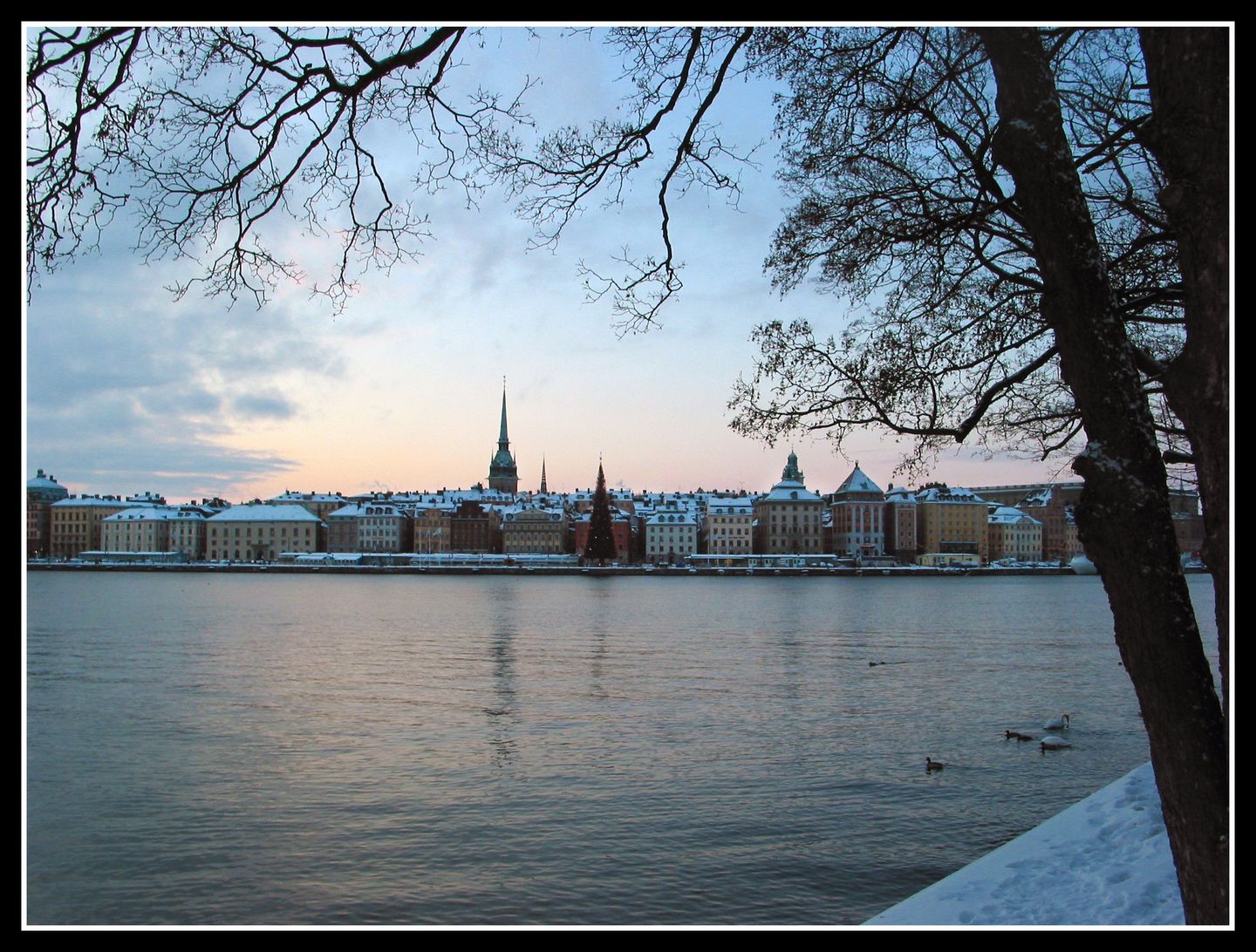
Most European capitals have a river or a hill to organise themselves around. Stockholm has water on every side and chose to build across it rather than around it, scattering itself over fourteen islands where Lake Mälaren meets the Baltic. The result is a city that reads less like a single urban mass and more like a cluster of distinct neighbourhoods, each with its own waterfront, each a short bridge or ferry ride from the next, with sightlines down every street ending in a glint of water rather than another block of buildings.
That geography is also why Stockholm's history survived so intact. Gamla Stan, the medieval old town, sits on its own small island and was never flattened for a ring road or bombed into rubble, so its narrow lanes and ochre-and-rust facades are the genuine thirteenth-century street plan rather than a careful reconstruction. A few hundred metres of water away, the island of Djurgården holds a 17th-century warship that spent three centuries on the harbour floor and came up looking almost new, alongside an open-air museum of transplanted historic buildings and one of the best amusement parks in Europe. The whole city operates on this logic of close-together contrasts: medieval next to modern, nature next to density, all connected by a metro system whose stations are themselves worth visiting.
This dispatch treats Stockholm as the island city it actually is — not a single centre with suburbs, but a set of neighbourhoods you choose between, each suited to a different kind of trip. It covers when the light and the water are worth the trip, how to move between islands without wasting a day on logistics, where Stockholm's design-and-food reputation actually earns its keep, and which base suits a first visit versus a repeat one.
The caseWhy Stockholm earns more than a layover
Stockholm gets treated by a lot of itineraries as the add-on to Copenhagen or a cruise-ship afternoon between fjords, and that undersells a capital with a genuinely rare combination: an intact medieval centre, a design and architecture culture that shaped how half the world furnishes its homes, and immediate access to an archipelago of roughly thirty thousand islands that starts at the edge of downtown. Few capitals let you stand in a seven-hundred-year-old square at breakfast and be swimming off a granite skerry by early afternoon.
The city's museums alone justify a multi-day stay rather than a half-day tick-box visit. The Vasa Museum houses an entire 64-gun warship that capsized on its maiden voyage in 1628 and spent 333 years at the bottom of the harbour, preserved by the Baltic's low salinity and cold water to a degree that has no real equivalent anywhere else — this is not a reconstruction or a model, it is the actual ship, ninety-five percent original timber, rising five storeys inside a purpose-built hall. Skansen, on the same island, does the inverse trick: an open-air museum of more than 150 historic buildings moved there from across Sweden, assembled into a working village that explains four centuries of Swedish life more vividly than any single building could.
Add Sweden's broader design reputation — this is the country that produced Ikea's aesthetic logic long before it became a global cliché, and the real version, in Stockholm's design shops and the Fotografiska photography museum, is considerably more interesting than the flat-pack caricature — and a food scene running from Michelin-starred New Nordic kitchens down to the everyday fika of coffee and cardamom buns, and the case for Stockholm stops being about a single headline sight and becomes about a capital built for unhurried, repeat exploration.
The calendarWhen to go
June through August is Stockholm at its most extroverted. This is when the famous light stretches the day toward twenty hours around midsummer, the archipelago ferries run their fullest timetables, and every waterfront terrace and park fills with a city that spends ten months a year compensating for the other two. It is also peak season for prices and crowds, though Stockholm's crowds rarely approach the crush of Southern Europe's summer capitals.
May and September are the trade-off worth considering seriously. Both carry the long-light benefit without the full tourist volume, and September in particular pairs reliably pleasant weather with lower accommodation rates and a city that has fully reopened after the quieter stretch of the Swedish summer, when many locals themselves leave for the archipelago or the countryside. If an archipelago day trip is a priority, keep to this window or the summer proper — winter ferry schedules thin out considerably.
Winter, December through February, is a genuinely different city: short days with only six or seven hours of weak daylight at the solstice, serious cold, but also candlelit cafés, a particular Nordic coziness (mys) that Stockholmers lean into deliberately, and a real chance of seeing the city under snow with the old town's lanes properly hushed. Avoid only the grey transitional weeks of November and March, which carry winter's dark without its charm or summer's light without its warmth.
LogisticsGetting around an island city
Stockholm's metro, the Tunnelbana, is the backbone of getting between islands and is worth riding for its own sake — several stations, particularly Kungsträdgården, T-Centralen and Stadion, are carved and painted like underground art installations rather than functional transit stops. Buy an SL Access card or use the city's transit app for contactless travel, and get a 72-hour travel card if you're staying more than a couple of days; single tickets add up fast on an island city where almost every day involves at least one crossing.
Walking covers Gamla Stan, Norrmalm and central Södermalm comfortably, since the historic core is compact, but budget transit time between the outer islands — Djurgården, where the Vasa Museum and Skansen sit, is a pleasant walk or a short tram ride from the centre, while reaching the archipelago proper means a ferry from Strömkajen or Nybrokajen. Buses fill the gaps the metro doesn't reach, and the hop-on ferry network run by operators like Djurgårdsfärjan is both practical transport and a cheap, scenic alternative to a harbour cruise.
Arlanda Airport connects to the centre via the Arlanda Express train in eighteen minutes — expensive for what it is, but genuinely fast — or more cheaply by the regular commuter train or an airport coach, both taking closer to forty minutes. Bromma Airport, used mainly for domestic and some European routes, sits much closer to the centre and is reachable by bus in well under half an hour. A car is actively unhelpful in the centre; parking is scarce and expensive, and the islands are better seen by foot, metro and ferry than through a windscreen.
The tableHow Stockholm actually eats
Fika is the word to learn before any restaurant name — a dedicated coffee-and-pastry break, usually involving a kanelbulle (cinnamon bun) or a cardamom bun, that functions as both a daily ritual and a genuine social institution rather than a tourist-facing custom. Treat at least one afternoon as a proper fika rather than a quick coffee-to-go, and you'll understand more about how Stockholm actually lives than from any single museum.
Swedish cuisine's international reputation got a serious upgrade from the New Nordic movement, and Stockholm has a real concentration of the kitchens doing it well — foraged ingredients, fermentation, and a restrained, seasonal plating that Copenhagen gets more credit for but Stockholm does in genuine depth. These restaurants are not cheap and mostly need booking well ahead, but the same ideas filter down to considerably more affordable neighbourhood bistros across Södermalm and Vasastan.
For the everyday version, Swedish home cooking runs on husmanskost — meatballs with lingonberry and cream sauce, gravlax, pickled herring in half a dozen preparations, and the Thursday tradition of ärtsoppa (pea soup) followed by pancakes, still observed in plenty of ordinary restaurants. Street food leans toward korv (sausage) stands and the Middle Eastern and Thai influence of a genuinely multicultural food city. And don't skip a proper Systembolaget visit if you want to drink at home — alcohol sales are a state monopoly with specific hours, closed Sundays, which catches visitors out more often than any other single piece of Stockholm logistics.
The mapNeighbourhoods to know
Gamla Stan is the medieval old town and the obvious starting point — narrow cobbled lanes, the Royal Palace, Stortorget square where the facades turn a deep ochre-red, and a density of tourist shops that thins out considerably the moment you turn off the main through-streets. It's small enough to cover in a day but worth returning to in the early morning or evening once the day-trip crowds have cleared.
Djurgården, a green royal island just east of the centre, holds the Vasa Museum, Skansen, the ABBA Museum and Gröna Lund amusement park, plus genuinely pleasant parkland and waterside walking paths — budget a full day if you want more than one of its museums. Södermalm, south across the water, is Stockholm's creative and nightlife engine: converted industrial buildings, vintage shops, the SoFo district's concentration of independent boutiques and cafés, and the best skyline views in the city from Monteliusvägen and Fjällgatan.
Norrmalm is the commercial centre — department stores, the main shopping streets, Stockholm Central Station — functional rather than charming, but geographically convenient as a base. Östermalm, to the northeast, is the city's wealthiest, most polished district, home to the Saluhall covered food market and leafy, grand-apartment-block streets. And Vasastan, north of Norrmalm, is a quieter residential area with an increasingly good café and restaurant scene and noticeably lower prices than the water-adjacent districts, popular with longer-staying visitors who want a more local pace.
Field intelligencePractical intelligence
Sweden uses the krona, not the euro, and the country is close to cashless — cards and phone payments are accepted almost everywhere, including small market stalls and public toilets, and some businesses no longer accept cash at all. Carrying krona for emergencies is reasonable, but don't expect to rely on it as a payment method.
Tipping is not the ritual it is in the United States; a service charge is generally built into restaurant prices, and rounding up a bill for good service is a generous gesture rather than an expectation. English is spoken fluently and widely, including by older generations, so language is rarely a practical barrier, though a few words of Swedish are appreciated.
Lagom — a cultural idea of 'just the right amount,' neither too much nor too little — shows up everywhere from portion sizes to interior design to how loudly people speak on public transport, and understanding it explains a lot about Swedish social behaviour that can otherwise read as reserved or understated. The city is extremely safe by international capital standards, walkable at night in most central areas, and the water is clean enough that swimming off a central Stockholm quay in summer is a genuine, popular local pastime rather than a novelty.
What to see & do
-
Vasa Museum
An entire 17th-century warship, ninety-five percent original, raised from the harbour floor after 333 years and housed in a purpose-built hall tall enough to hold its full five-storey hull.
Tip:Go straight for the top viewing platform first for the full-ship perspective, then work down through the lower galleries on casualties, rigging and the salvage itself.
-
Gamla Stan
The medieval old town on its own small island — ochre and rust-red facades, the Royal Palace, Stortorget square, and a street plan that has barely shifted since the thirteenth century.
Tip:Visit early morning or after dinner once the cruise-ship day-trip crowds have thinned; the lanes feel entirely different without them.
-
Skansen
An open-air museum of more than 150 historic buildings relocated from across Sweden, assembled into a living village with craftspeople, farm animals and seasonal festivals rather than static exhibits.
Tip:Check the day's craft demonstrations and seasonal events online before visiting; the museum changes considerably by season.
-
Stockholm City Hall
The red-brick, gold-mosaic building where the Nobel Prize banquet is held every December, with a tower view over the water that ranks among the best panoramas in the city.
Tip:Climb the tower in late spring or summer when it's open; the Golden Hall mosaic tour alone is worth booking separately if the tower is closed.
-
Fotografiska
A photography museum in a converted industrial waterfront building on Södermalm, with rotating major exhibitions, a well-regarded restaurant, and one of the best harbour views in the city from its top-floor windows.
Tip:Evening visits pair well with the rooftop restaurant; check current exhibitions ahead, since the whole museum rotates rather than keeping a fixed collection.
-
ABBA Museum
An interactive museum on Djurgården built around Sweden's biggest musical export, with costumes, a recreated studio, and genuinely hands-on exhibits rather than a static walk past memorabilia cases.
Tip:Book a timed-entry ticket online ahead; it sells out on weekends and school holidays more often than visitors expect.
-
Stockholm Archipelago
Around thirty thousand islands and skerries fanning out from the harbour into the Baltic, reachable by regular ferry and ranging from developed resort islands to bare granite outcrops with a single summer cottage.
Tip:Vaxholm is the easiest half-day introduction by ferry; go further out to Sandhamn or Grinda if you have a full day to spend.
-
Drottningholm Palace
The still-inhabited royal residence on an island in Lake Mälaren, a UNESCO World Heritage site with formal Baroque gardens and a remarkably preserved 18th-century court theatre still used for performances.
Tip:Take the seasonal boat from central Stockholm rather than the metro for a far more scenic approach, weather permitting.
On the groundWhere things are
Map data © OpenStreetMap contributors.
Where to stayBase yourself well
Gamla Stan
Best for first-timers prioritising atmosphere over spaceSleeping inside the medieval old town itself — cobbled lanes, the Royal Palace on your doorstep, and a genuine fairy-tale atmosphere once the day-trippers clear out in the evening.
A boutique hotel in a converted Gamla Stan townhouse
Rooms tend to be small and stairs steep in these old buildings, but the location is unmatched for atmosphere.
€€€A guesthouse on a quiet Gamla Stan side lane
Pick a street off Västerlånggatan to avoid the main tourist thoroughfare's evening noise.
€€Södermalm
Best for nightlife, design and a younger, local paceStockholm's creative, slightly grittier southern island — converted industrial buildings, vintage shops, the SoFo boutique district, and the best skyline views from its northern cliffs.
A design-forward hotel near Mariatorget
Central within Södermalm and a short bridge walk from Gamla Stan without the old town's premium pricing.
€€€An apartment rental in SoFo
Puts the best independent cafés and boutiques on your own street rather than a destination to travel to.
€€Norrmalm
Best for convenience and transit linksThe commercial centre around Stockholm Central Station — less charming architecturally, but the most convenient base for transit connections, shopping and a first-time visit with limited time.
A business hotel near Stockholm Central Station
Ideal if you're arriving by train or combining the city with day trips that need an early start.
€€€Östermalm
Best for a refined, residential baseThe city's most polished residential district — grand apartment blocks, the Saluhall food market, and leafy streets with a quieter, more upscale evening pace than Södermalm or Norrmalm.
A classic hotel near Stureplan
Expect formal service and higher rates in exchange for one of the city's most elegant neighbourhoods on your doorstep.
€€€€Vasastan
Best for longer stays and better valueA quieter, more residential district north of the centre with a growing independent café and restaurant scene and noticeably lower rates than the water-adjacent islands.
A neighbourhood hotel near Odenplan
A short metro ride from Gamla Stan and Djurgården, with calmer streets and lower prices than the central islands.
€€Affiliate notePostcardRoute is reader-supported. Some links to Booking.com (stays, flights, car hire, tickets and tours, airport transfers) are affiliate links, tracked through CJ Affiliate: if you book through them we may earn a small commission at no extra cost to you. We only recommend places we would send a friend.
Book the restEverything else for the trip
Stay sorted? These open Booking.com for the other legs of the journey.
-
Tours & tickets
Things to do in Stockholm
Skip-the-line tickets, tours and day trips.
Browse activities -
Wheels
Car hire in Stockholm
Compare pick-up points and rental companies.
Compare cars -
Air
Flights
Search fares, then come back for the neighbourhood advice.
Search flights -
Ground
Airport transfers
Book a taxi or private transfer before you land.
Book a transfer
Affiliate noteThese four links are affiliate links too: if you book through them we may earn a small commission at no extra cost to you.
Beyond the cityWorthwhile day trips
- Vaxholm & the inner archipelago
An hour by ferry into the Stockholm archipelago, with a 16th-century fortress, pastel wooden houses and an easy, low-effort introduction to the thirty thousand islands fanning out from the city.
- Uppsala
Forty minutes by train to Sweden's oldest university town, with a soaring Gothic cathedral, a hilltop castle and a lively, youthful energy driven by one of the country's most prestigious universities.
- Sigtuna
Sweden's oldest town, under an hour away, with Viking-era rune stones scattered through its streets and a tiny, walkable centre that makes an easy half-day escape from the capital.
Before you goCommon questions
- How many days do you need in Stockholm?
- Three full days covers Gamla Stan, the Vasa Museum, Skansen and one neighbourhood on Södermalm at a reasonable pace. Four or five lets you add an archipelago day trip and a second museum day without rushing — and Stockholm rewards the extra time more than most capitals its size.
- What is the best area to stay in Stockholm for first-time visitors?
- Gamla Stan for atmosphere, or Södermalm for a livelier, slightly more affordable base with excellent transit links to everything else. Norrmalm is the practical choice if convenience to the central station matters more than charm.
- Is Stockholm expensive to visit?
- Yes, by most measures — Scandinavia generally runs expensive, and Stockholm is no exception for dining out and alcohol in particular. Fika culture helps: a coffee and a pastry is a reasonable daily indulgence, and self-catering or lunch set menus keep food costs more manageable than dinner-out every night.
- Do I need to speak Swedish to visit Stockholm?
- No. English is spoken fluently and widely across all generations, in shops, restaurants and public transport alike, so language is rarely a practical barrier for visitors.
- What is the best time of year to visit Stockholm?
- June through August for the long daylight and full archipelago ferry schedules, or May and September for similar light with fewer crowds and lower prices. Winter is a genuinely different, cosier experience if you don't mind short days and serious cold.
- How do I get from Arlanda Airport into central Stockholm?
- The Arlanda Express train takes eighteen minutes but costs a premium for the speed. The regular commuter train or an airport coach both take around forty minutes for considerably less money, and are the better choice unless you're short on time.
- Is the Stockholm archipelago worth visiting on a short trip?
- Even a half-day is worthwhile if your schedule allows it. Vaxholm is an easy, hour-long ferry ride for a taste of the inner archipelago; further-out islands like Sandhamn or Grinda need a full day but reward it with a genuinely different, quieter side of the region.