
Greece · Attica
Athens refuses to be a museum
The Acropolis sits at the centre of a loud, unpolished, thoroughly modern capital that has been continuously inhabited since before the Parthenon was built — and it shows no interest in behaving like a ruin.
A three-thousand-year-old city that never stopped being lived in · 37.98° N · 23.73° E
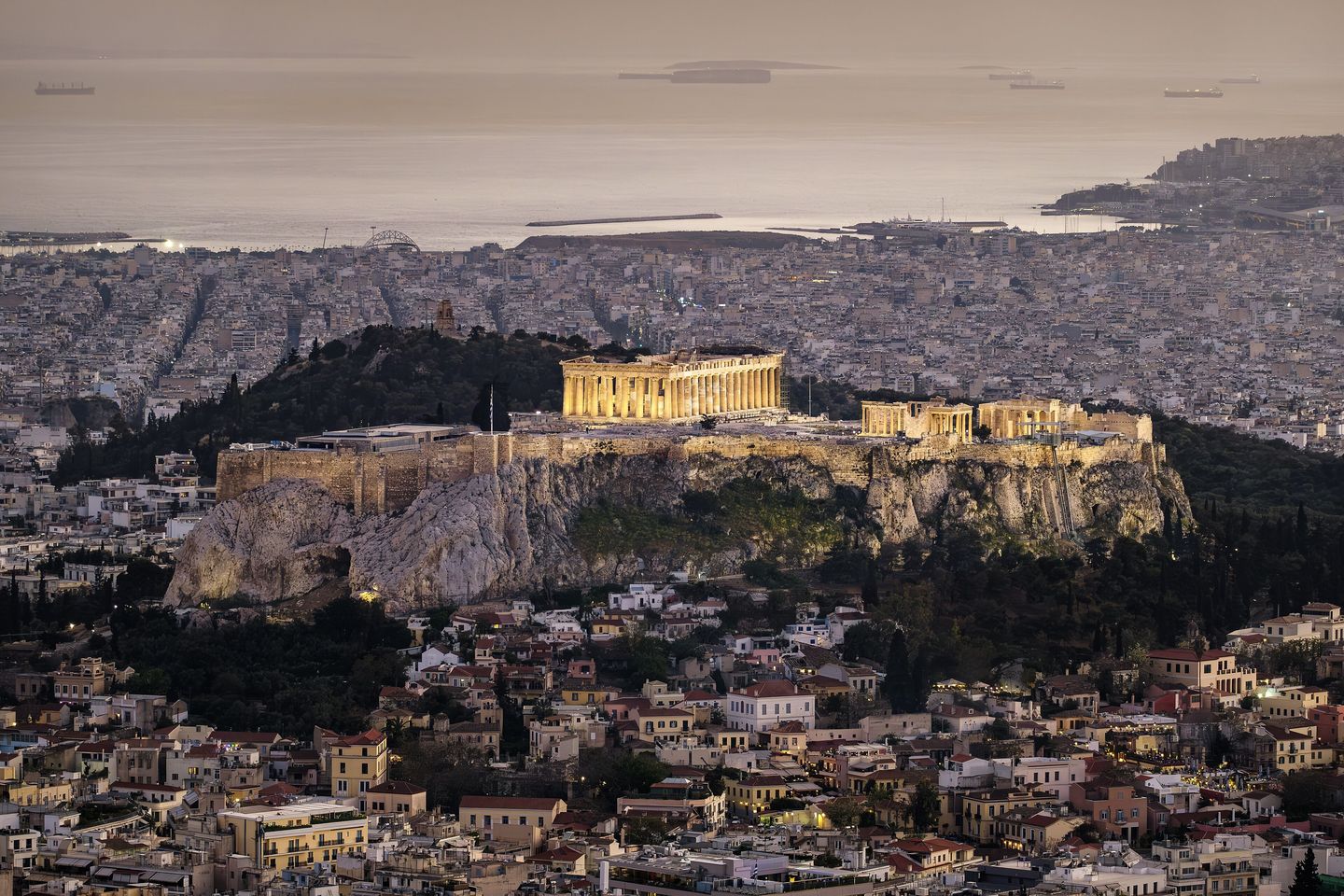
Most visitors arrive in Athens expecting an open-air museum and leave having discovered a city that simply refuses to perform that role. Yes, the Acropolis dominates the skyline from almost anywhere you stand, floodlit and unmissable after dark, and yes, you will spend a morning walking among columns older than most of recorded European history. But step ten minutes away from the Acropolis Museum and you are in a graffiti-covered, motorbike-clogged, intensely alive capital of four million people that has never once paused its own life to accommodate the tourists photographing its ruins.
That friction is the whole point. Athens was continuously inhabited for roughly seven thousand years before anyone thought to rope off the Parthenon, and it has kept right on being inhabited since — through Roman rule, Byzantine centuries, four hundred years under the Ottomans, a catastrophic population exchange in the 1920s that doubled the city overnight, a brutal civil war, a military junta, and the frantic concrete-block building boom of the 1960s and 70s that gives the modern city its unglamorous, practical architecture. Every layer of that history is still legible if you know where to look, often stacked directly on top of the ancient one.
This isn't a checklist of the Acropolis and a photo from Lycabettus Hill, although you should do both. It's the neighbourhood-level detail that turns a rushed two-day ruins tour into an actual visit to a real city — where to base yourself, when the heat makes sightseeing miserable, how Athenians actually eat and drink after dark, and which of the countless ancient sites beyond the Acropolis are worth your limited time.
The caseWhy Athens rewards more than a stopover
Most itineraries treat Athens as a one- or two-night stopover before the ferry to the islands, and that is the single biggest mistake a first-time visitor to Greece makes. The Acropolis and its museum are genuinely worth the hype — standing inside the Parthenon's shadow, or watching the Acropolis Museum's glass floor reveal excavated Athenian streets beneath your feet, are experiences that reorganise how you think about the ancient world. But they are also only the loudest part of a much longer story the rest of the city keeps telling.
The Ancient Agora, a short walk below the Acropolis, was the actual civic heart of classical Athens — the marketplace and meeting ground where democracy itself was practised, where Socrates argued in the open air, and where the best-preserved Doric temple in Greece still stands almost fully intact. Hadrian's Library, the Roman Forum, and the Tower of the Winds add Roman-era layers within walking distance of each other. None of this requires the stamina of a full day; a focused visitor can cover the headline ancient sites in a day and a half and spend the rest of the trip on everything Athens has built since.
And that everything-since is considerable. Athens has quietly become one of the most interesting food and nightlife cities in southern Europe over the last decade, its street art scene rivals Berlin's in the Psiri and Exarchia districts, and neighbourhoods like Koukaki and Pangrati offer a version of Mediterranean city life — long lunches, rooftop bars with Acropolis views, genuinely cheap good wine — that most visitors rushing to catch a ferry never see.
The calendarWhen to go
Spring and autumn are the honest answer for anyone planning to spend real time outdoors among the ruins. April through early June brings warm, mostly dry days, wildflowers on the Acropolis slopes, and crowds that are present but manageable before the June cruise-ship surge. Mid-September through October offers much the same trade, plus a sea still warm enough for a day trip to the coast, and it is arguably the better of the two windows because the worst of the tourist season has already thinned out.
Summer is genuinely punishing, and this is not a minor caveat — Athens regularly hits 38-40°C in July and August, the Acropolis has essentially no shade, and heat-related closures of the site itself are now a real possibility on the worst afternoon spikes. If you do come in summer, flip your schedule to Athenian hours: an early start at the Acropolis right at opening, an indoor museum or a long lunch through the brutal early-afternoon heat, and everything else after 6pm when the city properly comes back outside. August also empties the city of many locals, who head to the islands themselves, leaving a quieter, hotter Athens with some restaurants shuttered.
Winter, December through February, is mild by northern European standards rather than genuinely cold, and it is comfortably the best season for anyone who prioritises empty ruins over beach weather — you can walk the Acropolis with a fraction of peak crowds and no queue for the museum. Rain is more frequent than visitors expect from a Mediterranean capital, so pack for it, but a grey Athenian winter still beats most of northern Europe's for daylight sightseeing hours.
LogisticsGetting around
Walk the centre. The historic core — Plaka, Monastiraki, Syntagma, Thissio and the ancient sites — is compact enough to cover almost entirely on foot, and much of it has been progressively pedestrianised over the last two decades, including the long promenade that now links the Acropolis directly to Thissio and the Ancient Agora without crossing a single road. This pedestrian spine is arguably the single best piece of city planning in Athens and does more to make the ancient sites feel connected than any map.
The Metro is clean, modern, and useful for anything beyond the compact centre — Line 3 runs directly to and from the airport in about forty minutes, a genuinely painless connection by European standards, and Line 2 is the quickest way between Syntagma and neighbourhoods like Koukaki or the port area. Buy an ATH.ENA travel card at any station and load it with single tickets or a 24- or 5-day pass if you're moving around a lot; a single ticket covers Metro, tram, bus and trolley transfers within ninety minutes.
Taxis are cheap by Western European standards and worth using late at night or for the trip to Piraeus port for an island ferry, though insist on the meter or agree a fare before setting off, since overcharging tourists is a known local irritation. Skip renting a car entirely if you're staying within the city — parking is a genuine headache and nothing in central Athens requires one. The tram along the coast toward Glyfada is a pleasant, slow way to reach the beaches south of the centre on a hot afternoon.
The tableHow Athenians actually eat
Skip the tourist-menu tavernas with the touts standing outside in Plaka's most photographed lanes — a restaurant that needs to hustle for customers on a street this central is rarely where locals eat, and the quality-to-price ratio there is the worst in the city. The better version of the same experience sits one or two streets back, or in neighbourhoods like Koukaki, Pangrati and Exarchia where Athenians actually spend their own money.
Learn the rhythm of a proper Greek meal, which is built around sharing rather than a single main course. Start with mezedes — small plates like tzatziki, melitzanosalata (smoky aubergine dip), fried courgette or saganaki cheese — ordered several at once for the table rather than as individual starters. Souvlaki, done properly, is street food eaten standing or on a bench, not a sit-down dish, and a good souvlaki stand in Athens costs a couple of euros and beats almost anything more expensive. Save the formal taverna sit-down for grilled fish or lamb, ordered by weight and cooked simply, with a jug of house wine (retsina if you're curious about the resin-flavoured local style, though it is genuinely divisive) rather than a bottled label.
Coffee culture runs its own separate, serious track: the freddo espresso and freddo cappuccino, Greece's own iced-coffee inventions, are drunk constantly and at all hours, and a proper Greek coffee — thick, unfiltered, served in a small cup with the grounds settled at the bottom — is a slow ritual rather than a to-go order. Dinner runs late, rarely starting before 9pm even outside summer, and Athenian nightlife genuinely gets going well after midnight on weekends, particularly around the bars of Gazi and the rooftop scene that has sprung up across Koukaki and Monastiraki specifically for the Acropolis view.
The mapNeighbourhoods to know
Plaka, tucked directly beneath the Acropolis's northern slope, is the oldest continuously inhabited neighbourhood in Athens — a genuinely lovely tangle of neoclassical houses, bougainvillea and narrow lanes, though its most central streets are also the most tourist-saturated in the city. It rewards a wander but is not necessarily the best base if you want an authentic evening out.
Monastiraki, just north of Plaka, centres on the flea market and the view of the Acropolis rising directly above the excavated Roman Agora — loud, commercial, and the best single vantage point in the city for that classic ruins-above-rooftops photograph, especially from one of the rooftop cafés ringing the square. Syntagma, the formal civic heart with Parliament and the hourly Evzone guard-changing ceremony, is more about logistics and transit than atmosphere, but it anchors the centre.
Koukaki, south of the Acropolis and increasingly the neighbourhood locals and savvy visitors alike recommend for a base, has exploded with good small restaurants, wine bars and boutique hotels over the last decade, many of them on rooftops with a direct, unobstructed Acropolis view for a fraction of what a Plaka address would cost. Exarchia, north of the centre, is the anarchist-leaning, intensely artistic student quarter — dense with street art, anarchist book cafés and some of the best cheap eating in the city, alongside a reputation for occasional friction with police that is worth being aware of rather than avoiding entirely. Pangrati and Mets, quieter residential pockets east of the centre, offer the most genuinely local, unhurried version of central Athens, with excellent neighbourhood tavernas and almost no tourist presence at all.
Field intelligencePractical intelligence
Buy the Acropolis combined ticket if you plan to see more than one ancient site — it covers the Acropolis itself plus the Ancient Agora, Roman Forum, Hadrian's Library, the Temple of Olympian Zeus, Kerameikos and the Aristotle's Lyceum site, is valid for five days, and comfortably pays for itself against buying two or three sites separately. Buy it online in advance rather than queueing at the gate, especially in summer.
Sun protection is not optional for a day among the ruins — there is essentially no shade at the Acropolis itself, the marble reflects heat aggressively, and a hat, water and sunscreen matter more here than at almost any other major European sight. Many ancient sites, including the Acropolis, now offer free entry on the first Sunday of the month from November through March, and reduced or free entry for EU students and under-25s with valid ID year-round — worth checking before you buy.
Tipping is appreciated rather than obligatory; rounding up or leaving small change for good service is standard, and a formal 10% is generous rather than expected. Tap water is generally safe to drink in central Athens, though many locals prefer bottled out of habit rather than necessity. Pickpocketing is a real, if modest, risk around Monastiraki, the metro and the most crowded stretches of Plaka, so treat it with the same ordinary caution you'd use in any dense tourist area. And do learn a handful of Greek phrases — efcharisto (thank you) and kalimera (good morning) go a long way, even though English is widely spoken in the tourist core.
What to see & do
-
Acropolis of Athens
The fortified hilltop sanctuary crowned by the Parthenon, visible from nearly everywhere in the city and floodlit gold after dark. The single most-visited ancient site in Greece, and it earns every bit of the crowd.
Tip:Arrive at opening, well before 8:30am in summer, both to beat the heat and to have the Parthenon nearly to yourself for the first half hour.
-
Acropolis Museum
A striking modern glass-and-concrete building at the foot of the hill, built directly over an excavated ancient neighbourhood visible through the floor, and home to the surviving original sculptures from the Parthenon itself.
Tip:Head straight for the top-floor Parthenon Gallery first, then work back down — the light and the empty-plinth arrangement (a pointed reminder of the Elgin Marbles still in London) make far more sense in that order.
-
Ancient Agora
The civic and commercial heart of classical Athens, where democracy was practised in the open air and Socrates held court — a green, unhurried site holding the astonishingly intact Temple of Hephaestus.
Tip:Come in late afternoon when the light is softer and the site is noticeably quieter than the Acropolis above it.
-
Plaka
The oldest inhabited neighbourhood in Athens, a neoclassical, bougainvillea-draped tangle of lanes directly beneath the Acropolis's northern slope, equal parts genuine charm and souvenir-shop density.
Tip:Walk the quieter upper lanes toward Anafiotika, a tiny Cycladic-style pocket built by island stonemasons in the 1800s, for the version of Plaka without the crowds.
-
Mount Lycabettus
The highest point in central Athens, a steep pine-covered hill topped by a whitewashed chapel, reachable by a funicular or a genuinely strenuous walk, with the single best panoramic view of the entire city and the Acropolis below it.
Tip:Time it for sunset and stay twenty minutes past — the floodlit Acropolis against the darkening city is the best single view in Athens.
-
Panathenaic Stadium
The marble horseshoe stadium built on the site of an ancient Athenian original, rebuilt for the first modern Olympic Games in 1896, and still the only stadium in the world built entirely of marble.
Tip:Pay the small entry fee to walk onto the actual track and climb the seating — the marble underfoot is the whole experience, and it takes barely half an hour.
-
Monastiraki flea market
A sprawling, chaotic Sunday flea market and daily bazaar spilling out from Monastiraki Square, selling everything from genuine antiques to tourist kitsch, directly beneath the Acropolis's most photographed profile.
Tip:Go on Sunday morning for the full flea-market version, then grab a rooftop coffee on the square afterward for the classic ruins-above-rooftops view.
-
Temple of Olympian Zeus
Fifteen towering Corinthian columns, the surviving fraction of what was once the largest temple in Greece, construction of which spanned over six centuries from its classical-era start to its completion under the Roman emperor Hadrian.
Tip:It's covered by the Acropolis combined ticket and takes only fifteen minutes — worth the short detour on the walk between the Acropolis and the National Garden.
-
National Archaeological Museum
The single best collection of ancient Greek art anywhere in the world, including the gold Mask of Agamemnon and the bronze Antikythera mechanism, housed a short walk north of the main tourist core.
Tip:Budget at least two hours, and go on a weekday morning — it draws a fraction of the Acropolis's crowds despite arguably rivalling it for historical importance.
On the groundWhere things are
Map data © OpenStreetMap contributors.
Where to stayBase yourself well
Plaka
Best for first-timers who want to walk everywhereThe postcard neighbourhood — neoclassical houses, bougainvillea, and the Acropolis looming directly overhead on every corner. Central and charming, but the busiest, most tourist-facing streets can run loud and pricey for what you get.
A small neoclassical guesthouse on a quiet Plaka lane
Look for a side street away from Adrianou, the main tourist thoroughfare, for a genuinely quiet night's sleep this close to the sights.
€€€A boutique hotel near Anafiotika
The tiny Cycladic-style pocket at Plaka's upper edge gives you the neighbourhood's charm with almost none of its crowds.
€€Koukaki
Best for food-focused visitors and better valueThe neighbourhood Athenians themselves recommend now — south of the Acropolis, dense with good small restaurants and rooftop bars, many with a direct Acropolis view for far less than a Plaka address.
A rooftop-terrace boutique hotel in Koukaki
This is where the Acropolis-view rooftop bars cluster — book one with its own terrace and you get the view without leaving the building.
€€A design-led apartment stay near the Acropolis Museum
A five-minute walk to the museum and the pedestrian promenade up to the Acropolis, in a genuinely local residential pocket.
€€Monastiraki & Psiri
Best for nightlife and market browsingLoud, commercial and central around the flea market itself, shading into Psiri's grittier street-art-and-nightlife energy a few blocks north — good for anyone who wants to be in the middle of things after dark.
A mid-range hotel overlooking Monastiraki Square
Expect noise from the square below on weekend nights, in exchange for the best Acropolis-over-the-ruins view from your own window.
€€Pangrati & Mets
Best for repeat visitors and a calmer, local baseQuiet, leafy, residential neighbourhoods east of the centre with excellent local tavernas and almost no tourist presence — the version of central Athens where you feel like you actually live there.
A small apartment stay near the Panathenaic Stadium
A fifteen-minute walk from Syntagma through the National Garden, with the neighbourhood's own strong taverna scene right outside.
€€Affiliate notePostcardRoute is reader-supported. Some links to Booking.com (stays, flights, car hire, tickets and tours, airport transfers) are affiliate links, tracked through CJ Affiliate: if you book through them we may earn a small commission at no extra cost to you. We only recommend places we would send a friend.
Book the restEverything else for the trip
Stay sorted? These open Booking.com for the other legs of the journey.
-
Tours & tickets
Things to do in Athens
Skip-the-line tickets, tours and day trips.
Browse activities -
Wheels
Car hire in Athens
Compare pick-up points and rental companies.
Compare cars -
Air
Flights
Search fares, then come back for the neighbourhood advice.
Search flights -
Ground
Airport transfers
Book a taxi or private transfer before you land.
Book a transfer
Affiliate noteThese four links are affiliate links too: if you book through them we may earn a small commission at no extra cost to you.
Beyond the cityWorthwhile day trips
- Cape Sounion
An hour and a half southeast along the coast to the ruined Temple of Poseidon, perched dramatically on a clifftop above the Aegean — the classic Athens sunset day trip, and deservedly so.
- Delphi
Around two and a half hours by road into the mountains of central Greece, to the ancient sanctuary the Greeks believed was the centre of the world, with a small but excellent museum and staggering valley views.
- Hydra
A car-free island roughly ninety minutes by high-speed ferry from Piraeus, all donkeys, whitewashed stone houses and a genuinely different pace — the easiest full taste of the Greek islands without an overnight stay.
- Ancient Corinth
About an hour southwest, taking in the dramatic Corinth Canal en route and the extensive ruins of one of ancient Greece's wealthiest cities, with Acrocorinth's hilltop fortress rising above the site.
Before you goCommon questions
- How many days do you need in Athens?
- Two full days covers the Acropolis, its museum and the Ancient Agora comfortably. Three or four lets you add the National Archaeological Museum, a proper wander through Koukaki or Pangrati, and a day trip to Cape Sounion or Delphi without rushing — and is the better plan if Athens isn't just a stopover before the islands.
- What is the best area to stay in Athens for first-timers?
- Plaka puts you directly beneath the Acropolis and within walking distance of nearly every ancient site, though its busiest streets run touristy. Koukaki, just south of the Acropolis, has become the locally recommended alternative — better restaurants, rooftop Acropolis views, and generally better value for a similarly central location.
- Is Athens expensive to visit?
- Less than most Western European capitals. Street food like souvlaki costs a couple of euros, a proper sit-down taverna meal with wine remains reasonably priced by comparison to Paris or Amsterdam, and the combined Acropolis ticket is genuinely good value against paying for each ancient site separately. Accommodation in central neighbourhoods is where costs climb fastest in peak season.
- What is the best time of year to visit Athens?
- Spring (April to early June) and autumn (mid-September to October) bring warm, mostly dry weather without summer's brutal heat. July and August regularly hit 38-40°C with essentially no shade at the Acropolis, so plan around the early morning and evening if you do visit then. Winter is mild and rewards visitors with dramatically thinner crowds at every major site.
- How do I get from Athens airport into the city centre?
- Metro Line 3 runs directly from Athens International Airport to Syntagma in the city centre in about forty minutes and is the fastest reliable option, avoiding road traffic entirely. A dedicated airport bus and metered taxis are also available, but the direct metro line is the easiest choice for most visitors.
- Do I need to buy Acropolis tickets in advance?
- Yes, strongly recommended, especially from April through October. Buy the combined ticket online, which covers the Acropolis plus six other ancient sites over five days, rather than queueing at the gate — walk-up lines in peak summer can run well over an hour in direct sun with no shade.