
United States · Washington
Seattle, between the rain
A working port city that quietly built Starbucks, Amazon, Boeing and grunge in the space of a century, and still can't decide if it wants you to notice. Come for a stretch of actual sun and you'll understand the fuss.
The city that built an empire on rain, coffee and code · 47.61° N · 122.33° W
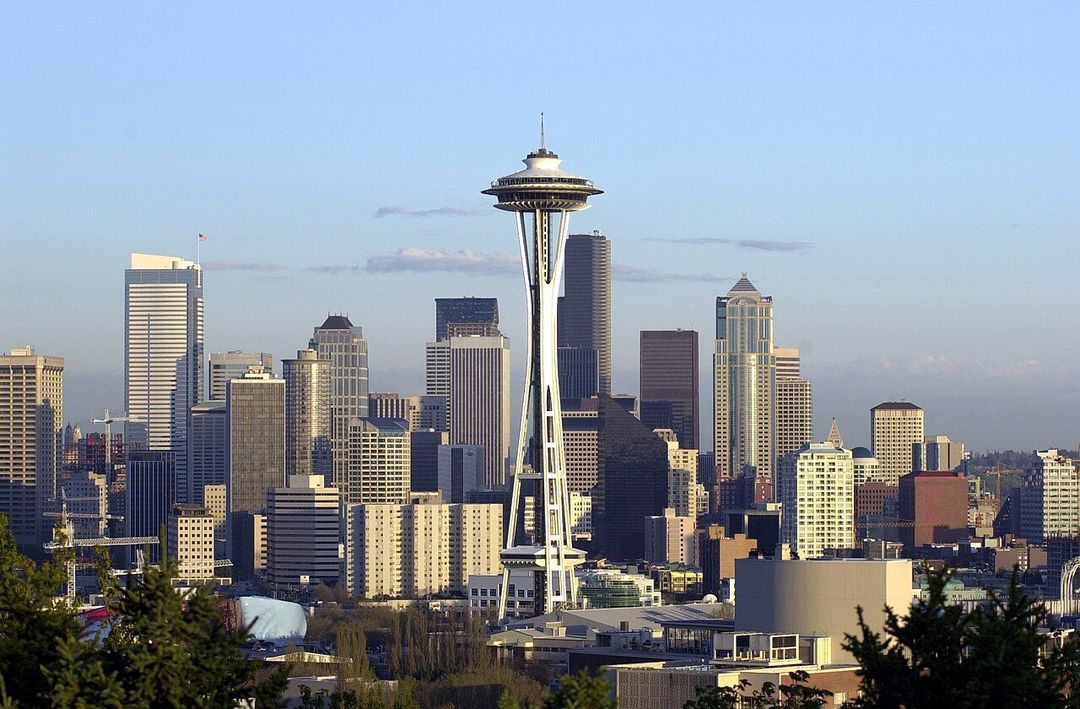
Seattle has an image problem it never quite bothered to fix: a grey, wet, vaguely depressing city somewhere up in the corner of the map, worth a layover on the way to Alaska or the Olympics. That reputation is doing the city a favour, in a way, because it keeps the crowds thinner than they should be for a place that gave the world Starbucks, grunge, Boeing's jets, and a fair share of the phone in your pocket. Seattle is a working city first and a tourist destination second, and that order is exactly what makes it worth visiting.
The geography does the heavy lifting before you've done anything at all. The city sits on a narrow isthmus between salt water and fresh — Elliott Bay and Puget Sound to the west, Lake Washington to the east, Lake Union sitting in between with seaplanes taking off from it on schedule — with the jagged wall of the Olympic Mountains on one horizon and, on a clear day, the solitary white cone of Mount Rainier looming over the skyline on the other like something that shouldn't be allowed so close to a major city. Hills roll through nearly every neighbourhood, which means half of Seattle's real estate value is just a good view, sold at a markup.
This dispatch skips the assumption that you're here for a single weekend of Space Needle photos and moves on to the actual questions: which of Seattle's hill-villages to sleep in, when the sky reliably clears, how to get around a city that was built for cars and is only slowly repenting, and where the food scene actually lives once you've had your one obligatory bowl of chowder at the market. Give it four or five days if you can. Give it a rushed 36 hours and you'll leave thinking the postcard version was right — grey, damp, and a bit underwhelming — which would be a shame, because it isn't.
The caseWhy Seattle earns a real visit, not just a layover
The easy case for Seattle is the outsized cultural footprint of a city this size. Roughly 750,000 people live within city limits, smaller than Nashville, smaller than Denver, and yet this one metro area gave the modern world its coffee shop template, its default online bookstore turned everything-store, most of its commercial jets, and the sound that dominated rock radio for the entire first half of the 1990s. Spend a few days here and that concentration stops feeling like trivia and starts feeling like the actual texture of the place: a Boeing 737 taking off from Boeing Field, a barista running a pour-over with the seriousness of a lab technician, a mural of Chris Cornell two blocks from a Cornell-adjacent dive bar that hasn't changed its jukebox since 1994.
The harder case, and the more interesting one, is the setting itself. Few American cities sit this dramatically between water and mountains. You can eat lunch on a ferry crossing Elliott Bay, watch container ships and sailboats share the same channel, and look up to see Rainier sitting on the horizon like a held breath, then be back on dry land twenty minutes later with a beer in Fremont. The Pacific Northwest's outdoor culture isn't a marketing line here; Seattleites genuinely structure their weekends around hiking trailheads ninety minutes away, and the city's own park system, largely the work of the Olmsted Brothers in the early 1900s, laced green space through neighbourhoods most American cities would have paved over.
What Seattle is not is a city that performs for visitors. There's no grand boulevard, no single unmissable plaza, no imperial architecture insisting you photograph it. The reward here is quieter and more cumulative — a coffee culture that actually earned its reputation, a produce and seafood scene fed directly by the water and farmland around it, and neighbourhoods with genuinely distinct personalities within a twenty-minute drive of each other. It rewards people willing to do a bit of legwork rather than stand in a queue.
The calendarWhen to go, and when to accept the rain
July and August are Seattle at its best and its most crowded: reliably dry, warm without being oppressive, daylight stretching past 9pm, Mount Rainier visible on most days rather than a rumour behind cloud. Hotel prices spike accordingly and the popular restaurants need reservations well ahead, but this is the window the postcards are actually taken in, and if you only get one shot at Seattle, aim for these two months.
June and September are the smart alternative for anyone who can be flexible. Both months are drier than their reputation suggests, crowds are noticeably thinner, and September in particular tends to deliver some genuinely spectacular stretches of Indian-summer weather once the tourist season proper has wound down. Spring, by contrast, is a coin flip. April and May can deliver blue skies and blooming cherry trees at the UW quad, or a solid fortnight of the exact grey drizzle the city is famous for. Pack for both.
The honest truth about Seattle's rain is that it is overstated in intensity and understated in duration. This is not a city of dramatic thunderstorms; it's a city of a persistent, unhurried drizzle that can stretch across the entire stretch from November through March, when the sky sits low and grey for weeks at a time and locals barely bother with umbrellas because the rain rarely justifies one. Annual rainfall here is genuinely lower than New York's or Miami's; Seattle just spreads its precipitation across far more days of the year, so the sun disappears rather than the water falling hard. If you visit in winter, know what you're signing up for: short days, a lot of soft grey light, and a city that copes by drinking more coffee and going inside earlier. It's not a bad version of Seattle, just a very different one, and it comes with off-season hotel rates to compensate.
LogisticsGetting around: Link, buses, ferries and hills
Seattle-Tacoma International Airport connects directly to downtown on the Link light rail's 1 Line, a roughly 35 to 40 minute ride that beats the taxi or rideshare option on both cost and reliability during rush hour traffic on I-5. Buy an ORCA card at the airport station or tap a contactless bank card directly at the fare gates; both work across Link, the bus network and the King County Water Taxi. The 1 Line has expanded significantly in recent years and now threads through downtown, Capitol Hill, the University District, and north to Northgate and Lynnwood, with a second line reaching east across Lake Washington to Bellevue and Redmond, genuinely useful if your trip includes the Eastside tech campuses, less so for a visitor sticking to the city proper.
Downtown and the closer-in neighbourhoods — Capitol Hill, Pioneer Square, Belltown, the International District — are walkable, if hilly enough that comfortable shoes matter more here than in most American cities. Seattle was built on a genuine slope, not a gentle rise, and several downtown streets require the kind of stair-climbing that makes you question your itinerary. Buses fill in everywhere the light rail doesn't yet reach, particularly for Ballard and Fremont, which remain frustratingly light-rail-free for now; budget extra time or lean on rideshare for those crossings, especially in evening traffic.
Don't skip the ferries. They're not a novelty here; they're genuine public transit. Washington State Ferries run frequent, cheap crossings from the downtown terminal at Colman Dock to Bainbridge Island and Bremerton, and the ride itself, gulls trailing the wake and the skyline shrinking behind you, is one of the best low-cost things to do in the city. Renting a car makes sense only if you're planning day trips into the mountains or the Olympic Peninsula; inside the city, between hills, one-way streets and a genuine parking shortage downtown, a car is more often a liability than a convenience.
The tableHow Seattle actually eats and drinks
Start with the given: Seattle is a seafood city, sitting directly on the supply chain for Dungeness crab, spot prawns, geoduck and some of the best wild salmon on the continent, and the good restaurants treat that proximity as a responsibility rather than a gimmick. Pike Place Market is the obvious entry point and worth doing once for the theatre of it — the fish-tossing crews at Pike Place Fish, the market's century of continuous operation, the lower arcades most day-trippers never find — but treat it as a starting point, not the whole meal. The market's real value to a longer stay is the produce and the specialty stalls, not the tourist-facing restaurants clustered at street level.
Coffee is not a cliché here so much as an actual civic infrastructure. Yes, the original 1971 Starbucks location still draws a queue outside the market, and it's fine to go look at it, but the city's real coffee culture lives in its independent roasters: dense, serious, unpretentious spaces where the pour-over is treated with the gravity of a small ceremony. This obsessiveness predates the chain that made the city famous for coffee and has comfortably outlived the chain's cultural relevance; if you only drink one coffee in Seattle, make it from an independent roaster rather than the flagship everyone photographs.
The wider food scene runs on immigration as much as it runs on the Sound. Seattle's Asian communities — Chinese, Japanese, Vietnamese, Filipino, and a significant and growing Korean and Southeast Asian presence — have shaped the city's food identity as much as anything caught in local waters, and the International District and the strip malls of the Rainier Valley hold some of the most interesting, least touristed eating in the city. Beer is its own serious subculture too, particularly in Ballard, which has more breweries within walking distance of each other than almost anywhere else on the West Coast. A Sunday afternoon spent brewery-hopping there before the farmers market wraps up is a genuinely good use of a day.
The mapNeighbourhoods to know
Capitol Hill is the city's densest, loudest, most walkable neighbourhood, and the centre of Seattle's LGBTQ+ life and its late-night scene. The Pike/Pine corridor is wall-to-wall bars, live music venues and after-midnight food, layered over blocks of grand old Victorian houses and sleek new apartment towers that haven't fully made peace with each other yet. It's the best base for anyone who wants nightlife and transit within stumbling distance.
Ballard, out on the water in the northwest of the city, wears its Scandinavian fishing-village history proudly even as it's become one of Seattle's most sought-after neighbourhoods — the Nordic Museum, the Ballard Locks where salmon climb a fish ladder past pleasure boats, a Sunday farmers market, and more breweries per block than anywhere else in the city. It's a longer trip from downtown without the light rail, but it rewards the trip.
Fremont, just south of Ballard, calls itself the Center of the Universe with a straight face and backs it up with the kind of purposeful weirdness that includes a giant concrete troll crushing a Volkswagen under a bridge and a statue of Lenin bought from a scrapyard in Slovakia. It's smaller and more walkable than Ballard, heavy on vintage shops and neighbourhood breweries, and connected to Ballard by a genuinely pleasant walk or bike ride along the Ship Canal.
Pioneer Square is Seattle's oldest neighbourhood, rebuilt in Romanesque brick after the Great Fire of 1889 and still showing the seams — cobbled streets, wrought-iron pergolas, and an entire buried street level underneath the current one, walkable on the Underground Tour. It's quieter at night and rougher around the edges than the other neighbourhoods on this list, worth a focused few hours rather than a base. Queen Anne, on its own hill above Seattle Center, trades in grand Craftsman houses and some of the best skyline views in the city, particularly from Kerry Park, a genuinely lovely, if pricier, place to stay if you want quiet streets within striking distance of the Space Needle and the water.
Field intelligencePractical intelligence
Layer, don't waterproof. Seattleites are famous for skipping umbrellas, and it's not an affectation — most of the year's rain is a fine, persistent mist rather than a downpour, and a good waterproof jacket handles it better than an umbrella does in the wind off the water. Bring layers you can shed; a 60°F morning with drizzle can turn into genuine sun by early afternoon, especially in summer.
Tipping follows standard US convention and is not optional the way it can feel elsewhere: 18-20% at sit-down restaurants and bars is the norm, and service charges are increasingly appearing automatically on the bill at busier spots, so check before doubling up. Washington has no state income tax but does charge a real sales tax on most purchases, which will make menu and shelf prices look cheaper than the total you actually pay.
Homelessness and visible drug use are a genuine, unresolved civic issue in parts of downtown, Pioneer Square and the area around Third Avenue, more visible than in most European capitals this size. It rarely translates into real danger for a visitor exercising ordinary city sense, but it's worth knowing about rather than being surprised by, particularly after dark. On a lighter note: Seattle's outdoor culture means good hiking boots or trail shoes are worth packing even for a city-only trip, since a half-day escape to the mountains is a realistic add-on almost any time of year, and locals will assume you're at least considering it.
What to see & do
-
Pike Place Market
The oldest continuously operating farmers market in the US, running since 1907 — fish-tossing fishmongers, flower stalls, the original Starbucks, and a warren of lower arcades most visitors never find.
Tip:Go before 9am on a weekday to see the market set up without the crowds, then come back at lunch for the actual energy of the place.
-
Space Needle
The 605-foot tower built for the 1962 World's Fair remains the city's defining silhouette, with a rotating glass floor and views out over Elliott Bay to the Olympics and, on clear days, Rainier.
Tip:Buy a combo ticket with Chihuly Garden and Glass next door and do both in one visit; the line for one alone often isn't worth a separate trip up.
-
Chihuly Garden and Glass
Dale Chihuly's blown-glass sculptures spread across eight indoor galleries and an outdoor garden at the foot of the Space Needle, including a suspended glasshouse ceiling that turns the whole room amber.
Tip:Visit at dusk when the exterior garden pieces catch the last light and the interior glasshouse glows against the darkening sky.
-
Museum of Pop Culture (MoPOP)
Frank Gehry's crumpled-metal building at Seattle Center houses genuinely serious exhibits on grunge, Jimi Hendrix, science fiction and indie games, not the tourist-trap the building's exterior might suggest.
Tip:The Nirvana and Seattle-music galleries are the strongest rooms in the building; budget real time there rather than rushing through.
-
Pioneer Square & the Underground Tour
Seattle's original downtown, rebuilt in brick after the 1889 fire, with an entire buried street level beneath the current sidewalks that a guided tour takes you through, equal parts local history and dark comedy.
Tip:Book the first tour of the day; the later time slots get noticeably rowdier and the guide has to compete with the crowd.
-
Ballard Locks
The Hiram M. Chittenden Locks connect Puget Sound's saltwater to Lake Union's fresh water, with boats rising and falling through the chamber and a fish ladder where salmon climb past viewing windows in season.
Tip:Summer weekday afternoons bring a steady parade of pleasure boats through the locks — genuinely absorbing to watch for half an hour with an ice cream.
-
Kerry Park
A small terraced viewpoint on Queen Anne hill delivering the single best skyline shot in the city: downtown towers, the Space Needle, Elliott Bay and Mount Rainier all in one frame on a clear day.
Tip:Come for sunset in summer, when the light hits the skyline from behind you and Rainier turns pink before the towers light up.
-
Fremont Sunday Market & the Fremont Troll
A sprawling flea and farmers market under the Aurora Bridge every Sunday, a few blocks from the giant concrete troll clutching a real Volkswagen Beetle that gives the neighbourhood its unofficial mascot.
Tip:Combine it with the canal-side walk to Ballard, about 25 minutes on foot, past houseboats and the Fremont Brewing beer garden.
-
Museum of Flight
One of the largest air and space museums in the world, built on Boeing's original manufacturing site south of the city, with a genuine Concorde, an Air Force One, and the full arc of the region's aerospace history.
Tip:It's a genuine half-day, not a quick stop; go early and pace yourself across the several connected galleries.
-
Olympic Sculpture Park
A free outdoor sculpture park run by the Seattle Art Museum, stepping down from the city through terraced lawns to a waterfront path along Elliott Bay, with major works by Calder and Serra among the pieces.
Tip:It connects directly to the waterfront path — worth combining with a walk down to the ferry terminal rather than visiting in isolation.
On the groundWhere things are
- 1Pike Place Market
- 2Space Needle
- 3Chihuly Garden and Glass
- 4Museum of Pop Culture (MoPOP)
- 5Ballard Locks
- 6Kerry Park
- 7Museum of Flight
- 8Olympic Sculpture Park
Map data © OpenStreetMap contributors.
Where to stayBase yourself well
Capitol Hill
Best for nightlife, first-timers who want to walk everywhereSeattle's densest, most walkable neighbourhood and the centre of its nightlife and LGBTQ+ culture — Victorian mansions and new apartment towers packed along the Pike/Pine corridor, with a light rail stop of its own.
A boutique hotel just off the Pike/Pine corridor
Look one or two blocks off Pike and Pine themselves for the same walkability with a quieter night's sleep.
$$$A converted apartment building near the Capitol Hill light rail station
Puts the airport and downtown both a single direct ride away, no transfers.
$$Downtown & Belltown
Best for first-timers who want everything in one radiusThe commercial core, walkable to Pike Place Market, the waterfront and the ferry terminal, with Belltown to the north offering a slightly younger, more restaurant-and-bar-dense edge to the same footprint.
A high-rise hotel near Pike Place Market
Pay a premium for the market and waterfront on your doorstep; expect a genuinely central, if slightly generic, downtown feel.
$$$$A mid-range hotel in Belltown
A ten-minute walk from the market with noticeably better restaurant density right outside the door.
$$$Queen Anne
Best for quieter stays near the Space Needle and Seattle CenterA hillside residential neighbourhood of grand Craftsman houses above Seattle Center, trading a little distance from downtown for genuine quiet, tree-lined streets and the city's best skyline views from Kerry Park.
A small inn on Queen Anne Hill near Kerry Park
A steep walk but a short one to Seattle Center, and the view from your own street rivals the paid observation decks.
$$$Ballard
Best for food-and-beer-focused stays, repeat visitorsA former Scandinavian fishing village turned brewery-dense, market-day neighbourhood on the water. Further from downtown and light-rail-free for now, but the best base for anyone prioritising food and beer over sightseeing checklists.
A boutique hotel near the Ballard Locks
Close to the locks and the farmers market, with easy bus or rideshare links back downtown.
$$Fremont & Wallingford
Best for longer stays, a local pace over a checklistNeighbourly, low-key, and thick with vintage shops, breweries and canal-side paths. Less postcard-ready than downtown, but genuinely pleasant to walk through and close to the University District.
A short-term apartment rental near the Fremont Bridge
Puts the Sunday market, the troll and the canal walk to Ballard all within a few minutes on foot.
$$Affiliate notePostcardRoute is reader-supported. Some links to Booking.com (stays, flights, car hire, tickets and tours, airport transfers) are affiliate links, tracked through CJ Affiliate: if you book through them we may earn a small commission at no extra cost to you. We only recommend places we would send a friend.
Book the restEverything else for the trip
Stay sorted? These open Booking.com for the other legs of the journey.
-
Tours & tickets
Things to do in Seattle
Skip-the-line tickets, tours and day trips.
Browse activities -
Wheels
Car hire in Seattle
Compare pick-up points and rental companies.
Compare cars -
Air
Flights
Search fares, then come back for the neighbourhood advice.
Search flights -
Ground
Airport transfers
Book a taxi or private transfer before you land.
Book a transfer
Affiliate noteThese four links are affiliate links too: if you book through them we may earn a small commission at no extra cost to you.
Beyond the cityWorthwhile day trips
- Bainbridge Island
A 35-minute passenger ferry from the downtown terminal drops you into a genuinely charming small town of galleries, coffeehouses and a walkable waterfront, with the ride itself, skyline shrinking behind you, half the reason to go.
- Mount Rainier National Park
About two hours south by car, the solitary volcano that dominates Seattle's skyline on clear days turns out to have wildflower meadows and genuine alpine trails at its base; Paradise is the classic entry point for a day visit.
- Snoqualmie Falls
A 270-foot waterfall about 30 miles east of the city, viewable from an easy platform a few minutes from the parking lot — one of the lowest-effort, highest-payoff half-day trips near Seattle.
- San Juan Islands
A longer haul — drive to Anacortes, then a scenic Washington State Ferries crossing — but the reward is orca-watching waters, quiet coastline and island towns that feel a world away from the city; best as an overnight rather than a rushed day.
Before you goCommon questions
- How many days do you need in Seattle?
- Four days covers the core city comfortably — Pike Place, Seattle Center, a couple of neighbourhoods, one day trip. Three works if you're disciplined about picking neighbourhoods rather than trying to see all of them. Add a fifth day if Mount Rainier or the San Juan Islands are on your list; both deserve more than a rushed half-day.
- What is the best neighbourhood to stay in Seattle for first-timers?
- Capitol Hill or downtown/Belltown. Capitol Hill gives you the best nightlife and its own light rail stop with a direct line to the airport; downtown puts Pike Place Market, the waterfront and the ferry terminal within walking distance. Both work well without a car.
- Is Seattle actually as rainy as its reputation?
- The reputation overstates the intensity and understates the duration. Seattle gets less annual rainfall than New York or Miami, but spreads it across far more grey, drizzly days, especially November through March. Summers, by contrast, are reliably dry and often sunny for weeks at a stretch — the rain is a real factor, just not the constant downpour the stereotype implies.
- Do I need a car in Seattle?
- Not for the city itself. Link light rail, buses and the downtown core are walkable and well connected, and the ferries handle water crossings. A car becomes worthwhile only if you're planning day trips to Mount Rainier, the Olympic Peninsula or destinations without good transit links, and even then, a rental for just those days beats one for the whole trip.
- What is the best time of year to visit Seattle?
- July and August are the reliable window — warm, dry, long daylight, Mount Rainier visible on clear days — though also the busiest and most expensive. June and September offer a strong compromise: thinner crowds, often still dry, and September in particular can deliver excellent late-summer stretches once the peak season crowds thin out.
- Is Pike Place Market worth visiting if I'm not into tourist attractions?
- Yes, but treat it as a starting point rather than a full day. The fish-tossing spectacle and the original Starbucks queue are worth ten minutes each; the real value is the produce stalls, the lower arcades most day-trippers skip, and using it as a launchpad into the surrounding downtown and waterfront rather than the whole itinerary.
- How do I get from Seattle-Tacoma Airport into the city?
- The Link light rail's 1 Line runs directly from the airport into downtown and beyond, roughly 35 to 40 minutes, and is almost always faster and cheaper than a taxi or rideshare during peak traffic on I-5. Buy an ORCA card at the airport station or simply tap a contactless bank card at the fare gates.