
Portugal · Norte
Porto, unvarnished
Granite, tile and river light — a northern city that earns its reputation on wine cellars and worn stone steps rather than a single must-see monument.
A working river city that never bothered dressing up for tourists · 41.16° N · 8.63° W
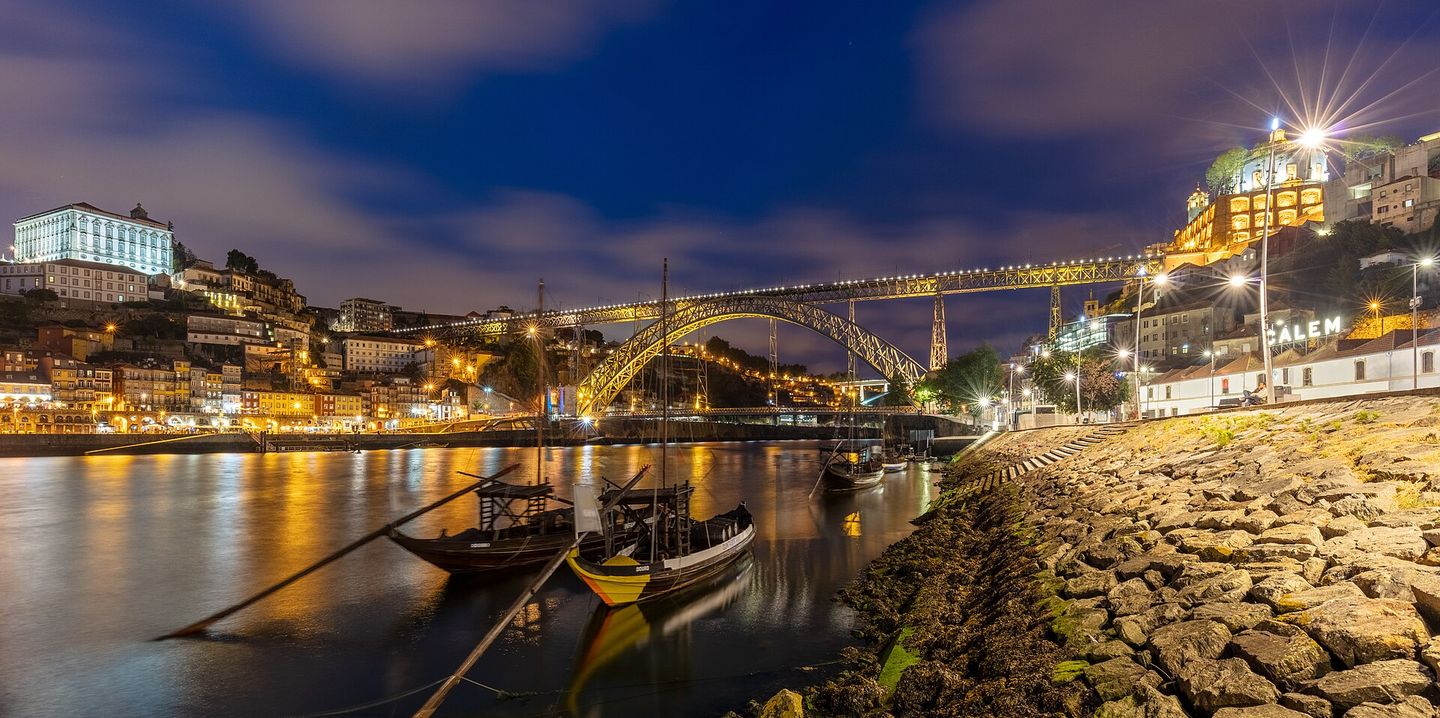
Lisbon gets the postcards, but Porto gets the loyalty. This is a smaller, steeper, more weathered city, built on a granite gorge above the Douro River, and it has never much bothered presenting itself for visitors. The laundry still hangs between balconies in the old quarter. The port houses across the water are working cellars, not theme parks, even when they sell a tasting at the end of the tour. People who come for a long weekend tend to leave planning how to come back for longer.
What Porto offers instead of a single headline monument is texture — tiled façades gone soft with age, a river gorge that forces every view into a composition, and a food and wine culture built around a drink most visitors only vaguely understand before they arrive. This isn't a checklist of the ten things you must see before you die. It's the neighbourhood logic, the timing, and the few practical details that make the difference between a flying visit to the Instagram spots and a trip where the city actually opens up.
Give it three or four days and Porto rewards patience the way few European cities this size do: a port lodge tour in the morning, a long lunch of something involving cod, an afternoon wander through tile-fronted streets that lead nowhere in particular, and sunset from one of the bridges with a glass of something fortified. Rush it into a single day trip from Lisbon, which plenty of people do, and you will see the landmarks and miss almost everything that makes them worth seeing.
The caseWhy Porto earns the detour
Porto's selling point isn't any individual sight — it's the accumulation. A UNESCO-listed historic centre tumbling down a granite hillside to a working river, a 2,000-year wine trade still conducted a few hundred metres from where it started, and a scale small enough that all of it connects on foot, if you don't mind stairs. The city has none of Lisbon's sprawl and little of its gloss. What it has instead is unselfconsciousness: a market that still sells to locals as much as tourists, shopfronts with hand-painted signage nobody has bothered to modernise, and a drinking culture built around standing at a tasca counter rather than posing for a photo.
The river is the organising fact of the whole city. Everything of consequence sits on or near the Douro gorge, and the two banks have genuinely different characters — Porto proper, dense and vertical and residential, against Vila Nova de Gaia, lower and quieter and entirely given over to the port wine trade. Crossing between them, by bridge, cable car or ferry, is less a logistical chore than one of the best things to do in the city, and you'll likely do it more than once a day without planning to.
The calendarWhen to go
Late spring and early autumn are the sweet spots, and most seasoned visitors who've tried both lean toward September and October over May and June — the light turns gold, the Atlantic humidity breaks, and the summer cruise-ship crowds have mostly gone home, while temperatures stay comfortable enough for long days on foot and cycling along the Douro. June is pleasant too, and carries the bonus of São João, Porto's raucous midsummer street festival on the night of June 23rd, when the whole city stays up hitting each other with plastic hammers and eating grilled sardines — genuinely worth timing a trip around if you enjoy civic chaos.
July and August bring the heat, the cruise groups, and the highest hotel prices of the year, with little upside to compensate. Winter is a legitimate option for anyone who prioritises empty streets and cheap rooms over guaranteed sunshine: expect rain, grey river light that the city's blue-and-white tile was practically designed for, and a noticeably calmer version of the same sights. Whatever the season, the city is hillier and more exposed to wind and rain than its scale suggests, so pack for weather more than the calendar date implies.
LogisticsGetting around
Porto is compact but aggressively vertical — the historic centre drops more than 100 metres from the upper town to the riverfront in places, and the charm of a cobbled lane evaporates fast once you're climbing it with luggage. Pack shoes that can handle stairs and camber, not just distance. The Metro do Porto light-rail network covers the practical connections well: Line E runs from Francisco Sá Carneiro Airport into the centre in around 35–40 minutes for a few euros, far cheaper than a taxi, and the central stations at Trindade, Aliados and São Bento put you within walking distance of almost everything on this page.
Within the historic core, walk. It's the only way to actually see Porto, and distances are shorter than the hills make them feel. To cross to Vila Nova de Gaia, the upper deck of the Dom Luís I Bridge carries pedestrians and the Metro with wide river views but real height and exposure to wind; the lower deck carries cars and a narrower pedestrian path at river level, which is the better choice for anyone uneasy with the drop. A small funicular, the Funicular dos Guindais, hauls you up the steepest stretch between the riverfront and the upper town for the price of a Metro ticket, and the Teleférico de Gaia cable car gives sweeping views over the port lodges on the Gaia side. Buy a rechargeable Andante card for the Metro and buses rather than paying per ride.
The tableHow Porto actually eats and drinks
Start with the obvious: port wine is not a dessert-cart afterthought here, it's the regional economy. Everything aged and blended in Vila Nova de Gaia's lodges began as grapes grown far upriver in the Douro Valley, shipped down to Gaia's cooler, river-moderated climate to mature — a system that predates the word 'brand' by a couple of centuries. A proper cellar tour (Taylor's, Graham's and Cálem are the reliably good, English-friendly options, though there are dozens more) explains tawny versus vintage versus ruby far better than any bottle label, and ends, correctly, in a tasting. Treat it as an afternoon activity, not a ten-minute stop.
On the food side, Porto earns its self-deprecating nickname tripeiros — 'tripe eaters' — from a dish that is exactly what it sounds like and is taken completely seriously by locals; order tripas à moda do Porto if you're curious and unsqueamish. Francesinha is the more approachable regional specialty tourists actually seek out: a towering, genuinely heavy sandwich of cured meats under melted cheese and a beer-and-tomato sauce, invented here in the mid-20th century and now a point of civic pride. Bacalhau, salt cod prepared a reputed hundreds of different ways across Portugal, shows up everywhere, and Matosinhos, a short Metro ride from the centre, is the place to eat grilled fresh fish at simple, no-frills seafood houses with views of the Atlantic rather than the river.
Eat where you are rather than chasing lists. A tasca — a small, family-run tavern with a short, unfussy menu — will usually beat a restaurant optimised for tour groups. Lunch is good value across the board; dinner runs a little later than further north in Europe but earlier than Spain.
The mapNeighbourhoods to know
Ribeira, the UNESCO-listed riverfront quarter, is Porto's most photographed and most crowded district — a tangle of narrow medieval lanes stacked with tall, tile-faced houses running down to a promenade thick with restaurant terraces. It's touristy by local standards and still genuinely beautiful, especially early morning or after the dinner rush when the crowds thin. The Baixa, just uphill, is the formal downtown: Avenida dos Aliados' grand boulevard, the azulejo-lined São Bento station, and the shopping streets around Rua de Santa Catarina and the restored Mercado do Bolhão.
Across the river, Vila Nova de Gaia is lower, quieter and entirely organised around the port trade — rows of lodges with their names painted in giant letters on the rooftops, best appreciated from the Ribeira side at golden hour. Cedofeita and Boavista, inland and uphill from the tourist core, are where contemporary Porto actually lives: independent shops, a livelier bar scene, and landmark modern architecture including Rem Koolhaas's Casa da Música. Foz do Douro, out at the mouth of the river, trades granite lanes for Atlantic boardwalk, seafood restaurants and a cooler, breezier register — a different city almost, and a good half-day escape from the old town's density.
Field intelligencePractical intelligence
Porto runs noticeably cheaper than Lisbon for comparable quality, in both hotels and restaurants, which makes it an easy base for a longer Portuguese trip. Tipping isn't obligatory — service is generally included — but rounding up or leaving five to ten percent for good table service is appreciated and increasingly normal in tourist-facing restaurants. Tap water is safe to drink throughout the city.
Book ahead for Livraria Lello and any of the more popular port lodge tours in summer; both sell out same-day slots regularly, and Lello in particular runs a paid timed-ticket system specifically to manage the queues (the ticket price is redeemable against a book purchase). The cobbled streets are uneven and can be slick when wet, which is often — budget extra time for getting anywhere on foot after rain. Porto is a genuinely safe city by European standards, though the usual pickpocket caution applies in Ribeira's dinner-hour crowds and on the funicular. Most museums and the cathedral offer free or discounted entry on certain days or hours; check current listings rather than assuming, since these shift from year to year.
What to see & do
-
Livraria Lello
A neo-Gothic bookshop with a carved wooden ceiling, a stained-glass skylight and a curling red staircase so photogenic it now requires a timed ticket just to get through the door.
Tip:Buy the entry ticket online in advance — it's redeemable against a book purchase inside, and walk-up queues can run over an hour in summer.
-
Clérigos Tower
A 76-metre Baroque bell tower with roughly 240 narrow spiral steps to a 360-degree platform over Porto's terracotta rooftops, the river gorge and, on a clear day, the Atlantic beyond.
Tip:Go close to opening or near sunset — the staircase is single-file and genuinely cramped at midday in high season.
-
São Bento Station
A working train station whose entrance hall is lined with roughly 20,000 hand-painted azulejo tiles depicting Portuguese history and royal processions — arguably the most beautiful transport building in Europe, and free to walk into.
Tip:It's a functioning station, not a museum — visit between trains rather than during rush hour, when platforms get crowded and photos get difficult.
-
Dom Luís I Bridge & the Ribeira riverfront
Gustave Eiffel's workshop engineered this double-deck iron bridge in the 1880s, and crossing its upper deck on foot remains the single best orientation exercise in the city, with the stacked, tile-faced houses of Ribeira below and the port lodges of Gaia dead ahead.
Tip:Walk across at golden hour for the view, then come back down to the Ribeira promenade for dinner as the lodge signs across the water light up.
-
A port wine lodge tour in Vila Nova de Gaia
Dozens of historic cellars — Taylor's, Graham's, Cálem and Sandeman among the best known — offer tours through barrel-lined ageing rooms followed by a guided tasting, explaining a 300-year-old trade most visitors arrive knowing almost nothing about.
Tip:Book the tour with the tasting included rather than visiting the shop alone, and allow a full afternoon — the good tours run 45 minutes to an hour before the pouring even starts.
-
Sé do Porto (Porto Cathedral)
A fortress-like Romanesque cathedral on the high point of the old town, with a Gothic cloister lined in 18th-century azulejo tiles and sweeping views over the rooftops toward the river.
Tip:The cloister ticket is small money and the better half of the visit — don't skip it for the free nave alone.
-
Palácio da Bolsa
Porto's 19th-century former stock exchange, built by the city's merchant association, hides the Salão Árabe behind its sober neoclassical façade — an opulent, Alhambra-inspired ballroom covered floor to ceiling in gilded Moorish-revival plasterwork.
Tip:Entry is by guided tour only, run on a fixed schedule — check tour times on arrival and plan the rest of your morning around the next available slot.
-
Mercado do Bolhão
A restored early-20th-century market hall back in full operation after a long renovation, selling produce, fish, flowers and flowers-to-cheese snack counters under a handsome iron-and-glass roof in the heart of the Baixa.
Tip:Go for an early lunch at one of the upstairs counter stalls rather than a full sit-down restaurant — it's cheaper, faster and arguably better.
On the groundWhere things are
Map data © OpenStreetMap contributors.
Where to stayBase yourself well
Ribeira
Best for first-timers who want to walk to everythingThe UNESCO riverfront quarter — tall tiled houses, tangled medieval lanes and the best views of the bridge and Gaia from your own window. Central, beautiful, and the busiest and noisiest part of town after dark.
A converted townhouse apartment above the Ribeira steps
Look for a listing a few streets back from the main praça — you keep the river views and lose most of the evening restaurant noise.
€€A small design hotel near the Cais da Ribeira
Riverfront rooms here command a real premium for the view — ask specifically, since not every room in these buildings faces the water.
€€€Baixa & Bolhão
Best for a central base without the steepest hillsThe formal downtown around Avenida dos Aliados, São Bento station and the restored Mercado do Bolhão — grander, flatter and a little calmer than Ribeira, with excellent Metro connections.
A grand hotel on or just off Avenida dos Aliados
The boulevard itself is pure early-20th-century civic ambition, and several of its former bank buildings are now handsome hotels.
€€€A boutique guesthouse near Bolhão market
Close enough to walk to both São Bento and Clérigos, and a genuinely good base for food, with the market itself a few steps away.
€€Vila Nova de Gaia
Best for wine lovers and anyone who wants a calmer night's sleepAcross the river from the old town, lower-rise and quieter, and entirely built around the port wine trade — several lodges now run small boutique hotels of their own, with the best bridge and Ribeira views in the city.
A riverside hotel attached to a historic port lodge
Several of the big port houses operate their own small hotels on site — ask about the view before booking, as not all rooms face the water.
€€€Cedofeita & Boavista
Best for repeat visitors and anyone prioritising nightlife over proximity to monumentsInland and uphill from the postcard core, with a livelier independent shopping and bar scene and landmark modern architecture, including Casa da Música — the Porto that locals actually use day to day.
A modern apartment hotel near Casa da Música
Trades a short Metro or taxi ride into Ribeira for noticeably lower rates and a genuinely local neighbourhood.
€€Foz do Douro
Best for longer stays and sea viewsOut at the river mouth, where the Douro meets the Atlantic — boardwalks, seafood terraces and sea air rather than granite lanes. Further from the historic centre, best for anyone who wants a quieter, beach-adjacent base.
A boutique hotel near the Foz boardwalk
Budget 20–25 minutes by tram or bus into the historic centre; the trade-off is sunset over the Atlantic instead of over rooftops.
€€Affiliate notePostcardRoute is reader-supported. Some links to Booking.com (stays, flights, car hire, tickets and tours, airport transfers) are affiliate links, tracked through CJ Affiliate: if you book through them we may earn a small commission at no extra cost to you. We only recommend places we would send a friend.
Book the restEverything else for the trip
Stay sorted? These open Booking.com for the other legs of the journey.
-
Tours & tickets
Things to do in Porto
Skip-the-line tickets, tours and day trips.
Browse activities -
Wheels
Car hire in Porto
Compare pick-up points and rental companies.
Compare cars -
Air
Flights
Search fares, then come back for the neighbourhood advice.
Search flights -
Ground
Airport transfers
Book a taxi or private transfer before you land.
Book a transfer
Affiliate noteThese four links are affiliate links too: if you book through them we may earn a small commission at no extra cost to you.
Beyond the cityWorthwhile day trips
- Guimarães
Widely called the birthplace of Portugal, with a hilltop castle and a well-preserved medieval centre — manageable in half a day and reached by a direct hour-long train, often paired with Braga into one full day.
- Braga
Portugal's historic religious capital, thick with Baroque churches including the country's oldest cathedral, and home to the Bom Jesus do Monte sanctuary and its famous zigzagging stairway up the hillside.
- Douro Valley
The terraced vineyard valley that supplies every lodge in Gaia, roughly two hours upriver — best experienced on a tour combining a river cruise, a vineyard lunch and a tasting at the source rather than attempted solo in a single rushed day.
Before you goCommon questions
- How many days do you need in Porto?
- Three full days covers the historic centre, a proper port lodge tour across the river, and one day trip at an unhurried pace. Two days works if you're disciplined and skip the day trip. A single day, which plenty of visitors do as a side trip from Lisbon, shows you the landmarks but skips the city's actual rhythm.
- What is the best area to stay in Porto for first-time visitors?
- Ribeira or the Baixa, both in the historic centre and within walking distance of São Bento, Clérigos and the river. Ribeira puts you right on the water and in the thick of the evening crowds; the Baixa is a few minutes uphill, a little calmer, and flatter underfoot.
- Is Porto cheaper than Lisbon?
- Generally yes, for comparable quality in both hotels and restaurants, which is one reason seasoned Portugal travellers often prefer basing a longer trip here. It isn't dramatically cheaper, but the difference is noticeable enough to matter on hotel rates especially.
- Do you need to book port wine lodge tours in advance?
- Not strictly, but it's worth doing in peak season (June to September), when the better-known houses like Taylor's and Graham's can sell out same-day slots by midday. Booking ahead also lets you pick a tour time that leaves room for the rest of your afternoon.
- How do you get from Porto airport into the city?
- Metro Line E runs directly from Francisco Sá Carneiro Airport into the city centre in roughly 35–40 minutes for a few euros — by far the cheapest and most reliable option, and faster than a taxi at most times of day given city traffic.
- What is the best time of year to visit Porto?
- Late spring (May–June) and especially early autumn (September–October) offer the best balance of mild weather and manageable crowds, with early autumn edging it on quieter streets and golden light. Midsummer brings heat, cruise-ship crowds and the city's biggest festival, São João, on 23 June.
- Is Porto walkable, or do you need to drive?
- It's entirely walkable and far better explored on foot than by car — but it's also steep, with real elevation changes between the upper town and the riverfront. Comfortable shoes matter more here than in almost any other European city this size; a car adds parking headaches without saving meaningful time.