
Italy · Campania
Naples refuses to perform for you
Loud, layered, and three thousand years deep. The city that invented pizza has never once tried to be charming on purpose — and that's exactly why it works.
Chaotic, operatic, and utterly unconcerned with being tidy for you · 40.85° N · 14.27° E
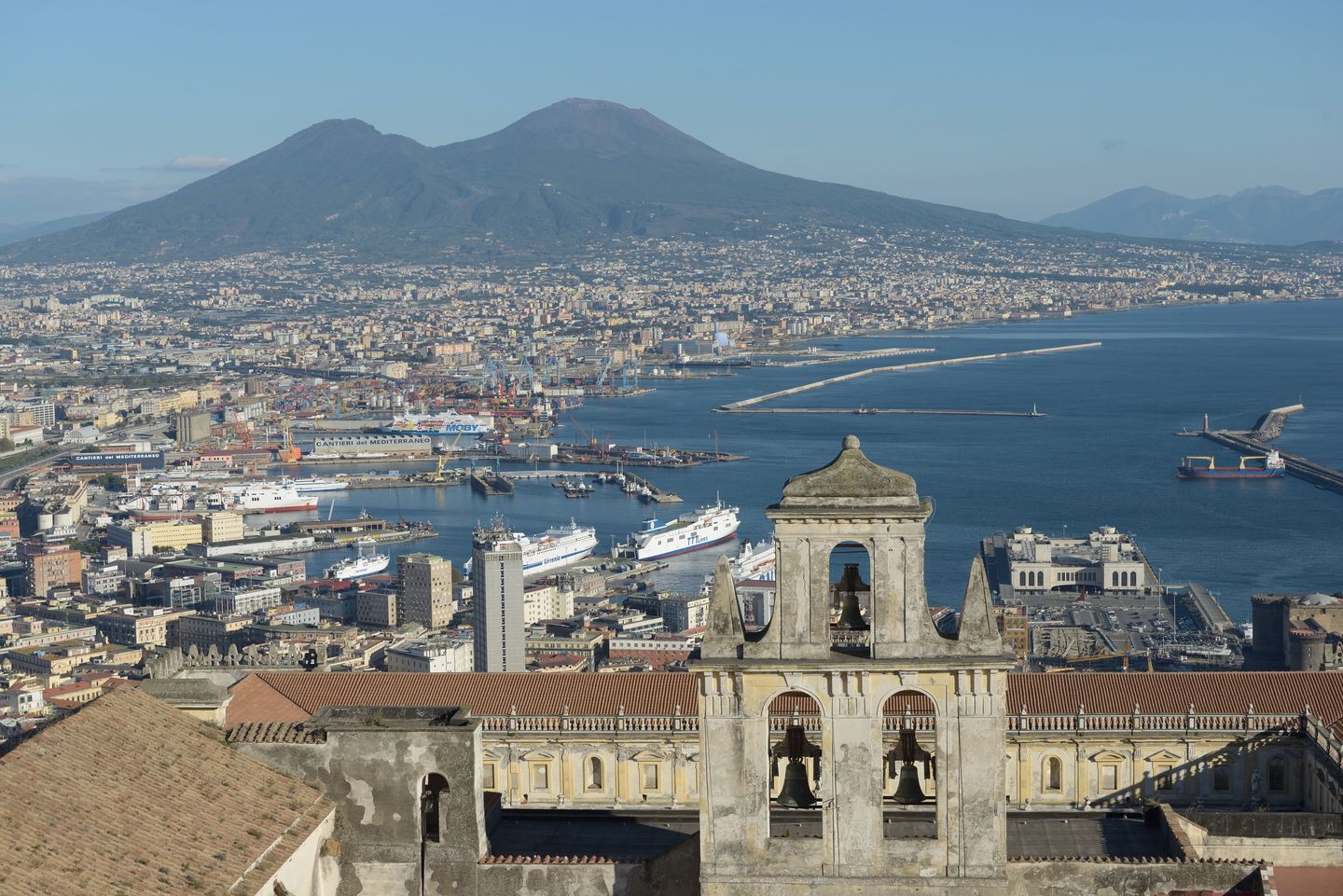
Naples does not ease visitors in. You step out of the station or off the ferry and the city is immediately, completely itself: scooters threading through pedestrians who are threading through traffic that has its own private logic, laundry strung between balconies three storeys up, a espresso bar doing more business at nine in the morning than most cities manage all day, and underneath all of it, somewhere between two and three thousand years of continuous settlement layered so densely that a church basement can open onto a Roman road. It is the oldest continuously inhabited urban area in Western Europe outside Rome, and unlike Rome, it has never organised itself for your convenience.
This unsettles some visitors and delights others, and the split is almost entirely about expectation. People arrive braced for the Italy of postcards — ordered piazzas, restored facades, a gentle hum — and Naples gives them something rowdier and far more alive: a southern Italian port city that has absorbed Greeks, Romans, Normans, Spanish viceroys and Bourbon kings without smoothing any of them into a theme. The grime is real. So is the Caravaggio in the church around the corner from it, and the pizza that genuinely does taste different here, and the sense that you are watching a functioning, unselfconscious city rather than a city performing itself for tourists.
What follows treats Naples as it deserves to be treated — not as a slightly dicey detour before Pompeii and Capri, but as one of Europe's most historically dense and most underrated cities in its own right. Where to actually stay, when to come, how to move through streets that were never meant to accommodate a car, and why the food here sets a bar most of the rest of the country is still chasing.
The caseWhy Naples earns the detour
The honest pitch for Naples is that it is the most historically layered city in Italy that most visitors never properly see. The Centro Storico sits directly on top of the Greek city of Neapolis, founded around 600 BC, and its main streets still follow the original Greek grid — Spaccanapoli, the street that splits the old town in two, is the same decumanus the Greeks laid out, now lined with Baroque churches, bars, and a Veiled Christ sculpture so technically improbable that guides still fail to fully explain how it was carved from a single block of marble. Underneath the street, Napoli Sotterranea runs for kilometres through Greek-era aqueducts and Roman theatre ruins, and the whole thing was the Allied-raid air shelter as recently as the 1940s.
Then there is the food, which is not a side attraction here but close to the entire point. Naples invented pizza as the world eats it, and the difference between a true Neapolitan pizza — UNESCO-recognised as an intangible cultural practice, made by pizzaiuoli trained for years in a specific dough technique — and the pizza you have had elsewhere is genuinely dramatic, not a matter of local pride talking up a mediocre product. Add a bay with Vesuvius looming on one side and the islands of Capri and Procida visible on the other, Pompeii and Herculaneum forty minutes away by train, and a National Archaeological Museum holding most of what was actually found at those sites, and you have a city that out-points Rome on density of things worth seeing per square kilometre, with a fraction of the crowds and, until recently, almost none of the polish.
The calendarWhen to go
April, May, September and October are the reliable window — warm enough for the islands and the coast, cool enough that walking the old town at midday doesn't feel like a mistake, and ahead of or behind the worst of the summer crush on Capri and the Amalfi Coast ferries. Spring adds wisteria over the Vomero's garden walls and a city coming back to life after winter; autumn brings the grape harvest to the hills above the bay and noticeably calmer queues at Pompeii.
July and August are genuinely hard going. Heat in the historic centre's narrow, sun-trapped lanes climbs into the high thirties with no coastal breeze reaching the inland streets, and much of the city — including a startling number of family-run trattorias — simply closes for some or all of August as owners decamp to the coast themselves, a tradition locals call the ferragosto exodus. Winter is underrated if you don't mind grey skies: December brings the extraordinary nativity-scene craftsmanship of Via San Gregorio Armeno in full production, museums empty out, and a plate of ragù napoletano tastes exactly as good at twelve degrees as it does at twenty-five.
LogisticsGetting around
Naples rewards walking in the old town and public transport everywhere else, and it punishes anyone who rents a car for the city centre itself — the historic streets were laid out for pedestrians and the occasional cart, traffic here follows rules that are more suggestion than law, and parking is a genuine ordeal. Buy a single unified ticket (TIC, the Campania regional pass) that covers the metro, funiculars, buses and the Circumvesuviana suburban railway, and you have covered almost everything you need.
The Circumvesuviana line is the one piece of infrastructure every visitor eventually uses: it runs from Napoli Garibaldi station out to Herculaneum, Pompeii, and Sorrento, is cheap, is crowded, and has a well-earned reputation for pickpockets on the busiest routes, so keep bags zipped and in front of you rather than slung over one shoulder. Inside the city, Naples' own Metro Line 1 is worth riding for its own sake — several stations are genuine contemporary art installations, Toledo station in particular, with a mosaic-tiled descent meant to evoke the sea. The funiculars up to the Vomero hill save a genuinely brutal climb and count as public transport rather than a tourist gimmick; locals use them daily.
The tableHow Neapolitans actually eat
Start with the obvious and take it seriously: pizza here is not a snack food, it is a specific craft tradition with its own vocabulary, and the two names that get repeated to the point of cliché — Da Michele and Sorbillo — earn the queues, but so do a dozen less-famous places that don't make the top-ten lists, so don't treat either as the only correct answer. True Neapolitan pizza is softer, wetter in the centre, and blistered at the crust from a wood-fired oven running near 900°F for under ninety seconds; it is meant to be folded and eaten by hand, not cut into neat triangles.
Pizza is a fraction of the story. Fried food is its own category — a cuoppo, a paper cone of fried seafood, arancini and potato croquettes, sold from street windows for a couple of euros, is the correct lunch on the move. Sfogliatella, a shell-shaped pastry with ricotta and candied fruit filling, and babà, a rum-soaked sponge cake, are the pastry-counter obligations, best eaten standing at the counter the way locals do rather than seated with a surcharge. Coffee is its own ritual: espresso is drunk fast, standing, and the Neapolitan custom of caffè sospeso — paying for a stranger's coffee in advance as an anonymous act of generosity — is a genuine, ongoing tradition worth knowing about even if you only encounter it as a line item on a receipt. Dinner runs properly late, rarely starting before eight, and a plate of spaghetti alle vongole or a slow-cooked ragù napoletano on a Sunday is treated with the same seriousness as the pizza.
The mapNeighbourhoods to know
The Centro Storico is the historic core and the obvious first stop — Spaccanapoli and the parallel Via dei Tribunali running through it, dense with Baroque churches, the Cappella Sansevero, and student energy from the nearby university. It is also the most intense version of Naples: loud, crowded, and not for anyone who wants a quiet first night in the city.
The Quartieri Spagnoli, the Spanish Quarter climbing the hill just west of Via Toledo, is the grittier, more photographed-for-Instagram version of old Naples — steep lanes, laundry overhead, street art, and a reputation for pickpocketing that is outdated in the well-trodden lower streets but still worth basic caution higher up after dark. Chiaia, down by the seafront, is the elegant counterpoint: boutique shopping, aperitivo bars, and some of the city's best-kept 19th-century architecture, a few minutes' walk from the chaos of the old town but a different register entirely. The Vomero, up the hill via funicular, is where middle-class Neapolitans actually live — quieter, leafier, with the best panoramic views from the Certosa di San Martino and genuinely excellent, unpretentious local restaurants with none of the centre's crowds. Santa Lucia and the Lungomare, the curving seafront promenade past Castel dell'Ovo, give you the postcard view of Vesuvius across the bay and a proper evening passeggiata.
Field intelligencePractical intelligence
Naples' reputation for pickpocketing and scooter-based bag snatching is not pure myth, but it is also wildly overstated relative to the actual experience most visitors have. Keep bags across your body rather than on one shoulder, don't leave a phone on a café table facing the street, and be alert — not paranoid — in the Circumvesuviana carriages and the most touristed stretches of the Spanish Quarter. The overwhelming majority of the city, including after dark in Chiaia and the main old-town streets, is simply a dense, loud, ordinary Italian city going about its evening.
Buy the Campania Artecard if you plan to hit several museums and sites, including Pompeii — it bundles transport and entry and pays for itself quickly. Learn the greeting basics; a few words of Italian go further here than in more internationally fluent northern cities. Many churches, including ones holding significant art, close for a long midday period and reopen only in late afternoon, so plan accordingly rather than arriving at one at 1pm and finding it shut. And budget more time than you think you need for the old town — the density of things worth stopping for, from a single fresco to a frying window with a queue, means a planned ten-minute walk routinely becomes an hour.
What to see & do
-
Spaccanapoli & the Centro Storico
The dead-straight street that splits the old town in two, laid out by the Greeks over two thousand years ago and still the spine of the historic centre — Baroque churches, hole-in-the-wall pizzerias and street life packed along a few hundred metres.
-
Cappella Sansevero
A small private chapel holding the Veiled Christ, a marble sculpture so fine the carved shroud appears to drape and cling over the body beneath it — one of the most technically astonishing single artworks in Italy, and routinely overlooked by rushed itineraries.
Tip:Book a timed slot online in advance; the chapel is tiny and sells out its entry windows most days.
-
Napoli Sotterranea
Guided tours descend forty metres through Greek-era aqueduct tunnels and Roman theatre remains beneath the old town, the same tunnels used as bomb shelters during the Second World War.
Tip:Wear a layer — the tunnels stay close to constant cool temperatures year-round, a sharp contrast to a hot Neapolitan street.
-
Museo Archeologico Nazionale (MANN)
The single best reason to see Pompeii and Herculaneum artifacts in one place rather than scattered across both sites — mosaics, bronzes and the Farnese marbles pulled directly from the Vesuvius excavations, housed in a former royal palace.
-
Certosa e Museo di San Martino
A former Carthusian monastery on the Vomero hill with one of the best panoramic views in the city, a cloister garden, and an extensive collection of Neapolitan presepi — nativity scenes elevated here to genuine folk art.
Tip:Time it for late afternoon; the terrace view over the bay and Vesuvius is best in the hour before sunset.
-
Castel dell'Ovo & the Lungomare
A fortified islet connected to the seafront by a causeway, the oldest standing structure in Naples, with the curving Lungomare promenade running along the bay past it — free to walk the ramparts, and the classic spot for a bay-and-Vesuvius photograph.
-
Catacombe di San Gennaro
Early Christian catacombs beneath the Sanità district, among the oldest and largest in southern Italy, with faded frescoes and burial niches dating back to the 2nd century — a quieter, less-visited counterpart to the old town's churches above ground.
-
Via San Gregorio Armeno
A narrow lane entirely given over to nativity-scene workshops, where artisans build presepi figures year-round — not just a Christmas-season novelty, since the craft is a genuine, continuous local trade with its own guild history.
Tip:Go on a weekday morning before the tour groups funnel through; the workshops are more willing to talk and demonstrate technique when it's quiet.
-
Quartieri Spagnoli
The steep, narrow grid of lanes climbing west from Via Toledo, strung with laundry and street art, and the most photographed version of unpolished old Naples — best absorbed by wandering rather than ticking off a specific sight.
Tip:Daylight hours are straightforwardly fine throughout; keep to the busier lower lanes after dark if you're wandering alone.
-
Toledo metro station
A contemporary art installation disguised as a functioning subway stop — a deep mosaic-tiled descent in shifting blues meant to evoke sinking beneath the sea, regularly named among the most beautiful metro stations in Europe.
Tip:It costs a single metro fare to ride down and back up — one of the cheapest genuine attractions in the city.
On the groundWhere things are
Map data © OpenStreetMap contributors.
Where to stayBase yourself well
Centro Storico
Best for first-timers who want everything on footRight inside the old town's density — walkable to nearly every headline sight, loudest at night, and the most immersive but least restful base.
A restored palazzo guesthouse near Spaccanapoli
Look for upper-floor rooms away from the street; ground-level noise runs late in the old town.
€€A small B&B near Via dei Tribunali
Central enough for every church and museum on this list, with easier access than deeper into the Spanish Quarter.
€Chiaia
Best for a quieter, more polished baseElegant, seafront-adjacent, and noticeably calmer than the old town — boutique shopping, aperitivo bars, and a short walk to both the Lungomare and the historic centre.
A boutique hotel on a Chiaia side street
Trades a few minutes' extra walk to the old town for noticeably better sleep and a more residential feel.
€€€Vomero
Best for longer stays and a local-feeling baseThe hilltop neighbourhood where middle-class Neapolitans actually live — quiet, leafy, with the best views in the city and a funicular ride to everything below.
An apartment near Piazza Vanvitelli
The Vomero's own high street, with far better everyday restaurants than the tourist-geared options downtown.
€€Santa Lucia & the Lungomare
Best for the view, and easy evening strollsSeafront grandeur near Castel dell'Ovo, with bay and Vesuvius views on the doorstep and a straightforward walk or bus into the centre.
A hotel overlooking the bay near Castel dell'Ovo
Ask specifically for a bay-facing room; the price difference over a street-facing one is usually worth it here.
€€€Affiliate notePostcardRoute is reader-supported. Some links to Booking.com (stays, flights, car hire, tickets and tours, airport transfers) are affiliate links, tracked through CJ Affiliate: if you book through them we may earn a small commission at no extra cost to you. We only recommend places we would send a friend.
Book the restEverything else for the trip
Stay sorted? These open Booking.com for the other legs of the journey.
-
Tours & tickets
Things to do in Naples
Skip-the-line tickets, tours and day trips.
Browse activities -
Wheels
Car hire in Naples
Compare pick-up points and rental companies.
Compare cars -
Air
Flights
Search fares, then come back for the neighbourhood advice.
Search flights -
Ground
Airport transfers
Book a taxi or private transfer before you land.
Book a transfer
Affiliate noteThese four links are affiliate links too: if you book through them we may earn a small commission at no extra cost to you.
Beyond the cityWorthwhile day trips
- Pompeii
The single best-preserved Roman city anywhere, a forty-minute Circumvesuviana ride from Naples — frescoes, bakeries, and the plaster casts of residents caught in the eruption of 79 AD. Go early and budget a full half-day minimum.
- Herculaneum & Vesuvius
Smaller and far less crowded than Pompeii, with better-preserved upper storeys and carbonised wood and furniture thanks to a different, hotter burial process — pair it with a hike up Vesuvius itself on the same day via a connecting bus from the station.
- Capri
A roughly 50-minute ferry from the port, and worth the inevitable crowds for the Faraglioni rock stacks and the Blue Grotto — go on an early boat and head straight for Anacapri's quieter half of the island if the main town feels overwhelmed.
- Procida
The smaller, far less touristed island across the bay, all pastel-coloured fishing houses stacked above the Marina Corricella harbour — the Naples day trip to take if Capri's crowds sound exhausting rather than appealing.
Before you goCommon questions
- How many days do you need in Naples?
- Two full days covers the old town, the archaeological museum and a first proper meal at a pace that doesn't feel rushed. Add a third and fourth day for Pompeii and either Vesuvius or an island, which is really the minimum if you want to treat the bay's day trips properly rather than racing through one.
- Is Naples safe to visit?
- Yes, with ordinary city caution. Naples' reputation for crime is older and more exaggerated than the current reality — petty theft and pickpocketing on crowded trains and in the busiest tourist lanes is the real risk, not violent crime, and it is easily managed by keeping bags zipped and in front of you and staying alert on the Circumvesuviana.
- Where is the best pizza in Naples?
- Da Michele and Sorbillo are the famous names and both are genuinely good, but they are far from the only good options — true Neapolitan pizza, made to the UNESCO-recognised dough technique, is widely available across the old town, and a shorter queue a few streets over is frequently just as good.
- Can I day-trip to Pompeii and Capri from Naples without a car?
- Yes, easily, and it's the recommended approach. The Circumvesuviana train reaches Pompeii and Herculaneum directly, and ferries to Capri and Procida run regularly from the port a short walk or taxi from the historic centre. A car in central Naples is a liability, not an asset.
- What is the best time of year to visit Naples?
- April through June and September into October — warm enough for the islands and the coast, without the brutal inland heat of July and August, when much of the city also closes for the traditional ferragosto holiday exodus.
- Is Naples worth visiting on its own, or just a base for day trips?
- On its own, decisively. Naples has more historically significant sights inside the city than most of its own day-trip destinations — the archaeological museum, the catacombs, the Veiled Christ, Napoli Sotterranea — and treating it purely as a logistics hub for Pompeii and Capri means missing most of what makes it worth the trip.