
Scotland · Lothian
Edinburgh, built on its own ruins
A medieval Old Town stacked on a dead volcano, a Georgian New Town laid out like a geometry lesson, and a skyline that still looks faintly implausible from street level.
A city built on a volcano, and it shows · 55.95° N · 3.19° W
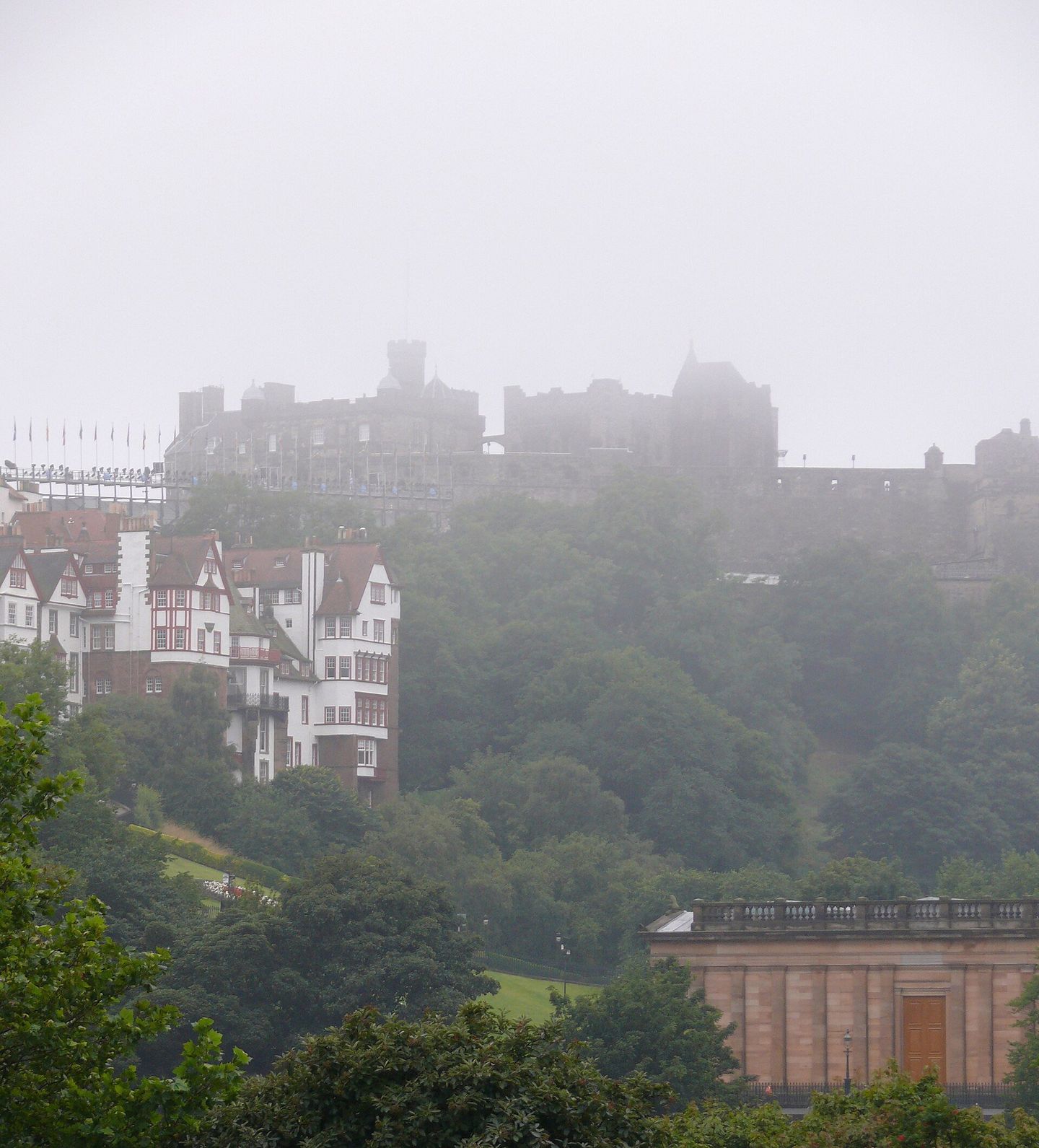
Edinburgh has the unfair advantage of sitting on genuinely dramatic geology, and it has never once let that advantage go to waste. The Castle occupies an extinct volcanic plug that erupted roughly 350 million years ago; Arthur's Seat, the hill that bookends the other end of the Old Town, is the eroded remnant of the same volcanic system. Humans have been building defensively on top of both for the better part of two thousand years, which is why a city of barely half a million people has a skyline that photographs like a much larger, much older capital.
What makes Edinburgh unusual among European capitals is how legible its history is from the street. Walk the Royal Mile and you are tracing the actual medieval spine of the city, tenements stacked eleven storeys high because the only way to expand was upward. Cross North Bridge into the New Town and the entire register changes: wide Georgian streets, crescents and squares laid out in the 1760s as a deliberate, planned rebuke to the overcrowded, fire-prone Old Town across the valley. Few cities let you walk between two entirely different centuries of urban planning in under fifteen minutes.
This isn't a checklist of the Castle, the Mile and a whisky tasting, though you'll do all three and they'll earn their reputation. What follows is the rest of it — which neighbourhood actually suits how you want to spend your evenings, when to come and when to actively avoid (the August answer is more complicated than you'd think), how the hills change the calculus of getting around, and the unglamorous practical details that make the difference between a good week here and a merely photographed one.
The caseWhy Edinburgh earns the postcard
Most European capitals hide their history behind museum walls. Edinburgh wears it on the skyline. The Castle Rock, the Mile's close-packed tenements, the ravine of Princes Street Gardens where a loch used to sit before the New Town's planners drained it for sanitation and views — none of this is reconstructed or staged. It is simply what remained once the city stopped needing to defend itself and started needing to look respectable instead.
The other thing Edinburgh does better than almost anywhere its size is concentrate serious cultural weight into a genuinely walkable footprint. The National Museum of Scotland, the National Gallery, a UNESCO World Heritage Old and New Town sitting side by side, and — for one month a year — the largest arts festival on the planet, all inside a city you can cross on foot in under an hour. It rewards slow walking more than almost any capital of comparable size, mostly because the hills force you to stop, and the views from wherever you stop are rarely worth rushing past.
The calendarWhen to go
Late spring, through May and June, is the best-kept secret on this list: long daylight (sunset gone 10pm by midsummer), gardens in full bloom, and a city that hasn't yet filled up for August. September is close behind — the Fringe crowds have cleared out, the light turns gold on the sandstone, and the hills above the city are at their best for walking before the weather turns properly wet.
August is Edinburgh's defining month and its most divisive. The Fringe, the International Festival, the Tattoo and the Book Festival all run roughly in parallel, turning the city into the largest concentration of live performance on earth — several thousand shows a day, strangers in costume on every corner, and a genuine, electric buzz that is worth experiencing once. It also means doubled accommodation prices, booked-out restaurants, and a Royal Mile you will need patience to simply walk down. Come for it deliberately, with tickets and a hotel booked months out, or avoid it entirely; a half-hearted August visit gets you the crowding without the payoff. Winter has its own case: December brings the Christmas markets and Hogmanay, one of the world's great New Year's Eve street parties, though you'll trade long evenings and daylight that can fail to clear 4pm.
LogisticsGetting around
Edinburgh is compact but not flat, and that distinction matters more here than in almost any other European capital. The Old and New Towns sit a short walk apart, but the valley between them, the climb up to the Castle, and the cobbled closes running off the Mile all add real vertical effort that a map alone won't show you. Budget more time than the walking distances suggest, and bring shoes that can handle wet cobblestones, because it rains here often enough that 'occasional shower' undersells the local weather.
The tram runs a single useful line from the airport into the New Town and on to Leith, efficient for that specific journey and largely irrelevant otherwise. Lothian Buses cover the rest of the city well and accept contactless payment with a daily fare cap, so there's no need to plan routes in advance. For the Old Town, New Town, Arthur's Seat and the Water of Leith, walking is simply faster than waiting for a bus that has to navigate the same one-way medieval street plan you're trying to avoid on foot. Taxis and ride-hailing apps are reliable but unnecessary for anything inside the centre; save them for late returns from Leith or the airport run with luggage.
The tableHow Edinburgh actually eats
Scottish food culture has shed its old reputation faster than most visitors expect, and Edinburgh is where that shift is most visible. Leith, the old port district, has become the city's serious food neighbourhood — Michelin-starred kitchens sit a few doors down from the fishmongers that used to supply the harbour, and the whole area rewards an evening spent simply picking a street and seeing what's open. The New Town and Stockbridge cover the more traditional end: solid gastropubs, seafood specialists working with day-boat catches from the Firth of Forth, and bakeries that take a Scottish breakfast seriously enough to make the full fry-up or a proper porridge worth ordering even if you think you know what both of those are.
Don't skip the unglamorous staples. A genuinely good fish and chip shop is a civic institution here, and the better ones use haddock rather than cod as the default. Haggis, neeps and tatties deserves a serious try at a kitchen that respects it rather than a tourist-trap version on the Mile — it is a proper, well-seasoned dish, not a dare. Whisky bars are everywhere and most offer flights that let you taste across regions (Speyside, Islay, Highland) without committing to a full bottle's worth of a style you might not love. And the city's café culture is real and worth using — Edinburgh invented the modern detective novel in its coffee houses for a reason; a slow morning with a flat white and a window seat is as Edinburgh as the Castle.
The mapNeighbourhoods to know
The Old Town is the postcard: the Royal Mile running from the Castle down to Holyrood Palace, flanked by closes — narrow medieval alleys, many barely a shoulder-width wide — that hide courtyards, pubs and the entrances to underground vaults most visitors never find. It's dramatic, it's crowded by midday, and it's genuinely worth staying in if you don't mind noise and stairs.
The New Town, directly across the valley, is the planned 18th-century counterpoint: wide Georgian streets, leafy garden squares, and a calmer, more residential register that still puts you a ten-minute walk from everything in the Old Town. Stockbridge, just northwest of the New Town, adds a villagey, boutique-and-brunch feel along the Water of Leith walkway. Leith, the old port a tram ride or a flat thirty-minute walk north, has reinvented itself as the city's best food and drink neighbourhood, with a working-harbour character the centre lost generations ago. Southside and Marchmont, south of the Old Town near the university, are quieter, more residential, and popular with longer-staying visitors who want real streets rather than tourist density.
Field intelligencePractical intelligence
Bring layers regardless of season. Edinburgh's weather changes within the same afternoon often enough that locals treat a four-season wardrobe as a daily, not seasonal, decision — a warm jacket, a proper waterproof, and shoes that can handle both cobblestones and rain are non-negotiable, even in July. Wind off the Firth of Forth makes the Castle esplanade and Arthur's Seat noticeably colder than street level in the New Town.
If you're visiting in August, book the Castle, major Fringe shows and your hotel as far ahead as you can manage; same-week bookings for anything popular will mostly fail. Scottish banknotes, issued by three different Scottish banks, are legal tender but occasionally refused by cashiers outside Scotland — not a problem here, but worth knowing if you're carrying cash onward to England. Tipping around 10 percent is customary in restaurants with table service but not expected at bars or for takeaway. And the Castle, Holyrood Palace and the National Museum all offer free or discounted entry with the Historic Scotland or National Trust for Scotland membership schemes if you're visiting more than two or three paid sites — worth the maths if Edinburgh is one stop on a longer Scottish trip.
What to see & do
-
Edinburgh Castle
A working fortress for most of the last thousand years, perched on its volcanic rock above the city. The Honours of Scotland, the Stone of Destiny and the one o'clock gun firing daily are the headline draws inside.
Tip:Book a timed-entry ticket online for the first slot of the day; the esplanade queue by mid-morning in summer can run well over an hour.
-
The Royal Mile
The medieval spine connecting the Castle to Holyrood Palace, lined with eleven-storey tenements, hidden closes and the kind of souvenir-shop density that thins out considerably the moment you duck off the main drag.
Tip:Detour into Mary King's Close or any unmarked close off the main street — most of the Mile's real atmosphere is one step sideways from the crowds.
-
Arthur's Seat
The extinct volcano forming the dramatic backdrop to Holyrood Park, and the best 360-degree panorama of the city, the Firth of Forth and the surrounding hills — a proper hike, not a stroll, but doable in under two hours round trip.
Tip:Start from Dunsapie Loch on the park's eastern side rather than the main Holyrood entrance; it shaves significant time off the climb to the summit.
-
National Museum of Scotland
A sweeping, free-to-enter survey of Scottish history, science and natural world exhibits inside a dramatically renovated Victorian building, anchored by a soaring, light-filled entrance hall.
Tip:Head straight for the roof terrace on the top floor — a genuinely underused viewpoint over the Old Town that most visitors miss entirely.
-
Holyrood Palace
The monarch's official Scottish residence, sitting at the foot of the Royal Mile opposite the dramatic modern Scottish Parliament building, with state apartments and the ruined abbey next door tied to Mary, Queen of Scots.
Tip:Combine it with the adjoining abbey ruins, included on the same ticket, and allow at least ninety minutes for both.
-
Calton Hill
A short, easy climb crowned with an unfinished Parthenon-style monument and Nelson's Monument, delivering a panoramic view of the Castle, the Old Town and the New Town together in one frame.
Tip:Come for sunset — it's the single best vantage point to see both halves of the city lit at once, and the climb takes under fifteen minutes.
-
Dean Village & the Water of Leith
A hidden former milling village tucked into a river gorge minutes from the New Town, with crooked stone buildings and a walkway that follows the water all the way to Stockbridge and on to Leith.
Tip:Walk the riverside path from Dean Village to Stockbridge rather than the road route — it's quieter, shaded, and the better introduction to the gorge.
-
The Real Mary King's Close
A warren of underground 17th-century streets sealed beneath later development, preserved almost exactly as they were abandoned, explored on a guided tour that leans into the city's plague-era history.
Tip:Book ahead; tour group sizes are capped and popular evening slots sell out days in advance in summer.
-
Scotch Whisky Experience
A barrel-ride introduction to how whisky is actually made and the regional differences between Scotland's distilling areas, ending in a guided tasting and the world's largest Scotch whisky collection on public display.
Tip:Spring for the tasting tier that includes more than one dram if you want a genuine comparison across regions rather than a single sample.
On the groundWhere things are
Map data © OpenStreetMap contributors.
Where to stayBase yourself well
Old Town
Best for first-timers who want everything on footThe postcard version of Edinburgh — Royal Mile closes, tenement stairwells, and the Castle looming over everything. Loud, atmospheric, and the most central base by a wide margin.
A converted tenement hotel just off the Mile
Look for a property on one of the closes rather than the main thoroughfare — same five-minute walk to everything, noticeably quieter at night.
€€€A boutique guesthouse near the Grassmarket
The Grassmarket end of the Old Town puts you close to the Castle and the pubs without the densest tourist crush of the upper Mile.
€€New Town
Best for a quieter, classic baseGeorgian elegance, wide streets and garden squares across the valley from the Old Town — a calmer, more residential base that's still a flat ten-minute walk from the Castle.
A grand Georgian townhouse hotel near Charlotte Square
The New Town's most elegant corner, with the Castle visible down the length of George Street.
€€€€A mid-range hotel near St Andrew Square
Right by the tram and bus hub, so it works well if you're arriving from the airport with luggage.
€€€Stockbridge
Best for longer stays and a residential feelA villagey, boutique neighbourhood along the Water of Leith, ten to fifteen minutes' walk from the New Town — brunch spots, independent shops, and a notably calmer pace.
A boutique B&B on a Stockbridge side street
Trade a few minutes of extra walking into the centre for a genuinely local neighbourhood feel.
€€Leith
Best for food-focused visitors and repeat visitorsThe old port, reinvented as the city's best food and drink district, with a working-harbour character and noticeably better restaurant-to-tourist ratio than the centre.
A modern harbourside hotel in Leith
A short tram ride from the centre, with some of the city's best kitchens within walking distance of the door.
€€Affiliate notePostcardRoute is reader-supported. Some links to Booking.com (stays, flights, car hire, tickets and tours, airport transfers) are affiliate links, tracked through CJ Affiliate: if you book through them we may earn a small commission at no extra cost to you. We only recommend places we would send a friend.
Book the restEverything else for the trip
Stay sorted? These open Booking.com for the other legs of the journey.
-
Tours & tickets
Things to do in Edinburgh
Skip-the-line tickets, tours and day trips.
Browse activities -
Wheels
Car hire in Edinburgh
Compare pick-up points and rental companies.
Compare cars -
Air
Flights
Search fares, then come back for the neighbourhood advice.
Search flights -
Ground
Airport transfers
Book a taxi or private transfer before you land.
Book a transfer
Affiliate noteThese four links are affiliate links too: if you book through them we may earn a small commission at no extra cost to you.
Beyond the cityWorthwhile day trips
- Rosslyn Chapel
A 15th-century chapel famous for its dense, enigmatic stone carving (and a certain novel's fictional claims about it) — a 45-minute bus ride south, best paired with a walk through the surrounding Roslin Glen.
- St Andrews
The home of golf and a handsome university town on the Fife coast, roughly ninety minutes away — walk the Old Course, the cathedral ruins, and the cliffside coastal path in a single day.
- The Scottish Borders & Melrose
Rolling hills, ruined abbeys and Sir Walter Scott's home at Abbotsford, about an hour south of the city — a quieter, slower-paced contrast to the capital's density.
- North Berwick & the East Lothian coast
A seaside town thirty minutes east by train, with a working harbour, a puffin-colony boat trip to Bass Rock in season, and some of the best coastal walking near the city.
Before you goCommon questions
- How many days do you need in Edinburgh?
- Three full days covers the Castle, the Royal Mile, Arthur's Seat and a proper look at both the Old and New Towns without rushing. Add a fourth day if you want to fit in a day trip or a slower pace through the museums; two days is workable but tight.
- What is the best area to stay in Edinburgh for first-timers?
- The Old Town, for sheer walkability — the Castle, the Mile and most major sights are within fifteen minutes on foot. If you'd rather trade a bit of that proximity for quiet, the New Town is the classic, calmer alternative just across the valley.
- Is Edinburgh worth visiting during the Fringe in August?
- Yes, if you commit to it properly — book accommodation and major show tickets months ahead and expect to pay a premium. It's a genuinely unique atmosphere worth experiencing once. If you'd rather see the city without the crowds and markup, come in May, June or September instead.
- Is Edinburgh an easy city to walk around?
- Mostly, but it's hillier than it looks on a map. The Old and New Towns sit a short walk apart, but climbs to the Castle, up Calton Hill, or onto Arthur's Seat all require more effort and better shoes than flat-city travel. Budget extra time, especially in wet weather.
- What is the best time of year to visit Edinburgh?
- Late May through June and September are the sweet spots — long daylight or still-mild weather, blooming gardens or golden autumn light, and crowds well short of the August peak. December has its own appeal for the Christmas markets and Hogmanay, if you don't mind short daylight hours.
- How do I get from Edinburgh Airport into the city centre?
- The tram runs directly from the airport to the city centre and on to Leith in around 35 minutes and is the simplest option with luggage. Airport buses (the Airlink service) are a faster, cheaper alternative to several central stops, and taxis take roughly 20 to 30 minutes depending on traffic.
- Is Scottish currency different from English currency?
- Scottish banknotes are issued by three Scottish banks rather than the Bank of England, but they are the same pound sterling and spend exactly the same in Edinburgh. They're occasionally refused by shops in England out of unfamiliarity, which is worth knowing if you're travelling onward, but it's a non-issue within Scotland.