
United States · Colorado
Denver, at the edge of the map
A mile-high grid of brick warehouses and gold-domed government buildings, dropped at the exact spot where the Great Plains stop being flat and start being the Rocky Mountains.
A flat grid at the foot of a wall of mountains · 39.74° N · 104.99° W
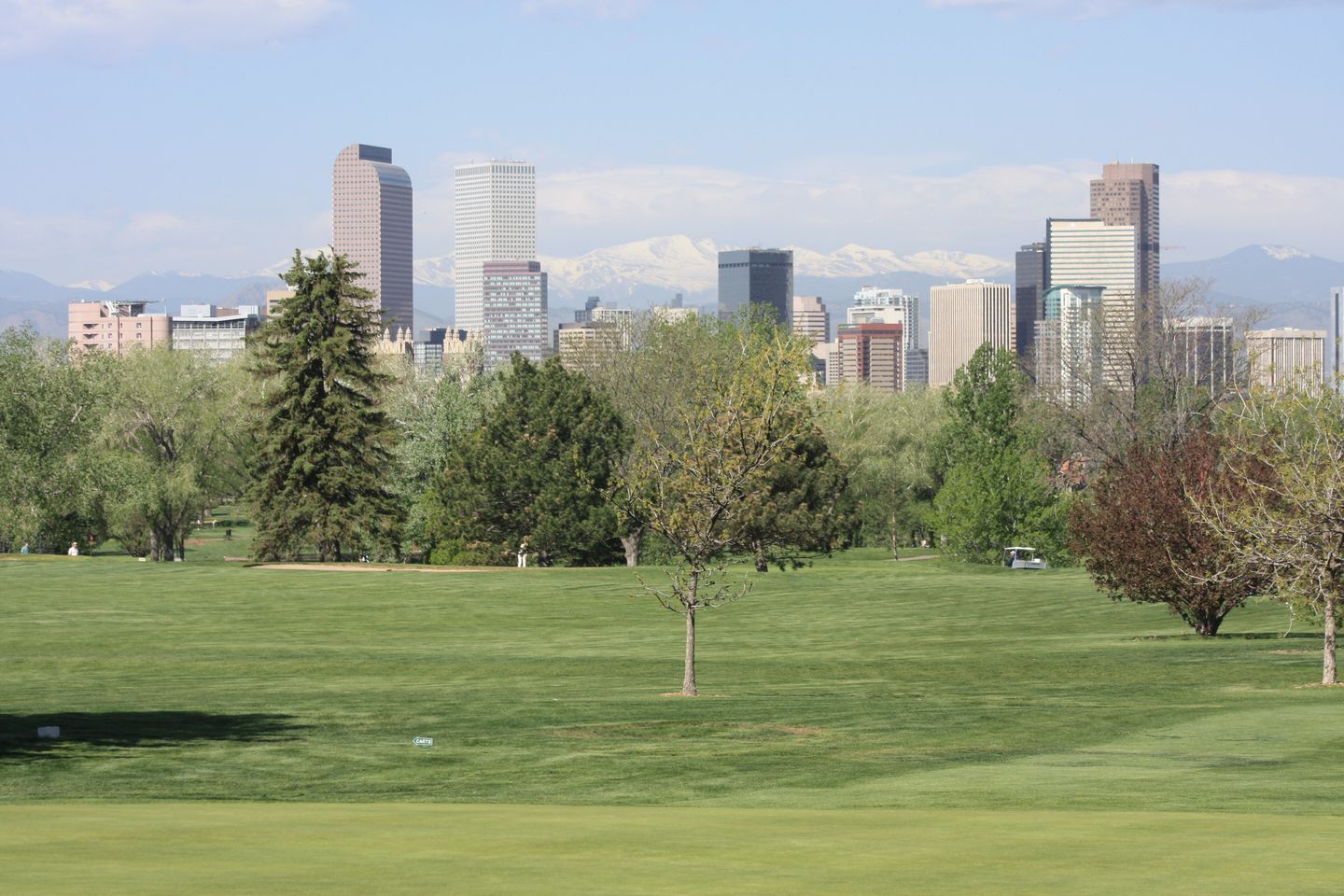
Denver's whole personality is contained in the elevation marker on the west steps of the State Capitol: exactly one mile, 5,280 feet, above sea level. The city has built an identity out of that number — the Mile High City, the Nuggets, the general sense of a place that considers itself a little closer to the sky than everywhere else — and once you've spent a day here, walking slightly out of breath up a gentle incline that shouldn't be tiring, you understand why the number matters so much. Denver is not, geographically, a mountain town. It sits on the high plains, flat as a tabletop, and the Rockies only really begin about fifteen miles further west. But the mountains dominate every westward view so completely, every single clear day, that the city has organised its entire self-image around a wall of rock it doesn't technically stand inside.
That tension — plains city with a mountain complex — explains a lot about how Denver actually works. Downtown is a dense, walkable grid of Gold Rush-era brick warehouses turned into breweries and lofts, gleaming financial towers, and a light-rail system that will get you almost anywhere without a car. But the moment a Denverite has a free Saturday, they are gone, up I-70 toward a trailhead or a ski lift, and the city empties out in a way that changes its texture completely. Visit expecting a mountain resort and you'll be disappointed by the flat, ordinary blocks of Capitol Hill. Visit expecting a plains city and you'll be caught off guard by how much of daily conversation here — gear, snowpack, the pass conditions on 70 — belongs to people who live for the peaks fifty miles away.
What follows treats Denver as its own destination rather than a mere gateway, because it has become one: a genuinely good beer-and-food city with a fast-changing skyline, neighbourhoods with real distinct character, and just enough museums and green space to fill three or four days before you ever need to point a rental car toward the mountains. The day trips are real and worth taking. But the city underneath them has earned its own chapter.
The caseWhy Denver earns a stop of its own
For a long time Denver's main job was to be the airport you flew into on the way to Aspen or Vail, and plenty of visitors still treat it that way, landing at DEN and driving straight west without a second thought. That undersells a city that has spent the last two decades reinventing itself with real conviction. The old Lower Downtown warehouse district, once genuinely derelict, is now LoDo — cobbled streets, converted brick lofts, and a ballpark that anchors one of the more walkable downtown cores in the American West. RiNo, the River North Art District, took a stretch of industrial rail yard and filled it with murals, breweries and galleries at a density that rewards a whole afternoon of aimless wandering.
The other case for Denver is simpler: it is one of the most naturally advantaged cities in the country and it knows it. Three hundred-plus days of sunshine a year, a skyline that has the Rockies as a permanent backdrop, and a civic culture built around getting outside — running the Cherry Creek Trail before work, climbing a fourteener on a long weekend, ending most days with a beer brewed within city limits. It isn't a city of monuments. It's a city that has figured out how to be genuinely pleasant to live in, and a few days spent moving at that pace is its own reward before you ever leave for the mountains.
The calendarWhen to go
Denver's climate is drier and more temperamental than its high-plains latitude suggests, and the classic local line — if you don't like the weather, wait fifteen minutes — is only a mild exaggeration. Late spring (May into early June) and early autumn (September into early October) are the sweet spots: warm, dry days, cool nights, the mountains still accessible, and none of the deep-summer thunderstorm pattern that rolls in most afternoons in July. Autumn has the extra advantage of aspen season in the high country, when the day trips west turn genuinely spectacular.
Summer (June through August) is Denver at its busiest and priciest, with near-daily afternoon thunderstorms that arrive like clockwork around 2 or 3pm and clear just as fast — plan outdoor mornings, not outdoor afternoons. Winter is underrated for the city itself: snow tends to fall hard and then melt within days thanks to Chinook winds and that relentless sunshine, so the city rarely stays buried, and hotel rates drop even as the ski resorts ninety minutes west fill up with visitors flying through DEN. Whatever season, pack layers — a fifty-degree temperature swing between morning and afternoon on the same clear day is entirely normal here.
LogisticsGetting around
Denver International Airport sits a genuinely inconvenient 25 miles from downtown — a legacy of a 1990s decision to build far out on the plains for future expansion room — but the RTD A Line commuter train runs directly from the airport terminal to Union Station downtown in about 37 minutes, cheaply and reliably, and is almost always the better call than a rideshare through I-70 traffic. Union Station itself is worth arriving through even if you don't need it functionally: a restored 1914 Beaux-Arts hall that now doubles as the city's best-looking lobby, hotel and food hall in one.
Once you're downtown, the core neighbourhoods — LoDo, the Central Business District, Capitol Hill, the edge of RiNo — are genuinely walkable, and RTD's light-rail and bus network covers the rest reasonably well, including a free downtown shuttle along the 16th Street corridor. Electric scooters are everywhere and useful for the longer hops between RiNo, Highlands and downtown. A car becomes worth renting only once the mountains enter the plan — for the city itself, plan to walk, take transit, or scoot, and save the rental for the day you drive to Boulder or Rocky Mountain National Park.
The tableHow Denver actually eats and drinks
Start with beer, because Denver has more claim to the title of America's brewing capital than almost any other city — Colorado has one of the highest breweries-per-capita counts in the country, and Denver proper concentrates a serious share of them, from RiNo's industrial taprooms to old-guard names that have been pouring since the 1980s craft-beer revival began here. A brewery crawl through RiNo or the Highlands is a completely legitimate way to spend an evening, and most tasting rooms are relaxed, food-truck-adjacent, and unpretentious about it.
The food underneath the beer draws heavily on two things: the Southwest and Colorado's own ranching and green-chile traditions, and a genuinely large and long-established immigrant community that has made Federal Boulevard's Far East Center — Vietnamese pho houses, Mexican taquerias, a real international food-hall energy — one of the best eating strips in the city, if the least photographed. Denver also takes its green chile seriously enough that smothering a burrito in it is close to a civic obligation, and the city's altitude and dry air have birthed a genuine culinary quirk: bakers and brewers alike have to adjust recipes for the thin air, which is part of why a good Denver-baked loaf or a well-carbonated local beer is a small point of local pride, not an accident.
The mapNeighbourhoods to know
LoDo (Lower Downtown) is the historic core and the natural first-timer's base — cobbled streets of converted 19th-century warehouses, Coors Field, Union Station, and the densest concentration of restaurants and bars within walking distance of everything else. It is also, on Rockies game nights, the loudest part of the city by a wide margin, worth knowing if you want an early night.
RiNo (River North Art District), just northeast across the rail tracks, is where Denver's contemporary energy actually lives: block after block of warehouse murals from the annual Crush Walls festival, dozens of breweries, and a newer wave of restaurants that skew more adventurous than downtown's. The Highlands and LoHi, across the river to the northwest, trade murals for a village-like grid of converted bungalows, some of the city's best restaurant blocks, and skyline views back toward downtown that are hard to beat at sunset. Capitol Hill, wrapping the gold-domed State Capitol, is cheaper, more residential, and a good base for anyone prioritising value and proximity to the civic museums over nightlife. Cherry Creek, southeast of downtown, is the polished, upscale alternative — boutique shopping, quieter streets, and a genuinely excellent creekside running and biking trail that connects most of these neighbourhoods to one another if you'd rather explore on two wheels than by rail.
Field intelligencePractical intelligence
The altitude is not a marketing gimmick — at 5,280 feet, most visitors from sea level notice something: faster fatigue on a walk that shouldn't be tiring, a headache on day one, alcohol hitting harder and faster than it does at home. Drink more water than feels necessary, go easy on alcohol the first evening, and use sunscreen even on cool days; UV exposure is meaningfully higher at this elevation and the dry air disguises how much it's doing to your skin.
Recreational cannabis has been legal in Colorado since 2012 and dispensaries are common, but consumption is restricted to private property — smoking or vaping in public, in a car, or on hotel balconies is illegal and enforced, and it cannot legally cross state lines even back to the airport departure lounge. Weather swings fast enough that checking the forecast each morning, not the night before, is a genuine local habit worth adopting. And if a mountain day trip is on the itinerary, build in a buffer: I-70 westbound out of the city is one of the most congestion-prone corridors in the country on weekend mornings and ski-season Fridays, and what looks like a ninety-minute drive on a map can stretch well past three hours at the wrong time.
What to see & do
-
Denver Art Museum
A serious encyclopedic collection anchored by one of the best Native American art holdings in the country, housed partly in Daniel Libeskind's angular, titanium-clad Hamilton Building — itself as much a reason to visit as anything inside it.
Tip:The Hamilton Building's sharp angles make for a disorienting first ten minutes; grab a floor map at the entrance rather than trying to wing it.
-
Red Rocks Amphitheatre
A natural sandstone bowl twenty minutes west of downtown that has hosted everyone from the Beatles to U2, ringed by 300-foot red rock monoliths that make it arguably the most dramatic concert venue in America — and worth the trip even with no show scheduled, for the hiking trails and the view alone.
Tip:Come at sunrise or sunset for the rock's colour and near-empty trails; midday visits in summer mean full parking lots and flat light.
-
Union Station
A meticulously restored 1914 Beaux-Arts train hall that now functions as downtown's living room — a hotel, a food hall, and the departure point for the airport train, all under a coffered ceiling and a giant neon sign that has become one of the city's most photographed backdrops.
Tip:The Great Hall's leather chesterfields are genuinely free to sit in — it's one of the best free people-watching spots downtown, especially at golden hour.
-
Larimer Square
The single oldest commercial block in Denver, saved from demolition in the 1960s and now a canopy-lit stretch of Victorian storefronts holding some of downtown's best restaurants and boutiques — small, but the block that convinces you LoDo has real history under the newer construction.
Tip:Come after dark; the overhead string lights are the whole point and the block reads flat in daylight.
-
RiNo Art District murals
Blocks of warehouse walls painted floor to roofline during the annual Crush Walls festival, turning a former industrial rail corridor into one of the largest open-air street art collections in the country, threaded between the district's breweries and studios.
Tip:Walk rather than drive — the best murals are down side alleys a car will skip entirely, and most breweries along the route offer flights small enough to pace an afternoon of walking.
-
Denver Botanic Gardens
A 24-acre garden a few minutes from downtown that punches well above its footprint, with a serious permanent collection, striking contemporary architecture in the conservatory, and an outdoor concert series through summer.
Tip:Visit on a weekday morning for the quietest light for photos, and check the events calendar — summer evening concerts here sell out fast.
-
Denver Museum of Nature & Science
A large, well-funded natural history museum in City Park with genuinely strong dinosaur and space exhibits, an IMAX theatre, and a planetarium — the kind of museum that works equally well as a rainy-afternoon plan or a full-day family outing.
Tip:Pair it with a walk through the rest of City Park and the adjacent Denver Zoo if the weather's good; the whole park is worth an afternoon on its own.
-
Colorado State Capitol
A gold-domed 1894 building modelled loosely on the U.S. Capitol, with a marked step on the west entrance officially recognised as exactly one mile above sea level — the literal origin of the city's whole nickname.
Tip:Free guided tours run on weekdays and include rooftop access when open, giving one of the better elevated views of the downtown skyline and the mountains beyond it.
On the groundWhere things are
Map data © OpenStreetMap contributors.
Where to stayBase yourself well
LoDo
Best for first-timers and anyone without a carThe historic warehouse core turned central nervous system of downtown — cobbled streets, the ballpark, Union Station, and the densest, most walkable concentration of restaurants and bars in the city.
A converted-warehouse hotel near Union Station
Look for a property in one of LoDo's old brick buildings — the exposed-beam rooms are part of the appeal and you're steps from the airport train.
€€€A boutique hotel a few blocks off Larimer Street
Slightly quieter than the blocks right on the ballpark, while keeping the whole LoDo restaurant scene an easy walk away.
€€RiNo
Best for brewery crawls and a creative-neighbourhood energyThe mural-and-brewery district a short ride northeast of downtown — younger, louder, and the best base for anyone prioritising the beer scene and street art over proximity to the civic sights.
A design-led hotel inside a converted RiNo warehouse
Several former industrial buildings here have been turned into stylish small hotels — expect exposed brick and a rooftop bar as standard.
€€€Cherry Creek
Best for a calmer base with strong restaurants and shoppingThe polished, upscale alternative southeast of downtown — boutique shopping, quieter tree-lined streets, and the Cherry Creek Trail running right through it for an easy car-free connection back to the centre.
A full-service hotel near the Cherry Creek Shopping Center
Trades some of LoDo's nightlife proximity for quiet streets, valet parking, and an easy trail ride into downtown.
€€€Capitol Hill
Best for value and a more local, lived-in feelA cheaper, more residential grid wrapping the gold-domed State Capitol — historic mansions turned bed-and-breakfasts, a strong LGBTQ+ nightlife scene along Colfax Avenue, and easy walking distance to the civic museums.
A restored Victorian mansion bed-and-breakfast
Capitol Hill has some of the city's best-preserved 19th-century houses, several now running as small inns with genuine period character.
€€Affiliate notePostcardRoute is reader-supported. Some links to Booking.com (stays, flights, car hire, tickets and tours, airport transfers) are affiliate links, tracked through CJ Affiliate: if you book through them we may earn a small commission at no extra cost to you. We only recommend places we would send a friend.
Book the restEverything else for the trip
Stay sorted? These open Booking.com for the other legs of the journey.
-
Tours & tickets
Things to do in Denver
Skip-the-line tickets, tours and day trips.
Browse activities -
Wheels
Car hire in Denver
Compare pick-up points and rental companies.
Compare cars -
Air
Flights
Search fares, then come back for the neighbourhood advice.
Search flights -
Ground
Airport transfers
Book a taxi or private transfer before you land.
Book a transfer
Affiliate noteThese four links are affiliate links too: if you book through them we may earn a small commission at no extra cost to you.
Beyond the cityWorthwhile day trips
- Rocky Mountain National Park
A roughly two-hour drive northwest to some of the most accessible high-alpine scenery in the country — Trail Ridge Road climbs above 12,000 feet, and even a short stop delivers tundra views most parks require a multi-day hike to reach.
- Boulder
Forty minutes northwest, a compact, hyper-outdoorsy university town at the base of the Flatirons rock formations, with the pedestrian Pearl Street Mall and some of the state's best trailheads a walk from downtown.
- Golden
A short thirty-minute hop west for the Coors Brewery's original home, the Colorado School of Mines campus, and Clear Creek's whitewater park — a compact, easy half-day that still feels like a genuine gateway to the mountains.
Before you goCommon questions
- How many days do you need in Denver?
- Two to three days covers the city itself well — a day for LoDo and the museums, a day for RiNo and the Highlands, and a half-day buffer. Most visitors then extend the trip with at least one mountain day trip, which effectively adds a fourth day to any realistic itinerary.
- Does the altitude actually affect visitors?
- Yes, noticeably for most people arriving from sea level — faster fatigue, a first-day headache, and alcohol hitting harder than usual are all common. Drink more water than feels necessary, take the first day easy, and it typically resolves within 24 to 48 hours.
- Do I need a car in Denver?
- Not for the city itself. LoDo, downtown, Capitol Hill and RiNo are walkable or connected by RTD light rail, and the A Line train covers the airport. A car becomes genuinely useful only once a mountain day trip — Rocky Mountain National Park, Boulder, Golden — enters the plan.
- What is the best area to stay in Denver for first-timers?
- LoDo. It's central, walkable, holds the highest concentration of restaurants and bars, and puts Union Station's airport train a short walk from your door. RiNo is the best alternative for anyone prioritising the brewery and mural scene over central-downtown convenience.
- Is marijuana legal to use as a visitor in Denver?
- Yes, Colorado legalised recreational cannabis in 2012 and dispensaries are common and visitor-friendly. Consumption is restricted to private property, though — public use, including on hotel balconies or in a car, is illegal, and it cannot legally travel across state lines, including back through airport security.
- What is the best time of year to visit Denver?
- Late spring (May–June) and early autumn (September–early October) offer the best balance of warm, dry weather and manageable crowds, with autumn adding spectacular aspen colour on any mountain day trip. Summer is busiest and brings near-daily afternoon thunderstorms, while winter keeps the city itself mild between snowstorms even as the ski resorts nearby fill up.
- How far is Denver International Airport from downtown?
- About 25 miles, a legacy of the airport being built far out on the plains for future expansion. The RTD A Line train runs directly from the airport to Union Station downtown in around 37 minutes and is almost always faster and cheaper than a rideshare through traffic.