
Croatia · City of Zagreb
Zagreb, the layover that earns its own trip
Most itineraries use it as a one-night bridge to the coast. Give it three, and the capital of Croatia stops feeling like a stopover and starts feeling like the actual destination.
The capital everyone skips on the way to the coast, and shouldn't · 45.81° N · 15.98° E
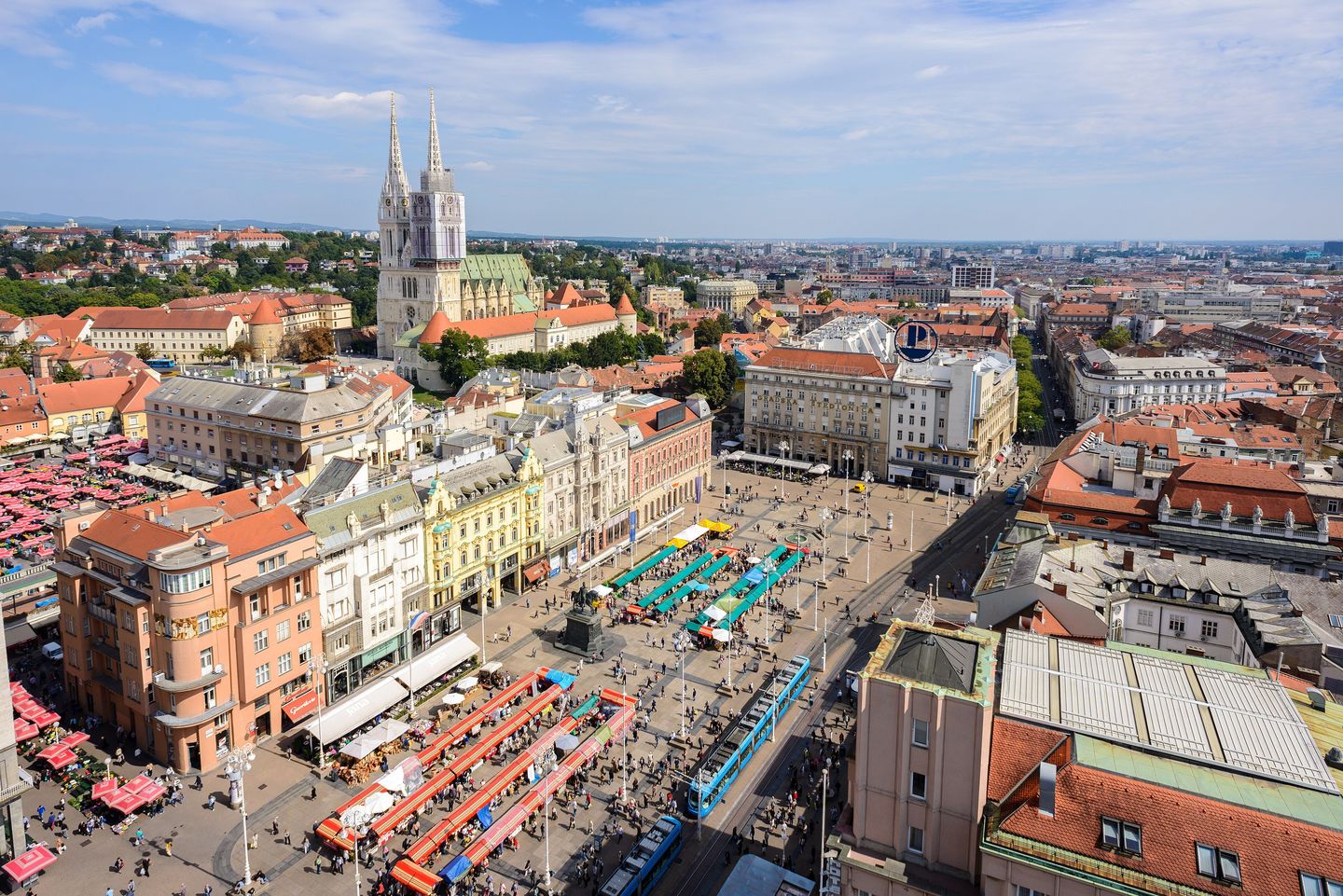
Zagreb has an image problem it doesn't deserve. For two decades, package itineraries have treated it as a connecting flight with a city attached — land, sleep one night, board a coach to Split or Dubrovnik the next morning. The result is a capital that most visitors to Croatia have technically passed through and genuinely never seen: not the Upper Town's cobbled quiet, not the market theatre of Dolac at eight in the morning, not the way the whole city empties into its parks and café terraces the second the weather turns decent.
What makes this particularly unfair is that Zagreb isn't a consolation prize for people who can't get to the Adriatic. It's a Central European capital with its own distinct character — more Vienna and Budapest in its bones than anything coastal, a city of Austro-Hungarian grandeur in the Lower Town giving way to a medieval hilltop core, stitched together by a funicular that takes about as long to ride as it does to read this sentence. It has a genuinely great Christmas market, a museum built entirely from donated breakup memorabilia, and a noon cannon blast that has been startling tourists on schedule since the 1870s.
This isn't a plea to skip the coast — go to the coast, obviously. It's an argument for not treating Zagreb as the toll you pay to get there. Give it two or three unhurried days on the front or back end of a Croatia trip and it holds up as a destination entirely on its own terms, at prices the Dalmatian coast gave up on years ago.
The caseWhy Zagreb earns more than a layover
Zagreb's center splits cleanly into two halves, and the split is the whole appeal. The Lower Town is wide boulevards, Austro-Hungarian façades and a horseshoe of parks and museums laid out with the kind of planning confidence only a 19th-century empire could afford. The Upper Town, reached by funicular or a short climb, is the medieval and Baroque original — narrow lanes, red-tiled roofs, a church roof tiled in heraldic mosaic, and views back over the city that most visitors never bother to earn.
What Zagreb has that the coast doesn't is a genuinely urban, lived-in texture. This is a working capital of three-quarters of a million people, not a resort town performing hospitality for six months a year. The café culture is real and unhurried, the market is where locals actually shop rather than a tourist photo op, and the city's cultural calendar — design festivals, the Christmas market, a serious live-music scene — runs on its own logic rather than a tourism board's. It rewards the kind of slow wandering that the coast's heat and crowds often don't leave room for.
The calendarWhen to go
Late spring (May into June) and early autumn (September into early October) are the sweet spots, for the same reason they work almost everywhere in Central Europe: comfortable walking weather, long daylight, and a city that hasn't yet hit peak coastal-transit traffic. Zagreb's continental climate means real seasons — count on genuinely cold, occasionally snowy winters and hot, sometimes sticky summers, unlike the moderating sea breeze down on the Adriatic.
December deserves a special mention. Zagreb's Advent market, spread across Ban Jelačić Square, Zrinjevac and King Tomislav Square, has repeatedly topped European readers' polls for best Christmas market on the continent, and it earns the reputation — mulled wine, ice rinks, and a city centre strung with lights for most of the month. Shoulder-season spring and autumn remain the most practical choice for sightseeing, but if you can handle the cold, early-to-mid December pairs the city at its most atmospheric with some of the lowest flight prices of the year.
LogisticsGetting around
Zagreb is flat and genuinely walkable at its centre — the Lower Town's green horseshoe of parks and the Upper Town above it fit comfortably inside a couple of kilometres, and most first-time visitors will do the bulk of their sightseeing on foot without strain. The one unmissable bit of transit theatre is the Zagreb funicular, the Zagrebačka uspinjača, which has linked the two towns since the 1890s and covers its short, steep route in under a minute — one of the shortest public funiculars anywhere, and worth riding once purely for the novelty even though the adjacent staircase takes barely longer.
Beyond the historic core, ZET's trams are the backbone of the city, cheap, frequent, and covering routes most visitors will only need for reaching the main train station, Mirogoj cemetery, or Maksimir Park. Buy tickets from a kiosk or the ZET app before boarding rather than from the driver. Zagreb's airport sits a genuine distance from the centre — budget thirty to forty minutes by the airport shuttle bus to the main bus station, since there is no direct train link as of 2026.
The tableHow Zagreb actually eats
Croatian coastal cuisine gets all the international attention — grilled fish, olive oil, Dalmatian ham — but Zagreb sits in a different culinary zone entirely, closer in spirit to Vienna and Budapest than to Split. The dish to know is štrukli, a baked or boiled pastry filled with fresh cottage cheese that shows up savoury at lunch and sweet at dessert, and that locals will argue about ferociously depending on which grandmother's recipe they grew up with. Sarma, grah (bean stew), and heavier Zagorje-region cooking round out the inland, continental character of the table.
The city's café culture deserves real time, not a quick espresso between sights — Zagreb takes its coffee culture seriously enough that lingering over one cup for an hour while people-watching on a terrace is the default use of a café table, not an imposition on the staff. Dolac Market, just above Ban Jelačić Square, is where to see the produce side of the city's food culture in full colour under its red umbrellas, best visited in the morning before the stalls thin out. For an evening out, Tkalčićeva Street — a pedestrianised strip built over a long-buried stream — is Zagreb's bar-and-café corridor, lively most nights of the week and especially dense on weekends.
The mapNeighbourhoods to know
Gornji Grad, the Upper Town, is the historic and political core — Croatia's parliament and presidential offices sit here alongside St. Mark's Church and its famous tiled roof, and the atmosphere is hushed, cobbled, and noticeably calmer than the streets below once you're past the main lookout points. Donji Grad, the Lower Town, is Austro-Hungarian Zagreb proper: the grid of boulevards and parks around Ban Jelačić Square, home to most of the city's museums, shopping streets, and grand 19th-century architecture.
Tkalčićeva, technically part of the old town but with its own identity, is the nightlife spine — cafés by day, bars and terraces by night, running from near Dolac Market down toward the centre. Further out, Novi Zagreb (New Zagreb), across the Sava river, is largely residential socialist-era architecture with a few notable exceptions, including the Museum of Contemporary Art — worth a deliberate trip for the museum rather than a wander, since the neighbourhood itself holds little for a short visit.
Field intelligencePractical intelligence
Croatia uses the euro, having adopted it in 2023, which removed one layer of friction for visitors coming from elsewhere in the eurozone. English is widely spoken in the city centre, especially among younger Zagrebians and anyone working in hospitality, though a few words of Croatian — hvala for thank you, molim for please — are always appreciated and rarely expected.
The noon cannon fired daily from Lotrščak Tower in the Upper Town is a genuine city institution dating back to the 1870s, loud enough to startle anyone standing underneath who didn't know it was coming — time a visit to the tower around it deliberately, or avoid being directly beneath it if loud noises bother you. Tap water is safe and good to drink throughout the city. And don't discount a rainy day here the way you might on the coast: Zagreb's museums, cafés and covered market halls make it one of the more pleasant Central European capitals to spend a wet afternoon in.
What to see & do
-
Zagreb Cathedral
The twin neo-Gothic spires of the Cathedral of the Assumption of Mary are Zagreb's defining silhouette, visible from much of the city and anchoring Kaptol, the cathedral quarter just above Dolac Market.
Tip:The façade is still partially under restoration scaffolding in places following past earthquake damage — check which spire is clear before planning a photo from Ban Jelačić Square.
-
St. Mark's Church
A small parish church in the Upper Town famous for one thing: a steeply pitched roof tiled in a mosaic of the medieval coats of arms of Croatia, Dalmatia, Slavonia and the city of Zagreb itself.
Tip:The square outside is often busier than the church's modest interior merits — come early morning for photos without a crowd of tour groups in front of the roof.
-
Dolac Market
Zagreb's main open-air market, a split-level plaza of red umbrellas just above Ban Jelačić Square, selling produce, cheese, flowers and flea-market goods since the 1930s — still the city's real food hub, not a staged tourist version of one.
Tip:Go before 10am on a weekday for the full working-market atmosphere; by early afternoon the best stalls have sold out and packed up.
-
Lotrščak Tower
A 13th-century defensive tower on the edge of the Upper Town, famous today for the Grič cannon fired from its top at noon every single day, a tradition running since the 1870s — and for the panoramic views from its upper platform.
Tip:Climb a few minutes before noon and stand clear of the cannon itself; it is genuinely loud at close range.
-
Museum of Broken Relationships
A small, quietly devastating museum built entirely from objects donated by strangers after their relationships ended, each with a handwritten note on what it meant — one of Zagreb's most original and most imitated ideas, since copied by temporary outposts worldwide.
Tip:Budget less time than you'd expect for the physical space and more for actually reading the notes — it rewards a slow pace, not a quick walk-through.
-
Mirogoj Cemetery
An arcaded, cypress-lined cemetery a short tram ride north of the centre, designed by architect Hermann Bollé and widely considered one of the most beautiful cemeteries in Europe rather than a grim detour.
Tip:Visit late afternoon when the arcades catch the light, and treat it as a quiet park walk rather than a quick checklist stop.
-
Zagreb Funicular & Strossmayer Promenade
One of the shortest public funiculars in the world links Lower and Upper Town in under a minute, depositing riders right beside the Strossmayer Promenade, a tree-lined terrace walk with some of the best rooftop views in the city.
Tip:Ride it once for the novelty, then walk back down via the promenade stairs rather than riding both ways — the view on foot is better than the view from the car.
-
Museum of Contemporary Art Zagreb
A striking purpose-built gallery across the Sava river in Novi Zagreb, holding Croatia's major contemporary art collection in a building far more architecturally ambitious than its residential surroundings suggest.
Tip:Check for one of the rooftop or courtyard events the museum runs in warmer months — the building itself is half the reason to go.
-
Maksimir Park
The oldest public park in this part of Europe, laid out in the 1790s, with woodland paths, artificial lakes, a small zoo and enough space that it never feels crowded even on a warm weekend.
Tip:Bring a picnic and aim for a full afternoon; it's a tram ride from the centre, so it rewards treating it as a destination rather than a quick stop.
On the groundWhere things are
Map data © OpenStreetMap contributors.
Where to stayBase yourself well
Donji Grad (Lower Town, near Ban Jelačić Square)
Best for first-timers who want everything on footThe most central possible base — walking distance to the museums, the main shopping streets, Dolac Market and the funicular up to the Upper Town. Loses points for weekend noise near the square itself.
A classic hotel steps from Ban Jelačić Square
Pay a little more for a room off the square's immediate frontage to avoid tram and nightlife noise.
€€€A design-led apartment near Zrinjevac park
Zrinjevac's chestnut-lined promenade is a calmer, greener stretch of the Lower Town just a few minutes from the square.
€€Gornji Grad (Upper Town)
Best for atmosphere and a quieter baseFewer beds, but genuine medieval-quarter atmosphere and a short, steep walk (or funicular ride) above the bustle of the Lower Town. Quieter at night, with fewer dining options on your own doorstep.
A boutique guesthouse on a quiet Upper Town lane
Look for something near St. Mark's Church rather than directly on the main tourist route for genuine quiet after dark.
€€€Tkalčićeva & the old town fringe
Best for nightlife and younger travellersRight in the middle of Zagreb's café-and-bar strip, a few minutes' walk from both towers of the old town. Lively, sometimes loud on weekend nights, and good value for the location.
A modern apartment just off Tkalčićeva
Pick a courtyard-facing unit over a street-facing one if you want to actually sleep before 1am on a Friday.
€€Near the main train station
Best for transit convenience and budgetLess charming than the old town, but well connected for anyone arriving by train or continuing on to the coast, and generally better value than the historic core.
A straightforward hotel opposite the main train station
Handy if you're arriving or departing by rail, with trams into the centre taking only a few minutes.
€€Affiliate notePostcardRoute is reader-supported. Some links to Booking.com (stays, flights, car hire, tickets and tours, airport transfers) are affiliate links, tracked through CJ Affiliate: if you book through them we may earn a small commission at no extra cost to you. We only recommend places we would send a friend.
Book the restEverything else for the trip
Stay sorted? These open Booking.com for the other legs of the journey.
-
Tours & tickets
Things to do in Zagreb
Skip-the-line tickets, tours and day trips.
Browse activities -
Wheels
Car hire in Zagreb
Compare pick-up points and rental companies.
Compare cars -
Air
Flights
Search fares, then come back for the neighbourhood advice.
Search flights -
Ground
Airport transfers
Book a taxi or private transfer before you land.
Book a transfer
Affiliate noteThese four links are affiliate links too: if you book through them we may earn a small commission at no extra cost to you.
Beyond the cityWorthwhile day trips
- Samobor
A small Baroque town around half an hour away, famous across Croatia for its kremšnita cream cake and mustard, with a gentle hillside castle ruin and a genuinely low-key, uncrowded centre.
- Plitvice Lakes National Park
Croatia's most famous natural attraction — a cascading chain of turquoise lakes and waterfalls linked by wooden boardwalks. It's a long day from Zagreb (budget the better part of a day for driving and walking), but it's the single best-known day trip from the capital for a reason.
- Varaždin
An hour or so by train, this former capital of Croatia is a compact, immaculately preserved Baroque town built around a hilltop castle — quieter and far less touristed than Zagreb's own old town.
- Zagorje castles (Trakošćan & Veliki Tabor)
The hilly Zagorje region north of the city holds two of Croatia's best-preserved castles, Trakošćan with its lake and romantic 19th-century remodel, and the older medieval fortress of Veliki Tabor — best combined into one long day with a car.
Before you goCommon questions
- Is Zagreb worth visiting, or just a stopover to the coast?
- It's genuinely worth two or three days on its own terms, not just a one-night bridge to Split or Dubrovnik. The Upper and Lower Towns, the museums, the market, and the café culture add up to a full Central European city break — it just gets overlooked because so many Croatia itineraries are built around the coast.
- How many days do you need in Zagreb?
- Two full days cover the essential sights comfortably; three lets you add a day trip to Samobor, Varaždin, or the Zagorje castles without feeling rushed. A single overnight, which is how most visitors currently use the city, really only allows a quick pass through the old town.
- What is the best area to stay in Zagreb for first-timers?
- Donji Grad, the Lower Town around Ban Jelačić Square, is the most practical choice — walking distance to Dolac Market, the funicular up to the Upper Town, and most of the city's museums and shopping streets.
- Is Zagreb expensive to visit?
- Noticeably less than the Dalmatian coast in peak summer, and less than most Western European capitals generally. Accommodation, food and museum tickets remain good value, though prices in the city centre have risen since the 2023 euro adoption.
- What is the best time of year to visit Zagreb?
- Late spring (May–June) and early autumn (September–early October) offer the most comfortable weather for walking the old town. December's Advent Christmas market is a genuinely different, highly atmospheric reason to visit despite the cold.
- Do I need a car to visit Zagreb?
- No — the city centre is compact and walkable, and trams cover everything else. A car becomes useful only if you're planning day trips to places like the Zagorje castles that aren't well served by public transport.
- What is Zagreb famous for?
- Its split Upper Town/Lower Town old city, St. Mark's Church's tiled roof, the noon cannon fired from Lotrščak Tower, the Museum of Broken Relationships, and a Christmas Advent market that has repeatedly ranked among the best in Europe.