
Italy · Veneto
Venice, off the one route everyone walks
Ninety percent of visitors follow the same painted arrows between the station and San Marco. The other ninety percent of the city is three minutes off that path, and it is where Venice actually lives.
Dispatch from the city with no cars and no shortcuts · 45.44° N · 12.32° E
Plan this trip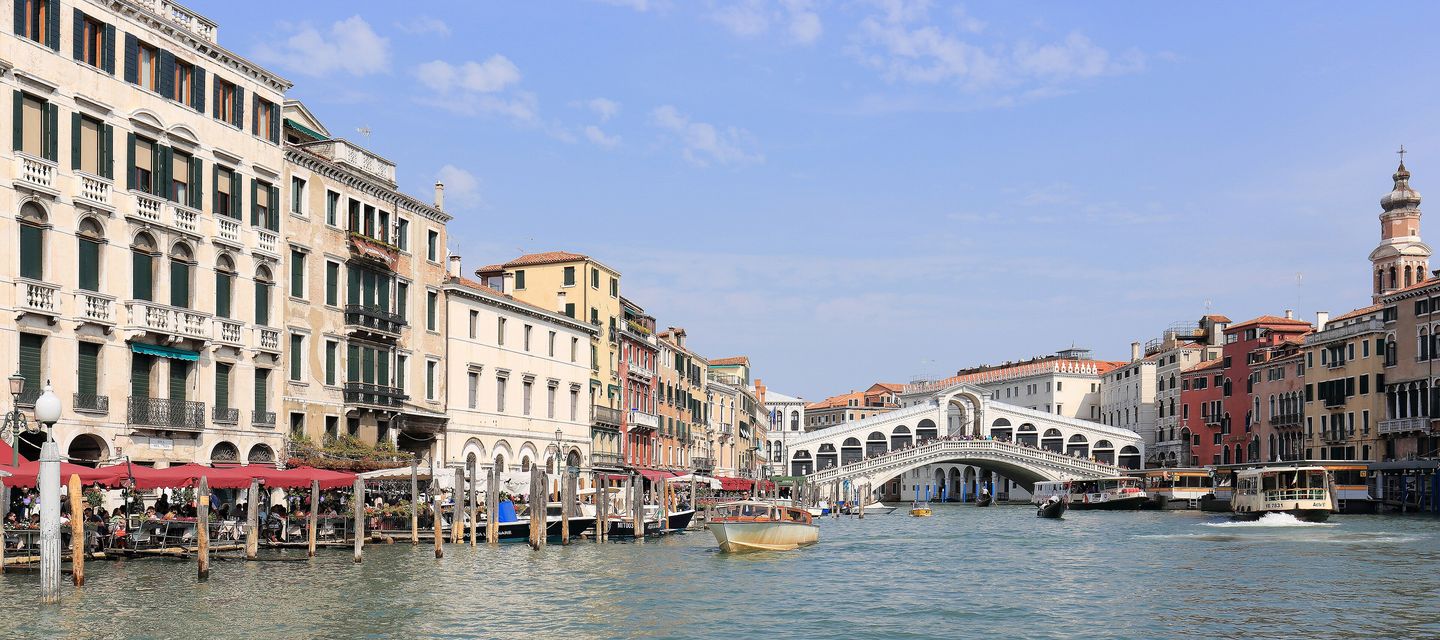
Venice has absorbed more clichés than almost any city on earth — sinking, dying, a museum pretending to be alive — and somehow none of them capture what it actually feels like to walk into a campo at eight in the morning before the day-trip ferries have docked, when the only sound is a bakery shutter going up and a single set of footsteps on stone that has been worn smooth since the Republic ran half the Mediterranean's trade. This is a city built by people solving an absurd problem — how do you build a capital on a lagoon of mudflats — with such ingenuity and wealth that six centuries later the solution is still standing, still occupied, and still stubbornly beautiful despite the weight of everyone who comes to look at it.
The tension that defines a Venice trip is the gap between the city everyone photographs and the city that's actually there. Piazza San Marco at noon in July is a genuine crowd-management problem, and most first-time visitors never get further than the few hundred metres of that route, the one connecting the train station, the Rialto, and the Piazza in a straight, overcrowded line. Step off it — into Cannaregio's quiet canals, Dorsoduro's university streets, Castello's washing lines strung between buildings — and the crowds mostly vanish, not because those neighbourhoods are secret, but because most visitors never think to look for them.
This dispatch is built around that gap. It covers where to base yourself so the city feels calm rather than besieged, when to come so the lagoon light does the work the marketing photos promise, how the vaporetto network and Venice's total absence of cars actually reshape a normal day, and where to eat once you've accepted that anywhere with a photo menu facing the canal is charging for the view, not the food.
The caseWhy Venice still earns it
The skeptical case against Venice writes itself: overtouristed, overpriced, a theme park built on a real city's bones. Spend three days there properly and the case collapses. No other city on earth was built entirely around water instead of despite it — every façade, every doorway, every warehouse was designed to be approached by boat first and on foot second, and that inversion still shapes how the place feels six hundred years later. There is no other urban experience quite like it, and photographs undersell it because they can't carry the sound: no engines, no horns, just water against stone and the particular quiet of a car-free city of 50,000 people.
The art and architecture alone justify the trip a dozen times over — Tintoretto's canvases still hanging in the buildings they were painted for, Titian in the church he chose for his own tomb, Byzantine mosaics in the Basilica that predate most of Europe's cathedrals. But the real case for Venice is atmospheric rather than checklist-able: the specific quality of light bouncing off water onto brick at 7pm, the sense of a city that has been quietly declining in population and rising in water level for a century and has decided to be gorgeous about it anyway. It rewards slowness in a way few cities do, because getting lost here is not a failure mode — the whole point of Venice's tangle of calli is that you are supposed to wander without a fixed destination and let the city surprise you.
The calendarWhen to go
Late autumn (November) and winter, storms and acqua alta risk aside, are when Venice feels most like itself — thin crowds, moody light, and locals visibly reclaiming their own campi. But the more practical sweet spots for a first visit are April to early June and late September through October: warm enough to sit outside, cool enough to walk for hours, and short of the truly overwhelming July-August crush when the lagoon humidity turns the narrow calli into a slow-moving crowd and hotel prices spike hardest.
Acqua alta — the seasonal high tide flooding that puts water into Piazza San Marco and low-lying calli — runs roughly October through January, worst around new and full moons. It's manageable (temporary raised walkways go up within the hour, and locals barely break stride) but worth knowing about if you're picking dates; check tide forecasts once you're within a couple of weeks of travel. Carnevale, in February, is spectacular and absurdly crowded in equal measure — book accommodation four to six months out if you want to see it. Whatever the season, arrive on the earliest sensible train or ferry: Venice before 9am, while the day-trip cruise and coach crowds are still arriving, is a different and much better city than Venice at 1pm.
LogisticsGetting around with no cars, no bikes, no exceptions
Venice is entirely car-free by geography, not by policy choice — there simply are no roads in the historic centre, only calli (streets), campi (squares) and canals. That means two modes of transport exist: your own feet, and the water. Walking covers almost everything; the historic centre is barely 3km end to end, and locals routinely cross it faster on foot than by boat once you learn the shortcuts. Budget for getting lost anyway — street signs are inconsistent, phone signal dips between tall buildings, and it is, genuinely, part of the experience rather than a problem to solve.
The vaporetto (water bus) is the public transport backbone for longer hops — down the Grand Canal, out to the islands, or when your legs give out. Buy a multi-day Activ card rather than single tickets if you're staying more than a couple of days; a single ride is expensive enough that three or four trips a day adds up fast. Traghetto gondola-ferries cross the Grand Canal at a handful of points for a couple of euros each, a genuinely useful shortcut most tourists never discover, standing up the whole way like a local. Water taxis exist and are fast but properly expensive — reserve them for the airport transfer if you want to arrive by water rather than bus, and treat gondola rides themselves purely as the one-time experience they are, not transport.
The tableHow to eat well in Venice
The single most useful rule: if a restaurant has laminated photos of the food, is directly on a canal near San Marco or the Rialto, or has a tout outside trying to seat you, walk on. Venetian cuisine is genuinely distinctive — built around lagoon seafood, rice, and a Republic-era trading history that folded in spices most of Italy never touched — and it deserves better than the tourist-menu version served on the main routes.
The cicchetti bar is Venice's answer to Spanish tapas and the best value meal in the city: small plates of baccalà mantecato (whipped salt cod), sarde in saor (sweet-and-sour sardines), or polpette (meatballs) eaten standing at a bar counter with a glass of local wine, moving between two or three bacari over an evening rather than sitting down at one restaurant. Cannaregio and Dorsoduro, particularly around Campo Santa Margherita, hold the highest concentration of honest ones. Seafood risotto and bigoli in salsa (thick wholewheat pasta with anchovy-onion sauce) are worth seeking out at a sit-down trattoria one neighbourhood back from any canal-front address — the rent drops fast once you're fifty metres from the water, and so do the prices.
The mapThe six sestieri, briefly
Venice divides into six sestieri (districts), and knowing their character matters more here than in most cities because you will be walking through several of them daily regardless of where you sleep. San Marco holds the headline sights and the headline prices — worth visiting, not worth basing yourself in unless budget is no object. Cannaregio, to the north, is where actual Venetians still outnumber visitors on most streets, threaded with quiet canals, the historic Jewish Ghetto, and the best cicchetti density in the city.
Dorsoduro, across the Grand Canal, mixes university-town energy (Ca' Foscari's students keep the bars affordable and lively) with serious art — the Accademia and the Peggy Guggenheim Collection both sit here — plus the closest thing Venice has to a proper waterfront promenade along the Zattere. Castello, the largest sestiere, sprawls east from San Marco into genuinely residential territory with the best washing-line-strung backstreets in the city. San Polo and Santa Croce, west of the Rialto, hold the working Rialto Market and a denser, more workaday feel. Giudecca, the island across the water from Dorsoduro, is quieter again and increasingly where Venetians who can't afford the centre actually live — a short vaporetto hop for a genuinely different pace.
Field intelligencePractical intelligence
Since 2024, day-trippers not staying overnight must register and, on peak dates, pay a small access fee (currently a few euros) booked online in advance — overnight guests are exempt but should still check current requirements before travelling, as the scheme has expanded each year. Carry cash in small denominations; some cicchetti bars and smaller shops don't take cards, and ATM fees inside the historic centre run high.
Luggage is a real logistical problem — there are no cars to carry it, bridges have steps, and dragging a wheeled suitcase over cobblestones and hump-backed bridges for half a kilometre from the nearest vaporetto stop is a genuinely common first-night ordeal. Pack lighter than you think you need to, or budget for a water-taxi/porter service directly to your door. Public toilets are scarce and often paid; use café ones considerately, ideally after buying something. And don't feed the pigeons in San Marco — it's actually banned and enforced with fines. Finally, mosquitoes are a real presence near the canals from late spring through early autumn; pack repellent, because the lagoon at dusk is glorious and the mosquitoes know it too.
Field notesWhat to see & do
-
St Mark's Basilica
A Byzantine-domed cathedral clad floor to ceiling in gold mosaic, built to declare Venice a rival to Constantinople itself — still one of the most overwhelming interiors in Europe.
On the groundBook the (free) timed-entry skip-the-line reservation online — the standing queue across the Piazza can run past an hour without it.
-
Doge's Palace
The Gothic seat of Venetian government for six centuries, connected to the old prisons by the Bridge of Sighs — the state rooms alone justify the ticket, thick with Tintoretto and Veronese.
On the groundThe Secret Itineraries tour adds access to the interrogation rooms and Casanova's actual cell — book it a few days ahead, it runs small groups only.
-
Rialto Bridge & Market
The oldest of the Grand Canal's four bridges, and still the city's commercial heart — a produce and fish market has traded at its foot since medieval times.
On the groundCome before 8am to see the fish market in full working swing before the stalls close around noon and the tour groups arrive.
-
Gallerie dell'Accademia
The definitive collection of Venetian painting from Byzantine icons through the High Renaissance, housed in a former scuola and church — Bellini, Titian, Veronese, Tintoretto, in the city that made them.
On the groundGo on a weekday morning; it's far smaller and easier to see properly than the Uffizi or the Louvre, and rarely crowded even in peak season.
-
Peggy Guggenheim Collection
A modern-art museum inside the American heiress's unfinished palazzo on the Grand Canal, with Pollock, Picasso, Ernst and Kandinsky in rooms she actually lived in.
On the groundThe waterside sculpture garden and café terrace are as much a reason to visit as the collection — budget time to sit there.
-
Ca' d'Oro
The most delicate Gothic palazzo façade on the Grand Canal, its lacy stonework once gilded (the name means 'golden house'), now housing a compact fine-art collection inside.
On the groundClimb to the loggia for one of the best free Grand Canal views in the city, at a fraction of the crowd of the Rialto.
-
Burano & Murano
Two lagoon islands, a vaporetto ride apart: Murano for six centuries of glassblowing tradition and furnace demonstrations, Burano for a village of impossibly bright, mismatched pastel houses.
On the groundDo Murano in the morning and Burano in the afternoon — the light suits Burano's colours best later in the day, and the day-trip boats hit Murano first.
-
Campo Santa Margherita
Dorsoduro's big, informal square, ringed by student bars, market stalls and cicchetti counters — the closest thing Venice has to an everyday, unstaged public space.
On the groundCome at aperitivo hour (6-8pm) when the square fills with students and locals rather than visitors, and drinks are priced accordingly.
On the groundWhere things are
Map data © OpenStreetMap contributors.
Where to stayBase yourself well
Cannaregio
Best for first-timers who want an authentic, walkable baseQuiet canals, the fewest tourists relative to residents of any central sestiere, and the best cicchetti bars in the city on your doorstep. A ten-minute walk from the station.
A canal-view guesthouse near the Jewish Ghetto
The Ghetto area is calm, historic, and puts you close to Cannaregio's bacari without the San Marco price premium.
€€A small hotel along the Strada Nova
The main pedestrian spine of Cannaregio — busy by day, but it means every essential is a short walk away.
€€Dorsoduro
Best for art lovers and a quieter, still-central baseUniversity energy, serious art museums, and the closest thing to a waterfront promenade along the Zattere. Slightly removed from the main tourist artery but an easy walk to everything.
A boutique guesthouse near the Accademia
Steps from the Accademia and Guggenheim, with easy vaporetto access across to San Marco.
€€€A converted palazzo room near the Zattere
The Zattere promenade catches the evening light beautifully and has a genuinely local café scene.
€€San Marco
Best for short stays and first-time visitors prioritising proximity over calmMaximum convenience and maximum price — every headline sight within a short walk, but also the densest crowds and the least neighbourhood feel after dark.
A grand hotel just off the Piazza
Pay for the location; the crowds thin dramatically once the day-trip boats leave in early evening.
€€€€Castello
Best for longer stays and repeat visitors wanting real neighbourhood lifeThe largest and most residential sestiere, sprawling east from San Marco into genuinely lived-in streets with laundry lines and neighbourhood bars rather than souvenir shops.
An apartment near Via Garibaldi
One of the few streets in central Venice with an actual daily market and residents outnumbering visitors.
€€Giudecca
Best for a calmer base with skyline views and lower pricesAn island apart — a short vaporetto hop from Dorsoduro, quieter again, with sweeping views back across the water to the city and some of Venice's better-value modern hotels.
A modern hotel with a Grand Canal-facing terrace
You trade a short boat commute for genuine quiet and some of the best sunset views in the city.
€€Affiliate notePostcardRoute is reader-supported. Some links to accommodation are affiliate links: if you book through them we may earn a small commission at no extra cost to you. We only recommend places we would send a friend.
Beyond the cityWorthwhile day trips
- Padua
Half an hour by train, home to Giotto's Scrovegni Chapel frescoes — book the mandatory timed entry days ahead — and one of Europe's oldest universities.
- Verona
An hour by train, with a genuine Roman arena still hosting opera, Juliet's balcony, and a walkable historic centre entirely worth a full day if you can spare one.
- The Brenta Canal villas
A string of Palladian and Baroque villas along the mainland canal between Venice and Padua, reachable by boat tour or car — Villa Pisani's hall of mirrors is the highlight.
- Lido di Venezia
The lagoon's beach barrier island, a short vaporetto ride away — Art Nouveau hotels, a proper sandy beach, and the closest thing to a seaside afternoon Venice offers.
Before you goCommon questions
- How many days do you need in Venice?
- Three full days is the sweet spot — enough to see the Basilica, the Palace, one or two major museums, cross to Murano and Burano, and still have time to just wander without a plan. Two days works for a first, focused visit; a single day only really covers the San Marco-to-Rialto corridor.
- Is Venice sinking?
- Slowly, yes, combined with rising sea levels — subsidence and acqua alta flooding are real and increasing, and the MOSE flood-barrier system (completed 2020, operational since) now closes the lagoon during the worst tides. It's a genuine long-term concern, not a myth, but the city is actively managing it rather than disappearing overnight.
- Do I need to pay to enter Venice?
- Only day-trippers not staying overnight, and only on specific peak dates — a small access contribution booked online in advance. Anyone staying overnight in registered accommodation is exempt, since the city's separate tourist tax already applies to overnight stays. Check the current rules before travelling, as they've expanded each year since 2024.
- Is Venice worth visiting given the crowds?
- Yes, if you plan around the crowds rather than through them — travel shoulder season, stay overnight rather than day-tripping, start mornings early, and spend deliberate time in Cannaregio, Dorsoduro or Castello rather than only the San Marco-Rialto route. The crowded version of Venice is real, but it's avoidable with basic timing.
- How do I get around without a car?
- On foot for almost everything — the historic centre is under 3km end to end — and by vaporetto (water bus) for longer hops or the outer islands. Buy a multi-day travel card if staying more than two days; single tickets are expensive enough that a few rides a day adds up fast.
- Is a gondola ride worth the cost?
- As a one-time experience, yes — it's a genuinely different way to see the smaller canals and palazzo facades. As transport, no; it's roughly ten times the price of a traghetto crossing or a vaporetto ride. Fix and confirm the price with the gondolier before boarding, and consider sharing one with up to five other people to split the cost.