
Canada · British Columbia
Vancouver, between the mountains and the sea
Skip the glass-tower postcard for a minute. The Vancouver worth remembering is the one you find at sea level — a seawall bend, a market stall, a rainforest that starts three stops past downtown on the SkyTrain.
Dispatch from the city where the rainforest starts at the last bus stop · 49.28° N · 123.12° W
Plan this trip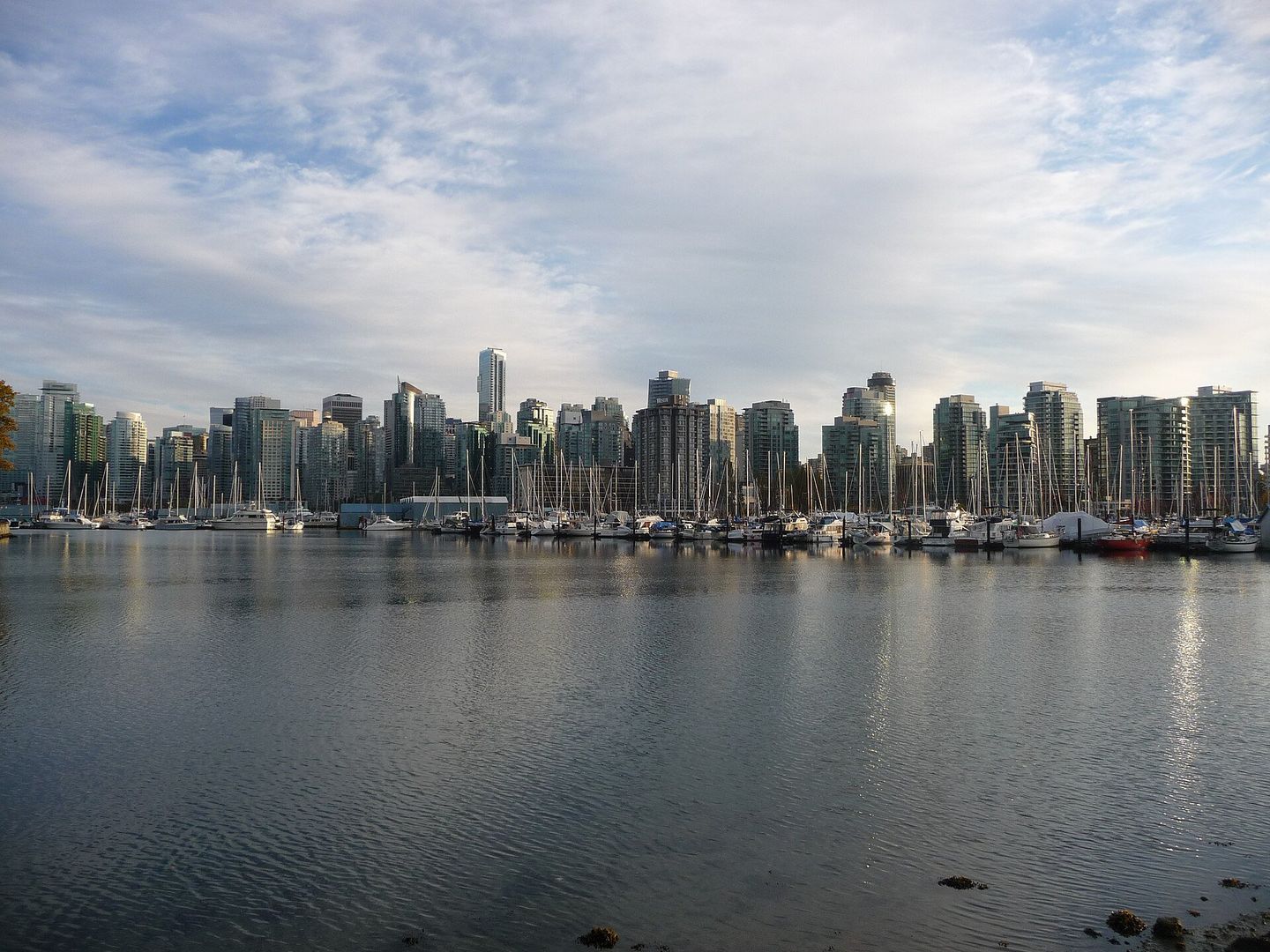
Vancouver has one of the strangest geographies of any major city in the world, and almost nothing about the place makes sense until you account for it. This is a downtown peninsula wedged between a working harbour, a tidal inlet and a thousand-acre temperate rainforest that the city had the sense never to build over, with a wall of Coast Mountains rising straight out of the water close enough that on a clear winter afternoon you can watch people ski at 4pm and be eating dim sum at sea level by 4:45. No other North American downtown backs directly onto old-growth forest. That single fact — mountains, ocean and rainforest all within view of the office towers — explains most of what Vancouverites actually do with their time, which is spend as much of it outdoors as the coastal rain allows.
It also explains what the city is not. Vancouver has comparatively little in the way of grand historical architecture or centuries of layered civic drama — this was a sawmill town called Gastown until 1886, incorporated the same year the Canadian Pacific Railway reached the coast, and burned to the ground in a fire that lasted less than an hour a few months after that. What it has instead is scenery pressed right up against daily life, an extraordinary range of food shaped by waves of immigration from across the Pacific, and a civic culture organized almost entirely around water, mountains and the outdoors rather than around monuments. Treat it like a checklist of landmarks and you will finish in a day and wonder what the fuss is. Treat it as a place to walk, eat and look at the light change on the water, and it opens up considerably.
This dispatch is written for people who want the actual city, not the cruise-ship-day version. That means the seawall properly explained rather than just Stanley Park's greatest hits, the neighbourhoods where locals actually spend their money, an honest account of the rain and why it matters for when you come, and the food scene that has quietly made this one of the best eating cities in North America without much of the world noticing yet.
The caseWhy Vancouver earns the trip
Vancouver's argument for itself is almost entirely about proximity — the sheer density of good things within a short distance of each other. Within twenty minutes of the downtown core you can be deep inside old-growth forest in Stanley Park, eating fresh spot prawns off a boat at Granville Island, or riding a gondola up a mountain that has its own ski runs and grizzly bear sanctuary. No convention-centre skyline in North America backs onto anything comparable, and the compression is genuinely disorienting the first time you register it: an ordinary Tuesday can plausibly include a rainforest walk, a harbour ferry, a dim sum lunch and a sunset from a mountain, all without renting a car.
The other case for Vancouver is the food, which has become one of the city's most legitimate claims to global relevance. Waves of immigration — Cantonese and Hong Kong Chinese from the late 19th century onward, a huge influx around the 1997 handover, Japanese, Filipino, South Asian, Vietnamese and Korean communities each with their own strongholds — mean Vancouver has some of the best Chinese food outside China, a sushi scene shaped by decades of Japanese-Canadian fishing families, and a general baseline of ingredient quality (wild salmon, Fraser Valley produce, Pacific seafood) that makes even an ordinary neighbourhood meal better than it has any right to be.
What Vancouver does not offer is drama in the European sense — no medieval core, no grand boulevards, very little that is more than a century old. Visitors expecting a compact historic city to wander for days will find Gastown's few blocks charming and then run out of that particular pleasure fast. The trade is scenery and food and outdoor access instead of history, and for a specific kind of traveller that trade is the whole point of coming.
The calendarWhen to go, and the rain question you actually need answered
Say the quiet part first: Vancouver's reputation for rain is earned, and pretending otherwise does visitors a disservice. The wet season runs roughly October through March, with November and December the soggiest months — persistent grey drizzle rather than dramatic downpours, day after day, sometimes for weeks. Locals cope with a specific wardrobe (a proper rain shell, not an umbrella, which the wind off the water makes useless) and a specific mindset, and it is genuinely part of the city's character rather than an occasional inconvenience. If your trip is weather-dependent — hiking, biking the seawall, day trips to the mountains — the rainy months are the wrong ones to book, full stop.
July through September is the reward for that honesty: this stretch is close to meteorologically perfect, with long daylight (sunset near 9pm in midsummer), warm-but-not-humid days in the low-to-mid twenties Celsius, and a real rain drought that can run for weeks. This is also, unsurprisingly, when the city is busiest and priciest, and when the mountain trails and Stanley Park seawall are at their most crowded. Book accommodation and any big-ticket activity (Capilano, Grouse Mountain, whale watching) well ahead for a July or August visit.
The shoulder seasons deserve more credit than they get. Late April through June brings blossoming cherry trees (Vancouver's cherry bloom is a genuine spectacle, tracked block by block by a dedicated local festival), lengthening days and thinner crowds, with rainfall dropping off noticeably by May. September into early October is arguably the best-kept secret: summer crowds have gone home, the weather typically holds warm and dry through most of the month, and the light turns gorgeous for the mountains. If forced to pick one month, most people who actually live here will say September.
LogisticsGetting around without a car
Vancouver is one of the more walkable and transit-friendly cities on the West Coast, and the compact downtown peninsula rewards leaving the car behind entirely if you are staying centrally. TransLink runs the whole regional system — SkyTrain (automated, driverless light rail), SeaBus (a proper passenger ferry across Burrard Inlet to North Vancouver) and an extensive bus network — all on one fare system using a tap card called Compass, which you can buy and load at any station, or simply tap a contactless bank card or phone wallet directly at the faregates on most of the network now.
The SkyTrain's two useful downtown-adjacent lines are the Canada Line, which runs from downtown south to the airport and Richmond (making it one of the few North American cities with a genuinely easy, cheap train-to-airport connection, roughly 25 minutes and a fraction of a taxi fare), and the Expo/Millennium Lines running east through Metrotown, Commercial Drive and out to Surrey. The SeaBus across to Lonsdale Quay in North Vancouver is one of the best-value rides in the city — a twelve-minute harbour crossing on a regular transit fare with a view most cities would charge for as a cruise.
Within downtown and the West End, walking is usually faster than transit for anything under two kilometres, and the seawall itself is the best walking (or cycling) infrastructure in the city — a fully separated, continuous path running some 28 kilometres from Coal Harbour around Stanley Park and along English Bay to Kitsilano and beyond, with a clearly marked separation between pedestrians and cyclists that locals take seriously. Renting a bike from one of the docks near Denman Street or a bike-share kiosk (Mobi) is genuinely one of the best ways to spend a half-day here. For Granville Island, a small passenger ferry (Aquabus or False Creek Ferries, not part of the TransLink fare system, small separate fare) crossing False Creek is more fun and often faster than the bus. Uber and Lyft both operate and are reasonably priced for the North American west coast; taxis exist but apps have mostly displaced them.
The tableHow Vancouver actually eats
Start with dim sum, because Vancouver's version is genuinely world class and mostly happens outside downtown, in Richmond — a fifteen-minute Canada Line ride south, and often described, not entirely as a joke, as having the best Chinese food in North America. Richmond's malls (the Aberdeen Centre area especially) are stacked with regional Chinese cuisines beyond Cantonese — Sichuan, Shanghainese, Taiwanese, northern Chinese hand-pulled noodles — served without much concession to Western palates, which is exactly the point. Locals plan whole days around a Richmond food crawl; treat it as a legitimate half-day excursion rather than a detour.
Sushi is the other pillar, and Vancouver's version has its own regional identity shaped by Japanese-Canadian fishing communities that have been here for over a century, plus genuinely excellent local ingredients — spot prawns in season (roughly May through June, and worth planning around if you can), wild salmon, and a general comfort with raw Pacific fish that shows in even modest neighbourhood spots. The California roll's most-cited origin story, for what it's worth, traces to a Vancouver-adjacent Japanese-Canadian chef, whatever the competing claims elsewhere.
Granville Island Public Market is the essential food stop for visitors with less time — a covered market of produce stalls, bakeries, a proper fishmonger and prepared-food counters where you can assemble a genuinely excellent lunch (fresh oysters, a fish taco, a pastry, all eaten on the surrounding docks watching the tiny rainbow-coloured Aquabus ferries scoot across False Creek). It is touristy in the sense that everyone goes, and worth it anyway because the quality holds up.
Beyond those two anchors, Commercial Drive carries the city's old Italian and Portuguese immigrant history in its cafés and delis, plus a strong Ethiopian and Eritrean food cluster further along the same street; Main Street's stretch through Mount Pleasant has become the city's best concentration of newer, chef-driven restaurants and natural wine bars; and the food-truck scene, once a novelty, is now a genuinely reliable lunch option downtown, with a rotating roster (check the city's food-truck app or map) parked at reliable pods near the art gallery and the seawall. Craft beer is a serious local obsession — Vancouver and neighbouring municipalities have one of the highest breweries-per-capita counts in Canada, concentrated especially around Mount Pleasant's 'Yeast Van' brewery district just off Main Street.
The mapNeighbourhoods to know
Downtown and the West End occupy the peninsula and are the default visitor base — dense, walkable, bookended by Stanley Park to the north and English Bay's beaches to the south, with Robson Street carrying most of the shopping and Denman Street the better neighbourhood-feeling strip of cafés and restaurants just off the park. It is convenient to nearly everything but can feel like a somewhat generic high-rise district away from the water's edge.
Gastown, the historic core where the city began, is a compact grid of Victorian-era brick warehouses a short walk east of downtown, now home to design shops, cocktail bars and the famous (and, depending who you ask, slightly overrated) steam clock. It rewards an hour of wandering rather than a whole day, and its eastern edge borders the Downtown Eastside, a neighbourhood with a serious, visible concentration of poverty, addiction and homelessness that visitors should be aware of rather than surprised by — it is not dangerous in the sense of violent crime against tourists, but it is a stark contrast worth walking through with awareness rather than either fear or voyeurism.
Yaletown, just south of Gastown along False Creek, is the polished converted-warehouse district of restaurants, patios and a young professional crowd — pleasant but expensive and a little interchangeable with equivalent districts elsewhere. Granville Island, technically a peninsula rather than an island, packs the public market, artisan studios, a small craft brewery and a genuinely excellent kids' water park into a walkable few blocks under the Granville Street Bridge.
Kitsilano ('Kits'), across English Bay from downtown, is beach-and-yoga-mat Vancouver at its most concentrated — Kits Beach itself, a strip of good casual restaurants along West 4th Avenue, and some of the best sunset views of the downtown skyline anywhere in the city. Main Street through Mount Pleasant is the current centre of gravity for the city's independent food and drink scene, looser and less polished than Yaletown and considerably more interesting for it. Commercial Drive further east carries the city's old-world immigrant history and a still-scrappy, left-leaning neighbourhood character that has resisted gentrification longer than most of the rest of the city.
Field intelligencePractical intelligence
Money and tipping. Canada is thoroughly card- and tap-first; carrying cash is rarely necessary beyond the odd small market stall. Tipping runs 15–20% at sit-down restaurants and is expected, not optional, and most card machines now prompt with suggested percentages built in — you are not obligated to pick the highest one offered.
Weather layering matters more here than almost anywhere else on this list. Even outside the wet season, coastal weather changes quickly, and a sunny morning can turn to drizzle by afternoon; a packable rain shell earns its space in the bag on any visit, any month. Sunscreen matters too — the UV index at this latitude in July surprises people who assume 'Canada' means mild sun.
Cannabis has been legal in Canada since 2018, and Vancouver has licensed retail dispensaries throughout the city (look for a proper storefront with visible licensing, not the older unlicensed 'compassion club' style that still occasionally operates in grey areas). Public consumption rules mirror those for tobacco — no smoking in most public places, parks and beaches included, despite the relaxed local reputation.
The US border is genuinely close — under an hour's drive to the Peace Arch crossing — which surprises some visitors, and combining Vancouver with a Seattle side trip is common; check current entry requirements for whichever direction you are crossing before assuming it is a casual day trip. Within the city, Indigenous land acknowledgment is a standard and sincere part of civic life here (Vancouver sits on the unceded territories of the Musqueam, Squamish and Tsleil-Waututh Nations), and the Museum of Anthropology and Bill Reid Gallery are both excellent, serious introductions to Northwest Coast Indigenous art and culture if you want context beyond a plaque. Finally, book any big single-ticket activity — Capilano Suspension Bridge, Grouse Mountain, whale watching — a few days ahead in summer; walk-up availability gets tight from July onward.
Field notesWhat to see & do
-
Stanley Park & the seawall
A thousand-acre peninsula of temperate rainforest wrapped by an uninterrupted 8.8-kilometre waterfront path, minutes from downtown's glass towers. Totem poles, old-growth cedar and an unbroken run of harbour, mountain and ocean views.
On the groundRent a bike near Denman Street and ride the full loop counter-clockwise, which is the direction the path's one-way cycling lane runs.
-
Granville Island Public Market
A covered market of produce stalls, a proper fishmonger, bakeries and prepared food under the Granville Street Bridge, with artisan studios and a small brewery filling out the surrounding blocks.
On the groundTake the tiny rainbow Aquabus ferry across False Creek instead of the bridge — it's part of the fun, not just transport.
-
Capilano Suspension Bridge Park
A 137-metre suspension bridge swaying 70 metres above the Capilano River canyon, plus a treetop walkway through old-growth Douglas fir a short drive across the water in North Vancouver.
On the groundGo right at opening or in the last two hours before close — tour buses arrive in a wave through the middle of the day.
-
Grouse Mountain
A gondola ride from the North Shore straight up to alpine terrain, hiking trails, a grizzly bear refuge and, in winter, ski and snowboard runs with the entire city and harbour laid out below.
On the groundHike the punishing Grouse Grind up instead of taking the gondola if you're fit and want bragging rights — but ride the gondola back down either way; descending the Grind is harder on the knees than climbing it.
-
Museum of Anthropology at UBC
A Arthur Erickson-designed concrete-and-glass building holding one of the world's best collections of Pacific Northwest Coast First Nations art, including monumental totem poles and Bill Reid's carved cedar masterpiece The Raven and the First Men.
On the groundBudget at least two hours, and don't skip the outdoor Haida house and totem poles behind the main building overlooking the water.
-
Chinatown
One of North America's largest historic Chinatowns, anchored by the Dr. Sun Yat-Sen Classical Chinese Garden — the first authentic Ming-dynasty-style scholar's garden built outside China — and still-thriving herbal shops and bakeries.
On the groundPay the small extra fee for the guided garden tour rather than just walking through; the symbolism in the rock placement and window shapes is otherwise invisible.
-
English Bay & Kitsilano Beach
The city's beach culture at its most concentrated — a long sand crescent facing west, packed with volleyball games, paddleboarders and sunset crowds, with some of the best downtown-skyline views anywhere in Vancouver.
On the groundCome for sunset rather than daytime swimming (the water is bracing even in August) and grab food along West 4th Avenue a few blocks inland first.
-
Vancouver Aquarium
Canada's largest aquarium, inside Stanley Park itself, with a strong Pacific Northwest and Arctic focus, sea otters, beluga interpretation programs and a well-regarded marine research and rescue mandate behind the exhibits.
On the groundCombine it with a Stanley Park walk on the same day — it sits directly on the seawall route, so there's no separate trip required.
On the groundWhere things are
Map data © OpenStreetMap contributors.
Where to stayBase yourself well
West End / Downtown
Best for first-timers and car-free visitorsThe default first-timer base — dense, walkable, bookended by Stanley Park and English Bay, with Robson Street's shopping and Denman Street's calmer café strip both on your doorstep.
A high-rise hotel near Coal Harbour
Look toward the Coal Harbour side of downtown for harbour and mountain views without straying from walking distance to Stanley Park.
$$$A boutique hotel just off Denman Street
Quieter than the Robson Street core, still a five-minute walk into Stanley Park and the seawall.
$$Yaletown
Best for restaurant-focused stays and easy airport accessPolished converted-warehouse blocks along False Creek, heavy on restaurants and patios, with a direct Aquabus link to Granville Island and Canada Line access to the airport.
A modern condo-style hotel near the seawall
Ground-floor restaurant density here is some of the best in the city, and the Canada Line station is a short walk.
$$$Gastown
Best for design-minded travellers and nightlifeThe historic brick-warehouse core with design shops, cocktail bars and easy walking access to Chinatown and the waterfront, bordering the Downtown Eastside on its eastern edge.
A design hotel in a converted heritage building
Stick to the western half of Gastown, closer to Water Street, for the most comfortable late-night walk back.
$$$Kitsilano
Best for a quieter, more local base with beach accessBeach-and-yoga-mat Vancouver across English Bay from downtown, with a laid-back, residential character, good casual restaurants on West 4th Avenue and some of the best skyline views at sunset.
A guesthouse or short-term rental near West 4th
Trades some downtown convenience for a genuinely residential, walkable neighbourhood a quick bus ride from the centre.
$$Mount Pleasant / Main Street
Best for repeat visitors and food-focused tripsThe current centre of the city's independent food, coffee and craft-brewery scene, looser and less touristy than downtown, a short bus or bike ride from the core.
A boutique or short-term rental near Main and Broadway
Puts you within walking distance of the 'Yeast Van' brewery cluster and the Main Street restaurant strip.
$$Affiliate notePostcardRoute is reader-supported. Some links to Booking.com (stays, flights, car hire, tickets and tours, airport transfers) are affiliate links, tracked through CJ Affiliate: if you book through them we may earn a small commission at no extra cost to you. We only recommend places we would send a friend.
Book the restEverything else for the trip
Stay sorted? These open Booking.com for the other legs of the journey.
-
Tours & tickets
Things to do in Vancouver
Skip-the-line tickets, tours and day trips.
Browse activities -
Wheels
Car hire in Vancouver
Compare pick-up points and rental companies.
Compare cars -
Air
Flights
Search fares, then come back for the neighbourhood advice.
Search flights -
Ground
Airport transfers
Book a taxi or private transfer before you land.
Book a transfer
Affiliate noteThese four links are affiliate links too: if you book through them we may earn a small commission at no extra cost to you.
Beyond the cityWorthwhile day trips
- Whistler
A two-hour drive up the Sea-to-Sky Highway — one of the most scenic road drives in Canada — to a world-class ski resort that doubles as a summer mountain-biking and hiking destination. Doable as a long day trip, better as an overnight.
- Victoria & the Gulf Islands
A ferry across the Strait of Georgia to BC's charming, more English-flavoured provincial capital, home to the Royal BC Museum and the famous Butchart Gardens. A full day round trip; consider staying over to properly see it.
- Squamish
Halfway up the Sea-to-Sky Highway, this former mill town has reinvented itself around rock climbing, mountain biking and the Sea to Sky Gondola, with sweeping views over Howe Sound's fjord-like coastline.
- Bowen Island
A twenty-minute ferry from Horseshoe Bay to a small, low-key island of hiking trails, a pretty harbour village and considerably less bustle than the mainland — a good half-day escape without a car.
Before you goCommon questions
- How many days do you need in Vancouver?
- Three full days covers the city core comfortably — Stanley Park and the seawall, downtown neighbourhoods, Granville Island and a day-trip option. Add a fourth or fifth day if you want to properly do Whistler or Victoria without rushing, since both are worth more than a half-day squeeze.
- Is Vancouver expensive to visit?
- Yes, by North American standards — accommodation and dining both run high, on par with Toronto or Seattle. You can manage costs by eating at markets and food trucks rather than sit-down restaurants for some meals, relying on transit and the seawall instead of taxis, and visiting outside the July–August peak.
- Does it really rain that much in Vancouver?
- In the wet season (roughly October to March), yes, consistently and often for days at a stretch — pack a proper rain shell rather than an umbrella. July through September is a different city, with a real dry streak and long daylight; that window is the honest answer for weather-dependent trips.
- What is the best neighbourhood to stay in for first-timers?
- The West End, on the downtown peninsula between Stanley Park and English Bay. It's walkable to most major sights, well served by transit, and puts the seawall directly on your doorstep without the higher prices of Yaletown or Coal Harbour's most central blocks.
- Do I need a car in Vancouver?
- No, not for the city itself — the SkyTrain, SeaBus and an extensive bus network cover downtown, the airport and most day-trip jumping-off points, and the seawall makes walking or cycling genuinely practical. A car becomes useful only if you're heading to Whistler or Squamish independently rather than by bus or tour.
- Is Vancouver's Chinatown or Richmond better for Chinese food?
- Different jobs: Chinatown is the historic, walkable district worth visiting for the Dr. Sun Yat-Sen Garden and old-school bakeries and herbal shops. Richmond, a short Canada Line ride south, has the more contemporary and arguably more exciting regional Chinese food scene, especially for dim sum and hand-pulled noodles — worth the trip if food is a priority.
- How do I get from Vancouver International Airport into the city?
- The Canada Line SkyTrain runs directly from YVR into downtown in about 25 minutes, on the same fare system as the rest of the city's transit — one of the easiest and cheapest airport-to-city links in North America. Taxis and rideshares are readily available too, but expect a considerably higher fare for a similar or slower trip in traffic.