
Malta · South Eastern Region
Valletta, built to survive a siege
Europe's smallest capital crammed inside honey-coloured walls, raised in five years by knights who were certain the Ottomans were coming back.
A fortress city built in a hurry by men who expected to be attacked again · 35.90° N · 14.51° E
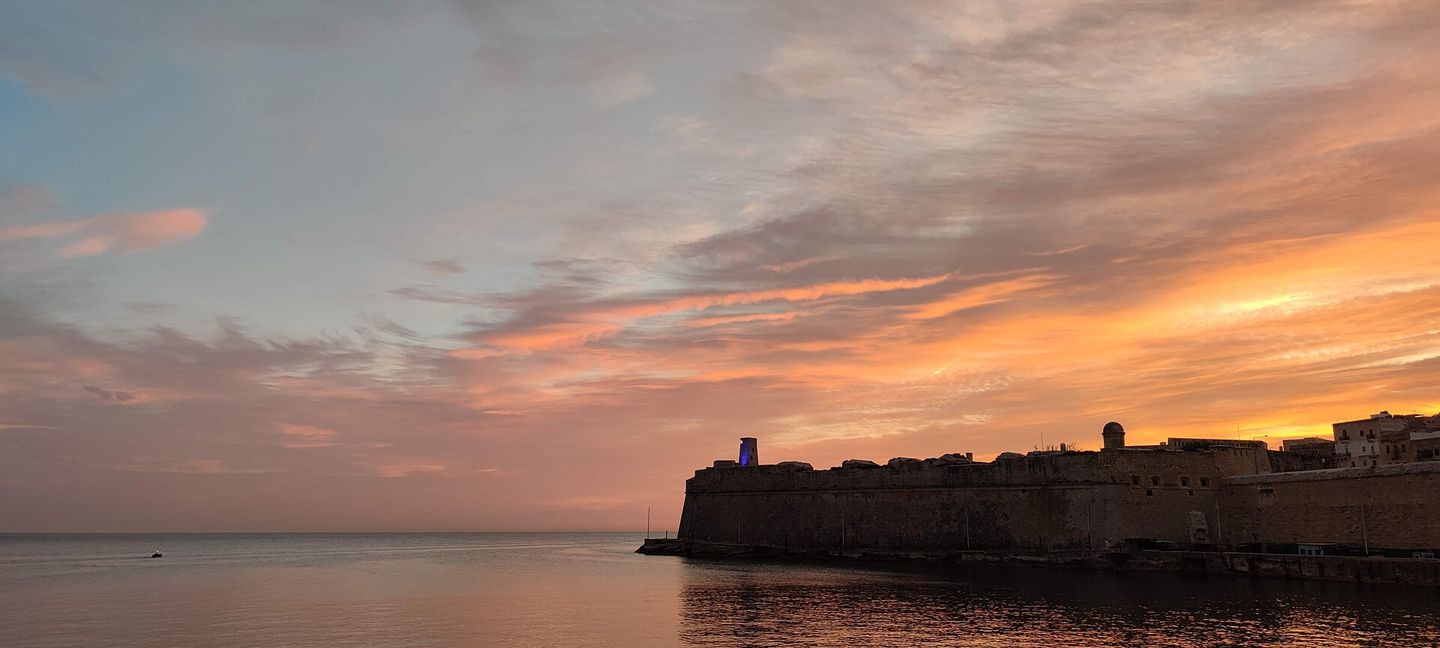
Valletta is absurdly small for a national capital — roughly a kilometre from end to end, home to a few thousand residents, walkable corner to corner in under half an hour. It is also, square metre for square metre, one of the densest concentrations of serious architecture and seriously dramatic history anywhere in Europe, which is why UNESCO listed the whole peninsula as a World Heritage Site rather than picking out individual buildings. You don't visit Valletta to tick off a landmark. You visit it to walk inside one.
The city exists because of a siege. In 1565 the Knights Hospitaller, a militarised religious order that had already been chased out of Rhodes once, held Malta against a months-long Ottoman assault that the Knights' Grand Master, Jean de Vallette, somehow survived against odds nobody expected him to beat. Convinced the Ottomans would try again, the Knights built a new fortified capital from scratch on the Sciberras peninsula, named it after their Grand Master, and threw up a planned Baroque city — straight streets, uniform honey-limestone facades, bastions on every exposed edge — in roughly five years flat. They never got attacked again, and the city they rushed to build in a panic became one of the most elegant in Europe almost by accident.
What follows isn't a checklist of Valletta's obvious landmarks, though you'll hit most of them simply by crossing the city once. It's the context for why the place looks and feels the way it does, when to come so you're not melting on the bastions in August, and how to use Valletta as a base for the rest of Malta, since the capital itself is a long weekend at most and the wider island — the Three Cities across the harbour, the old capital Mdina, the sister island of Gozo — is where a longer trip actually goes.
The caseWhy a tiny capital earns the detour
Most capital cities grew organically over centuries and show it — a patchwork of eras bolted together. Valletta is the opposite: a single Baroque vision laid down fast under wartime urgency, then largely left alone, so the whole peninsula reads as one coherent architectural statement rather than a collage. Walk down Republic Street and nearly every facade is the same warm, weathered limestone, pierced by the same enclosed wooden balconies the Maltese call gallarija, which give the streetscape a rhythm you don't get in cities that evolved more slowly.
The density of what's inside those walls is genuinely startling for a place this size. St John's Co-Cathedral alone holds a Caravaggio and a floor made entirely of inlaid marble tombstones. The Grand Master's Palace, the bastion gardens, the war rooms carved into the rock beneath the city, the Mediterranean's most fortified harbour — all of it sits within a 20-minute walk of all of the rest. Valletta rewards people who like their sightseeing concentrated rather than spread across a sprawling metro area.
The calendarWhen to go
April, May, October and the first half of November are the sweet spots. The Mediterranean light is glorious, the sea is warm enough to swim by late spring, and the midday bastion walks that will flatten you in July are perfectly comfortable. Malta's summer runs hot and dry from June through September, with Valletta's stone streets acting like a storage heater by early afternoon — doable, but plan around it with an early start and a long lunch break rather than a straight midday march between sights.
Winter is Malta's secret season: mild by northern European standards, genuinely quiet, and the best time for the museums and the Caravaggio without a queue. The trade-off is shorter days and a real chance of a few wet, windy days off the sea. Easter week and the Malta International Arts Festival in July bring the city's best processions and open-air events, but also its biggest crowds and highest accommodation prices — book well ahead for either.
LogisticsGetting around
Walk. There is no realistic alternative inside the walls — Valletta's historic core is a pedestrian-first grid of straight streets and perpendicular stepped lanes, and most of the interior is effectively car-free in practice even where it's technically not. The only catch is topography: the Sciberras ridge means long flights of steps between the lower and upper streets, so comfortable shoes matter more here than in almost any other city in this guide.
For reaching Valletta from elsewhere on the island, Malta's bus network radiates from a terminal just outside City Gate and is cheap, frequent and genuinely useful for day trips to Mdina, the airport or the north of the island, though schedules loosen on Sundays. The far more memorable option for crossing the Grand Harbour is the small passenger ferry linking Valletta to Sliema and, separately, to the Three Cities — a few minutes on the water that save a long bus loop and hand you the best view of the fortifications you'll get all trip. Taxis and ride-hailing apps cover the rest; renting a car only makes sense if you're based outside Valletta and touring the wider island, since parking inside the walls is scarce and the lanes weren't built for traffic.
The tableHow Maltese people actually eat
Maltese food sits at a genuinely interesting crossroads — Sicilian in its bones, with Arab, British and North African threads running through it from centuries of trade and occupation. Start with pastizzi, the flaky ricotta- or mushy-pea-filled pastries sold from hole-in-the-wall counters for pocket change; they're a breakfast or a snack, not a sit-down meal, and every Maltese person has an opinion about which bakery does them best. Hobz biz-zejt — a thick slab of crusty local bread rubbed with tomato, olive oil, capers and tuna — is the lunch equivalent, and worth seeking out over anything aimed squarely at tourists.
Rabbit, stewed slowly with wine and garlic (fenkata), is the closest thing Malta has to a national dish, traditionally a weekend feast eaten at long tables outside the city rather than in Valletta's centre, but you'll find versions on menus across the capital too. Ġbejniet, small discs of sheep or goat cheese eaten fresh or sun-dried and peppered, turn up in salads and on their own. For something distinctly Valletta, book a table on one of the capital's rooftop terraces over the Grand Harbour at sunset — the food is often secondary to the view, and that's fine; this is a city built on a harbour, and eating with it in front of you is the point.
The mapNeighbourhoods to know
Valletta itself is really one neighbourhood by the standards of most capitals, but it divides usefully into an upper town along Republic and Merchants Streets — the main shopping and sightseeing spine, busiest by day — and a quieter lower town toward the bastions and the Lower Barrakka Gardens, where residential streets and small family-run eateries outnumber tour groups. The area around St Elmo and the Breakwater, at the tip of the peninsula, is the most purely military and least commercial corner, good for an uncrowded walk with harbour views on both sides.
Beyond the walls, three places matter for understanding greater Valletta. Floriana, directly outside City Gate, is a quieter extension of the capital with its own gardens and a far more residential feel — a sensible base if you want Valletta on foot without Valletta prices. Across the Grand Harbour, the Three Cities — Birgu (Vittoriosa), Senglea and Cospicua — predate Valletta itself as the Knights' original fortified base and are dramatically less touristed, best reached by the harbour ferry. And Sliema and St Julian's, across the other side of Marsamxett Harbour, are where Malta's modern resort life actually happens — high-rises, nightlife, beach clubs — a useful contrast to Valletta's Baroque quiet and an easy ferry or bus ride away.
Field intelligencePractical intelligence
Malta uses the euro and English is an official language alongside Maltese, spoken fluently by essentially everyone — menus, signage and museum labels are bilingual as standard, which makes Valletta one of the easiest Mediterranean capitals to navigate without any language prep. Malta International Airport sits a short drive south of Valletta, and both direct buses and taxis connect the two in well under half an hour.
The heat and the stone streets are the two things that catch visitors out. Sun protection matters even on an overcast day, and the bastion walks have almost no shade at midday, so front-load sightseeing into the morning and the late afternoon and use the middle of the day for a long lunch indoors. Cruise ships dock directly below the city on days that vary through the week, and their passengers surge through Republic Street and the Co-Cathedral in a predictable late-morning wave — check the day's cruise schedule if you want to time the main sights around the quiet gaps either side of it. And budget more time than the compact map suggests: the vertical layout and the sheer density of things worth stopping for mean a kilometre of Valletta takes far longer to cross properly than a kilometre anywhere flat.
What to see & do
-
St John's Co-Cathedral
A plain Baroque exterior hides one of the most lavishly decorated interiors in Europe — gilded vaults, a floor of inlaid marble knights' tombs, and two Caravaggios in a side oratory.
Tip:Buy a timed ticket online and go straight to the oratory first; the Caravaggios draw the longest dwell times and the room empties out again fast.
See full guide -
Grand Master's Palace
The seat of the Knights' government for over two centuries, now Malta's presidential offices and a state rooms museum hung with tapestries and a serious armoury.
Tip:The armoury alone justifies the ticket if you only have time for one room — it's one of the best-preserved collections of its kind anywhere.
-
Upper Barrakka Gardens
A terraced garden built into the bastion walls with the single best panoramic view of the Grand Harbour and the Three Cities opposite.
Tip:Time your visit for noon or 4pm to catch the Saluting Battery's cannon fire from the terrace just below.
-
Fort St Elmo & the National War Museum
The star-shaped fort that bore the worst of the 1565 siege, now holding a museum that runs from the Knights' arrival through Malta's brutal World War II bombing campaign.
Tip:Allow at least two hours; the fort's layout is sprawling and the WWII galleries are more substantial than the entrance suggests.
-
Lascaris War Rooms
A command bunker tunnelled into the bastion rock, used to direct Malta's air and naval defence during WWII and, later, part of NATO's regional headquarters.
Tip:Go for the guided tour slot rather than wandering alone — the context makes the bare rooms click into place.
-
Grand Harbour & the Valletta waterfront
One of the finest natural deep-water harbours in the Mediterranean, ringed by bastions on every side and still a working port for cruise ships and naval vessels alike.
Tip:Take the short passenger ferry to the Three Cities for the classic postgame view of Valletta's walls from the water.
-
Casa Rocca Piccola
A still-inhabited 16th-century noble palazzo open for tours, with original furniture, family portraits and a WWII air-raid shelter dug beneath the house.
Tip:Tours run on a fixed schedule rather than continuously — check times before you plan your route around it.
-
Republic Street & Merchants Street
The city's two parallel spines, lined end to end with the honey-stone facades, enclosed balconies and street-level shops that make up everyday Valletta.
Tip:Merchants Street, one block over, is quieter and has the better food stalls and local bakeries away from the main tourist flow.
On the groundWhere things are
Map data © OpenStreetMap contributors.
Where to stayBase yourself well
Inside the walls, Upper Valletta
Best for first-timers who want everything on footThe historic heart itself — Republic Street, the Co-Cathedral, the Grand Master's Palace, all within a few minutes' walk. You pay for the location and the atmosphere of sleeping inside a fortress city.
A boutique guesthouse in a converted Knights-era palazzo
Several of Valletta's historic townhouses have been converted into small hotels with original stone vaulting intact — look for one tucked off the main thoroughfares for a quieter night.
€€€A harbour-view room near the Upper Barrakka Gardens
Rooms on the bastion side of the upper town often have Grand Harbour views without the premium of a dedicated resort.
€€€Lower Valletta, toward the bastions
Best for value and a calmer eveningQuieter, more residential, and a short walk downhill from the main sights — this is where Valletta's own families live, with fewer souvenir shops and more corner bakeries.
A family-run guesthouse near the Lower Barrakka Gardens
Expect simpler rooms than the upper-town hotels, traded for lower prices and genuine neighbourhood quiet after dark.
€€Floriana
Best for walkers who want Valletta prices to go furtherTechnically its own town, practically Valletta's front garden — directly outside City Gate, with its own fortifications, gardens and a notably more residential pace.
A mid-range hotel near the Phoenicia and the Floriana gardens
A ten-minute walk into Valletta's centre, with easier bus and taxi access than the old city's interior.
€€Sliema & St Julian's
Best for beach time and nightlife alongside sightseeingMalta's modern resort strip across Marsamxett Harbour — high-rise hotels, a seafront promenade, beach clubs and the island's liveliest nightlife, all a short ferry or bus ride from the capital.
A seafront hotel along the Sliema promenade
Trade Valletta's quiet evenings for a longer dining and bar scene, with the ferry putting the capital ten minutes away by water.
€€€The Three Cities (Birgu, Senglea, Cospicua)
Best for repeat visitors and anyone who prefers quiet over convenienceThe Knights' original fortified base across the Grand Harbour, predating Valletta itself and far less touristed — narrow lanes, working marinas, and some of the best harbour views going.
A converted townhouse in Birgu's old quarter
Birgu rewards a slower visit, and staying overnight means seeing the Grand Harbour lit up without the day-trip ferry crowd.
€€Affiliate notePostcardRoute is reader-supported. Some links to Booking.com (stays, flights, car hire, tickets and tours, airport transfers) are affiliate links, tracked through CJ Affiliate: if you book through them we may earn a small commission at no extra cost to you. We only recommend places we would send a friend.
Book the restEverything else for the trip
Stay sorted? These open Booking.com for the other legs of the journey.
-
Tours & tickets
Things to do
Tickets, tours and activities, anywhere.
Browse activities -
Wheels
Car hire
Compare rental companies worldwide.
Compare cars -
Air
Flights
Search fares, then come back for the neighbourhood advice.
Search flights -
Ground
Airport transfers
Book a taxi or private transfer before you land.
Book a transfer
Affiliate noteThese four links are affiliate links too: if you book through them we may earn a small commission at no extra cost to you.
Beyond the cityWorthwhile day trips
- Mdina & Rabat
Malta's hushed former capital, a walled hilltop city of silent lanes and noble palazzi that largely emptied out when the Knights moved the action to Valletta — go at dusk when the day-trippers leave.
- The Three Cities
Birgu, Senglea and Cospicua across the Grand Harbour, fortified before Valletta existed and dramatically quieter — a short ferry ride for the best photograph of Valletta's walls you'll get.
- Gozo
Malta's smaller, greener sister island, reached by ferry from the north coast — slower pace, the Citadel at Victoria, and some of the archipelago's best coastal swimming spots.
- Marsaxlokk & the Blue Grotto
A working fishing village with its own Sunday market, paired naturally with a boat trip to the sea caves of the Blue Grotto further down the southern coast.
Before you goCommon questions
- How many days do you need in Valletta?
- Two full days covers the capital itself properly — the Co-Cathedral, the Grand Master's Palace, the bastion gardens and a proper wander down Republic and Merchants Streets. Most visitors use Valletta as a base and add three or four more days for Mdina, the Three Cities, Gozo and the beaches, since the island as a whole rewards a longer stay than the tiny capital alone suggests.
- Is Valletta walkable?
- Entirely — it's one of the most walkable capitals in Europe, small enough to cross in twenty minutes flat. The catch is topography rather than distance: the city sits on a ridge, so expect long flights of steps between the upper streets and the harbourside gardens, and wear shoes built for it.
- What is Valletta best known for?
- Its Baroque fortifications, built fast by the Knights of St John after surviving the Great Siege of 1565, and St John's Co-Cathedral, whose plain exterior hides an extraordinarily ornate interior and two paintings by Caravaggio. UNESCO lists the entire walled city as a World Heritage Site.
- How do I get from Malta's airport to Valletta?
- It's a short drive — well under half an hour by taxi, ride-hailing app, or the direct airport bus route into the capital. There's no train network on Malta, so road transport is the only option either way.
- Is Valletta expensive to visit?
- It can be if you stick to the main tourist strip, but it doesn't have to be. Pastizzi and hobz biz-zejt from local bakeries cost pocket change, museum tickets are reasonable compared to similar sites elsewhere in Europe, and the ferry crossings to Sliema or the Three Cities cost a fraction of a taxi fare for a far better view.
- What is the best time of year to visit Valletta?
- April, May, October and early November give the best balance of warm weather and manageable crowds. Summer (June to September) is hot and dry with little shade on the bastions, while winter is mild, quiet, and the best season for museums and the Co-Cathedral without a queue.