
Spain · Valencian Community
Valencia plays it straight
No Ramblas, no Sagrada Família, no apology. A Gothic old city, a dry riverbed turned into five miles of park, and a paella recipe the locals will still argue about tonight.
Spain's third city, and the one nobody warns you is this good · 39.47° N · 0.38° W
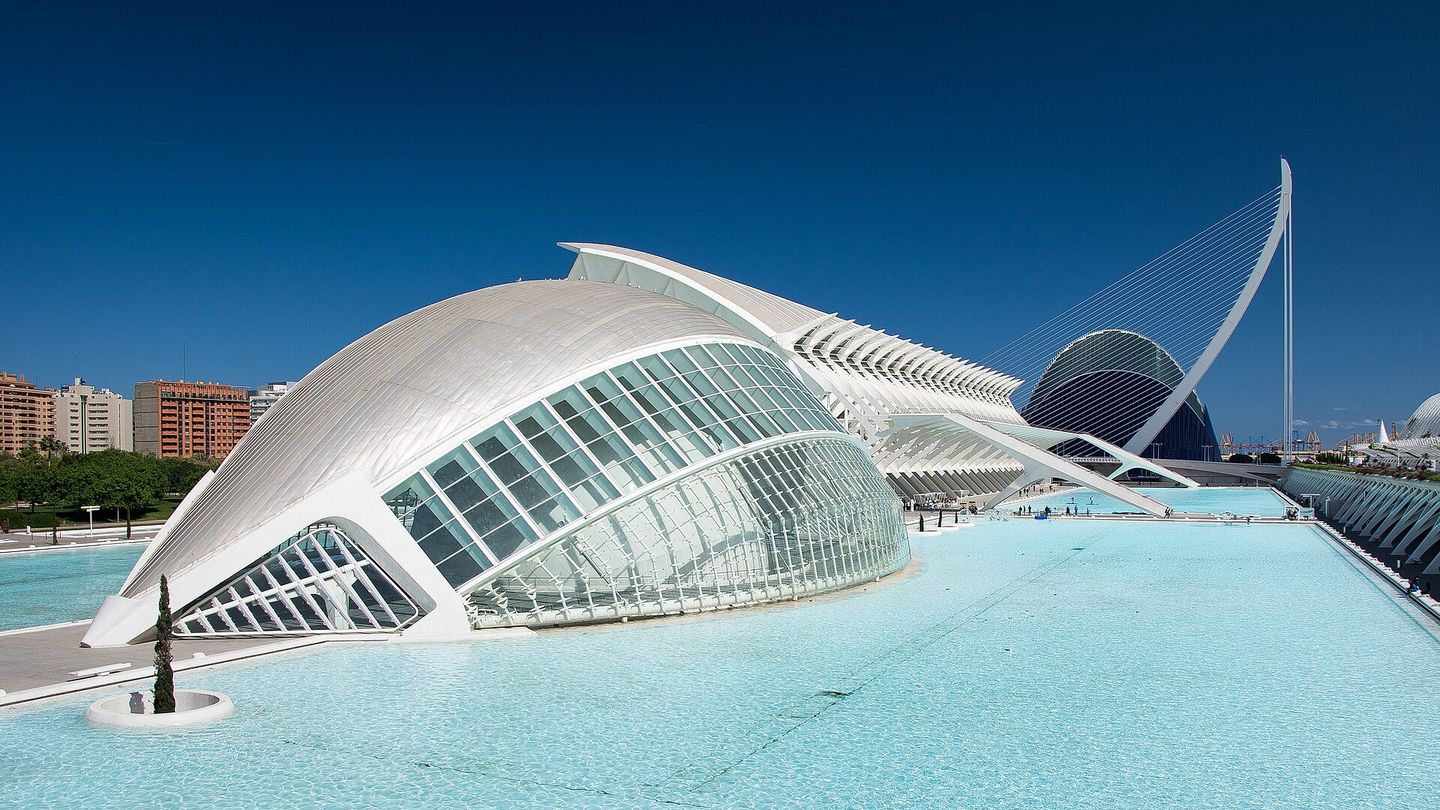
Valencia has spent the last two decades being the answer to a question most travellers never think to ask: what if a Spanish city had Barcelona's architecture, a beach as good as anything on the Costa Blanca, and none of the crowds? It is the country's third-largest city, with roughly eight hundred thousand people, and it carries that scale lightly — big enough for a serious food scene and a world-class concert hall, small enough that you can walk from the cathedral to the beach in under an hour if you feel like it.
The city's defining feature isn't a single building, though it has one of the more photographed ones in Europe. It is a decision, made after catastrophic flooding in 1957, to reroute the Turia river entirely around the city's southern edge and turn its old bed — a nine-kilometre scar running straight through the historic centre — into a continuous public park. Nowhere else has quite this: a sunken green spine, cutting from the old town to the sea, that locals run, cycle, picnic and raise children in every single day. Most of what's good about Valencia connects back to that one piece of civic nerve.
This guide skips the temptation to sell Valencia as an undiscovered secret, because it isn't — paella tourism and City of Arts and Sciences selfies are well established. What follows instead is the practical layer underneath: which barrio actually suits you, when the rice is worth ordering and when it isn't, how a Fallas trip differs from any other kind of trip to this city, and where the two-hour train from Madrid or Barcelona earns its ticket price several times over.
The caseWhy Valencia earns the detour
Ask most northern Europeans to name a Spanish city and they'll reach for Barcelona or Madrid before Valencia even crosses their mind, which says more about marketing budgets than about the place itself. Valencia has a Gothic quarter as atmospheric as anything in Barcelona's Born, a silk exchange that UNESCO rates among the finest civil Gothic buildings in Europe, and a produce market under a 1920s iron-and-glass dome that puts most European food halls to shame. It also has something Barcelona has largely lost: a city centre that still feels inhabited by people who live there rather than staged for people who are visiting.
The other argument is architectural whiplash, in a good way. You can stand in the Lonja de la Seda, a fifteenth-century merchants' hall with twisted stone columns built to intimidate rival traders, and ninety minutes later be looking at Santiago Calatrava's bone-white, space-age City of Arts and Sciences, built on the very riverbed the old city used to flood from. Few cities let you walk that directly between six centuries without a metro ride in between.
And then there's the coast. Valencia is one of the only major European cities where you can have a serious museum morning and a legitimate beach afternoon on the same Mediterranean, without a connecting train. Malvarrosa is a real urban beach with real sand, not a postcard prop, and the paella you eat afterwards at a chiringuito with your feet still sandy is closer to the dish's actual origin than anything served in a tourist restaurant off La Rambla.
The calendarWhen to go
March is a special case and worth naming first. Las Fallas, held in the days around the 19th, is Valencia's signature event — enormous, satirical sculptures called fallas built in squares across the city, fireworks (the mascletà) detonated at deafening volume in the Plaza del Ayuntamiento every single afternoon, and the whole thing burned to the ground on the final night. It is one of the great spectacles in Spain, genuinely worth planning a trip around, but it is loud, crowded, smoky and disruptive to ordinary sightseeing — book accommodation months ahead if this is the trip you want, and skip it if you're after a quiet city break.
Outside of Fallas, April through June is the sweet spot: warm but not yet brutal, the beach usable, the Turia gardens green and full, and hotel rates still reasonable before the summer spike. September and October are nearly as good, with the sea at its warmest and the worst of the heat broken. July and August bring proper Mediterranean heat and the domestic beach crowds, which thickens Malvarrosa and pushes restaurant prices up along the coast, though the old town itself stays relatively calm since most of its charm is indoors or in the shade.
Winter is underrated here in the way it's underrated across southern Spain — mild by northern European standards, with plenty of sunny days in the mid-teens, no queues at the Silk Exchange, and hotel prices that drop noticeably. It's not beach weather, but as a city-break season it quietly outperforms its reputation.
LogisticsGetting around
Valencia is flat, compact and built for bicycles, and the city has invested accordingly. The old town itself is entirely walkable — you can cross the historic centre in well under half an hour — but the real transport story is the Turia gardens, which function as a nine-kilometre car-free cycling and running corridor connecting the old city to the Bioparc at one end and the City of Arts and Sciences at the other. Renting a bike for a morning and simply following the riverbed is one of the best low-effort ways to see the city.
For anything the park doesn't cover, Valencia runs an efficient, affordable metro and tram network plus a dense bus grid, all covered by the same Mobilis or tourist travel cards if you're using public transport more than a couple of times a day. The EMT city bikes (Valenbisi) are everywhere but geared toward residents with subscriptions, so a day-rental shop is usually the simpler option for visitors.
From the airport, metro line 3 or 5 runs directly into the centre in about twenty-five minutes and is the obvious choice over a taxi unless you're arriving very late or heavily loaded with luggage. High-speed AVE trains put Madrid under two hours away and Barcelona around three, which is part of why Valencia increasingly works as a weekend trip layered onto a bigger Spanish itinerary rather than only a standalone destination.
The tablePaella, and the rest of the table
Valencia invented paella and the city has strong, occasionally combative opinions about what that word is allowed to mean. The original, paella valenciana, is rice cooked in a wide shallow pan over an open flame with rabbit, chicken, sometimes snails, green beans and garrofón beans — no seafood, despite what most menus outside Spain imply. Paella de marisco, the seafood version, is a legitimate and delicious dish; it is simply a different dish, and a Valencian will tell you so without much prompting. Treat paella as a lunch order, never a dinner one — it's cooked to order and takes the better part of forty-five minutes, and any restaurant offering it instantly at seven in the evening is almost certainly reheating.
The wider food culture rewards the same slow-down-and-look approach that works elsewhere in Spain. The Mercado Central is the place to start any day, a cathedral-scale produce market under stained glass and ironwork where you can build breakfast from a dozen stalls for a few euros. Valencia is also the home of horchata, a sweet, milky drink made from tiger nuts (chufa) rather than any kind of dairy, traditionally paired with fartons, long sugar-glazed pastries built specifically for dunking — an horchatería in the old town or out in the suburb of Alboraya, where the tiger nuts are actually grown, is a genuine local institution rather than a tourist detour.
Beyond rice, look for all i pebre (eel or fish stewed with garlic and paprika from the Albufera wetlands), bombas (fried potato croquette balls, a Valencian bar-food staple), and the local short white wines that almost never make it onto export lists. As in most of Spain, lunch is the anchor meal and the best-value one — look for a menú del día at a neighbourhood bar away from the cathedral square, and expect dinner service to properly start closer to nine.
The mapNeighbourhoods to know
El Carmen is the historic soul of the city, the old Muslim and medieval quarter inside what's left of the city walls — narrow lanes, street art layered onto centuries-old façades, the Torres de Serranos and Torres de Quart gate towers, and the highest concentration of bars, galleries and late nights in the city. It's also the most visited and, on weekend nights, the loudest; book here for atmosphere and pack earplugs.
Ciutat Vella's other half, around the cathedral and Plaza de la Reina, is calmer and more monumental — this is where the Lonja de la Seda, the cathedral and its Miguelete bell tower, and the Mercado Central all sit within a few minutes' walk of each other. Ruzafa (Russafa), just south of the old town, is the neighbourhood that actually earns the word trendy: a former working-class barrio turned into Valencia's best concentration of independent restaurants, vermuterías and design shops, and a genuinely good base if you want to eat and drink like a resident rather than a visitor.
Eixample, the formal grid-planned district south of the centre, is quieter and more residential, built around wide boulevards and handsome Modernista buildings — a sensible, slightly less thrilling base for anyone prioritising space and calm over nightlife. And out toward the coast, the Malvarrosa and Cabanyal beach neighbourhoods are a different city altogether: a historic fishing quarter of colourful tiled houses, now half-gentrified, that puts you a short tram ride from the old town and a two-minute walk from the sand.
Field intelligencePractical intelligence
Valencian is co-official alongside Spanish here, and you'll see it everywhere on street signs and menus — Ciutat de les Arts i les Ciències rather than Ciudad de las Artes y las Ciencias, for instance. Nobody expects visitors to speak it, and Castilian Spanish works everywhere, but recognising that the two names for the same place are not a typo will save some confusion.
Valencia keeps the same siesta-adjacent rhythm as the rest of Spain: many independent shops close for a few hours in the early afternoon, and restaurant kitchens generally don't reopen for dinner before eight or so. The city is safe by European standards, with the usual pickpocket vigilance warranted around the Mercado Central and on crowded metro lines during Fallas. Tipping is modest — rounding up or a euro or two on a good meal is normal, not a service charge.
Book timed tickets for the Oceanogràfic and the Museu de les Ciències online in advance, especially in summer or during school holidays, since same-day queues at the City of Arts and Sciences can run long. If Fallas dates overlap with your trip, expect daily fireworks at two in the afternoon in the Plaza del Ayuntamiento and genuinely heavy air pollution from the nightly displays and bonfires — asthma sufferers and parents of small children should plan around it. Finally, the beach: Malvarrosa is clean, free and properly local, but it is also exposed with limited natural shade, so bring your own umbrella rather than relying on paid loungers if you're there for more than an hour.
What to see & do
-
City of Arts and Sciences
Santiago Calatrava's vast white complex of museums, an opera house, an IMAX planetarium and Europe's largest aquarium, built along the dried-up bed of the Turia river. Whatever you think of the architecture up close, it photographs like nothing else in Spain.
Tip:Visit the complex at dusk even if you've already toured it by day — the reflecting pools and floodlit ribs of L'Hemisfèric are a different experience entirely after dark.
-
Oceanogràfic
The largest aquarium in Europe, designed by Félix Candela as part of the City of Arts and Sciences, organised around distinct marine ecosystems from the Arctic to the tropics, with an underwater tunnel through the main shark tank.
Tip:Buy timed tickets online and arrive at opening; it's the single most popular paid attraction in the city and queues build fast by mid-morning.
-
La Lonja de la Seda (Silk Exchange)
A late-Gothic merchants' hall from the 1480s, UNESCO-listed, with a main trading room of twisted spiral columns that still feel built to overawe. One of the finest surviving pieces of civil Gothic architecture anywhere in Europe.
Tip:The courtyard orange trees and the upper consulate hall are easy to miss — don't leave after just the main column hall.
-
Valencia Cathedral & the Miguelete
A cathedral built over the old mosque, mixing Romanesque, Gothic, and Baroque in a way that shouldn't work and somehow does, home to a chalice some traditions hold to be the Holy Grail. Climb the octagonal Miguelete bell tower for the best rooftop view of the old town.
Tip:The tower climb is narrow, spiral stone stairs with no lift — manageable for most, but allow extra time if you're claustrophobic or travelling with young kids.
-
Mercat Central (Central Market)
One of the oldest operating produce markets in Europe, under a 1920s Modernista dome of iron and stained glass, with hundreds of stalls selling everything from jamón to fresh-pressed horchata. A genuine working market, not a tourist food hall dressed up as one.
Tip:Go in the morning when the stalls are fullest and build breakfast as you wander rather than aiming for one specific stand.
-
Turia Gardens (Jardí del Túria)
Nine kilometres of continuous park laid into the old riverbed after the 1957 flood diverted the Turia around the city. Running paths, cycling lanes, football pitches, playgrounds and shaded walks connect the old town to the sea without crossing a single road.
Tip:Rent a bike near the old town and ride the full length out to the City of Arts and Sciences rather than walking it piecemeal — it's an easy, flat hour or so.
-
El Carmen & the city walls
The old Muslim and medieval quarter, dense with narrow lanes, street art and two surviving monumental gates — the Torres de Serranos and the Torres de Quart, the latter still pockmarked with cannon damage from the Napoleonic siege.
Tip:Climb the Torres de Serranos late afternoon; the view back over the old town's rooftops is one of the better free vistas in the city.
-
Malvarrosa Beach
A proper urban beach of fine sand facing the open Mediterranean, backed by a promenade of paella restaurants in the historic Cabanyal fishing quarter. Unpretentious, well used by locals, and a legitimate contrast to the old town's stone and shade.
Tip:Walk or tram up to Cabanyal afterwards for an unhurried lunch rather than eating at the busiest beachfront spot closest to the sand.
-
Bioparc Valencia
An immersive zoo on the western edge of the Turia gardens, built around open, moat-separated African landscapes rather than cages, with no visible bars between visitors and the animals.
Tip:Go on a weekday morning if you can; the open layout gets genuinely crowded on weekend afternoons.
On the groundWhere things are
Map data © OpenStreetMap contributors.
Where to stayBase yourself well
El Carmen
Best for first-timers who want to walk straight into the old townThe atmospheric heart of the old city — street art, medieval lanes, and the thickest concentration of bars and galleries anywhere in Valencia. Maximum character, and correspondingly loud on weekend nights.
A restored townhouse hotel near the Torres de Serranos
Ask for a room facing an interior courtyard rather than the street; El Carmen's nightlife runs late on weekends.
€€€A small guesthouse tucked off Plaza del Carmen
Central enough to walk everywhere in the old town, with slightly better value than the streets closest to the cathedral.
€€Ciutat Vella (Cathedral quarter)
Best for sightseeing-focused stays and a quieter old-town baseThe more monumental, calmer half of the old city, built around the cathedral, the Lonja and the Mercat Central. Fewer late-night bars than El Carmen, with most of the headline sights within a short walk.
A boutique hotel near Plaza de la Reina
You're a few minutes' walk from the cathedral, the Lonja and the market, with the convenience costing a little more than the surrounding streets.
€€€Ruzafa (Russafa)
Best for food-focused trips and repeat visitorsThe city's best eating and drinking neighbourhood, a former working barrio turned design-forward without losing its edges. Fewer monuments on the doorstep, considerably better odds of a genuinely local night out.
A design-led apartment near Mercat de Russafa
Staying here trades postcard views for the best restaurant and vermouth-bar density in the city, a ten-minute walk from the old town.
€€Eixample
Best for space, calm, and easy transit connectionsThe formal, grid-planned district south of the old town, lined with handsome Modernista buildings and wide boulevards. Quieter and more residential, with good transport links in every direction.
A mid-rise hotel along Gran Vía Marqués del Túria
A straightforward, well-connected base if you'd rather not be woken by old-town nightlife.
€€Malvarrosa & Cabanyal
Best for a beach-forward trip without giving up the city entirelyThe old fishing quarter by the beach, part gentrified, part still resolutely itself, with coloured tiled houses and a seafront of paella restaurants. A fifteen-minute tram ride from the old town, a two-minute walk from the sand.
A beachfront apartment near Passeig Marítim
Worth it for anyone prioritising a morning swim over a five-minute walk to the cathedral; the tram into the centre is quick and frequent.
€€Affiliate notePostcardRoute is reader-supported. Some links to Booking.com (stays, flights, car hire, tickets and tours, airport transfers) are affiliate links, tracked through CJ Affiliate: if you book through them we may earn a small commission at no extra cost to you. We only recommend places we would send a friend.
Book the restEverything else for the trip
Stay sorted? These open Booking.com for the other legs of the journey.
-
Tours & tickets
Things to do in Valencia
Skip-the-line tickets, tours and day trips.
Browse activities -
Wheels
Car hire in Valencia
Compare pick-up points and rental companies.
Compare cars -
Air
Flights
Search fares, then come back for the neighbourhood advice.
Search flights -
Ground
Airport transfers
Book a taxi or private transfer before you land.
Book a transfer
Affiliate noteThese four links are affiliate links too: if you book through them we may earn a small commission at no extra cost to you.
Beyond the cityWorthwhile day trips
- Albufera Natural Park
A vast freshwater lagoon just south of the city, ringed by the rice paddies that give Valencia's paella its name. Take a traditional wooden boat out at sunset, when the light over the water and the reeds is reliably spectacular.
- Xàtiva
An hour by train to a hill town crowned by a sprawling double castle, with sweeping views over the surrounding orchards. Birthplace of two Borgia popes and a far quieter day out than the coastal options.
- Peñíscola
A fortified old town on a rocky promontory a couple of hours north, with a castle once held by a rival pope and a long sandy beach beneath the walls. Popular in summer, atmospheric nearly any time of year.
- Requena
An hour inland into Valencia's wine country, with its own historic cave network beneath the old town and a respected DO for red wines made largely from the Bobal grape. A good half-day for anyone who's done with beaches and rice.
Before you goCommon questions
- How many days do you need in Valencia?
- Three full days covers the essentials well — one for the old town and the market, one for the City of Arts and Sciences and the Turia gardens, and one for the beach or a day trip to the Albufera. Two days is workable if you're efficient and skip the Oceanogràfic, which easily eats half a day on its own. Four or more lets the trip breathe and makes a proper day trip comfortable.
- What is the best area to stay in Valencia for first-timers?
- El Carmen, for the atmosphere and the walk-everywhere convenience, or the quieter cathedral quarter just beside it if you'd rather skip the weekend noise. Ruzafa is the better call if eating and drinking well matters more to you than sleeping next to the cathedral.
- Is paella in Valencia different from paella elsewhere in Spain?
- Yes, and locals care about the distinction. The original paella valenciana uses rabbit, chicken and local beans rather than seafood; the seafood version served across the rest of Spain is a different, equally legitimate dish with a different name here. Order it at lunch, never dinner — it's cooked fresh to order and takes the better part of an hour, so any restaurant serving it instantly in the evening is almost certainly reheating a batch.
- Is Las Fallas worth planning a trip around?
- If spectacle is what you're after, absolutely — it's one of the great festivals in Spain, with elaborate sculptures, daily fireworks and a genuinely electric atmosphere in the days around 19 March. But it is loud, smoky and disruptive to ordinary sightseeing, accommodation prices rise sharply, and parts of the city centre become difficult to move through. Come for Fallas on purpose, or avoid those dates if you want a calmer trip.
- How do you get from Valencia to the beach?
- Malvarrosa, the main city beach, is a short metro or tram ride from the old town, generally under twenty minutes door to door, and an easy half-day add-on to any old-town itinerary. It's a real sandy urban beach rather than a tourist-brochure cove, backed by the Cabanyal neighbourhood's seafood restaurants.
- Is Valencia walkable, or do you need public transport?
- The historic centre is entirely walkable and compact enough to cross in well under half an hour. You'll want the metro or a rental bike mainly for the City of Arts and Sciences, the beach, or the Bioparc, all of which sit further out along or beyond the Turia gardens. The gardens themselves are the best way to connect the old town to the coast on foot or by bike, without touching a road.
- How does Valencia compare to Barcelona for a Spanish city trip?
- Valencia is smaller, calmer and considerably less crowded, with its own strong claims — a better-preserved Gothic quarter in parts, a unique riverbed park, and a beach that's easier to combine with a sightseeing day. It doesn't have Gaudí or Barcelona's nightlife scale, but it rewards a slower visit and costs noticeably less for accommodation and food, which makes it an increasingly popular add-on to a longer Spain itinerary rather than a consolation choice.