
Greece · Central Macedonia
Thessaloniki, off the postcard
Greece's second city never dressed itself up for visitors, and that is exactly why it rewards them — a working port town of Ottoman minarets, Byzantine walls and the best late-night food scene in the country.
Dispatch from the Greek city that never bothered performing for tourists · 40.64° N · 22.94° E
Plan this trip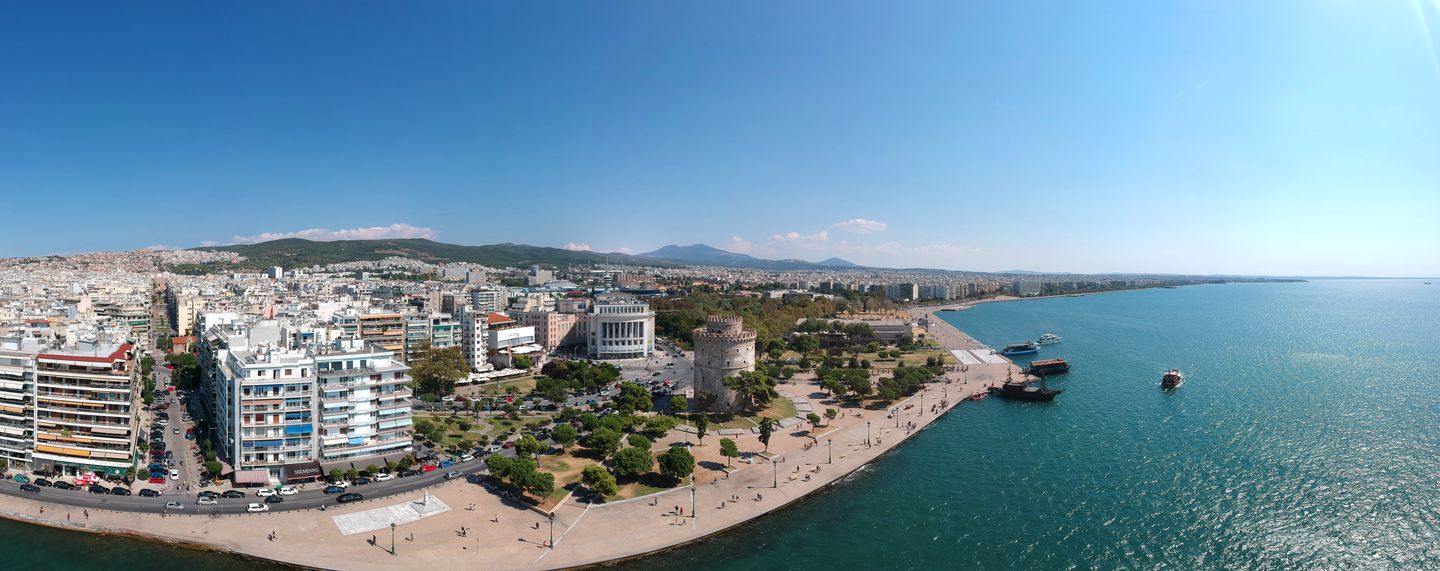
Athens gets the ruins and the reputation, but Thessaloniki is where a lot of Greeks will tell you, quietly, that they would rather live. It is a city built in layers rather than showcased in one — a Roman forum sits a few streets from an Ottoman bathhouse, which sits a few streets from a Byzantine church still holding its 8th-century mosaics, all of it wedged between a working port and a university that keeps roughly a hundred thousand students cycling through the bars and record shops of the old town. Nobody built this city for a tour bus, and it shows in the best possible way.
This dispatch is not a checklist of ruins to photograph and leave. You will see the White Tower and the Rotunda, and they are worth the twenty minutes each takes, but the actual case for Thessaloniki is everything built around them — the seafront promenade that fills with the entire city at sunset, the Ladadika district's converted warehouses now running until 3am, and a food culture shaped by a century of refugees, Ottoman inheritance and Macedonian farmland that makes this arguably the best place to eat in Greece, full stop.
Give it three unhurried days and the shape of the place clicks: a flat, walkable waterfront strip backed by a steep old town climbing toward Byzantine walls, with the whole thing scaled for a population that actually uses its own public space rather than one arranged for visitors passing through.
The caseWhy Thessaloniki still earns the hype
Thessaloniki's pitch is density without exhaustion. Founded in 315 BC and continuously inhabited ever since, it carries visible Roman, Byzantine, Ottoman and Sephardic Jewish layers in a compact grid you can walk end to end in under an hour, yet none of it feels curated into a museum circuit. The Rotunda, built as a mausoleum for Emperor Galerius around 300 AD and later converted into a mosque and then a church, still functions as an active place of worship between tourist visits. The Byzantine walls above the old town are free, unfenced, and mostly ignored by anyone not already looking for them.
What separates Thessaloniki from a smaller-scale Athens is that its identity was shaped less by antiquity tourism and more by twentieth-century upheaval — a devastating 1917 fire that levelled the old commercial centre, the 1923 population exchange that brought over 100,000 Greek refugees from Asia Minor, and a Sephardic Jewish community, once nearly half the city's population, that was almost entirely destroyed in the Holocaust. That history sits under the surface of the food, the street names, and the synagogue quietly tucked into a modern block, and it gives Thessaloniki a gravity that the sun-and-ouzo version of Greece rarely has.
The calendarWhen to go
May, June and September are the sweet spots. Spring brings mild, comfortable temperatures for walking the waterfront and climbing to the Byzantine walls without the punishing midsummer heat, while September keeps the warm sea temperature of summer with noticeably thinner crowds and the university crowd not yet fully back from break. Both months also line up with the region's best produce — cherries and apricots in late spring, grapes and figs by early autumn.
July and August turn Thessaloniki properly hot, often in the mid-30s Celsius with high humidity off the gulf, and much of the local population that can escapes to nearby beach towns on weekends, thinning the city out in a way that can feel either peaceful or oddly deflated depending on your mood. Winter is underrated and genuinely cold by Greek standards, with the Thermaic Gulf wind cutting along the waterfront, but it is also when the city's bar and taverna scene is at its most local and unhurried, and hotel prices drop hard. Avoid visiting during the biannual Thessaloniki International Fair in early September if you want a quiet hotel market — book well ahead if your dates overlap it.
LogisticsGetting around
Walk the flat waterfront strip and take the bus or a taxi for the climb into the old town — this is the practical split that makes Thessaloniki manageable. The city has no metro line running yet as of 2026 despite decades of construction and delay, so the extensive OASTH bus network is the backbone of public transport, cheap and reasonably frequent along the main corridors, though schedules loosen noticeably on the smaller routes into the upper town.
The city centre itself, from the port to the White Tower along the seafront, is a comfortable 45-minute walk end to end, and most visitors will do it more than once simply because the promenade is genuinely one of the best in the Mediterranean for an evening stroll. Ano Poli, the upper old town inside the Byzantine walls, is steep enough that a taxi or the infrequent bus up is worth it at least once, particularly with luggage or after dark. Taxis are inexpensive by Western European standards and worth using for the Ano Poli climb or a late return from Ladadika; just confirm the meter is running, as flat-rate negotiations with tourists are not unheard of.
The tableHow Thessaloniki actually eats
Greeks from Athens will tell you, sometimes a little enviously, that Thessaloniki has the best food in the country, and the claim holds up. The city's culinary identity was shaped heavily by the 1923 refugees from Smyrna and the Pontic region, who brought spiced, slow-cooked dishes and a taste for street food that differs noticeably from the grilled-meat-and-salad template found further south. Bougatsa — a custard or cheese-filled pastry eaten for breakfast, ideally from a bakery that has been making it the same way for decades — is close to a civic obligation.
The covered Modiano Market and the surrounding Kapani market district are where the city actually shops, thick with fishmongers, spice stalls and butchers rather than souvenir stands, and worth a wander even if you are not cooking. Ladadika, the old olive-oil trading district by the port, converted its 19th-century warehouses into a dense cluster of tavernas and bars that runs from early evening well past midnight — go for mezedes shared across a table rather than a single main course, which is how the city actually eats dinner. And do not skip the late-night souvlaki and gyro counters around Aristotelous Square; they are a genuine local institution rather than a tourist fallback, often busiest well after midnight with students and shift workers alike.
The mapNeighbourhoods to know
The city centre around Aristotelous Square and the waterfront is the natural first base — flat, walkable, and within easy reach of the White Tower, the Roman Forum and the main shopping streets. It is busy and somewhat generic by evening compared to what is a short walk away, but the convenience is real, especially for a first visit.
Ladadika, tucked between the port and the centre, is the nightlife and dinner district, dense with restored warehouse buildings now running as tavernas, cocktail bars and clubs; it is loud after dark and considerably quieter and more atmospheric to simply walk through by day. Ano Poli, the upper old town climbing toward the Byzantine walls, is the most visually distinct part of the city — narrow lanes, Ottoman-era wooden houses, and sweeping views over the gulf — and noticeably quieter and more residential than the centre below, worth a half-day even though it has fewer places to eat.
Valaoritou and the streets around it have become the creative and student quarter, filled with independent record shops, natural wine bars and design studios inside converted commercial buildings — a good sense of where the city's under-30 population actually spends its evenings, distinct from the more polished Ladadika scene nearby.
Field intelligencePractical intelligence
Thessaloniki runs later than most of Europe expects. Dinner reservations before 9pm will often find a half-empty restaurant, and the real evening in Ladadika or Valaoritou does not properly start until after 10. Plan meals and expectations around that rhythm rather than fighting it.
Most museums and archaeological sites offer reduced or free admission on the first Sunday of the month from November through March, and EU citizens under 25 typically get free entry to state-run archaeological sites year-round — bring ID. Cash still matters more here than in Athens for smaller tavernas and market stalls, so carry some even if cards are widely accepted at bigger venues.
The city's Jewish heritage is easy to miss if you are not looking for it — a single active synagogue remains from what was once one of the largest Sephardic communities in Europe, and the Jewish Museum of Thessaloniki near the waterfront is a quiet, well-curated way to understand a history that shaped the city as much as its Byzantine and Ottoman layers did. It is a fifteen-minute walk from the White Tower and worth the detour.
Field notesWhat to see & do
-
The White Tower
The city's defining landmark, an Ottoman-built fortification on the waterfront that has served as a prison, execution site and now a museum on Thessaloniki's history. The view from the top over the gulf is the real reason to climb it.
On the groundVisit in the late afternoon and stay for sunset over the water from the small park beside it — free, and better than the view from inside the tower itself.
-
Rotunda of Galerius
A vast circular Roman mausoleum from around 300 AD, later converted into a mosque and then a church, still holding fragments of some of the oldest mosaics in the Christian world beneath its dome.
On the groundCheck ahead for occasional closures around religious services — it remains a consecrated church and does close to visitors for these.
-
Ano Poli (Upper Town)
The old town climbing steeply behind the centre, inside the surviving Byzantine walls, with narrow lanes, wooden Ottoman-era houses and the best panoramic views over the gulf in the city.
On the groundTake a taxi or the bus up and walk back down — the descent is far more pleasant than the climb, especially in warmer months.
-
Ladadika district
Restored 19th-century warehouse streets by the old port, now the city's densest cluster of tavernas, bars and late-night spots, atmospheric by day and genuinely loud after dark.
On the groundWalk it in daylight to see the architecture properly, then come back after 9pm for the district it actually is.
-
Church of Hagios Demetrios
A UNESCO-listed Byzantine basilica dedicated to the city's patron saint, rebuilt after a devastating 1917 fire but still holding some original 5th- to 7th-century mosaics in the side aisles.
On the groundThe crypt beneath the church, with Roman-era remains and a small museum, is easy to miss and considerably quieter than the main nave.
-
Modiano and Kapani markets
The city's working food markets, thick with fishmongers, spice merchants and butchers rather than souvenir stalls — the most reliable way to see how Thessaloniki actually shops and eats.
On the groundGo mid-morning on a weekday for the full working atmosphere without the Saturday crush.
-
Archaeological Museum of Thessaloniki
A compact, well-organised museum covering Macedonian antiquity through Roman rule, including gold finds from royal tombs that rival anything in the National Archaeological Museum in Athens.
On the groundPair it with the adjacent Museum of Byzantine Culture on the same ticket-friendly stretch for a full morning of context before wandering the actual ruins.
-
Thessaloniki waterfront promenade
A long, flat seafront walk from the port to the White Tower and beyond, filled every evening with the entire city walking, cycling and sitting out along the water — the closest thing Thessaloniki has to a single defining public space.
On the groundRent a bike near the port and ride the full length out past the White Tower toward the new waterfront parks — it is longer and more rewarding than it looks on a map.
On the groundWhere things are
Map data © OpenStreetMap contributors.
Where to stayBase yourself well
City centre / waterfront
Best for first-timers and short staysFlat, walkable, and within easy reach of the White Tower, Aristotelous Square and the main shopping streets. The most convenient base for a first visit, if the least distinctive after dark.
A mid-range hotel near Aristotelous Square
Puts the waterfront, the main shopping streets and the bus network all within a ten-minute walk.
€€A seafront hotel toward the White Tower
Pay a little more for a gulf-facing room and the promenade becomes your morning walk rather than a destination.
€€€Ladadika
Best for nightlife and short, sociable staysRestored warehouse streets by the old port, loud and lively after dark with the city's densest concentration of tavernas and bars right outside the door.
A boutique hotel in a converted Ladadika warehouse
Expect noise from the surrounding bars on weekend nights in exchange for genuine character and walkability.
€€Ano Poli (Upper Town)
Best for views and a slower paceSteep, quiet, and visually the most distinct part of the city, with Ottoman-era houses and sweeping views — further from the centre and better suited to travellers who value atmosphere over convenience.
A small guesthouse in Ano Poli
Book one with a view terrace if you can — this is the neighbourhood's whole appeal, and the climb up is worth it for the right room.
€€Valaoritou
Best for a local, under-30 paceThe creative, student-heavy quarter of record shops, natural wine bars and design studios — a younger, less polished alternative to Ladadika a few streets away.
A design-led apartment near Valaoritou
Close enough to Ladadika and the centre to walk everywhere, with a noticeably more local evening scene on the doorstep.
€€Affiliate notePostcardRoute is reader-supported. Some links to accommodation are affiliate links: if you book through them we may earn a small commission at no extra cost to you. We only recommend places we would send a friend.
Beyond the cityWorthwhile day trips
- Vergina (Aigai)
An hour and a half by car or bus, the UNESCO-listed royal tombs of ancient Macedon, including the tomb widely believed to be that of Philip II of Macedon, father of Alexander the Great. The underground museum built around the tombs is one of the best in Greece.
- Mount Olympus
Around an hour south by car or train to Litochoro, the gateway town for Greece's highest and most mythologically loaded mountain. A full-day hike suits fit, prepared visitors; even a short walk into the lower gorge trails is worthwhile for those without the time for a summit attempt.
- Halkidiki peninsula
An hour or so southeast, three finger-like peninsulas of pine forest and some of the clearest beach water in the northern Aegean. Kassandra is the built-up, accessible option; Sithonia is quieter and greener; Mount Athos, the third finger, is a monastic republic largely closed to casual visitors.
- Edessa
Roughly ninety minutes west, a small town built around a genuine waterfall running through its centre, with a dramatic drop visible from a cliffside park. A quieter, greener day trip than the coastal options, and easy by car or regional bus.
Before you goCommon questions
- How many days do you need in Thessaloniki?
- Three full days covers the centre, Ano Poli and a proper feel for the food scene at an unhurried pace. Two days works if you are efficient and willing to skip one of the museums. Add a fourth day for a single day trip to Vergina or the Halkidiki coast.
- What is the best area to stay in Thessaloniki for first-timers?
- The city centre near Aristotelous Square and the waterfront. It puts the White Tower, the Roman Forum and the main shopping streets within easy walking distance, and the bus network for everything further out starts right there.
- Is Thessaloniki worth visiting compared to Athens?
- They are different trips rather than competing ones. Athens has the headline ancient sites; Thessaloniki has a denser, more walkable layering of Byzantine, Ottoman and refugee-era history, plus what many consider the best food scene in Greece. Visitors who have already done Athens tend to prefer Thessaloniki's slower, less tourist-oriented pace.
- Is Thessaloniki expensive to visit?
- Generally less expensive than Athens or the Greek islands, particularly for food and accommodation outside peak summer. Eating well is genuinely affordable here — mezedes-style dinners in Ladadika and street food like bougatsa and souvlaki cost a fraction of a sit-down tourist-menu meal.
- What is the best time of year to visit Thessaloniki?
- May, June and September offer the best balance of warm weather and manageable crowds. July and August bring serious heat and humidity off the gulf; winter is cold and windy but reveals the city's most local, unhurried version of itself.
- How do I get from the airport into central Thessaloniki?
- Thessaloniki Airport (Makedonia) sits about 16 kilometres southeast of the centre. City bus routes run directly into town for a low fixed fare in around 40 minutes, or a taxi covers the same distance in roughly 20 to 30 minutes depending on traffic, for a fixed rate agreed with the driver or shown on the meter.