
Italy · Campania
Sorrento holds the cliff edge so you don't have to drive it
Fifty metres above the Bay of Naples, with Vesuvius on the skyline, Capri a ferry ride away, and the Amalfi Coast's hairpins starting just past the edge of town.
The clifftop town that turned a lemon into an industry · 40.63° N · 14.38° E
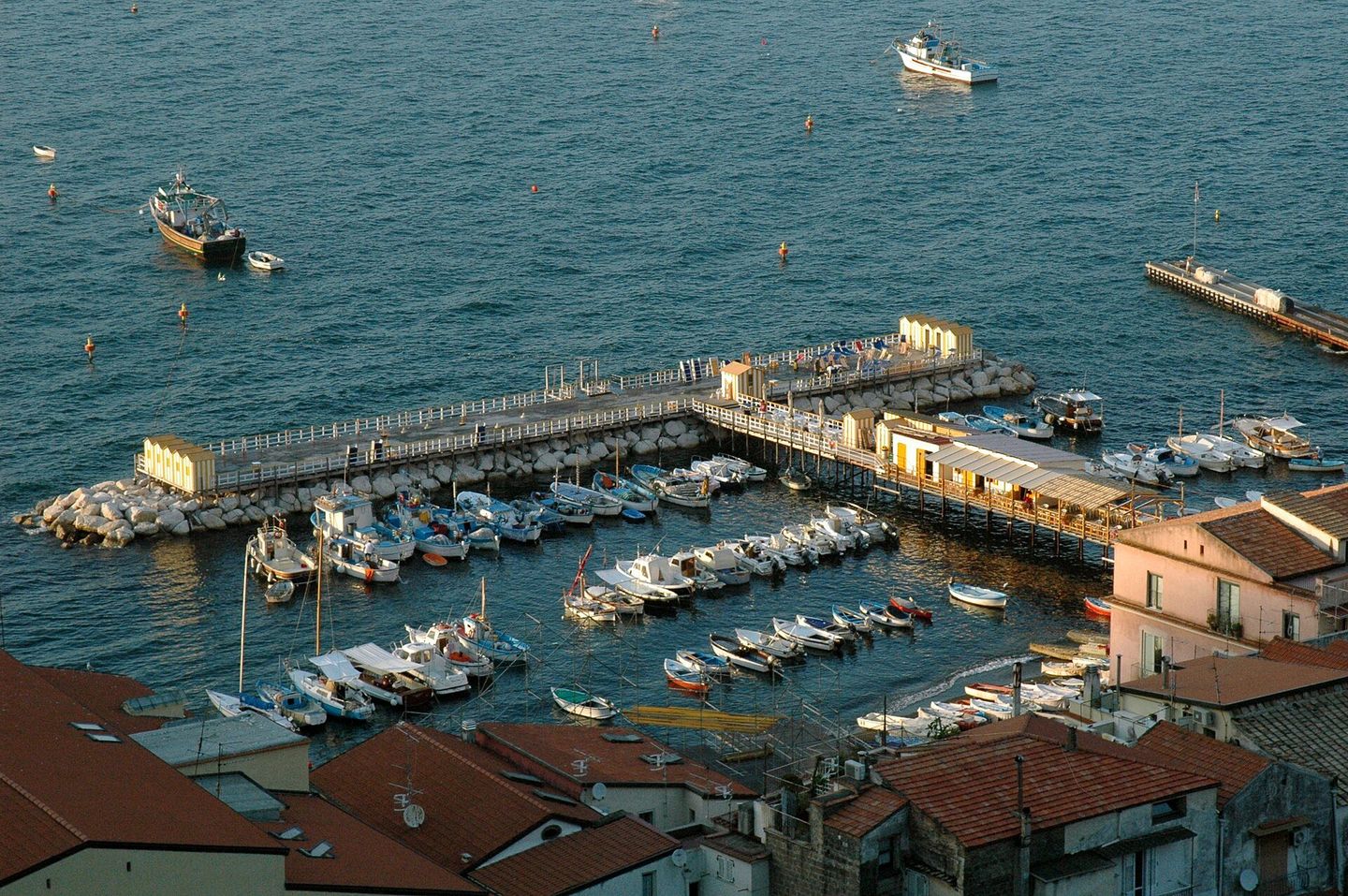
Sorrento has a trick most of its famous neighbours don't: it lets you base yourself somewhere genuinely pleasant and use the region as a day-trip radius, rather than forcing you to pick a single cliffside town and stay put. Perched on a tufa plateau that drops sheer into the Bay of Naples, it has Capri twenty minutes off its harbour, Pompeii and Herculaneum a short train ride inland, and the full winding spectacle of the Amalfi Coast starting almost at its own edge. None of that is accidental — Sorrento has been a resort town since Roman senators built villas on these cliffs, and it has spent the centuries since getting quietly good at hosting people without losing its own character.
That character is built on citrus. The Sorrentine Peninsula's thick-skinned, intensely fragrant lemons, grown on trellised terraces under black netting that filters the sun, are the reason limoncello exists in anything like its modern form, and the reason the air in the old town occasionally smells like a lemon grove even streets away from one. Alongside the lemons sits a centuries-old tradition of intarsio, elaborate wood marquetry that turned Sorrento's workshops into a stop on the 19th-century Grand Tour, when English and European travellers arrived in numbers large enough to permanently reshape the town's economy toward hospitality.
None of this makes Sorrento a secret, and it would be dishonest to pretend the historic centre doesn't get crowded in July and August, when day-trippers from cruise ships and coach tours fill Corso Italia by midday. But arrive outside the peak weeks, stay more than one night, and walk the backstreets rather than only the postcard route, and Sorrento still delivers what sent people here in the first place: cliffside views across the bay to a smoking volcano, good unfussy southern Italian food, and a genuinely workable base for seeing a part of the world that is otherwise exhausting to navigate on a series of day trips from Naples.
The caseWhy Sorrento earns its reputation as a base
Sorrento's real strength isn't any single sight within the town — it's geography. Stand in the Villa Comunale gardens and you can see Vesuvius across the water, know that Pompeii sits in its shadow forty minutes away by train, and that Capri is a short hydrofoil ride from the harbour directly below you. Add the Amalfi Coast road starting a few kilometres past the edge of town, and Sorrento becomes the one place in the region where you can credibly do all of it without repacking a bag.
The town itself rewards a slower look too. Behind the souvenir shops of Corso Italia is a genuine historic centre with a Roman-grid street plan, a working cathedral, a 13th-century cloister that still hosts summer concerts, and a ravine of abandoned watermills sitting incongruously in the middle of town. It isn't trying to be the most dramatic stop on the coast — that's Positano's job — but it does unpretentious, liveable Italian seaside town better than places with bigger reputations.
The calendarWhen to go
Late April through June and mid-September through October are the sweet spots: warm enough to swim and eat outdoors, cool enough to actually enjoy the walk up from Marina Grande, and well short of the peak-season crowds that clog Corso Italia and the SITA bus queues from July through the end of August. The sea is swimmable by late May and stays warm into October, so shoulder season doesn't mean giving up the water, just sharing it with fewer people.
July and especially August bring Italian domestic holidaymakers in large numbers on top of the usual international visitors, and the coast road to Positano and Amalfi can turn into a genuine traffic crawl on peak weekends — budget extra time for any day trip in that window, or take the ferry instead of the bus. Winter is quiet to the point of sleepy; many hotels and restaurants close for a stretch between late autumn and Easter, so it isn't the season for hopping between towns, though the town itself stays pleasant and the light is good.
LogisticsGetting around Sorrento and beyond
The historic centre is small and entirely walkable — Piazza Tasso to the Marina Grande steps is a ten-minute stroll, and Corso Italia runs the length of the old town as its main spine. The one genuine quirk of getting around Sorrento itself is vertical: the town sits on a plateau well above its two harbours, so reaching Marina Grande or Marina Piccola means a walk down (and, more importantly, back up) a flight of steps or a switchback road.
For the wider region, the Circumvesuviana train is the workhorse: a slow, crowded, cheap commuter line that connects Sorrento to Pompeii, Herculaneum and Naples, running every twenty to thirty minutes and worth boarding early for a seat. Ferries and hydrofoils from Marina Piccola reach Capri in well under an hour and also run to Naples, Positano and Amalfi directly by sea — often faster and considerably calmer than the coast road. SITA buses handle the Amalfi Coast road itself; buy tickets before boarding from a tobacconist or bar displaying the SITA sign, since they aren't sold on board, and expect to stand for at least part of the journey in high season.
The tableLemons, limoncello and what to actually eat
Everything citrus-flavoured you eat or drink here traces back to the Sfusato Amalfitano, the thick-skinned, intensely perfumed lemon grown on trellised terraces across the peninsula. Limoncello, the lemon liqueur now sold everywhere from airport duty-free to supermarket shelves worldwide, originated in exactly this stretch of coast, and the difference between a mass-market bottle and one made with local lemons and real patience is not subtle — a tasting at a small producer or an agriturismo lemon grove is worth the detour.
On the plate, look for gnocchi alla sorrentina, a baked dish of potato gnocchi in tomato sauce and melted fior di latte that takes its name from the town, and for the seafood that comes in daily to Marina Grande. Delizia al limone, a dome-shaped sponge cake filled and coated in lemon cream, is the dessert to order rather than skip. As in the rest of southern Italy, meals run on their own clock — lunch after one, dinner rarely starting before eight — and a wedge of real Amalfi-coast lemon in your water or your limoncello, rather than a candied syrup, is the easiest way to tell a kitchen that cares from one coasting on the view.
The mapGetting your bearings
Piazza Tasso, named for the poet Torquato Tasso who was born here in 1544, is the town's social hub and the natural point from which everything else radiates — cafés, the start of Corso Italia, and the steps down toward the sea. Corso Italia itself is the pedestrianised main street, lined with shops selling intarsio woodwork, ceramics and limoncello, busiest by far at midday and in the early evening.
Marina Grande, below the cliffs to the southwest, is a small working fishing village with its own quieter, more local character and some of the best seafood restaurants in town, distinct from and genuinely worth the walk beyond the tourist-facing centre above. Marina Piccola, the main harbour for ferries and boat tours, sits directly below Piazza Tasso and is more functional than charming — come for the boats, not to linger. Further east, Sant'Agnello and Piano di Sorrento are quieter residential towns that blend into Sorrento's outskirts, offering a calmer, often cheaper base a short walk or bus ride from the centre.
Field intelligencePractical intelligence
Book Capri ferries and any Positano or Amalfi boat trips a day or more ahead in high season; the fastest hydrofoils sell out, and the alternative — the coast road by bus or car — takes considerably longer and is far more exposed to traffic. If you're set on the Amalfi Coast road itself, consider the ferry one way and the bus the other, so you get the dramatic driving views without doing the full return journey by road.
Sorrento's historic centre has genuine steps and slopes, so pack accordingly if mobility is a concern — several hotels advertise sea views specifically because they're perched at the top of a long staircase from the water. Tap water is safe but mineral-heavy; bottled water is cheap and widely preferred locally. And if you only do one thing beyond the obvious sights, make it a walk down into Marina Grande for dinner rather than eating on Corso Italia every night — the short, steep walk back up is the price of a noticeably better, less tourist-pitched meal.
What to see & do
-
Piazza Tasso
Sorrento's main square, named after the poet Torquato Tasso, and the hinge the whole town turns on — cafés, the top of the steps to Marina Piccola, and the start of Corso Italia all meet here.
Tip:Come back after dark; the square's cafés and the passeggiata along it are a different, livelier scene than the daytime tourist shuffle.
-
Marina Grande
A small working fishing village tucked below the cliffs, with pastel houses, pulled-up boats, and some of the best, least tourist-pitched seafood restaurants in Sorrento.
Tip:Walk down for dinner rather than lunch — the restaurants along the water are at their best once the day-trip crowds have thinned.
-
Cloister of San Francesco
A 13th-century cloister beside the church of San Francesco, its interlacing pointed arches and climbing bougainvillea making it one of the quietest, most photogenic corners of the old town — and free to step into.
Tip:It's directly beside the entrance to the Villa Comunale gardens, so pair the two on the same short stop.
-
Villa Comunale gardens
A small clifftop public garden with a viewing terrace that frames Vesuvius and the full sweep of the Bay of Naples — the best free view in town, and an easy five-minute walk from Piazza Tasso.
Tip:Go close to sunset; the terrace faces roughly the right direction to catch the light over the bay.
-
Sorrento Cathedral (Duomo)
The working cathedral of Sorrento, dedicated to Saints Filippo and Giacomo, with a marble bishop's throne and choir stalls showcasing the town's intarsio woodworking tradition at full scale.
Tip:Look specifically at the choir and bishop's chair for the inlaid woodwork — it's the same craft sold as souvenirs on Corso Italia, done here at cathedral scale.
-
Vallone dei Mulini (Valley of the Mills)
A startling ravine of moss-covered, abandoned watermill ruins sitting right in the middle of the modern town, the result of a street-level widening project that left the old mill valley stranded below current ground level.
Tip:The best viewpoint is from Via Fuoro — no entry is needed, since you're looking down into the ravine from the street above.
-
Museo Correale di Terranova
A noble family's former villa turned museum, with a quietly excellent collection of 17th- to 19th-century Neapolitan paintings, decorative arts and antique clocks, plus gardens looking out over the bay.
Tip:It's a reliable, uncrowded option on a day when the main sights and beaches feel oversubscribed.
-
Bagni della Regina Giovanna
The ruins of a Roman villa on a headland west of town, where broken arches now frame a natural sea pool popular for swimming — named for a queen local legend says bathed here.
Tip:It's a genuine walk from the centre with no facilities on site, so bring water and come prepared to swim rather than just look.
-
Capri day trip
Not technically in Sorrento, but close enough that most visitors treat it as one — a twenty- to fifty-minute ferry or hydrofoil ride to the Faraglioni rock stacks, the Blue Grotto and Capri town's famous piazzetta.
Tip:Take the earliest boat you can manage; Capri's harbour and funicular queues build fast once the mid-morning crowds arrive from Naples and Sorrento alike.
On the groundWhere things are
Map data © OpenStreetMap contributors.
Where to stayBase yourself well
Around Piazza Tasso
Best for first-timers who want everything on footThe absolute centre — every café, shop and the top of the steps to the sea within a few minutes' walk. Lively well into the evening, which is a selling point or a drawback depending on how you sleep.
A classic hotel just off Piazza Tasso
Look for a traditional mid-range property on a side street off the square itself, close enough to walk everywhere but set back from the loudest night-time traffic.
€€€A simple guesthouse on Corso Italia
A budget-friendly option directly on the main pedestrian spine, best for travellers prioritising location over quiet.
€€The clifftop hotel strip
Best for a resort-style stay with a real sea viewA row of larger hotels perched directly on the cliff edge west of the centre, most with sea-facing terraces, pools and private lift or staircase access down to the water. You pay for the view and the elevator.
A cliffside hotel with a sea-view terrace and lift to the water
These properties justify their price with genuinely dramatic Vesuvius-facing views and direct, step-free access down to a bathing platform.
€€€€Marina Grande
Best for travellers who want a quieter, more local baseThe working fishing village below the main town — fewer hotels, more local character, and dinner on your doorstep without the climb back up after dark if you stay right in the village.
A small guesthouse in Marina Grande village
Staying down at sea level trades some convenience for the centre for a genuinely different, calmer atmosphere in the evenings.
€€Sant'Agnello
Best for better value without losing the viewA quieter residential town blending into Sorrento's eastern edge, a short walk or bus ride from Piazza Tasso, with its own stretch of clifftop and noticeably lower rates for similar views.
A mid-range hotel on the Sant'Agnello clifftop
Expect the same kind of sea-facing terrace as Sorrento's pricier hotels, for less, with a short walk or local bus into the centre.
€€Piano di Sorrento
Best for budget-conscious travellers with a car or train patienceFurther east again, more residential and workaday, with easy Circumvesuviana access into Sorrento and on to Naples — the trade-off is distance for a noticeably lower cost of staying.
A budget hotel near the Piano di Sorrento station
A practical, inexpensive base for anyone planning to spend most days out on the train or ferry network rather than in Sorrento itself.
€Affiliate notePostcardRoute is reader-supported. Some links to Booking.com (stays, flights, car hire, tickets and tours, airport transfers) are affiliate links, tracked through CJ Affiliate: if you book through them we may earn a small commission at no extra cost to you. We only recommend places we would send a friend.
Book the restEverything else for the trip
Stay sorted? These open Booking.com for the other legs of the journey.
-
Tours & tickets
Things to do in Sorrento
Skip-the-line tickets, tours and day trips.
Browse activities -
Wheels
Car hire in Sorrento
Compare pick-up points and rental companies.
Compare cars -
Air
Flights
Search fares, then come back for the neighbourhood advice.
Search flights -
Ground
Airport transfers
Book a taxi or private transfer before you land.
Book a transfer
Affiliate noteThese four links are affiliate links too: if you book through them we may earn a small commission at no extra cost to you.
Beyond the cityWorthwhile day trips
- Capri
A short ferry or hydrofoil ride to the Faraglioni rocks, the Blue Grotto and the glamorous piazzetta — go early to beat the midday crowds funnelling off the Naples boats.
- Positano and Amalfi
The classic Amalfi Coast run, reachable by SITA bus along the cliffside road or by direct ferry from Marina Piccola — the ferry is calmer and often faster in summer traffic.
- Pompeii and Herculaneum
Both Roman sites sit directly on the Circumvesuviana line between Sorrento and Naples, making either — or both in a long day — an easy, no-car excursion.
- Mount Vesuvius
The volcano visible from Sorrento's own waterfront is climbable via a marked trail to the crater rim, reached by bus or organised tour from the Circumvesuviana stops below it.
Before you goCommon questions
- How many days do you need in Sorrento?
- Three to four nights lets you enjoy the town itself and take one or two day trips — Capri, or the Amalfi Coast — without feeling rushed. A full week comfortably covers Capri, Positano or Amalfi, and Pompeii, with time left over to simply be in Sorrento.
- Is Sorrento a good base for the Amalfi Coast?
- Yes, and it's often a more practical one than staying in Positano or Amalfi itself: Sorrento has better transport connections in every direction, generally lower prices, and both the SITA bus and direct ferries reach the Amalfi Coast towns without needing a car on the famously narrow coast road.
- How do you get from Naples to Sorrento?
- The Circumvesuviana commuter train runs directly between Naples and Sorrento, via Pompeii and Herculaneum, in roughly an hour, and is the cheapest option. Faster ferries also connect Naples and Sorrento by sea, and are worth the extra cost if the train is crowded or you'd rather skip a stop at Naples' station areas with luggage.
- Can you visit Capri from Sorrento in a day?
- Easily — ferries and hydrofoils from Marina Piccola reach Capri in well under an hour. Take an early boat to get ahead of the crowds arriving from Naples, and book a return time in advance during summer, since the last boats back can sell out.
- What is Sorrento known for?
- Its clifftop position over the Bay of Naples, the lemons that gave the world limoncello, and a tradition of inlaid wood marquetry (intarsio) that made it a stop on the 19th-century Grand Tour. It's also simply the most convenient base for visiting Capri, the Amalfi Coast and the Pompeii area without constantly changing hotels.
- Is Sorrento expensive?
- It's generally cheaper than staying directly in Positano or Amalfi, though the clifftop hotels with sea views command a real premium. Eating and getting around stay affordable if you favour the Circumvesuviana train and local trattorias over organised tours and the fanciest waterfront restaurants.
- What is the best time of year to visit Sorrento?
- Late April to June and mid-September through October offer warm, swimmable weather without the full crush of the July–August peak, when both the town and the Amalfi Coast road get genuinely congested. Winter is quiet and pleasant in the town itself, but many hotels and restaurants scale back or close.