
Bulgaria · Sofia City Province
Sofia, built on top of itself
A Roman street runs under the main shopping mall, a 4th-century rotunda sits behind the old Communist Party headquarters, and a mountain with chairlifts rises at the end of the tram line. Few capitals pack this much layered history into a city this easy to afford.
A capital built on seven thousand years of other capitals, with a mountain at the end of the tram line · 42.70° N · 23.32° E
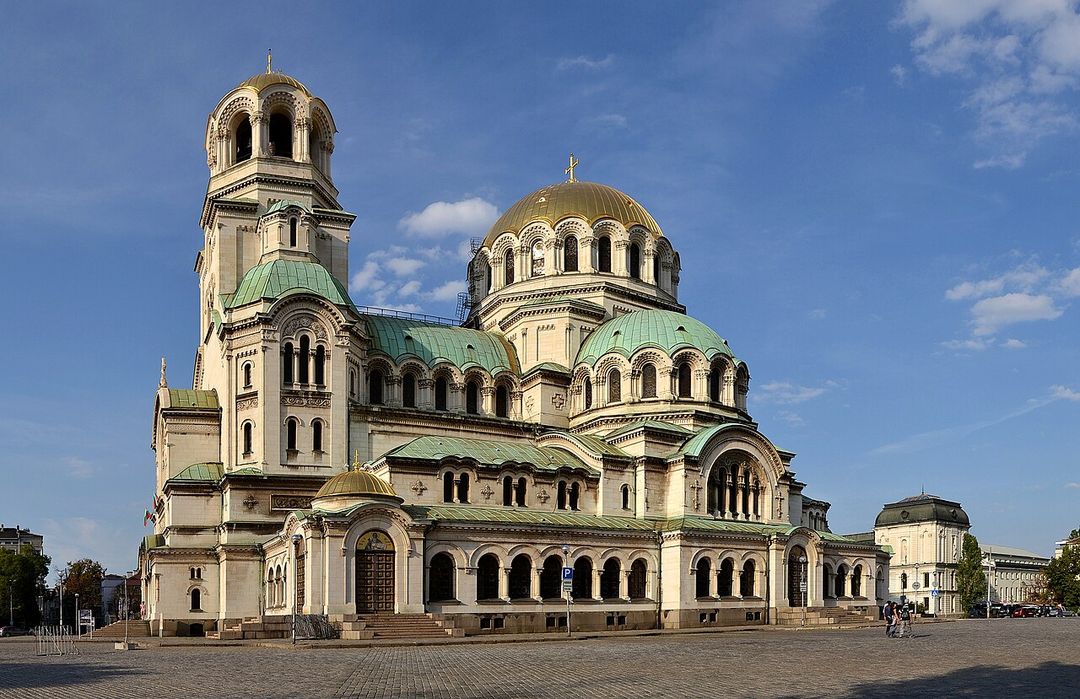
Most people who can place Sofia on a map know exactly one fact about it: it is the cheapest capital in the European Union. That is true, and it is also the least interesting thing about the city. Sofia has been continuously inhabited for roughly seven thousand years, which puts it in the same age bracket as Plovdiv and a handful of other claimants to Europe's oldest-city title, and almost none of that depth is marketed the way Rome or Athens market theirs. You find it instead by accident — a glass floor in a pedestrian underpass revealing a lit-up Roman street, a 4th-century rotunda standing quietly behind the old Party House, mineral water running from a public fountain that has been flowing since Ottoman times.
The layering is the whole story. Thracians, Romans, Byzantines, Ottomans, and forty-five years of Communist Bulgaria each built on top of what came before rather than clearing it away, so a single city-centre block can show you a 2nd-century Roman wall, a 6th-century church, a Soviet-brutalist government building, and a glass-fronted café with a flat white menu, all within sight of each other. It should feel chaotic. It mostly feels like a city that stopped apologising for its own contradictions some time ago.
Then there is Vitosha — a 2,290-metre mountain that rises directly at the southern edge of the city, close enough that a tram and a short bus ride gets you to hiking trails, waterfalls, and in winter a working ski area, all before lunch. No other EU capital hands you a genuine mountain this casually. Combine that with some of the lowest prices for food, drink, and lodging anywhere in the Union, and Sofia earns a longer look than the one-night layover most itineraries give it on the way to the Black Sea coast.
The caseWhy Sofia deserves more than a layover
Sofia's reputation problem is that it looks, from the ring road, like a grey post-Communist city, and that first impression is not entirely wrong — there is plenty of blunt Soviet-era architecture, and the airport road does it no favours. But that reading misses almost everything that makes the place worth visiting. Within about a fifteen-minute walk of Alexander Nevsky Cathedral you can stand inside a working 4th-century Roman rotunda, walk a preserved stretch of ancient Serdica's street grid lit up beneath the TZUM department store, and browse an open-air Sunday flea market selling Soviet medals and hand-thrown pottery side by side.
It is also, bluntly, one of the best-value capitals left in Europe. A sit-down dinner with wine for two rarely clears the price of a single museum ticket in Paris or Amsterdam, which means the ordinary business of eating and drinking well here never feels like a luxury you have to budget hard for. Add a genuine mountain at the tram line's end and a historic core still being actively excavated — new Roman finds surface almost every time the city digs a new metro extension — and Sofia rewards exactly the kind of unhurried, curious visit that this guide is built around.
The calendarWhen to go
Late spring (May into June) and early autumn (September into early October) are Sofia's sweet spots, the same window that works for most of continental Europe: warm but not scorching days, the parks and outdoor cafés in full use, and Vitosha's trails clear of snow and mud. Early autumn has the edge for colour on the mountain and for the grape harvest showing up on menus.
Summer runs hot and can turn genuinely stifling in the concrete centre during a July or August heatwave, though it is also when Vitosha's higher trails and the Black Sea coast (a few hours east) offer the easiest escape. Winter is Sofia's quiet secret: temperatures drop well below freezing and snow is reliable, but that same cold turns Vitosha into a legitimate, inexpensive ski destination with lifts reachable by city tram, and the centre's Christmas market and mulled-wine culture are genuinely good, not a tourist afterthought. Avoid planning around a single clear-sky day in winter — Sofia's basin location traps smog and haze more than most capitals, and locals watch the air-quality index the way other cities watch the weather.
LogisticsGetting around
The historic centre is flat and compact enough to walk end to end in under half an hour, so treat Sofia as a walking city first. When you do need transit, the metro is the best tool in the box: two clean, modern, air-conditioned lines that keep expanding, running frequently and cheaply, and conveniently connecting the airport directly to the centre in about 20 minutes on Line 1 — genuinely one of the easier airport-to-downtown metro rides in Europe.
Buy a rechargeable contactless card or just tap a bank card at the metro gates; single paper tickets also work for trams and buses but need validating on board. Trams are the classic above-ground way to reach Vitosha's base stations and some museum-heavy districts the metro doesn't cover. Taxis are inexpensive by Western standards but notorious for overcharging tourists who flag one off the street — use a ride-hailing app (Bolt is dominant) instead and you will pay the fair local rate with zero haggling.
The tableHow Sofia actually eats
Bulgarian food is Balkan comfort food with its own clear identity, built around dairy, grilled meat, slow-cooked clay-pot stews, and a produce culture that takes its tomatoes and peppers seriously. Start every day the way locals do: a banitsa, a flaky cheese-and-egg pastry sold from bakery windows on every second block, eaten walking and washed down with boza, a thick fermented grain drink that is an acquired taste worth acquiring at least once.
Lunch and dinner both lean on shopska salata (tomato, cucumber, pepper, onion, buried under grated white sirene cheese) as the default starter, followed by something cooked in a clay pot — kavarma, a slow-braised meat stew, is the dish to order at a proper mehana (tavern). Mehanas do traditional Bulgarian food with live folk music on weekends and are worth seeking out over the generic international restaurants on the main tourist drag. Rakia, a fruit brandy usually distilled from grapes or plums, is the toast of choice and is taken seriously enough that good restaurants stock several house-made varieties rather than one bottle behind the bar. The newer story is Sofia's craft beer and specialty coffee scene, which has grown fast in the last decade and sits very comfortably alongside the old mehana culture rather than displacing it.
The mapNeighbourhoods to know
The centre around Vitosha Boulevard is the obvious base — a pedestrianised shopping and café strip running south from Sveta Nedelya Square toward the mountain's silhouette, with the cathedral, the National Theatre, and most major sights within easy walking distance. It is touristy by Sofia's modest standards, which in practice just means well-lit, well-served, and busy rather than overrun.
Lozenets, just south and east of the centre, is where a lot of Sofia's younger professional and expat crowd actually lives — leafier streets, a strong café and brunch scene, and the diplomatic quarter's quieter residential calm, at a short walk or one tram stop from the main sights. The area around NDK (the National Palace of Culture) mixes Communist-era civic grandeur with a genuinely pleasant park and an increasingly good restaurant scene. For nightlife with more edge and lower prices, Studentski Grad (Students' Town) on the city's southeastern fringe is where university-age Sofia actually parties — far from the centre and worth a special trip only if that is specifically what you're after.
Field intelligencePractical intelligence
Bulgaria uses the lev (BGN), not the euro, and it is pegged tightly to the euro but not interchangeable with it — bring or withdraw leva rather than assuming euros will be accepted, though some central tourist-facing businesses do quote prices in both. Cards are widely accepted in the centre; carry some cash for mehanas, markets, and the Sunday flea market, where card machines are hit or miss.
English is spoken reasonably well by younger Sofians and almost everyone in tourism, less reliably by older residents — a few words of Bulgarian, especially "blagodaryà" (thank you), go further than you'd expect. One genuinely useful quirk: Bulgarians traditionally nod for "no" and shake their head for "yes", the reverse of most of the world, which causes real confusion in markets and taxis if you don't know to watch for it. Public mineral-water fountains dotted around the centre, fed by the same thermal springs that gave the city its old bathhouses, are free, safe to drink, and a genuinely nice local habit worth adopting. Petty theft and pickpocketing exist around the busiest tourist points and on crowded trams, as in any capital, but Sofia overall registers as a very low-stress, low-hassle city to walk around, day or night.
What to see & do
-
Alexander Nevsky Cathedral
The neo-Byzantine gold-domed cathedral that anchors every Sofia skyline shot, built in the early 20th century to honour the Russian soldiers who died liberating Bulgaria from Ottoman rule. One of the largest Orthodox cathedrals in the Balkans, and free to enter.
Tip:Visit in late afternoon when low sun catches the gold domes, then circle to the crypt entrance on the south side for the icon museum — it's a separate, modest ticket and worth the few extra minutes.
-
Rotunda of St. George
A squat red-brick Roman rotunda from the 4th century, the oldest building still standing in Sofia, improbably tucked into a courtyard behind a five-star hotel and the former Communist Party headquarters — Roman frescoes and Soviet office blocks sharing one small plaza.
Tip:It sits through an unmarked archway off Largo square; look for the low brick dome rather than a signposted entrance, and check opening hours before you go, as they're limited and irregular.
-
Serdica Ancient Complex
An excavated stretch of Roman Serdica's street grid, fortress wall, and public buildings, uncovered during metro construction and preserved in situ beneath and around the Largo and the Serdika II metro station — walkable at street level and visible through glass underfoot.
Tip:Come at the TZUM department store side for the lit underground section; it's unticketed, open whenever the passage is, and gives the clearest sense of how deep the Roman layer actually runs.
-
Boyana Church
A small medieval church on Sofia's southern edge, a UNESCO World Heritage Site for frescoes painted in 1259 that are considered among the finest surviving examples of medieval Eastern European art — strikingly naturalistic faces for their era, unlike the flatter Byzantine style around them.
Tip:Entry is timed and capped in small groups to protect the frescoes, so book ahead online rather than turning up and hoping; visits run about 10 minutes inside but are worth the short trip out.
-
Vitosha Mountain
A 2,290-metre massif rising directly at the city's southern edge, reachable by tram and bus in under an hour — hiking and the Boyana Waterfall in warmer months, a working ski area in winter, unusually close for a European capital.
Tip:Head for Aleko hut and the chairlift rather than Zlatni Mostove unless you specifically want the stone river; Aleko gives easier access to the Cherni Vrah summit trail and better winter sports infrastructure.
-
National Palace of Culture (NDK) & South Park
A vast Communist-era congress centre fronted by a sweeping plaza and backed by South Park, Sofia's largest green space — brutalist civic architecture that has aged into something closer to cult-favourite than eyesore, with skaters and families using the plaza daily.
Tip:Walk straight through to South Park behind it; the park is the better half of the visit and gets overlooked by anyone who only photographs the building's front steps.
-
Vitosha Boulevard
The pedestrianised main shopping and café street running from Sveta Nedelya Square toward the mountain of the same name — the city's social spine, lined with terrace cafés, international and local boutiques, and the Church of St. Nedelya at its northern end.
Tip:It's at its best at aperitivo hour when every terrace fills up; come for an evening coffee or drink rather than daytime shopping if you want the real atmosphere.
-
Sofia Central Mineral Baths & the free mineral fountains
A grand Vienna Secession-style bathhouse building, now Sofia's regional history museum, built over thermal springs that still feed public drinking fountains just outside — a visible reminder that the whole city sits on geothermal water.
Tip:Skip the museum queue if you're short on time and just fill a bottle at the free fountains out front; locals do it constantly and the warm mineral water is genuinely drinkable.
-
Sveta Sofia Church & the Monument to the Unknown Soldier
The unassuming 6th-century church that gave the entire city its name, standing quietly beside the much grander Alexander Nevsky Cathedral — an eternal flame and tomb of the unknown soldier sit just outside its walls.
Tip:Don't let the plain exterior fool you into skipping it; the brick Early Christian basilica interior, stripped of later additions, is one of the oldest intact worship spaces in the Balkans.
On the groundWhere things are
Map data © OpenStreetMap contributors.
Where to stayBase yourself well
Centre (Vitosha Boulevard / Sveta Nedelya)
Best for first-timers and anyone without a carWalking distance to the cathedral, the Largo, and every major museum, with the pedestrianised boulevard's cafés and shops on the doorstep. The default base for first-timers and for good reason.
A design hotel just off Vitosha Boulevard
Look for a small boutique property on one of the quieter side streets a block or two off the main boulevard for the location without the evening café noise.
€€An apartment near Sveta Nedelya Square
A short-let flat near the square puts the Largo's Roman ruins, the cathedral, and the metro all within a ten-minute walk.
€Lozenets
Best for a quieter, more local-feeling stayLeafy, residential, and increasingly the neighbourhood where Sofia's own younger crowd actually lives — a strong brunch and specialty-coffee scene, calmer streets, still a short walk or one tram hop from the centre.
A boutique guesthouse in Lozenets
Trade a few minutes of extra walking for genuinely residential streets and some of the city's best small cafés on your block.
€€Around NDK
Best for value and easy park accessCommunist-era civic grandeur softened by South Park's green space right behind it — a growing restaurant strip and good mid-range hotel stock, a ten- to fifteen-minute walk or quick tram ride from the historic core.
A mid-range hotel near the NDK plaza
You give up a little walkability to the cathedral for a quieter base next to the city's biggest park.
€Near Vitosha's base (Simeonovo / Dragalevtsi)
Best for hikers and winter-sports visitorsOn the southern edge of the city where the tram lines end and the mountain trailheads begin — further from the historic centre, but the right call if hiking or skiing Vitosha is the actual point of the trip.
A guesthouse near the Simeonovo gondola base
Staying at the mountain's edge means first-lift access in ski season and no commute for an early hike the rest of the year.
€€Affiliate notePostcardRoute is reader-supported. Some links to Booking.com (stays, flights, car hire, tickets and tours, airport transfers) are affiliate links, tracked through CJ Affiliate: if you book through them we may earn a small commission at no extra cost to you. We only recommend places we would send a friend.
Book the restEverything else for the trip
Stay sorted? These open Booking.com for the other legs of the journey.
-
Tours & tickets
Things to do in Sofia
Skip-the-line tickets, tours and day trips.
Browse activities -
Wheels
Car hire in Sofia
Compare pick-up points and rental companies.
Compare cars -
Air
Flights
Search fares, then come back for the neighbourhood advice.
Search flights -
Ground
Airport transfers
Book a taxi or private transfer before you land.
Book a transfer
Affiliate noteThese four links are affiliate links too: if you book through them we may earn a small commission at no extra cost to you.
Beyond the cityWorthwhile day trips
- Rila Monastery
Bulgaria's most important Eastern Orthodox monastery, founded in the 10th century and rebuilt in dramatic striped frescoes in the 19th, set deep in the forested Rila mountains about two hours south of Sofia.
- Plovdiv
Bulgaria's other ancient capital contender, with a Roman amphitheatre still used for concerts and a beautifully preserved Old Town of 19th-century Bulgarian National Revival houses, about two hours away by train or car.
- Koprivshtitsa
A perfectly preserved 19th-century village of cobbled lanes and colourful National Revival-era houses, central to the history of Bulgaria's independence movement — roughly 90 minutes from the capital and an easy half-day.
- Vitosha Nature Park (beyond the city trailheads)
For a fuller mountain day rather than a quick city-edge hike, the park's deeper trails, the Boyana Waterfall, and the stone river at Zlatni Mostove reward a dedicated half-day with proper boots.
Before you goCommon questions
- How many days do you need in Sofia?
- Two full days covers the historic centre — the cathedral, the Roman ruins, the main museums — at a reasonable pace. Add a third day if you want to hike or ski Vitosha, or a fourth if you're folding in a day trip to Rila Monastery or Plovdiv.
- Is Sofia safe to visit?
- Yes, by most measures it is one of the more relaxed capitals in Europe to walk around, including at night in the centre. The usual big-city caution applies around pickpocketing on crowded trams and near major tourist points, but violent crime against visitors is rare.
- What currency does Sofia use?
- The Bulgarian lev (BGN), not the euro, despite Bulgaria's EU membership. The lev is closely pegged to the euro but not interchangeable with it — plan to pay in leva, though some central tourist businesses do quote both.
- Is Sofia cheap compared to the rest of Europe?
- Yes, consistently — Sofia regularly ranks among the least expensive capitals in the EU for food, drink, transit, and lodging. A full sit-down dinner with wine for two is often cheaper than a single museum ticket in Western Europe.
- Can you ski near Sofia?
- Yes — Vitosha Mountain rises directly at the city's southern edge, reachable by tram and bus in under an hour, with a working ski area at Aleko in winter. It is an unusually casual mountain-to-capital commute by European standards.
- What is the best way to get from Sofia Airport into the city?
- The metro's Line 1 runs directly from the airport to the city centre in about 20 minutes, cheaply and reliably — one of the more straightforward airport transfers in Europe. Ride-hailing apps like Bolt are a fast, fairly priced alternative if you'd rather skip the walk to the platform.
- What is the best time of year to visit Sofia?
- Late May into June and September into early October offer the best balance of mild weather and manageable crowds. Winter is colder but opens up Vitosha's ski season; summer can turn hot and hazy in the centre.