
Spain · Andalusia
Seville after dark
This is a city that shuts its shutters at two in the afternoon and comes properly alive at ten at night. Plan around that and everything else falls into place.
Dispatch from the Andalusian capital that lives outdoors and starts late · 37.39° N · 5.98° W
Plan this trip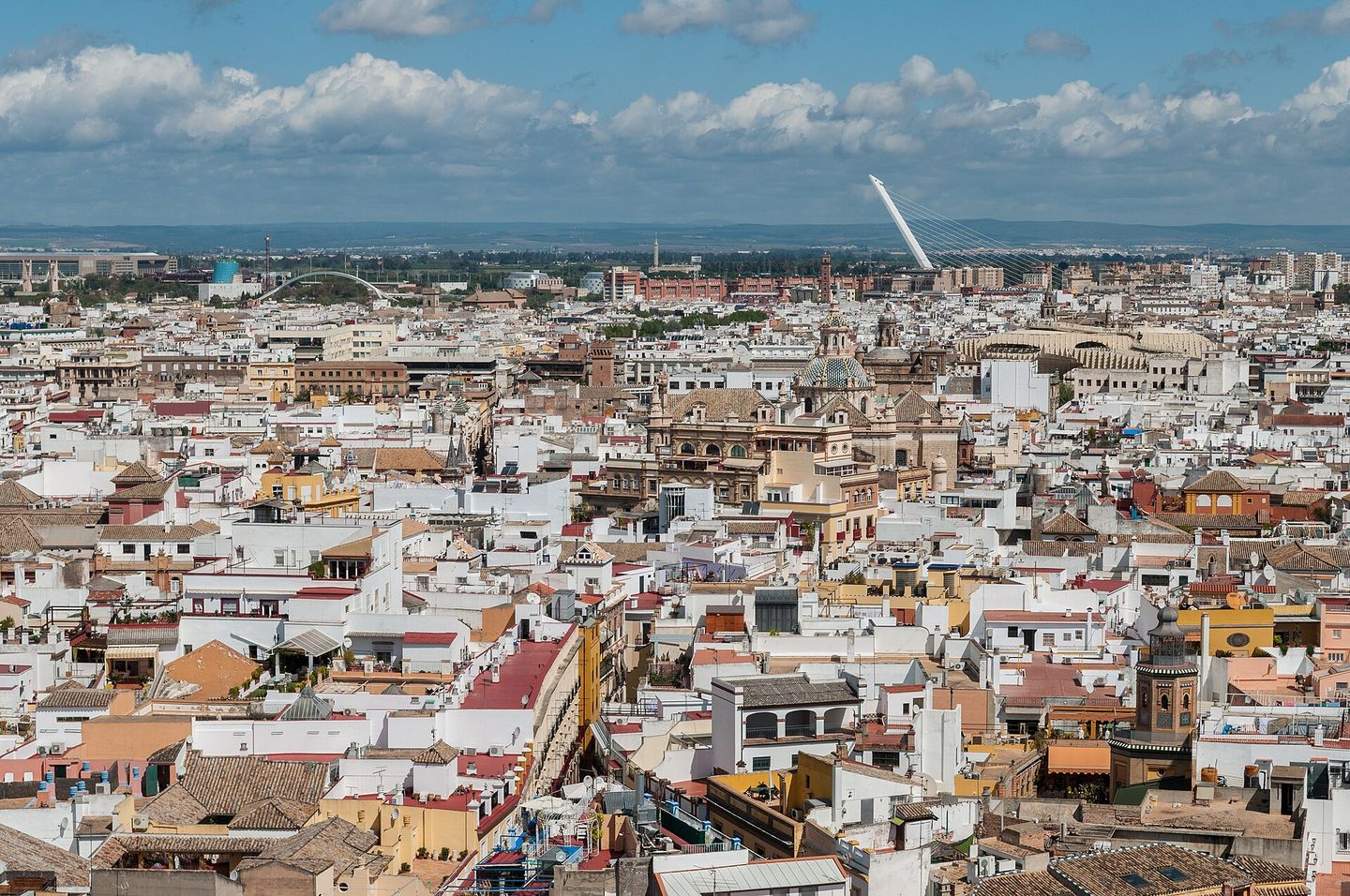
Seville is the city people mean when they say Spain and picture something specific — orange trees, tiled courtyards, a guitar somewhere in the dark, dinner at eleven. It is one of the rare places that actually delivers the cliché, which is either the highest compliment you can pay a city or a warning about what happens to a place that knows exactly what visitors want from it. The truth sits somewhere in between, and finding it is mostly a matter of geography and timing.
The old centre is small — you can cross it on foot in twenty-five minutes — and it holds three of the most extraordinary buildings in Europe within a few hundred metres of each other: the cathedral with its Almohad minaret, the Alcázar with its Mudéjar ceilings and water gardens, and the Archivo de Indias where the paperwork of an empire is still stacked on the shelves. Around them spreads a maze of lanes that was laid out by people avoiding the sun, not planning a grid, and the disorientation is part of the pleasure.
What this dispatch is really about is the rest of it: which side of the river to sleep on, why August is a genuinely bad idea rather than a mild inconvenience, how the tapas system actually works when nobody explains it to you, and where the city goes when it gets tired of being looked at. Seville rewards a slower, later, more social visit than most people arrive prepared for.
The caseWhy Seville is worth the detour
Andalusia has a lot of beautiful towns and Seville is not the prettiest of them. Granada has the Alhambra and the Sierra Nevada behind it. Córdoba has the Mezquita, which is arguably the single most astonishing interior in Spain. Cádiz has the Atlantic. What Seville has instead is scale and life — it is a real city of nearly seven hundred thousand people that happens to contain world-class monuments, rather than a monument with a town attached.
That distinction matters more than it sounds. It means there is a genuine dinner scene rather than a tourist strip, that the flamenco you stumble into at midnight in Triana might be the real thing rather than a scheduled show, and that walking ten minutes off the cathedral square puts you somewhere ordinary and pleasant instead of somewhere dead. The Alcázar alone justifies the trip — a palace complex begun under Muslim rule and rebuilt over six centuries by Christian kings who kept hiring Moorish craftsmen because nobody else could do the work — but the reason to stay four days rather than two is the city around it.
The other honest argument is climate, inverted. Seville is punishingly hot for a third of the year, which means the other two-thirds are extraordinary. A February afternoon here is shirt-sleeve weather in a courtyard full of orange trees while most of Europe is grey and closed. Off-season Seville is one of the best value city breaks on the continent, and almost nobody plans it that way.
The calendarWhen to go — and when absolutely not to
March to early May is the answer, with one enormous caveat. Spring here is close to perfect: warm days, cool evenings, the orange blossom out and scenting entire streets in a way that sounds like marketing copy until you walk through it. October and November are the other sweet spot, quieter and softer, with the heat broken and the light gone amber.
The caveat is that spring is also when the city's two vast festivals land. Semana Santa, the week before Easter, brings enormous hooded processions through the streets night after night — genuinely extraordinary to witness, and genuinely disruptive if you had other plans, since routes close the centre for hours at a time. Two weeks later the Feria de Abril fills a purpose-built fairground with striped tents, horses and sherry for a solid week. Both are worth planning a trip around. Neither is worth stumbling into by accident with a packed sightseeing itinerary and a hotel booked at four times the normal rate.
Avoid July and August. This is not the usual hedge about summer crowds — Seville regularly runs past forty degrees, the record sits above forty-six, and the city genuinely empties because locals leave. Sightseeing between noon and six becomes an endurance exercise rather than a pleasure, and half the good restaurants close for the month. If August is your only window, restructure the day entirely: out early, indoors and horizontal through the afternoon, out again after nine. Winter is the underrated option — mild, cheap, quiet, and the monuments have no queues at all.
LogisticsGetting around
Walk. The historic centre is compact and largely pedestrianised or nearly so, and the lanes of Santa Cruz and the Alfalfa are too narrow for anything else. Almost every sight you have heard of sits within a twenty-minute walk of the cathedral. Download an offline map before you start, because the medieval street plan was designed to confuse and it still does — the streets bend, rename themselves and dead-end without warning.
For anything further out, the tram and single metro line are limited but the bus network is decent, and a Tarjeta Multiviaje card brings the per-ride fare down noticeably if you are using it more than a few times. The real local transport story is bicycles: Seville built out a genuinely excellent protected bike-lane network in the late 2000s and the SEVici bike-share is cheap, ubiquitous and pleasant on the flat. This is one of the easier European cities to cycle in.
Crossing the river to Triana is a five-minute walk over the Isabel II bridge from the centre, so do not let the water put you off staying on that side. Taxis are affordable and metered; use them at night if you are far out, but they are slower than walking in the old town. From the airport, the EA airport bus runs to the centre for a few euros and takes around thirty-five minutes, which is the sensible default unless you land late with luggage.
The tableHow to eat tapas without getting it wrong
The single most useful thing to understand is that tapas here is a format, not a menu category. You are not ordering a set of small plates to share as a meal in one place. You are having one or two dishes and a drink standing at a bar, then leaving, then doing it again somewhere else. The going out is the point. Sit down at a table in the first place you find, order six things, and you have technically eaten tapas while missing the entire experience.
Sizes go tapa, then media ración, then ración — small, half, full. Order tapas at the bar, raciones at a table, and expect the bar price and the table price to differ. Say what you want out loud and confidently; nobody is coming to take your order, and hovering politely will leave you unfed for a long time. The bill is usually chalked on the bar in front of you or remembered, and it is always less than you expect.
What to actually eat: espinacas con garbanzos (spinach and chickpeas, Moorish, better than it sounds), carrillada (slow-braised pork cheek), salmorejo — the thicker, richer Córdoban cousin of gazpacho, topped with egg and jamón — and in summer, anything fried, because Andalusia fries fish better than anywhere else in Spain. Drink fino or manzanilla, the bone-dry sherries served cold, which is what this food was built around and which almost every visitor skips in favour of an indifferent beer. In hot months, order tinto de verano rather than sangría; it is what locals actually drink and it costs a third as much.
On timing: the kitchen rhythms here are late even by Spanish standards. Lunch runs from two to four and is the bigger meal. Dinner does not meaningfully begin before nine-thirty and a bar at eight will be empty and slightly sad. Adjust or eat alone.
The mapNeighbourhoods to know
Santa Cruz is the old Jewish quarter east of the cathedral and the postcard version of Seville — whitewashed walls, iron balconies, tiled patios glimpsed through open gates, streets barely wide enough for two people. It is also the most heavily touristed square kilometre in Andalusia, and by midday in season it can feel like a queue with architecture. Beautiful at eight in the morning and after ten at night; hard work in between.
El Arenal, between the cathedral and the river, is quieter and more workaday, anchored by the bullring and some genuinely old bars. La Alfalfa and Santa Catalina, north of the centre, are where the balance tips toward locals — a dense, scruffy, excellent grid of tapas bars where the crowd on a Thursday night is Sevillano rather than visiting. This is where to go for the evening.
Across the river, Triana is the counterweight to the whole thing: historically the sailors' and ceramicists' and flamenco barrio, still fiercely separate in its own self-image, with a market, a riverfront of restaurants facing back at the old town, and the best concentration of serious flamenco outside a paid tablao. Further north, La Macarena is younger, cheaper and rougher-edged, with the city's most impressive surviving stretch of Almohad walls. Which of these you choose to sleep in changes the trip more than any other decision you will make.
Field intelligencePractical intelligence
Book the Alcázar and the cathedral online, in advance, with timed slots. This is not optional advice in season — walk-up queues for the Alcázar routinely run over an hour and sometimes sell out entirely for the day. Aim for the first slot of the morning or the last of the afternoon; the gardens in particular are transformed when the light is low and the tour groups have gone.
The siesta is real here in a way it no longer is in Madrid or Barcelona. Many independent shops genuinely close from around two until five, and in summer the streets in that window are empty for good reason. Plan the indoor, air-conditioned or horizontal part of your day around it rather than fighting it.
A few smaller things. Seville is a safe city by European standards, with the usual pickpocketing around the cathedral and on crowded festival nights — normal vigilance, no paranoia. Tipping is minimal: rounding up, or a euro or two on a good meal. Tap water is safe and free if you ask for agua del grifo, though many bars will steer you to bottled. Free entry to the cathedral is available at certain times for visitors who book ahead through the parish schedule, and several museums are free to EU citizens with ID. Finally, the flamenco question: the large tablao shows are professional and expensive and perfectly enjoyable, but for something closer to the real thing look for a peña, the members' clubs that hold public nights, mostly in Triana. It will be later, cheaper, less polished and considerably more interesting.
Field notesWhat to see & do
-
Real Alcázar
A royal palace complex begun under Muslim rule and rebuilt over six centuries, where Christian kings kept commissioning Moorish craftsmen because nobody else could carve plasterwork like that. The gardens alone are worth an hour.
On the groundBook the earliest timed slot online and go straight past the first courtyards to the Patio de las Doncellas before the groups arrive.
-
Seville Cathedral & the Giralda
The largest Gothic cathedral in the world, built on the footprint of the mosque it replaced, with the old Almohad minaret still standing beside it as a bell tower. The climb up is ramps, not stairs — built for a man on horseback.
On the groundThe Giralda ramp is easy but the top is a bottleneck; go up first thing, then do the cathedral floor afterwards when everyone else is queueing for the tower.
-
Plaza de España
A vast semicircular pavilion of brick, tile and balustrade built for the 1929 Ibero-American Exposition, with a canal you can row and a tiled bench for every province of Spain. Unapologetically theatrical.
On the groundLate afternoon light hits the tilework best, and the adjoining Parque de María Luisa is the shadiest place in the city on a hot day.
-
Triana
The barrio across the river with its own church, its own market built over the ruins of the Inquisition's castle, and a long claim to being where Sevillano flamenco actually lives. Walk the Calle Betis riverfront at dusk.
On the groundCross at Isabel II bridge, eat in the covered market at lunch, and come back after ten for the bars along Calle Pureza rather than the tourist-facing riverfront.
-
Metropol Parasol (Las Setas)
A colossal undulating timber canopy dropped into a square in the old town, loathed on arrival and now quietly beloved. Roman ruins in the basement, a market at ground level, and a walkway across the top.
On the groundGo up at sunset — the ticket includes a drink and the rooftop walkway gives you the cathedral silhouette against the sky.
-
Casa de Pilatos
A sixteenth-century aristocratic palace that mixes Mudéjar tilework with Italian Renaissance sculpture, and receives a small fraction of the Alcázar's crowds despite being nearly as beautiful.
On the groundPay for the upper floor as well; the guided visit upstairs is short and the painted ceilings are the best part.
-
Hospital de los Venerables & the Baroque churches
Seville's Baroque legacy is scattered through unremarkable doorways all over the centre — gilded retablos, Murillo canvases, and interiors that give no clue from the street.
On the groundDuck into any open church you pass. The Iglesia del Salvador and Santa María la Blanca reward the two minutes it costs to look.
-
Archivo General de Indias
The archive of the Spanish empire in the Americas, housed in a former merchants' exchange — shelf after shelf of the actual paperwork, including documents in Columbus's hand. Free, quiet and largely ignored.
On the groundIt sits between the cathedral and the Alcázar, so slot it into the gap between two timed tickets rather than making a separate trip.
On the groundWhere things are
Map data © OpenStreetMap contributors.
Where to stayBase yourself well
Santa Cruz
Best for first-timers who want to step out the door into itThe postcard quarter — whitewashed lanes, hidden patios and the cathedral at the end of the street. Maximum atmosphere and maximum footfall, so you are trading quiet for the shortest possible walk to everything.
Hotel Casa 1800 Sevilla
The old-house conversions here are the point — an interior patio with orange trees is worth more on a hot day than any amount of square footage.
€€€A small guesthouse on a quiet lane behind the cathedral
Aim for the eastern edge of the barrio toward Santa María la Blanca; you keep the location and lose most of the daytime crowd noise.
€€El Arenal
Best for central location without the crushBetween the cathedral and the river, anchored by the bullring. Central and walkable but distinctly calmer than Santa Cruz, with older, less self-conscious bars and an easy walk to the Triana bridge.
Hotel Bécquer
This stretch stays quiet after dark while remaining ten minutes from the cathedral on foot, which is a rare combination in central Seville.
€€€A riverside apartment facing the Guadalquivir
Worth paying up for a balcony here — the walk along the river into the centre is the nicest commute in the city.
€€Triana
Best for repeat visitors and anyone who wants evenings among localsAcross the river and proud of it. A working barrio with a market, a ceramics tradition, serious flamenco and a riverfront that looks back at the old town. Five minutes over the bridge, a different city in temperament.
A rooftop-terrace apartment near the Triana market
Terraces matter more here than anywhere — this is a barrio that lives outside, and the view back across the water at night is the whole argument for staying on this side.
€€A small hotel off Calle San Jacinto
The pedestrianised spine of Triana puts bars, the market and the bridge all within a few minutes, at noticeably lower rates than the equivalent walk in Santa Cruz.
€€La Alfalfa & Santa Catalina
Best for eating and drinking as the priorityNorth of the cathedral, the dense tapas grid where Sevillanos actually go out. Fewer monuments on the doorstep, far better odds that the bar you walk into on a Tuesday is full of people who live here.
A boutique hotel near Plaza de la Alfalfa
You are inside the best bar-crawl radius in the city, which also means some late-night street noise; ask for an interior room.
€€La Macarena
Best for budget travellers and longer staysNorth again, younger and rougher-edged, with the surviving Almohad city walls and the basilica at its heart. The cheapest central-ish option and the least visited, at the cost of a longer walk to the monuments.
A simple apartment near the Basílica de la Macarena
Twenty minutes on foot to the cathedral, which is nothing in a city this flat, and rates drop sharply the further north you go.
€Affiliate notePostcardRoute is reader-supported. Some links to accommodation are affiliate links: if you book through them we may earn a small commission at no extra cost to you. We only recommend places we would send a friend.
Beyond the cityWorthwhile day trips
- Córdoba
Forty-five minutes on the high-speed train to the Mezquita, a mosque-cathedral of red-and-white striped arches that is arguably the most extraordinary interior in Spain. Easily done in a day, and the train makes it painless.
- Cádiz
An hour and a half to the oldest continuously inhabited city in Western Europe, jutting into the Atlantic on a sandbar. Sea air, fried fish, crumbling grandeur and beaches — the antidote to inland heat.
- Jerez de la Frontera
An hour by train to the home of sherry and the Andalusian horse. Book a bodega tour, drink fino where it is made, and understand what all those bars in Seville were pouring.
- Itálica
Twenty minutes out to a Roman city with a vast amphitheatre and intact floor mosaics, birthplace of two emperors and considerably quieter than any of the above. A half-day at most.
Before you goCommon questions
- How many days do you need in Seville?
- Three full days is the sensible minimum — one for the Alcázar and cathedral, one for Triana and the river, and one loose day for the Plaza de España, the smaller palaces and simply walking. Four lets you add a day trip to Córdoba or Cádiz without cutting anything. Two days covers the headline monuments but leaves no room for the evenings, which is where the city is at its best.
- What is the best area to stay in Seville for first-timers?
- Santa Cruz or El Arenal. Santa Cruz puts you inside the postcard with everything on your doorstep, at the cost of daytime crowds. El Arenal, just west toward the river, is only a few minutes further from the cathedral but noticeably calmer and often better value. If you have visited before, or care more about eating than sightseeing, cross the river to Triana instead.
- Is Seville too hot to visit in summer?
- July and August are genuinely difficult, not merely warm — temperatures routinely exceed forty degrees, many restaurants close for the month, and midday sightseeing is unpleasant rather than just tiring. It can be done if you invert the day: monuments at opening, indoors through the afternoon, out again after nine. But if your dates are flexible, come in spring, autumn or even winter instead.
- Do I need to book Alcázar tickets in advance?
- Yes. Timed-entry tickets sell out days ahead in high season, and the walk-up queue can run over an hour when they do not. Book online as soon as your dates are fixed and take the first slot of the day if it is available — the palace and gardens are dramatically better before the mid-morning crowds arrive.
- When do people actually eat dinner in Seville?
- Late. Kitchens rarely get going before nine-thirty, and a bar at eight in the evening will be quiet and half-empty. Lunch, from around two to four, is the larger meal of the day. The practical move is to have a late lunch, an afternoon break, and then start the evening properly around ten rather than trying to impose a northern European schedule on the city.
- Is Semana Santa a good time to visit Seville?
- It is spectacular and it is disruptive, and you should choose deliberately rather than arrive by accident. The processions are among the most striking religious events in Europe, but they close streets for hours at unpredictable times, accommodation prices multiply, and normal sightseeing becomes difficult. Come for the processions themselves, or come two weeks either side of them.
- Where can you see real flamenco in Seville?
- The large tablao shows in the centre are professional, reliable and priced accordingly — a perfectly good introduction. For something closer to the source, look for a peña, the members' flamenco clubs that hold public nights, concentrated in Triana. They start late, cost little, and are considerably less polished, which is rather the point.