
Latvia · Riga
Riga, gilded and unhurried
The largest city in the Baltics has more Art Nouveau buildings than Paris and Vienna combined, a UNESCO Old Town built on Hanseatic trade, and crowds that still haven't caught up to the architecture.
Dispatch from the Art Nouveau capital the Baltics kept mostly to themselves · 56.95° N · 24.11° E
Plan this trip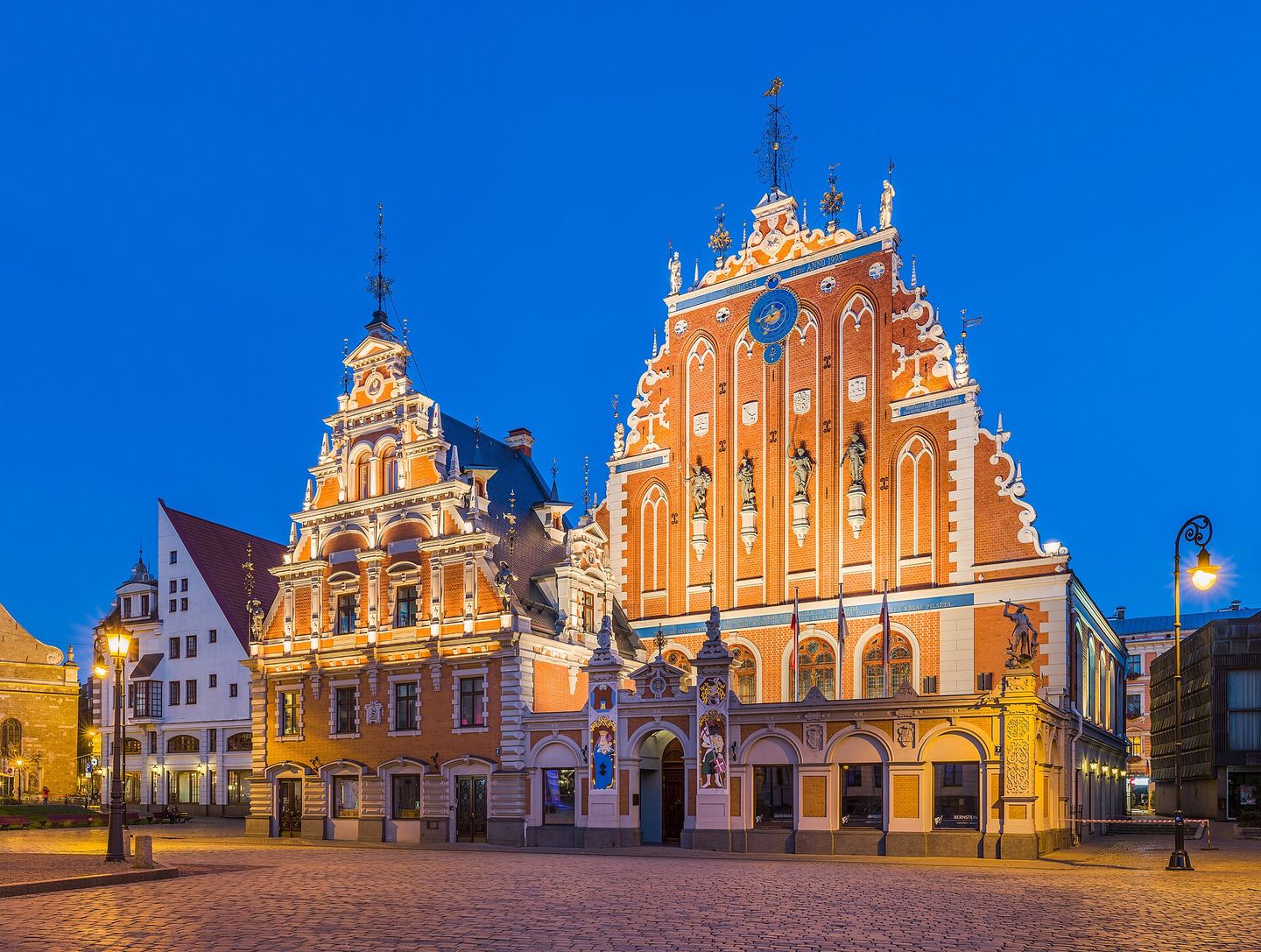
Riga has an odd habit of being described as an undiscovered version of somewhere else — the next Prague, the next Tallinn, the Paris of the Baltics — when what it actually is turns out to be more specific and more interesting than any of those comparisons. This is a city that was, for a few decades either side of 1900, one of the wealthiest ports in the Russian Empire, and the merchants and architects who got rich on flax, timber and grain spent that money building what is now the largest and most intact collection of Art Nouveau architecture anywhere on earth — more than eight hundred buildings, entire streets of them, sculpted faces and peacocks and screaming masks worked into stone facades that most visitors have never heard of until they are standing under one.
That district sits a short walk from a UNESCO-listed medieval Old Town that predates it by six centuries, a warren of guild halls, spires and cobbled squares built on the Hanseatic trade that first put Riga on the map. Between the two, and around them, is a city of just over half a million people that still runs at a genuinely Baltic pace — long, unhurried summer evenings on café terraces, a Soviet-era past that shows up in tower blocks and a still-functioning Zeppelin-hangar market rather than being scrubbed away, and a food and coffee scene that has quietly become one of the best in the region without much outside attention.
This dispatch is not a rush through the postcard steeples. It is the version aimed at someone with three or four days who wants to understand how Riga actually fits together — where the Art Nouveau district rewards slow walking rather than a single photo stop, why the Central Market deserves a full morning, which riverside neighbourhood to base yourself in, and the practical details that turn a quick Baltic stopover into the trip people come home talking about.
The caseWhy Riga earns more than a day
Most itineraries treat Riga as a one- or two-night add-on to Tallinn or Vilnius, and that undersells it badly. Riga is the largest city in the three Baltic states by a wide margin, and it has an architectural density that neither of its neighbours can match — UNESCO recognised the Old Town specifically for the way medieval, Gothic, Baroque and Art Nouveau layers sit stacked on top of each other across a genuinely walkable centre, rather than for any single monument.
The Art Nouveau (Jugendstil) quarter, concentrated along Alberta iela and Elizabetes iela just north of the Old Town, is the real headline and the thing almost no first-time visitor expects. Architect Mikhail Eisenstein — father of the filmmaker Sergei Eisenstein — designed some of its most theatrical facades, all sculpted lions, mythical faces and geometric ornament, and the district reads less like a scattered handful of buildings and more like an entire neighbourhood built by people competing to out-decorate each other.
Layer onto that a genuinely excellent, still-underrated food scene built around New Nordic-influenced Latvian cooking, a Central Market housed in five former Zeppelin hangars that remains a real working market rather than a tourist stage set, and a river-and-park green belt that rings the Old Town where the city's old fortifications used to stand, and the case for Riga stops being about ticking off a UNESCO site and starts being about a capital that rewards genuine time.
The calendarWhen to go
Late May through August is Riga at its most alive — long daylight stretching past 10pm in June, café terraces and beer gardens full along the canal and the river, and the Baltic Sea beach town of Jūrmala twenty minutes away by train becoming a legitimate half-day trip rather than a cold, closed-up detour. This is also peak season, so book Old Town accommodation ahead and expect the main squares to be busy, though Riga never gets Prague- or Dubrovnik-level overwhelmed even in July.
September and early October are arguably the sweet spot for anyone prioritising atmosphere over guaranteed warmth: the summer crowds thin out, the Art Nouveau facades look particularly good in low autumn light, and prices ease. Riga's Christmas market, centred on Dome Square, is one of the more atmospheric in the region and runs from late November through early January, worth planning around if you don't mind the cold and the short daylight hours.
Winter proper — January through March — is genuinely harsh, with temperatures regularly below freezing and daylight in short supply, but it is also when hotel rates drop hardest and the Old Town's cobbled streets look their most atmospheric under snow, if you pack for it seriously. Spring (April to early May) is the one stretch worth deprioritising on a flexible schedule: it is cold, grey and slushy without much compensating charm.
LogisticsGetting around
The Old Town and the Art Nouveau district are both entirely walkable and best explored on foot — the two sit close enough together that most visitors never need transit for the historic core at all. The Bastejkalns park and canal that separate them, following the line of the city's old moat, make for one of the more pleasant short walks in Europe, and doubles as the natural route between the two districts.
For anywhere further out — Central Market, the Āgenskalns district across the river, or the airport — Riga's tram, trolleybus and bus network (Rīgas satiksme) is cheap, frequent and easy to use with a rechargeable e-talons card, sold at kiosks and machines across the network. The trams in particular are a pleasant way to see more of the city than the compact centre; several routes cross the river or run out toward the greener, more residential districts.
Riga International Airport connects to the centre via bus route 22 in about 30 minutes, considerably cheaper than a taxi and reliable outside the latest and earliest hours. Jūrmala and the beach towns are a straightforward local train ride from Riga Central Station — the line to Majori, Jūrmala's main stop, runs frequently and takes around 30 to 40 minutes, making it an easy half-day or full-day escape without a car.
The tableHow Riga actually eats
Riga's food scene has quietly become one of the more interesting in Northern Europe over the last decade, built on a New Nordic-adjacent movement that takes Latvian ingredients — foraged mushrooms and berries, rye, smoked fish, root vegetables — and treats them with the same seriousness Copenhagen brought to Danish cooking twenty years ago. It shows up at every price point, from tasting-menu restaurants to unpretentious neighbourhood kitchens serving updated versions of grey peas with bacon or rye bread soup.
The Central Market (Centrāltirgus), housed in five converted Zeppelin hangars left over from the First World War, is the essential stop for understanding how the city actually eats — smoked fish stalls, farmers selling honey and pickled vegetables, and a genuinely local crowd doing their weekly shop rather than a market curated for visitors. Go hungry, graze, and don't skip the smoked eel or the sprats, both Baltic specialities worth trying at least once.
Beyond the market, look for rupjmaize (dark rye bread, close to a national symbol and the base of half the country's traditional dishes), speķa pīrāgi (small bacon-and-onion filled pastries, sold everywhere as a snack), and Rīgas Melnais balzāms — Riga Black Balsam, a fiercely bitter herbal liqueur that locals drink neat, in coffee, or mixed with blackcurrant juice as a considerably more approachable introduction. Craft beer has also taken off hard here; Riga's bar scene now runs well beyond the tourist-facing Old Town squares into genuinely good taprooms in Miera iela and the emerging districts across the river.
The mapNeighbourhoods to know
Old Town (Vecrīga) is the medieval core and the obvious first stop — Dome Square, St. Peter's Church, the House of the Blackheads and the narrow lanes between them, dense with restaurants, bars and souvenir shops. It is compact enough to see in a day but rewards slower repeat visits at different times, since the crowds and character shift noticeably between a busy Saturday afternoon and a quiet weekday morning.
The Art Nouveau (Jugendstil) quarter, centred on Alberta iela, Elizabetes iela and Strēlnieku iela just north of the park ring, is the district that actually justifies a longer stay. It reads as a genuine residential neighbourhood rather than a museum piece — most of the buildings are still lived in — so pace yourself, look up constantly, and don't rush a district built specifically to reward exactly that.
Āgenskalns, across the river via the Vanšu or Akmens bridges, is a quieter, increasingly fashionable wooden-house district with its own Art Nouveau pockets, good cafés and a noticeably calmer, more local pace than the centre — worth an afternoon for anyone staying more than two days. Miera iela, further out past the Central Market, has become the city's creative and craft-beer strip, a formerly industrial street now filled with independent bars, design shops and studios, and the closest Riga gets to a proper up-and-coming neighbourhood.
Field intelligencePractical intelligence
Currency is the euro, and Latvia is comfortably part of the Schengen area with no border formalities from most of Europe. Cards are accepted almost everywhere, including small cafés and market stalls, though it's worth carrying some cash for the rare exception. Tipping around 10 percent for good restaurant service is appreciated and increasingly standard, though not strictly obligatory the way it is in the United States.
English is widely spoken in the Old Town, hospitality industry and among younger Latvians generally, though Russian remains widely understood as a second language given the country's history — a sensitive topic worth being aware of rather than a conversation starter. Latvian itself is famously difficult for outsiders, so don't expect to pick up more than a greeting or two, and that's entirely normal.
The Old Town's cobblestones are genuinely uneven in places, so pack shoes that can handle them, especially if visiting after rain. Riga's weather runs colder and greyer than Western Europe expects at the same latitude equivalent; layer accordingly even in shoulder season. Pickpocketing is low by European capital standards but not absent — normal awareness around Dome Square and the train station is sufficient. Tap water is safe to drink throughout the city.
Field notesWhat to see & do
-
Art Nouveau district (Alberta iela)
The largest concentration of Art Nouveau architecture on earth, entire streets of sculpted faces, peacocks and geometric ornament, much of it designed by Mikhail Eisenstein — father of filmmaker Sergei Eisenstein.
On the groundWalk Alberta iela slowly and look up constantly; the best details are two and three storeys above street level and easy to miss at a glance.
-
House of the Blackheads
A dazzling stepped-gable guild hall on Town Hall Square, originally built in 1334 for unmarried merchants, destroyed in WWII and rebuilt from scratch in the 1990s as an act of national reconstruction.
On the groundCome at dusk when the facade is lit — it is one of the most photographed buildings in the Baltics for good reason.
-
St. Peter's Church
A soaring Gothic brick church whose 123-metre spire has collapsed and been rebuilt three times across its history; a lift to the observation deck gives the best rooftop panorama of Old Town and the river.
On the groundGo up on a clear afternoon for the light on the terracotta rooftops — the view is worth prioritising over several ground-level sights.
-
Central Market (Centrāltirgus)
One of the largest and oldest markets in Europe, housed in five former Zeppelin hangars, where smoked fish, rye bread, pickles and honey are sold to a genuinely local crowd rather than a tourist stage set.
On the groundGo on a weekday morning for the least crowded, most authentic version, and try the smoked sprats straight from a stall.
-
Riga Cathedral & Dome Square
The largest medieval church in the Baltics, its origins dating to 1211, ringing Riga's central square with cafés and street performers, and home to one of Europe's largest historic organs.
On the groundCheck for an organ concert during your visit — the acoustics inside the cathedral are genuinely exceptional.
-
Bastejkalns Park & the canal
A green ring following the line of the city's demolished medieval fortifications, with a canal you can cross by small boat in summer, connecting the Old Town to the Art Nouveau district on foot.
On the groundTake the short canal boat trip in summer for a different, low-effort angle on the park and the Freedom Monument.
-
Freedom Monument
A 42-metre granite and copper monument to Latvia's independence, topped by a bronze figure locals call 'Milda,' and a genuine site of national pride watched over by an honour guard.
On the groundTime a visit to the top of the hour to see the changing of the guard, a brief but well-attended local ritual.
-
Latvian National Museum of Art
A grand early-20th-century building holding the country's best collection of Latvian painting, recently and thoughtfully renovated, with a permanent collection spanning the 18th century to today.
On the groundBudget an hour and a half; the top-floor 20th-century Latvian collection is the highlight for most first-time visitors.
On the groundWhere things are
Map data © OpenStreetMap contributors.
Where to stayBase yourself well
Old Town (Vecrīga)
Best for first-timers and short staysThe medieval core, packed with restaurants, bars and the headline sights within a ten-minute walk of almost anywhere inside it. Atmospheric but the busiest and noisiest part of the city at night.
A boutique hotel on a quiet Old Town side street
Look a block or two off the main squares to keep the location without the late-night bar noise.
€€€A budget guesthouse near St. Peter's Church
Central and walkable, with rates well below the squares directly on Town Hall Square.
€Art Nouveau district (Centrs)
Best for a calmer base with easy walking to everythingThe elegant, tree-lined streets north of the park ring, quieter than Old Town at night, with the district's famous facades as your everyday backdrop and the Old Town a short walk away.
A design-led hotel near Elizabetes iela
Puts the Art Nouveau quarter's best streets on your doorstep, with the Old Town ten minutes away on foot.
€€€Āgenskalns
Best for longer stays and a more local feelA quieter wooden-house district across the river, with its own café culture and a noticeably more residential, local pace than the centre.
A neighbourhood apartment stay near Kalnciema Quarter
A short tram ride from Old Town, with better value and a genuinely local neighbourhood on your doorstep.
€€Affiliate notePostcardRoute is reader-supported. Some links to accommodation are affiliate links: if you book through them we may earn a small commission at no extra cost to you. We only recommend places we would send a friend.
Beyond the cityWorthwhile day trips
- Jūrmala
A string of Baltic Sea beach towns twenty to forty minutes away by train, with wide white-sand beaches, wooden Art Nouveau summer villas, and a relaxed resort pace popular with Rigans on any warm weekend.
- Sigulda & Gauja National Park
An hour by train into Latvia's 'Switzerland' — forested river valleys, medieval castle ruins, and a cable car across the Gauja gorge, an easy full day of outdoor scenery a world away from the city.
- Rundāle Palace
A two-hour drive or bus to a Baroque palace often called the 'Versailles of Latvia,' designed by the same architect behind the Winter Palace in St. Petersburg, with formal gardens best seen in late spring or summer.
Before you goCommon questions
- How many days do you need in Riga?
- Three full days covers Old Town, the Art Nouveau district and the Central Market at an unhurried pace. Four days lets you add a day trip to Jūrmala or Sigulda without feeling rushed. A single overnight, common on Baltic multi-city itineraries, only really shows you Old Town.
- What is Riga actually known for?
- Its Art Nouveau architecture above all — the largest concentration anywhere in the world, concentrated in streets just north of the Old Town. Add a UNESCO-listed medieval centre, a five-hangar Zeppelin-era market, and a fast-improving New Nordic-influenced food scene, and that's the core of Riga's appeal.
- Is Riga expensive to visit?
- No — Riga remains one of the more affordable capitals in the EU. Public transit, market food and mid-range restaurants all run noticeably cheaper than Western Europe, though Old Town restaurants directly on the main squares charge a tourist premium worth avoiding.
- Is Riga safe to visit?
- Yes, by ordinary European capital standards. Petty theft exists around the train station and busy Old Town streets, so keep normal awareness, but violent crime against visitors is rare and most neighbourhoods are comfortable to walk after dark.
- What is the best time of year to visit Riga?
- Late May through August for long daylight, terrace season and an easy Jūrmala beach trip. September and early October trade some warmth for thinner crowds and excellent light on the Art Nouveau facades. Winter is atmospheric around the Christmas market but genuinely cold.
- How do I get from Riga Airport into the city centre?
- Bus route 22 runs from the airport to the city centre in about 30 minutes and is considerably cheaper than a taxi. Taxis and rideshare apps are readily available and take roughly 20 minutes outside rush hour.