
Greece · South Aegean (Dodecanese)
Rhodes: a fortress that happens to have beaches
The largest of the Dodecanese islands spent two centuries as the headquarters of a crusading order, and the walled town they left behind is still the main event.
A knights' citadel wrapped around a beach island · 36.43° N · 28.22° E
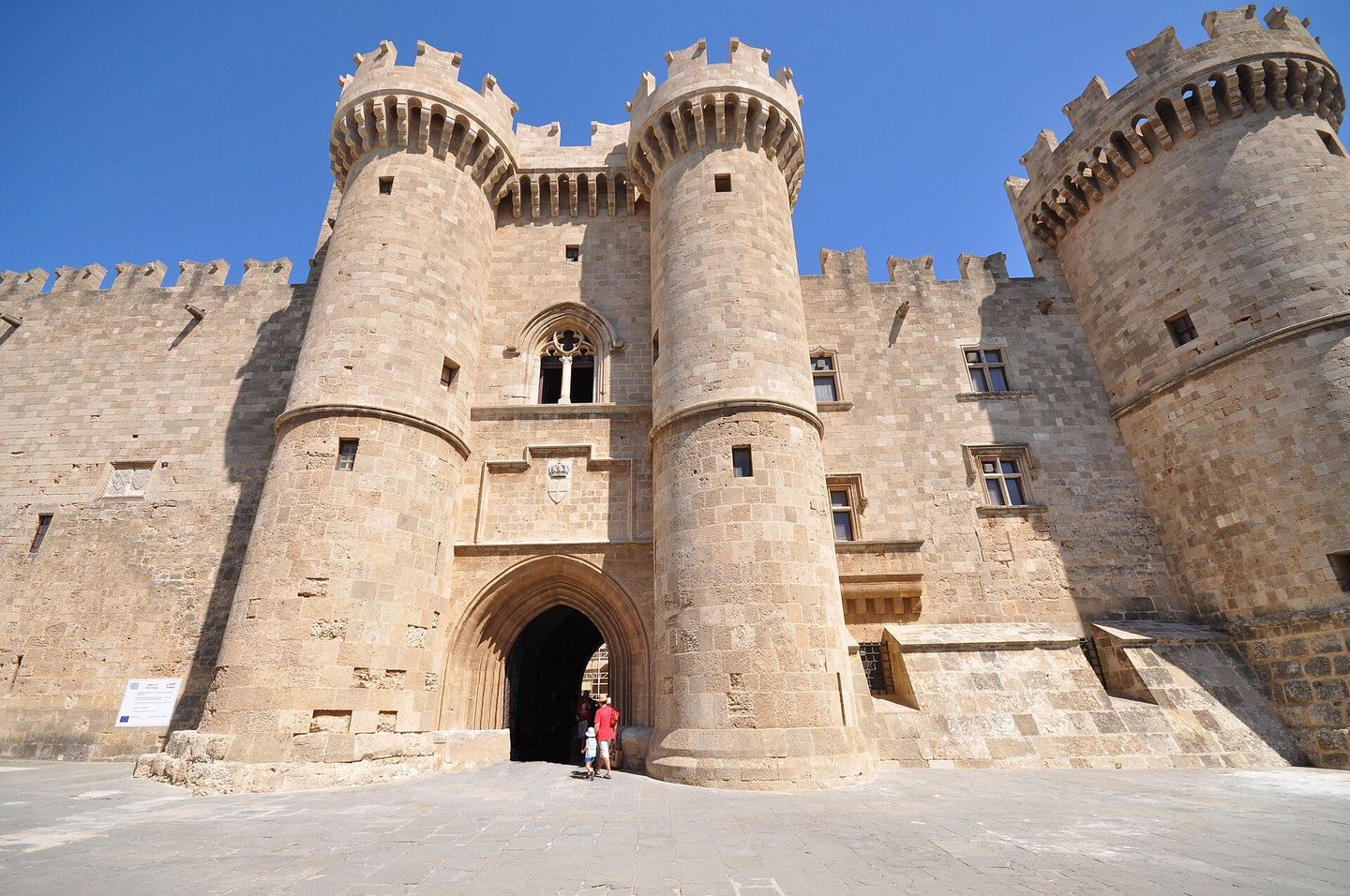
Most Greek islands sell you a view. Rhodes sells you a history lesson you didn't know you wanted, wrapped around a view. For two centuries, between 1309 and 1522, the island was the sovereign headquarters of the Knights Hospitaller, a militarised crusading order that built themselves a walled capital so formidable it took the full weight of the Ottoman Empire, and two failed sieges, to finally take it. What they left behind — the Palace of the Grand Master, the Street of the Knights, four kilometres of intact fortification — makes Rhodes Town one of the few places in the Mediterranean where you can walk a genuinely medieval street grid rather than a reconstruction of one, which is exactly why UNESCO inscribed it in 1988 as one of Europe's best-preserved inhabited medieval towns.
That history is only half the island, though. Rhodes is also simply big — at roughly 1,400 square kilometres it's the largest island in the Dodecanese — and the other half is beach-resort Greece in full: package hotels strung along the east coast at Faliraki and Kolymbia, a cliff-top village at Lindos that rivals Santorini for photogenic density, a windsurfing peninsula at the southern tip, and an interior of pine-covered hills and valleys that most visitors never see because the coast keeps them busy. The island works at more than one speed, and the trick is figuring out which parts are worth your time before the itinerary gets decided for you by a hotel brochure.
This is a researched, compiled guide, not a diary of one trip — it's built to help you decide how to split your time between the Old Town's stone and the coast's sand, when to go to dodge both the July heat and the worst of the cruise-ship crowds, and which of the island's lesser-known corners (a thermal spa from the 1920s, a valley full of moths that everyone insists are butterflies) are worth the detour.
The caseWhy Rhodes earns the two-week package-holiday reputation — and why that's not the whole story
Rhodes built its modern tourism industry on a simple trade: reliable sun, long sandy beaches, and direct charter flights from across Northern Europe, which is why it's been a fixture of package-holiday brochures for decades and why a lot of travellers write it off as generic beach Greece before they've seen it. That reputation is earned by the resort strip, and it's also almost entirely beside the point if you spend any real time in the Old Town.
What the brochures undersell is the scale of what the Knights of St John actually built here. This isn't a single restored building or a token medieval quarter bolted onto a modern town — it's four kilometres of walls, a moat, eleven towers, and a street grid that has been continuously inhabited since the 14th century, home today to roughly 6,000 people living inside a UNESCO World Heritage Site. Add Lindos's acropolis stacked on top of 2,500 years of continuous settlement, Kamiros's untouched ancient ruins, and a south coast wild enough that windsurfers fly in specifically for it, and the honest pitch for Rhodes is that it does two very different kinds of trip well: lie-on-a-beach Greece and genuinely serious history, often in the same afternoon.
The calendarWhen to go
Late May through June, and September into early October, are the sweet spots most seasoned visitors land on, and for good reason — the sea has warmed up or is still warm, daytime temperatures sit in the comfortable high 20s to low 30s Celsius rather than the furnace of midsummer, and the beaches and Old Town streets haven't filled up with the full July–August crowd. June in particular tends to get the best weather scores: long sunshine hours, minimal rain, and a sea that's just starting to feel properly swimmable.
July and August are peak season for a reason — reliably hot, reliably busy — but the trade-off is real. Expect the Old Town's main thoroughfares to be genuinely overrun by midday, driven in large part by cruise-ship crowds disembarking at Mandraki, and expect beach resort towns like Faliraki to be running at full capacity. If you're set on a summer trip, build in early mornings and late afternoons for the Old Town and treat the midday hours as pool or beach time instead. September is arguably the single best month for a lot of visitors: the sea is at its warmest after a full summer of heating up, crowds and prices both start to ease, and the light turns noticeably softer for photos. Winter (November through March) is the quiet season — many coastal hotels and restaurants close entirely, bus and ferry schedules thin out dramatically, and a rental car stops being optional if you want to see anything outside Rhodes Town.
LogisticsGetting around
Rhodes Town itself is walkable, and the Old Town's narrow lanes are pedestrianised and largely closed to cars, so once you're inside the walls you're on foot regardless. For anywhere beyond the capital, the choice is really between buses and a rental car, and the honest answer is that a car earns its cost the moment you want to see more than two or three things in a day. Public buses run from the stations near Mandraki Harbour down both coasts to the resort towns and to Lindos, but frequency drops off outside peak season, and the quieter interior villages and the southern beaches around Prasonisi are poorly served or not served at all by bus.
Rent a car or a scooter for a few days if your plan includes Lindos, Kamiros, the Valley of the Butterflies, or the south coast — all of those are most comfortably done as half- or full-day drives rather than bus connections. Taxis exist and are metered, but on an island this size they add up fast for anything beyond short hops. If you're island-hopping onward, ferries leave from Mandraki Harbour and the nearby commercial port for Symi (roughly 50 minutes on a fast ferry, 80 minutes on the slower car ferry), with several sailings a day in high season on operators including Blue Star Ferries and Dodekanisos Seaways — book ahead in July and August, when demand for the Symi run is highest.
The tableWhat to actually eat
Rhodian food draws on the same Greek and broader Aegean pantry as everywhere else in the islands — grilled fish, village salad, tzatziki — but it has its own specific signature dishes worth actively seeking out rather than settling for a generic taverna menu. Pitaroudia are the one to order first: crisp-edged chickpea fritters, usually mashed with onion, tomato and mint before frying, sold everywhere from tavernas to street stalls and often the best cheap, filling thing on the menu. Giaprakia (stuffed vine leaves) and soupioryzo — rice cooked in cuttlefish ink, dense and briny in a way that photographs badly and tastes considerably better than it looks — are both distinctly Dodecanesian rather than generic Greek.
For dessert, melekouni is the dish to know: a dense sesame-and-honey confection studded with almonds and citrus peel, traditionally served at Rhodian weddings and baptisms and sold year-round in the Old Town's sweet shops as a genuinely local souvenir rather than a tourist-trap one. Rhodes also has a winemaking history that predates most of what's drunk in mainland Greece today — amphorae stamped with Rhodian seals have turned up across the ancient Mediterranean as evidence the island was exporting wine more than two thousand years ago. Modern Rhodian wineries keep that tradition alive on a smaller scale; ask any decent taverna for a local bottle rather than the house default, and don't be surprised if ouzo appears unasked alongside the bill, Greek-island style.
The mapOld Town, New Town, and the resort coast
The Old Town is the medieval walled city and far and away the most atmospheric place to base yourself — cobbled lanes, the Street of the Knights, hotels occupying genuinely historic buildings, and a short walk to everything that matters. The trade-off is that cars are heavily restricted inside the walls, which means lugging bags over cobblestones from the nearest gate, and that the main streets near the harbour gates get swamped with day-trippers from late morning through mid-afternoon in high season.
Just outside the walls, the New Town around Mandraki Harbour offers a calmer, more modern base — the marina promenade, shopping streets, ferry connections, and beaches within walking distance, all without the Old Town's cobblestone-and-crowds trade-off. Further down the east coast, Faliraki is the island's established party resort: big beach, big nightlife, not the place for a quiet trip. Kolymbia, Stegna and Haraki, a bit further south, offer a calmer, more family-oriented version of the same east-coast beach-resort formula. On the west coast, Ixia and Ialyssos sit between Rhodes Town and the airport and read as a strip of large hotel complexes rather than a village — convenient for flights, short on character. And then there's Lindos, an hour south by car or bus, which functions almost as its own separate destination: a whitewashed hillside village under its own ancient acropolis, beautiful, well known, and consequently busy with day-trippers for most of the day.
Field intelligencePractical intelligence
The Old Town's cobbled, pedestrianised lanes are hard going in anything but proper walking shoes — leave the sandals for the beach. If you're visiting in July or August, plan museum and monument visits for the first couple of hours after opening; by mid-morning, cruise-ship arrivals at Mandraki push crowds into the Palace of the Grand Master and the Street of the Knights in waves that make either one considerably less pleasant to see.
Summers are genuinely hot and dry, so carry water even for short walks and treat the hottest midday hours (roughly noon to 4pm) as swimming or shade time rather than sightseeing time. If a day trip to the Valley of the Butterflies is on your list, note the butterfly (technically moth) season runs roughly mid-June to mid-September, and that keeping noise down is the one real request the site makes of visitors, since the moths are easily disturbed. And if you're renting a car for the south coast, fill the tank in Rhodes Town or one of the larger towns before heading down — petrol stations thin out noticeably past Lindos.
What to see & do
-
Palace of the Grand Master
The fortified seat of the Knights Hospitaller's government, begun in the 1440s and finished by 1489 — a genuine Gothic castle with vaulted halls, a mosaic-floored upper storey, and the thickest walls in the Old Town.
Tip:Visit right at opening to see the upper-floor mosaic rooms before tour groups arrive; afternoons get crowded fast in summer.
-
Street of the Knights (Odos Ippoton)
A steep cobbled street running from the old Hospital up to the Palace, lined on both sides by the restored Inns of the Order's different language groups — one of the best-preserved medieval streets anywhere in Europe.
Tip:Come early morning or after sunset, when the street empties out and the cobblestones and stonework actually photograph the way they look in person.
-
Mandraki Harbour
The old commercial harbour, its entrance marked by two columns topped with bronze deer that legend places as the site of the Colossus of Rhodes — no proof survives, but the view across the water at dusk doesn't need the legend to work.
Tip:Walk the harbour at golden hour rather than midday; the Fortress of St Nicholas and the windmills line up best in late light.
-
Lindos and its Acropolis
A whitewashed village beneath a dramatic rock acropolis holding the Temple of Athena Lindia and fortifications added later by the Knights — often called Greece's second-most important acropolis after the one in Athens.
Tip:Go early or take the 15-minute climb rather than hiring a donkey; the site is at its best, and least crowded, before 10am.
-
Kamiros
One of Rhodes's three ancient city-states, its ruins laid out across a hillside amphitheatre about a kilometre from the sea — far less visited than Lindos, and correspondingly quieter and more atmospheric.
Tip:Pair it with the Valley of the Butterflies on the same drive down the west coast — they're a short distance apart.
-
Valley of the Butterflies (Petaloudes)
A shaded, stream-fed valley on the island's west side that fills with Jersey tiger moths (universally called butterflies locally) from roughly mid-June to mid-September — a genuinely cool, green break from the coastal heat.
Tip:Keep noise to a minimum; the moths scatter at the slightest disturbance, and a quiet approach is the only way to actually see them settled.
-
Kallithea Thermal Springs
A striking 1929 spa building on a small bay south of Rhodes Town, designed by an Italian architect during the island's period of Italian rule, restored and reopened to the public after years of neglect.
Tip:Go for the architecture and the small sheltered cove as much as the springs themselves — it's as much a photogenic stop as a wellness one.
-
Prasonisi
The sandy spit at the island's southern tip where the Aegean and Mediterranean meet, and one of Europe's best-known windsurfing and kitesurfing spots thanks to the strong, reliable Meltemi winds of July and August.
Tip:Visitors who don't surf can still enjoy a calmer swim on the sheltered side of the spit while watching the kites work the windier side.
-
Anthony Quinn Bay
A small rocky cove south of Rhodes Town named for the actor who reportedly fell for it while filming nearby and later bought land around it — now a popular swimming and snorkelling stop, with Ladiko Bay next door as the quieter overflow.
Tip:Arrive early to claim a rock ledge before coach tours fill the access points by mid-morning.
On the groundWhere things are
Map data © OpenStreetMap contributors.
Where to stayBase yourself well
Old Town (Medieval City)
Best for first-timers prioritising history and atmosphereSleeping inside the walls, among the actual medieval streets — unmatched atmosphere, cobblestones underfoot, and everything within a short walk. Cars are restricted inside, so arriving with luggage takes some planning.
A boutique hotel in a restored Ottoman-era building near the Street of the Knights
Several of the Old Town's small hotels occupy genuinely historic buildings; book one close to a gate to minimise the luggage-over-cobblestones walk.
€€€A guesthouse tucked off a quiet Old Town side lane
Stepping even one street back from the main tourist thoroughfares buys real quiet after the day-trippers leave in the evening.
€€New Town / Mandraki
Best for travellers who want Old Town access without Old Town logisticsA short walk outside the walls, with harbour promenades, shopping streets, easy ferry access, and nearby town beaches — a more modern, convenient base without the cobblestone trade-offs.
A mid-range hotel near the Mandraki waterfront
Close enough to walk into the Old Town in minutes, with easier car access and parking than inside the walls.
€€Faliraki
Best for beach-and-nightlife package tripsThe island's biggest purpose-built beach resort, with a long sandy beach, water sports, and a nightlife strip that runs late — built for a lively beach holiday, not a quiet one.
A large beachfront resort hotel on the main Faliraki strip
Expect a resort-complex feel with pools, water sports and organised activities rather than village charm.
€€Kolymbia, Stegna & Haraki
Best for families and couples wanting beach quiet without total isolationA quieter stretch of the east coast past Faliraki — smaller hotels, calmer beaches, and a more family-oriented pace, while still close enough to Lindos for an easy day trip.
A smaller family-run hotel near Kolymbia's eucalyptus-lined main road
This stretch trades some nightlife for a genuinely calmer beach scene and easier parking.
€€Lindos
Best for couples and anyone prioritising scenery over central-Rhodes convenienceA whitewashed hillside village beneath its own acropolis, an hour from Rhodes Town — among the most photogenic bases on the island, and correspondingly busy with day-trippers through the middle of the day.
A traditional whitewashed guesthouse on a Lindos backstreet
Staying overnight means you get the village to yourself in the early morning and evening, after the day-trip coaches have gone.
€€€Affiliate notePostcardRoute is reader-supported. Some links to Booking.com (stays, flights, car hire, tickets and tours, airport transfers) are affiliate links, tracked through CJ Affiliate: if you book through them we may earn a small commission at no extra cost to you. We only recommend places we would send a friend.
Book the restEverything else for the trip
Stay sorted? These open Booking.com for the other legs of the journey.
-
Tours & tickets
Things to do
Tickets, tours and activities, anywhere.
Browse activities -
Wheels
Car hire
Compare rental companies worldwide.
Compare cars -
Air
Flights
Search fares, then come back for the neighbourhood advice.
Search flights -
Ground
Airport transfers
Book a taxi or private transfer before you land.
Book a transfer
Affiliate noteThese four links are affiliate links too: if you book through them we may earn a small commission at no extra cost to you.
Beyond the cityWorthwhile day trips
- Symi
A pastel-painted harbour island reached by ferry from Mandraki in 50 minutes to just over an hour — one of the prettiest ports in the Aegean and an easy full-day round trip.
- Lindos and the southeast coast
Combine the acropolis and village with a swim at one of the beaches nearby, or push on to Prasonisi at the southern tip for the windsurfing scene.
- Kamiros, Petaloudes and the west coast
A single drive down the west coast road links the ancient ruins at Kamiros with the Valley of the Butterflies — a quieter, greener contrast to the east coast's beach resorts.
Before you goCommon questions
- How many days do you need in Rhodes?
- Five to seven days lets you properly split time between the Old Town, Lindos, and at least one beach day without rushing. Three days works if you focus tightly on Rhodes Town and a single day trip to Lindos, but you'll be trading away the island's quieter corners like Kamiros and the south coast.
- What is the best area to stay in Rhodes?
- The Old Town for atmosphere and walkability, if you don't mind cobblestones and summer crowds; the New Town around Mandraki for a calmer, more convenient base that's still an easy walk from the walls. Beach-first travellers should look at Faliraki for nightlife or Kolymbia and Stegna for a quieter resort pace.
- Is Rhodes worth visiting outside of summer?
- Yes, with caveats. Late spring (May–June) and early autumn (September–October) offer warm weather with far fewer crowds and are widely considered the best overall windows. Winter is genuinely quiet — many coastal hotels and restaurants close, and bus schedules thin out — so a car becomes close to essential if you visit then.
- Do I need a car to see Rhodes properly?
- Not for Rhodes Town itself, but yes for most of the rest of the island. Buses connect the main coastal towns and Lindos reasonably well in high season, but Kamiros, the Valley of the Butterflies, Prasonisi and the quieter inland villages are far easier, and sometimes only reasonably possible, with a rental car or scooter.
- How do I get from Rhodes to Symi?
- Ferries leave from Mandraki Harbour (occasionally the nearby commercial port) and take roughly 50 minutes on a fast catamaran or around 80 minutes on a slower car ferry. Several daily sailings run in summer on operators including Blue Star Ferries and Dodekanisos Seaways; book ahead in July and August.
- Is the Rhodes Old Town crowded with cruise-ship visitors?
- It can be, particularly from late morning through mid-afternoon in July and August, when the Street of the Knights and the Palace of the Grand Master see the heaviest foot traffic. Visiting at opening time, or after about 5pm once day-trip crowds have cleared out, makes a noticeable difference.
- What is the one dish to try in Rhodes that you won't find everywhere else in Greece?
- Pitaroudia — crisp chickpea fritters with onion, tomato and mint — are the island's signature savoury dish and worth ordering ahead of a generic mixed meze plate. For dessert, melekouni, a sesame-honey confection traditionally served at weddings, makes a genuinely local souvenir.