
Iceland · Capital Region
Reykjavík is not the waiting room
Two-thirds of Iceland's population lives in and around this small, low, brightly painted city, and most visitors give it an afternoon between a lagoon and a glacier. It deserves better than that.
Dispatch from the small northern capital that most visitors treat as a car park · 64.15° N · 21.94° W
Plan this trip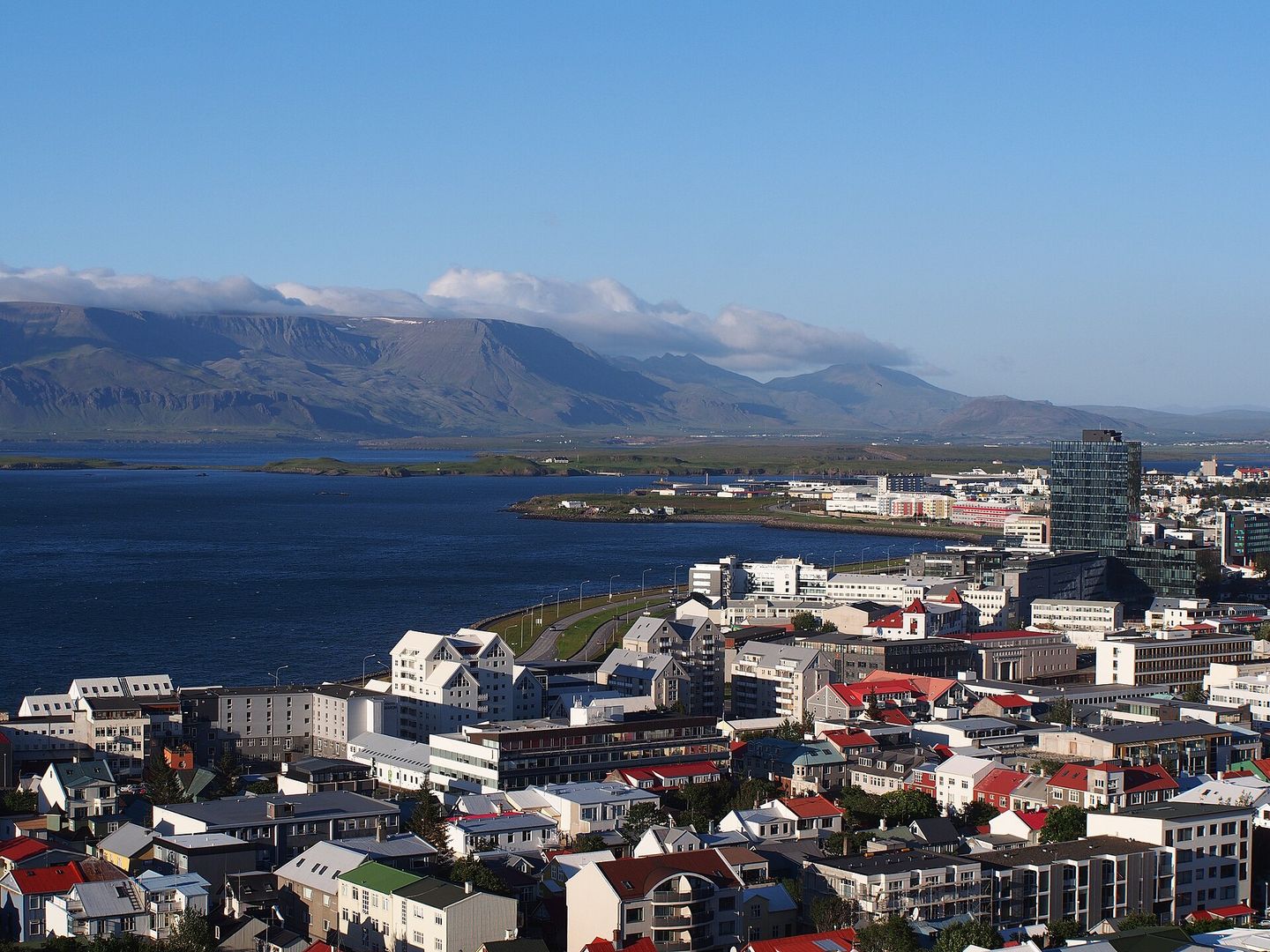
Reykjavík has a strange relationship with the people who visit it. Roughly two million travellers a year pass through Iceland, and a very large proportion of them treat the capital as the place where the rental car is collected — a night before the Golden Circle, a night after the south coast, an afternoon of souvenir shopping in between. The city is polite about this. It has, after all, built much of its recent economy on exactly that traffic.
But it is worth resisting. This is the northernmost capital of any sovereign state, a city of around 140,000 people, home with its surrounding municipalities to about two-thirds of everyone in Iceland. It is small enough to cross on foot in half an hour and strange enough to reward several days of doing so: streets of corrugated-iron houses painted in colours that only make sense under a northern sky, a concrete church modelled on basalt columns, a Viking-age longhouse excavated in situ underneath an office building, and a public bathing culture that is the single most authentically Icelandic thing available to a visitor.
It is also, and this will be a recurring theme, expensive in a way that catches people out even when they have been warned. Iceland is a small island importing nearly everything, with high wages and high taxes, and the arithmetic shows up on every restaurant bill. The good news is that the best things here — the pools, the walks, the light, the water — are either free or close to it. This dispatch is about where to base yourself, how the pools work, what to skip, and how to spend three days here without the bill becoming the thing you remember.
The caseWhy the city is worth more than an afternoon
The honest case for Reykjavík is not that it out-competes other European capitals on monuments. It does not have them. The case is that it is a genuinely unusual small city with a very high concentration of things you cannot do elsewhere, and that the standard two-night stopover reduces it to a shopping street and a photograph of a church.
Start with the pools, because they are the answer to what Icelanders actually do. Every neighbourhood has a geothermally heated outdoor swimming pool surrounded by hot pots at graded temperatures, open early until late, all year, in every weather, for a few euros. This is not a spa experience sold to visitors — it is the social infrastructure of the country, the place where people meet, argue, gossip and sit in forty-degree water while it snows on their heads. An hour at Laugardalslaug or Vesturbæjarlaug will tell you more about Iceland than any museum.
Then there is the Settlement Exhibition, which is the best small museum of its kind anywhere. During construction work in the early 2000s, the remains of a Viking-age longhouse were found in the middle of downtown, datable to before the year 1000 by the volcanic ash layer running beneath it. Rather than move it, the city built the exhibition around the excavation in place, so you walk around the actual turf wall foundations of a hall standing where it was built eleven centuries ago. Add Harpa, the glass concert hall on the harbour whose construction was famously completed anyway after the 2008 banking collapse froze everything else, and the view from Hallgrímskirkja's tower over roofs painted red, green and blue, and there is more than a single afternoon here.
The calendarWhen to go
The two seasons that matter are light and dark, and they offer completely different trips. June and July give you the midnight sun: the sky never properly darkens, the sun sets around midnight and comes back within a couple of hours, and the whole country stays awake. Highland roads are open, day trips run at full frequency, and the weather is at its least hostile. It is also peak season, at peak prices, with the popular sights busy from mid-morning.
September through March is the aurora season, and the trade is straightforward: you get darkness, lower prices and a real chance at the northern lights, in exchange for short days and worse weather. December has around four hours of usable daylight, which sounds grim and is in practice quite atmospheric, with the city fully lit and Christmas markets running. February and March are the sweet spot for aurora hunting — long nights, but with enough daylight left to actually do things.
The shoulder months, May and September, are underrated and probably the best all-round choice. You get long days without the July crowds and prices, most tours running, and in September a decent shot at the lights toward the end of the month. Whenever you come, do not plan around the weather forecast more than about two days out. Iceland's weather is genuinely, famously changeable, and the thing that will affect your plans is not cold — Reykjavík is milder than its latitude suggests, hovering around freezing in midwinter — but wind, which can be extraordinary and which closes roads.
LogisticsGetting around
Downtown Reykjavík is small. The area most visitors care about, the 101 postcode, runs from the old harbour up to Hallgrímskirkja and along Laugavegur, and you can walk from end to end in twenty-five minutes. Do not rent a car for the city itself; parking downtown is metered, limited and pointless when everything is this close together. Strætó, the yellow city buses, cover the wider capital region well enough for the pools and Perlan, with tickets bought in the Klappið app.
Rent a car for the country, not the capital, and pick it up when you leave the city rather than on arrival. If your plan is the Golden Circle and the south coast, a two-wheel-drive car is fine in summer; anything involving the interior F-roads needs a proper four-wheel drive and those roads are closed outside the summer months regardless. Two pieces of local knowledge that cost visitors real money: gravel damage and wind damage are usually excluded from basic insurance and are the two most common claims in Iceland, and opening a car door in a strong wind can tear it off its hinges. Hold the door.
From Keflavík airport, the airport bus services take around forty-five minutes to an hour into the city and drop at the BSÍ terminal or, for a supplement, at hotels. There is no train. The Blue Lagoon sits roughly between the airport and the city, which is why the standard advice is to do it on the way in or out rather than as a separate trip — though note that eruptions on the Reykjanes peninsula have forced temporary closures more than once in recent years, so check its current status rather than assuming.
The tableEating and drinking without a second mortgage
Restaurant prices in Reykjavík are among the highest in Europe, and the reason is structural rather than a tourist markup: almost everything is imported to a small island with high wages. A mid-range dinner for two with wine is a serious sum. Accepting that up front, there are ways to eat well here that do not involve one blowout a day.
The cheap end is genuinely good. The Icelandic hot dog, made with lamb as well as pork and served with crisp fried onion, raw onion, ketchup, sweet brown mustard and remoulade, is a national institution, and the stand by the harbour that has been selling them since 1937 has a queue for a reason. Ask for it with everything. Soup served in a bread bowl, usually lamb or fish, is the standard cheap lunch and is often excellent. Supermarkets — Bónus and Krónan rather than the convenience chains — are where residents shop, and self-catering even part of the time changes the budget substantially.
At the other end, the New Nordic influence has produced a serious restaurant scene built around lamb, cod, langoustine, skyr and foraged herbs. If you have one big meal in Iceland, have it here rather than in a small-town hotel restaurant. Skip the fermented shark unless you actively want the experience; it is a dare rather than a dish, and no Icelander is eating it by choice on a Tuesday.
On alcohol: it is heavily taxed and sold, outside of bars and restaurants, only by Vínbúðin, the state monopoly, which keeps limited hours and is closed on Sundays. Buy at the airport duty-free on arrival like everybody else. And a piece of history that explains a lot about Icelandic drinking culture: beer was actually illegal here until the first of March, 1989, an anniversary the country still marks.
The mapNeighbourhoods to know
Downtown, the 101 postcode, is where nearly everything is: Laugavegur and Skólavörðustígur for shops and restaurants, the old harbour for whale watching and the Grandi warehouses, Harpa on the waterfront, and Hallgrímskirkja on the hill above. It is also where the bars are, which is worth knowing on a Friday night — Reykjavík's rúntur, the downtown pub crawl, runs very late and very loudly on weekends, so a room on Laugavegur is a decision, not an accident.
Vesturbær, the west side beyond the pond, is the quiet residential alternative: low houses, the university, and Vesturbæjarlaug, the neighbourhood pool that most locals will tell you is the best one to sit in. It is a fifteen-minute walk from the centre and considerably calmer.
Laugardalur, east of downtown, is the green sports valley — the national stadium, the botanic garden, a small family zoo, and Laugardalslaug, the largest pool in the city with a fifty-metre outdoor lane pool and a bank of hot pots. Further out again, Perlan sits on Öskjuhlíð hill on top of the city's hot water storage tanks, with an observation deck and an artificial ice cave inside.
Across the bay in Kópavogur, Sky Lagoon opened in 2021 as the near alternative to the Blue Lagoon — a geothermal infinity pool looking out over the North Atlantic, twenty minutes from downtown rather than fifty. It costs a fraction less and involves a good deal less driving.
Field intelligencePractical intelligence
Learn the pool rules before your first visit, because they are enforced and getting them wrong is the classic visitor humiliation. You must shower thoroughly, naked, with soap, in the communal changing-room showers before entering the water. There are diagrams on the wall showing the areas to wash. This is not negotiable, attendants do check, and Icelanders find the foreign reluctance to do it genuinely unhygienic rather than charmingly shy. Bring your own towel or pay to rent one, and note that the pools use very little chlorine precisely because everyone washes.
The water situation takes a day to get used to. Cold tap water is glacial meltwater and is some of the best drinking water in the world — never buy it bottled. Hot tap water is geothermal and smells faintly of sulphur, which is normal and harmless and does not mean anything is wrong with the plumbing.
Iceland is effectively cashless. Cards work everywhere including the smallest rural petrol pump, and you will not need krónur in cash at any point. Tipping is not expected. English is universal.
For the northern lights, manage the expectation: they need darkness, a clear sky and solar activity all at once, and none of those are guaranteed on any given night. Check the Icelandic Met Office's aurora forecast, get away from the city's light, and give yourself several nights rather than betting a trip on one. Guided tours are worth it mainly because the driver knows where the cloud is not.
Finally, respect the weather warnings. When the Icelandic road administration or the Met Office issues a wind or storm warning, tours are cancelled and roads close, and this is not excessive caution. People die here every year going off-piste in bad conditions or standing too close to the sea on the black-sand beaches, where sneaker waves come much further up than they look like they will.
Field notesWhat to see & do
-
Hallgrímskirkja
The 74-metre concrete church on the hill above downtown, designed by Guðjón Samúelsson to echo the basalt columns of Iceland's lava flows, and completed in 1986 after decades of building.
On the groundPay for the tower lift. The view over the coloured rooftops toward the harbour and Mount Esja is the best in the city, and it takes fifteen minutes.
-
The Settlement Exhibition
A Viking-age longhouse excavated where it was built, dated by the volcanic ash layer beneath it to before the year 1000, with the exhibition constructed around the turf walls in situ underneath a downtown building.
On the groundSmall, and the best hour of history in Reykjavík. Do it before any day trip to Þingvellir — it makes the settlement story far more concrete.
-
Laugardalslaug and the neighbourhood pools
Geothermally heated outdoor pools with graded hot pots, open early to late all year for a few euros. Laugardalslaug is the biggest; Vesturbæjarlaug and Sundhöllin are the local favourites.
On the groundShower naked with soap before entering — it is compulsory and enforced. Go on a cold evening; sitting in forty-degree water in falling snow is the point.
-
Harpa concert hall
The glass-and-steel concert hall on the harbour, its honeycomb facade designed with Olafur Eliasson, which was completed after the 2008 crash rather than abandoned with everything else.
On the groundFree to walk into and wander the foyers, which is where the facade does its work with the light. Check the programme — concert tickets are cheaper than you would guess.
-
The old harbour and Grandi
A working harbour where whale-watching and puffin boats leave from, with the former fish-processing warehouses of Grandi now holding restaurants, a maritime museum and an ice cream shop with a permanent queue.
On the groundWhale watching runs year-round but summer is far better for both sightings and sea conditions. Puffins are only there from roughly May to August.
-
Sun Voyager (Sólfar)
Jón Gunnar Árnason's steel sculpture on the waterfront path, a skeletal abstraction of a ship pointed out to sea — an ode to the sun and to discovery rather than a Viking longship, despite what everyone assumes.
On the groundIt is a five-minute stop on the seafront walk between downtown and Harpa. Best at sunset, or at three in the morning in June, which is the same thing.
-
Perlan
A glass dome built on top of the city's geothermal hot water tanks on Öskjuhlíð hill, with a 360-degree observation deck and exhibitions including a walk-through artificial ice cave.
On the groundThe observation deck alone is worth it on a clear day. Walk up through the birch woods on the hill rather than taking the bus if the weather allows.
-
Sky Lagoon, Kópavogur
A geothermal infinity pool on the coast twenty minutes from downtown, looking out over the Atlantic, opened in 2021 as the close-to-town alternative to the Blue Lagoon.
On the groundBook a slot in advance and go late in the evening for the light. Considerably less driving than the Blue Lagoon, and less crowded.
On the groundWhere things are
Map data © OpenStreetMap contributors.
Where to stayBase yourself well
101 Downtown
Best for first-timers and short staysThe old centre between the harbour and Hallgrímskirkja, holding almost every restaurant, bar, shop and museum a visitor wants. Walkable end to end, and genuinely lively — which cuts both ways at weekends.
A boutique hotel near Skólavörðustígur
The rainbow street up to the church is the prettiest address downtown and one block off the noisiest stretch of Laugavegur.
€€€€A guesthouse near the old harbour
Walkable to everything, quieter at night than the bar strip, and closest to the whale-watching departures.
€€€Vesturbær
Best for quiet, and a longer stayThe residential west side beyond the pond — low houses, the university, and the neighbourhood pool locals rate highest. Fifteen minutes' walk from downtown and much calmer at night.
An apartment near Vesturbæjarlaug
Self-catering makes a real difference to an Iceland budget, and having the best neighbourhood pool at the end of the street is not a bad arrangement.
€€€Laugardalur
Best for families and driversThe green sports and recreation valley east of the centre, with the biggest pool in the city, the botanic garden and the campsite. Twenty minutes by bus or forty on foot from downtown.
A family hotel near the Laugardalur pool
Parking is easier out here than downtown, and the fifty-metre pool with its hot pots is the neighbourhood's centre of gravity.
€€Near Keflavík airport
Best for very early flights and lagoon stopoversNot Reykjavík at all — a functional cluster of hotels forty-five minutes from the city, next to the airport and the Reykjanes peninsula. Purely tactical.
An airport hotel near Keflavík
Worth it only for a dawn departure or a lagoon visit on the way out; do not spend a real night of your trip here.
€€Affiliate notePostcardRoute is reader-supported. Some links to accommodation are affiliate links: if you book through them we may earn a small commission at no extra cost to you. We only recommend places we would send a friend.
Beyond the cityWorthwhile day trips
- The Golden Circle
The standard first day out and deservedly so: Þingvellir, where the Icelandic assembly met from 930 and where the North American and Eurasian plates are visibly pulling apart; the Geysir field, where Strokkur erupts every few minutes; and Gullfoss, a two-tier waterfall dropping into a canyon. Around six to eight hours by car or coach.
- The south coast
A longer and, for many people, better day: the waterfalls at Seljalandsfoss and Skógafoss, the black-sand beach and basalt columns at Reynisfjara, and the village of Vík. Two and a half hours each way, so start early. Do not turn your back on the sea at Reynisfjara — the sneaker waves there have killed people.
- Reykjanes peninsula and the Blue Lagoon
Lava fields, geothermal vents and the famous milky-blue silica lagoon, all between the city and the airport, which makes it a natural arrival or departure stop. Volcanic activity on the peninsula has closed the lagoon temporarily more than once in recent years — check the current position before booking.
- Snæfellsnes peninsula
Sometimes called Iceland in miniature: a glacier-capped volcano, black churches, basalt sea stacks and fishing villages, about two hours north. A long day from Reykjavík and better as an overnight if you can spare it.
Before you goCommon questions
- How many days do you need in Reykjavík?
- Two full days does the city properly — the museums, the pools, the harbour and the church tower — and most people should add one or two more for day trips using Reykjavík as a base. If Iceland's landscape is the point of your trip, treat the city as two days at the start and rent the car afterwards rather than trying to do both at once.
- Is Reykjavík expensive?
- Yes, genuinely — it is one of the most expensive cities in Europe, driven by import costs, high wages and high taxes rather than tourist pricing. Restaurants and alcohol are the worst of it. Self-catering from Bónus or Krónan, eating hot dogs and soup at lunch, using the cheap public pools and buying duty-free alcohol on arrival all make a substantial difference.
- What are the rules at Icelandic swimming pools?
- You must shower naked with soap in the communal changing-room showers before you enter the water, washing the areas shown on the diagrams posted on the wall. It is compulsory, attendants do check, and it is the reason the pools need so little chlorine. Bring a towel or rent one, and rinse off again afterwards.
- Can you see the northern lights from Reykjavík?
- Occasionally, during a strong display, but the city's light pollution works against you. The season runs roughly September to March, you need darkness, clear sky and solar activity together, and the reliable approach is to get out of town — either on a guided tour, whose drivers chase the gaps in the cloud, or by driving somewhere dark yourself. Allow several nights rather than pinning hopes on one.
- Is the Blue Lagoon worth it, and is it open?
- It is a genuinely striking place and it is also the most expensive and most crowded geothermal bath in the country. Sky Lagoon in Kópavogur is closer to the city and cheaper, and the ordinary municipal pools are a fraction of the price and more authentically Icelandic. Volcanic activity on the Reykjanes peninsula has forced temporary Blue Lagoon closures more than once in recent years, so check its current status before booking anything around it.
- Do you need to rent a car in Reykjavík?
- Not for the city — downtown is walkable in half an hour and parking is metered and scarce. Rent one for the rest of Iceland, ideally collecting it when you leave the capital. Note that gravel and wind damage are typically excluded from basic insurance and are the two most common claims here, and that highland F-roads require a four-wheel drive and are closed outside summer.
- What is the best time of year to visit Reykjavík?
- June and July for the midnight sun, open roads and the warmest weather, at peak prices. September to March for the northern lights, lower prices and short days. May and September are the best compromise — long daylight, fewer crowds, most tours running, and in late September a real chance at the aurora.