
Mexico · Puebla
Puebla, tile by tile
A colonial capital built on a strict Spanish grid, decorated in glazed talavera, and fed better than almost anywhere else in Mexico.
Dispatch from the city that taught Mexico how to build a colonial grid · 19.04° N · 98.21° W
Plan this trip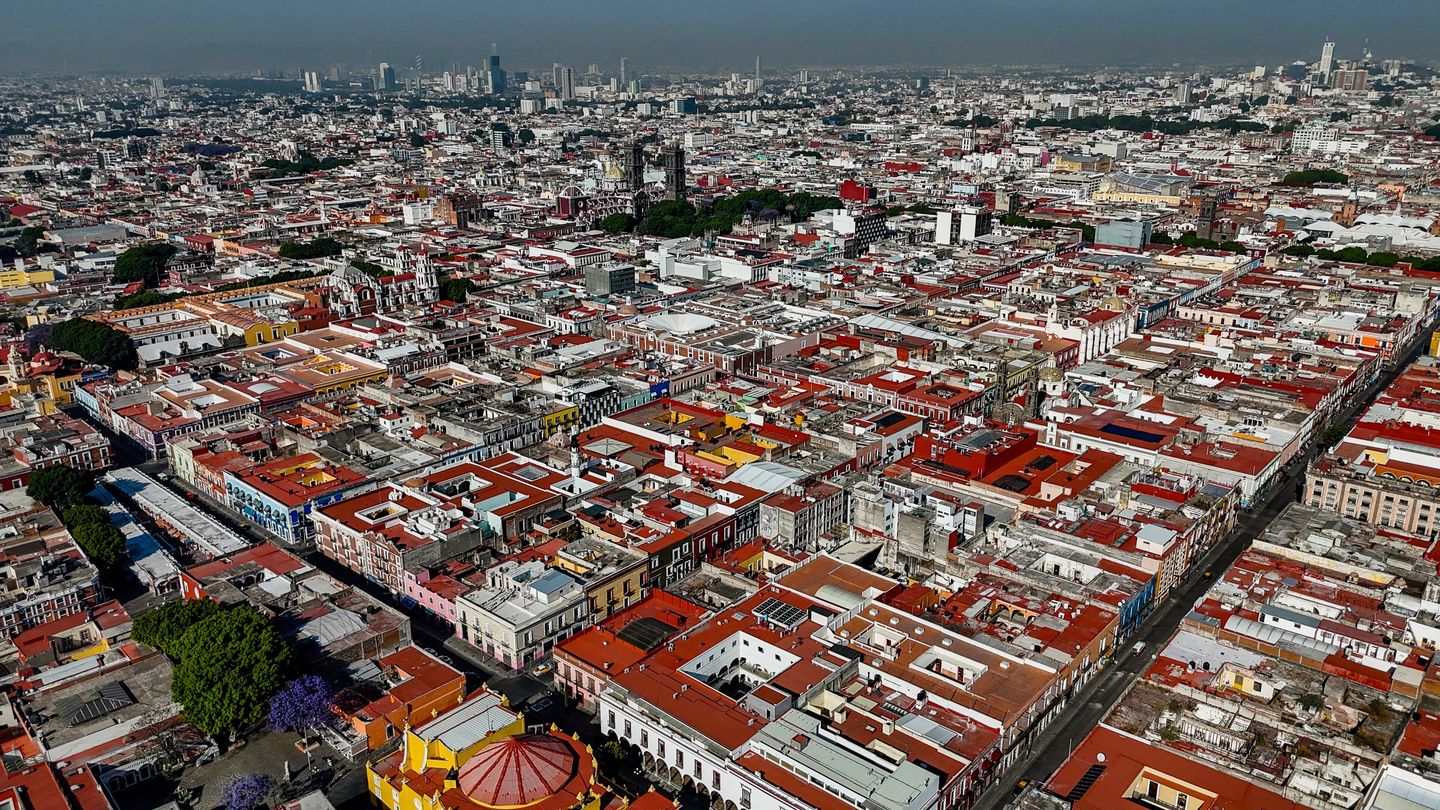
Puebla de Zaragoza does not announce itself the way Mexico City does. There is no single overwhelming plaza, no one museum everyone name-drops before they arrive. Instead there is a whole historic centre — one of the largest and best-preserved in the Americas, a UNESCO World Heritage Site since 1987 — built on an unusually rigid Spanish grid and finished, almost obsessively, in glazed talavera tile. Baroque church facades are studded with it. Kitchen walls wear it like wallpaper. Entire building fronts are checkerboarded in blue, yellow and white ceramic that has survived nearly five centuries of central Mexican weather and two volcanoes worth of ash.
This is also, by wide consensus, the birthplace of Mexico's most complicated dish. Mole poblano — that dark, patient sauce of chiles, spices, nuts and chocolate, simmered for hours and traditionally reserved for a wedding or a saint's day — was reportedly invented by nuns at the Convento de Santa Rosa, and Puebla has never stopped treating food as a serious civic achievement since. The cemita, a sesame-topped sandwich stacked with milanesa, string cheese, avocado and pápalo, is a full lunch and a minor point of local pride. Pair either with the fact that Puebla is where a badly outnumbered Mexican army beat the French on the 5th of May, 1862 — the actual reason the date matters, and it happened here, not in Mexico City, whatever the margarita specials elsewhere suggest.
None of this requires much hustle to see. Puebla's centro histórico is compact enough to walk in full over a long weekend, sits an hour and a half from Mexico City by frequent bus, and rewards a slow pace more than a checklist — a cathedral tower here, a tile workshop there, an unhurried three-hour lunch in between. Add the fact that the pre-Hispanic pyramid at Cholula is a tram ride away and two dormant volcanoes are visible from half the rooftops in town, and Puebla ends up being one of the better-value serious trips in the country, still comparatively overlooked by international visitors who fly straight past it toward the coast.
The caseWhy Puebla earns a place on the itinerary
Most travellers see Puebla, if they see it at all, as a day trip from Mexico City — squeezed between a bus ride and dinner back in the capital. That undersells it badly. Puebla's historic centre is denser with baroque architecture than almost anywhere else in the country, a legacy of the city's colonial-era wealth as the halfway point between the port of Veracruz and Mexico City, and its position as an early manufacturing centre for tiles, textiles and glass. The result is a downtown where you can turn a corner every few minutes and find another gilded church interior, another talavera-fronted mansion, another quiet interior courtyard doing nothing more ambitious than being beautiful.
It is also, unusually for a big Mexican city, genuinely walkable and calm at street level, with wide colonial-era pavements, low traffic in the historic core, and a public safety reputation that is markedly better than several more heavily marketed destinations. Add the food — this is a legitimate contender for Mexico's best regional cuisine, not just mole and cemitas but chiles en nogada in season and some of the country's most serious street-market cooking — and a weekend in Puebla stops feeling like a consolation prize next to Mexico City and starts feeling like its own destination.
The calendarWhen to go
Puebla sits at over 2,100 metres, so the climate runs cooler and drier than coastal Mexico year-round, and the difference between seasons is more about rain than heat. The dry season, roughly October through April, brings crisp mornings, warm early-afternoon sun and blue skies that make Popocatépetl and Iztaccíhuatl visible on the horizon far more often than in the wetter months. Evenings get properly cold in December and January, so bring a jacket even if the rest of your Mexico packing list skews tropical.
May through September is the rainy season, with reliable but usually short afternoon downpours rather than washed-out days — mornings and early afternoons are typically fine for sightseeing. If your trip allows any flexibility, aim for late July through September specifically for chiles en nogada, the walnut-sauce, pomegranate-seed dish tied to the pátriotic colours of the Mexican flag and traditionally served only in this narrow window when fresh walnuts and pomegranates overlap. Late September also brings Fiestas Patrias energy without the total crush of the 5 de Mayo commemorations, which are a bigger production in Puebla than anywhere else in the country and worth timing around deliberately, whichever way you'd prefer it — either to catch the parade or to avoid the crowds.
LogisticsGetting around
The historic centre is Puebla's whole game and it is entirely walkable — the strict Spanish colonial grid means street numbers actually tell you where you are (odd-numbered streets run one direction, even the other, radiating out from the Zócalo), and most of what matters sits within a fifteen-minute walk of the main square. Bring comfortable shoes for cobblestones and don't bother with a rental car for the centre itself; parking is a headache and everything worth seeing downtown is closer on foot than it looks on a map.
Puebla has no metro, but a combination of RUTA buses, the modern articulated buses running dedicated corridors, and cheap app-based taxis (Uber and DiDi both operate reliably here) cover everything beyond walking range, including the airport and the bus terminal (CAPU). For Cholula, the RUTA-based tranvía-style buses and taxis both run regularly and the trip takes about 30–40 minutes depending on traffic; it's close enough that many visitors base themselves in Puebla and treat Cholula as an easy half-day rather than a separate stop. Arriving from Mexico City, ADO's frequent first-class buses from the Terminal Oriente (TAPO) or the airport bus terminal to Puebla's CAPU take roughly two hours and are considerably less hassle than driving through Mexico City traffic to get out of the valley.
The tableHow Puebla actually eats
Start with the cemita, and start at a market rather than a restaurant with an English menu — the Mercado de Sabores Poblanos and the older neighbourhood markets do this better and cheaper than anywhere aimed at visitors. The proper build is a sesame-seed roll, milanesa (breaded, fried meat, usually chicken or pork), quesillo string cheese pulled by hand, avocado, a chile chipotle en adobo for heat, and a fistful of pápalo, an herb that tastes nothing like cilantro and that regulars insist is non-negotiable. It is a genuinely large sandwich; one is usually lunch.
Mole poblano deserves the reputation but deserves context too — it is a special-occasion dish in its home city as much as a tourist checkbox, traditionally made in enormous batches for weddings and saints' days, and the good versions take real hunting or a proper sit-down restaurant rather than a quick market stall. If your visit lands between roughly late July and September, prioritise chiles en nogada over mole; it is the more genuinely seasonal, more locally treasured dish, built from a poblano chile stuffed with a sweet-savoury picadillo, blanketed in a walnut cream sauce, and finished with pomegranate seeds and parsley for the red-white-green flag colours. Round it out with a chalupa (a small fried tortilla piled with salsa, meat and cheese, a genuine Puebla original despite the name's spread elsewhere in Mexico) and a glass of local pulque or a coffee from the Sierra Norte, and you've covered the city's actual culinary range rather than the postcard version of it.
The mapNeighbourhoods to know
The Centro Histórico is where you will spend most of your time and it functions almost like several districts stitched together. Around the Zócalo, expect the cathedral, government buildings, arcaded portales for coffee and people-watching, and the highest concentration of talavera-tiled facades in the city. A few blocks northeast, the Barrio del Artista is a small enclave of working artist studios in a converted 16th-century building, low-key and genuinely local rather than staged for visitors.
Callejón de los Sapos, just south of the Zócalo, is Puebla's antiques-and-nightlife corridor — a cobbled alley lined with curio stalls by day that turns into bars and live-music spots most nights, especially around the weekend flea market. Further out, Barrio de Xanenetla and Barrio de Analco carry the city's mural and craft-workshop scene, worth a slower wander if you have more than a weekend, while the Angelópolis area to the south is the modern, mall-and-high-rise Puebla most locals actually live and shop in day to day — useful to know exists, not essential to visit unless you need a shopping centre or an airport-adjacent hotel.
Field intelligencePractical intelligence
Altitude sneaks up on visitors here more than in Mexico City itself — Puebla sits above 2,100 metres, so pace the first day, hydrate more than feels necessary, and don't be surprised if a flight of cathedral-tower stairs winds you harder than expected. Evenings cool off fast even in the dry season; layer up rather than relying on daytime warmth to hold.
Spanish fluency helps more here than in heavily touristed parts of Mexico, since Puebla sees far fewer English-speaking visitors relative to its size — a translation app and basic courtesy phrases go a long way. Many churches and the cathedral keep specific visiting hours around Mass times, so if a particular chapel interior (the gold-leafed Capilla del Rosario especially) is the whole reason for your stop, check the schedule rather than guessing. Cash still moves markets and smaller cemita stalls faster than cards, so carry pesos for anything outside a sit-down restaurant, and factor the altitude and cooler evenings into what you pack rather than assuming tropical Mexico weather applies here.
Field notesWhat to see & do
-
Puebla Cathedral
A Herrerian-style cathedral finished in 1649, with the second-tallest bell towers in Mexico and a gold-and-onyx interior that took over a century to complete.
On the groundClimb the tower on a clear morning for one of the best rooftop views over the historic centre and, on a good day, both volcanoes.
-
Capilla del Rosario, Templo de Santo Domingo
A single side chapel so extravagantly gilded — floor to ceiling in gold leaf, stucco angels and talavera-tiled surfaces — that it's often called the eighth wonder of the baroque world.
On the groundIt's inside the working Templo de Santo Domingo; check Mass times so your visit doesn't collide with a service.
-
Biblioteca Palafoxiana
The first public library in the Americas, founded in 1646, with over 45,000 volumes still shelved on their original 17th-century carved wooden stacks.
On the groundGo for the smell and the silence as much as the books — it's one of the few places in the centre where the crowds genuinely thin out.
-
Callejón de los Sapos
A cobbled antiques alley that runs an open-air flea market most weekends and flips into Puebla's liveliest bar-and-live-music strip after dark.
On the groundCome Saturday or Sunday morning for the antiques stalls, then come back after 9pm for a completely different neighbourhood.
-
Museo Amparo
A well-funded pre-Hispanic and contemporary art museum inside two connected colonial buildings, widely considered one of the best-curated museums in Mexico outside the capital.
On the groundThe rooftop terrace café has one of the better casual views over the centro histórico — worth the visit even on a fast pass through the galleries.
-
Uriarte Talavera workshop
A working ceramics workshop operating since 1824, producing the hand-painted glazed tile and pottery that decorates half the city, with tours showing the full process.
On the groundBook the guided workshop tour ahead rather than just visiting the shop — seeing the painting process changes how you look at every tiled facade afterward.
-
Fuertes de Loreto y Guadalupe
The hilltop forts where the outnumbered Mexican army defeated French forces on 5 May 1862 — the actual site of the battle the date commemorates.
On the groundCombine it with the adjacent Centro Cívico 5 de Mayo museum complex and treat it as a half-morning rather than a quick photo stop.
-
Barrio del Artista
A small enclave of working artist studios inside a converted 16th-century building, low-key and still functioning as real studio space rather than a tourist stage.
On the groundWeekday mornings are quietest and give the best chance of actually seeing an artist at work rather than an empty studio.
-
Mercado de Sabores Poblanos
A market hall built specifically to showcase Puebla's regional cooking under one roof — cemitas, mole, chalupas and chiles en nogada in season, stall by stall.
On the groundGo hungry and share plates across two or three stalls rather than committing to one; portions run generous.
On the groundWhere things are
Map data © OpenStreetMap contributors.
Where to stayBase yourself well
Zócalo and the historic core
Best for first-timers who want everything on footThe absolute centre — cathedral, government palace, arcaded portales, and the highest concentration of talavera facades. Everything is walkable from here, at the cost of weekend evening noise around the square.
A restored colonial mansion hotel just off the Zócalo
Look for a converted 17th- or 18th-century house with an interior courtyard — Puebla has an unusually good stock of these at mid-range prices.
€€€A boutique hotel toward Calle 5 de Mayo
A few blocks off the main square trades a little foot traffic for a quieter night's sleep without losing the walk-everywhere convenience.
€€Callejón de los Sapos and the antiques quarter
Best for nightlife and a livelier evening baseJust south of the Zócalo, cobbled and characterful by day, genuinely lively after dark with bars and live music. A good base for anyone who wants nightlife within stumbling distance.
A small design hotel near Callejón de los Sapos
Expect some weekend night noise in exchange for being steps from the bar and antiques scene.
€€Barrio del Artista and Xanenetla
Best for a calmer, more local-feeling stayQuieter, more residential streets a short walk northeast of the centre, with the artist studios and a growing mural scene. Fewer big hotels, more small guesthouses.
A family-run guesthouse near Barrio del Artista
Expect simpler rooms and a genuinely quieter night in exchange for trading a little polish for neighbourhood authenticity.
€Angelópolis and the modern south
Best for business travellers and airport conveniencePuebla's newer commercial district — malls, chain hotels, wider roads — a taxi ride rather than a walk from the historic centre. Trades atmosphere for convenience if you're driving in or flying out.
A business-class hotel near Angelópolis
Best if you have a car or an early flight; budget a 15–20 minute taxi ride each way into the historic centre.
€€Affiliate notePostcardRoute is reader-supported. Some links to Booking.com (stays, flights, car hire, tickets and tours, airport transfers) are affiliate links, tracked through CJ Affiliate: if you book through them we may earn a small commission at no extra cost to you. We only recommend places we would send a friend.
Book the restEverything else for the trip
Stay sorted? These open Booking.com for the other legs of the journey.
-
Tours & tickets
Things to do
Tickets, tours and activities, anywhere.
Browse activities -
Wheels
Car hire
Compare rental companies worldwide.
Compare cars -
Air
Flights
Search fares, then come back for the neighbourhood advice.
Search flights -
Ground
Airport transfers
Book a taxi or private transfer before you land.
Book a transfer
Affiliate noteThese four links are affiliate links too: if you book through them we may earn a small commission at no extra cost to you.
Beyond the cityWorthwhile day trips
- Cholula
A 30–40 minute bus or taxi ride to the Great Pyramid of Cholula — technically the largest pyramid by volume on Earth, though it now looks like a grass-covered hill topped by a colonial church, with tunnels open for exploring the structure beneath.
- Africam Safari
A large drive-through wildlife park about 40 minutes from central Puebla, popular with families for its close-range giraffe and rhino encounters from the safety of a car or the park's own vehicles.
- Tlaxcala and Cacaxtla
An hour north to Mexico's smallest state capital, a pastel-coloured colonial town in its own right, plus the nearby Cacaxtla archaeological site with strikingly well-preserved pre-Hispanic murals.
- Atlixco
A relaxed colonial town about 45 minutes south, known for its own talavera tradition, a cable-car ride up the Cerro de San Miguel, and — if you time it right — the cempasúchil flower fields ahead of Día de Muertos.
Before you goCommon questions
- How many days do you need in Puebla?
- Two full days covers the historic centre's essentials comfortably, including a proper lunch each day; three lets you add Cholula unhurried and slow down for a workshop visit or a second museum. It works well as a two-to-three-night trip either on its own or paired with Mexico City.
- Is Puebla worth visiting if I've already seen Mexico City?
- Yes — it's a different register entirely, denser with baroque architecture per block than the capital, calmer at street level, and built around a food culture (mole, cemitas, chiles en nogada) that's genuinely distinct rather than a smaller version of what you'll find in Mexico City.
- Is Puebla safe for travellers?
- The historic centre has a solid safety reputation relative to many other Mexican cities, with heavy foot traffic and a visible tourist police presence around the main sights. Standard city precautions apply — stay aware at night around Callejón de los Sapos, and use app-based taxis after dark rather than hailing on the street.
- How do I get from Mexico City to Puebla?
- ADO runs frequent first-class buses from Mexico City's TAPO terminal or the airport bus terminal directly to Puebla's CAPU station, taking roughly two hours. It's a considerably easier option than driving, given Mexico City's traffic and the mountain pass between the two cities.
- What is the best time of year to visit Puebla?
- October through April brings the driest, clearest weather and the best odds of seeing the surrounding volcanoes. Late July through September is worth targeting specifically if you want to eat chiles en nogada in its authentic short season, even though it overlaps with the rainy months.
- Can I visit Cholula and Puebla in the same day?
- Easily — Cholula is only 30 to 40 minutes away by bus or taxi, and many visitors base themselves in Puebla's historic centre and treat the Great Pyramid and Cholula's own churches as a half-day trip rather than an overnight stop.
- What food should I make sure to try in Puebla?
- A cemita from a market stall, mole poblano at a proper sit-down restaurant, and — if your dates land between roughly late July and September — chiles en nogada, which is genuinely seasonal and considered a local treasure rather than a year-round tourist dish.