
Brazil · Rio Grande do Sul
Porto Alegre, watching the river burn
Brazil's southernmost gaucho capital, where a whole city stops what it's doing for the sunset over the Guaíba and every plaza smells faintly of chimarrão.
Dispatch from the gaucho capital where the sunset over the lake is a civic event · 30.03° S · 51.22° W
Plan this trip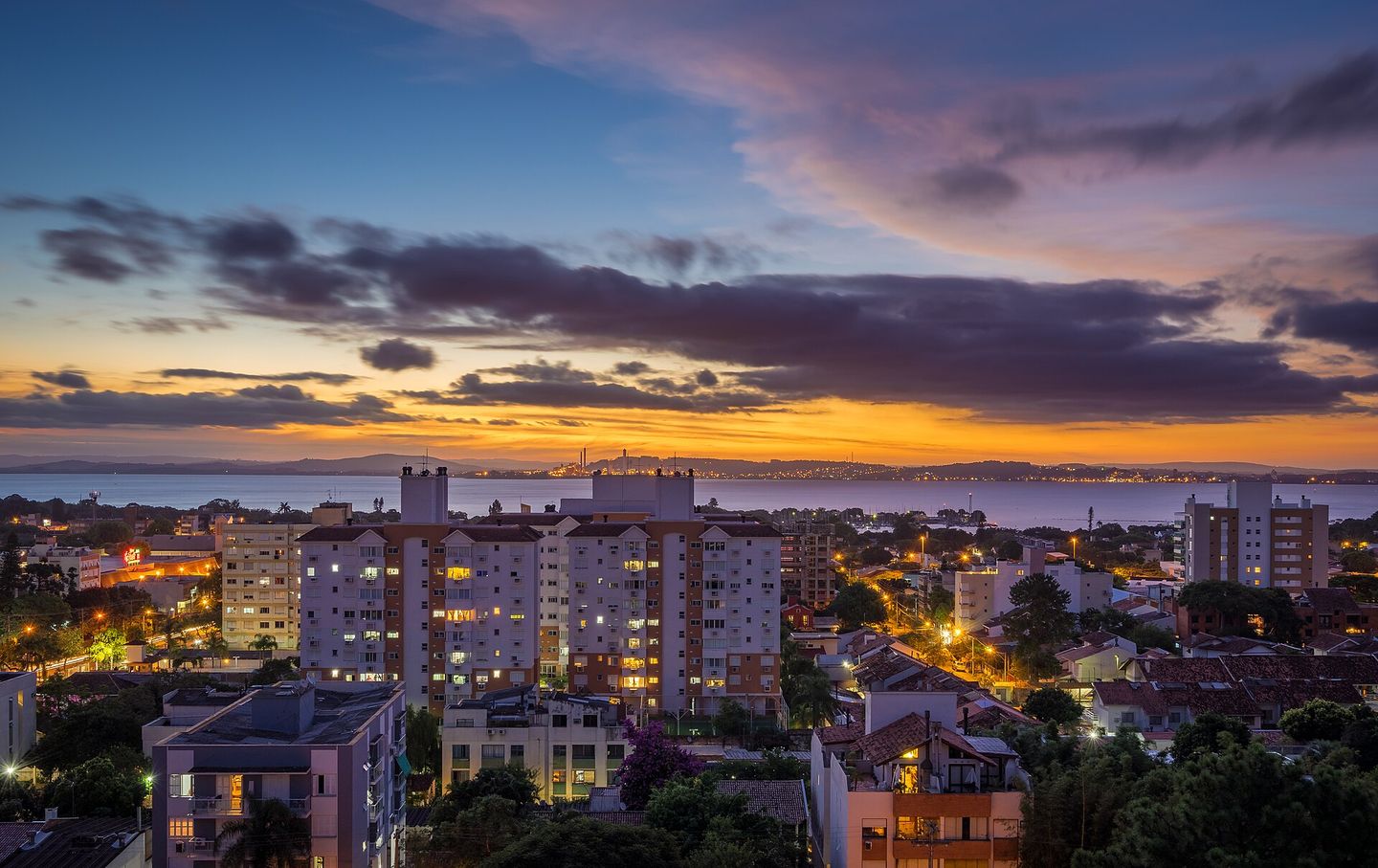
Most visitors to Brazil never make it this far south, and Porto Alegre is unbothered by that. Rio Grande do Sul's capital sits at the confluence of five rivers feeding the vast, sea-like Lagoa dos Patos, and it has built its entire identity around water it insists on calling a lake even though the far shore vanishes into haze. Every evening, rain or shine, people find a spot along the Guaíba to watch the sun go down — a habit the city treats with the seriousness other places reserve for a football match, which in Porto Alegre's case is really saying something.
This is gaucho country, and that word means something specific here that has nothing to do with Argentina's pampas myth-making, though the two share a horseback ranching history. Rio-Grandenses drink chimarrão — a bitter, communal mate tea sipped from a gourd through a metal straw, passed hand to hand at bus stops, in university lecture halls, on riverside benches — with a devotion that borders on ritual. The accent is distinct, the barbecue tradition (churrasco, done with skewers and salt rather than sauce) runs deeper than almost anywhere else in Brazil, and the state's own history of a nine-year secessionist war in the 1830s, the Revolução Farroupilha, still gets its own week-long holiday every September.
The city itself rewards a slower read than most Brazilian capitals. It has no headline monument to tick off, no single postcard shot that explains the place in one frame. What it has instead is a genuinely lived-in downtown of Art Deco towers and a restored 19th-century port, a green ring of parks that fill with joggers and mate drinkers from dawn, a serious live-music and craft-beer scene, and — within a couple of hours by car — some of the best wine country and canyon scenery in South America. Come for a few days in the city and stay long enough to get out of it.
The caseWhy Porto Alegre earns the detour
Porto Alegre rarely makes anyone's first Brazil itinerary, and that is largely the point. It is a city that functions the way it wants to rather than the way a tourism board might prefer, which means an old port converted into a cultural centre rather than a mall, a downtown market still built around meat, cheese and coffee rather than souvenirs, and a waterfront promenade that fills every evening with locals rather than tour groups. The pace here is unmistakably southern Brazilian: unhurried, a little formal, warm once you're past the initial reserve.
What makes the detour worth it is the combination on offer within a short radius: a genuinely interesting mid-sized capital with real architecture and food culture, one of the most dramatic urban sunsets in the country, and — a couple of hours away by car — the vineyards of the Vale dos Vinhedos and the canyon country of the Aparados da Serra. Few Brazilian cities let you pair urban culture with wine country and canyon hiking in the same long weekend. Porto Alegre does, easily.
The calendarWhen to go
Spring (September to November) and autumn (March to May) are the sweet spots, with mild days, cooler evenings, and a landscape that in the wine country turns properly beautiful — green vines in spring, turning leaves by late April and May. Humidity is lower than in tropical Brazil and the light has a clarity that makes the Guaíba sunsets even more dramatic.
Summer (December to February) runs hot and sticky, regularly into the mid-30s Celsius, though it is also when the riverfront and beer gardens are liveliest and locals decamp in droves to the coastal towns a couple of hours east, thinning the city itself. Winter (June to August) is the local peculiarity: this is one of the only places in Brazil where frost is routine and snow, while rare, has genuinely fallen in the hills just outside town. It is also the best season to be in Gramado and Canela, which lean fully into the cold with Christmas-market lighting and fondue menus that feel a little surreal at this latitude. Porto Alegre itself in winter is grey and can be raw, but it is uncrowded and the wine country is quiet and easy to book.
LogisticsGetting around
Salgado Filho International Airport sits unusually close to the centre — about six kilometres — and connects directly to downtown via the Trensurb light-rail line, which is the cheapest and often fastest way in if you're travelling light. A taxi or ride-share takes fifteen to twenty-five minutes depending on traffic and costs relatively little by international standards.
Within the city, the historic centre, Cidade Baixa and the waterfront are all walkable to each other, and Porto Alegre's bus network (EPTC) is extensive if not always intuitive for visitors — ride-share apps are the practical default for anything outside the core. Trensurb also runs north to the metro region if you need it, but most travellers will not. If you plan to do any of the day trips yourself rather than joining a tour, renting a car is worth it: distances to Gramado, Bento Gonçalves and Cambará do Sul are all comfortably drivable but not realistically doable by public transport in a day. Uber and 99 both operate reliably throughout the city.
The tableHow Porto Alegre eats and drinks
Rio Grande do Sul's contribution to Brazilian food is churrasco gaúcho, and it is worth understanding the difference before you sit down: this is not the all-you-can-eat rodízio spectacle exported worldwide, but a slower, more ceremonial tradition of skewered cuts grilled over wood coals and seasoned with little more than coarse salt, traditionally cooked by the host or a designated churrasqueiro for family and friends rather than served buffet-style to strangers. The Mercado Público and the surrounding centro are the easiest places to try it properly at a churrascaria without needing a local's invitation.
The other unmissable ritual is chimarrão — yerba mate infused in hot water, sipped through a bombilla (metal straw) from a cuia (gourd), refilled and passed around a circle of friends for hours. You will see it everywhere: on park benches in Redenção, tucked under commuters' arms on the Trensurb, balanced on café tables. It is bitter and an acquired taste, but accepting a sip when it's offered is a small, genuine way into the local culture. Beyond the classics, Porto Alegre has a serious craft-beer scene concentrated in Cidade Baixa and Moinhos de Vento, a strong Italian and German food inheritance from the colonisation of the nearby Serra, and — thanks to the Vale dos Vinhedos an hour and a half away — some of Brazil's best domestic wine on nearly every decent wine list in town.
The mapNeighbourhoods to know
The Centro Histórico is where the city's 19th- and early-20th-century bones are most visible: Praça da Matriz, the Art Deco office towers, the Mercado Público, and the restored Cais Mauá port district, now a strip of restaurants and event spaces built directly into the old harbour warehouses. It's compact, walkable, and quiet at night once the offices empty out, so plan daytime energy here.
Cidade Baixa, just south of the centre, is the opposite: a dense grid of low houses turned into bars, live-music venues and student haunts, at its best from Thursday night through the weekend. Moinhos de Vento, further out, is the polished, tree-lined counterpart — boutique shopping on Rua Padre Chagas, a well-used park locals call the Parcão, and some of the city's better restaurants. Closer to the river south of downtown, Praia de Belas and Menino Deus sit near the Usina do Gasômetro and the convention-centre district, quieter and more residential but only a short ride from everything else. Knowing these four gets you around ninety percent of what a first visit needs.
Field intelligencePractical intelligence
Portuguese is essential outside upscale hotels and a handful of tourist-facing restaurants — English is spoken less reliably here than in Rio or São Paulo, so a translation app or a few stock phrases go a long way. Locals are formal on first meeting and genuinely warm once a conversation is underway; the reserved first impression is a regional trait, not unfriendliness.
Porto Alegre is generally safer to walk than Brazil's largest cities, though ordinary urban caution still applies: keep valuables out of sight downtown and around Cidade Baixa at night, and use ride-share rather than walking long stretches alone late. The Brazilian real is the currency, and card payment (including contactless) is close to universal, even for small purchases and street food. If you're in town in September, ask about Semana Farroupilha — the state's founding-history festival brings traditional gaucho dress, music and food stalls to Parque Farroupilha and is a genuinely good time to be there, if you don't mind extra crowds. And bring layers even in shoulder season: the city's weather swings fast, and a warm afternoon can turn into a cold, windy riverside evening within a couple of hours.
Field notesWhat to see & do
-
Usina do Gasômetro
A decommissioned early-20th-century thermoelectric plant on the Guaíba waterfront, its brick chimney now the single most recognisable silhouette in the city and the spot where half of Porto Alegre gathers to watch the sunset.
On the groundArrive thirty to forty minutes before sunset to claim a seat on the riverside steps — this is a genuine local ritual, not a tourist photo op, and it fills up.
-
Mercado Público
A cast-iron-and-masonry public market dating to 1869, still trading in cheese, spices, coffee and produce on the ground floor, with churrascarias and lanchonetes upstairs serving the city's classic sandwiches and grilled meats.
On the groundOrder a bauru or a cachorro-quente completo from one of the upstairs counters, then take it to a stool at the bar rather than the sit-down tables for the full local rhythm.
-
Cais Mauá & the Orla do Guaíba
The old port's 19th-century harbour warehouses, restored and reopened as a strip of restaurants, bars and event space, feeding directly into the newly rebuilt riverside promenade that now runs for kilometres along the water.
On the groundWalk it in the late afternoon and let it carry you straight into the Gasômetro sunset crowd — the two sit a short stroll apart.
-
Parque Farroupilha (Redenção)
The city's great green lung, a sprawling 19th-century park that fills daily with joggers, mate circles, a small lake with paddleboats, and — on Sundays — the long-running Brique da Redenção antiques and crafts fair.
On the groundGo on a Sunday morning specifically for the Brique fair; on any other day the park is pleasant but far quieter.
-
Praça da Matriz & Catedral Metropolitana
The ceremonial heart of the old city, flanked by the neoclassical Catedral Metropolitana, the state's Palácio Piratini government seat, and the Teatro São Pedro — a compact square that concentrates most of Porto Alegre's institutional grandeur in one block.
On the groundThe cathedral's interior is worth a quiet ten minutes even if you're not religious — it's cooler and calmer than the square outside.
-
MARGS (Museu de Arte do Rio Grande do Sul)
The state's fine-art museum, housed in a striking Art Deco former finance building on Praça da Alfândega, with a strong permanent collection of Rio-Grandense and Brazilian modernist work and a busy rotating exhibition programme.
On the groundCheck what's showing in the adjoining Santander Cultural and Memorial do RS buildings on the same square — a single ticket-free afternoon can cover all three.
-
Casa de Cultura Mario Quintana
A grand former hotel turned free public cultural centre, named for the beloved gaucho poet who lived out his last years within its walls, now holding galleries, a cinema, a theatre and one of the city's most photogenic staircases.
On the groundRide the panoramic glass elevator on the building's exterior for a quick, free view over the surrounding centro.
-
Moinhos de Vento & Rua Padre Chagas
Porto Alegre's most polished residential neighbourhood, centred on the well-used Parcão park and the boutique-lined Rua Padre Chagas, where the city's better small shops, cafés and restaurants cluster within a few blocks.
On the groundCome for a long lunch on a weekday, when the street is at its most relaxed and least crowded compared to weekend evenings.
On the groundWhere things are
Map data © OpenStreetMap contributors.
Where to stayBase yourself well
Centro Histórico
Best for first-timers and sightseeing on footThe old commercial core — Art Deco towers, the Mercado Público and Cais Mauá within walking distance, and most of the museums and civic architecture on your doorstep. Quiet and business-like after dark.
A business-class tower hotel near Praça da Matriz
Several mid-to-upscale chain hotels cluster within a few blocks of the cathedral square, putting the historic core and Cais Mauá within an easy walk.
R$$$A budget hotel near the Mercado Público
Simple, well-located options a short walk from the market and the Trensurb line into the airport.
R$$Cidade Baixa
Best for nightlife and younger travellersLow houses turned into bars, live-music venues and student haunts, at its loudest Thursday through Saturday night. Central and walkable to downtown, with the city's best nightlife on the doorstep.
A boutique guesthouse in a converted Cidade Baixa townhouse
Expect character over polish, and ask for a room set back from the main bar streets if you want any sleep before midnight.
R$$Moinhos de Vento
Best for a quieter, more refined baseThe city's most polished residential district, with the Parcão park, boutique shopping on Rua Padre Chagas, and a calmer, more upscale pace than downtown. Further from the historic sights but well served by ride-share.
A design-led hotel near the Parcão
Trades some walkability to the historic centre for a genuinely pleasant, leafy neighbourhood to return to each evening.
R$$$Praia de Belas & Menino Deus
Best for convention travel and river viewsQuieter, more residential streets near the Usina do Gasômetro and the convention-centre district, with easy access to the riverfront promenade and shopping malls but fewer historic sights within immediate walking distance.
A riverside hotel near the convention centre
Worth it specifically for proximity to the Gasômetro sunset and the Orla promenade; less convenient for the old centro's sights.
R$$Affiliate notePostcardRoute is reader-supported. Some links to accommodation are affiliate links: if you book through them we may earn a small commission at no extra cost to you. We only recommend places we would send a friend.
Beyond the cityWorthwhile day trips
- Gramado & Canela
A pair of mountain towns roughly two hours away, built around a self-consciously European, Alpine-chalet aesthetic that leans hardest into it at Christmas, when Gramado's light festival draws visitors from across Brazil. Chocolate shops, fondue restaurants and cool-climate hiking around Canela's Parque do Caracol waterfall round it out.
- Vale dos Vinhedos (Bento Gonçalves)
Brazil's best-known wine region, roughly two hours away, settled by 19th-century Italian immigrants and now dense with family-run wineries producing serious sparkling and red wines along a signposted rural route. Book tastings ahead on weekends.
- Cambará do Sul & the Aparados da Serra canyons
A longer but spectacular day out — roughly three hours each way — to the rim of Itaimbezinho and Fortaleza canyons, dramatic 700-metre-deep gorges cut into the southern Brazilian plateau, best combined with an overnight if your schedule allows it.
Before you goCommon questions
- How many days do you need in Porto Alegre?
- Two full days covers the historic centre, the waterfront and a proper sunset at the Gasômetro comfortably. Add a third day, or several, if you want to fit in one of the wine-country or canyon day trips — they're the strongest reason to linger.
- What is the best area to stay in Porto Alegre for first-timers?
- The Centro Histórico. It puts the Mercado Público, Cais Mauá and the main civic squares within walking distance, and it's a short ride from Cidade Baixa's nightlife and Moinhos de Vento's restaurants when you want either.
- Is Porto Alegre safe to visit?
- It's generally considered safer to walk than Brazil's largest metros, but ordinary urban precautions still apply — keep valuables out of sight downtown and in Cidade Baixa at night, and favour ride-share over walking long unfamiliar stretches after dark.
- Do I need to speak Portuguese in Porto Alegre?
- It helps a great deal. English is spoken less reliably here than in Rio or São Paulo outside upscale hotels and a handful of tourist restaurants, so a translation app or a few basic phrases will smooth most interactions.
- What is the best time of year to visit Porto Alegre?
- Spring (September to November) and autumn (March to May) offer the most comfortable weather and the best light for the riverfront and wine country. Summer is hot and humid; winter is cold by Brazilian standards but is the best season for Gramado and Canela's Alpine-town atmosphere.
- How do I get from the airport into central Porto Alegre?
- Salgado Filho International Airport is only about six kilometres from downtown. The Trensurb light-rail line runs directly into the centre and is the cheapest option; a taxi or ride-share takes fifteen to twenty-five minutes depending on traffic.
- Can you visit the wine country as a day trip from Porto Alegre?
- Yes — the Vale dos Vinhedos around Bento Gonçalves is roughly two hours away by car, easily doable as a long day trip with tastings booked ahead, though an overnight lets you see more than one winery without rushing back.