
Greece · South Aegean
Paros doesn't try as hard, and that's the whole appeal
No caldera, no infinity-pool arms race — just a working marble island with two excellent towns, a dozen genuinely good beaches, and a sense of proportion its neighbours lost decades ago.
The Cycladic island that quietly out-performs its famous neighbours · 37.09° N · 25.15° E
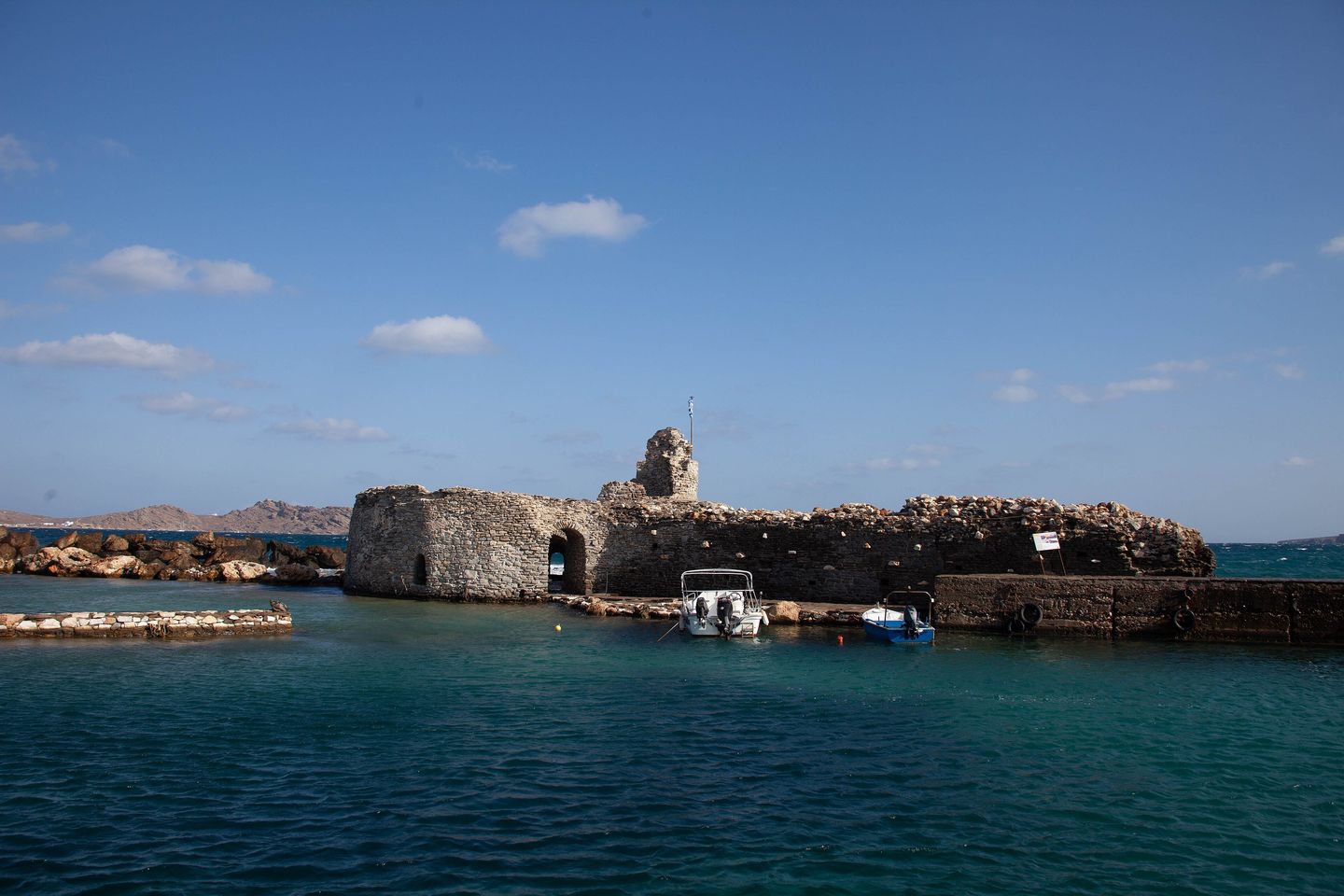
Paros spent most of the last few decades being the island people flew into on their way to somewhere else — a ferry hub between Athens and the more photogenic Cyclades, Santorini and Mykonos chief among them. That reputation has been quietly collapsing for about ten years, for a simple reason: a critical mass of travellers who'd already done the caldera sunset and the beach-club bottle service came back to Paros and realised it was doing something those islands had largely stopped doing, which is behaving like an actual Greek island rather than a stage set for one.
The island earns that the old way, through geology and history rather than marketing. Parian marble, quarried here since antiquity, built the Venus de Milo and the Nike of Samothrace and was prized across the ancient Mediterranean for a translucency no other stone could match; the quarries near Marathi are still there, mostly abandoned, genuinely strange to walk through. That same unhurried, working-island character shows up everywhere else too — in Parikia's sprawling old town built partly from a ransacked ancient temple, in Naoussa's fishing harbour that still has actual fishing boats in it, in villages like Lefkes that have no beach, no obvious tourist pitch, and no interest in building one.
None of which means Paros is undiscovered — it isn't, and August here is genuinely busy. What it means is that the island has kept its proportions: good beaches without a sunbed arms race, two excellent towns with distinct personalities rather than one over-photographed main street, and a scale small enough that you can plausibly see most of it without a frantic schedule. For a lot of travellers weighing Santorini, Mykonos and Paros against each other for the same week, Paros is the one that actually delivers the trip the brochure promised.
The caseWhy Paros, specifically
The honest pitch for Paros is comparative: it does most of what makes Santorini and Mykonos famous, at a lower price, with less crowding, and without either island's single defining compromise. There's no caldera view here, so skip Paros if that exact photograph is the point of the trip. But there is genuinely excellent Cycladic architecture in two distinct towns, a beach scene that ranges from serious windsurfing water to sheltered family coves to a genuinely strange lunar rock-pool landscape, and a nightlife register in Naoussa that's lively without tipping into the superyacht theatre Mykonos runs on.
The island also functions unusually well as a base for a longer Cycladic trip rather than a single stop. Paros sits at the hub of the inter-island ferry network, with frequent, short crossings to Naxos, Antiparos, Mykonos and Santorini, which makes it a sensible place to spend four or five nights with easy day trips rather than packing and repacking every forty-eight hours. Antiparos in particular — a short, cheap ferry away — is worth treating as an extension of the Paros trip rather than a separate island entirely.
What tips it from "good alternative" into "actively better for most people" is the pacing. Santorini's beauty comes with a genuine logistics tax — cliffside towns built for donkeys and golf carts, a single road, crowds that concentrate in a handful of sunset spots. Paros spreads its appeal across enough towns, villages and beaches that nothing feels like a bottleneck, which in practice means more time doing the actual things you came for and less time queuing to photograph them.
The calendarWhen to go
Late May through June and the second half of September into early October are the island's best stretches, and this is true for almost every Cycladic island but especially Paros, which has less shoulder-season infrastructure drop-off than its smaller neighbours. The sea is swimmable from early June, tavernas and most hotels are fully open, and the crowds and prices sit well below August's peak. Light wind, warm but not punishing heat, and a Naoussa harbour you can actually get a table around without a reservation made weeks out.
July and especially August are Paros at full capacity — ferries book out, Naoussa's restaurant scene requires real advance planning, and the meltemi, the strong, dry summer wind that defines Cycladic weather, blows hardest in these months. For windsurfers and kitesurfers this is actually the draw, not the drawback: Golden Beach and New Golden Beach run some of the best wind conditions in the Mediterranean precisely because of it, and the island's watersports scene is built around the August meltemi rather than despite it. For anyone not here for the wind, it can make beach days on the exposed east coast genuinely uncomfortable and kicks dust across unpaved stretches of road.
April, early May and most of October are the quiet bookends — cooler water, a fair number of seasonal businesses still shuttered, but Parikia and Lefkes remain beautiful and nearly empty, and prices drop sharply. Winter is a real off-season here, with ferry schedules thinning to a skeleton service and much of the tourist infrastructure closed, so it isn't a realistic window for a first visit.
LogisticsGetting there and around
Paros has its own airport with seasonal flights from Athens, a journey of well under an hour, though the far more common route is by ferry. High-speed catamarans from Piraeus run roughly three to four hours depending on the vessel and routing; conventional ferries take longer but run more reliably in windy weather, which matters in a region where speedboat services sometimes cancel outright when the meltemi is up. Parikia is the island's main port and the arrival point for almost every ferry, including the short, frequent inter-island hops to Naxos, Mykonos, Santorini and Antiparos that make Paros such a workable hub.
Once on the island, renting a car, ATV or scooter is close to essential if you want to see more than Parikia and Naoussa — the good beaches and the inland villages are spread across a landscape with genuinely limited public transport. The KTEL bus network does connect the main towns and the busier beaches on a reasonably frequent summer schedule, and it's a perfectly workable option for a trip centred on Parikia and Naoussa alone, but it thins out considerably once you're heading toward Lefkes or the island's quieter southern coves.
Taxis exist but the fleet is small relative to summer demand, so don't count on flagging one down outside a rank in peak season. The island is compact enough — about twenty kilometres across at its widest — that even a modest rental car puts the whole of Paros within a single day's reach, which is not something you can say about Santorini or most of the larger Cyclades.
The tableWhat to actually eat
Paros eats like a working Cycladic island because it largely still is one, and the food reflects that more than the more internationalised menus on Mykonos or Santorini. Look for louza, a cured, spiced pork loin similar to the Cycladic charcuterie found across the island chain, and the local version of mizithra and xinomizithra, soft fresh and tangy whey cheeses that turn up in pies, salads and simply drizzled with honey as a starter. The island's gouna — sun-dried mackerel, grilled and dressed in oil and vinegar — is a specifically Parian way of preserving the day's catch that predates refrigeration and is still genuinely good.
Naoussa has the more polished, harbour-facing dining scene, including a cluster of seafood tavernas where you can point at the morning's catch and have it grilled within the hour; expect to pay a premium for the water views on the harbour's edges and to eat better for less a few streets back. Parikia and the inland villages, Lefkes especially, keep a more traditional, lower-key taverna culture, with set lunch menus and family-run kitchens that haven't particularly changed their approach in decades.
As on most of the Cyclades, local wine is worth seeking out rather than defaulting to a familiar label — Paros has its own small appellation built around the Monemvasia grape, producing a distinctive, slightly saline white that pairs naturally with the island's seafood-heavy table. Aperitif hour in Naoussa's harbour, from around six, is one of the better small rituals on the island: an ouzo or a glass of the local white, watched over by the fishing boats and the ruined Venetian kastro at the harbour mouth.
The mapParikia, Naoussa, and the island in between
Parikia, the capital and main port, is the island's historic core — a dense, whitewashed Cycladic old town, the Kastro quarter built directly into the walls of a demolished ancient temple, and the Panagia Ekatontapiliani, the Church of a Hundred Doors, one of the oldest and most important Byzantine churches in Greece and still an active place of worship rather than a museum piece. It's the practical base for anyone relying on ferries, and its evening market street comes alive after sunset in a way that photographs well without feeling staged for photographs.
Naoussa, on the island's north coast, is the more fashionable half of Paros and the closer rival to Mykonos in atmosphere — a tiny, genuinely picturesque fishing harbour ringed by the eroded walls of a 15th-century Venetian castle, now mostly submerged, with a tangle of whitewashed lanes behind it that hold the island's best concentration of boutiques, bars and restaurants. It gets busy and stylish after dark in summer without tipping into Mykonos-scale spectacle, which is more or less the exact balance most visitors say they're hoping to find and rarely do.
Inland, Lefkes is the hill village worth the detour specifically because it has almost nothing to sell you — a marble-paved square, a handful of tavernas, sweeping views down toward both coasts, and a genuine sense of having developed on its own terms rather than the island's tourism economy. The south of the island, around Aliki and the airport, is quieter and more residential, while the smaller satellite island of Antiparos, a short ferry from the southwest coast, has its own low-key, increasingly fashionable scene worth a full day on its own.
Field intelligencePractical intelligence
Greece uses the euro, and card payments are widespread in Parikia and Naoussa, though smaller tavernas, beach bars and inland villages still lean cash-first — carry enough for a day trip away from the main towns. Tipping around five to ten percent at sit-down restaurants is appreciated rather than obligatory, and rounding up on drinks and taxis is standard practice.
The meltemi is the single biggest variable to plan around in July and August. It can make the east-facing beaches genuinely rough for casual swimming on its stronger days, occasionally disrupts the smaller inter-island ferries and speedboat services, and is worth building a buffer day around if your itinerary depends on a tight ferry connection onward to another island. Check conditions the evening before any ferry-dependent day trip rather than assuming the schedule will hold.
Book accommodation well ahead for July and August, particularly in Naoussa, where the best small hotels and harbour-view rooms sell out weeks in advance. Sun protection matters more here than the temperature alone suggests — the marble-dust light bouncing off the island's white stone and pale beaches is intense even on a cloud-covered day. And if island-hopping onward, buy ferry tickets for peak-season routes a few days ahead rather than on the day; Paros's position as the regional hub means outbound boats fill fast in August.
What to see & do
-
Naoussa old town & Venetian castle
A tiny, still-working fishing harbour ringed by whitewashed lanes, with the eroded ruins of a 15th-century Venetian sea castle rising directly out of the water at the harbour mouth — Paros's single most photogenic corner, especially at sunset.
Tip:Walk out to the castle ruin itself at low tide or by small boat, then stay for the evening when the harbour lights come on and the fishing boats and bars share the same narrow quay.
-
Panagia Ekatontapiliani, Parikia
One of the oldest surviving Byzantine churches in Greece, the Church of a Hundred Doors traces its foundations to the 4th century and remains an active place of worship, not a roped-off monument — a quietly extraordinary building most visitors walk past without realising its age.
Tip:Visit in the morning when the church is at its quietest and the light through the courtyard's old olive tree is best for photographs.
-
Kolymbithres Beach
A genuinely strange, sculptural beach near Naoussa where wind and sea have carved the granite shoreline into huge, rounded boulders and pools, creating a series of small sheltered coves rather than one continuous stretch of sand.
Tip:Come in the morning before the beach bars' loungers fill the best rock-sheltered pools, and bring water shoes — the granite is smooth but can be slippery near the waterline.
-
Golden Beach (Chrysi Akti)
The island's premier windsurfing and kitesurfing beach on the exposed east coast, where the summer meltemi that frustrates swimmers elsewhere on Paros is the entire point — a long stretch of golden sand backed by a cluster of watersports schools.
Tip:Beginners should book a lesson rather than rent gear solo; the wind here is genuinely strong by Mediterranean standards and not forgiving of a first attempt without guidance.
-
Lefkes
A marble-built hill village in the island's interior, the medieval capital of Paros before piracy pushed the population toward the coast, with a quiet central square, sweeping valley views, and almost none of the coastal towns' tourist infrastructure.
Tip:Walk part of the old Byzantine marble path (the Byzantine Road) that connects Lefkes toward Prodromos — a genuinely atmospheric stretch of centuries-old paving through olive groves.
-
Ancient marble quarries, Marathi
The source of Parian marble, prized across the ancient Mediterranean for its fine, near-translucent quality and used for the Venus de Milo and the Nike of Samothrace — abandoned galleries and shafts you can walk into, with none of the ticketed-site apparatus of a major ruin.
Tip:Bring a torch and sturdy shoes; the main accessible gallery is unlit and the ground is uneven, but it's free, unfenced, and rarely has more than a handful of other visitors.
-
Antiparos
A short ferry from Paros's southwest coast, this smaller satellite island has its own low-key main town, a genuinely impressive stalactite cave on Mount Agios Ioannis Despotis, and a noticeably quieter, more under-the-radar version of Cycladic island life.
Tip:Take an early ferry and allow a full day — the cave alone takes a couple of hours round trip including the approach road, and the town is worth a slow lunch rather than a rushed stopover.
-
Parikia Kastro
The old fortified quarter of Parikia's town, built directly from the stones of a demolished 6th-century-BC temple to Athena — ancient column drums and marble blocks are visible embedded in house walls and archways throughout the neighbourhood.
Tip:Go at dusk when the Kastro's café terraces fill up and the stonework catches the last light — it's a five-minute walk from the ferry port but most day-trippers never find it.
On the groundWhere things are
Map data © OpenStreetMap contributors.
Where to stayBase yourself well
Naoussa
Best for first-timers who want atmosphere and nightlife within walking distanceThe fashionable half of the island — a picturesque fishing harbour, the island's best concentration of restaurants and bars, and the closest Paros gets to Mykonos-style polish, at a noticeably gentler scale and price.
A boutique Cycladic hotel a few lanes back from the harbour
Look for a small, whitewashed property set just off the main quay — close enough to walk to everything, far enough to sleep through the harbour's evening noise.
€€€A harbour-view studio near the old Venetian castle
Paying for the castle and water view here buys genuinely one of the best outlooks on the island, at a premium that peaks hardest in August.
€€€€Parikia
Best for ferry-dependent trips and island-hopping itinerariesThe practical, well-connected base — every ferry arrives here, the old Kastro quarter and Ekatontapiliani church are a short walk from the port, and prices run a notch below Naoussa's for comparable quality.
A family-run hotel a short walk from the ferry port
Staying within easy walking distance of the port removes the need for a taxi on arrival or departure day, which matters on a tight island-hopping schedule.
€€Golden Beach & the east coast
Best for watersports enthusiasts and a beach-first stayBuilt around the windsurfing and kitesurfing scene, with a straightforward, sporty feel rather than old-town charm — the right base if the wind and the water are the actual point of the trip.
A beachfront studio near the windsurf schools
Being able to walk straight onto the sand with your gear is the whole value proposition here; inland alternatives save little and cost you the convenience.
€€Lefkes & the inland villages
Best for longer stays and travellers prioritising quiet over nightlifeQuiet, marble-built, and removed from the coastal scene almost entirely — a genuinely different register of the island, best for travellers who've already done a coastal stay elsewhere in Greece and want something calmer.
A restored village house near the central square
A rental car becomes essential from here, but the quiet and the valley views are a genuine trade worth making for a few nights.
€€Affiliate notePostcardRoute is reader-supported. Some links to Booking.com (stays, flights, car hire, tickets and tours, airport transfers) are affiliate links, tracked through CJ Affiliate: if you book through them we may earn a small commission at no extra cost to you. We only recommend places we would send a friend.
Book the restEverything else for the trip
Stay sorted? These open Booking.com for the other legs of the journey.
-
Tours & tickets
Things to do in Paros
Skip-the-line tickets, tours and day trips.
Browse activities -
Wheels
Car hire in Paros
Compare pick-up points and rental companies.
Compare cars -
Air
Flights
Search fares, then come back for the neighbourhood advice.
Search flights -
Ground
Airport transfers
Book a taxi or private transfer before you land.
Book a transfer
Affiliate noteThese four links are affiliate links too: if you book through them we may earn a small commission at no extra cost to you.
Beyond the cityWorthwhile day trips
- Antiparos
A short, cheap ferry from Paros's southwest coast to a smaller, lower-key island with its own old town and an impressive stalactite cave — close enough to treat as a half-day, substantial enough to deserve a full one.
- Naxos
The largest of the Cyclades, a short ferry away, trading Paros's compactness for mountain villages, ancient ruins including the giant unfinished Portara gateway, and some of the best uncrowded beaches in the island group.
- Mykonos
A fast, frequent ferry connection makes a day trip to Mykonos Town and the windmills genuinely workable from Paros, for travellers who want a taste of its famous old town without the overnight price tag.
- Santorini
A longer but entirely doable day trip by high-speed ferry — enough time for Oia's caldera view and Fira's cliffside town, best attempted on a calm-weather day given the longer crossing.
Before you goCommon questions
- Is Paros better than Santorini or Mykonos?
- It depends what you're after. Santorini has the caldera view and Mykonos has the beach-club intensity, and neither is replaceable. But for most travellers wanting good architecture, good beaches, real nightlife and a workable budget without the crowding and premium pricing of its two famous neighbours, Paros delivers a more balanced trip — and it works as an excellent hub for day trips to both.
- How many days do you need in Paros?
- Four to five days covers Parikia, Naoussa, the main beaches and at least one inland or day-trip excursion at a comfortable pace. Three works if you're focused mainly on the two main towns. Paros also works well as a base for a longer multi-island Cyclades trip, given its central ferry connections.
- Should I stay in Naoussa or Parikia?
- Naoussa for atmosphere, nightlife and the best restaurant scene on the island; Parikia for ferry convenience and a slightly lower price point. Many visitors split a trip between the two, or base in one and day-trip to the other — they're under twenty minutes apart by car or bus.
- Is Paros good for windsurfing and kitesurfing?
- Yes, genuinely among the best in the Mediterranean — Golden Beach and New Golden Beach on the east coast are built around the strong, reliable summer meltemi wind, with established schools for beginners and serious conditions for experienced riders, especially in July and August.
- What is the best time of year to visit Paros?
- Late May to June and September to early October offer the best balance of warm, swimmable weather and manageable crowds. July and August are busiest and windiest, which suits watersports but can make exposed beaches uncomfortable for casual swimming; spring and autumn shoulder months are quieter but cooler.
- Do I need a car on Paros?
- Not strictly if you're sticking to Parikia and Naoussa, which are connected by a reasonably frequent bus service, but a rental car or scooter opens up Lefkes, the ancient marble quarries, and the quieter southern beaches that public transport barely reaches.