
Norway · Eastern Norway
Oslo, between the fjord and the trees
A capital of seven hundred thousand people that keeps a forest inside the city limits and a fjord full of swimmable islands at the bottom of the main street. The prices are the price of admission.
Dispatch from the capital where the forest starts at the end of the metro line · 59.91° N · 10.75° E
Plan this trip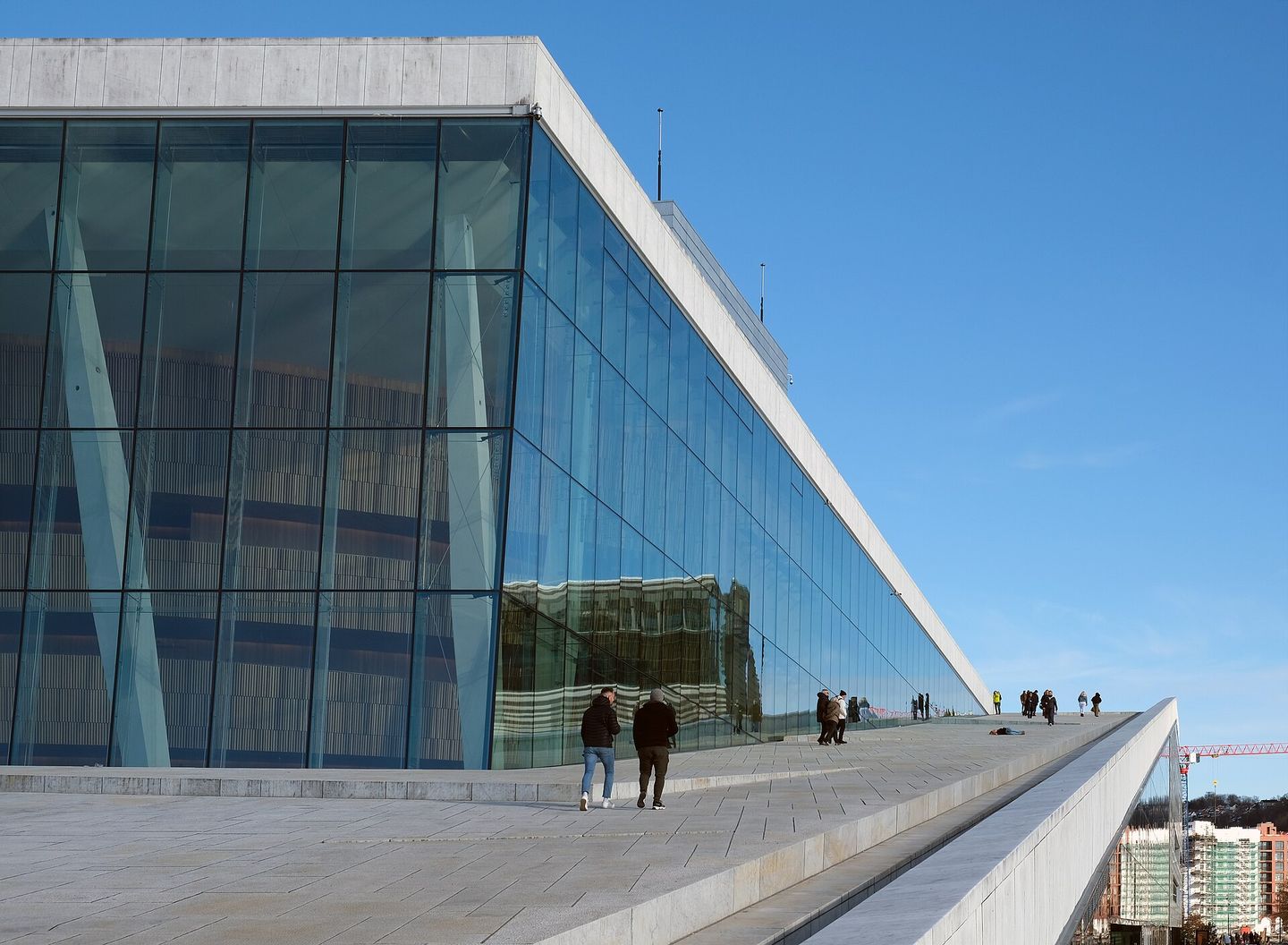
Oslo spent most of the twentieth century as the quiet one. Stockholm had the grandeur, Copenhagen had the design magazines, and Norway's capital got described, when it got described at all, as a pleasant enough stop on the way to the fjords. Anyone who visited in 1995 and has not been back would not recognise the waterfront now.
The last twenty years rebuilt the entire seam where the city meets the water. A motorway went into a tunnel. An opera house you can walk on the roof of opened in 2008 and immediately became the thing people picture when they picture Oslo. A new central library, a new national museum and a new Munch museum followed within a few years of each other, all within about a kilometre of one another, all deliberately public in a way that older cultural institutions are not. It is the most concentrated burst of civic architecture in Northern Europe this century, and it happened in a city most people still think of as a transit stop.
What has not changed is the thing that actually makes Oslo unusual. Roughly two-thirds of the municipality is forest and protected land, and the metro will take you into it — the same ticket that gets you across town also gets you to a trailhead in deep pine woods, or to a ski slope in winter. In the other direction the fjord starts at the bottom of the main street, with public ferries to islands you can swim off. Very few capitals give you a genuine wilderness and an archipelago on a city transit pass. That is the case for Oslo, and it survives the prices, which are as bad as you have heard.
The caseWhy Oslo is worth more than a stopover
Plenty of visitors give Oslo a single night before catching the Bergen train, and it is the wrong call. The city rewards three or four days, largely because the good things are so different from one another. You can spend a morning in front of one of the world's great art collections and an afternoon on a rock in the fjord, and the two are twenty minutes apart.
The museum case alone is strong. The National Museum, which opened its new building in 2022, is the largest art museum in the Nordic countries and holds a version of The Scream in a room that has become a pilgrimage site. The Munch Museum at Bjørvika, a leaning thirteen-storey tower that Oslo argued about bitterly before it opened in 2021, holds the vast bequest Munch left the city — well over a thousand paintings, plus prints and drawings — and has the space to show him as a working artist across sixty years rather than as the man who painted one famous picture. Out on the Bygdøy peninsula, the Fram Museum keeps the actual ship that carried Nansen and Amundsen into the polar ice, which is a more affecting object than any amount of interpretation about it.
The other half of the argument is not indoors at all. This is a city where the default summer evening activity is to swim, and where the harbour is clean enough that the municipality built bathing decks into the redeveloped waterfront rather than treating the water as scenery. Add a network of floating saunas that has multiplied along the harbour over the last few years, and Oslo in July stops feeling like a northern capital and starts feeling like a very cold-water resort.
The calendarWhen to go
June and July are when the city is at full volume. Oslo sits at nearly sixty degrees north, so midsummer gives you light until close to eleven at night and a population determined to use every hour of it. The fjord ferries run at full frequency, the island beaches fill, the sauna barges are booked out, and outdoor seating appears on streets that have none for the rest of the year. August is nearly as good and slightly calmer.
May is the underrated month. The city is green, the crowds have not arrived, rates are lower, and if your dates include the seventeenth you get Norway's Constitution Day, which is unlike any national day in Europe — no military parade, just tens of thousands of people in regional folk costume, children's processions filling the streets, and the royal family waving from the palace balcony for hours. It is worth planning a trip around.
Winter divides people. December through February is dark, with only a few hours of proper daylight around the solstice, and it is genuinely cold. It is also when Oslo's strangest advantage kicks in: the metro runs to the ski slopes. You can be on a cross-country track or a downhill run within forty minutes of the city centre, on public transport, having had breakfast in town. If you do not ski, the compensations are thinner than in Copenhagen or Stockholm and the case for coming is weaker. March and April are best avoided — the snow goes grey, the ski season winds down, and spring takes its time this far north.
LogisticsGetting around
Everything runs on one Ruter ticket: metro, tram, bus, and — this is the part visitors miss — the public ferries out into the fjord. The islands of Hovedøya, Gressholmen and Langøyene are ordinary stops on an ordinary fare from Vippetangen, not an excursion you buy separately. Discovering this on day three rather than day one is a common and avoidable regret. Buy tickets in the Ruter app, and get a 24-hour or seven-day pass if you plan more than a few journeys a day.
The metro, the T-bane, is the backbone, and its distinguishing feature is where it goes. Line 1 climbs out of the city to Frognerseteren, high above the treeline of the Nordmarka forest, passing Holmenkollen and its ski jump on the way. That is a wilderness trailhead at the end of a subway line, and it is the single best thing you can do with a transit pass in Northern Europe.
The centre itself is compact and increasingly car-free — Oslo removed most on-street parking from the core in 2019 and handed the space to pedestrians, cyclists and benches. Walking works for most of the central sights, and city bikes are widely available in season. From the airport, the Flytoget express runs to Oslo S in around twenty minutes; the ordinary Vy regional trains take a few minutes longer on the same tracks for noticeably less money, which is the choice to make unless you are in a genuine hurry. Be careful when booking flights: Torp, sometimes sold as Oslo, is well over an hour away to the south.
The tableEating here without despair
Norwegian prices are the defining constraint of any Oslo trip, and pretending otherwise helps nobody. A sit-down dinner with a couple of drinks will cost what a serious meal costs in a much larger European capital, and the drinks are the worst of it — alcohol carries heavy tax and a restaurant beer can cost more than a main course elsewhere. Plan around this and Oslo is a fine eating city. Ignore it and you will spend four days feeling mugged.
The practical answer is to eat well at lunch and casually at night. Mathallen in Vulkan is a covered food hall with two dozen counters, good for a proper meal at a fraction of restaurant prices. Vippa, in a converted warehouse down on the harbour, does the same trick with a more international line-up. Grønland, just east of the centre, is the immigrant neighbourhood where the city actually eats cheaply — Turkish, Pakistani, Somali and Middle Eastern kitchens, and by a wide margin the best value in the city. And do not overlook the shrimp boats that tie up at the quay near the town hall in season, selling fresh-cooked prawns by the bag to be eaten on the harbour wall with bread and mayonnaise.
On alcohol, learn the rules before you need them. Beer and cider are sold in supermarkets, but sales stop at eight in the evening on weekdays and six on Saturdays, and there are none at all on Sundays. Wine and spirits come only from Vinmonopolet, the state monopoly, which keeps ordinary shop hours and closes early on Saturdays. Arriving on a Saturday evening expecting to buy a bottle of wine is a rite of passage that ends at a locked door. At the very top end, Oslo does hold a genuine three-star restaurant in Maaemo and a serious fine-dining scene beneath it, all of which needs booking well ahead and a clear-eyed look at the bill.
The mapNeighbourhoods to know
Sentrum, the centre, runs from the central station along Karl Johans gate to the royal palace, and holds the National Museum, the town hall, Akershus Fortress and most of the hotels. It is convenient and a little characterless, emptying out in the evening the way business districts do. Immediately south and east of it, Bjørvika is the new waterfront: the Opera House, the Munch Museum, the Deichman library and the Barcode row of towers. It is where the modern city argues for itself, and the harbour promenade along it is the best walk in Oslo.
Grünerløkka, north-east across the Akerselva river, is the neighbourhood most visitors end up wishing they had stayed in. Former industrial workers' housing turned into the city's centre of gravity for coffee, second-hand shops, small restaurants and drinking, with Mathallen at its southern edge and the river walk running through it. Directly south, Grønland is grittier, cheaper and the best place to eat in the city; it is also the most diverse district in Norway and considerably more interesting for it.
Frogner, west of the palace, is the wealthy, handsome, quiet side of Oslo — embassies, nineteenth-century apartment blocks and the enormous Frogner Park with Vigeland's sculptures in the middle of it. Aker Brygge and Tjuvholmen on the western waterfront are the polished, glassy, expensive end of the harbour, with the Astrup Fearnley Museum at the tip. Then there is Bygdøy, the peninsula across the water, which is not somewhere you stay but somewhere you spend a day: four major museums, the royal farm, beaches, and a summer ferry from the town hall quay to get there.
Field intelligencePractical intelligence
Norway is not in the European Union and does not use the euro. The currency is the Norwegian krone, and you will almost never need cash — Norway is close to fully cashless, and contactless cards work everywhere including ferries and market stalls. Tipping is not expected, though rounding up for good table service is becoming more common. English is near-universal and spoken to a very high standard.
Budget deliberately. The Oslo Pass covers most museums plus public transport and pays for itself quickly if you are doing two or more paid attractions a day, and is a waste if your plan is mostly walking and swimming. Do the arithmetic against your actual itinerary. The genuinely free list is long and good: Vigeland Sculpture Park, the roof of the Opera House, the grounds of Akershus Fortress, the harbour promenade, the Botanical Garden, all the swimming spots, and the entire Nordmarka forest.
On the forest, understand allemannsretten — the right to roam. Norwegian law gives everyone access to uncultivated land, including the right to walk, ski and camp on it, subject to leaving no trace and keeping a respectful distance from houses. It is a genuine legal right rather than a tolerated practice, and it is why the Marka is so heavily used by ordinary Oslo residents on ordinary weekends.
One honest warning. The old Viking Ship Museum on Bygdøy, for decades the single most recommended sight in Oslo, has been closed for a major rebuild and is due to reopen as the Museum of the Viking Age. Reopening dates have moved more than once. Check the current status before you build a day around it, because a large number of visitors still arrive at Bygdøy expecting to find it open.
Field notesWhat to see & do
-
The Oslo Opera House
Snøhetta's 2008 building on the Bjørvika waterfront, a slab of white Carrara marble sloping out of the fjord that the public is invited to walk up. No ticket, no barrier, no opening hours for the roof.
On the groundGo up at sunset in summer, and again in winter when the low light on the marble is even better. The interior oak-clad foyer is worth stepping into as well.
-
Vigeland Sculpture Park
Over two hundred bronze and granite figures by Gustav Vigeland arranged along an axis through Frogner Park, culminating in the Monolith — a single granite column carved with 121 intertwined human bodies.
On the groundAlways open, always free. Come early morning for the sculptures without crowds, or at dusk when the bronzes go dark against the sky.
-
The National Museum
The largest art museum in the Nordics, in a new building since 2022, running from antiquity to the present with a Munch room that holds one of the painted versions of The Scream.
On the groundIt is very large. Pick two or three collections rather than attempting the whole thing, and note that the rooftop Light Hall hosts temporary shows worth checking separately.
-
MUNCH at Bjørvika
A leaning thirteen-storey tower holding the enormous collection Edvard Munch left to the city — well over a thousand paintings plus prints, drawings and personal effects, shown across eleven floors.
On the groundStart at the top and work down. The upper floors have the views over the fjord, and the crowds concentrate on the lower galleries.
-
The Fram Museum, Bygdøy
The polar ship Fram, the vessel that carried Nansen north and Amundsen south, preserved whole inside a purpose-built hall that you can board and walk through below decks.
On the groundCombine it with the Kon-Tiki Museum next door and the Norsk Folkemuseum in a single Bygdøy day, reached by summer ferry from the town hall quay.
-
Fjord islands by public ferry
Hovedøya, Gressholmen and Langøyene are twenty minutes offshore, with monastery ruins, swimming rocks, pine woods and picnic spots — all served by ordinary public ferries on an ordinary transit ticket.
On the groundHovedøya is closest and best for a short trip; Langøyene has the best swimming. Buy nothing on the islands — bring food with you.
-
Holmenkollen ski jump
The vast modern jump on the hillside above the city, with a ski museum inside the structure and an observation deck at the top of the inrun looking down the landing slope and out over the fjord.
On the groundMetro line 1 goes straight there. Stay on to the end of the line at Frognerseteren for the forest trails and the classic wooden lodge.
-
Akershus Fortress
A medieval castle turned Renaissance royal residence on the headland above the harbour, with ramparts and grounds open to walk and a resistance museum on the site of wartime executions.
On the groundThe grounds are free and the views over the harbour are among the best in the city. The castle interior is a separate ticket and can be skipped if you are short on time.
On the groundWhere things are
Map data © OpenStreetMap contributors.
Where to stayBase yourself well
Sentrum & Bjørvika
Best for first-timers and short staysThe central spine from the station to the palace, plus the new waterfront. Every tram and metro line, most of the hotels, the National Museum and the Opera House all within walking distance. Quiet in the evenings.
A business hotel near Oslo S
Puts the airport train, the fjord ferries and the Opera House within a few minutes' walk, which matters more than charm on a two-night trip.
€€€A design hotel near Karl Johans gate
Central for the museums and the palace park, with the trade-off that the immediate area empties out after office hours.
€€€€Grünerløkka
Best for repeat visitors and anyone who wants an evening neighbourhoodThe former workers' district turned the city's best neighbourhood for coffee, food and drinking, with the Akerselva river walk running through it and Mathallen at its edge. Twenty minutes' walk or a short tram from the centre.
An apartment near Olaf Ryes plass
The square at the centre of Grünerløkka's bar and café life, with the river and Mathallen both a few minutes away.
€€Frogner
Best for families and a calmer baseNineteenth-century apartment blocks, embassies and the enormous Frogner Park with the Vigeland sculptures inside it. Handsome, residential, expensive and very quiet at night.
A residential hotel near Frogner Park
The sculpture park on your doorstep and an easy tram into the centre, in the part of Oslo that feels most like a place people actually live.
€€€Grønland
Best for budget travellers and eatersThe most diverse district in Norway, immediately east of the centre — market stalls, Turkish and South Asian kitchens, and by a distance the cheapest good eating in Oslo. Rougher-edged than the rest of this list.
A budget hotel near Grønland torg
Ten minutes' walk to the central station and the best-value food in the city downstairs, at rates well below the centre.
€€Affiliate notePostcardRoute is reader-supported. Some links to accommodation are affiliate links: if you book through them we may earn a small commission at no extra cost to you. We only recommend places we would send a friend.
Beyond the cityWorthwhile day trips
- The Nordmarka forest
Not really a day trip, since it is inside the city limits — take metro line 1 to Frognerseteren and walk into hundreds of square kilometres of pine forest, lakes and marked trails. Swimming at Sognsvann in summer, cross-country skiing in winter, all on a transit ticket.
- Drøbak and the Oscarsborg fortress
An hour south down the fjord by bus or summer boat to a wooden village of white clapboard houses, with a ferry across to the island fortress whose guns sank the German cruiser Blücher in April 1940 and bought Oslo a day.
- Fredrikstad old town
About ninety minutes south by train to the best-preserved fortified town in the Nordics — a moated seventeenth-century grid of cobbled streets and ramparts, still lived in rather than preserved as a museum.
Before you goCommon questions
- How many days do you need in Oslo?
- Three full days is the right answer for most people: one for the central museums and the waterfront, one for Bygdøy or the fjord islands, and one for the forest or a day trip. Two days covers the headline sights. A single night, which is what a lot of people give it before heading for Bergen, misses everything that makes the city distinctive.
- Is Oslo very expensive?
- Yes — it is one of the most expensive cities in Europe, and alcohol is the worst of it thanks to heavy taxation. It is manageable if you eat your main meal at lunch, use the food halls and Grønland's restaurants, buy from supermarkets before the alcohol cut-off, and lean on the very good free options: the sculpture park, the opera roof, the fjord swimming and the forest.
- What is the best area to stay in Oslo?
- Sentrum or Bjørvika for a first visit, because everything is walkable and every transport line converges there. Grünerløkka if you would rather stay somewhere with an evening life of its own and do not mind a twenty-minute walk or a short tram ride into the centre. Grønland is the value option and eats better than either.
- Can you swim in Oslo?
- Yes, and locals do so enthusiastically from June to August. There are bathing decks built into the redeveloped harbour at Sørenga and Tjuvholmen, beaches on Bygdøy, and swimming rocks on the fjord islands twenty minutes out by public ferry. The floating saunas along the harbour have become an institution and pair with a cold-water dip year round.
- Is the Viking Ship Museum in Oslo open?
- It has been closed for a major reconstruction and is due to reopen as the Museum of the Viking Age, with the opening date having shifted more than once. Check the current status before planning a Bygdøy day around it — the Fram, Kon-Tiki and Norsk Folkemuseum on the same peninsula are open and worth the trip regardless.
- How do you get from Oslo airport to the city?
- Gardermoen is about twenty minutes from Oslo S on the Flytoget airport express, or a few minutes longer on an ordinary Vy regional train running the same route for noticeably less. Unless you are in a hurry, take the regional train. Be careful with budget airlines advertising Torp as Oslo — it is over an hour south of the city.
- When can you see the northern lights in Oslo?
- Realistically, you cannot. Oslo is too far south and too light-polluted for reliable aurora, and the occasional strong display that reaches this latitude is a matter of luck rather than planning. If the northern lights are the point of the trip, you need to be well north of the Arctic Circle — Tromsø rather than the capital.