
The Bahamas · New Providence
Nassau after five o'clock
Millions of people a year step off a ship, buy a duty-free watch on Bay Street, and step back on. The city they missed starts about two blocks inland and gets much better once the horns sound.
Dispatch from the capital that only becomes itself after the ships leave · 25.04° N · 77.35° W
Plan this trip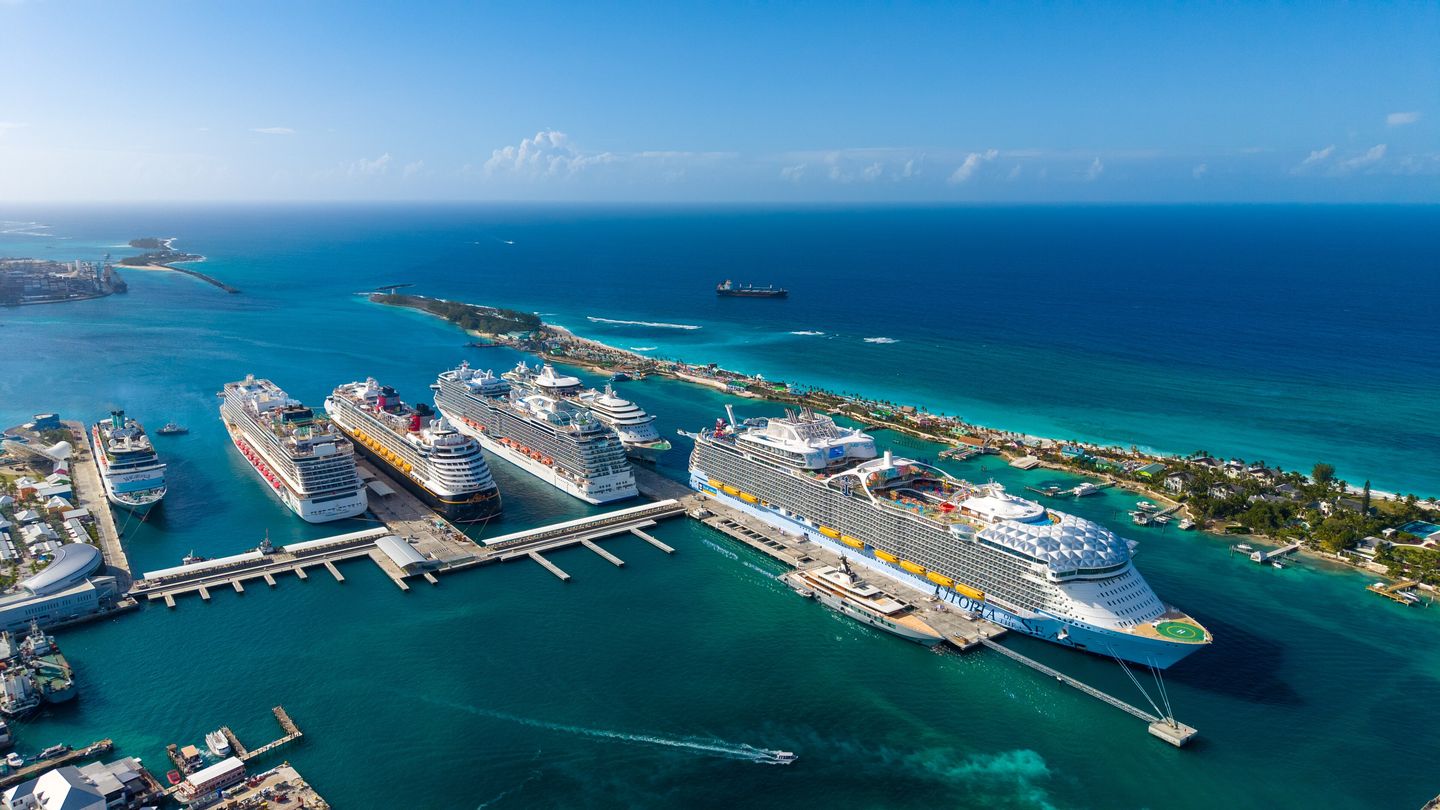
Nassau has the strange distinction of being one of the most visited places on earth and one of the least seen. Millions of people arrive here every year, almost all of them by ship, and the great majority experience the city as a four-hour window: a walk down Bay Street, a photograph of a pastel government building, a straw bag, a rum punch, and back up the gangway before the horn. It is entirely possible to spend a day in Nassau and come away convinced there is nothing here but jewellery shops and a queue for the ferry.
That version of the city is real, and it is also a tiny slice of one. Nassau is the working capital of an archipelago of some seven hundred islands, home to roughly seventy percent of all Bahamians, with a history that runs from Lucayan settlement through a genuine pirate republic, a British colony, a Confederate blockade-running boomtown, a Prohibition-era rum pipeline into Florida, and independence in 1973. It has one of the oldest continuously sitting parliaments in the Western Hemisphere. It has an art gallery that would be a point of pride in a city ten times its size. It has a food culture built almost entirely around a single shellfish, and a street festival at two in the morning on Boxing Day that is the loudest, most serious thing in the country.
This dispatch is written for the visitor who has more than four hours: someone staying a few nights, or a cruise passenger willing to walk past the first four blocks. The argument throughout is simple. Nassau does not reward the itinerary it is usually given. It rewards leaving the port area, eating where the ships are not, and above all staying the night, because at around five in the afternoon the day-trippers go back out through the harbour entrance and a completely different city turns up in their place.
The caseWhy Nassau is worth more than a shore excursion
The cynical take on Nassau is that it is a shopping mall with a beach attached, run for the benefit of six cruise berths. Spend a day here on the standard route and you would be forgiven for agreeing. The mistake is treating the port's immediate hinterland as the city, when it is really a filter placed in front of it: the first three blocks are engineered for people with a four-hour window and a credit card, and they do their job well enough that most visitors never find out what is behind them.
Walk inland and uphill instead. Within a fifteen-minute radius of the wharf you can stand at the bottom of the Queen's Staircase, sixty-odd steps hacked out of solid limestone by enslaved labourers in the late eighteenth century; look at the House of Assembly, a set of pink Georgian buildings housing a legislature that traces its line back to 1729; walk into Vendue House, where enslaved people were once sold and which is now a museum of slavery and emancipation named for a man who led a revolt; and see one of the Caribbean's best national collections of contemporary art in a nineteenth-century mansion on West Hill Street. That is a serious morning by any standard, and on most days you will share it with almost nobody.
The other argument for Nassau is geographic and slightly counterintuitive. It is the most convenient base in the Bahamas — the flight hub, the ferry hub, the place with a functioning hospital and a supermarket and more than one restaurant — and it sits within an hour or two of some of the best water in the Atlantic. Serious Bahamas travellers often skip Nassau entirely in favour of the Family Islands, and they are not wrong that Exuma and Eleuthera and Andros are more beautiful. But Nassau is the door, it is cheaper than the outer islands, and it is the only place in the country where you get a genuine city — a place with an argument going on in it — alongside the water. Use it as a base rather than a checkpoint and the trip changes shape entirely.
The calendarWhen to go, and the calendar that actually matters
The conventional answer is December through April: dry, breezy, daytime temperatures in the mid-twenties Celsius, and almost no rain. That is correct as far as it goes, and it is also the most expensive and most crowded stretch of the year, when North American winter pushes both hotel rates and ship traffic to their annual peak. The best-value windows are late April into early June, when the weather is still excellent and the winter crowd has gone home, and the second half of November, after hurricane season winds down but before the Christmas rates kick in.
Summer is hotter and stickier than the brochures admit — low thirties with high humidity, and afternoon thunderstorms that arrive fast and clear fast. It is genuinely cheap, and the water is at its warmest, so it is a reasonable trade if you plan mornings outdoors and treat two in the afternoon as an indoor hour. Hurricane season officially runs from the first of June to the end of November, with the real risk concentrated in August, September and October. Be honest with yourself about that: the risk in any given week is low, but it is not zero, and travel insurance that actually covers weather disruption is not optional in September. New Providence itself was largely spared the catastrophic 2019 storm that devastated Abaco and Grand Bahama, which is a useful thing to know and a terrible thing to rely on.
Here is the calendar that matters more than the weather one, and that almost no guide mentions: the cruise schedule. Nassau Cruise Port can handle several very large ships simultaneously, and on a heavy day twenty thousand or more passengers come ashore within a couple of hours of each other. The difference between a two-ship Monday and a six-ship Wednesday is the difference between a pleasant walkable town and a crush. The port publishes its arrivals, and checking it before you fix which day you do downtown, the Queen's Staircase, or a snorkel trip is the single highest-value ten minutes of planning available for this city.
One date is worth building a trip around. Junkanoo, the national street parade, runs in the small hours of Boxing Day and again on New Year's Day, starting around two in the morning on Bay Street and going until well after sunrise: goatskin drums, cowbells, brass sections, and crepe-paper costumes that competing groups spend the entire year building in secret. It is a judged competition, not a performance for visitors, and it is the loudest and best thing in the Bahamian year. Book accommodation months ahead and accept that you will not sleep.
LogisticsGetting around without being fleeced
Downtown Nassau is small and flat enough to walk, and walking is by far the best way to see it. The historic core — Bay Street, Parliament Square, the forts, the gallery, the cathedral — fits inside a rough rectangle you can cross on foot in twenty minutes, with one short uphill. Beyond that you will need wheels.
The jitneys are the local answer and they are excellent value: privately operated minibuses running numbered routes across New Providence for a flat fare of a little over a dollar. Pay the driver as you get off, carry small bills and coins because change can be a negotiation, and flag one down anywhere along its route rather than looking for a marked stop. Two limitations matter. They do not cross to Paradise Island, and service thins out and then stops in the early evening, so they are a daytime tool. Route 10 and the western routes along Cable Beach are the ones most visitors end up using.
Taxis are not metered. Fares are set by government zone and priced for two passengers, with a supplement per additional person, and the single most important habit in Nassau is to agree the fare out loud before the car moves. This is normal and expected, not rude; drivers will quote you a number without complaint. Rates from the airport into town, to Cable Beach and to Paradise Island are all published and reasonably well known, so a quote wildly above the going rate is worth questioning. Rideshare apps are not meaningfully established here.
The water taxi between the cruise wharf and Paradise Island is cheap, frequent in daylight hours, and takes about ten minutes across the harbour, which beats the bridge traffic and is a pleasant crossing in itself. Driving yourself is possible but comes with a quirk worth taking seriously: the Bahamas drives on the left, a British inheritance, while most of the cars on the road are left-hand-drive imports from the United States. That combination is more disorienting than either would be alone, and roundabouts are where visitors get into trouble. Unless you are heading out to the west end repeatedly, skip the rental and use jitneys plus the occasional taxi.
Lynden Pindling International Airport sits about sixteen kilometres west of downtown, twenty to thirty minutes depending on traffic. One feature of it deserves advance planning: the airport has United States pre-clearance facilities, which means passengers on US-bound flights clear American immigration and customs in Nassau before boarding and land domestically on the other side. It is a gift at the far end and a reason to arrive early at this one.
The tableConch, and everything around it
Bahamian food is built around the queen conch, and understanding the forms is most of the battle. Conch salad is the national dish and the one to eat first: raw conch diced at speed in front of you, dressed with lime and sour orange, onion, sweet pepper, tomato, and as much bird pepper as you ask for. Cracked conch is tenderised, battered and fried, usually with peas 'n' rice and a slab of baked macaroni that arrives cut like a lasagne and is treated as a serious side dish rather than a joke. Conch fritters are the bar snack. Scorched conch is scored, dressed and eaten raw off the shell, and is the connoisseur's order.
Two places are worth knowing by name. Arawak Cay, universally called the Fish Fry, is a strip of brightly painted shacks about twenty minutes' walk west of downtown along the waterfront, and it is where Nassau goes to eat, drink and argue on a Friday night. It has been discovered — there are tour buses at lunchtime, and prices reflect it — but it stays genuinely local after dark and the cooking is the real thing. Order sky juice while you are there: gin, coconut water, condensed milk and grated nutmeg, served in a plastic cup, considerably stronger than it tastes. Potter's Cay, the strip of stalls under the Paradise Island bridge, is the rougher, cheaper, more local version, where mail boats and sloops still land produce and fish from the Family Islands and the conch salad is made from something landed that morning.
Beyond conch, look for rock lobster in season, which runs from the start of August to the end of March and is closed the rest of the year for conservation reasons that are worth respecting. Breakfast is boil fish — a clean, lime-sharp broth with grits and johnnycake — or souse, a light peppery broth built around chicken, sheep tongue or pig's feet, which is not a hangover cure by coincidence. For dessert, guava duff: a steamed rolled sponge shot through with guava and served under a rum butter sauce, and one of the genuinely distinctive desserts of the Caribbean. Drink Kalik or Sands, the two local beers, and treat the Goombay Smash as the tourist cocktail it is without shame.
Two practical notes on the bill. Value added tax applies, and a service charge of around fifteen percent is frequently added automatically by restaurants — read the bill before tipping on top, because double-tipping here is extremely common among visitors. And one honest caveat about the star ingredient: Bahamian conch stocks are in real decline, and there is an active national conversation about closed seasons and export limits. Eating conch in Nassau is part of the culture and nobody is asking you to abstain. But it is worth knowing that the plate in front of you is not an infinite resource, and worth ordering it somewhere that is landing it locally rather than somewhere serving it three ways to a coach party.
The mapNeighbourhoods to know
Downtown is the colonial core: Bay Street running along the harbour, the pink Georgian government buildings of Parliament Square a block inland, and a grid of steep side streets climbing to the ridge where the forts and the older mansions sit. The waterfront half of it is given over to duty-free retail and cruise traffic and is dead by evening. The uphill half, around West Hill Street and Cumberland Street, is where the history and the good architecture are, and where you will find the art gallery, the older hotels and the quiet.
Over the Hill is the district immediately south of that ridge — Grant's Town and Bain Town, settled in the 1820s by freed and liberated Africans, and for two centuries the cultural engine of Bahamian music, Junkanoo and politics. It is also, straightforwardly, the poorest part of the city and the part with the real crime problem, and it is the subject of an ongoing government revitalisation effort. Visitors should not treat it as a no-go zone nor wander it aimlessly after dark; the sensible approach is to go with a local guide or for a specific event, of which there are many, and to understand that the Junkanoo shacks and the music you came for originate here rather than on Bay Street.
Cable Beach is the hotel strip: a few kilometres west of downtown, a long stretch of genuinely good sand, and the vast resort complex that opened in 2017 after one of the more spectacular construction sagas in Caribbean history. It is where most first-time visitors sleep, it is comfortable and slightly hermetic, and the jitney into town takes twenty minutes.
Paradise Island, connected by two bridges and a ten-minute water taxi, is a separate proposition again: the enormous pink resort with the aquarium and the water park, the casino, Cabbage Beach, and — tucked away and almost always empty — a fourteenth-century French cloister that was bought, shipped, and reassembled here in the 1960s, in gardens that are free to walk. If you are travelling with children, this is where you will spend money. If you are not, come for an afternoon and leave.
East of downtown, along the Eastern Road and out toward Fox Hill, is residential Nassau: old estate houses, the Bahamas National Trust's eleven-acre palm garden, and Fort Montagu, the oldest fort on the island and the site of the first amphibious landing in United States Marine Corps history, in 1776. The far west end, past the airport toward Clifton and Lyford Cay, is where the best swimming and snorkelling are, along with the national heritage park and the Ocean Atlas sculpture standing on the seabed offshore.
Field intelligencePractical intelligence
Money is simple. The Bahamian dollar is pegged one-to-one with the US dollar and the two circulate interchangeably; you can pay in US dollars everywhere and may receive change in a mix of both. There is no benefit to changing money before arrival. Value added tax applies to most purchases, and the duty-free pitch on Bay Street is genuine for a narrow set of goods — spirits, some jewellery, some watches — and mostly theatre for everything else.
On safety, the honest position. Nassau has a real violent crime problem, it is heavily concentrated in specific neighbourhoods and overwhelmingly involves people known to each other, and it very rarely touches visitors. Foreign governments periodically issue advisories about it, and those advisories read more alarming than the practical experience of most travellers. What this means in practice: be normally careful downtown, do not walk south of the ridge at night, do not go to isolated beaches after dark, use licensed taxis rather than unofficial rides, and do not leave belongings unattended on any beach. Scooters and jet skis are the other genuine hazard, and the local advice — from Bahamians, consistently — is to avoid renting jet skis from the beach vendors entirely; the combination of poor maintenance, disputed damage charges and aggressive operation has an ugly track record.
On sun and water: the latitude is deceptive. There is a steady breeze that makes an eight-hour burn feel like nothing until the evening, so wear reef-safe sunscreen and reapply it. Tap water on New Providence is generally treated and safe, though most visitors and plenty of residents drink bottled. Atlantic-facing beaches can get sargassum seaweed in the summer months, which is an aesthetic problem rather than a health one but can ruin a specific beach on a specific week.
A few social notes. Bahamians are formal about greetings in a way that is easy to miss: a good morning or good afternoon before you ask for anything is expected, and skipping it lands badly. Dress is relaxed but beachwear is for the beach; walking shirtless or in a swimsuit through downtown is considered rude and, in some places, is actually against the rules. Sunday is quiet, church attendance is high and widespread, and a number of businesses simply close. Finally, electrical outlets and voltage match the United States, so North American devices need no adapter and European ones do.
Field notesWhat to see & do
-
Queen's Staircase & Fort Fincastle
Sixty-five steps cut down through solid limestone in the late eighteenth century by enslaved labourers, leading up a shaded, fern-hung ravine to a small paddle-steamer-shaped fort on the highest point in the city.
On the groundGo before ten in the morning. The staircase is narrow, it is on every shore excursion, and by midday you are queuing to walk up a set of stairs.
-
Parliament Square & the Georgian core
The pink-and-white colonial government buildings of 1815, arranged around a statue of Queen Victoria, housing a legislature whose line runs back to 1729 — one of the oldest continuously sitting in the Western Hemisphere.
On the groundCross the street and walk uphill on Parliament Street; the architecture gets better and the crowd disappears within a block.
-
National Art Gallery of The Bahamas
The national collection in Villa Doyle, a restored nineteenth-century mansion on West Hill Street. Contemporary Bahamian and Caribbean work, thoughtfully hung, and the single most under-visited serious thing in the city.
On the groundAllow ninety minutes and read the labels — the curatorial writing on Bahamian identity is as good as the art and puts Junkanoo in context.
-
Pompey Museum at Vendue House
A small museum of slavery and emancipation in the building where enslaved people were once auctioned, named for Pompey, who led an 1830 revolt on the Rolle estates in Exuma. Unsparing, and short.
On the groundDo this before the forts rather than after; it reframes every colonial building you will look at for the rest of the day.
-
Arawak Cay (the Fish Fry)
A waterfront strip of loud, brightly painted food shacks west of downtown where Nassau actually eats. Conch salad chopped to order, cracked conch, sky juice, and a Friday night that runs long.
On the groundCome for dinner rather than lunch. At midday it is a tour-bus stop; after dark it is a neighbourhood.
-
Fort Charlotte
The largest of the island's forts, built in the 1780s with a dry moat, drawbridge and underground passages, commanding the western harbour approach. It cost a fortune and never fired a shot in anger.
On the groundThe guided tour is short, cheap and genuinely worth it — the tunnels and powder magazines are the point and are not obvious on your own.
-
The Cloisters & Versailles Gardens
A fourteenth-century French Augustinian cloister, dismantled, shipped across the Atlantic and reassembled on a Paradise Island hilltop above terraced gardens and a long view down to the harbour.
On the groundIt is free, it is five minutes from the resort crush, and it is almost always empty. Go at the end of the day for the light down the terraces.
-
Clifton Heritage National Park
A headland at the far west end holding Lucayan sites, plantation ruins and a slave village, plus carved wooden figures facing the water and the submerged Ocean Atlas sculpture just offshore.
On the groundBring a mask and fins — the sculpture sits in shallow water and is snorkellable from the beach without a boat or a tour.
-
Potter's Cay
Stalls and conch shacks packed under the Paradise Island bridge, where mail boats and sloops still unload fish and produce from the Family Islands. The unpolished, cheaper counterpart to Arawak Cay.
On the groundGo in the morning when the boats are in; ask which stall landed the conch and order from that one.
On the groundWhere things are
Map data © OpenStreetMap contributors.
Where to stayBase yourself well
Downtown & the ridge
Best for history, walkability and short staysThe historic core — colonial architecture, the forts, the gallery, and walkable access to everything that is not a beach. Busy and commercial by day, very quiet once the ships leave, which is either the appeal or the drawback depending on your temperament.
A historic guesthouse on the West Hill ridge
Staying uphill from Bay Street puts you above the cruise-day noise while keeping the whole old town within a ten-minute walk downhill.
$$$A small harbourfront hotel near the wharf
Convenient for early ferries and airport runs, but check which side your room faces — the port side is loud from first light on a multi-ship day.
$$Cable Beach
Best for beach-first trips and families who want everything on siteThe resort strip a few kilometres west: a long, genuinely good stretch of sand, big hotels, casinos and restaurants that never require you to leave the property. Comfortable and somewhat sealed off from the city, with a twenty-minute jitney ride into town.
A large beachfront resort on the Cable Beach strip
The full all-in-one option — pools, casino, several restaurants. Check whether rates include the resort levy, which is substantial here and often quoted separately.
$$$$A mid-range hotel just off the beach road
Stepping one block back from the sand cuts the rate sharply while leaving you a two-minute walk from the same beach.
$$Paradise Island
Best for travelling with kids, or a short splurgeAcross the harbour by bridge or water taxi: the mega-resort, the aquarium and water park, the casino, and Cabbage Beach. Expensive, self-contained and built for children. Also, improbably, home to a quiet fourteenth-century cloister and free gardens almost nobody visits.
A room in the main Paradise Island resort complex
Water-park access is usually bundled with the room rate, which is the actual economics of staying here — day passes for non-guests are steep.
$$$$A condo rental on the island's quieter eastern end
Away from the resort core you get beach access and kitchen facilities at a fraction of the rate, at the cost of walking or a short taxi to everything.
$$$Eastern Road & Montagu
Best for repeat visitors and anyone wanting a non-resort stayResidential Nassau along the north-eastern shore — old estate houses, the calm sheltered bay at Fort Montagu, the National Trust gardens, and a local rhythm rather than a visitor one. You will need taxis, and you will eat where Bahamians eat.
A guesthouse near Montagu Bay
The bay here is sheltered and shallow, which makes it the calmest swimming on the island and a local favourite for early-morning laps.
$$The west end, toward Love Beach and Clifton
Best for divers, snorkellers and anyone prioritising water over cityPast the airport, where the island thins out and the water gets dramatically better. Reefs offshore, the heritage park and the underwater sculpture, very little infrastructure and very few people. A car is effectively mandatory.
A villa rental near the western reefs
The trade is absolute: the best snorkelling on New Providence in exchange for a thirty-minute drive to anything resembling a restaurant.
$$$Affiliate notePostcardRoute is reader-supported. Some links to Booking.com (stays, flights, car hire, tickets and tours, airport transfers) are affiliate links, tracked through CJ Affiliate: if you book through them we may earn a small commission at no extra cost to you. We only recommend places we would send a friend.
Book the restEverything else for the trip
Stay sorted? These open Booking.com for the other legs of the journey.
-
Tours & tickets
Things to do in Nassau
Skip-the-line tickets, tours and day trips.
Browse activities -
Wheels
Car hire in Nassau
Compare pick-up points and rental companies.
Compare cars -
Air
Flights
Search fares, then come back for the neighbourhood advice.
Search flights -
Ground
Airport transfers
Book a taxi or private transfer before you land.
Book a transfer
Affiliate noteThese four links are affiliate links too: if you book through them we may earn a small commission at no extra cost to you.
Beyond the cityWorthwhile day trips
- Exuma and the swimming pigs
The famous one, and the one to think hardest about. A day trip from Nassau means a short flight or a long, often rough powerboat run each way to reach the sandbars, iguanas, nurse sharks and pigs of the Exuma cays. The water genuinely is that colour. It is also twelve hours, expensive, and much better as two nights than as a day.
- Rose Island and Blue Lagoon
The sensible half-day alternative. Small islands twenty to forty minutes out of the harbour by boat, with empty beaches, clear shallows and beach clubs of varying levels of organisation. Far less time in transit than Exuma and, for swimming purposes, not much worse.
- Harbour Island and Eleuthera
A fast ferry of roughly two hours reaches Eleuthera, and a short water taxi from there lands you on Harbour Island, where the sand is genuinely pink from crushed foraminifera and the town is all clapboard cottages and golf carts. Doable in a long day; much better overnight.
- Andros
A short hop by air to the largest and least developed island in the Bahamas — the third-longest barrier reef in the world along its eastern edge, inland blue holes, and the country's serious bonefishing. A specialist trip rather than a casual one, and the antidote to Bay Street.
Before you goCommon questions
- How many days do you need in Nassau?
- Three nights is the sweet spot: one for the historic downtown and the museums, one for the beaches and the west-end water, and one for a boat trip out to Rose Island or the Exumas. A single cruise-day stop gives you Bay Street and not much else. If you only have two nights, drop the day trip rather than the city.
- Is Nassau safe for tourists?
- For most visitors, yes, with normal urban precautions. Nassau does have a serious violent crime problem, but it is heavily concentrated in specific residential neighbourhoods south of the downtown ridge and rarely involves tourists. Stay north of the ridge at night, use licensed taxis, avoid isolated beaches after dark, and skip the beach-vendor jet ski rentals, which have a genuinely bad reputation.
- What is the best area to stay in Nassau?
- Cable Beach if you want a beach holiday with restaurants and a casino on site; downtown or the West Hill ridge if you want history, walkability and the real city; Paradise Island if you are travelling with children and plan to use the water park. For a second or third visit, the Eastern Road area gives you a residential Nassau that most visitors never see.
- Do you need a car in Nassau?
- Not for a standard trip. Downtown is walkable, jitneys cover the island cheaply during the day, and taxis fill the gaps. Rent only if you plan repeated trips to the far west end. Be aware that the Bahamas drives on the left while most cars are left-hand-drive American imports, which is more disorienting than it sounds.
- What food should you eat in Nassau?
- Conch, in as many forms as you can manage: conch salad chopped raw in front of you, cracked conch fried with peas 'n' rice and baked macaroni, and fritters. Add souse or boil fish for breakfast, guava duff for dessert, and a sky juice at Arawak Cay. Rock lobster is in season from August to March and closed the rest of the year.
- Is Nassau worth visiting if you are not on a cruise?
- More so, in fact. The cruise schedule is what makes downtown unpleasant, and staying overnight means you get the historic core, the Fish Fry and the beaches in the hours when the day-trippers are not there. Nassau is also the cheapest and best-connected base from which to reach the Family Islands, which are the reason most people come to the Bahamas in the first place.
- When is Junkanoo, and can visitors attend?
- Junkanoo parades on Bay Street in the small hours of Boxing Day and again on New Year's Day, typically starting around two in the morning and running past dawn. It is free to stand and watch, with paid bleacher seating sold in advance, and it is entirely open to visitors — just remember it is a judged national competition between rival groups, not a show put on for tourists.