
Greece · South Aegean
Mykonos, before the yachts arrive
The whitewashed cube houses and the windmill hill are real. So is the price tag and the September-level crowd in July. Timing this island correctly matters more than almost anywhere else in Greece.
The island that turned a windmill hill and a sunset into an industry · 37.45° N · 25.33° E
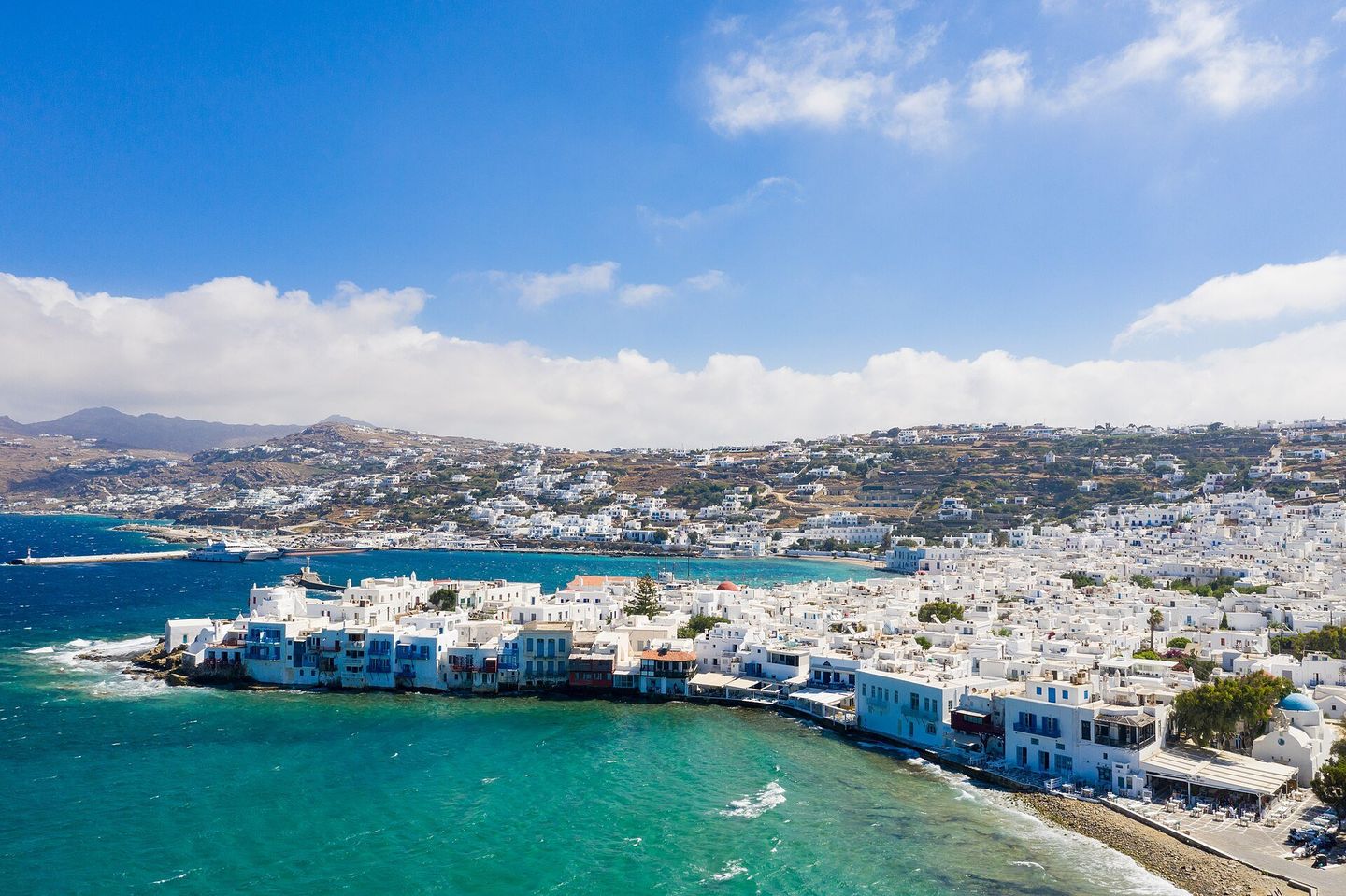
Mykonos has spent sixty years being the Greek island other Greek islands get compared to, for better and worse. It was the first place in the country to go properly international — Jackie Kennedy was photographed here in the 1960s, the gay bars opened not long after at a time when that took real nerve, and by the 1980s the combination of beach clubs, sunset bars and a genuinely beautiful whitewashed old town had made it the Mediterranean's answer to Ibiza. That reputation is both completely earned and, for a certain kind of traveller, completely beside the point.
Because underneath the yacht-club version of Mykonos is an actual Cycladic island: a hilltop row of windmills that ground the region's grain for three centuries, a maze of lanes in Chora narrow enough to have once confused Barbary pirates on purpose, a tiny uninhabited neighbour called Delos that the ancient world considered the literal birthplace of Apollo, and fishing villages inland that still run on a completely different clock than the beach clubs twenty minutes away. Both Mykonoses exist on the same nine-by-ten-kilometre island, often a short taxi ride apart, and almost nobody who only books the clubs and the infinity pools notices the other one is there.
This guide treats both as worth knowing about, because most of the dissatisfaction people report with Mykonos comes down to a mismatch between what they wanted and which version they landed in. Come in August wanting quiet and you will be miserable at prices that make Paris look cheap. Come in June or late September chasing the same postcard and the island is genuinely one of the best few days in the Aegean.
The caseWhy Mykonos earns its reputation, some of the time
Strip away the superyachts and the bottle service and what is actually on this island is a very good, very concentrated version of the Cycladic archetype: cube houses stacked on a hillside in blinding white, blue-domed chapels tucked into corners that seem architecturally unnecessary, and light that photographers talk about the way wine people talk about terroir. Chora, the main town, is one of the most purely beautiful built environments in Greece — not because any single building is a masterpiece, but because the whole town was shaped by function (narrow, shaded, wind-breaking lanes) into something that reads as pure design four centuries later.
The beach scene, love it or not, is also simply excellent at what it does. Few places in the Mediterranean have this density of genuinely good sand within a twenty-minute drive of each other, each with a different personality — a DJ-booth party beach, a quiet family cove, a see-and-be-seen VIP strip — so you can build a very different week here depending on which three or four you choose. And Delos, the half-day boat trip across, is not a theme-park add-on but one of the most important archaeological sites in the Mediterranean, a sacred island so significant to the ancient Greek world that at one point no one was permitted to be born or die on it.
The honest counter-argument is price and crowding. Mykonos is consistently among the most expensive Greek islands for both hotels and dinner, and in peak season the main square in Chora can feel more like an airport departure lounge than a village. That trade is worth making for some trips and not others, which is really the whole decision this guide is trying to help with.
The calendarWhen to go, and when the island turns against you
Late May through June, and the second half of September into early October, are the sweet spots. The sea is warm enough to swim by early June and stays that way into October; the beach clubs are open and the restaurants are running at full capacity, but the crowds and prices sit at perhaps sixty percent of August's. This is when Mykonos is at its most purely enjoyable — warm days, a lighter wind, and a town that still feels walkable rather than besieged.
July and especially August are a different proposition entirely. This is peak European holiday season and Mykonos absorbs an outsized share of it; hotel rates can triple, restaurants require booking days ahead, the ferry terminal and the airport both run flat out, and the meltemi — the strong, dry northerly wind that scours the Cyclades every summer — is at its most relentless, which closes some beaches to swimming on windier afternoons and makes dust and sand a genuine daily nuisance. People who love this version of Mykonos tend to love it specifically for the intensity; people who don't should simply avoid these eight weeks.
April, early May and most of October are the quiet bookends. Many beach clubs, a fair number of restaurants and some hotels close for the season, the sea is cooler, and the island runs at a fraction of its summer energy — but Chora is still beautiful, prices drop sharply, and it is the best window for anyone who wants the architecture and the walking without any of the scene. November through March is effectively closed season; most tourist infrastructure shuts and ferries run a skeleton schedule, so this is not a viable visit outside a very specific kind of off-season curiosity.
LogisticsGetting there, and getting around once you land
Mykonos National Airport sits about three kilometres southeast of Chora and takes direct flights from Athens year-round (around forty-five minutes) plus a wide seasonal network of charters and direct flights from across Europe in summer. The alternative is the ferry: high-speed catamarans from Piraeus or Rafina near Athens run around three to four and a half hours, while the slower conventional ferries take closer to five, and both the airport and the port sit close enough to Chora that a taxi or the public bus covers the distance in well under fifteen minutes.
Mykonos is also one of the better-connected islands for exploring the rest of the Cyclades by sea — regular high-speed links run to Naxos, Paros, Santorini and Tinos, which makes it a sensible hub for a multi-island trip rather than a dead end.
Once you are on the island, a rental car, ATV or scooter is genuinely the most useful thing you can book, because the good beaches are spread along the south coast and a car collapses twenty-minute taxi rides into five-minute drives you can make on your own schedule. The public bus network (KTEL) is cheap and more extensive than its reputation suggests, running from Chora out to most of the main beaches and to Ano Mera, though services thin out sharply outside July and August. Taxis exist but the fleet is famously small for an island this busy, so expect a wait at peak hours and in bad weather, and never assume you can simply flag one down outside the stand in town. Inside Chora itself, forget wheels of any kind — the old town is pedestrian by necessity, its lanes too narrow and twisting for anything but foot traffic.
The tableWhat to actually eat
Mykonian food is Cycladic cooking with its own small vocabulary, and it rewards seeking out the handful of specific things the island does that its neighbours don't. Kopanisti is the headline act: a soft, peppery, deliberately pungent fermented cheese spread that turns up on bread at almost every taverna and is worth ordering even if the description sounds like a dare. Louza, a cured, spiced pork loin similar to a Cycladic prosciutto, and tyropita or kremmydopita — Mykonian cheese and sweet-onion pies with their own distinct pastry — are the other dishes worth hunting down, particularly in Ano Mera, which keeps a more traditional kitchen scene than the beach-facing restaurants nearer the coast.
Seafood is excellent and priced accordingly in Chora and Little Venice, where a sunset-view table can cost two or three times the same fish a kilometre inland. The reliable move, as on most Greek islands, is to eat where the view is ordinary and the kitchen is not — inland villages and the less photogenic stretches of the main towns consistently serve better food for less than anywhere with a harbour view attached to the bill.
Mykonos's beach-club culture has also produced a genuinely different category of eating and drinking: all-day sunbed service, elaborate cocktail menus, and lunches that run into dinner into the DJ set, at beach clubs like Nammos, Scorpios and Cavo Paradiso. This is an entirely legitimate way to spend a day on this island and it is priced like the experience it is, with minimum spends and reservation requirements at the well-known clubs in July and August. Treat it as its own thing rather than expecting typical taverna value, and you won't feel cheated by it.
The mapChora, the coast, and the inland version of the island
Chora, Mykonos Town, is where most visitors spend their evenings regardless of where they sleep. It is a dense knot of whitewashed lanes radiating out from the harbour, built narrow and crooked on purpose to break the meltemi's force and to confuse raiders centuries ago; getting mildly lost here is part of the design and genuinely enjoyable in the morning before the shops and bars are at full volume. Little Venice (Alefkandra), on the town's western edge, is the neighbourhood of houses built with their balconies hanging directly over the sea, and it holds the best sunset-watching real estate on the island along with the row of windmills on the hill just above it, the most photographed structures in the Cyclades.
The south coast, roughly twenty minutes from Chora by car, is where the beach scene lives. Psarou is the VIP end — a small, sheltered cove backed by the island's most expensive sunbeds and a client list that leans celebrity. Platis Gialos and Ornos are calmer, more family-oriented stretches with a wide choice of straightforward tavernas and easy water-taxi connections onward to the party beaches. Paradise and Super Paradise are the famous club beaches, loud and crowded by early afternoon in season, built almost entirely around their beach bars rather than the sand itself. Elia, a little further east, offers a quieter, longer stretch for anyone who wants the south coast's warm water without the sound system.
Inland, Ano Mera is Mykonos with the volume turned off — a genuine village with its own slower rhythm, built around the Monastery of Panagia Tourliani, and the single best place on the island to understand that Mykonos was a working agricultural and fishing community for centuries before it became a brand. The north coast, exposed directly to the meltemi, is quieter still and rougher: Ftelia draws windsurfers precisely because of the wind the south coast tries to avoid, and Agios Sostis and Fokos are among the last genuinely undeveloped beaches left on the island, reachable mostly by dirt track and worth the detour for exactly that reason.
Field intelligencePractical intelligence
Book accommodation and, in July and August, restaurant tables and beach club sunbeds well ahead — this is not an island where you can reliably wing it in peak season, and the properties and venues with any reputation sell out weeks out. If budget is a real constraint, shift your dates into June or late September rather than hunting for a bargain in August, because the bargain mostly doesn't exist.
The meltemi is worth planning around rather than hoping to avoid. It typically strengthens through July and August, can make north-coast beaches unswimmable on its stronger days, kicks up dust on unpaved roads, and occasionally disrupts smaller ferry and hydrofoil services, so build a buffer day into any itinerary that depends on a specific departure if you are travelling in peak summer.
Pickpocketing and the usual nightlife-adjacent opportunism are the main safety concerns rather than anything more serious; keep valuables secured in beach-club lockers rather than on a sunbed, and agree taxi fares or confirm the meter before setting off given the limited fleet and occasional overcharging that comes with it. Mykonos has also been a pioneering LGBTQ+-friendly destination in Greece since the 1970s, with a concentrated, long-established scene of gay bars around the Little Venice and Matogianni Street area, and that openness is woven genuinely into the island's culture rather than being a recent marketing addition. Finally, carry cash for smaller tavernas and beach bars outside the main town, since card acceptance, while widespread, is not universal once you are off the main strip.
What to see & do
-
Kato Mili windmills
The row of whitewashed windmills on the hill above Little Venice, built by the Venetians around the sixteenth century to grind grain using the island's near-constant wind. Seven survive, several restored, and the sunset view from the ridge they stand on is the single most photographed scene in the Cyclades.
Tip:Walk up in the late afternoon and stay through sunset; the crowd thins fast once the light goes, and the windmills lit against a darkening sky are quieter and better than the golden-hour version everyone photographs.
-
Little Venice (Alefkandra)
The row of centuries-old houses built with their balconies cantilevered directly over the sea, originally homes of sea captains and merchants. The bars and cafés wedged beneath them now hold the best sunset seats on the island, at a price that reflects exactly that.
Tip:Arrive an hour before sunset to actually get a waterfront seat — the good tables fill early and many bars enforce a drink minimum once the sun starts dropping.
-
Panagia Paraportiani
An improbable, lumpy whitewashed church that is actually five separate chapels fused into one structure over several centuries, sitting right where the old town meets the sea near Kastro. It looks almost sculptural rather than built, and is one of the most photographed churches in Greece despite having no single architect or plan behind it.
Tip:Visit in the soft light just after sunrise or just before sunset, when the irregular whitewashed curves actually read as shapes rather than a flat white blur under the midday sun.
-
Delos
A small, uninhabited island thirty minutes offshore that the ancient Greek world considered the sacred birthplace of Apollo and Artemis — once so holy that no one was permitted to be born or die there. What survives is one of the most important archaeological sites in the Mediterranean: a sprawling sanctuary, a terrace of marble lions, mosaic-floored houses and a theatre, largely unshaded and genuinely vast.
Tip:Take the earliest boat of the day, bring far more water and sun protection than feels necessary, and budget three to four hours — the site has almost no shade and gets brutally hot by midday.
-
Paradise and Super Paradise beaches
The two beaches that built Mykonos's party reputation, a short hop apart on the south coast, each organised almost entirely around its beach clubs and DJ sets rather than the sand itself. Loud, crowded and unapologetically about being seen from roughly midday onward.
Tip:Come early morning if you actually want to swim rather than attend a party — by early afternoon in July and August both beaches are standing room only at the water's edge.
-
Psarou beach
A small, sheltered cove on the south coast that has become the island's VIP address, backed by Nammos and a client list that regularly includes actual celebrities and superyachts anchored just offshore. Expensive, polished and exactly as curated as it looks in photographs.
Tip:Sunbeds here require reservations and minimum spends in peak season — book a day or two ahead through your hotel concierge rather than turning up and hoping.
-
Ano Mera and the Panagia Tourliani monastery
An inland village roughly seven kilometres from Chora that still runs on a working, unhurried rhythm, built around an eighteenth-century monastery with an elaborately carved marble bell tower and a small museum of ecclesiastical treasures and embroideries.
Tip:Time a visit around lunch and eat in the village square — Ano Mera has some of the island's best-value, most traditional tavernas precisely because it isn't on the beach circuit.
-
Armenistis Lighthouse
An early-twentieth-century lighthouse on the island's rugged northern tip, built after a 1887 French warship wreck prompted the Greek state to finally light this stretch of coast. The site itself is modest, but the drive out and the views back across the strait to Tinos are the real reward.
Tip:Go for sunset facing west over the strait rather than for the lighthouse itself, and bring a jacket — the north coast catches the meltemi at full strength even on calm days elsewhere on the island.
On the groundWhere things are
Map data © OpenStreetMap contributors.
Where to stayBase yourself well
Chora (Mykonos Town)
Best for first-timers who want to walk everywhere and skip the nightlife commuteThe old town itself — maximum atmosphere, every restaurant and bar within a stumble, and the windmills and Little Venice on your doorstep. Also the loudest, most crowded base in peak season, with narrow lanes that mean real luggage-hauling on arrival.
A boutique Cycladic hotel tucked into the lanes near Little Venice
Look for a small, whitewashed property set back from the main harbour strip — you keep the five-minute walk to sunset without the loudest late-night noise.
€€€€A simple studio above the shops near the old port
A step down in polish buys a genuinely central base at a noticeably lower summer rate than the Little Venice-adjacent hotels.
€€€Psarou & Platis Gialos
Best for a beach-first trip with easy access to the VIP sceneThe polished south-coast strip, a short drive from Chora, built around beach-club life rather than old-town wandering. Expect resort-style properties, sea views and some of the island's highest rates.
A resort with direct access to Platis Gialos beach
Paying for sea-view rooms here buys you the ability to walk down to sunbeds before the day-trip crowds arrive by water taxi.
€€€€Ornos
Best for families and anyone who wants quiet nights near, not in, the actionA calmer, more family-friendly bay a few minutes from Chora by car or bus, with a long sandy beach, straightforward tavernas, and noticeably less nightlife noise than the town itself.
A small hotel a short walk back from Ornos beach
Set back a street or two from the waterfront restaurants for a quieter night, still inside a five-minute walk of the sand and the bus stop into town.
€€€Ano Mera
Best for longer stays, budget-conscious trips, and anyone who wants to see the other MykonosInland, unhurried and markedly cheaper, built around an actual working village rather than a tourist strip. You trade beach proximity for a genuinely different, calmer version of the island and a car becomes close to essential.
A family-run guesthouse near the village square
Rooms here run well below the coastal rate for the same dates, at the cost of a ten-to-fifteen-minute drive to the nearest beach.
€€Agios Stefanos & Tourlos
Best for a quiet base with town still within easy reachLow-key bays just north of Chora, close enough to walk or take a short taxi into town but removed from its noise, with sea views back toward the harbour and a quieter, more residential feel.
A hillside apartment with a view back toward Chora and the port
The elevated position here means a sea breeze and a view most Chora hotels can't offer, with the town still a short drive or a fifteen-minute walk away.
€€€Affiliate notePostcardRoute is reader-supported. Some links to Booking.com (stays, flights, car hire, tickets and tours, airport transfers) are affiliate links, tracked through CJ Affiliate: if you book through them we may earn a small commission at no extra cost to you. We only recommend places we would send a friend.
Book the restEverything else for the trip
Stay sorted? These open Booking.com for the other legs of the journey.
-
Tours & tickets
Things to do in Mykonos
Skip-the-line tickets, tours and day trips.
Browse activities -
Wheels
Car hire in Mykonos
Compare pick-up points and rental companies.
Compare cars -
Air
Flights
Search fares, then come back for the neighbourhood advice.
Search flights -
Ground
Airport transfers
Book a taxi or private transfer before you land.
Book a transfer
Affiliate noteThese four links are affiliate links too: if you book through them we may earn a small commission at no extra cost to you.
Beyond the cityWorthwhile day trips
- Delos
The essential excursion rather than an optional one — a thirty-minute boat ride to one of the most important archaeological sites in Greece, the sanctuary island the ancient world considered sacred to Apollo. Half a day, no shade, and worth every minute of the heat.
- Tinos
A short ferry hop north to an island with its own strong identity: a major pilgrimage church, dramatic dovecote-dotted countryside, and a marble-carving tradition that gives its villages a distinctly sculptural character you won't find on Mykonos itself.
- Naxos
The largest of the Cyclades, a couple of hours away by ferry, trading Mykonos's intensity for mountain villages, genuinely excellent local cheese and wine, and some of the best uncrowded beaches in the island group.
- Rineia
The quiet, uninhabited island just across the strait from Delos, usually combined with it on the same boat trip — a chance to swim in genuinely empty water a few hundred metres from one of Greece's busiest ancient sites.
Before you goCommon questions
- How many days do you need in Mykonos?
- Three to four days covers Chora, a couple of beaches and the Delos excursion comfortably. A shorter stay of two days is workable if you treat it as a focused beach-and-town trip rather than trying to cover the whole island, and most people visiting multiple Cyclades islands in one trip give Mykonos two or three nights before moving on.
- Is Mykonos too expensive for a budget trip?
- In July and August, largely yes — this is one of the most expensive islands in Greece for both accommodation and dining. Visiting in June or late September cuts costs substantially while keeping warm, swimmable weather, and staying inland in Ano Mera rather than in Chora or on the main beach strip brings rates down further.
- What is the best area to stay in Mykonos for first-timers?
- Chora itself, if you want to walk everywhere and don't mind noise, or Ornos if you want a calmer base a short drive or bus ride from town. Psarou and Platis Gialos suit a beach-first trip with higher rates attached; Ano Mera is the budget and quiet option if you're comfortable driving.
- Is Mykonos worth visiting outside of the party scene?
- Yes, and arguably it's a better trip that way. The windmills, Little Venice, Panagia Paraportiani, Delos and the inland village of Ano Mera add up to a genuinely rewarding Cycladic visit with no beach club required — the party reputation is real but it's an optional layer on top of an already worthwhile island.
- Do you need a car on Mykonos?
- Not strictly, since buses and taxis cover the main routes, but a rental car or ATV makes a real difference given how spread out the good beaches are and how limited the taxi fleet is relative to demand in peak season. If you're planning to see more than one or two beaches, renting wheels is worth it.
- How windy does Mykonos actually get?
- Often genuinely windy, especially in July and August when the meltemi blows hardest — strong enough on its worst days to close north-coast beaches to swimming and disrupt smaller ferries. It's rarely dangerous for a typical visitor, but it's worth checking which beaches face the wind on a given day and having a backup plan for ferry connections in peak summer.
- Is Delos worth the extra time and cost?
- Yes — it's one of the most significant archaeological sites in the Aegean, not a minor add-on, and seeing it properly needs a dedicated half-day rather than a rushed stop. Go on the earliest available boat, bring water and sun protection, and treat it as a highlight of the trip rather than an optional extra.