
Germany · Bavaria
Munich, at its own unhurried pace
Germany's most orderly city spends its evenings doing nothing in particular in a beer garden, and expects you to slow down and join it.
Dispatch from the Bavarian capital that takes its leisure as seriously as its engineering · 48.14° N · 11.58° E
Plan this trip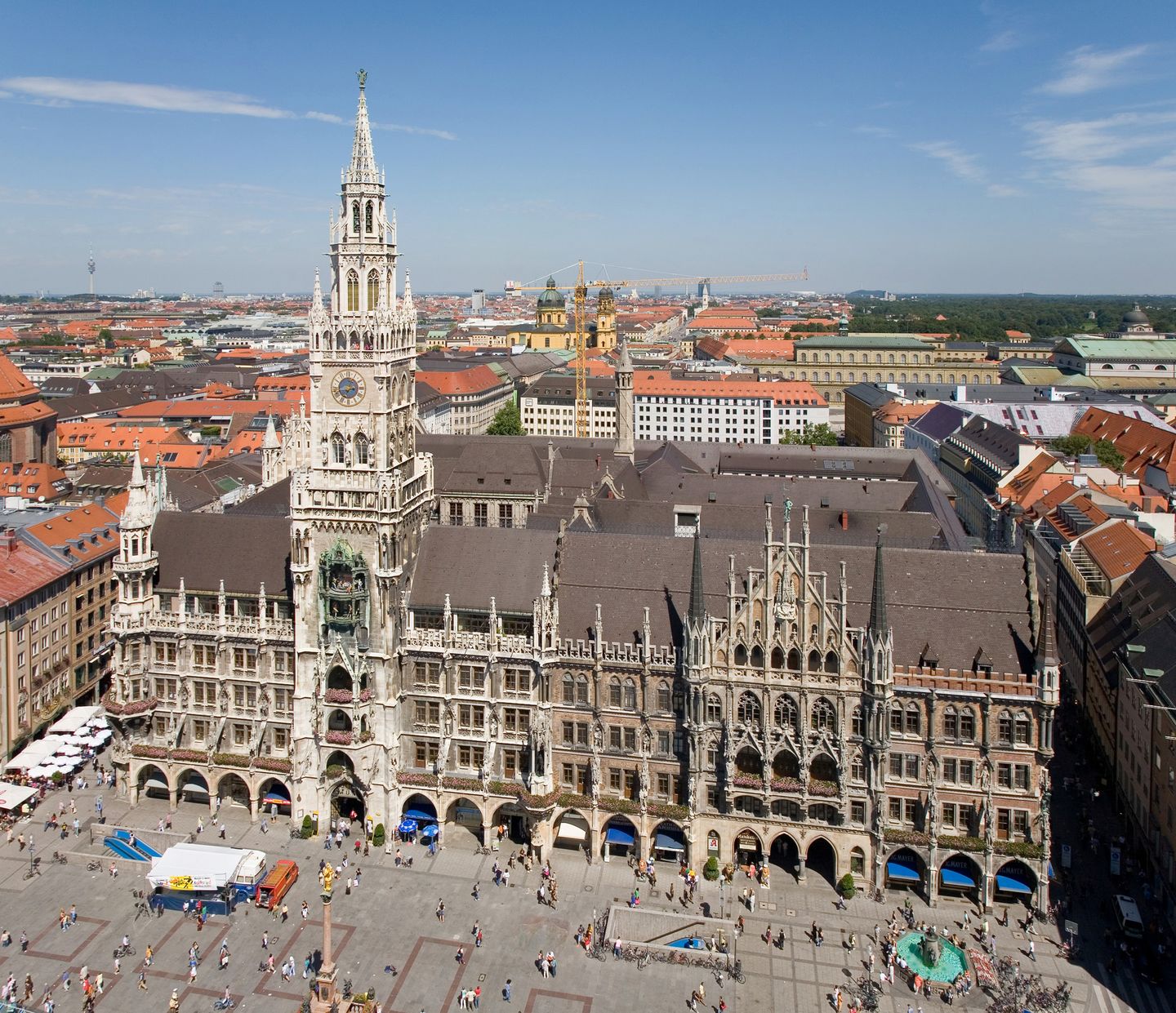
Munich has an image problem it does nothing to correct: lederhosen, oompah bands, a single fortnight of beer-tent chaos that most residents actively avoid. That version of the city exists, briefly, once a year, and it is not the reason to come. The Munich worth knowing is a wealthy, meticulously run Bavarian capital that happens to have turned communal outdoor drinking into a genuine civic institution, and that treats the two months either side of Oktoberfest as vastly more interesting than the festival itself.
What actually distinguishes the city is the seriousness with which it takes unstructured time. This is a place with more museum-grade art per capita than almost anywhere in Germany, a design and engineering pedigree running from BMW to the Deutsches Museum, and a historic centre dense with Gothic and Baroque set-pieces — and it spends its evenings sitting under chestnut trees with a litre of Helles, having brought its own picnic, doing essentially nothing. The beer garden is not a tourist attraction here. It is where the city actually lives from May to October, and understanding its unwritten rules will tell you more about Munich than any single monument will.
It also sits closer to genuinely spectacular mountains than any other city its size in Germany, which changes the calculus of a visit. Neuschwanstein is a long day trip, but the Alps themselves — proper hiking, proper lake swimming, a cable car up to a ridge with views into three countries — start about an hour south by train. Budget for the city and budget for at least one day of leaving it; Munich is as much a base as it is a destination, and the best trips here treat it that way.
The caseWhy Munich rewards more than a weekend stopover
Munich's old town packs an unreasonable amount of set-piece architecture into a walkable core: the twin onion domes of the Frauenkirche, the neo-Gothic Rathaus with its clattering Glockenspiel, the Residenz palace complex that housed Bavarian royalty for five centuries. All of it is genuinely worth seeing, and all of it can be done in a single focused morning, which is exactly why visitors who stop there come away thinking Munich is a pleasant half-day city. It isn't. It's a wealthy state capital with the museum density of a much larger place — the three Pinakothek galleries alone would anchor most European cities — and a park, the Englischer Garten, that is bigger than Central Park and genuinely used rather than merely photographed.
The deeper case is cultural rather than architectural. Bavaria has a distinct identity within Germany — its own dialect, its own patron saints, a Catholic conservatism that coexists with one of the country's most liberal, LGBTQ+-friendly neighbourhoods a few streets over — and Munich is where that identity is performed daily rather than staged for visitors, right down to the traditional Tracht (lederhosen and dirndls) worn unironically to weddings and to Oktoberfest by locals who own several. The city also functions as the country's engineering and design capital: BMW's headquarters and museum sit here, Siemens was founded here, and the Deutsches Museum is arguably the finest science and technology museum on the continent. Munich rewards people who give it three or four days rather than a rushed layover between Berlin and the Alps.
The calendarWhen to go — and why that isn't Oktoberfest
Late April through June is the strongest window: beer gardens reopen properly, the Englischer Garten fills with sunbathers and the Eisbach river surfers, days stretch long, and the crowds are a fraction of high summer's. Early autumn — September before Oktoberfest starts, and October after it ends — is nearly as good, with golden light, comfortable temperatures, and a city that has not yet been requisitioned by beer tents.
Oktoberfest itself deserves a clear-eyed assessment. It runs from mid-September to the first Sunday in October at the Theresienwiese fairground, and it is worth experiencing once — the scale of it, fourteen enormous tents each with their own brass band and six-million-litre annual pour, is genuinely something. But hotel prices triple or more, the tents are loud and crowded well beyond what most visitors expect, and the city outside the fairground gets noticeably less pleasant to simply wander. If you come for it, book accommodation six months out and reserve a tent table in advance if you want to sit rather than stand for the day; if the festival itself doesn't interest you, actively avoid those specific dates and come the fortnight before or after instead, when the beer gardens are just as full of Helles without the tour-bus crush.
Winter is genuinely underrated for a shorter trip: the Christkindlmarkt at Marienplatz runs through Advent with mulled wine and roasted almonds, museums are queue-free, and a clear cold day gives the best odds of seeing the Alps' snow-capped wall from the city itself, a view summer haze usually hides. March brings Starkbierzeit, the strong-beer season tied to Lent, when breweries roll out beers strong enough that monks historically drank them to survive fasting — a curious, distinctly Bavarian few weeks worth timing a visit around if strong beer interests you more than sunshine.
LogisticsGetting around
Munich's public transport, the MVV network of U-Bahn, S-Bahn, trams and buses, is fast, clean and exactly as punctual as the stereotype promises. Buy a day ticket (Tageskarte) or, better, load a Deutschlandticket if you're staying a month or connecting onward by regional train elsewhere in Germany; single tickets are poor value if you're moving more than twice a day. The system runs on an honour basis with no barriers, but plainclothes inspectors do check, and the fine for riding without a validated ticket is not a rounding error — validate everything before boarding, including day passes bought from a machine.
The old town itself is entirely walkable, and most first-time visitors will use the U-Bahn mainly to reach the Alte Pinakothek museum quarter, Schwabing, or the Olympiapark rather than to cross the centre. Munich is also a genuinely excellent cycling city — flat, with an extensive network of dedicated lanes — and a rented bike is the best way to actually use the Englischer Garten rather than just skirting its edge. The S-Bahn is what you'll use for the airport (roughly 45 minutes from the centre on the S1 or S8) and for day trips to the lakes and the Alps; buy the correct zone ticket, since Bavaria's regional day tickets scale by how many zones or how far you're travelling, and the mountain day trips often need a wider zone than a standard city ticket covers.
The tableHow Munich actually eats and drinks
Start with the beer garden, because the etiquette genuinely matters and nobody explains it to visitors. A traditional Munich Biergarten has two zones: table service, where you order from a waiter and tip as you would at any restaurant, and a self-service area, usually marked by unclothed wooden tables, where you queue at a counter for your beer and food and — critically — are allowed to bring your own picnic, as long as you buy your drinks there. This right is protected by Bavarian law and locals use it constantly, turning up with a full spread of bread, cheese and radishes and simply buying litres of Helles to go with it. Sit at an unclothed table with your own food; sit at a clothed, waiter-service table and a picnic basket will get you pointedly ignored.
The city's own beer, brewed within Munich under the Reinheitsgebot purity law, comes from six breweries: Augustiner, Paulaner, Löwenbräu, Hacker-Pschorr, Spaten and Hofbräu. Augustiner is the one locals reach for first — still served from wooden kegs in some of its own beer gardens — while Hofbräuhaus is the famous one, packed with tour groups, worth one visit for the spectacle and not the beer. Order a Helles, the pale lager that is the city's default, or a Weissbier (wheat beer) with a proper cloudy pour if you want the other Bavarian classic.
Food follows the same unfussy, hearty register. Weisswurst — a delicate white veal-and-pork sausage — is traditionally a breakfast dish, eaten before noon with sweet mustard, a pretzel and a Weissbier, and skinned rather than bitten through, a detail locals notice. Schweinshaxe (roasted pork knuckle) and Schweinebraten (pork roast) with dumplings and red cabbage anchor the dinner end of things; Leberkäse, a baked meatloaf served in a bread roll as a quick lunch, is the everyday version. The Viktualienmarkt, a permanent open-air market just off Marienplatz, is the best single stop for grazing across all of it — beer garden in the centre, stalls selling everything from Bavarian cheese to fresh oysters around the edges — and it operates daily except Sunday, when almost every shop in the city, by law, closes.
The mapNeighbourhoods to know
Altstadt, the old town ringed by the former city walls, holds the postcard sights — Marienplatz, the Frauenkirche, the Residenz — and almost nobody actually lives there anymore; treat it as the place you visit rather than the place you base yourself, unless proximity to everything matters more to you than atmosphere or price.
Maxvorstadt, just north of the old town, is the museum quarter and university district — the three Pinakothek galleries, the Lenbachhaus, wide Ludwigstrasse boulevards, and a studenty energy from the neighbouring Ludwig Maximilian University. It's an excellent base for culture-heavy visits and noticeably calmer than the centre in the evenings.
Schwabing, north of Maxvorstadt and bordering the Englischer Garten's northern reaches, was Munich's bohemian quarter a century ago — Kandinsky and Thomas Mann both lived here — and today reads as comfortably upscale rather than edgy, with leafy streets, good cafés, and easy park access. Glockenbachviertel and the neighbouring Gärtnerplatz quarter, south of the old town, are the current version of that energy: independent boutiques, the city's best concentration of bars and restaurants, and Munich's LGBTQ+ centre, all within walking distance of the centre.
Haidhausen, across the Isar to the east, is sometimes called the French Quarter for its 19th-century town-planning grid, and combines a residential, slightly gentrified calm with genuinely good restaurants and the Gasteig cultural centre nearby. It's a five-minute tram ride from Marienplatz and consistently better value than the old town for the same level of comfort.
Field intelligencePractical intelligence
Sundays are quiet by law. The Ladenschluss rules mean nearly all shops close, supermarkets included, with exceptions only for bakeries (a few hours in the morning), restaurants, and stores inside major train stations, which stay open as a deliberate loophole. Plan grocery shopping and errands around Saturday, and treat Sunday as the day for a park, a museum or a beer garden instead — most of Munich already does.
Cash still matters more here than in much of Western Europe. Contactless cards are accepted at hotels, chains and most restaurants now, but plenty of smaller bakeries, market stalls and traditional beer gardens are cash-only or cash-preferred, and carrying some euros avoids an awkward stand-off at the till. Tipping is modest — round up or add five to ten per cent at a restaurant, handed directly to the server when you pay rather than left on the table.
Watch for the Föhn, a warm Alpine wind that occasionally blows down from the mountains and is genuinely blamed by locals for headaches, irritability and traffic accidents — meteorologically real, not just folklore, and it also happens to produce the clearest possible views of the Alps from the city on the days it occurs. Jaywalking is mildly taboo; Münchners wait for the green pedestrian signal even on empty streets, and doing otherwise around children draws disapproving looks. And German directness is not rudeness: a shop assistant or waiter who is brisk and unsmiling is simply being efficient by local standards, not being cold.
Field notesWhat to see & do
-
Marienplatz and the Neues Rathaus
The city's central square, dominated by the neo-Gothic New Town Hall and its Glockenspiel, a mechanical carillon that re-enacts a 16th-century royal wedding and a coopers' dance twice daily to a crowd that gathers below.
On the groundThe Glockenspiel plays at 11am and noon year-round, with a 5pm show added March to October — check the time before you plan around it, since it's brief and easy to miss.
-
Frauenkirche
Munich's cathedral and skyline-defining silhouette, twin brick towers capped with distinctive Renaissance copper domes that a city ordinance keeps taller than any nearby building.
On the groundClimb the south tower for the best rooftop view of the old town's red roofs against the Alps on a clear day — it's an elevator most of the way, not a punishing climb.
-
Englischer Garten
A vast 18th-century park, larger than New York's Central Park, threaded by the Eisbach stream where wetsuited surfers ride a standing wave at the park's edge — one of Munich's most reliably surprising free spectacles.
On the groundHead to the Chinesischer Turm beer garden in the park's south for the classic self-service, bring-your-own-picnic experience under a five-tiered wooden pagoda.
-
Deutsches Museum
The world's largest museum of science and technology, spread across an island in the Isar, with everything from a walk-through coal mine to historic aircraft and one of the first working nuclear reactors used for research.
On the groundIt's genuinely too large for one visit — pick two or three sections in advance rather than trying to see all of it, and budget at least three hours even then.
-
Residenz Munich
The former royal palace of the Bavarian monarchs, a sprawling complex of over ninety rooms including the glittering Antiquarium, one of the largest Renaissance halls north of the Alps, plus a separate treasury and theatre.
On the groundBuy the combined ticket covering the Residenz museum, treasury and Cuvilliés Theatre — seeing all three in one visit is significantly better value than paying separately.
-
Viktualienmarkt
A permanent open-air food market just off Marienplatz, running since the early 1800s, with stalls selling Bavarian cheese, cured meats, produce and flowers around a central beer garden shaded by a maypole.
On the groundClosed Sundays, like almost everything retail in the city — come on a weekday morning when the stalls are freshest and least crowded.
-
Nymphenburg Palace
The Wittelsbach dynasty's Baroque summer palace, set in a formal park with canals, follies and a porcelain manufactory that still produces hand-painted Nymphenburg china using 18th-century techniques.
On the groundSkip the palace interior if you're short on time and just walk the free park — the canal, the Amalienburg hunting lodge, and the deer park make for a proper half-day on their own.
-
BMW Welt and BMW Museum
A striking architectural showroom and adjoining museum beside BMW's four-cylinder headquarters tower, tracing the company's design and motorsport history alongside a rotating display of current models.
On the groundBMW Welt itself is free to walk through and worth a look even if you skip the paid museum next door — check ahead if a factory tour is running, since those need advance booking.
On the groundWhere things are
Map data © OpenStreetMap contributors.
Where to stayBase yourself well
Altstadt
Best for first-timers and short stays who want everything on footThe old town core, within walking distance of Marienplatz, the Frauenkirche and the Residenz. Central, comfortable, and priced accordingly — you are paying for proximity, not atmosphere, since few locals actually live here.
A mid-range hotel a few streets off Marienplatz
Being able to walk to the main sights and the Viktualienmarkt in minutes is the whole case for staying in the Altstadt.
€€€A business hotel near the Karlsplatz (Stachus) transit hub
Puts you on top of the U-Bahn and S-Bahn interchange, useful if you're also planning day trips out of the city.
€€Maxvorstadt
Best for museum-focused visits and a quieter baseThe museum quarter and university district — wide boulevards, the three Pinakothek galleries, and a calmer, more residential evening feel than the centre while staying an easy walk or one tram stop from it.
A boutique hotel near the Pinakotheken
Ideal if the museums are the point of your trip — several galleries are within a ten-minute walk of each other here.
€€€Glockenbachviertel and Gärtnerplatz
Best for food, nightlife and a younger crowdMunich's trendiest quarter — independent boutiques, the best concentration of bars and restaurants in the city, and the centre of Munich's LGBTQ+ scene. A ten-minute walk from Marienplatz with a completely different energy after dark.
A design-led hotel on a quiet Gärtnerplatz side street
Puts you in the best restaurant neighbourhood in the city while staying an easy walk from the old town.
€€€Schwabing
Best for longer stays and park accessThe former bohemian quarter, now comfortably upscale, bordering the Englischer Garten's northern edge. Leafy, calm, and well connected by U-Bahn, with good cafés and easy park access.
An apartment-hotel near Münchner Freiheit
A short walk to the Englischer Garten and the Eisbach surfers, with the U-Bahn putting the centre ten minutes away.
€€Haidhausen
Best for value and a more local feel without losing convenienceAcross the Isar to the east, sometimes called the French Quarter for its 19th-century grid of streets. Residential, gently gentrified, and consistently better value than the centre for a comparable level of comfort.
A mid-range hotel near Max-Weber-Platz
Two tram stops from Marienplatz, with a genuinely good, less touristy restaurant scene on your own doorstep.
€€Affiliate notePostcardRoute is reader-supported. Some links to accommodation are affiliate links: if you book through them we may earn a small commission at no extra cost to you. We only recommend places we would send a friend.
Beyond the cityWorthwhile day trips
- Neuschwanstein Castle
Ludwig II's fairy-tale 19th-century castle near Füssen, the direct inspiration for Disney's Sleeping Beauty Castle. A two-hour train each way plus a shuttle or steep walk up, so it's a full day — book the timed entry ticket online well ahead.
- Dachau Memorial Site
The first Nazi concentration camp, now a preserved memorial and museum roughly 25 minutes from central Munich by S-Bahn and bus. Sober, essential, and best given at least three hours; the audio guide is worth the small extra cost.
- The Bavarian Alps and Zugspitze
Germany's highest peak is reachable by train and cogwheel railway from Garmisch-Partenkirchen, about an hour and a quarter south of Munich, with a cable car finishing the ascent to views across three countries on a clear day.
- Andechs Monastery
A working Benedictine monastery brewery on a hilltop above the Ammersee lake, about an hour away, where monks have brewed strong beer since the 15th century. Combine with a lakeside walk or a swim in summer for a slower, less structured day out.
Before you goCommon questions
- How many days do you need in Munich?
- Three full days covers the city itself comfortably — one for the old town and Marienplatz area, one for the museums in Maxvorstadt, one for the Englischer Garten and a neighbourhood like Glockenbachviertel. Add at least one more day for a single Alpine or Neuschwanstein day trip, since both are worth a full day rather than a rushed half-day.
- Is it worth visiting Munich for Oktoberfest?
- Once, if the scale of it genuinely interests you — but book accommodation months ahead, expect prices to triple, and know that the city outside the fairground gets noticeably more crowded and expensive too. If you'd rather see the real beer garden culture without the tour-bus intensity, come in the weeks just before or after the festival instead.
- What is the beer garden etiquette in Munich?
- Traditional beer gardens have two zones. At unclothed self-service tables, you queue at a counter for drinks and food, and are legally allowed to bring your own picnic as long as you buy your beer there. At clothed, waiter-service tables, you order and tip as you would at any restaurant — bringing outside food to those tables is not acceptable.
- What is the best time of year to visit Munich?
- Late April to June and September (before Oktoberfest) to October are the strongest windows — beer gardens are in full swing, days are long, and crowds are lighter than midsummer or the festival itself. Winter is a good, quieter alternative for a shorter trip, with Christmas markets and queue-free museums.
- Are shops really closed on Sundays in Munich?
- Yes, almost entirely, by law. Supermarkets and most retail close, with exceptions for bakeries in the morning, restaurants, and shops inside major train stations. Plan grocery runs and errands for Saturday and treat Sunday as a day for the park, a museum, or a beer garden instead.
- Can you day-trip to Neuschwanstein Castle from Munich?
- Yes, though it's a full day rather than a quick excursion — about two hours each way by train to Füssen, plus a shuttle bus or a steep 30-minute walk up to the castle itself. Book the timed-entry ticket online in advance; walk-up tickets sell out, especially in summer.
- Is Munich expensive compared to other German cities?
- Yes, it's consistently ranked as Germany's most expensive city for rent and hotels, largely thanks to its wealthy corporate base. Food and beer remain reasonable by comparison, especially at self-service beer gardens and the Viktualienmarkt, so the honest strategy is to spend on where you stay wisely and eat and drink like a local.