
Mexico · Nuevo León
Monterrey, under the saddle mountain
A steel-and-glass business capital that never quite shook off its industrial spine, ringed by some of the most dramatic peaks any Mexican city can claim.
An industrial capital pinned under a mountain it never stops looking at · 25.69° N · 100.32° W
Plan this trip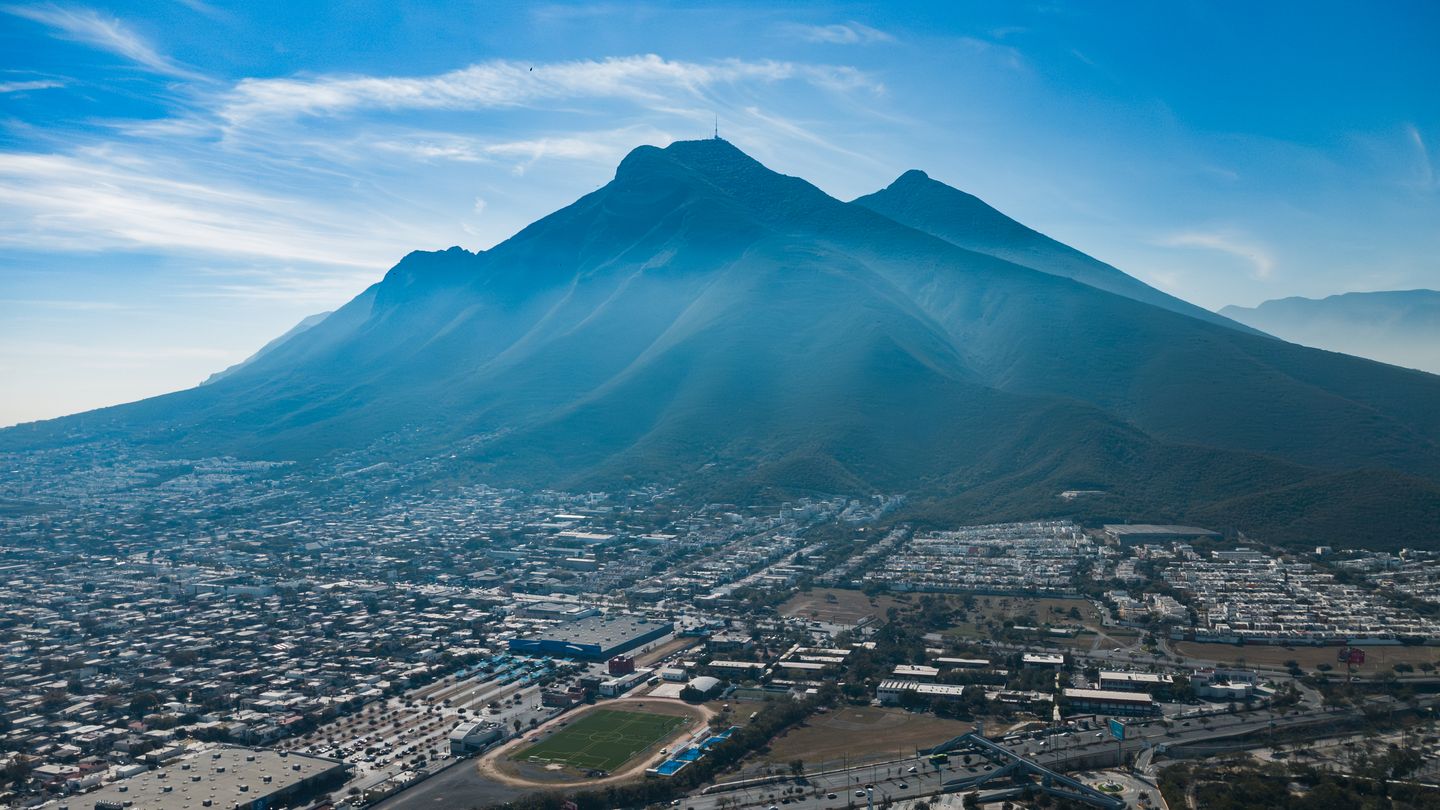
Monterrey does not perform for visitors the way Mexico City or Oaxaca do. It is Mexico's industrial and financial capital, a city built by steel barons and cement magnates rather than viceroys, and it carries itself accordingly — glass office towers, six-lane arterial roads, a skyline that looks more like Houston than colonial New Spain. Most travellers pass over it entirely on the way to somewhere with a better postcard. That is Monterrey's loss and, if you actually come, your gain: this is one of the least crowded major cities in the country, with genuinely good food, a serious contemporary art scene, and a mountain backdrop few cities anywhere can match.
The backdrop is not incidental. Cerro de la Silla — the saddle-shaped peak that gives the city its emblem — rises directly behind the eastern edge of downtown, close enough that it dominates sightlines from office windows and highway overpasses alike. The Sierra Madre Oriental wraps the rest of the valley, close enough that a serious canyon hike is a forty-minute drive from the financial district, not a day trip. Few cities let you go from a rooftop bar to a waterfall in under an hour, and Monterrey does it without much fuss.
What follows is not a checklist built for a city trying to be Mexico City's understudy. Monterrey works on its own terms — a compact historic core, a converted steel foundry turned into the country's most ambitious industrial park, and a food culture built around wood-grilled meat rather than street tacos. Come with those expectations set correctly and it is a genuinely rewarding two or three days, not a layover to endure.
The caseWhy Monterrey is worth the detour
Monterrey's pitch is not a single monument — it is a combination nowhere else in Mexico quite offers: a real, functioning modern city with money behind its museums and restaurants, set directly against a mountain range serious enough to draw climbers and canyoneers from across the country. Fundidora Park alone justifies a stop, an early-twentieth-century steel foundry the city converted into one of Latin America's most genuinely successful pieces of adaptive reuse rather than a token industrial-chic gesture — blast furnaces stand next to running tracks, a concert venue, and a science museum, and none of it feels forced.
The other draw is proximity to wilderness most Mexican cities can only gesture at from a bus window. Parque Nacional Cumbres de Monterrey wraps the metro area, and specific sites within it — the Cola de Caballo waterfall, the Grutas de García caves, the Matacanes and Horsetail canyons for anyone serious about adventure travel — sit close enough that a half-day trip barely dents a short visit. Add a downtown core that is walkable, cheap by comparison with Mexico City's tourist-facing prices, and a restaurant scene built around genuinely excellent grilled meat, and the case for Monterrey stops needing much of a sales pitch.
The calendarWhen to go
Monterrey sits in a bowl that traps heat, and summer here is not a mild inconvenience — June through September regularly pushes past 35°C with heavy afternoon humidity, and hiking or walking the historic core at midday in August is genuinely unpleasant. Aim instead for October through April, when daytime temperatures settle into the low-to-mid twenties and evenings turn properly cool, sometimes cold enough for a jacket in December and January.
Spring, specifically March and April, is arguably the sweet spot: the mountains are green after winter rain, the light is clear enough for the Cerro de la Silla views to actually deliver, and the city has not yet tipped into summer heat. Late autumn, October and November, runs a close second, with the added bonus of clearer skies for anyone heading into the Sierra Madre. Whatever month you choose, check for the ozone and particulate air-quality alerts the city issues in winter — a temperature inversion effect that can genuinely dull the mountain views for a few days at a stretch.
LogisticsGetting around
Downtown Monterrey — the historic centre, Barrio Antiguo, and Fundidora Park — is walkable as a single unit, roughly forty minutes end to end on foot, and the connecting stretch along the Santa Lucía Riverwalk (Paseo Santa Lucía) is one of the more pleasant urban walks in Mexico, a landscaped artificial channel linking the Macroplaza to Fundidora with the option of a slow boat ride instead of walking.
Beyond downtown, the city sprawls the way most car-oriented Mexican metros do, and San Pedro Garza García — the wealthy, restaurant-heavy municipality to the southwest — is genuinely too far to walk from the centre. The Metrorrey light rail system covers two lines and is clean, cheap and reliable for the corridors it serves, but its coverage of San Pedro and the northern suburbs is thin. Rideshare apps (Uber and Didi both operate widely and reliably) are the practical default for anything the metro doesn't reach, and are inexpensive enough that most visitors default to them for evening trips rather than driving themselves.
The tableHow Monterrey actually eats
Forget the idea that Mexican regional cooking is interchangeable — Nuevo León's food culture is built around wood and charcoal grilling more than anywhere else in the country, a legacy of the state's ranching economy. Cabrito — young goat, split and slow-roasted over open coals until the skin crisps — is the dish the city is proudest of, and a handful of long-running asadores serve almost nothing else. Carne asada, thin-cut beef grilled hot and fast, is the other pillar, typically served with flour tortillas rather than corn, a genuine regional distinction from most of the country.
Machaca — dried, shredded beef scrambled with eggs and peppers — is the breakfast to order at least once, and the region's flour tortillas deserve real attention: thin, slightly charred, and used for everything from breakfast tacos to the wraps that carry carne asada. San Pedro Garza García carries the city's fine-dining weight, with a genuinely serious contemporary restaurant scene that has drawn national attention over the past decade, but do not skip the market-stall and taquería end of the spectrum in the historic centre — Mercado Barrio Antiguo and the streets around it are where the everyday cooking happens, and it is where the city's food reputation is actually earned.
The mapNeighbourhoods to know
Barrio Antiguo, the old colonial quarter just south of the Macroplaza, is the closest thing Monterrey has to a classic Mexican historic centre — low colonial-era buildings, cobbled streets, and a nightlife scene of bars and cantinas that gets going properly after dark, particularly on weekends. By day it is quiet and pleasant for wandering; by night it is the closest thing the city has to a party district.
The Macroplaza itself, one of the largest city squares in the world, anchors downtown with the cathedral, the Government Palace, and the striking orange Faro del Comercio monument by Luis Barragán. Fundidora Park, the converted steel foundry a short walk or tram ride northeast, is worth treating as its own half-day rather than a quick pass-through — it holds the excellent Museo del Acero science museum, the CINTERMEX convention centre, and enough green space and public art to wander for hours. San Pedro Garza García, southwest of downtown, is where the money lives: manicured, upscale, dense with the city's best restaurants and bars, and genuinely worth an evening even if you are based elsewhere for the location and food alone.
Field intelligencePractical intelligence
Altitude is not a factor here — Monterrey sits at a modest 540 metres — but the heat and the valley's trapped air are, so plan outdoor time for morning or early evening for most of the year and check air-quality readings in winter if respiratory sensitivity is a concern. The city has a reputation, dating to a rougher period in the late 2000s and early 2010s tied to cartel violence, that has substantially eased; tourist areas including downtown, Barrio Antiguo and San Pedro are calm and well-trafficked today, though it is still sensible to stick to well-lit, populated streets at night as in any large Mexican city and to use rideshare rather than hailing unmarked taxis.
Spanish is close to universal outside hotel and upscale restaurant staff, more so than in Mexico City's more tourist-adjusted centre, so a little functional Spanish goes a genuinely long way. Tipping runs 10–15% at sit-down restaurants, broadly in line with the rest of Mexico. Tap water is not safe to drink here any more than elsewhere in the country — bottled or filtered water is the default, and most hotels and restaurants provide it as standard. The Sierra Madre day trips are genuinely worth arranging a guide or organised tour for rather than self-driving on a first visit — several of the canyon routes involve technical terrain and local knowledge of current conditions matters.
Field notesWhat to see & do
-
Cerro de la Silla
The saddle-shaped mountain that gives Monterrey its skyline signature, visible from nearly every part of the city and the single image most associated with the place. Hiking the main trail to the ridge is a serious full-day undertaking, not a casual stroll.
On the groundYou don't need to summit to get the payoff — several viewpoints around the base and from Fundidora Park deliver the iconic silhouette without the climb.
-
Fundidora Park
A former steel foundry converted into one of Latin America's best examples of industrial adaptive reuse — blast furnaces, a science museum, a concert venue and green space all sharing the same grounds without feeling like a theme park.
On the groundRent a bike at the entrance; the park is large enough that walking the whole thing eats a surprising chunk of the day.
-
Barrio Antiguo
The old colonial quarter south of the Macroplaza, quiet cobbled streets by day and the city's liveliest bar-and-cantina district after dark, particularly on weekends.
On the groundCome back after 9pm on a Friday or Saturday to see the neighbourhood at its actual register — daytime visits only tell half the story.
-
Macroplaza
One of the largest city squares in the world, anchoring downtown with the cathedral, the Government Palace and Luis Barragán's striking orange Faro del Comercio monument.
On the groundThe Faro's laser beam sweeps the square nightly around sunset — worth timing a visit for the display rather than a daytime photo only.
-
Paseo Santa Lucía
A landscaped artificial river channel connecting the Macroplaza to Fundidora Park, with a slow boat ride available for the full 2.5-kilometre stretch if you'd rather not walk it.
On the groundWalk it at golden hour — the fountains and mountain backdrop both photograph best in the last hour before sunset.
-
Parque Nacional Cumbres de Monterrey
The national park wrapping the metro area, home to the Cola de Caballo waterfall, the Grutas de García caves, and the canyoneering routes at Matacanes and La Huasteca that draw serious adventure travellers.
On the groundBook an organised tour for the canyon routes rather than self-driving on a first visit — several involve technical terrain and local guides know current conditions.
-
Museo de Arte Contemporáneo (MARCO)
A striking Legorreta-designed contemporary art museum facing the Macroplaza, with a rotating program that has made it one of the most respected contemporary art institutions in Mexico.
On the groundCheck for a temporary exhibition before visiting — the permanent collection is smaller than the building's ambition suggests, and the program is where MARCO earns its reputation.
-
San Pedro Garza García
The affluent municipality southwest of downtown, dense with Monterrey's best contemporary restaurants and bars and worth an evening even for visitors based elsewhere.
On the groundBook dinner reservations ahead on weekends — the area's best-known kitchens fill up with a local, not tourist, crowd.
On the groundWhere things are
Map data © OpenStreetMap contributors.
Where to stayBase yourself well
Barrio Antiguo / Centro
Best for first-timers and sightseeing on footThe historic core, walkable to the Macroplaza and the Riverwalk, with the city's liveliest nightlife on the doorstep. The most convenient base for a first visit built around downtown sights.
A restored colonial-era hotel in Barrio Antiguo
Look for a property in a converted historic building rather than a chain tower — several boutique conversions sit right in the old quarter's cobbled core.
€€A business hotel near the Macroplaza
International chains cluster around the square, offering reliable amenities within walking distance of Fundidora and the cathedral.
€€€San Pedro Garza García
Best for food-focused trips and business travellersUpscale, leafy and restaurant-dense, roughly twenty minutes from downtown by car or rideshare. The right choice if good food and a quieter evening matter more than walking to the historic sights.
A modern hotel in central San Pedro
Puts you within walking distance of the municipality's best-regarded restaurants and bars, at the cost of a commute into the historic centre.
€€€€Valle Oriente / Del Valle
Best for business travellers and easy airport accessA modern business corridor between downtown and San Pedro, home to shopping centres and international hotel brands. Practical rather than characterful.
A corporate-standard hotel near Valle Oriente
Convenient for meetings and malls, with rideshare making both downtown and San Pedro a short, cheap trip away.
€€€Cumbres / near the park entrance
Best for adventure travellers prioritising the Sierra MadreFor anyone building a trip primarily around hiking and canyon routes rather than city sights — a handful of guesthouses and small hotels sit closer to the national park's main access points.
A guesthouse near the park's main entrance
Trims the early-morning drive time for a Cola de Caballo or García caves trip, at the cost of distance from downtown's restaurants and nightlife.
€€Affiliate notePostcardRoute is reader-supported. Some links to Booking.com (stays, flights, car hire, tickets and tours, airport transfers) are affiliate links, tracked through CJ Affiliate: if you book through them we may earn a small commission at no extra cost to you. We only recommend places we would send a friend.
Book the restEverything else for the trip
Stay sorted? These open Booking.com for the other legs of the journey.
-
Tours & tickets
Things to do in Monterrey
Skip-the-line tickets, tours and day trips.
Browse activities -
Wheels
Car hire in Monterrey
Compare pick-up points and rental companies.
Compare cars -
Air
Flights
Search fares, then come back for the neighbourhood advice.
Search flights -
Ground
Airport transfers
Book a taxi or private transfer before you land.
Book a transfer
Affiliate noteThese four links are affiliate links too: if you book through them we may earn a small commission at no extra cost to you.
Beyond the cityWorthwhile day trips
- Cola de Caballo waterfall
A roughly 25-metre waterfall in the Sierra Madre foothills, about an hour from the city, with a cable car or horseback option up to the falls and a small tourist village at the base.
- Grutas de García
A large limestone cave system reached by cable car up the mountainside, with guided walking tours through chambers of stalactites and stalagmites that take roughly an hour.
- La Huasteca canyon
A dramatic limestone canyon on the city's southwestern edge, popular with rock climbers and an easy half-day trip for anyone who wants Sierra Madre scenery without a full expedition.
- Matacanes canyon
A serious full-day canyoneering route involving rappelling, swimming and cliff jumps through a slot canyon — genuinely demanding, guide-required, and one for travellers who specifically want adventure sport rather than sightseeing.
Before you goCommon questions
- How many days do you need in Monterrey?
- Two to three days covers the city itself comfortably — downtown, Fundidora Park, Barrio Antiguo and San Pedro's restaurants — with a third day freed up for a Sierra Madre day trip to the waterfall or caves. Adventure travellers building a trip around canyoneering should budget an extra day or two for the more demanding routes.
- Is Monterrey safe for visitors?
- The city's reputation still carries the shadow of a rougher period around 2009–2012 tied to cartel conflict, but tourist areas including downtown, Barrio Antiguo, Fundidora Park and San Pedro are calm and well-trafficked today. Standard big-city precautions apply — stick to populated, well-lit areas at night, use rideshare apps rather than hailing taxis on the street, and keep valuables discreet, as in any large Mexican city.
- What is Monterrey known for?
- Steel and industry historically, and today a financial and manufacturing hub — Mexico's answer to a corporate business capital. Visitors know it for the Cerro de la Silla mountain backdrop, Fundidora Park's converted foundry, cabrito and carne asada, and easy access to serious Sierra Madre hiking and canyoneering.
- What is the best time of year to visit Monterrey?
- October through April, avoiding the intense summer heat that regularly tops 35°C with heavy humidity from June to September. March and April are the sweet spot, with green mountains after winter rain and clear skies before the heat sets in.
- Can you visit Monterrey without a car?
- Yes, comfortably. Downtown and Barrio Antiguo are walkable, the Metrorrey light rail covers useful corridors, and rideshare apps are widely available and inexpensive for everywhere else, including San Pedro Garza García. A car or organised tour is genuinely useful only for the Sierra Madre day trips.
- How do I get from the airport into central Monterrey?
- Monterrey International Airport (MTY) sits roughly 24 kilometres northeast of downtown. Official airport taxis and rideshare apps both operate reliably, with the trip into the centre typically running 30 to 45 minutes depending on traffic; there is no direct metro or train link from the airport itself.