
Monaco
Monaco, where the world's second-smallest country does a lot with very little land
A cliffside principality the size of a mid-sized airport, built up and terraced rather than out, where you can walk the entire Grand Prix circuit before lunch and still have the afternoon free.
Two square kilometres, no income tax, and a hairpin turn where Formula 1 cars nearly clip the hotel lobby · 43.74° N · 7.42° E
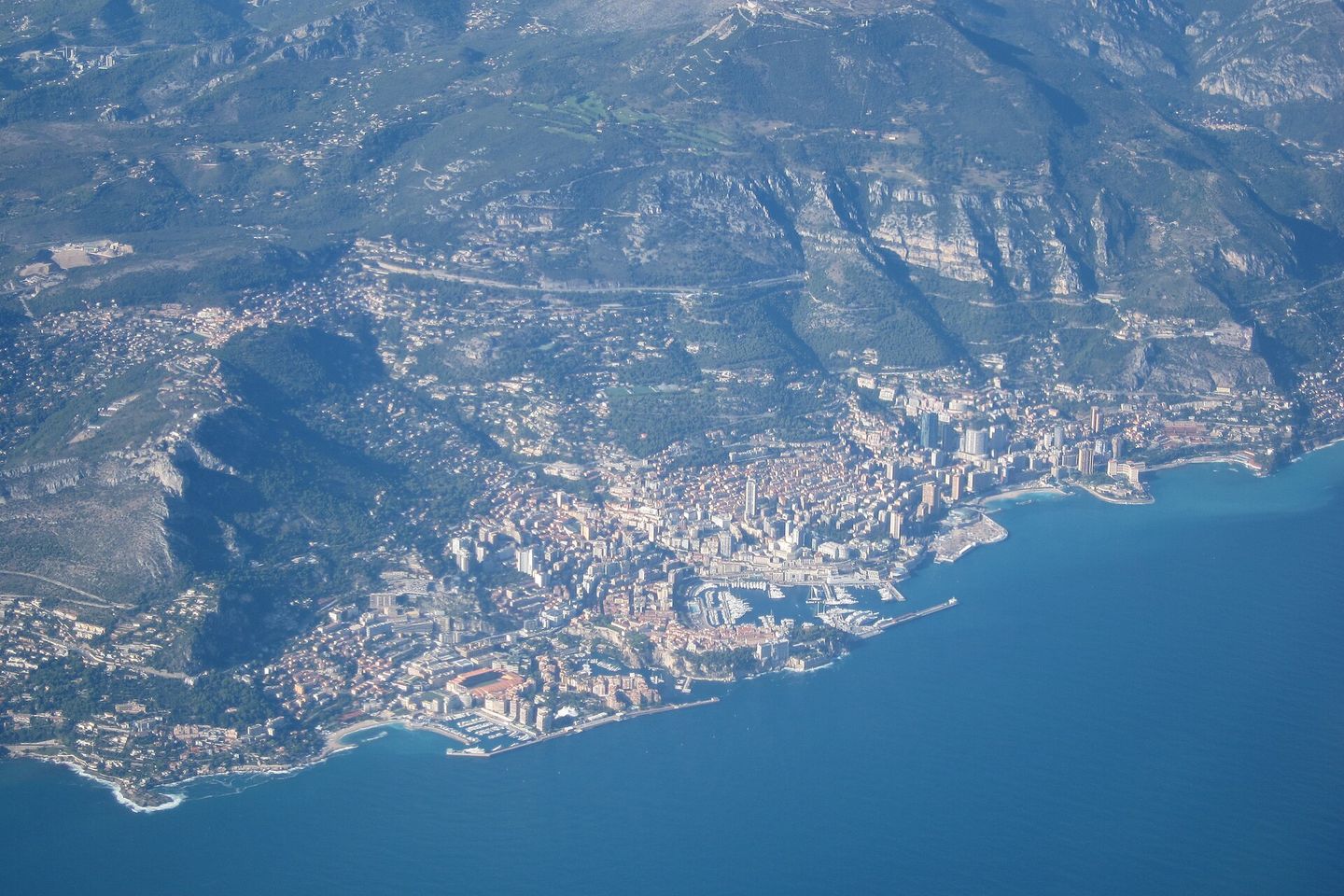
Monaco is 2.1 square kilometres, which sounds like a rounding error until you're standing in it. The entire country is smaller than many single neighbourhoods in the cities around it, and yet it has crammed in a working harbour, a Grand Prix circuit, a rock-top old town, a casino that funds the state, a skyline of towers wedged onto hillsides too steep for most cities to bother building on, and roughly 39,000 residents with one of the highest concentrations of wealth on earth. Nothing about Monaco is accidental. Every metre of flat land here was either reclaimed from the sea or carved into a terrace, and the whole place runs on the fact that density, not sprawl, is the only option it has.
This isn't a city in the usual sense — it's a sovereign microstate squeezed between the French Riviera hills and the Mediterranean, independent since the House of Grimaldi took the rock in 1297, with its own government, its own flag, and a currency arrangement and open border with France that make it feel, for a visitor, like stepping into a particularly well-funded French arrondissement. You don't need a passport check to cross in, and the transition from Beausoleil or Cap-d'Ail into Monaco is sometimes just a change in the quality of the pavement and a sudden absence of French number plates.
What follows treats Monaco for what it actually is to visit: a half-day to a full day of genuinely dense, walkable sightseeing — the Rock, the harbour, the Casino quarter, a chunk of the actual Grand Prix track — that most people do as a side trip from Nice or the rest of the Riviera, plus honest notes on the one week a year (the Grand Prix, in May) when the whole calculation changes and prices and crowds both become genuinely extreme.
The caseWhy Monaco is worth more than a drive-by
The easy cynical take is that Monaco is a tax haven with excellent sea views, and there's truth in that — Monaco has levied no income tax on its residents since 1869, and that single policy shapes almost everything you'll see, from the yacht density in Port Hercule to the apartment prices that regularly top anywhere else on the planet. But reducing the country to that misses what actually makes it interesting to walk around: an almost theatrical commitment to building upward and outward against impossible terrain, a genuine 1920s-through-2020s architectural timeline compressed into a few hillside kilometres, and a Belle Époque core around the Casino that is, regardless of how you feel about gambling or wealth, one of the most ornate public interiors you'll stand inside anywhere in Europe.
It also rewards visitors who come for the mundane, unglamorous version of the place rather than the yacht-and-roulette fantasy. The old town on the Rock has a working cathedral, a changing of the guard that happens on a schedule rather than for tourists specifically, and sea views that don't care what currency is in your pocket. The Oceanographic Museum is a serious scientific institution, not a photo-op aquarium. And the Grand Prix circuit — the actual public roads that F1 cars scream around one week a year — is just the normal road network the rest of the time, meaning you can stand at the Fairmont hairpin or walk through the tunnel the cars pass through and feel the scale of the thing with no ticket required.
The calendarWhen to go — and when to actively avoid
Late April, June, and September are the sweet spots: warm enough for the harbour and the beach at Larvotto, not yet or no longer at the peak heat and crowding of July–August, and critically, outside the Grand Prix week. May is genuinely split in two. Early May is lovely — spring light, manageable crowds, the Mediterranean warming up. Then, for roughly ten days around the third weekend of the month, the Monaco Grand Prix takes over entirely: hotel rates multiply several times over, large sections of the principality close to normal traffic for days of track setup and grandstand construction, and anyone not here specifically for the race will mostly find themselves fighting it rather than enjoying the city.
If you do want the Grand Prix experience, book accommodation and tickets the better part of a year out — rooms in Monaco itself sell out early and at extraordinary prices, and plenty of regulars base themselves in Nice or Menton and train in instead. Outside race week, July and August bring the heaviest ordinary tourist crowds and the highest heat, along with the Monaco Yacht Show in late September, which has its own smaller but real crowd-and-price bump. Winter is quiet, mild by northern European standards, and the best time to see the Casino's interior and the museums without a crowd, even if the beach is a non-starter.
LogisticsGetting around a country you can cross on foot
Monaco's entire territory is walkable, but it is also aggressively vertical — the Rock, Monte-Carlo, and the hillside above the harbour are connected by genuinely steep streets and staircases, which is why the state has installed dozens of free public lifts and escalators tucked into buildings and hillsides across the principality. Learning to use them, rather than fighting the gradient on foot, is the single best logistics tip for visiting: a lift from the harbourside up to Monaco-Ville or from La Condamine toward the Casino saves what would otherwise be a genuinely sweaty climb.
The free Monaco Bus network (CAM) covers the rest, running frequently between the wards and useful if you're carrying bags or the heat is up. There is no need for a car, and having one is mostly a liability — parking is scarce and expensive, and the road network briefly becomes a literal closed racetrack every May. Monaco has its own train station (Monaco-Monte-Carlo) on the coastal line linking Nice and Ventimiglia, which makes it an easy and cheap rail hop from anywhere else on the Riviera — most visitors arrive this way rather than driving. The nearest airport is Nice Côte d'Azur, roughly 30 minutes by road or an actual helicopter shuttle away, which is the kind of detail that tells you a lot about who else is landing there.
The tableEating in Monaco without a Michelin budget
Monaco's restaurant scene has a genuine high end — Alain Ducasse's Le Louis XV at the Hôtel de Paris has held three Michelin stars for decades, and the Casino quarter is lined with dining rooms built for exactly that kind of evening. If that's the trip you're having, book weeks ahead and dress for it. But it is entirely possible to eat well here without that budget, and doing so is the more honest version of visiting.
Look for Monégasque specialities rather than generic French-Riviera menus: barbagiuan, deep-fried pastry parcels stuffed with chard, ricotta and onion, are the closest thing Monaco has to a national snack, and you'll find them at small bakeries and traiteurs rather than grand restaurants. Stocafi, a slow-cooked stockfish stew, and fougasse, a local flatbread, show up on menus that take local identity seriously. The covered market in La Condamine is the best lunch move for most visitors — a real working market with counter food, well below Casino-quarter prices, and a genuine slice of everyday Monégasque life rather than the postcard version. Supermarkets and bakeries throughout La Condamine and Fontvieille run at normal French-Riviera prices, which, next to the hotel restaurants, will feel like a different country entirely.
The mapThe six wards, and what each one actually is
Monaco divides into distinct quartiers, each small enough to cross on foot in minutes but different enough in character to be worth knowing before you arrive. Monaco-Ville, universally called the Rock, is the oldest ward — the fortified promontory holding the Prince's Palace, the cathedral, and the narrow lanes of the old town, all of it looking out over genuinely dramatic sea cliffs. La Condamine wraps around Port Hercule, the main harbour, and is the most normal, lived-in part of the principality: the market, workaday shops, and the yachts themselves, moored close enough to touch.
Monte-Carlo is the ward most people picture when they hear the country's name — the Casino, the Place du Casino, the grand Belle Époque hotels, and the steep streets above the harbour where the Grand Prix's famous hairpin and tunnel sit. Fontvieille, entirely built on land reclaimed from the sea since the 1970s, is quieter and more residential, home to the marina, the national stadium, and the Princess Grace Rose Garden. Moneghetti climbs the hillside above La Condamine and holds the Jardin Exotique, with some of the best panoramic views in the country. Larvotto, to the east, is Monaco's beach ward — the principality's only real stretch of sand, artificial but well kept, and the closest thing here to a conventional Riviera beach day.
Field intelligencePractical intelligence for a very small, very wealthy country
Monaco uses the euro and feels, in every practical sense, like an extension of France — there's no passport control crossing the border, French mobile plans generally roam here without issue, and most residents speak French as a first language, with English widely spoken in anything tourist-facing. It is not part of the European Union itself, though it operates inside the Schengen area via its relationship with France, so the border crossing genuinely is seamless for almost everyone.
The Casino de Monte-Carlo's main gaming rooms require a passport for entry (no national ID is accepted) and a minimum age of 18, and smart-casual dress is enforced more strictly in the evening and in the private rooms than at midday. The famous open-air changing of the guard at the Prince's Palace happens daily at 11:55am and is free and genuinely worth timing a Rock visit around. Everything in Monaco, from parking to a coffee at a harbourside café, costs meaningfully more than the French towns a ten-minute walk away — Beausoleil and Cap-d'Ail specifically exist, in large part, as the places people stay to avoid Monaco's own prices while still spending their days here. Pickpocketing is low by major-city standards given the security presence, but it's not zero, especially in Casino-quarter crowds.
What to see & do
-
Casino de Monte-Carlo
Charles Garnier's 1879 Belle Époque gaming house, still the financial engine behind the whole principality's tax-free arrangement and one of the most ornate public interiors in Europe, from the atrium's frescoed ceiling to the Salle Garnier opera house tucked inside the same building.
Tip:You can walk into the atrium and the public gaming rooms for a fee without playing a single hand — it's worth it purely to see the room, and a passport is required for entry.
-
Prince's Palace (Palais Princier)
The Grimaldi family's seat since the 13th century, perched on the Rock with sweeping views over the harbour, open to visitors for part of the year and the site of a genuinely functioning daily changing of the guard rather than a staged tourist show.
Tip:Time your visit for 11:55am for the changing of the guard, which is free and happens in the square outside whether or not you pay for the palace interior.
-
Oceanographic Museum (Musée Océanographique)
Founded by Prince Albert I in 1910 and directed for three decades by Jacques Cousteau, a serious marine research institution built into the cliff face of the Rock, with a shark lagoon, a working aquarium and a terrace with one of the best sea views in the country.
Tip:Go in the morning before cruise-ship groups arrive, and don't skip the rooftop terrace — the view over the Mediterranean from up there is as good as the exhibits.
-
Monaco Cathedral
A late-19th-century Romanesque-Byzantine cathedral on the Rock, final resting place of Monaco's princes and princesses, including Grace Kelly and Rainier III, whose graves draw a steady, quiet stream of visitors.
Tip:It's free to enter and a genuine working cathedral — keep voices down, and check for Sunday Mass times if you'd rather visit outside a service.
-
Jardin Exotique
A cliffside botanical garden laid out in the 1930s on near-vertical terrain, packed with cacti and succulents from Africa and the Americas that improbably thrive on this Mediterranean hillside, plus caves and one of the best panoramic viewpoints over the principality.
Tip:The paths are steep and the footing can be uneven in places — wear real shoes, not sandals, and budget at least an hour.
-
Port Hercule
The principality's main harbour and the literal centre of the country geographically, lined with superyachts, cafés and the covered market, and transformed every May into the pit lane and paddock for the Formula 1 Grand Prix.
Tip:Walk the full length of the harbour promenade at golden hour — it's free, flat, and the single best stretch for seeing the yachts, the Rock and Monte-Carlo's skyline together.
-
The Grand Prix circuit on foot
The actual public roads used for the Monaco Grand Prix — Sainte-Dévote, the climb past the Casino, the Fairmont hairpin, and the harbourfront tunnel — are ordinary streets for 51 weeks of the year, meaning anyone can walk the circuit and stand on corners where F1 cars pass within centimetres of the barriers each May.
Tip:The Fairmont hairpin, the tightest corner in Formula 1, is the single most recognisable spot and easy to reach on foot from the Casino — look for the hotel awning the cars pass directly beneath.
-
Larvotto Beach
Monaco's only real beach ward, a stretch of artificial but well-maintained sand on the eastern edge of the principality, with free public sections alongside paid beach clubs and generally calm, clear Mediterranean water.
Tip:The free public stretch at the eastern end is perfectly good and considerably less expensive than the beach-club loungers further west.
On the groundWhere things are
Map data © OpenStreetMap contributors.
Where to stayBase yourself well
Monte-Carlo
Best for a once-in-a-while splurgeThe postcard version of Monaco — the Casino, the grand Belle Époque hotels, and the steepest, most expensive real estate in the country. You are paying for the address as much as the room.
A Belle Époque grand hotel near the Place du Casino
This is the Monaco of the imagination, a short walk from the gaming rooms and the Grand Prix hairpin, at a price to match.
€€€€La Condamine
Best for first-timers who want a central base without the casino-district markupThe harbourside ward where Monaco actually functions day to day — the market, the working port, and a noticeably more normal pace than Monte-Carlo a few streets uphill.
A mid-range hotel a few streets back from Port Hercule
Close enough to walk everywhere in the principality, and the market is on your doorstep for breakfast.
€€€Fontvieille
Best for a calmer stay with easy access to the rest of the principality by lift or busQuieter, more residential, and entirely built on reclaimed land — the marina, the stadium and the rose garden give it a calmer, less touristed feel than the harbour-and-casino core.
A modern hotel near the Fontvieille marina
A short free-bus or lift ride from Monaco-Ville and the Casino, with a noticeably quieter evening than either.
€€€Just across the border — Beausoleil & Cap-d'Ail
Best for value, and anyone unwilling to pay Monaco's own room ratesTechnically France, practically Monaco — these neighbouring towns sit directly against the border, in some streets literally across the road from it, and offer the same walkable access at a fraction of Monégasque prices.
A standard hotel in Beausoleil, uphill from the Casino
A ten-to-fifteen-minute walk or one bus stop into Monaco proper, at ordinary French Riviera prices rather than Monégasque ones.
€€Affiliate notePostcardRoute is reader-supported. Some links to Booking.com (stays, flights, car hire, tickets and tours, airport transfers) are affiliate links, tracked through CJ Affiliate: if you book through them we may earn a small commission at no extra cost to you. We only recommend places we would send a friend.
Book the restEverything else for the trip
Stay sorted? These open Booking.com for the other legs of the journey.
-
Tours & tickets
Things to do in Monaco
Skip-the-line tickets, tours and day trips.
Browse activities -
Wheels
Car hire in Monaco
Compare pick-up points and rental companies.
Compare cars -
Air
Flights
Search fares, then come back for the neighbourhood advice.
Search flights -
Ground
Airport transfers
Book a taxi or private transfer before you land.
Book a transfer
Affiliate noteThese four links are affiliate links too: if you book through them we may earn a small commission at no extra cost to you.
Beyond the cityWorthwhile day trips
- Nice
The Riviera's biggest city is 15–20 minutes away by train and makes an easy pairing in either direction — the old town, the Promenade des Anglais and a much larger, more varied food scene than Monaco's.
- Èze
A medieval hilltop village clinging to a crag above the coast, roughly 20 minutes from Monaco by bus, with narrow stone lanes and one of the best panoramic viewpoints on the entire Riviera.
- La Turbie
A short bus or taxi ride up into the hills above Monaco to the Trophy of Augustus, a Roman monument from 6 BC, with the single best elevated view directly down onto the principality's skyline and harbour.
- Menton
The last French town before the Italian border, 20 minutes east by train, known for its lemon festival, a milder microclimate than the rest of the coast, and a far less expensive old town to wander.
Before you goCommon questions
- How many days do you need in Monaco?
- A single full day is genuinely enough to see the Rock, the Casino quarter, the harbour and a stretch of the Grand Prix circuit on foot — the entire country is 2.1 square kilometres. Most visitors do it as a day trip from Nice or elsewhere on the Riviera rather than staying overnight, and that's a perfectly sensible way to do it.
- Is Monaco expensive to visit?
- Hotels, Casino-quarter restaurants and anything branded with the principality's name are genuinely expensive, among the highest in Europe. But a day visit can be done cheaply — the train in is inexpensive, the public lifts and buses are free, the changing of the guard and the harbour walk cost nothing, and the covered market in La Condamine offers normal French-Riviera lunch prices. The cost scales almost entirely with how much Monte-Carlo glamour you're buying into.
- What is the best time to visit Monaco?
- Late April, June and September give warm weather without the two extremes to avoid: the Monaco Grand Prix in mid-to-late May, when prices multiply and roads close for the race, and the peak heat and crowds of July–August. Winter is quiet and mild but not beach weather.
- Do I need a car in Monaco?
- No — and having one is mostly a disadvantage. The entire country is walkable with the help of its free public lifts and escalators, the free Monaco Bus covers longer hops, and parking is both scarce and expensive. Most visitors arrive by train from Nice or elsewhere on the coastal line.
- How do I get from the airport to Monaco?
- Nice Côte d'Azur is the nearest airport, roughly 30 minutes away by road (bus or taxi) or by a dedicated helicopter shuttle. There's no airport within Monaco itself, so every visitor arrives via Nice one way or another.
- Is Monaco part of France or the European Union?
- Neither — it's a fully sovereign microstate, independent of France, and not an EU member, though it uses the euro and operates inside the Schengen area through its relationship with France. In practice the border is open and unchecked, so it feels seamless to cross.
- Can I visit Monaco during the Grand Prix?
- Yes, but plan around it rather than stumbling into it — accommodation in Monaco itself sells out and multiplies in price the better part of a year ahead, and several roads close for days around the race for track construction. Many visitors base themselves in Nice or Menton for the week and train in instead.