
Greece · Cyclades
Milos doesn't look like the rest of Greece
A volcanic island of lunar-white beaches, pirate-hideout coves and a port town that still mends its own nets — researched and compiled for the trip before Milos gets discovered properly.
The Cycladic island that looks like nowhere else on Earth · 36.73° N · 24.44° E
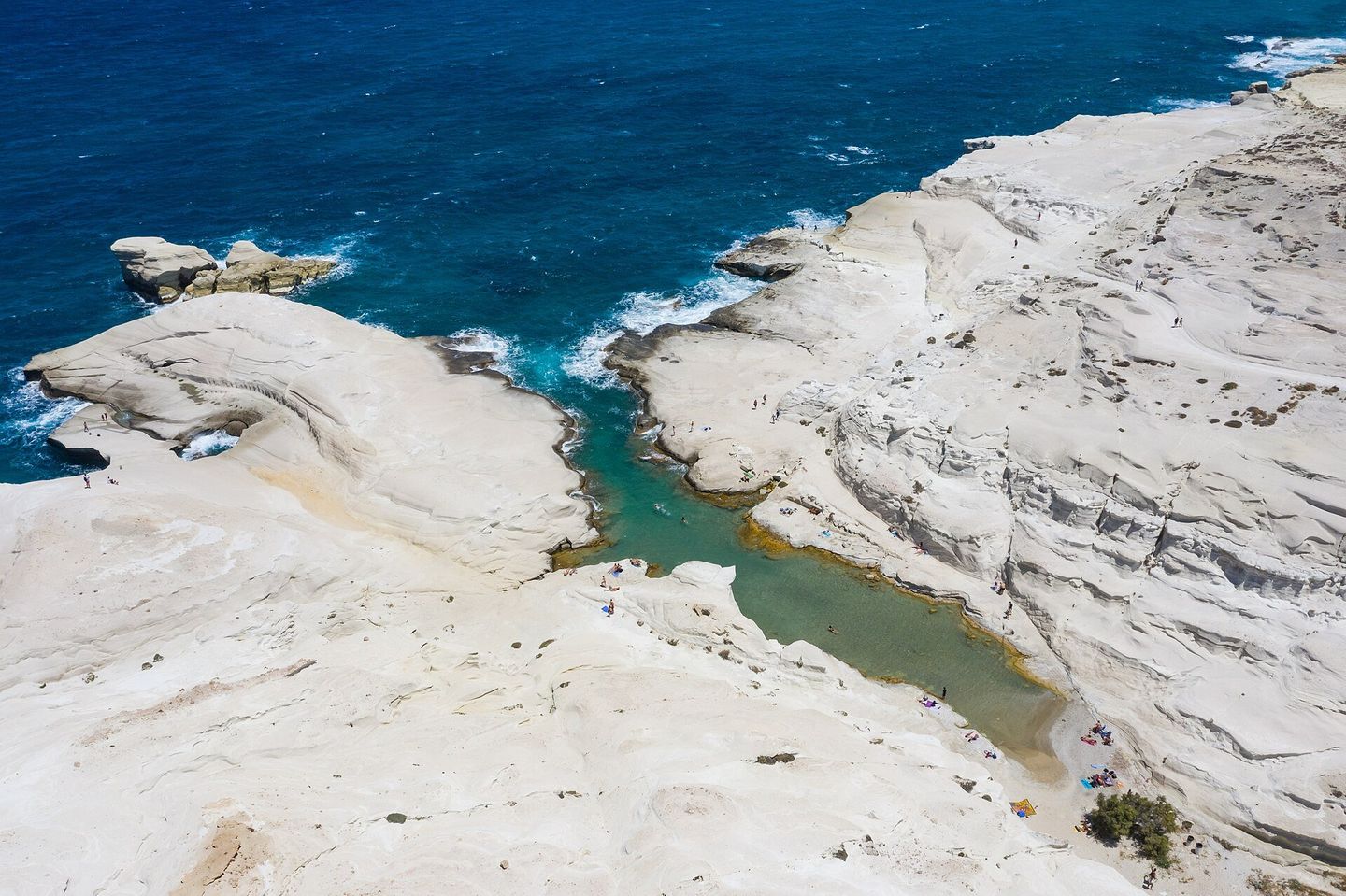
Most Cycladic islands sell the same picture: whitewashed cubes, blue domes, a sunset bar. Milos sells a different one, because geologically it has no choice. This is a volcanic island, still faintly active underground, and the rock itself does most of the marketing — bone-white pumice beaches that look lifted from the moon, sea caves striped in ochre and rust, cliffs honeycombed with abandoned mineral workings. It is strange-looking in a way that photographs undersell and that no other Greek island quite matches.
It is also, for now, considerably less crowded than its neighbours two hours east by ferry. Santorini and Mykonos get the cruise ships and the influencer traffic; Milos gets day-trippers who heard about Sarakiniko and a smaller, steadier run of people who come specifically for the boat trips, the diving, and a port town where the main industry is still mining and fishing rather than tourism alone. That balance is shifting — Sarakiniko shows up on enough feeds now that August afternoons there are genuinely busy — but the island as a whole still rewards anyone willing to rent a car and go looking.
This isn't a top-ten list. You already know Sarakiniko is coming. What follows is the rest of it: which village to actually sleep in, how to see Kleftiko without wasting a day on the wrong boat, what Milos's mining past left behind that's worth a detour, and the honest case for giving this island four or five days rather than treating it as a two-night add-on to a Santorini trip.
The caseWhy Milos earns the detour
The short version is geology. Milos sits on an active volcanic arc, and roughly seventy beaches ring its coastline, each shaped by a different rock type, so the island reads like a geology field trip disguised as a beach holiday — bone-white tephra at Sarakiniko one hour, deep red cliffs at Paliorema the next, caramel-striped sea caves at Papafragkas after that. No two coves look alike, which is unusual on an archipelago where most islands' beaches are variations on the same sand.
The human layer is just as distinctive. Milos has been mined continuously since the Neolithic, when its obsidian was traded across the Aegean and beyond; that mining economy never really stopped, and the island still has working perlite and bentonite quarries rather than a tourism-only monoculture. It gave the ancient world the Venus de Milo, discovered by a farmer in 1820 and now in the Louvre, though the statue itself long ago left the island it's named for. What's left in its place is a genuinely working island — fishing boats stored in volcanic-rock boathouses at Klima, a port that smells of diesel and grilled octopus in equal measure, and a tourist economy that still feels secondary to real local life rather than the whole point of the place.
The calendarWhen to go
Late May through June, and again mid-September into October, are the sweet spots. The water is warm enough to swim by late May, the island's famously strong meltemi winds are less relentless than in the dead of summer, and Sarakiniko, Kleftiko and the rest haven't yet filled with the July-August crowds. Late September adds genuinely warm sea temperatures with a fraction of the people.
July and August are peak season in every sense — hot, busy, and windy, since the meltemi blows hardest in high summer and can cancel small-boat trips to Kleftiko and Glaronisia for a day or two at a stretch. Book accommodation and any boat tour well ahead if you're travelling then. Winter all but shuts the island down: many businesses close from November to April, ferry schedules thin dramatically, and this becomes a trip for people who specifically want an empty, windswept Milos rather than a functioning holiday base.
LogisticsGetting around
Fly or ferry. Milos has a small airport with short connections to Athens, useful for saving a travel day, though ferries from Piraeus (roughly three to four and a half hours depending on the boat) or island-hopping routes from Santorini, Paros or Sifnos are the more common approach and let you combine Milos with the rest of the Cyclades. Adamas, the main port, is where almost everyone arrives.
Rent a car or scooter for your stay — this is not a walkable island, and public buses, while they exist and connect Adamas to Plaka, Pollonia and the main beaches, run on a limited schedule that won't get you to Sarakiniko at sunrise or Firiplaka at golden hour. A small car handles the paved roads fine; a few of the best coves (Sykia Cave, some approaches to Kleftiko's clifftop views) want a bit more ground clearance or a short walk from where you can safely park. Kleftiko itself is boat-only — there's no road access, so budget a half or full day for an organised tour or a rented boat if you're confident on the water.
The tableWhat to eat, and where
Milos's food culture leans harder into seafood and foraged greens than the Cycladic average, and locals are proud of a handful of dishes you won't find pushed quite so hard elsewhere in the islands. Pitarakia — small cheese or herb pies, often with a tangy local soft cheese — turn up as a starter at most tavernas and are worth ordering on sight. Watermelon pie (karpouzopita), a sweet-savoury pastry built around dried watermelon, is a genuine island specialty worth seeking out at a bakery in Plaka rather than a tourist-facing dessert menu.
For seafood, Klima and the small harbours at Mandrakia and Firopotamos have waterfront tavernas built right into the old boathouse rock, and these are where to eat the day's catch rather than at a bigger restaurant in Adamas. Octopus, sun-dried on lines outside tavernas before it's grilled, is the dish to photograph and then eat. Pair any of it with a glass of the local, lesser-known wine — Milos isn't a major wine island, but a handful of small producers are worth asking your taverna about, and the volcanic soil does something interesting to what they grow.
The mapVillages to know
Plaka, the island's capital, sits on a clifftop above the Gulf of Milos and is the obvious base for anyone who wants postcard views and a short walk to the best sunset in the Cyclades from the Venetian Kastro above the village. It's quiet at night, which is either the point or a drawback depending on what you want from an evening.
Adamas, the port, is the practical hub — most of the restaurants, the ferry and the rental agencies, and a genuinely lively waterfront in high season, but it trades Plaka's views for convenience. Pollonia, on the island's northeast tip, is the low-key alternative: a small fishing-harbour-turned-resort village, the departure point for ferries to neighbouring Kimolos, and noticeably calmer than either Plaka or Adamas even in August. Inland, Triovasalos and Pera Triovasalos are where many Milians actually live — working villages with none of the coastal polish, cheaper tavernas, and a useful base if you want quiet and don't mind driving to the beaches.
Field intelligencePractical intelligence
The meltemi wind is the single biggest variable on a Milos trip. It can run for days in July and August, kicking up enough swell to cancel the Kleftiko and Glaronisia boat tours outright, so if those are the reason you're visiting, build in a buffer day or two rather than booking a tour for your one free afternoon. Boats also sell out in peak season; book a day or two ahead where you can.
Milos's obsidian and other volcanic rock are genuinely, legally protected — picking up 'just one piece' from Sarakiniko or anywhere else is removal of a geological and often archaeological resource, and it's enforced. Bring water shoes: most of the standout beaches are rock or pumice rather than sand, and Sarakiniko's smooth white stone turns slick and hot underfoot by midday. And don't expect to see the actual Venus de Milo statue here — it's been in the Louvre since 1821, and the island's small Archaeological Museum in Plaka holds a plaster cast rather than the original, a detail that catches a surprising number of first-time visitors off guard.
What to see & do
-
Sarakiniko Beach
The island's signature landscape: smooth, bone-white volcanic rock sculpted by wind and sea into a lunar basin, with no sand at all and swimming holes carved straight into the stone.
Tip:Come at sunrise or soon after — by midday in July and August it's the busiest single spot on the island, and the white rock gets uncomfortably hot and glaring underfoot.
-
Kleftiko
A boat-only cluster of pale volcanic arches, caves and sea stacks on the island's southwest tip, named for the pirates who reputedly hid fleets inside it — still the best half-day on the water in the Cyclades.
Tip:Book a smaller boat tour rather than a big group catamaran if you want time to actually swim inside the arches rather than just photograph them from the deck.
-
Plaka & the Kastro
Milos's clifftop capital, a maze of whitewashed lanes climbing to a 13th-century Venetian castle ruin that delivers, without serious argument, the best sunset view in the Cyclades.
Tip:Arrive at the Kastro at least forty minutes before sunset — the climb and the viewing spots both get crowded right at golden hour.
-
Catacombs of Milos
An early-Christian underground cemetery carved into the rock at Trypiti, among the largest of its kind anywhere outside the Holy Land and Rome, rediscovered after a 19th-century earthquake exposed its entrance.
Tip:Only a short section is open to walk-through visitors, so pair it with the ancient theatre and Klima just below for one efficient Trypiti-area afternoon.
-
Klima
A working fishing hamlet strung along the water below Trypiti, famous for its syrmata — boat garages carved directly into the volcanic cliff, their doors painted in bright, mismatched colours.
Tip:Visit around sunset, when the painted boathouse doors catch the warm light and the one or two waterfront tavernas start filling up.
-
Firiplaka Beach
A dramatic strip of golden-pink sand backed by sheer ochre-and-rust cliffs on the island's south coast — the most conventionally beach-like of Milos's major swimming spots, and genuinely stunning for it.
Tip:The southern end, past the small headland, is quieter and sun-loungers are optional — walk ten minutes if you want real elbow room.
-
Papafragkas & Glaronisia
A narrow, cliff-walled sea inlet near Sarakiniko where the water glows an intense turquoise, and the jumping-off point by boat to Glaronisia, a cluster of improbably geometric basalt column islets offshore.
Tip:Papafragkas itself is reachable on foot; Glaronisia needs a boat tour, and most Kleftiko trips swing past it on the return leg.
-
Milos Mining Museum
A small, well-curated museum in Adamas tracing the island's nine-thousand-year mining history, from Neolithic obsidian tools to the perlite and bentonite quarries still operating today.
Tip:Visit before heading out to the abandoned mining villages like Paliorema — the museum gives useful context for what you're actually looking at.
On the groundWhere things are
Map data © OpenStreetMap contributors.
Where to stayBase yourself well
Plaka
Best for first-timers who want postcard Milos and don't mind driving to the beachesClifftop and quiet, with the island's best sunset on the doorstep and a short, steep walk between whitewashed lanes. Trades nightlife for views and calm.
A boutique guesthouse on a Plaka lane near the Kastro
Look for a small, family-run place on the quieter upper lanes so you get the sunset walk without traffic noise.
€€€A studio with a sea-view terrace on Plaka's western edge
West-facing rooms here catch the same sunset as the Kastro without the crowd at the viewpoint itself.
€€Adamas
Best for convenience, and travellers without a rental car for at least part of their stayThe port town and practical hub — restaurants, rental agencies and the ferry dock all within walking distance, with a genuinely lively waterfront once the evening boats come in.
A waterfront hotel near Adamas harbour
Being steps from the ferry and the restaurant strip matters more here than a sea view, since every room faces a working port.
€€A quieter apartment on the hillside above Adamas
A five-minute walk up from the harbour buys real quiet at night without losing the convenience of the port by day.
€€Pollonia
Best for travellers who want a low-key base and an easy side trip to KimolosA small former fishing harbour on the island's northeast tip, calmer than either Plaka or Adamas, and the departure point for the short ferry to neighbouring Kimolos.
A small hotel right on Pollonia's harbour front
Being able to walk to the Kimolos ferry and a handful of good tavernas without a car is Pollonia's whole appeal.
€€Triovasalos & Pera Triovasalos
Best for value-focused stays and travellers happy to rely on a rental carInland working villages with none of the coastal polish, noticeably cheaper than the waterfront towns, and a useful base for anyone planning to drive to the beaches anyway.
A simple rental apartment in Pera Triovasalos
Expect a genuine village rather than a resort — cheaper rates in exchange for a short drive to every beach on this list.
€Affiliate notePostcardRoute is reader-supported. Some links to Booking.com (stays, flights, car hire, tickets and tours, airport transfers) are affiliate links, tracked through CJ Affiliate: if you book through them we may earn a small commission at no extra cost to you. We only recommend places we would send a friend.
Book the restEverything else for the trip
Stay sorted? These open Booking.com for the other legs of the journey.
-
Tours & tickets
Things to do in Milos
Skip-the-line tickets, tours and day trips.
Browse activities -
Wheels
Car hire in Milos
Compare pick-up points and rental companies.
Compare cars -
Air
Flights
Search fares, then come back for the neighbourhood advice.
Search flights -
Ground
Airport transfers
Book a taxi or private transfer before you land.
Book a transfer
Affiliate noteThese four links are affiliate links too: if you book through them we may earn a small commission at no extra cost to you.
Beyond the cityWorthwhile day trips
- Kimolos
A twenty-minute ferry from Pollonia to a small, little-visited island with its own volcanic beaches and a charming walled chora — an easy, worthwhile day away from Milos's busier spots.
- Polyaigos
An uninhabited island between Milos and Kimolos, reachable only by boat tour, with isolated beaches and clear water that feel genuinely untouched even by Cycladic standards.
- Sifnos
A short ferry hop east to a gentler, greener island known for its pottery villages and food scene — a good contrast day if Milos's volcanic starkness starts to feel relentless.
Before you goCommon questions
- How many days do you need in Milos?
- Four to five days is the honest sweet spot — enough for Sarakiniko, a Kleftiko boat day, the Trypiti/Klima cluster, and a couple of the quieter beaches, with a buffer day in case the meltemi wind cancels a boat tour. Two or three days works if you're combining Milos with other islands, but you'll have to choose between the boat trip and everything else.
- Is the Venus de Milo statue actually on Milos?
- No. The statue, discovered by a farmer near ancient Milos in 1820, has been in the Louvre in Paris since 1821. The island's Archaeological Museum in Plaka displays a plaster cast, not the original — a mix-up that trips up a surprising number of first-time visitors.
- Do you need a car on Milos?
- Effectively yes. Public buses connect the main villages and beaches but run on a limited schedule, and several of the best coves and viewpoints are easiest to reach with your own wheels. Rent a car or scooter for at least most of your stay.
- Is Milos less crowded than Santorini or Mykonos?
- Yes, noticeably, though Sarakiniko in particular has become busy in peak summer as it's shown up more on social media. The island overall still has far less cruise-ship and day-tripper traffic than its two famous neighbours, especially outside Sarakiniko and the Kleftiko boat tours.
- How do you get to Kleftiko?
- By boat only — there's no road access. Most visitors join an organised half-day or full-day tour from Adamas or Pollonia, which typically also passes Glaronisia and other sea caves; smaller boats generally allow more time to actually swim inside Kleftiko's arches than the larger catamaran tours.
- What's the best way to get to Milos?
- By ferry from Piraeus (roughly three to four and a half hours depending on the vessel) or as part of an island-hopping route from Santorini, Paros or Sifnos. Milos also has a small airport with short flights to Athens if you want to save travel time on one leg of the trip.
- Can you swim at Sarakiniko?
- Yes — the smooth volcanic rock forms natural pools and ledges people jump from, and it's one of the more distinctive swimming spots in Greece. There's no sand, though, so bring water shoes, and the white stone gets very hot and glaring by midday.