
France · Provence-Alpes-Côte d'Azur
Marseille, unvarnished
France's oldest port city has never bothered to charm anyone. Give it two days and it will anyway.
France's oldest city, and its least apologetic · 43.30° N · 5.37° E
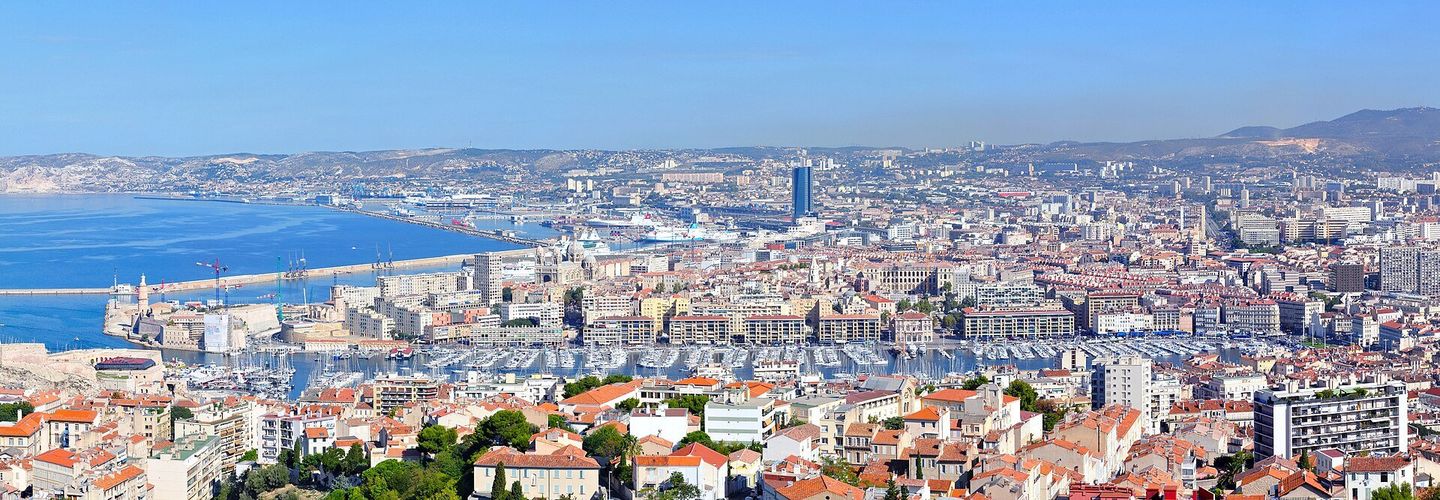
Marseille does not perform for visitors the way Paris or Nice does, and that is precisely the point. This is a working Mediterranean port that happens to be two and a half thousand years old, founded by Greek sailors from Phocaea around 600 BC, and it has spent every century since being a harbour first and a tourist destination a distant second. The result is a city that feels lived-in rather than staged: fish markets that sell to actual fishmongers, apartment blocks with laundry strung across balconies two streets back from the postcard view, and a population drawn from North Africa, Italy, Corsica, Armenia and the Comoros that has never quite agreed on a single idea of what the city is supposed to be.
That friction is the attraction. Marseille rewards people who like their cities a little rough around the edges — who would rather eat a proper bouillabaisse at a plastic table than a mediocre one on white linen, who want limestone cliffs and turquoise water without a funicular queue, and who find something more honest in graffiti-streaked stairwells leading to a three-thousand-year-old chapel than in a city that has sanded off every contradiction for the cameras.
It is also, unglamorously, a genuinely practical base. The TGV puts Paris under four hours away, budget flights blanket the Mediterranean from Marseille Provence Airport, and the calanques — the fjord-like limestone inlets that are the single best reason to extend a stay — start at the edge of the 8th arrondissement, reachable by bus or on foot. Few European cities pack this much geography, history and contradiction into a weekend.
The caseWhy Marseille is worth defending
Marseille has a reputation problem in France that it does not entirely deserve. Parisians joke about it, guidebooks hedge about it, and plenty of first-time visitors arrive braced for grime and leave having barely scratched the surface of what the city actually offers. The truth is closer to this: Marseille is the most topographically dramatic city in France, built across a bowl of limestone hills that drop straight into the Mediterranean, and it uses that geography constantly — a five-minute walk from almost any neighbourhood delivers a sea view, a hill climb, or both.
It is also, improbably for a city its size, one of the best-value places to eat well in the country. The Mediterranean, North African and Italian threads running through Marseillais cooking produce food that is cheaper and often more interesting than its equivalent in Paris, and the city's hillside and portside settings mean a mediocre view is genuinely hard to find. Add the calanques, the islands, and the fact that this is one of the few French cities where you can swim, hike a limestone ridge and eat couscous within the same afternoon, and the case makes itself.
The calendarWhen to go
Late spring, from mid-April through June, is Marseille at its best: the calanques are swimmable without the August crush, hillside wildflowers are out, and the mistral wind — Provence's notorious dry northerly, which can batter the coast for days at a time in winter and early spring — has usually settled. September and the first half of October repeat the trick from the other side of summer, with warm sea temperatures, thinner crowds, and a light that photographers chase for a reason.
July and August bring the Mediterranean's full heat and France's own domestic holiday crowds, so the calanques fill fast, parking near the trailheads disappears by mid-morning, and some require a free permit in peak fire-risk periods — check Marseille's mairie website before a summer calanques trip, since access is sometimes restricted outright on high-risk days. Winter is underrated and often overlooked: mild by northern European standards, with clear light, empty museums, and a bowl of bouillabaisse that tastes better when it is actually cold outside.
LogisticsGetting around
The Vieux-Port is the city's hinge, and most of what matters for a short stay sits within walking distance of it or a short Metro ride away. Marseille's two Metro lines are small by big-city standards but cover the essentials, and a handful of tram and bus lines fill in the rest; a single multi-trip ticket or a day pass from the RTM network covers all of it. The free ferry across the Vieux-Port itself — the César ferry, running a short hop between the quays — is one of the city's small, genuine pleasures and worth taking even without a destination in mind.
For the calanques specifically, public transport gets you to the edge but not all the way in: bus lines reach Luminy and the Callelongue trailheads from the city centre, after which it's on foot. A car is useful for ranging further east toward Cassis but becomes a liability in the old-town core, where streets narrow to car-unfriendly widths and parking is genuinely scarce. Airport transfers run via a dedicated shuttle bus to Saint-Charles station in the centre, roughly 25 minutes, far simpler than a taxi in traffic.
The tableHow Marseille actually eats
Bouillabaisse is the dish everyone has heard of and almost nobody outside Marseille eats correctly. The real version is a whole production — a fish broth built from rockfish, served first as a soup with garlic-rubbed croutons and rouille, then the fish itself served separately as a second course — and it is expensive because it is genuinely labour-intensive, not because it is a tourist markup. A handful of portside restaurants still make it the traditional way and will say so upfront; anywhere offering a cheap bouillabaisse for two is not making the dish its reputation is built on.
Everything else is where the real value sits. Panisse, chickpea-flour fritters sold from street stalls, make an excellent and nearly free snack. Pieds et paquets — sheep's tripe and trotters stewed with white wine — is the unglamorous classic worth trying once with an open mind. North African influence runs deep through the city's food culture: couscous and tagine are not a novelty here but a genuine second culinary tradition, often better and cheaper than the French-labelled restaurants nearby. The Noailles market, running through the city centre, is the place to see where Marseille's actual groceries come from — spice stalls, fish, and produce piled waist-high, loud and unpolished in exactly the way a real market should be.
The mapNeighbourhoods to know
Le Panier, the oldest quarter in the city, climbs the hill directly behind the Vieux-Port in a tangle of steep lanes, painted shutters, street art and small ateliers — it was the site of the original Greek settlement and still feels like the city's historic core, if a gentrifying one. La Joliette, just north along the water, is the redeveloped docklands turned cultural quarter, anchored by the MuCEM museum and its striking latticed concrete, a useful contrast to Le Panier's medieval tangle right next door.
The Vieux-Port itself and the streets immediately around it are the tourist centre of gravity, understandably, with the harbour, the fish market and easy access to everything else. South along the coast, the Corniche Kennedy winds past the Prado beaches and the Vallon des Auffes, a tiny, almost absurdly picturesque fishing cove tucked beneath a road bridge that most visitors drive straight over without noticing. Further east again, Endoume and the approach to the calanques trade postcard density for quiet residential streets and genuine sea access without the crowds.
Field intelligencePractical intelligence
Marseille's safety reputation is overstated for the areas visitors actually spend time in — the Vieux-Port, Le Panier, La Joliette and the Corniche are busy, well-trodden and no riskier than equivalent districts in any major European port city. Ordinary caution with bags and phones in crowded market streets is sensible, as it is anywhere; it is not a city that demands special vigilance beyond that.
The mistral wind can appear with little warning and genuinely disrupts outdoor plans — ferries to the Frioul islands or Château d'If sometimes cancel on high-wind days, so build slack into any boat-trip plan rather than scheduling it for a single afternoon. Calanques access can also close on red fire-risk days in summer, announced via the local prefecture; check before driving out. Tap water is safe and fine to drink. And learn to say santon and pastis without flinching — the little clay nativity figurines and the anise aperitif are both treated with real local pride, not kitsch.
What to see & do
-
Vieux-Port
The working harbour at the dead centre of the city, ringed by cafés and the morning fish market, with small boats bobbing where Greek traders first put ashore 2,600 years ago.
Tip:Take the free César ferry straight across the harbour — a two-minute ride and one of the best free things to do in the city.
-
Notre-Dame de la Garde
The gilded Madonna-topped basilica crowning the city's highest hill, visible from nearly everywhere in Marseille and the single best panoramic viewpoint over the port and the islands.
Tip:Walk up through the Vauban quarter rather than taking the tourist train; it's a steep twenty minutes but far more interesting.
-
Le Panier
The oldest quarter in the city, a steep tangle of painted-shutter lanes, street art and small workshops built on the site of the original Greek settlement.
Tip:Go slow and let the lanes wander you — the quarter rewards aimless walking more than any specific itinerary.
-
MuCEM
The Museum of Civilisations from Europe and the Mediterranean, a striking lattice-concrete building on the old docks connected to the Fort Saint-Jean by a dramatic footbridge over the sea.
Tip:The rooftop terrace is free to walk even without a museum ticket, and it has one of the best photo angles on the harbour entrance.
-
The calanques
Limestone fjords cutting into turquoise water along the coast toward Cassis, inside a protected national park — hiking and swimming within a bus ride of the city centre.
Tip:Sugiton and Morgiou are the two most reachable from Luminy by bus and foot; go early to beat both the heat and the midday crowds.
-
Château d'If
A 16th-century fortress-turned-prison on a small island offshore, made famous as the setting of The Count of Monte Cristo and reachable by a short ferry from the Vieux-Port.
Tip:Check sailing times before committing to a day — crossings are weather-dependent and the mistral can cancel them without much notice.
-
Vallon des Auffes
A tiny, almost toy-scale fishing cove tucked beneath the Corniche road bridge, lined with pastel boathouses and a couple of excellent seafood restaurants.
Tip:Come at golden hour — the light through the bridge arch onto the boats is the best single photograph in the city.
-
Cathédrale de la Major
An enormous striped Neo-Byzantine cathedral standing almost alone between La Joliette and the sea, built in the 19th century on a scale that still looks oversized for the plaza around it.
Tip:Visit in late afternoon when the low sun catches the green-and-white stone banding at its best.
-
Marché de Noailles
The loud, unpolished heart of Marseille's everyday food culture — spice stalls, fish stands and produce piled through the narrow streets of the city centre.
Tip:Go hungry, go with cash, and don't expect English — this market serves locals, not tourists, and that's exactly the point.
On the groundWhere things are
Map data © OpenStreetMap contributors.
Where to stayBase yourself well
Vieux-Port
Best for first-timers and short staysThe obvious choice for a reason — everything is a short walk away, the harbour is lit up at night, and the cafés along the quays never quite stop.
A harbourfront hotel facing the quays near the Vieux-Port
Pay a little more for an upper-floor room with a harbour view; the noise from the quayside cafés fades well before midnight.
€€€A simple apartment a few streets back from the port
Stepping just one or two streets inland from the water cuts the price noticeably without losing the walkability.
€€Le Panier
Best for atmosphere over convenienceSteep, atmospheric and genuinely historic — staying here means climbing a hill daily, but you get the oldest, most characterful quarter in the city on your doorstep.
A small guesthouse on a quiet Panier lane
Pick somewhere with lift access or confirm the stair count — the quarter's charm comes with genuinely steep streets.
€€La Joliette
Best for business travellers and a calmer baseThe redeveloped docklands, modern and a little more corporate by day, with the MuCEM and the waterfront promenade close by. Quieter at night than the Vieux-Port.
A contemporary hotel near the Joliette docks
Good for anyone arriving by train, since Saint-Charles station is a short tram ride away.
€€€Endoume & the Corniche
Best for longer stays and calanques day tripsResidential and coastal, strung along the Corniche Kennedy toward the calanques — further from the sights but with genuine sea air and easier calanques access.
An apartment along the Corniche near Vallon des Auffes
Trade a longer bus or taxi ride into the centre for sea views and a head start on the calanques trailheads.
€€Affiliate notePostcardRoute is reader-supported. Some links to Booking.com (stays, flights, car hire, tickets and tours, airport transfers) are affiliate links, tracked through CJ Affiliate: if you book through them we may earn a small commission at no extra cost to you. We only recommend places we would send a friend.
Book the restEverything else for the trip
Stay sorted? These open Booking.com for the other legs of the journey.
-
Tours & tickets
Things to do in Marseille
Skip-the-line tickets, tours and day trips.
Browse activities -
Wheels
Car hire in Marseille
Compare pick-up points and rental companies.
Compare cars -
Air
Flights
Search fares, then come back for the neighbourhood advice.
Search flights -
Ground
Airport transfers
Book a taxi or private transfer before you land.
Book a transfer
Affiliate noteThese four links are affiliate links too: if you book through them we may earn a small commission at no extra cost to you.
Beyond the cityWorthwhile day trips
- Cassis
A postcard harbour town thirty minutes east by bus, and the other main gateway into the calanques — busier and prettier than Marseille's own approach, at a price to match.
- Aix-en-Provence
Cézanne's elegant home city, forty minutes north by train — fountains, plane-tree boulevards and a Saturday market that's one of the best in Provence.
- Les Îles du Frioul
A cluster of scrubby, near-treeless islands a short ferry ride from the Vieux-Port, with clear-water coves that are far quieter than the mainland calanques in summer.
- Arles
An hour west by train, Van Gogh's city and a genuinely well-preserved Roman amphitheatre still used for events two thousand years after it was built.
Before you goCommon questions
- Is Marseille safe for tourists?
- Yes, in the areas visitors actually spend time in — the Vieux-Port, Le Panier, La Joliette and the Corniche are busy, well-policed and no riskier than comparable districts of any large European port city. Ordinary care with bags and phones in crowded markets is sensible, as it would be anywhere; the city's edgy reputation is mostly about districts well outside a typical visit.
- How many days do you need in Marseille?
- Two full days cover the Vieux-Port, Le Panier, Notre-Dame de la Garde and one calanque properly. Three or four lets you add Château d'If, a day trip to Cassis or Aix, and a slower pace through the markets and side neighbourhoods without rushing.
- What is the best time of year to visit Marseille?
- Mid-April through June and September into early October are the sweet spots — warm enough to swim in the calanques, without August's heat and crowds. Winter is genuinely pleasant too, mild and clear with empty museums, though the mistral wind can disrupt outdoor and boat plans at any time of year.
- Can you swim in the calanques near Marseille?
- Yes — Sugiton and Morgiou, both reachable by bus and a hike from the Luminy campus, are the two most accessible for swimming without a car. Go early in the day in summer; parking and shade both disappear by mid-morning, and access can close entirely on high fire-risk days.
- Is bouillabaisse worth the price in Marseille?
- At the handful of portside restaurants that still make it properly — a long-simmered rockfish broth served as two courses with rouille and croutons — yes, it's a genuine culinary production and the price reflects real labour, not tourist markup. A cheap bouillabaisse for two is a sign the kitchen isn't making the dish the city is actually known for.
- How do I get from Marseille Provence Airport into the city?
- A dedicated shuttle bus runs from the airport directly to Saint-Charles station in the city centre in about 25 minutes, and is simpler and usually cheaper than a taxi. From Saint-Charles, the Metro and tram network reaches most central neighbourhoods within a few more stops.