
France · Auvergne-Rhône-Alpes
Lyon eats first, sightsees second
France crowned this city its gastronomic capital for a reason. The traboules and the Roman ruins are real draws, but the table is where Lyon actually wins you over.
France's actual food capital, built where two rivers and three thousand years of history meet · 45.76° N · 4.84° E
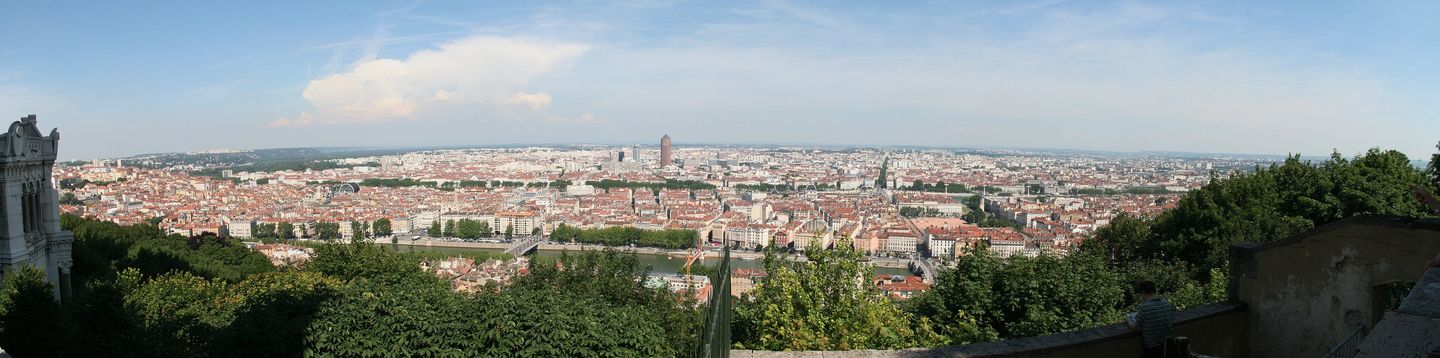
Ask a French person which city actually deserves the title of culinary capital and a surprising number will skip Paris entirely and say Lyon. That is not local chauvinism. Lyon sits at the confluence of the Rhône and the Saône, at the historic crossroads between the butter-and-cream cooking of the north and the olive-oil-and-garlic traditions of the south, and it absorbed both into something distinct: the bouchon, a small, unfussy, often family-run restaurant built around offal, sausage, and sauces that take two days to make properly. Paul Bocuse ran his flagship restaurant just outside the city for half a century and never saw a reason to leave.
But reducing Lyon to a dinner reservation undersells it. This is France's third-largest city, with nearly two thousand years of continuous history stacked in layers you can actually walk through: Roman theatres cut into the Fourvière hillside, a Renaissance old town threaded with hidden passageways called traboules, a 19th-century silk-weavers' district on the hill above it, and a 21st-century riverfront at the Confluence that looks like nothing else in France. Lyon was a UNESCO World Heritage Site before most visitors had heard of it, largely because almost nobody was coming — which, if you time it right, is still partly true today.
This isn't a list of the ten things you must see before you die. It's where to base yourself so the city makes geographic sense, when to come so you're not fighting the Fête des Lumières crowds without meaning to, how the traboules actually work, and why the bouchon you eat at matters more here than almost any single monument.
The caseWhy Lyon earns a trip of its own
Lyon gets treated, too often, as a TGV stopover between Paris and the Alps or the Mediterranean coast — ninety minutes from the capital, so why not just keep moving. That is a mistake, and the city's own residents will tell you so with some satisfaction. Lyon has the density of history of a much more famous destination without the density of visitors: you can stand inside a 2,000-year-old Roman theatre still used for summer concerts, walk fifteen minutes through a Renaissance quarter honeycombed with secret passages, and sit down to a lunch that France's own food-writing establishment considers some of the best in the country, all without once standing in a queue that wraps around a block.
What makes it different from the Paris-Lyon-Marseille axis most itineraries default to is scale. Lyon is a city you can actually hold in your head after two days — walkable, legible, organised by its rivers rather than by arrondissement numbers — while still offering enough depth in food, history and neighbourhood character to fill four or five. It rewards curiosity rather than ticking boxes: the traboules you find by accident are often better than the ones in the guidebook, and the bouchon with no sign out front is usually the one locals actually go to.
The calendarWhen to go
Spring (April to June) and early autumn (September, early October) are the reliable sweet spots — mild weather for walking the hills, outdoor terraces open on the Presqu'île and along the Saône, and crowds that never approach Parisian density even in high season. Lyon summers run hot and can get genuinely stifling in a city built mostly of stone with limited shade in the old town, so July and August are the months to plan siesta-style days: mornings and evenings outdoors, afternoons in a museum or a cool bouchon.
The one date that changes everything is early December, when the Fête des Lumières takes over the entire city for four nights — building facades across the Presqu'île and Vieux Lyon turned into large-scale light projections, with locals setting candles (lumignons) on their windowsills in a tradition that dates back to 1852. It's spectacular and absolutely worth planning a trip around, but book accommodation months ahead and expect the historic centre to be genuinely packed after dark. Outside that week, winter is otherwise a quiet, moody, bouchon-friendly season — the traboules feel atmospheric rather than crowded, and restaurant tables are easy to get.
LogisticsGetting around
Lyon is built on a north-south spine between two rivers, and understanding that geography solves most of your navigation. The Presqu'île (the peninsula between the Rhône and the Saône) holds the main shopping streets and Place Bellecour; Vieux Lyon sits across the Saône at the foot of the Fourvière hill; Croix-Rousse rises on the hill to the north of the Presqu'île; and the newer Confluence district extends south where the two rivers actually meet. Most of what matters to a visitor sits within this compact core, walkable end to end in under an hour.
The Métro has four lines and is fast, clean and genuinely useful for crossing the city or climbing to Croix-Rousse without the hill. For Fourvière, skip the road entirely and take the funicular (the "ficelle") from Vieux Lyon station — it's part of the regular transit network, included on a standard ticket, and far more pleasant than the switchback walk up in summer heat. A Lyon City Card bundles transit with museum entry if you're museum-hopping; otherwise single tickets or a carnet from any Métro station cover you fine. The TGV station at Part-Dieu puts Paris two hours away and Marseille about ninety minutes, which is part of why so many visitors treat Lyon as a through-point rather than a destination — one more reason to budget real time here instead.
The tableHow Lyon actually eats
The bouchon is the institution to understand before anything else: a small, traditionally decorated restaurant — checked tablecloths, close-packed tables, a menu that rarely changes — serving the hearty, offal-heavy cooking of Lyonnais working-class tradition. Expect quenelles (a light dumpling, often pike, in a cream sauce), andouillette (a sausage made from tripe that is genuinely not for everyone), gratin de cardons (a winter vegetable in bacon and cream), and tablier de sapeur (breaded, fried tripe). None of this is precious cuisine; it's generous, specific, and best eaten with a Beaujolais or a Côtes du Rhône and no particular hurry.
The Mères Lyonnaises — a tradition of formidable women cooks running the city's defining kitchens through the 19th and 20th centuries — set the template that today's bouchons still follow, and the more serious ones trace a direct lineage back to that lineage. For a lighter counterpoint, Lyon's covered markets (Les Halles de Lyon Paul Bocuse, on Cours Lafayette, is the big one) let you graze cheese, charcuterie and pastry stalls without committing to a full sit-down meal. Book bouchon tables ahead, especially on weekends — the good ones are small by design and locals fill them. And resist the instinct to tip generously by American standards; service is included, and rounding up is plenty.
The mapNeighbourhoods to know
Vieux Lyon, at the foot of the Fourvière hill on the Saône's west bank, is the Renaissance old town and a UNESCO-listed core of its own — narrow cobbled streets, pastel facades, and the traboules, covered passageways that let silk workers and, later, résistants move between streets without being seen from the road. Many are unmarked doors that happen to be open; a few of the most photogenic (Rue du Bœuf, Rue Saint-Jean) are signposted and genuinely worth seeking out.
The Presqu'île is the commercial and civic heart, anchored by the vast open expanse of Place Bellecour and threaded with the pedestrianised Rue de la République. Croix-Rousse, up on the hill to the north, was the 19th-century silk-weaving district — the canuts — and still has a looser, more bohemian, more residential feel, with its own traboules built for moving bolts of fabric rather than silk workers in hiding. Confluence, at the southern tip where the rivers meet, is Lyon's newest neighbourhood: striking contemporary architecture, the Musée des Confluences, and a sense of the city still actively building itself rather than just preserving what's already there.
Field intelligencePractical intelligence
A few things that quietly improve a Lyon trip. The traboules in Vieux Lyon and Croix-Rousse are mostly on private property shared with the public by longstanding custom — keep your voice down, don't linger excessively, and treat them as someone's actual front hallway, because several of them are. Many close at night and some close entirely on Sundays, so plan traboule-hunting for a weekday daytime.
Sunday in Lyon is genuinely quiet by French standards — many shops and some restaurants close, so if a specific bouchon is on your list, check their Sunday hours before building a day around it. The city is proudly, sometimes defensively, distinct from Paris, and comparing the two aloud to a local rarely goes the way you'd hope — Lyon considers itself the better food city and would rather you simply notice. Lastly, Lyon airport (Saint-Exupéry) connects to the centre via the Rhônexpress tram, a fast but pricier dedicated line; regional trains and buses are a cheaper if slower alternative if you're not pressed for time.
What to see & do
-
Basilique Notre-Dame de Fourvière
An opulent 19th-century basilica crowning the Fourvière hill, visible from almost everywhere in Lyon, with a terrace that gives the single best panorama of the city and its two rivers.
Tip:Take the funicular up from Vieux Lyon rather than walking the switchback road, and time your visit for late afternoon when the light on the rooftops below is best.
-
Vieux Lyon traboules
Hidden covered passageways threading through Renaissance buildings, built so silk workers — and later résistants — could move between streets unseen. Several of the best are unmarked doors that happen to be open.
Tip:Start on Rue du Bœuf and Rue Saint-Jean, where the most accessible traboules are signposted, and go quietly — most pass through what is still someone's private courtyard.
-
Théâtre antique de Fourvière
A Roman amphitheatre built around 15 BC, cut directly into the Fourvière hillside, still intact enough to host a summer festival of concerts and theatre nearly two thousand years after the first performance.
Tip:Climb into the upper tiers for the best view back down over the stage toward the city — most visitors stop at the lower rows and miss it.
-
Musée des Confluences
A startling, deconstructivist glass-and-steel building at the exact point where the Rhône meets the Saône, holding a sprawling, genuinely odd collection spanning natural history, anthropology and science.
Tip:The building's exterior and the surrounding Confluence riverside walk are worth the trip even if you skip the exhibits entirely.
-
Parc de la Tête d'Or
A huge 19th-century public park with a lake, a free zoo, botanical gardens and rose beds, giving the whole city — not just visitors — somewhere to actually spend a slow Sunday.
Tip:Rent a rowboat on the lake in good weather, or just bring a baguette and cheese and picnic on the grass like everyone else does.
-
Les Halles de Lyon Paul Bocuse
A covered market named for the city's most famous chef, packed with cheesemongers, charcuterie stalls, bakeries and oyster bars — the fastest way to taste Lyon's food culture without booking a table.
Tip:Go hungry and graze several counters rather than filling up at the first one; a glass of wine standing at a stall is entirely normal here.
-
Croix-Rousse and the Maison des Canuts
The hillside silk-weavers' district, with its own quieter traboules built for moving fabric, and a small museum dedicated to the canuts whose 1830s uprising was one of Europe's first organised workers' revolts.
Tip:Visit on a Saturday morning for the Croix-Rousse market along the boulevard, one of the city's best and least touristed.
-
Place des Terreaux and the Musée des Beaux-Arts
A grand civic square anchored by Bartholdi's monumental fountain, fronting one of France's largest fine-art museums outside Paris, housed in a former Benedictine abbey.
Tip:The museum's inner cloister garden is a quiet spot to sit even if you don't buy a ticket for the galleries.
-
Place Bellecour
One of the largest open squares in Europe, at the dead centre of the Presqu'île — more a civic landmark and orientation point than a destination in its own right, but you will pass through it repeatedly.
Tip:Use it as your mental zero point for the whole city; most Presqu'île sights sit within a ten-minute walk of it.
On the groundWhere things are
Map data © OpenStreetMap contributors.
Where to stayBase yourself well
Presqu'île (around Bellecour and République)
Best for first-timers and walkersThe commercial and civic heart, flat and endlessly walkable, with the best shopping, the main squares, and easy access across both rivers. The obvious first-time base.
A mid-range hotel near Place Bellecour
Staying within a few minutes of Bellecour puts both Vieux Lyon and the main Presqu'île shopping streets in easy walking range.
€€A design-led hotel near Rue de la République
The pedestrianised main shopping street is loud by day and quiet by night, with Métro access in both directions.
€€€Vieux Lyon
Best for atmosphere and first-time romanceRenaissance old-town romance at the foot of the Fourvière hill, cobbled and atmospheric, with the traboules on your doorstep. Livelier with tourists by day, genuinely magical after dark.
A small boutique hotel on a quiet Vieux Lyon side street
Look just off the main Rue Saint-Jean for the setting without the daytime foot traffic outside your window.
€€€Croix-Rousse
Best for value and a more local feelThe hillside former silk-weavers' quarter, looser and more residential, with its own market and traboules. A climb, but Métro access softens it, and prices are kinder here.
A simple guesthouse near the Croix-Rousse Métro
A few minutes from the Saturday market, with a direct line down into the Presqu'île whenever you need it.
€€Confluence
Best for repeat visitors and design enthusiastsLyon's newest district at the rivers' meeting point, modern and a little removed from the old-town action, but increasingly stocked with good restaurants and striking architecture.
A contemporary riverside hotel near the Musée des Confluences
Quieter at night than the Presqu'île, with a scenic riverside walk back into the centre.
€€Affiliate notePostcardRoute is reader-supported. Some links to Booking.com (stays, flights, car hire, tickets and tours, airport transfers) are affiliate links, tracked through CJ Affiliate: if you book through them we may earn a small commission at no extra cost to you. We only recommend places we would send a friend.
Book the restEverything else for the trip
Stay sorted? These open Booking.com for the other legs of the journey.
-
Tours & tickets
Things to do in Lyon
Skip-the-line tickets, tours and day trips.
Browse activities -
Wheels
Car hire in Lyon
Compare pick-up points and rental companies.
Compare cars -
Air
Flights
Search fares, then come back for the neighbourhood advice.
Search flights -
Ground
Airport transfers
Book a taxi or private transfer before you land.
Book a transfer
Affiliate noteThese four links are affiliate links too: if you book through them we may earn a small commission at no extra cost to you.
Beyond the cityWorthwhile day trips
- Pérouges
A near-perfectly preserved medieval walled village about forty minutes east of Lyon, famous for its cobbled streets, half-timbered houses, and a local galette sucrée worth the trip alone.
- Beaujolais wine country
Rolling vineyard hills just north of Lyon, easily reached by regional train or a half-day driving tour, with tastings at small producers far removed from the bottled Beaujolais Nouveau most visitors already know.
- Vienne
A Roman town on the Rhône south of Lyon, with a well-preserved Roman theatre of its own and a Gallo-Roman museum, easily combined with a half-day and a short train ride.
Before you goCommon questions
- How many days do you need in Lyon?
- Two full days cover the Presqu'île, Vieux Lyon and Fourvière at a comfortable pace with a couple of proper bouchon meals. Three to four days lets you add Croix-Rousse, the Confluence, and a day trip to Pérouges or Beaujolais without rushing.
- What is the best area to stay in Lyon for first-timers?
- The Presqu'île around Place Bellecour. It's flat, central, and puts Vieux Lyon's traboules, the main shopping streets, and both rivers within easy walking distance, with Métro access to everywhere else.
- Is Lyon worth visiting, or is it just a stop between Paris and the south?
- It's worth a dedicated trip. Lyon has the historical density of a much more famous destination — Roman ruins, a UNESCO-listed Renaissance old town, a 19th-century silk district — plus a food scene France itself considers among its best, without the crowds that come with Paris or the Côte d'Azur.
- What is a bouchon and do I need a reservation?
- A bouchon is Lyon's defining style of small, traditional restaurant, serving hearty dishes like quenelles and andouillette. The well-regarded ones are small and popular with locals, so book ahead, especially on weekend evenings.
- When is the Fête des Lumières and is it worth planning around?
- It runs four nights in early December, with large-scale light projections across the Presqu'île and Vieux Lyon. It's spectacular and worth building a trip around, but book accommodation well in advance and expect the historic centre to be crowded after dark.
- How do I get from Lyon to Paris or other cities?
- The TGV from Lyon Part-Dieu reaches Paris in about two hours and Marseille in around ninety minutes, making Lyon one of France's best-connected secondary cities. Lyon-Saint Exupéry airport links to the centre via the Rhônexpress tram.