
Slovenia · Central Slovenia
Ljubljana, quietly perfect
No tour buses idling at the centre, because there is no centre for them to idle in. A capital that banned cars from its old town and never looked back.
Dispatch from the smallest capital that got everything right · 46.06° N · 14.51° E
Plan this trip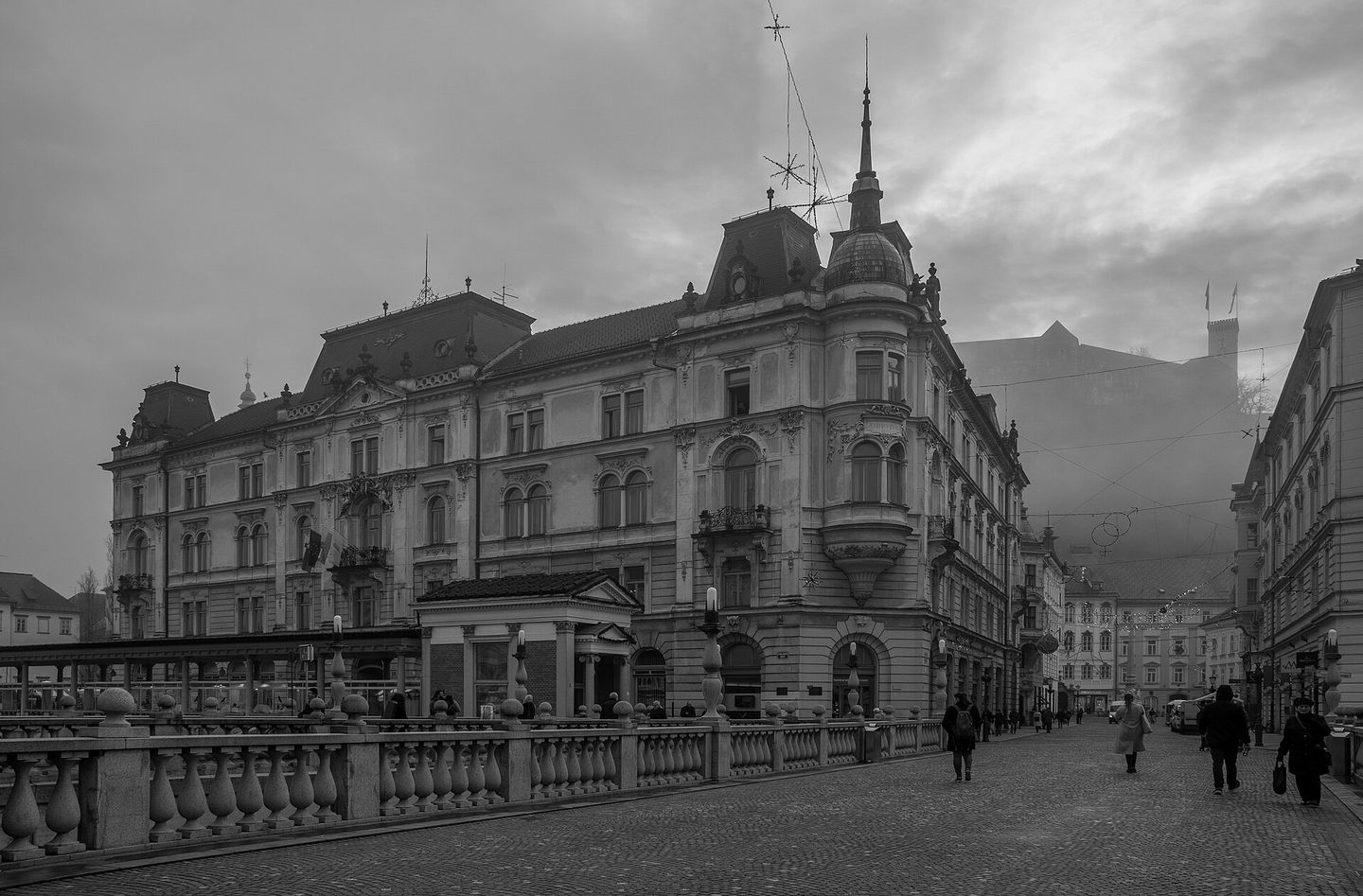
Ljubljana has spent most of its history being the smallest, quietest capital in whatever empire happened to be running it — Roman, Habsburg, Yugoslav — and it has turned that habit of being overlooked into its single best asset. There is no skyline to speak of, no single monument dragging in coach parties, and as of a set of car-free reforms pushed through in the mid-2000s, barely any traffic noise in the old town at all. What you get instead is a compact riverside capital of about 290,000 people that genuinely works: dragons on the bridges, a green hill with a castle on top, a river lined with café terraces, and a design sensibility, courtesy of one obsessive early-20th-century architect, that ties the whole place together like nowhere else in Central Europe.
This is not a whistle-stop guide bolted onto a Lake Bled day trip, though Bled is close enough that you should absolutely still go. It is a case for spending real time in the city itself — for understanding why Ljubljana's own residents rank it, unprompted, among the most liveable capitals in Europe, why Metelkova's squatted barracks turned into one of the continent's stranger nightlife districts, and why the market alongside the river is worth visiting even if you have nowhere to cook.
Give it two full days and you will have covered the old town properly with time to spare for a riverside beer. Give it three or four and you can add Bled, or the caves at Postojna, or simply the pleasure of doing very little in a city built at exactly human scale. Rush it on a half-day layover between Venice and Zagreb, which is how most people still treat it, and you will miss the entire point.
The caseWhy Ljubljana punches so far above its size
Most European capitals grew large enough to lose the plot — sprawling, congested, their old cores turned into open-air malls for visitors who never leave a three-block radius. Ljubljana never got big enough to make that mistake, and then it doubled down: in 2007 the city began progressively closing its historic centre to private cars, and by the mid-2010s the entire old town — Prešeren Square, the riverside embankments, the streets fanning out from the Triple Bridge — had become one of the largest genuinely pedestrian old-town cores in Europe. The difference this makes is not cosmetic. You can sit at a café table eighteen inches from the water on Cankarjevo nabrežje and hear the river, not engines.
The other thing Ljubljana has that almost nowhere else does is a single coherent architectural signature. Jože Plečnik, a local architect who studied under Otto Wagner in Vienna and later worked on Prague Castle, spent the interwar decades and beyond quietly rebuilding his home city — the Triple Bridge, the riverside colonnades, the covered market, the National and University Library, an entire cemetery complex — in a personal, almost mythological style that borrows from classical antiquity without ever feeling like pastiche. Walking the centre is effectively walking through one architect's sustained, decades-long argument about what a small capital city should look like, and it is a genuinely unusual thing to experience anywhere in the world.
The calendarWhen to go
Late April through June is the sweet spot: the plane trees along the river are in full leaf, café terraces are out, and the city hasn't yet hit peak summer heat or peak day-tripper traffic from Venice and Zagreb. September and the first half of October run a close second, with the added bonus of the Ljubljana Marathon crowd gone and warm, stable weather that often holds later than you'd expect this far inland.
July and August bring genuine heat — the Ljubljana basin traps humidity and summer afternoons regularly push past 30°C — plus the heaviest crush of day-trippers stopping between Croatia and points north. December has its own strong case: the old town's Christmas market and light displays along the river are considerably less commercialised and more charming than most Central European equivalents, and Plečnik's colonnades look genuinely magical strung with lights, even if you'll want real layers against the cold. Whatever month you land in, check the university term calendar loosely in your head — Ljubljana is a proper student city, and the atmosphere shifts noticeably when the university is in session versus emptied out for summer.
LogisticsGetting around
You will barely need transport at all. The entire old town, the riverside embankments, the market, the castle funicular base station and most of the neighbourhoods worth staying in sit within a twenty-five-minute walk of each other, and the historic core itself is closed to private cars, so walking is not just pleasant here, it is the fastest way to move. Bring comfortable shoes for the cobbles and accept that you will cross the Ljubljanica on foot several times a day without really planning to.
For the castle hill, either walk up via one of several signed footpaths in about fifteen to twenty unhurried minutes, or take the glass funicular from behind the market — a short, scenic ride that's worth doing at least one way for the view alone. The city's BicikeLJ bike-share system is dense, cheap and genuinely used by locals, a good option if you want to cover Tivoli Park and the wider green ring faster than on foot. Buses (LPP) cover everywhere the old town doesn't, run reliably, and take a rechargeable Urbana card rather than cash — buy one at a kiosk if you're heading somewhere the walk won't reach. For day trips, the bus station and train station sit side by side just north of the centre; buses to Lake Bled are frequent and usually faster than the train, which takes a more roundabout route.
The tableHow Ljubljana actually eats
Slovenian food sits at a genuine crossroads — Alpine dumplings and cured meats from the north, Mediterranean olive oil, seafood and prosciutto influence from the short Adriatic coast an hour away, and a hearty, Habsburg-inflected core running through both. Štruklji, rolled dumplings that can be sweet or savoury and are usually filled with tarragon-flecked cottage cheese, are the single dish to seek out and are done exceptionally well here. Kranjska klobasa, Slovenia's answer to the frankfurter (protected by EU designation, genuinely a step above), turns up everywhere from market stalls to sit-down menus. Potica, a rolled walnut or tarragon nut-roll, is the classic thing to bring home if you can resist eating the whole thing first.
Open-air Central Market, running along the river and up onto Vodnik Square most mornings, is where the city actually does its food shopping, and it's worth wandering even with nowhere to cook — the covered fish market inside Plečnik's riverside colonnade is genuinely beautiful, and there's usually informal produce, honey and cheese from the surrounding countryside on offer. Slovenia is also a serious, under-recognised wine country: the Vipava Valley whites and the orange (skin-contact) wines from the Goriška Brda region near the Italian border show up on nearly every good wine list in the city, and a proper vinoteka is worth an evening on its own. Lunch menus (dnevno kosilo) at neighbourhood restaurants are excellent value, often three courses for a fraction of the à la carte price — order it and eat like a local office worker rather than a tourist.
The mapNeighbourhoods to know
The Old Town (Stari trg, Mestni trg and Gornji trg), threading along the base of Castle Hill on the river's left bank, is the historic core — pastel baroque façades, the Town Hall, Robba Fountain and the highest concentration of good restaurants and bars, all car-free. It is compact enough to see properly in a few hours but rewards slow repeat passes at different times of day, when the light off the river changes completely.
Across the Triple Bridge, Prešeren Square and the streets fanning north toward the market form the city's civic heart — the pink Franciscan Church, the statue of national poet France Prešeren, and the start of Čopova, the main pedestrian shopping street. North again, past the market, sits the university quarter and, a short walk beyond it, Metelkova — a former Yugoslav army barracks squatted by artists and activists in the early 1990s and never fully reclaimed by the city, now a permanently graffitied, defiantly unpolished autonomous cultural zone of bars, clubs and street art that runs entirely on its own rules. It is one of the strangest and most genuine nightlife districts left in Europe and worth an evening even if clubbing isn't usually your thing.
West of the centre, Tivoli Park is Ljubljana's green lung — a huge 19th-century landscaped park, also partly shaped by Plečnik, with museums, a castle-like mansion and enough space to properly disappear from the crowds. Trnovo, south along the river past Congress Square, is the quieter, more residential option: leafy, low-rise, popular with young families and increasingly with visitors who want the river-café life without the old-town crowds.
Field intelligencePractical intelligence
Slovenian is the local language, but English is spoken fluently and near-universally in anything tourist-facing, and German and Italian both work well given the country's borders. A simple 'živjo' (hi) or 'hvala' (thanks) goes further than it needs to, precisely because so few visitors bother.
Slovenia uses the euro, tipping 5-10% for good service is appreciated but not obligatory the way it is in the US, and cards are accepted almost everywhere including small cafés — carrying some cash is still sensible for the market and smaller bakeries. The old town's car-free status means taxis and rideshares cannot simply pull up outside your hotel; check in advance how your accommodation handles drop-off, especially with luggage. Ljubljana Castle's grounds are free to wander; only the tower, museum exhibits and funicular carry a charge, and a combined ticket is the better value if you want more than the view. Tap water is excellent and free everywhere — Slovenia is unusually proud of it, and asking for bottled water in most restaurants will get you a faint look of confusion. Finally, budget more time than you think: the city's real charm is in the unplanned half-hour on a riverside bench, not in checking sights off a list.
Field notesWhat to see & do
-
Ljubljana Castle
A medieval hilltop fortress rebuilt many times over, now home to a small history museum, a viewing tower and, most of all, the best panorama of the old town's terracotta roofs and the Julian Alps beyond on a clear day.
On the groundWalk up one way and take the glass funicular down (or vice versa) — doing both gets you the forest path and the skyline ride for the price of one funicular ticket.
-
Triple Bridge (Tromostovje)
Jože Plečnik's signature structure: a central stone bridge flanked by two pedestrian side bridges he added in the 1930s, turning a single crossing into a wide, theatrical public square suspended over the river.
On the groundCross it at golden hour, when the pastel façades of Prešeren Square catch the light and the outdoor cafés on both banks are at their fullest.
-
Central Market & Plečnik's Colonnade
A riverside open-air produce market by day, backed by Plečnik's covered colonnade housing a genuinely beautiful, tiled fish market — one of the architect's most complete surviving interiors and easy to miss if you don't look for the entrance.
On the groundGo on a Saturday morning, when the open-air stalls extend furthest and the covered farmers' market upstairs is at its busiest.
-
Metelkova
A former Yugoslav army barracks occupied by artists and activists in 1993 and never fully reclaimed by the city — now a permanent, self-governed cultural zone of graffiti-covered courtyards, alternative bars and small clubs.
On the groundVisit once by day to see the murals properly, then come back after 10pm on a weekend to see what it's actually for.
-
Tivoli Park
A sprawling 19th-century landscaped park just west of the centre, partly shaped by Plečnik, with wide chestnut-lined promenades, the Tivoli Mansion, and enough space to genuinely lose the crowds within ten minutes of the old town.
On the groundEnter via the Knight's Promenade behind the National Museum for the most dramatic tree-lined approach.
-
Dragon Bridge (Zmajski most)
An Art Nouveau bridge from 1901 guarded by four bronze dragons, the unofficial symbol of the city — local legend ties them to the Argonaut Jason, who is said to have founded Ljubljana after slaying a dragon in a nearby swamp.
On the groundThe dragons look best from the riverbank below rather than from the bridge deck itself — walk down to the water on either side.
-
National and University Library
Another Plečnik masterwork: a deliberately austere brick exterior studded with rough stone hides a dramatic black-marble staircase rising into a reading room flooded with light through glass-brick walls.
On the groundThe main reading room is generally open to respectful visitors outside exam periods — check current access at the entrance rather than assuming.
-
Prešeren Square
The city's civic heart, framed by the salmon-pink Franciscan Church of the Annunciation and a statue of national poet France Prešeren, and the natural starting point for the Triple Bridge and the old town beyond.
On the groundLook for the small glass-and-metal statue of Prešeren's muse Julija in the corner of the square, facing his statue across the plaza.
On the groundWhere things are
Map data © OpenStreetMap contributors.
Where to stayBase yourself well
Old Town (Stari trg / Mestni trg)
Best for first-timers who want to be in the postcardThe pastel, car-free historic core along the river's left bank, with the castle hill rising directly behind it — the most atmospheric base and genuinely walkable to everything, though also the priciest and busiest with day visitors.
Lesar Hotel Angel
Look for a small property tucked just off the main riverside strip for the location without the peak café-terrace noise in the evening.
€€€Galeria River
Upper-floor units on the embankment itself put the castle and the water right outside the window — book well ahead in summer.
€€Prešeren Square & the market quarter
Best for food-focused stays and market morningsOne step north of the old town proper, closer to Central Market and the university, with slightly calmer streets once you're a block back from the square itself and easy walking access to Metelkova after dark.
Hotel Emonec
Puts the market's morning bustle and the covered colonnade a two-minute walk from the door.
€€Trnovo
Best for value and a more local paceA quieter, leafier residential district just south of Congress Square along the river, popular with young Ljubljana families — a fifteen-minute riverside walk from the old town with noticeably lower rates.
A guesthouse along the Gradaščica canal
Trades old-town proximity for a genuinely residential, low-key evening scene right on the water.
€Near Tivoli Park
Best for families and those wanting more spaceWest of the centre by the park's edge — larger hotels, more parking options for those arriving by car, and a green, breathing-room base a flat ten-to-fifteen-minute walk from the old town.
A modern hotel facing the park entrance
The Knight's Promenade approach into Tivoli is right outside, with the old town a straightforward walk beyond it.
€€Affiliate notePostcardRoute is reader-supported. Some links to accommodation are affiliate links: if you book through them we may earn a small commission at no extra cost to you. We only recommend places we would send a friend.
Beyond the cityWorthwhile day trips
- Lake Bled
Slovenia's postcard lake, forty minutes north by frequent bus: an island church reachable by traditional wooden pletna boat, a clifftop medieval castle, and a walkable lakeside path. Go early or stay overnight to beat the day-tripper crowds that build by mid-morning.
- Postojna Cave & Predjama Castle
One of Europe's largest karst cave systems, toured partly by underground electric train, paired naturally with Predjama Castle built directly into a cliff face nearby — both under an hour southwest of the city and easily combined in one day.
- Lake Bohinj
Quieter and, many locals will argue, more beautiful than Bled, an hour further into Triglav National Park — glacial, ringed by mountains, with none of Bled's crowds and considerably more room to simply sit by the water.
Before you goCommon questions
- How many days do you need in Ljubljana?
- Two full days covers the old town, the castle and Metelkova at a proper pace. Add a third day for Lake Bled, or a fourth to combine Bled with Postojna Cave — both are close enough to do as day trips without changing hotels.
- What is the best area to stay in Ljubljana for first-timers?
- The Old Town, specifically around Stari trg or Mestni trg. It is car-free, walkable to literally everything, and puts the castle, the river and the best restaurants within a few minutes on foot. The market quarter around Prešeren Square is a close, slightly calmer alternative.
- Is Ljubljana expensive to visit?
- Noticeably cheaper than Venice or Vienna, its nearest big-name neighbours, though prices have risen with tourism growth. Lunch menus at neighbourhood restaurants, market food, and the fact that the whole centre is walkable (no taxis or transit passes needed) keep a trip here reasonable by Western European standards.
- Can you do Lake Bled as a day trip from Ljubljana?
- Yes, easily. Buses run frequently and take about an hour to ninety minutes depending on traffic; the train is slower and less direct. Go early to see the lake before the tour-bus crowds arrive mid-morning, or consider one night in Bled itself if your schedule allows it.
- Is Ljubljana worth visiting or just a stopover to Croatia?
- It is very much worth its own time, not just a break in a drive to the coast. The car-free old town, Plečnik's architecture, Metelkova's alternative scene, and the sheer liveability of a capital this size at this pace are genuinely distinct from anywhere else on a typical Adriatic route.
- What is the best time of year to visit Ljubljana?
- Late April through June and September into early October are the sweet spots — mild weather, full café terraces, and lighter crowds than peak summer. December's Christmas market along the river is a strong, less commercialised alternative if you don't mind the cold.
- Do people speak English in Ljubljana?
- Yes, fluently and near-universally in anything tourist-facing — hotels, restaurants, shops and the tourist information office. German and Italian both work well too, given Slovenia's borders, but a simple greeting in Slovenian is always well received.