
Italy · Lombardy, Veneto & Trentino
One lake, three completely different moods
Alpine fjord in the north, Mediterranean resort in the south, and a working wine and olive region strung along both shores — pick the wrong end and you'll miss the point of the place.
Italy's biggest lake, and its most contradictory · 45.62° N · 10.64° E
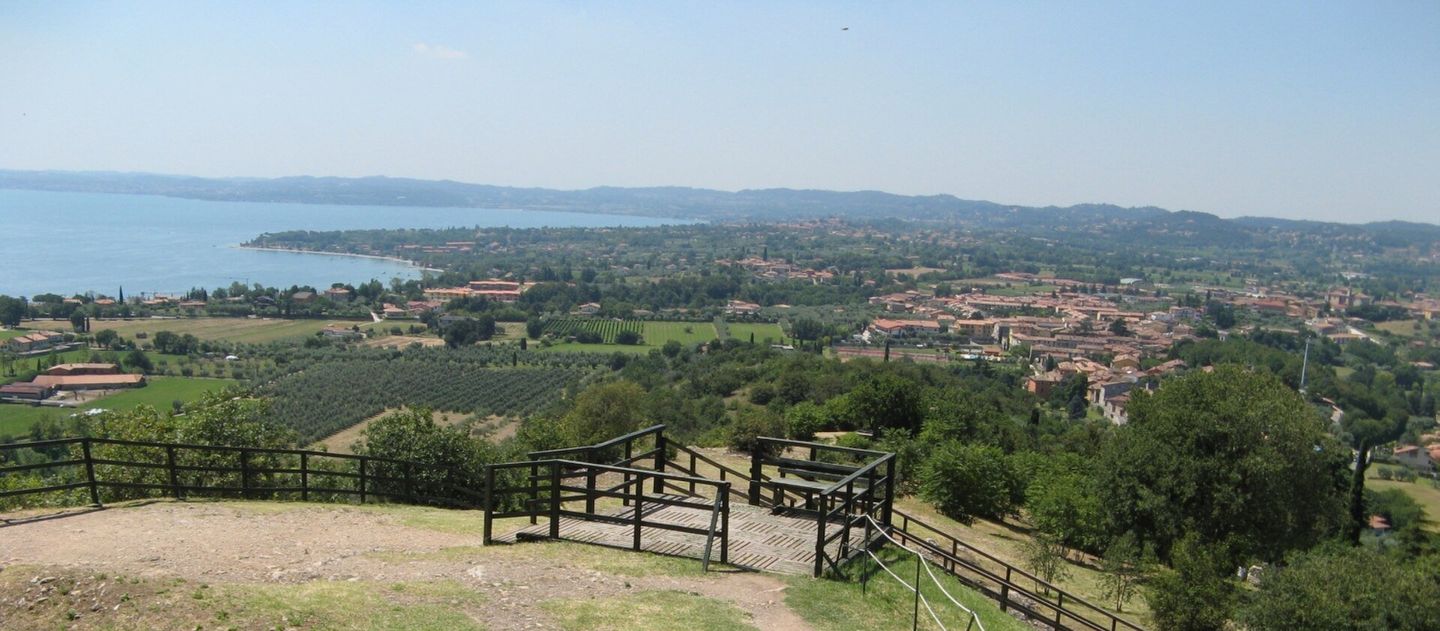
Lake Garda does not behave like one lake. Stand at the northern tip in Riva del Garda, boxed in by sheer grey mountains with windsurfers carving the thermal gusts that funnel down the valley, and you could be in a Norwegian fjord that wandered south by mistake. Drive two hours down the eastern shore to Sirmione, where a Roman emperor's family reportedly kept a villa on a sliver of peninsula and the water turns the pale turquoise of somewhere far more southern, and you are somewhere else entirely — soft, warm, crowded with the kind of lakeside resort energy that built package-holiday Europe. In between, along both banks, run the olive groves and vineyards that make this the northernmost place on earth where olive oil is produced commercially, a detail that tells you more about Garda's genuinely odd microclimate than any amount of photography does.
This is Italy's largest lake by a wide margin — fifty kilometres north to south, carved by glaciers and then softened by three thousand years of people deciding it was a good place to live — and it spans three regions at once: Lombardy to the west, Veneto to the east, Trentino up at the alpine top. That administrative split is not trivia. It is the reason the food, the wine, the dialect and even the pace of life shift noticeably as you move around the shoreline, in a way that a single compact city never would. Most visitors pick one town, usually on the advice of a package-holiday brochure, and never register that they have seen perhaps a fifth of what the lake actually is.
What follows treats Garda as the composite place it actually is rather than a single destination with one correct home base. Which shore you choose should depend on what you are actually here for — hiking and windsurfing in the alpine north, wine and gentle resort towns on the eastern bank, Mediterranean warmth and crowds in the south, or quieter elegance on the western Riviera. Get that choice right and the lake delivers on all its contradictions at once. Get it wrong and you will spend a week wondering what the fuss is about from inside one overbuilt resort strip.
The caseWhy Garda earns a full week, not a day trip
Most foreign visitors to Italy's lakes default to Como, and Como is genuinely beautiful, but it is also a single long, narrow trench with one obvious circuit and a price tag to match its fame. Garda is bigger, more varied, and — away from the handful of famous names like Sirmione — considerably less expensive. It also does something Como can't: it stitches together genuinely different landscapes and climates into one touring base, so a week here can include alpine hiking, lake swimming, Roman ruins, a working wine region and a funicular up a two-thousand-metre peak without ever changing hotels more than once or twice.
The other thing Garda has that gets undersold is depth of ordinary life. This isn't a lake that exists purely for tourism — Desenzano and Peschiera are working towns with real markets and real commuters to Milan and Verona, Bardolino's vineyards supply restaurants across northern Italy whether or not a single tourist ever visits, and the olive groves on the western shore have been pressed for oil since before the Romans arrived. That ordinary texture is what saves the lake from feeling like a resort theme park, even in the most crowded stretches of August.
The calendarWhen to go
Late May through June and September into early October are the honest sweet spots — warm enough to swim, cool enough to hike Monte Baldo without suffering, and short of the July-August crush when Milanese and German families descend on the southern resorts en masse and the ferry queues at Sirmione can run well over an hour. If windsurfing or sailing at the northern end is the point of the trip, April through October is the working season for the Ora and Peler thermal winds that make Riva del Garda and Torbole genuinely world-class spots, with the most reliable conditions in the shoulder months either side of peak summer.
Winter is a different, quieter lake entirely — most resort hotels and many restaurants on the southern shore close for the season, Sirmione's thermal spa becomes the main draw rather than an afterthought, and the water takes on a slate-grey stillness that has its own appeal if you are coming for a spa break rather than swimming and hiking. Christmas markets run in Riva del Garda, Malcesine and a few other towns through December, which is worth knowing if alpine-adjacent festive atmosphere is what you are after rather than beach season.
LogisticsGetting around a fifty-kilometre lake
Decide early whether you are renting a car. The two shore roads — the Gardesana Occidentale on the west, the Gardesana Orientale on the east — are spectacular and also genuinely stressful in August, narrow, tunnel-pocked, and frequently gridlocked around Malcesine, Limone and Sirmione at peak times. If your trip is mostly about settling into one or two towns and using the lake itself as the connector, the Navigazione Laghi ferry and hydrofoil network is the better call: it links every major town, runs year-round at reduced winter frequency, and turns the fifty-kilometre length of the lake into a genuinely relaxing way to travel rather than a white-knuckle drive.
A car still earns its keep for reaching inland wine villages, the Vittoriale, or the Monte Baldo trailheads away from the cable car, and it's the only sane way to see the lake's full circumference in a short trip. If you're arriving by train, Desenzano del Garda and Peschiera del Garda both sit directly on the Milan–Venice main line, which makes the southern shore the easiest entry point regardless of where you ultimately base yourself; buses and the summer ferry network fan out from both stations toward the rest of the lake.
The tableWhat actually ends up on the table
Garda sits at a genuine culinary crossroads, and the honest way to understand it is that you are eating Lombardy on one shore and the Veneto on the other, with a shared obsession over the lake's own olive oil and fish running through both. The oil itself is worth seeking out deliberately — DOP-certified Garda oil is famously delicate and grassy rather than the peppery, robust style further south, a product of this being the coldest climate on the planet where olives are grown commercially, and tastings at groves around Salò and Gardone Riviera are genuinely worth the detour.
Freshwater fish from the lake itself — sardine di lago (actually a small whitefish, not a true sardine, cured and grilled whole), coregone, and trout — turn up on menus the whole way round, usually simply grilled with that same local oil, or spread on crostini with a vinegared onion marinade in the Garda sarde in saor tradition. On the eastern shore, Bardolino and the surrounding Valpolicella-adjacent hills produce the light, cherry-red Bardolino DOC red and the crisp white Lugana near the southern tip, both worth a glass with lunch rather than saving for a special dinner — they are everyday wines here, not trophy bottles. Polenta, risotto and the Lombard side's tendency toward butter rather than olive oil show up more as you move west and north.
The mapThe shores, and how they differ
Think of Garda in four stretches rather than a single ring. The south is the warmest, flattest and most crowded — Sirmione on its narrow peninsula is the famous name, postcard-pretty and genuinely besieged by day-trippers in summer, while Desenzano and Peschiera nearby offer much the same southern-lake warmth with considerably less tour-bus pressure. The eastern shore, from Peschiera up through Bardolino, Lazise and Garda town, is wine country first and resort strip second — gentler hills, vineyards running down toward the water, and a noticeably more Italian, less package-holiday atmosphere than the south.
Continue north up the east bank and the lake narrows and the mountains close in fast around Malcesine, the single most photogenic town on the water and the gateway to the Monte Baldo cable car. The west shore, the Riviera, trades the east's wine hills for a run of Belle Époque resort towns — Salò, Gardone Riviera, Gargnano — grander, quieter and historically the aristocratic side of the lake, home to the extravagant Vittoriale estate. And the far north, Riva del Garda and Torbole, is a different climate and culture entirely: alpine, German-influenced (this was Austro-Hungarian territory until 1918), and built around wind sports and mountain hiking rather than beach loungers.
Field intelligencePractical intelligence
The lake's microclimate means weather can shift fast and differently at each end — the north catches mountain storms that never reach the mild south, so check conditions for your specific base rather than a single lake-wide forecast, especially if windsurfing or hiking Monte Baldo is on the agenda. Swimming is genuinely good lake swimming rather than beach-resort sand — expect pebble beaches, lido-style access points with entry fees in the busiest towns, and water that's bracingly cool even in August compared with the Mediterranean proper.
August specifically is worth planning around rather than into: Italian domestic holidaymakers fill the southern resorts completely, restaurant bookings and ferry queues both stretch long, and prices on the south shore spike hardest. If your dates are flexible, shifting even two weeks either side of peak August changes the experience substantially. English is widely spoken in the tourist-facing south and east; it thins out noticeably in smaller western-shore towns and inland wine villages, where a few words of Italian go a long way. Many hotels and campsites close for winter between November and March on the southern and western shores — check specifically before booking an off-season trip.
What to see & do
-
Sirmione & the Scaliger Castle
A narrow peninsula town crowned by a 13th-century moated castle, with Roman ruins at its tip and thermal springs beneath it — the lake's most famous and most crowded single stop.
Tip:Arrive before 9am or after 6pm; the single approach road and bridge become a bottleneck by mid-morning in summer.
-
Malcesine & the Monte Baldo cable car
A fairy-tale lakefront old town beneath its own castle, with a rotating cable car that climbs to nearly 1,800 metres and some of the best panoramic hiking on the lake.
Tip:The cable car's cabin floor rotates slowly during the ride — stand near the centre rail for the smoothest views going up.
-
Riva del Garda
The lake's alpine northern tip, boxed in by sheer rock walls, built around sailing, windsurfing and mountain trailheads rather than resort loungers.
Tip:Walk the lakefront promenade at sunset, when the cliffs behind the town catch the last light in a way photos never quite capture.
-
Vittoriale degli Italiani
The eccentric hillside estate of poet and provocateur Gabriele D'Annunzio above Gardone Riviera — part house museum, part war memorial, part genuine monument to one man's ego.
Tip:Budget a full half-day; the grounds, the war museum and the house itself are each worth real time on their own.
-
Isola del Garda
The lake's largest island, a private Venetian-Gothic villa and garden off Salò, reachable only by guided boat tour during a limited summer season.
Tip:Book the boat tour well ahead in July and August — capacity is small and tours sell out days in advance.
-
Bardolino & the wine road
A relaxed eastern-shore wine town at the heart of the Bardolino DOC, with cellar-door tastings, a Thursday market and an easy lakefront promenade.
Tip:Follow the Strada del Vino Bardolino signage inland for small family cantinas rather than sticking to the lakefront tasting rooms.
-
Limone sul Garda's lemon terraces
Centuries-old stepped lemon gardens (limonaie) climbing the hillside above a pastel harbour town at the lake's northwestern pinch point.
Tip:The restored limonaia museum garden explains the terraces properly — well worth it before wandering the town's steep lanes.
-
Grotte di Catullo
The sprawling ruins of a Roman villa at the very tip of the Sirmione peninsula, among the largest private Roman residences ever found in northern Italy, with an onsite olive grove and lake views on three sides.
Tip:Go late afternoon for softer light on the ruins and a noticeably thinner crowd than the castle back in town.
On the groundWhere things are
Map data © OpenStreetMap contributors.
Where to stayBase yourself well
Sirmione
Best for first-timers who want the postcard and a spaThe famous name — a pedestrianised peninsula old town, thermal spas, and the castle and Roman ruins on your doorstep. Also the most crowded base on the lake by a wide margin in summer.
A thermal spa hotel toward the peninsula's tip
Several hotels here pipe in the same sulphurous thermal water as the public spa, which is worth the premium if a spa break is part of the plan.
€€€€A family-run pensione back from the old town bridge
Staying just outside the pedestrianised core cuts the price and the crowds without losing the short walk in.
€€Malcesine
Best for hikers and cable-car day tripsThe most photogenic east-shore town, castle on the water, old-town lanes, and the Monte Baldo cable car on your doorstep. Busy, but more vertical hiking culture than beach-club resort.
A lakefront hotel near the harbour and castle
Book a room with a lake-facing balcony for the sunset view across to the western shore.
€€€Riva del Garda & Torbole
Best for active types, windsurfers and hikersThe alpine north — sailing schools, windsurfing centres and mountain trailheads rather than loungers. A genuinely different climate and culture from the southern resorts.
A sports-focused hotel near the Torbole windsurf beaches
Many here cater specifically to sailing and windsurf schools, with gear storage and early breakfasts built around the morning wind window.
€€Bardolino & Lazise
Best for wine lovers and families wanting a quieter baseEastern-shore wine country — gentler hills, vineyards down to the waterline, and a noticeably more Italian, less package-holiday feel than the far south.
A vineyard agriturismo just inland from Bardolino
Staying among the vines rather than on the lakefront itself trades a water view for cellar-door access and a genuinely rural pace.
€€A family-run hotel on the Lazise waterfront
Lazise's small walled harbour is calmer than Sirmione's crush and still puts you a short drive from everything on the east shore.
€€Gardone Riviera & Salò
Best for a refined, slower-paced baseThe elegant, Belle Époque west shore — grand old resort hotels, the Vittoriale estate, and a historically aristocratic, quieter register than the east.
A restored Belle Époque hotel in Gardone Riviera
A handful of the lake's grandest historic hotels cluster here, several with their own lakefront gardens and pools.
€€€€Affiliate notePostcardRoute is reader-supported. Some links to Booking.com (stays, flights, car hire, tickets and tours, airport transfers) are affiliate links, tracked through CJ Affiliate: if you book through them we may earn a small commission at no extra cost to you. We only recommend places we would send a friend.
Book the restEverything else for the trip
Stay sorted? These open Booking.com for the other legs of the journey.
-
Tours & tickets
Things to do
Tickets, tours and activities, anywhere.
Browse activities -
Wheels
Car hire
Compare rental companies worldwide.
Compare cars -
Air
Flights
Search fares, then come back for the neighbourhood advice.
Search flights -
Ground
Airport transfers
Book a taxi or private transfer before you land.
Book a transfer
Affiliate noteThese four links are affiliate links too: if you book through them we may earn a small commission at no extra cost to you.
Beyond the cityWorthwhile day trips
- Verona
Shakespeare's setting and a genuinely lovely Roman and medieval city in its own right, roughly thirty minutes from the southeastern shore and easily reached by train from Peschiera or Desenzano.
- Trento
An hour north into the Dolomites' foothills — a handsome Renaissance-fresco'd capital with a famous Christmas market season and some of the best mountain food in northern Italy.
- Mantua (Mantova)
A UNESCO-listed Renaissance city ringed by artificial lakes, roughly forty-five minutes southwest of the lake's southern tip, built around the Gonzaga family's extraordinary ducal palace.
Before you goCommon questions
- Which shore of Lake Garda should I stay on?
- It depends what you want. The south (Sirmione, Desenzano) is warmest and most crowded; the east (Bardolino, Malcesine) mixes wine country with hiking and is the best all-rounder; the west (Gardone Riviera, Salò) is quieter and more elegant; the north (Riva del Garda, Torbole) is alpine and built around wind sports. First-timers wanting one base often do best around Bardolino or Malcesine, which split the difference.
- How many days do you need at Lake Garda?
- Four to five days lets you properly settle into one shore and take a couple of ferry or driving day trips to see another. A week is better if you want to experience the lake's full range — alpine north and Mediterranean south genuinely feel like different places, and rushing between them in two or three days means seeing very little of either properly.
- Is it better to drive or use the ferries at Lake Garda?
- Ferries are more relaxing and avoid the shore roads' summer gridlock, especially around Sirmione and Malcesine, and they link every major town. A car is still worth it for reaching inland wine villages, the Vittoriale, or Monte Baldo trailheads away from the cable car — many visitors do best with a rental car for flexibility and the ferries for the busiest, most congested legs.
- What is the best time of year to visit Lake Garda?
- Late May to June and September into early October are the sweet spots — warm enough to swim, cool enough to hike comfortably, and well short of the July-August crowds that fill the southern resorts and stretch ferry queues and restaurant bookings thin.
- Can you swim in Lake Garda?
- Yes — the water is clean and genuinely good for swimming, though it runs noticeably cooler than the Mediterranean even at the height of summer. Expect pebble beaches and lido-style access points with small entry fees in the busiest towns, rather than sand.
- Is Lake Garda expensive?
- It varies hugely by shore and season. Sirmione and the southern resorts in peak summer carry some of the highest prices on any of the Italian lakes; the eastern wine towns and the alpine north are noticeably better value, and shoulder-season rates anywhere on the lake drop substantially from August peaks.
- Do I need a car to get around Lake Garda?
- Not strictly — the ferry network reaches every major town and running a car-free trip based around one or two towns works well. A car becomes genuinely useful for inland wine villages, hiking trailheads away from the main cable cars, and covering the lake's full circumference in a short visit.