
Italy · Lombardy
Lake Como, slower than the photographs suggest
A Y-shaped lake ringed by cypress, lemon trees and villas that have been showing off since the Renaissance. Here is how to see it without spending the whole trip in a car park.
A lake that has been auditioning for paradise since the Romans retired here · 45.99° N · 9.26° E
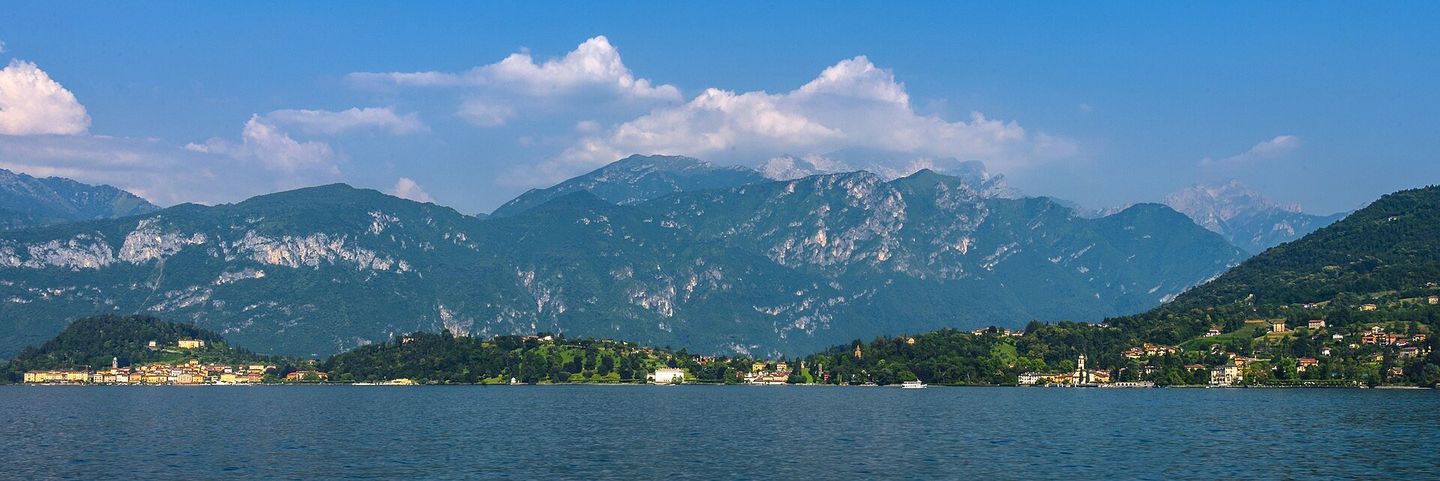
Lake Como does not need the introduction most travel writing gives it, because the lake has already been doing its own marketing for about two thousand years. Pliny the Younger had villas here. Stendhal called the view from the hills above it the most beautiful place on earth, more or less setting the tone for every rapturous description since. Clooney moved in on the Tremezzina shore and promptly made the lake's name a search-engine magnet for people who had never previously thought about northern Italy. None of this is undeserved. The lake really does look the way the postcards promise — a forked ribbon of improbably blue-green water pinned between steep, chestnut-wooded mountains, with a scatter of lemon-coloured towns clinging to whatever flat ground the shoreline allows.
What the postcards don't tell you is how the place actually functions day to day, and that is where most short visits go wrong. Lake Como is not one destination but a loose federation of a dozen small towns, each reachable mainly by a single coastal road that was clearly designed before anyone anticipated a tour coach, plus a ferry network that is, for most of the year, a far better way to move around than a car. Travellers who rent a car in Milan and try to loop the whole lake in a day usually end up with a sore neck from hairpin bends and a phone full of photos taken through a windscreen. The ones who pick a base, learn the ferry timetable, and let the lake set the pace tend to come home actually believing Stendhal.
This guide treats Lake Como as the region it is rather than a single city, because that is the honest way to plan it. What follows covers which shore and which town to anchor yourself to, when the lake is worth visiting and when it is simply crowded, how the ferries and the funiculars and the one coastal road fit together, which villas are worth a ticket and which are worth a photo from the water, and the practical detail — day trips, where to actually sleep, what the lake eats — that turns a scenic drive-through into a trip you remember for the right reasons.
The caseWhy Lake Como earns its reputation
The easy version of the appeal is the view: glacial water the colour of old bottle glass, a skyline of Alpine foothills that still carry snow into May, and villages that look designed rather than grown, all orange tile roofs and shuttered pastel façades stacked above stone jetties. That alone would be enough to justify the trip. What keeps people coming back is the texture underneath it — four centuries of aristocratic and literary tourism have left the lake absurdly over-equipped with gardens, villas and follies for a place this size, almost all of it still standing and most of it open to the public for the price of a ticket.
The other part of the case is scale. Como is large enough to have real variety — a workaday lakeside city at its southern tip, a cluster of genuinely grand villages in the middle where the lake forks, and quieter upper reaches near the Swiss border that most day-trippers never reach — but small enough that you can be on a boat crossing from one mood to another within twenty minutes. Few places in Europe let you go from a Romanesque cathedral to a cypress-lined formal garden to a near-empty mountain trailhead on the same afternoon, all without getting back in a car.
The calendarWhen to go
Late April through June is the strongest window: the wisteria and azaleas are doing exactly what the garden postcards show, the water is still cool enough that the air stays fresh, and the crowds that define July and August haven't arrived yet. Early autumn, mid-September into October, is the connoisseur's choice — the light goes gold in the afternoons, the heat breaks, the grape and chestnut harvests are on, and Bellagio's main square stops feeling like a queue.
July and August are objectively the worst time to be here if you dislike crowds, and most first-time visitors come precisely then anyway, because that is when school holidays line up across Europe. Expect packed ferries, a lakefront in Bellagio that moves at the speed of the slowest tour group, and villa gardens at their most crowded exactly when the heat makes them least comfortable to walk. Winter is the lake's secret: genuinely cold, many hotels and some ferry routes scaled back or closed, but the mountains carry snow down to the shoreline and you will have entire villages practically to yourself. If you want the famous view with none of the famous crowds, come in November or February and accept that half the gelaterias will be shuttered.
LogisticsGetting around the lake
Learn the ferry timetable before you learn anything else, because it will shape your entire trip. Navigazione Laghi runs the lake's public boats on a genuinely useful network: slow traghetti that stop everywhere, and faster aliscafi (hydrofoils) that skip the smaller landings. A multi-day lake pass pays for itself after about three crossings and removes the need to think about tickets every time you want to swap shores. The central crossing — Bellagio to Varenna to Menaggio, the three towns that sit at the point where the lake forks into its two southern arms — is the busiest and most useful route on the whole system, and most visitors will ride it more than once.
A car is genuinely useful if you plan to explore beyond the lakefront towns themselves — up into the hills, to the smaller villages the ferries skip, or onward to Switzerland — but it is a liability rather than an asset within the towns. Parking in Bellagio, Varenna and Como's old centre ranges from scarce to nonexistent in season, the single coastal road (the SS340 on the western shore especially) is narrow, blind-cornered and routinely jammed behind tour coaches in summer, and the ferries simply go faster point to point than driving does. If you do rent a car, base yourself somewhere with parking included and use it for day trips away from the lake rather than for lake-to-lake hops. Trains reach Como San Giovanni and Varenna-Esino directly from Milan, which is the sane way to arrive without a car at all.
The tableHow the lake eats
Lombard lake cooking leans on what the water and the hills actually produce, which is a quieter, more rustic register than the pasta-and-pizza version of Italian food most visitors expect. Lake fish — perch (persico), whitefish (lavarello), and shad (agone), often dried and pressed as missoltini — turns up risotto-style, grilled, or fried, and a plate of fresh perch fillets with butter and sage is the single dish worth ordering at least once on any visit. Polenta, often paired with game or local cheese, is the lake's carbohydrate of choice far more than pasta, reflecting the mountains at the lake's back rather than the sea.
Most of what gets served lakeside to day-trippers is unremarkable tourist-menu pasta at a markup for the view, so the better meals tend to sit a street or two back from the water. Look for a trattoria with a short, handwritten menu rather than a laminated multilingual one, and don't be shy about ordering the lake fish even where it costs more than the pasta — it is the one dish here that genuinely reflects the place rather than a generic idea of Italy.
The mapTowns and shores to know
Think of Como less as a lake and more as three lakes stitched together at a Y-junction. At the southern foot sits Como itself, the only real city on the lake, with a working historic centre, a cathedral, and direct trains to Milan — useful as an arrival point or a base for day-trippers, less essential for anyone chasing the postcard villages. Where the lake forks, the central cluster of Bellagio, Varenna and Menaggio forms the lake's postcard core: Bellagio on the promontory between the two arms, grand and genuinely beautiful but also the single most crowded spot on the water in high season; Varenna across the lake, quieter, steeper, arguably prettier at street level and markedly less overrun; Menaggio on the western shore, a working lakeside town with a proper beach and easy onward routes toward Switzerland.
North of that fork, the lake grows noticeably calmer. Tremezzina (Tremezzo and Lenno together) holds the grandest villa gardens and the lake's most expensive hotels, popular with a quieter, older crowd. Further north still, towns like Menaggio's neighbours and the upper lake around Dongo and Gravedona see a fraction of the tourist traffic and reward anyone willing to drive the extra half hour. The eastern arm, toward Lecco, is the lake's least photographed and least visited side, mountainous and more industrial near the city itself, but genuinely rewarding for hikers heading into the Grigne peaks.
Field intelligencePractical intelligence
Book accommodation well ahead for June through September; the lake's hotel stock is small relative to its fame, and the best-placed rooms in Bellagio and Varenna sell out months in advance. If you are flexible, Varenna and Menaggio offer noticeably better value than Bellagio for a similar view, simply because Bellagio's name recognition lets it charge a premium.
Pack for both heat and rain — lake weather is genuinely changeable, afternoon storms roll down from the mountains with little warning even in summer, and the towns' cobbled, often stepped streets are unkind to anything but proper walking shoes. Villa gardens generally close for the winter (roughly November to March), so check specific opening dates before building a trip around them outside the main season. And budget more time than feels necessary for moving between towns: ferry schedules thin out considerably in the evening and in shoulder season, and missing the second-to-last boat back can mean an expensive taxi or an unplanned overnight.
What to see & do
-
Bellagio
The town the lake is famous for, sitting on the promontory exactly where Como forks into its two southern arms — steep stone staircases, boutique-lined lanes, and a waterfront promenade that is the single most photographed stretch of shoreline on the lake.
Tip:Arrive by the first or last ferry of the day; midday in high season the main lanes move at the pace of the slowest tour group.
-
Varenna
Bellagio's quieter rival across the water, a tangle of pastel houses stacked up a hillside above a lakeside walkway, the Passeggiata degli Innamorati, that is genuinely one of the loveliest short walks on the whole lake.
Tip:Climb to the ruined Castello di Vezio above the town for the best panoramic view of the lake's fork, with none of Bellagio's crowds.
-
Villa del Balbianello
A cliff-top 18th-century villa on the Lenno peninsula, reachable only by boat or a walking path through the woods, famous for its loggia framing the lake and for cameos in two Star Wars films and a James Bond movie.
Tip:Book the timed garden-and-villa ticket online; access is deliberately limited to protect the grounds, and walk-up visits are often turned away in season.
-
Villa Carlotta
A grand neoclassical villa at Tremezzo with terraced botanical gardens that cascade down to the water, home to a notable collection of 18th- and 19th-century sculpture including a cast of Canova's Cupid and Psyche.
Tip:Come in late April for the azalea and rhododendron bloom, when the terraced gardens are at their most absurdly colourful.
-
Como's Duomo and historic centre
Como city's compact old town, built where the Roman settlement once stood, centred on a marble Gothic-Renaissance cathedral whose façade took nearly 350 years to finish — the lake's best base for culture that isn't a villa garden.
Tip:Ride the Como–Brunate funicular straight up from the lakefront for a sweeping view back down over the cathedral and the southern basin.
-
The lake ferry network
Navigazione Laghi's public boats are less an attraction than the actual spine of a Lake Como trip — slow traghetti and faster aliscafi connecting every town on the shoreline, and the single best vantage point for the lake's famous views.
Tip:Buy a multi-day pass rather than single tickets if you plan to hop shores more than twice; it pays for itself fast and removes the ticket-queue friction.
-
Brunate and Monte Faro
A hillside village above Como city, reached by a century-old funicular, with a web of walking trails continuing up to the Volta lighthouse-folly on Monte Faro and a view that takes in the full southern sweep of the lake.
Tip:The walk up to the Faro from Brunate takes about ninety minutes round trip; bring water and proper shoes even though it looks like a short stroll from the funicular station.
-
Menaggio
A working lakeside town on the western shore with an actual public beach, a lively passeggiata, and the easiest onward connection toward Lugano and Switzerland — the sensible, less showy alternative to Bellagio.
Tip:Use Menaggio as a springboard for the cable-free hike up to the Rifugio Menaggio in the hills behind town, a half-day walk with a proper mountain-refuge lunch at the top.
On the groundWhere things are
Map data © OpenStreetMap contributors.
Where to stayBase yourself well
Bellagio
Best for first-timers who want the postcard and don't mind the crowdsThe lake's headline town, perched on the promontory where the two southern arms meet — grand, genuinely beautiful, and priced accordingly. You pay a premium for the name as much as the view.
A lakefront hotel on Bellagio's main promenade
Rooms facing the water book out first and carry the steepest premium; a side-street room a block back costs noticeably less for almost the same walk to everything.
€€€€A small guesthouse in the upper lanes above town
Climbing a few of Bellagio's famous staircases from the water buys real quiet after the day-trip boats leave in the evening.
€€€Varenna
Best for value and a calmer paceBellagio's view without Bellagio's price or crowds, arguably the better base for anyone who actually wants to relax rather than photograph a postcard. Quieter evenings, steeper streets, a genuine lakeside walk.
A family-run hotel near the old harbour
Varenna's tiny port is a two-minute walk from the train station, making this the easiest car-free base on the lake.
€€A room above the Passeggiata degli Innamorati
Pay a little more for a terrace over the lakeside walk and you get the lake's best sunset view without leaving the building.
€€€Menaggio
Best for longer stays and travellers heading on to LuganoA real working town rather than a stage set, with a public beach, better-value dining, and the easiest onward link to Switzerland. Less picturesque at first glance, more livable for a longer stay.
A mid-range hotel near the lakefront promenade
Menaggio's beach and ferry dock sit within a few minutes of most central hotels, without Bellagio's staircases to haul luggage up.
€€Como city
Best for arrivals, departures and budget-conscious basesThe only real city on the lake, with direct trains to Milan, a working historic centre, and noticeably lower prices than the postcard villages further north — the practical choice over the scenic one.
A hotel near Como San Giovanni station
Staying near the main train station trades lake-village charm for the fastest possible Milan connection and the lowest rates on the lake.
€€Affiliate notePostcardRoute is reader-supported. Some links to Booking.com (stays, flights, car hire, tickets and tours, airport transfers) are affiliate links, tracked through CJ Affiliate: if you book through them we may earn a small commission at no extra cost to you. We only recommend places we would send a friend.
Book the restEverything else for the trip
Stay sorted? These open Booking.com for the other legs of the journey.
-
Tours & tickets
Things to do
Tickets, tours and activities, anywhere.
Browse activities -
Wheels
Car hire
Compare rental companies worldwide.
Compare cars -
Air
Flights
Search fares, then come back for the neighbourhood advice.
Search flights -
Ground
Airport transfers
Book a taxi or private transfer before you land.
Book a transfer
Affiliate noteThese four links are affiliate links too: if you book through them we may earn a small commission at no extra cost to you.
Beyond the cityWorthwhile day trips
- Lugano, Switzerland
A fast bus or drive north across the border into Ticino's elegant, Italian-speaking lakeside city — close enough for an easy day trip, and a useful contrast in how a Swiss lake town runs compared to an Italian one.
- Milan
Under an hour by direct train from Como San Giovanni, making the Duomo, La Scala and the city's fashion districts an easy add-on for anyone flying in or out of Milan's airports rather than treating Como as a separate trip.
- Lecco and the Grigne
The lake's less-visited eastern arm, mountainous and industrial near the city itself but the launch point for proper hiking into the Grigne range — the trip for anyone who wants the lake's scenery without any of its tourist infrastructure.
Before you goCommon questions
- Which town is the best base on Lake Como?
- Bellagio for the postcard experience and the central ferry connections, Varenna for the same view at a gentler price and pace, Menaggio for a working town with an easier onward route to Switzerland, and Como city for the cheapest beds and the fastest Milan trains. Most first-timers are happiest in Bellagio or Varenna.
- How many days do you need at Lake Como?
- Three full days covers the central towns and one or two villas comfortably. Five to seven lets you add the quieter upper lake, a Switzerland day trip, and a proper hike without feeling rushed. A single overnight will show you one town and little else — the lake rewards staying still more than it rewards speed.
- Do you need a car to visit Lake Como?
- No, and in the central towns a car is often more trouble than it is worth — parking is scarce, the coastal road is slow and narrow, and the ferries are frequently faster point to point. A car earns its keep for day trips into the hills or beyond the lake, not for shuttling between Bellagio, Varenna and Menaggio.
- Is Lake Como expensive?
- Bellagio and the grand hotels around Tremezzo are genuinely pricey, trading partly on name recognition. Varenna, Menaggio and Como city deliver nearly the same scenery and experience for noticeably less, and eating at trattorias serving lake fish and polenta rather than tourist-menu pasta keeps costs down anywhere on the lake.
- What is the best time of year to visit Lake Como?
- Late April to June and September into October are the sweet spots — good weather, blooming or still-colourful gardens, and manageable crowds. July and August are the busiest and hottest months by far; winter is quiet and atmospheric but many villa gardens and some ferry routes scale back or close.
- How do you get from Milan to Lake Como?
- Direct trains run from Milano Centrale or Milano Cadorna to Como San Giovanni in under an hour, or to Varenna-Esino on a slightly longer regional line. Both of Milan's airports have bus and train connections into the city first; there is no direct airport-to-lake service, so budget time for the Milan connection.
- Can you swim in Lake Como?
- Yes — the water is clean and several towns, including Menaggio, have proper public beaches or lido-style swimming areas. It runs cold even in summer compared to the Mediterranean, and some of the smartest lakefront stretches in Bellagio and Tremezzo are private hotel frontage rather than open to casual swimmers.