
Finland · Uusimaa
Helsinki, where the sea does half the work
No grand boulevards, no single skyline shot — just granite islands, trams that run on time, and a city that would rather hand you a towel than a monument.
A capital built on granite, water and good design · 60.17° N · 24.94° E
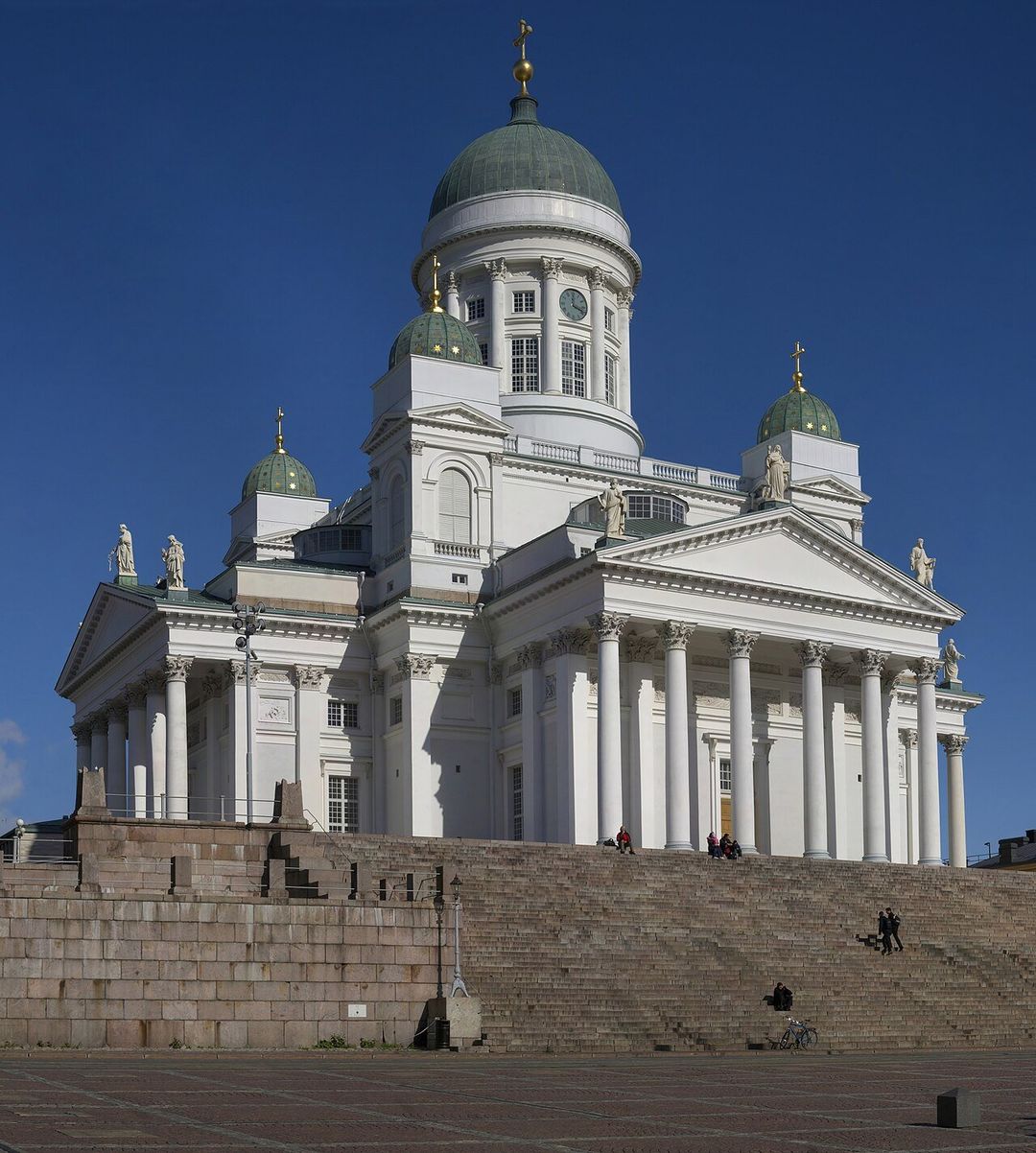
Helsinki does not announce itself the way other European capitals do. There is no single river sweeping past palace fronts, no skyline built to be photographed from a bridge. Instead there is granite — in the bedrock the whole city sits on, in the steps of Senate Square, in the boulders left scattered through city parks by the last ice age — and water on almost every side, since Helsinki occupies a peninsula stitched to an archipelago of some three hundred islands. The effect, once it clicks, is of a capital that feels closer to a very well-run small town than to Paris or Rome: compact, walkable, slightly austere, and much warmer underneath than the climate or the Finnish reputation for reticence would suggest.
What Helsinki does instead of grandeur is design, in the broadest sense of that word. This is a city that has spent a century thinking hard about how a tram stop, a library chair, or a public sauna should actually work, and the result is a kind of everyday elegance that rewards slow noticing rather than checklist sightseeing. The Design District's shopfronts matter less than the fact that the whole city was more or less laid out by the same functionalist logic — trams that run every few minutes, a library that feels like a living room, a swimming spot a short walk from the central train station.
This is not a guide that pretends Helsinki is secretly the new Copenhagen or a budget alternative to Stockholm. It is its own, odder thing: Nordic but with a Russian-built Orthodox cathedral on the skyline, Scandinavian in temperament but linguistically and historically apart from its neighbours, a city of saunas and ferries and a public library better than most countries' national ones. Give it two or three unhurried days and it opens up considerably faster than its reputation for coldness implies.
The caseWhy Helsinki rewards the trip
Helsinki's pitch is not a single headline sight but a texture of good decisions, stacked up across a whole city. You can stand on Senate Square between a Lutheran cathedral modelled on St Petersburg's grand civic architecture and a university founded in the 1600s, walk fifteen minutes to a church carved directly into a granite outcrop, and finish the afternoon on a sea fortress reachable only by ferry — all without a car, a tour bus, or much of a queue anywhere.
The other case for Helsinki is pace. This is a capital that still closes for the summer in a way few European cities do any more; locals genuinely decamp to lakeside cottages for weeks at a time, and the city itself slows into long light evenings on the Esplanadi and impromptu swims off granite rocks that are, confusingly, inside the city limits. It rewards visitors willing to adopt that rhythm rather than fight it — fewer sights, more sitting still near water, which turns out to be most of what Helsinki is actually for.
The calendarWhen to go
June through August is Helsinki at its most generous: daylight stretches past ten at night, terraces and ferry decks fill up, and the whole city's relationship to the sea becomes obvious rather than theoretical. This is also, unsurprisingly, when everyone else wants to come, and when Finns themselves vanish to the countryside, so some restaurants and small shops close for stretches even as the tourist-facing city stays busy.
Late May and September are the better-kept secret — milder crowds, still-long days, and a city that has not yet emptied out for the holidays or filled up with the summer rush. Winter is a different proposition entirely: short, often grey days with only six or seven hours of weak daylight by December, but also the season when the sauna culture and the ice-swimming habit make the most sense, when Christmas markets fill Senate Square, and when snow turns the granite parks genuinely beautiful rather than merely bare. What to actually avoid is the deep slush of late March, when the snow has gone ugly but spring hasn't arrived.
LogisticsGetting around
Helsinki is built for walking and trams in roughly equal measure, and the two work well together because the old city centre is small enough to cross on foot in under half an hour. The tram network, run by HSL, is the single most useful tool for a visitor — routes 2 and 3 in particular loop through most of the sights worth seeing, and simply riding one end to end is a perfectly good way to get oriented on arrival.
A single HSL ticket, bought through the app or at a kiosk, covers trams, buses, the metro's one line, and — usefully — the short ferry crossing to Suomenlinna, so there is rarely a reason to think about transport mode by mode. From the airport, the train (not a shuttle bus) runs directly into the city centre in under half an hour and is the easiest option by far. Taxis exist but are expensive by European standards and almost never necessary inside the core. In summer, city bikes are everywhere and genuinely useful given how flat and well-signed the cycling network is.
The tableHow Helsinki actually eats
Coffee comes first, structurally: Finns drink more coffee per capita than almost anyone on earth, and the café culture is correspondingly serious, if understated — expect a strong, fairly light-roast cup and a pulla or korvapuusti cinnamon roll rather than performative latte art. Market Square and the beautifully restored Old Market Hall next to it are the easiest places to taste the city's Baltic and Nordic staples in one stop: smoked and cured fish, reindeer, rye bread, and berries that make it into everything from porridge to dessert.
The more interesting food scene has, in the last decade, colonised Teurastamo, a former municipal slaughterhouse district turned into one of the city's best food-and-drink destinations, and the Kallio neighbourhood more broadly, where a wave of casual, unfussy restaurants has pushed back against Helsinki's old reputation for being an expensive place to eat averagely. New Nordic technique shows up at the top end, but the more useful habit for a short visit is simply trusting the lunch buffet (lounas) that most restaurants run on weekdays — a genuinely good, fixed-price way to eat well without committing to a full dinner booking.
The mapNeighbourhoods to know
Kruununhaka, tucked behind Senate Square, is the oldest part of the city and the quietest — a grid of handsome 19th-century buildings with almost none of the footfall of the square itself, good for a slow wander once the main sights are done. Punavuori and the wider Design District to its south are Helsinki's most self-consciously stylish quarter: small design studios, vintage shops, and a café density that rewards simply picking a street and following it.
Kallio, north across the water from the centre, is the neighbourhood that actually tells you where Helsinki is heading — working-class in living memory, now the city's best concentration of affordable bars, record shops and the kind of restaurants locals actually book, with Kallio Church's dark granite spire as its landmark. Töölö, by contrast, is green and civic: Finlandia Hall, the Olympic Stadium, and the National Museum sit here among parkland that runs almost continuously up to Sibelius Park. Katajanokka, the Art Nouveau peninsula east of the centre, and Eira, its counterpart to the south, are worth a walk purely for the architecture — ornate turn-of-the-century apartment blocks with almost no equivalent elsewhere in the Nordic region.
Field intelligencePractical intelligence
Sauna is not a spa indulgence here, it is closer to a civic institution, and visitors who skip it miss something close to the actual key to Finnish life. Public saunas like Löyly and Allas Sea Pool on the waterfront welcome tourists without membership, typically alongside a cold plunge in the sea itself — bring a swimsuit and expect mixed-gender common areas even where the saunas themselves are single-sex.
Tipping is not customary; prices already include service, and rounding up is a kind gesture rather than an expectation. Finns are famously comfortable with silence and personal space, which first-time visitors sometimes misread as coldness — a direct, unfussy politeness is the norm, and small talk with strangers is not required to be considered friendly. Tap water is excellent everywhere and bottled water is essentially unnecessary. And the right to roam — jokamiehenoikeus, 'everyman's right' — means the forests and islands around the city are genuinely open to walk, swim, and even forage in, which is as good a summary of the Finnish outlook as anything in a guidebook.
What to see & do
-
Suomenlinna
A UNESCO-listed 18th-century sea fortress spread across a cluster of islands a short ferry ride from Market Square, with grassy ramparts, a working shipyard, museums and a surprisingly lively residential community.
Tip:The ferry is covered by a standard HSL ticket — no separate boat fare needed. Bring a picnic and plan at least half a day to see more than one island.
-
Helsinki Cathedral & Senate Square
The white neoclassical cathedral that anchors every postcard of the city, set above a monumental granite staircase on a square otherwise ringed by the main university building and the Government Palace.
Tip:Climb the steps at dusk when the floodlit dome is at its best and the square has mostly emptied of day-trip crowds.
-
Temppeliaukio Church
The 'Rock Church', blasted directly into a granite outcrop in the 1960s and lit by a vast copper-ringed skylight — one of the most genuinely startling pieces of religious architecture in Europe, and still a working Lutheran parish.
Tip:Check the posted service times before visiting; it occasionally closes to tourists for concerts and worship, which happens often given the acoustics.
-
Design District Helsinki
A loosely defined cluster of streets across Punavuori, Kaartinkaupunki and Kruununhaka packed with Finnish design studios, vintage furniture shops and small galleries — less a single attraction than a mood to wander into.
Tip:Pick up the free Design District map from any participating shop; the area rewards unplanned drifting more than a fixed route.
-
Oodi Central Library
A striking wave-roofed wooden-and-glass public library beside the train station, with 3D printers, sewing machines and recording studios on the ground floors and a hushed, light-filled reading hall on top.
Tip:Head straight to the third floor for the best view back toward the Parliament House and Kiasma, especially near sunset.
-
Market Square & Old Market Hall
The working harbourfront market where Suomenlinna ferries depart, flanked by an elegantly restored 19th-century covered market hall selling smoked fish, reindeer, rye bread and Finnish berries.
Tip:Go for breakfast rather than lunch — the hall is calmer and the fish stalls are freshest earlier in the day.
-
Allas Sea Pool
A floating harbourside complex of heated and unheated sea-water pools plus saunas, open through the Baltic winter for anyone willing to follow the hot-cold-repeat ritual the locals swear by.
Tip:Visit in winter if you can — steam rising off the pools against a snowy harbour is the single most memorably Finnish image the city offers.
-
Sibelius Monument & Park
A soaring abstract sculpture of welded steel organ pipes, built to honour the composer Jean Sibelius, set in a quiet lakeside park in Töölö that is as much the point as the monument itself.
Tip:Combine it with a wider loop through Töölö's parkland toward the Olympic Stadium rather than treating it as a standalone stop.
On the groundWhere things are
Map data © OpenStreetMap contributors.
Where to stayBase yourself well
Kruununhaka & the city centre
Best for first-timers who want everything walkableSenate Square's quiet backyard — handsome 19th-century streets, genuinely central, and close to everything without the Esplanadi's tourist density.
A classic hotel near Senate Square
Staying within the old grid means the cathedral, the harbour and the trams are all a short walk away in every direction.
€€€A smaller boutique hotel in Kruununhaka's back streets
A block or two off the square buys real quiet without losing the walk-everywhere convenience.
€€Punavuori & the Design District
Best for design-minded visitors and good food on the doorstepHelsinki's most stylish quarter, dense with small design shops, cafés and restaurants, a short tram ride or an easy walk from the centre.
A design-forward hotel in Punavuori
Look for a property on or just off the main shopping streets for the best café density outside the door.
€€€Kallio
Best for value, nightlife, and a more local feelWorking-class turned creative, with Helsinki's best bar and restaurant density and a noticeably lower price tag than the centre, across the water but still a short tram ride away.
A no-frills apartment hotel in Kallio
Trade a little distance from the postcard sights for Helsinki's liveliest evening scene and lower rates.
€€Katajanokka & the harbour
Best for architecture lovers and a calmer baseAn Art Nouveau peninsula just east of the centre, quieter and more residential, with some of the city's handsomest early-20th-century apartment blocks.
A converted warehouse or harbourside hotel in Katajanokka
Several of the area's hotels occupy handsomely repurposed historic buildings right on the water.
€€€Affiliate notePostcardRoute is reader-supported. Some links to Booking.com (stays, flights, car hire, tickets and tours, airport transfers) are affiliate links, tracked through CJ Affiliate: if you book through them we may earn a small commission at no extra cost to you. We only recommend places we would send a friend.
Book the restEverything else for the trip
Stay sorted? These open Booking.com for the other legs of the journey.
-
Tours & tickets
Things to do in Helsinki
Skip-the-line tickets, tours and day trips.
Browse activities -
Wheels
Car hire in Helsinki
Compare pick-up points and rental companies.
Compare cars -
Air
Flights
Search fares, then come back for the neighbourhood advice.
Search flights -
Ground
Airport transfers
Book a taxi or private transfer before you land.
Book a transfer
Affiliate noteThese four links are affiliate links too: if you book through them we may earn a small commission at no extra cost to you.
Beyond the cityWorthwhile day trips
- Porvoo
A beautifully preserved medieval town an hour east by road or river boat, known for its ochre-red wooden warehouses along the river and one of Finland's oldest town centres.
- Tallinn
A two-hour ferry across the Gulf of Finland to Estonia's walled medieval capital — close enough that locals treat it as a day trip, and a genuinely different country and old town for the effort.
- Nuuksio National Park
Dense forest, granite ridges and clear lakes under an hour from the city, the easiest way to experience Finland's famous wilderness without leaving the Helsinki region.
- Fiskars Village
A former ironworks village turned into a crafts and design community, about ninety minutes west, with working studios, galleries and a handsome riverside setting.
Before you goCommon questions
- How many days do you need in Helsinki?
- Two full days cover the core sights comfortably — Senate Square, Temppeliaukio, the Design District and a Suomenlinna visit. Three days leaves room for a sauna afternoon and a slower wander through Kallio or Töölö, which is where the trip tends to improve.
- What is the best area to stay in Helsinki for first-timers?
- Kruununhaka or the immediate city centre around Senate Square. It puts the cathedral, the harbour, Market Square and the main tram lines within easy walking distance, with Punavuori's Design District just a short walk or tram ride further on.
- Is Helsinki expensive to visit?
- It is not cheap by European standards, but it is manageable with a few habits: eat the weekday lunch buffet (lounas) rather than booking dinner everywhere, use the single HSL ticket for all transport including the Suomenlinna ferry, and treat public sauna and sea-pool visits as the city's best-value afternoon rather than paying for a spa.
- Do I need to try a sauna in Helsinki?
- Yes, it is close to the central experience of the city rather than an optional extra. Public venues like Löyly and Allas Sea Pool welcome visitors without membership, pair the sauna with a sea or pool plunge, and ask for nothing more than a swimsuit and an openness to the hot-cold ritual.
- What is the best time of year to visit Helsinki?
- June to August brings the long daylight and open-air city the postcards promise, though it is also the busiest and when many Finns themselves leave town. Late spring and early autumn offer a quieter, still-bright middle ground, while winter suits visitors specifically chasing the sauna, snow and Christmas-market side of the city.
- How do I get from Helsinki Airport into the city centre?
- Take the train directly from the airport into the city centre, which runs in under half an hour and is covered by a standard HSL ticket. It is faster and considerably cheaper than a taxi, which is the better option only if you are travelling with heavy luggage very late at night.
- Is English widely spoken in Helsinki?
- Yes, very widely, particularly among younger Finns and anyone in tourism, hospitality or retail. Menus, transport information and museum signage are routinely multilingual, so a visit is straightforward without any Finnish at all, though a hyvää päivää ('good day') is always appreciated.