
Spain · Andalusia
Granada, ruled from a hill it never quite gave up
A Moorish palace still standing eight centuries later, a whitewashed quarter built to stare at it, and a tapas culture that still gives food away. Book the Alhambra first — everything else here can wait.
The last Moorish kingdom, still standing on its hill · 37.18° N · 3.60° W
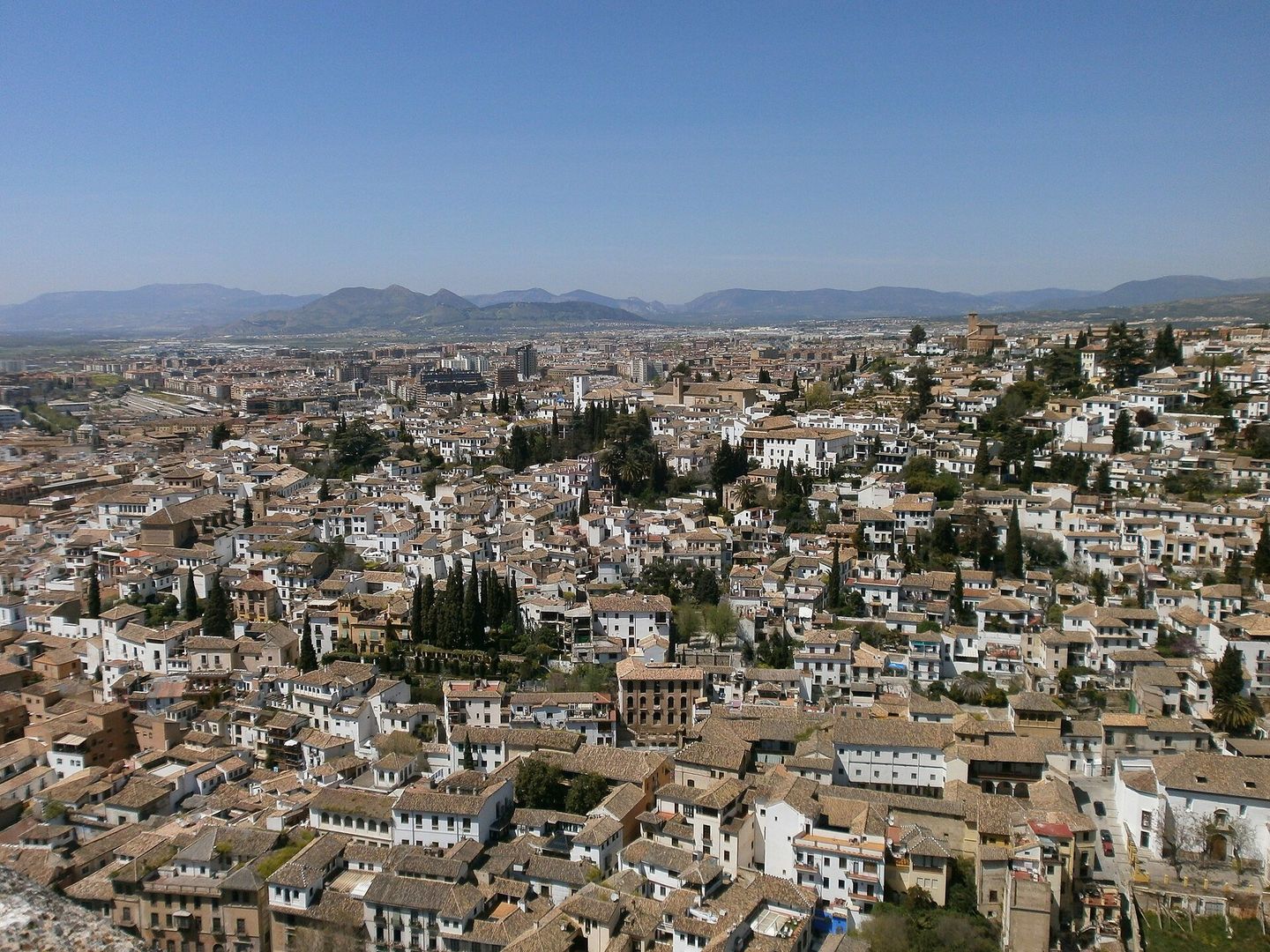
Granada does something almost no other European city still does: it lets you stand inside the thing that made it famous. The Alhambra is not a ruin you reconstruct in your imagination from a few surviving column bases — it is a working palace complex, plaster latticework and carved cedar ceilings and courtyards of still water largely intact, built by the Nasrid emirs in the final two centuries before 1492, when Granada was the last Muslim-ruled territory in Iberia and everyone, Christian and Muslim alike, knew the clock was running out. That knowledge is baked into the building. The Alhambra was constructed by a kingdom that understood it was living on borrowed time, and it built accordingly: dense, defensible, and so intricately beautiful that losing it would cost the conquerors something too.
Granada's genius, though, is that it never turned into a one-monument city. Climb out of the Alhambra's ticket queues into the Albaicín, the old Moorish quarter spilling down the opposite hill, and you find a living neighbourhood of whitewashed houses, walled gardens called carmenes, and streets too narrow and steep for anything but a scooter, still arranged on the medina street plan laid down a thousand years ago. Drop into the Realejo or the centre around the cathedral and you find a proper Spanish university city — bars with chalkboard tapas menus, a student population that keeps the nightlife running well past any sensible hour, and a civic confidence that has nothing to prove to the tourists filing past with Alhambra tickets.
This isn't a city that needs embellishing. Granada's reputation for one of Europe's great cultural collisions — Islamic, Jewish and Christian Iberia, layered rather than erased — is earned, visible, and still being lived in by the people who make your coffee in the morning. What follows is not a ranked bucket list. It's the information that actually changes a Granada trip: when the Alhambra tickets disappear, which hill rewards the climb, how the free-tapas economy works, and why a city this far south still gets genuinely cold.
The caseWhy Granada still earns the detour
Andalusia has no shortage of beautiful old cities, and plenty of visitors treat Granada as a day trip bolted onto Seville or the coast. That is a mistake, and the Alhambra is only half the reason why. Yes, the palace complex is one of the most complete surviving works of Islamic architecture anywhere in the world, and yes, it alone justifies the trip — but Granada is also one of the few Spanish cities where the medieval layering of cultures is still legible at street level rather than confined to a museum case. The Albaicín's lanes follow the original medina plan. The Realejo was the old Jewish quarter before the 1492 expulsion. The cathedral and Capilla Real sit on the site of the former great mosque, a deliberate Christian statement built directly atop what it replaced.
Then there is the altitude and the geography, which do more work than people expect. Granada sits at the foot of the Sierra Nevada, Iberia's highest range outside the Pyrenees, and on a clear winter morning you can see snow on the peaks from a rooftop tapas bar in the old town — a combination of mountain and Moorish palace that genuinely exists nowhere else in Europe. Add a free-tapas culture that still treats a drink order as an invitation to feed you, and a student population that keeps prices honest, and Granada is simply better value and more atmospheric than its reputation as 'the Alhambra city' suggests.
The calendarWhen to go
Spring (April to early June) and autumn (September to October) are the sweet spots, and for once that advice isn't generic — Granada's inland, high-altitude setting means summer here is properly brutal, with July and August afternoons regularly pushing past 35°C and the old town's narrow stone streets trapping the heat long into the evening. Spring brings the bonus of snow still capping the Sierra Nevada while jacaranda and orange blossom perfume the streets below, a contrast that does not last much past May.
Winter is a genuine option and a slightly surreal one: Granada is cold by Andalusian standards, cold enough for a proper coat most evenings, and the Sierra Nevada ski resort is forty minutes from the city centre, meaning you can ski in the morning and walk the Alhambra's gardens in the afternoon — a day combination that exists in almost no other European destination. The trade-off is shorter daylight and a colder wind funnelling down from the Albaicín's high points. Whatever season, avoid planning a trip around a specific Alhambra date without a ticket already secured; the palace sells out independent of the weather.
LogisticsGetting around
Granada's historic core is compact but aggressively hilly, and the Albaicín and Alhambra hills in particular will punish anyone expecting flat Spanish city walking. Good shoes matter more here than in almost any other city in this guide. That said, most of what you came for — the cathedral, Capilla Real, Realejo, the lower Albaicín, the tapas bars around Elvira and Navas — sits within a walkable, roughly triangular core.
For the climbs, Granada runs a cheap and genuinely useful minibus network (lines C1, C2, C3, C4) that loops up through the Albaicín and out to the Alhambra, designed specifically for streets too narrow for a full-size bus. Buy a rechargeable Credibús card at any kiosk rather than paying cash fares one at a time. A car is actively unhelpful in the centre — parking is scarce and the old town's one-way maze defeats GPS as often as it helps — but worth renting only if you're using Granada as a base for the Alpujarras or the coast. The airport, Federico García Lorca Granada, connects to the centre by a direct bus service timed to flights; taxis are a reasonable backup, around twenty minutes into town.
The tableTapas, the Granada way
Granada is one of the last places in Spain, and arguably the single best-known, where ordering a drink still gets you a free tapa — not a dish of olives, but a genuine small plate that escalates as you order more rounds: a first beer might bring patatas bravas, the second a few croquetas, the third something more ambitious. The system varies bar to bar and nobody publishes a menu for it; part of the pleasure is not knowing what's coming. It survives in Granada largely because of the university population keeping margins tight and volume high, and locals will tell you, with some pride, that it has held on here while it has faded almost everywhere else in the country.
This changes how you should eat. Don't book a single big dinner — bar-hop instead, treating three or four stops as a meal, moving when the crowd thins or the tapa stops exciting you. The streets around Calle Elvira, Calle Navas and the Campo del Príncipe in the Realejo are the reliable hunting grounds; San Miguel Bajo square in the upper Albaicín is quieter and better for a sunset round. Order a caña (small draft beer) or a tinto de verano rather than wine if you want the tapa economy to work in your favour — it's the volume drink, and bars price and pace their kitchens around it. And don't skip the specifically Granadino dishes worth seeking out deliberately: habas con jamón (broad beans with cured ham), remojón granadino (an orange, salt-cod and olive salad), and piononos, a tiny syrup-soaked pastry from nearby Santa Fe that has become the city's signature sweet.
The mapNeighbourhoods to know
The Albaicín, the old Moorish quarter climbing the hill opposite the Alhambra, is the obvious headline — a UNESCO-listed tangle of whitewashed lanes, hidden carmen gardens behind high walls, and the single best panorama in the city from the Mirador de San Nicolás at dusk. It is also the most photographed and most crowded stretch at golden hour, so budget patience for that one viewpoint and use the rest of the quarter, genuinely quiet a few streets back, to actually enjoy Granada rather than queue for a photo of it.
The Realejo, the former Jewish quarter south of the cathedral, is the city's best under-the-radar base: steep, atmospheric, dense with tapas bars, and close enough to walk everywhere without the Albaicín's tourist density. Sacromonte, further up and east of the Albaicín, is the historic Roma quarter known for cave dwellings carved into the hillside and the zambra, a flamenco style born in those caves — still the most authentic place in the city to see flamenco, if you pick a venue by local reputation rather than the tour buses parked outside the biggest one. The city centre proper, around the cathedral and Puerta Real, trades atmosphere for convenience — shopping streets, transport links, and the practical base if you'd rather not manage hills twice a day.
Field intelligencePractical intelligence
Book the Alhambra before you book anything else about this trip. Tickets are released on a rolling window months ahead and the Nasrid Palaces allocation — the single most in-demand part of the complex — regularly sells out weeks in advance in spring and summer; arriving in Granada without a ticket already secured is the single most common regret visitors report. Tickets are timed and non-transferable to a different slot, so build your Granada days around whatever entry time you can get, not the reverse.
Granada's altitude (roughly 738 metres) means the climate runs more continental than the rest of Andalusia — hot, dry summers but genuinely cold winter nights, so pack accordingly regardless of season. The free-tapa culture is generous but not infinite; it's considered poor form to order the cheapest possible drink round after round purely to graze, and bar staff notice. Flamenco in Sacromonte ranges from genuinely excellent to pure tour-bus theatre — ask your accommodation for a current recommendation rather than booking the first venue that comes up in search results, since reputations shift. And carry small change: a number of the most atmospheric old-town bars and the standing-room tapas counters still don't take cards for small rounds.
What to see & do
-
The Alhambra
The Nasrid palace-and-fortress complex that gives the city its reason for being — intricate plasterwork, carved cedar ceilings, and courtyards of still water that have survived eight centuries largely intact.
Tip:Book the Nasrid Palaces timed-entry slot the moment your dates are fixed; it is the part that sells out, sometimes months ahead.
-
Generalife gardens
The Nasrid emirs' summer palace and pleasure gardens just outside the Alhambra's main walls, built around terraced courtyards, fountains and some of the oldest cypress trees in the complex.
Tip:Visit at the end of your Alhambra ticket window rather than the start — it's the calmer, greener close to a dense, crowded morning.
-
Albaicín
The old Moorish quarter on the hill facing the Alhambra, a UNESCO-listed maze of whitewashed lanes, hidden walled gardens and churches built over former mosques, still laid out on its original medina street plan.
Tip:Get lost deliberately on a weekday morning, well before the sunset crowds converge on the Mirador de San Nicolás.
-
Mirador de San Nicolás
The single best panorama in Granada — the Alhambra laid out against the Sierra Nevada from a small square at the top of the Albaicín, busiest and most beautiful right at sunset.
Tip:Arrive forty minutes before sunset to claim a spot at the wall; it fills in fast and stays full.
-
Sacromonte
The historic Roma quarter east of the Albaicín, known for cave dwellings carved directly into the hillside and the zambra, a flamenco style that was born inside them.
Tip:Pick a flamenco cave on current local reputation, not proximity to the main road — quality varies enormously between neighbouring venues.
-
Capilla Real
The Royal Chapel built to hold the tombs of Ferdinand and Isabella, the Catholic Monarchs who completed the conquest of Granada in 1492 and chose to be buried inside the city they took.
Tip:The admission is modest and the ornate marble tombs and royal treasury are easy to see in thirty focused minutes.
-
Granada Cathedral
A vast Renaissance cathedral raised directly over the site of the city's former great mosque, its brilliant white interior and soaring rotunda a deliberate architectural statement of the new order.
Tip:Combine it with the adjoining Capilla Real on one ticket to save a second queue.
-
Carrera del Darro
The cobbled street tracing the Darro river beneath the Alhambra's walls, lined with Moorish bridges, Renaissance mansions and some of the best postcard views of the fortress above.
Tip:Walk it in the early morning light, when the street is nearly empty and the Alhambra's walls catch the sun directly overhead.
On the groundWhere things are
Map data © OpenStreetMap contributors.
Where to stayBase yourself well
Albaicín
Best for romance and the best views in the cityThe old Moorish quarter itself — steep cobbled lanes, whitewashed carmen houses, and Alhambra views from your own rooftop in the right spot. Atmospheric, but expect stairs and narrow streets that taxis won't reach.
A carmen guesthouse near the Mirador de San Nicolás
A handful of small guesthouses occupy former carmen gardens close to the main viewpoint, so you get the sunset crowd's view without the walk back down after dark.
€€€A boutique hotel in the lower Albaicín near Plaza Nueva
Lower down the hill, closer to the centre, with less climbing but still inside the old quarter's lanes.
€€Realejo
Best for first-timers who still want characterThe former Jewish quarter south of the cathedral — steep but shorter climbs than the Albaicín, dense with tapas bars, and genuinely local rather than built for visitors. The best balance of atmosphere and convenience.
A small hotel near Campo del Príncipe
This leafy square anchors the Realejo's best tapas crawl and sits a flat, manageable walk from the Alhambra's lower entrance.
€€Centro (around the Cathedral)
Best for flat walking and transport convenienceThe flattest, most convenient base — shopping streets, transport links, and the cathedral and Capilla Real on your doorstep. Less atmosphere than the hill quarters, but the easiest logistics by a wide margin.
A mid-range hotel near Puerta Real
Central enough to walk to the Albaicín, the Realejo and the cathedral without relying on the bus network.
€€An apartment near Bib-Rambla square
A flat-based stay works well here for a family or a longer visit that wants a kitchen and fewer stairs.
€€Sacromonte
Best for a genuinely different kind of stayThe farthest out and the most distinctive — cave-house stays on the hillside above the flamenco venues, with some of the quietest nights and best unobstructed Alhambra views in the city.
A restored cave house on the Sacromonte hillside
A small number of traditional cave dwellings have been converted into guest stays; expect thick walls, cool interiors, and a longer walk into the centre.
€€Affiliate notePostcardRoute is reader-supported. Some links to Booking.com (stays, flights, car hire, tickets and tours, airport transfers) are affiliate links, tracked through CJ Affiliate: if you book through them we may earn a small commission at no extra cost to you. We only recommend places we would send a friend.
Book the restEverything else for the trip
Stay sorted? These open Booking.com for the other legs of the journey.
-
Tours & tickets
Things to do
Tickets, tours and activities, anywhere.
Browse activities -
Wheels
Car hire
Compare rental companies worldwide.
Compare cars -
Air
Flights
Search fares, then come back for the neighbourhood advice.
Search flights -
Ground
Airport transfers
Book a taxi or private transfer before you land.
Book a transfer
Affiliate noteThese four links are affiliate links too: if you book through them we may earn a small commission at no extra cost to you.
Beyond the cityWorthwhile day trips
- Sierra Nevada
Iberia's highest mountain range outside the Pyrenees, forty minutes from the city centre — a ski resort in winter and a network of high-altitude hiking trails the rest of the year.
- The Alpujarras
A cluster of white villages tumbling down the southern slopes of the Sierra Nevada, Berber in layout and famous for their flat-roofed houses, jamón, and some of the best walking country in Andalusia.
- Costa Tropical
Granada's own, less-crowded stretch of Mediterranean coast around Almuñécar and Salobreña, under an hour south — a legitimate beach day without the Costa del Sol's crowds.
Before you goCommon questions
- How far in advance should I book Alhambra tickets?
- As far ahead as you can, ideally the moment your travel dates are fixed. The Nasrid Palaces entry, the most in-demand part of the complex, regularly sells out weeks ahead in spring and summer, and tickets are released on a rolling window months in advance. Arriving without one booked is the single most common regret visitors report.
- How many days do you need in Granada?
- Two full days covers the essentials — a half-day for the Alhambra and Generalife, and a day split between the Albaicín, the cathedral and Capilla Real, and a tapas crawl through the Realejo. Three days lets you add Sacromonte properly and a day trip into the Sierra Nevada or the Alpujarras without rushing.
- What is the best area to stay in Granada?
- The Realejo offers the best balance of atmosphere and manageable walking for most first-time visitors. The Albaicín has the best views and the most character but means steep climbs daily; the centre around the cathedral is flattest and most convenient if hills are a concern.
- Is the free-tapas tradition still real in Granada?
- Yes, and Granada is one of the last Spanish cities where it survives at real scale. Order a drink at most old-town bars and a small plate arrives unasked, typically escalating in ambition with each round. It varies bar to bar, which is part of the fun — nobody publishes which tapa is coming next.
- Is Granada walkable, or do I need public transport?
- The historic core is walkable but seriously hilly, especially the Albaicín and the Alhambra approach. Most visitors manage on foot with good shoes, but the cheap C-line minibuses are worth using for the steepest climbs, particularly after a long day of sightseeing.
- What is the best time of year to visit Granada?
- Spring (April to early June) and autumn (September to October) are the sweet spots — mild temperatures, snow still visible on the Sierra Nevada in spring, and manageable crowds. Summer runs genuinely hot for an inland, high-altitude city; winter is cold by Andalusian standards but offers the rare option of skiing and sightseeing on the same day.
- Can I see the Alhambra without booking tickets in advance?
- It is risky and not recommended. A limited allocation of same-day tickets exists but cannot be relied on, especially for the Nasrid Palaces. Treat advance booking as mandatory rather than optional if the Alhambra is a priority for your trip.