
Poland · Pomerania
Gdansk, rebuilt on purpose
A Hanseatic trading city flattened in 1945 and reconstructed brick by brick, sitting next to the shipyard where a strike ended up unravelling the Eastern Bloc. Amber, herring and a very specific kind of Polish stubbornness.
Dispatch from the Hanseatic port where Poland's history actually turns · 54.35° N · 18.65° E
Plan this trip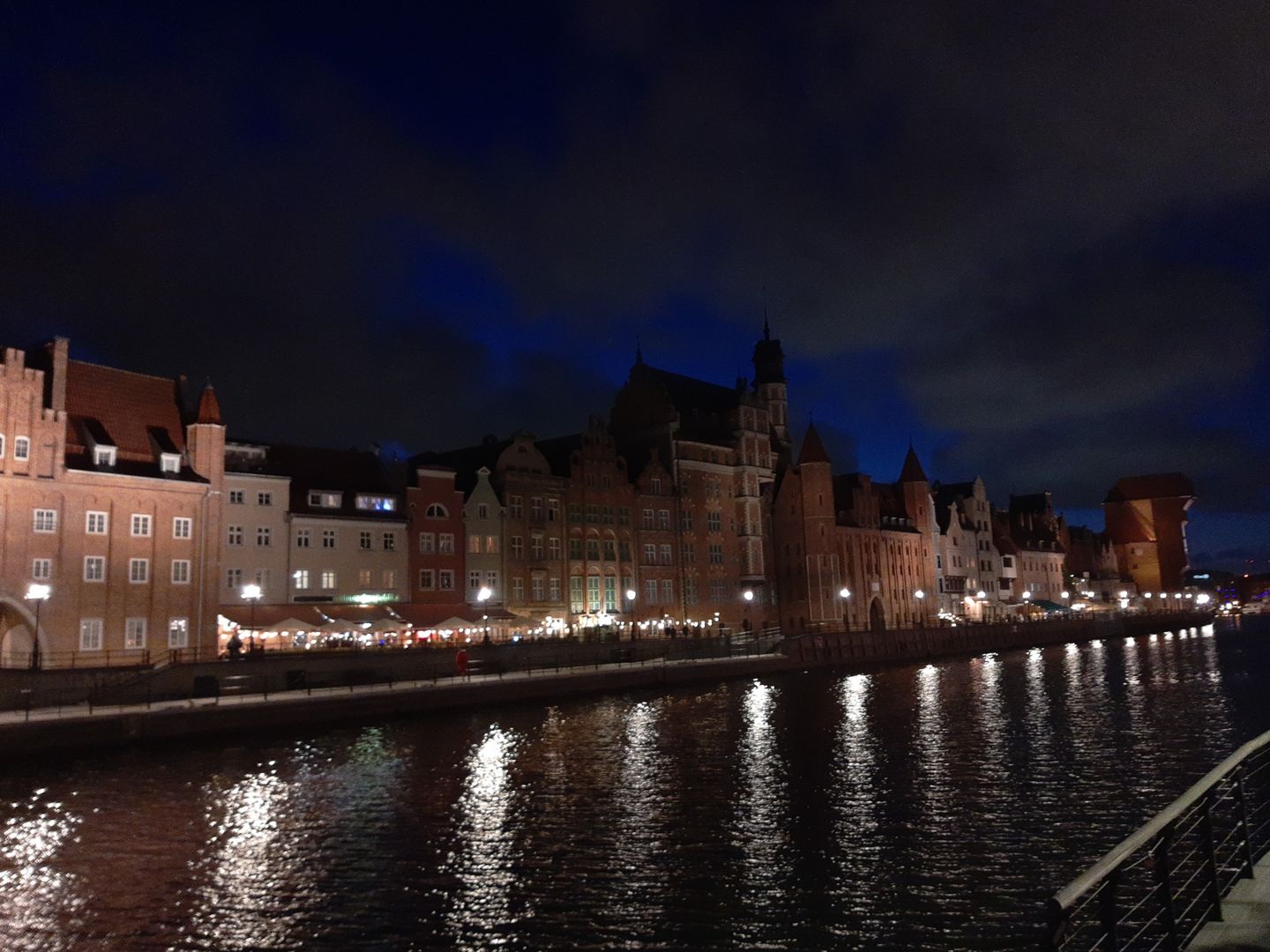
Gdansk asks a question most European old towns never have to answer: what do you do when the thing you're famous for no longer physically exists? By the time the Second World War ended, upward of ninety percent of the historic centre lay in rubble, deliberately targeted street by street. What stands today along the Long Market and the Motlawa waterfront is a reconstruction — a remarkably faithful one, built from pre-war photographs and salvaged fragments over four decades of Communist-era restoration, but a reconstruction all the same. Knowing that changes how you should look at it: less a preserved medieval relic like Krakow, more a monument to a city's refusal to let its own erasure be the last word.
That refusal is the throughline of Gdansk's whole modern identity, and it shows up again barely a kilometre from the gabled merchant houses, at the gate of the Gdansk Shipyard. This is where, in August 1980, a strike led by an electrician named Lech Walesa produced the Gdansk Agreement and the Solidarity trade union — the first independent labour movement in the Soviet bloc, and the opening crack in a wall that would take another nine years to fully come down. The shipyard is still partly working, still faintly rusted at the edges, and the European Solidarity Centre built against its gate is one of the most honestly moving museums in Poland.
This dispatch treats Gdansk as what it actually is: a working Baltic port city with a rebuilt postcard centre, a serious amber trade running back to Roman times, and a beach twenty minutes away by tram. It covers when to come, how the Tri-City of Gdansk, Sopot and Gdynia fits together, where to eat herring the way locals do, and which neighbourhood to base yourself in depending on whether you came for the history or the coast.
The caseWhy Gdansk earns the detour
Most first-time visitors to Poland default to Krakow and Warsaw, and Gdansk gets treated as an optional extra if there's time. That ranking undersells it. Gdansk was, for most of its history, wealthier and more cosmopolitan than either — a leading member of the Hanseatic League, a free city with its own laws for large stretches of its existence, and the point where Baltic amber, Flemish cloth and grain from the Polish interior all changed hands. The wealth shows in the architecture: the Long Market's facades borrow as much from Amsterdam and Lübeck as from Warsaw, all ornate gables and loggias built by merchants competing to outdo each other's frontages.
The more urgent case, though, is the twentieth century. Gdansk — as the Free City of Danzig — is where the Second World War began, with the first shots fired at Westerplatte on 1 September 1939. It's also, four decades later, where a shipyard strike began the process that ended that war's political aftermath across an entire continent. Visiting the Old Town and the European Solidarity Centre in the same day gives you a genuinely rare thing: a city whose two defining historical moments bookend the era that shaped modern Europe, both walkable from the same hotel.
Add in that Gdansk sits directly on the Baltic, with the resort town of Sopot and its famous wooden pier a short train ride away, and a food scene built on herring, pierogi and a strong craft beer revival, and the case stops being purely historical. This is a city that rewards three or four unhurried days rather than a rushed day trip bolted onto a Krakow-Warsaw itinerary.
The calendarWhen to go
June through August is peak season, and for good reason — this is when the Baltic coast actually delivers on the beach promise, with long daylight hours, the Sopot pier at its liveliest, and outdoor terraces along the Motlawa full into the evening. It's also when the Old Town is at its most crowded and hotel prices climb hardest, particularly around St. Dominic's Fair in late July and August, a centuries-old street market and festival that fills the centre with stalls but also with crowds three deep.
May and September are the better trade-off for most visitors. The weather is still generally cooperative — the Baltic rarely gets properly warm even in July, so you're not sacrificing much swimmable water by shifting a few weeks either side of peak season — and the Old Town's streets are walkable without the summer crush. September in particular pairs pleasant temperatures with the tail end of outdoor dining season and noticeably lower accommodation rates.
Winter is a genuinely different city: short days, a cold wind off the Baltic that cuts harder than the thermometer suggests, and a Christmas market on the Long Market that gives the reconstructed gables a warm, lit-up backdrop worth seeing at least once. It's also when the European Solidarity Centre and the amber museums are at their emptiest, if indoor history is more your priority than coastal weather. Avoid only the deep grey stretch of late January and February, when neither the market nor the beach season is doing any work for you.
LogisticsGetting around the Tri-City
Gdansk itself is compact and walkable — the Old Town, the Main Town and the waterfront along the Motlawa all sit within a twenty-minute walk of each other, and most visitors will do the bulk of their sightseeing on foot. Where transit actually matters is connecting to the rest of the Tri-City: Gdansk, Sopot and Gdynia form a single urban strip along the coast, linked by the SKM commuter rail, which runs frequently and cheaply and makes a Sopot beach afternoon or a Gdynia harbour visit a straightforward half-day add-on rather than a separate trip.
Buy tickets from machines at SKM platforms or via the local jakdojade app rather than assuming card taps work everywhere — validate paper tickets in the machines onboard before the conductor comes through, since Polish transit inspectors do check and unvalidated tickets count as fare evasion. Trams and buses cover the parts of Gdansk proper that fall outside comfortable walking distance, including the shipyard district and the airport link.
Gdansk Lech Walesa Airport sits about twelve kilometres from the centre, connected by a direct rail line (the PKM) that runs into the main train station in well under half an hour — skip the taxi unless you're arriving very late at night. Within the Old Town, cobblestones and pedestrianised streets make a car actively unhelpful; if you're renting one for a coastal side trip, pick it up on the day you need it rather than for the whole stay.
The tableHow Gdansk actually eats
Herring is the anchor of Gdansk's food identity, in more preparations than most visitors expect — pickled in oil with onions, in cream sauce, or the local specialty śledź po kaszubsku, made with a Kashubian regional twist. Milk bars (bar mleczny), a Communist-era institution that survived because they're simply good value, are the honest way to try it: cafeteria-style counters serving pierogi, żurek sour rye soup and herring plates at prices that make the tourist-menu restaurants along the Long Market look absurd by comparison.
The Long Market and Mariacka Street are where the postcard restaurants cluster, and while a few are genuinely good, most are priced for the foot traffic rather than the cooking — treat them as a place for a coffee or a beer with a view rather than the meal you'll remember. For that meal, head a few streets back from the water, where local crowds outnumber tour groups and the same Polish staples cost half as much.
Gdansk's other specific contribution is Goldwasser, a herbal liqueur flecked with actual gold leaf that's been distilled in the city since the 16th century — more a novelty shot than a serious drink, but worth trying once precisely because it's Gdansk-specific rather than generically Polish. The craft beer scene has grown substantially in the last decade too, with taprooms around the Main Town pouring genuinely good local IPAs and sours alongside the ubiquitous Żywiec and Tyskie. And don't skip the amber-adjacent tourist trap that turns out to be worth it: paczki, Polish jam-filled doughnuts, from any of the bakeries dotted through the centre, best eaten still warm.
The mapNeighbourhoods to know
The Main Town (Glowne Miasto) is the reconstructed heart everyone pictures — the Long Market, Neptune's Fountain, St. Mary's Church and the Motlawa waterfront with the Gdansk Crane. It's dense, walkable, and unavoidably the most touristed part of the city, but it earns the crowds; budget most of your first day here regardless of where you sleep.
The Old Town (Stare Miasto) proper sits just north of the Main Town, across the Radunia Canal, and is a quieter, less rebuilt-for-tourism district with the Great Mill and a more residential, lived-in feel — a good half-day once the Long Market's crowds have worn you down. Further north again, the Young Town and the Gdansk Shipyard district hold the European Solidarity Centre and the actual shipyard gates where the 1980 strikes happened; it's a starker, more industrial landscape and worth treating as a deliberate contrast to the postcard centre rather than an afterthought.
Outside the historic core, Wrzeszcz is Gdansk's real residential and student neighbourhood, with a more local café and bar scene and noticeably lower prices, connected to the centre by a short SKM ride. And Sopot, technically a separate town but functionally a Gdansk neighbourhood by how integrated the transit is, adds the resort layer entirely missing from the Old Town — a wooden pier reaching into the Baltic, a proper sandy beach, and a livelier nightlife strip along Monte Cassino Street.
Field intelligencePractical intelligence
Poland uses the złoty, not the euro, despite EU membership — card payments are widely accepted even for small purchases, but carry some cash for milk bars, market stalls and smaller shops that still prefer it. Tipping around ten percent is customary at sit-down restaurants and appreciated but not obligatory; it's rarely expected at bars or cafés with counter service.
Amber is Gdansk's signature souvenir and also its signature scam risk — the city has traded genuine Baltic amber for centuries, but the sheer density of amber shops along Mariacka Street includes plenty of dyed plastic or pressed-amber fakes sold at real-amber prices. Buy from shops displaying a certificate of authenticity or, better, from the Amber Museum's own attached shop, and be sceptical of anyone aggressively flagging down tourists on the street.
St. Mary's Church, one of the largest brick churches in the world, is worth the climb up its tower for a rooftop view over the Old Town's red-tiled roofs — go on a clear day and expect a genuinely steep, narrow staircase rather than a lift. The European Solidarity Centre is best visited with at least two hours; it's dense and text-heavy but exceptionally well curated, and rushing it undersells what's one of the more important modern-history museums in Europe. Weather off the Baltic turns quickly even in summer, so a light waterproof layer is worth carrying regardless of the forecast.
Field notesWhat to see & do
-
Long Market & Neptune's Fountain
The reconstructed heart of the Main Town — a broad, gabled street running from the Golden Gate to the Green Gate, centred on a 17th-century bronze fountain of Neptune that survived the war buried underground.
On the groundCome back after dark, when the facades are lit and the crowds thin to a fraction of the daytime footfall.
-
St. Mary's Church
One of the largest brick churches on earth, a cavernous Gothic hall church that took over a century to build and can hold thousands of worshippers under its whitewashed vaults.
On the groundClimb the tower's roughly four hundred steps for the best rooftop panorama in the city, and go early to beat the tour-group bottleneck on the stairs.
-
European Solidarity Centre
A striking rust-coloured museum built against the actual gate of the Gdansk Shipyard, telling the story of the 1980 strikes and the Solidarity movement that helped end Communist rule across Eastern Europe.
On the groundBudget at least two hours; the exhibition is dense and rewards reading rather than skimming through.
-
Gdansk Crane (Zuraw)
A hulking medieval wooden crane straddling the Motlawa waterfront, once the largest port crane in Europe, used to load cargo and step ship masts using a human-powered treadwheel mechanism still visible inside.
On the groundThe exterior view from the opposite riverbank at golden hour is the single most photographed frame in the city for good reason.
-
Westerplatte
The peninsula where the first shots of the Second World War were fired on 1 September 1939, now a quiet memorial park with the ruins of Polish barracks and a towering monument overlooking the harbour mouth.
On the groundTake the summer ferry from the Motlawa waterfront rather than the tram — the approach by water past the container port adds real context.
-
Amber Museum
Housed in a medieval prison tower, tracing Baltic amber's forty-million-year geological story alongside the trade that made Gdansk rich, with genuinely striking specimens including insect inclusions.
On the groundBuy any amber jewellery from the museum's own shop afterward rather than an unverified street stall — you'll know exactly what you're paying for.
-
Sopot Pier
Europe's longest wooden pier, stretching over five hundred metres into the Baltic from the resort town of Sopot, a short SKM ride from central Gdansk, backed by a proper sandy beach and a lively promenade.
On the groundWalk to the very end for open sea views back toward Gdynia's harbour cranes, especially striking at sunset.
-
Mariacka Street
A narrow cobbled lane of amber shops and merchant houses fronted by ornate stone porches called przedproza, originally used for salting fish, now the most photogenic street in the Old Town.
On the groundVisit early morning before the shops open for photos without the daytime crowds, then return later to actually browse.
On the groundWhere things are
Map data © OpenStreetMap contributors.
Where to stayBase yourself well
Main Town (Glowne Miasto)
Best for first-timers focused on the historic sightsThe reconstructed postcard centre — Long Market, the Motlawa waterfront and St. Mary's Church all within a ten-minute walk. Central, busy, and unavoidably the most touristed base in the city.
A boutique hotel in a rebuilt merchant house near the Long Market
Puts every headline sight within walking distance, at a premium for the location and the historic building.
€€€A guesthouse just off the main tourist strip toward the Green Gate
A quieter side street a few minutes from the crowds, without losing the walkable centre.
€€Old Town (Stare Miasto)
Best for value without straying far from the centreNorth across the Radunia Canal from the Main Town — quieter, more residential, and noticeably cheaper, with the Great Mill and a more local feel while still an easy walk from the sights.
A modern apartment stay near the Great Mill
A ten-minute walk to the Long Market with calmer streets and lower rates once you're back for the evening.
€€Wrzeszcz
Best for longer stays and a more local rhythmGdansk's real residential and student district, a short SKM ride from the centre, with its own café and bar scene and prices well below the Main Town.
A budget-friendly hotel near Wrzeszcz's SKM station
Direct, frequent rail access into the centre in under ten minutes, at a fraction of Main Town rates.
€Sopot
Best for combining a beach stay with day trips into GdanskThe resort town joined to Gdansk by frequent SKM trains — beach, pier and nightlife on Monte Cassino Street, best for anyone prioritising the coast alongside the history.
A seaside hotel within walking distance of Sopot Pier
Trades the Old Town's doorstep convenience for beach access and an easy twenty-minute train into central Gdansk.
€€€Affiliate notePostcardRoute is reader-supported. Some links to accommodation are affiliate links: if you book through them we may earn a small commission at no extra cost to you. We only recommend places we would send a friend.
Beyond the cityWorthwhile day trips
- Malbork Castle
An hour by train to the largest brick castle in the world, built by the Teutonic Knights and vast enough to swallow half a day — one of Poland's most genuinely impressive UNESCO sites.
- Sopot & Gdynia
The other two-thirds of the Tri-City, reachable by frequent SKM trains — Sopot for the pier and beach, Gdynia for its modernist interwar architecture and a still-working commercial harbour.
- Kashubian Switzerland
A hilly, lake-dotted region an hour or so southwest of Gdansk by car, with a distinct regional culture, hiking trails and a noticeably different, more rural landscape than the coast.
Before you goCommon questions
- How many days do you need in Gdansk?
- Three full days covers the Main Town, the European Solidarity Centre and a Sopot beach afternoon at an unhurried pace. Four days gives room for a Malbork Castle day trip, which is worth the extra time rather than a rushed half-day squeeze.
- Is the Gdansk Old Town really a reconstruction?
- Yes — around ninety percent of the historic centre was destroyed in 1945, and what stands today was rebuilt over decades using pre-war photographs and salvaged architectural fragments. It's a remarkably faithful reconstruction, but worth knowing as you look at the facades rather than assuming they're all original medieval fabric.
- Is Gdansk worth visiting if I've already been to Krakow or Warsaw?
- Yes, and arguably more so — Gdansk's Hanseatic trading history and its role in both the start of the Second World War and the fall of Communism give it a genuinely different character from either city. It's a coastal, mercantile counterpoint to Krakow's royal history and Warsaw's capital-city weight.
- What is the best time of year to visit Gdansk?
- May, June and September offer the best balance of decent weather and manageable crowds. July and August bring the warmest days and the liveliest beach season in Sopot, but also peak prices and the crowded St. Dominic's Fair. Winter is quieter and atmospheric around the Christmas market, if coastal weather isn't the priority.
- How do I get from Gdansk Airport into the city centre?
- The PKM rail line runs directly from the airport terminal to Gdansk's main train station in well under thirty minutes, with frequent departures throughout the day. It's cheaper and generally faster than a taxi once city traffic is factored in.
- Can I visit Sopot and Gdynia as day trips from Gdansk?
- Easily — the SKM commuter rail connects all three Tri-City towns with frequent, cheap trains, and Sopot is barely twenty minutes from central Gdansk. Many visitors treat all three as one extended stay rather than separate trips.