
Germany · Hesse
Frankfurt, past the layover
Everyone's connecting through here. Almost nobody stops. The city that rebuilt its medieval heart from photographs is worth the extra night.
Dispatch from the city everyone flies through and almost nobody stays in · 50.11° N · 8.68° E
Plan this trip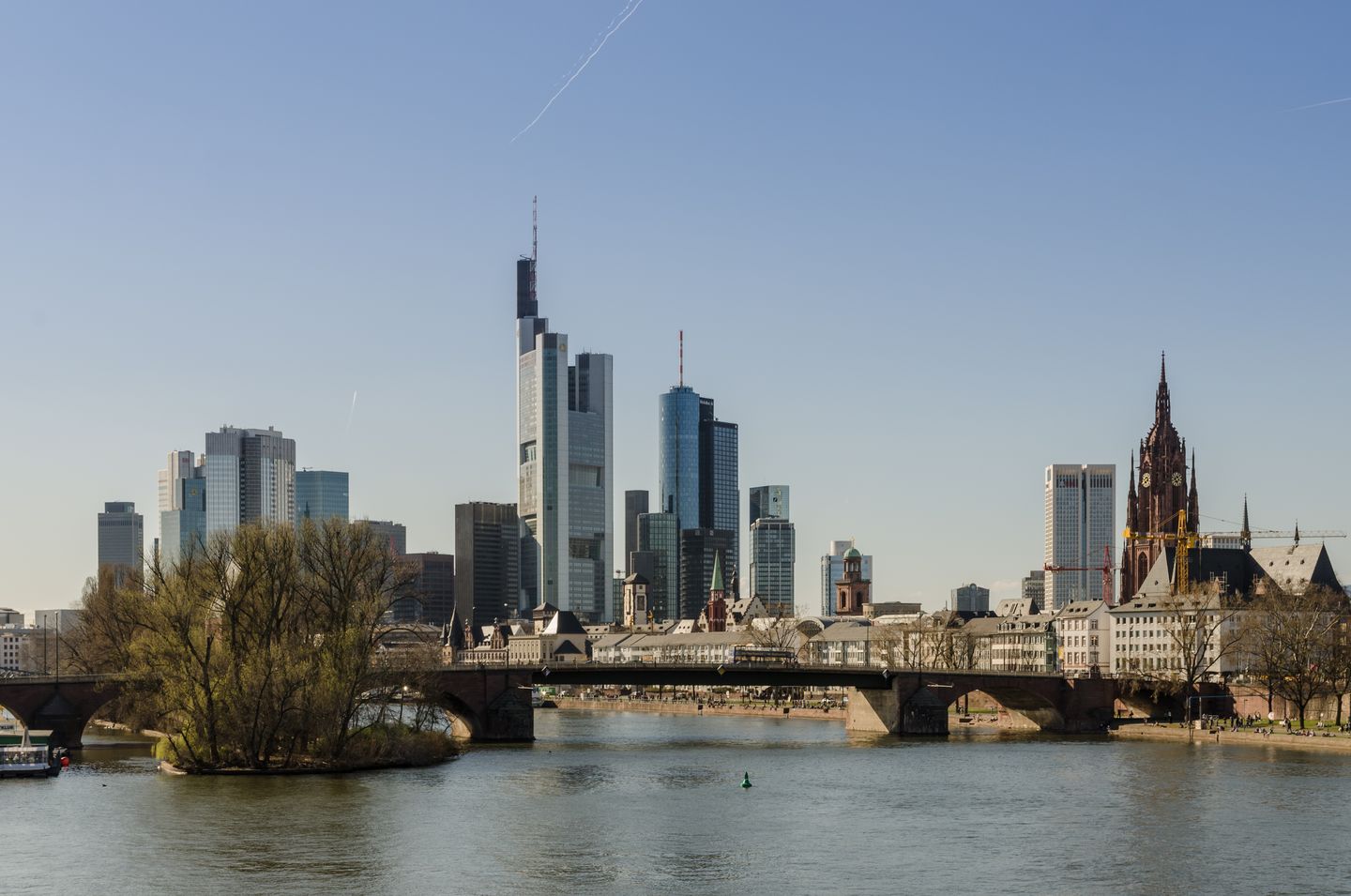
Frankfurt has an image problem it never quite shakes: banking towers, an airport the size of a small country, and a reputation as the city business travellers pass through rather than the one they choose. Germans themselves have a joke about it — that Frankfurt is where you land on your way to somewhere better. The joke undersells a genuinely strange and interesting place, a city that is simultaneously the most American-looking skyline in Germany and the site of one of the country's most ambitious historical reconstructions.
The reason Frankfurt looks the way it does — a compact cluster of glass towers rising directly out of a half-timbered old town — is that almost none of what you see downtown is original. Allied bombing raids in 1944 destroyed roughly eighty percent of the historic centre, and postwar reconstruction chose function over faithfulness: modern high-rises where the medieval merchant quarter used to be, because Frankfurt, as the seat of the Bundesbank and later the European Central Bank, needed office space more than it needed nostalgia. What makes the city worth a proper visit now is watching that calculation get partially reversed. The Altstadt, the old town around the Römerberg square, was rebuilt from scratch between 2012 and 2018, using historical photographs, surviving fragments and old building records to recreate streets that had been parking lots and postwar concrete blocks for seventy years.
This dispatch treats Frankfurt as what it actually is: a small, dense, oddly layered city where you can stand in a genuinely medieval-looking square, walk two hundred metres and be under a forty-storey bank tower, then cross the river into a neighbourhood that still runs on apple wine and nineteenth-century tavern rules. It rewards a day and a half far more than it rewards the four-hour airport layover most visitors give it.
The caseWhy Frankfurt earns more than a layover
Frankfurt's real appeal is density and contrast packed into a city small enough to walk across in an afternoon. Nowhere else in Germany puts a rebuilt medieval square, a world-class museum row, and a genuine financial-district skyline within a fifteen-minute walk of each other. The Museumsufer alone — a run of museums lined up along one bank of the Main — would justify a stopover in most other cities; here it's one item on a longer list.
The skyline itself is worth taking seriously rather than dismissing as generic corporate architecture. Frankfurt is the only German city with a genuine high-rise skyline, and several of the towers — the Commerzbank Tower, the Maintower with its public observation deck — were architecturally ambitious in ways that get lost in photos taken from street level. Go up one. The view back down onto the reconstructed old town, with the office towers looming directly behind it, is the single image that explains the whole city better than any guidebook paragraph.
The calendarWhen to go
Late spring and early autumn are the reliable sweet spots, as in most of central Europe — May and June bring long evenings and outdoor tavern seating without the heaviest crowds, while September and early October pair mild weather with the start of apple-wine season, which matters more here than in most German cities. Sachsenhausen's tavern gardens are genuinely built around this drink, and the new-season Ebbelwoi arriving in autumn is a local event, not a marketing line.
Frankfurt's calendar is also shaped hard by its trade fairs. The Frankfurt Book Fair in October and several major industry fairs throughout the year can fully book the city's hotels and roughly double prices with no warning if you haven't checked the Messe Frankfurt calendar first — this is the single most common way visitors get blindsided by cost here. The Christmas market on the Römerberg, running from late November, is one of Germany's oldest and draws its own crowds, but it's also when the rebuilt old town looks its best, lit up against the winter dark. Avoid nothing so much as booking a hotel here without checking the trade fair schedule.
LogisticsGetting around
Frankfurt is compact enough that the centre — Altstadt, the museum embankment, the shopping streets around the Hauptwache, and Sachsenhausen across the river — is entirely walkable, and most first-time visitors will do most of their sightseeing on foot without needing transit at all. When you do need it, the U-Bahn, S-Bahn, trams and buses run on one integrated ticket system (RMV), and validate paper tickets before boarding — inspectors do check, and there are no barriers to stop you forgetting.
The airport, Frankfurt am Main, sits inside the city's own S-Bahn network, which is unusual and genuinely convenient: the S8 and S9 lines run directly from the airport's long-distance and regional stations into the city centre in around fifteen minutes, cheaper and often faster than a taxi. For crossing the river, skip the road bridges when you can and use the Eisener Steg, a pedestrian-only iron footbridge built in 1869 that remains the most direct and most pleasant way between the old town and Sachsenhausen.
The tableHow Frankfurt actually eats and drinks
The one drink you need to understand before arriving is Apfelwein — apple wine, known locally as Ebbelwoi — a cloudy, tart, low-alcohol cider that Frankfurt treats the way Munich treats beer. It's served in a distinctive grey stoneware jug called a Bembel and drunk in Sachsenhausen's traditional taverns, most of which have been run by the same families for generations and follow their own unwritten rules about seating, ordering and tipping that regulars won't explain and first-timers are expected to pick up by watching.
On food, Frankfurt's signature dish is Grüne Soße — green sauce — a cold herb sauce made from seven specific herbs (parsley, chives, borage, sorrel, cress, chervil and salad burnet) blended with sour cream or yoghurt and served over boiled eggs and potatoes. It sounds slight and isn't; a good version, eaten at a proper Sachsenhausen tavern, is one of the more distinctive regional dishes in Germany and worth actively seeking out rather than treating as a side note. Pair a meal at Kleinmarkthalle, the covered food market near the old town, with an evening in Sachsenhausen, and you've covered the two pillars of how the city actually eats — market culture at lunch, tavern culture at night.
The mapNeighbourhoods to know
The Altstadt around the Römerberg is the reconstructed medieval core — half-timbered facades, the Gothic Frankfurt Cathedral (the Kaiserdom, one of the few buildings that survived the 1944 bombing largely intact), and the Römer city hall with its distinctive stepped gables. It's compact, genuinely pretty, and worth slowing down in rather than photographing and moving on from — most visitors give it twenty minutes and it deserves an hour.
Across the Main, Sachsenhausen is the apple-wine district — cobbled lanes of taverns south of the river, quieter and more residential the further you go from the water, and the place to spend an evening rather than an afternoon. Along the northern bank between the two, the Museumsufer strings together roughly a dozen museums, from the Städel's serious old-masters and modern collections to smaller specialist museums on film, architecture and communication, most of them walkable in sequence. West of the Altstadt, the Bankenviertel — the financial district — is the actual skyline: functional and unglamorous at street level on weekdays, but worth walking through for the sheer scale contrast with the medieval square you just left.
Field intelligencePractical intelligence
Check the Messe Frankfurt trade fair calendar before booking anything — this is the single detail most likely to blow up a budget, since hotel prices can double or triple during major fairs with essentially no other warning sign. Outside fair weeks, Frankfurt's hotels are reasonably priced by major-city standards, especially compared to Munich or Hamburg.
Shops largely close on Sundays under German trading law, with the Hauptbahnhof (main station) and some tourist-facing exceptions being the main workarounds if you need something. Tap water is safe and free everywhere. Tipping around 5 to 10 percent for good service is customary but not obligatory, and it's normal to state the total including tip when paying rather than leaving cash on the table. And don't underestimate the airport as a place worth passing through slowly rather than sprinting — Frankfurt Airport's Terminal 1 has a genuinely good viewing terrace if a flight delay leaves you with time to kill.
Field notesWhat to see & do
-
Römerberg & the Altstadt
The reconstructed medieval heart of the city — half-timbered facades rebuilt from historical photographs between 2012 and 2018, centred on the stepped-gable Römer city hall and one of Germany's prettiest small squares.
On the groundCome in the early morning or after the tour groups clear out in early evening; midday is when the square is at its most crowded and least atmospheric.
-
Städel Museum
One of Germany's best art museums, spanning seven centuries from early Dutch and German masters through to Beckmann and contemporary work, housed partly in an expanded underground gallery lit by circular skylights.
On the groundThe permanent collection ticket is a genuine bargain by European museum standards — budget at least two hours if you care about the older Northern European rooms.
-
Kaiserdom (Frankfurt Cathedral)
The Gothic cathedral where Holy Roman Emperors were once crowned, one of the few Altstadt buildings that survived the 1944 bombing with its structure largely intact.
On the groundClimb the tower for one of the better skyline views in the city — the office towers framed directly behind the Gothic spire is the classic Frankfurt contrast shot.
-
Sachsenhausen apple-wine taverns
The cobbled district south of the Main built around Apfelwein culture — traditional taverns serving the cloudy local cider from stoneware Bembel jugs, alongside Grüne Soße and other Frankfurt classics.
On the groundGo with an appetite and no fixed plan; the taverns reward wandering more than a pre-picked restaurant name.
-
Maintower observation deck
A 200-metre office tower with a public open-air viewing platform, the best accessible vantage point over both the skyline and the old town below it.
On the groundGo around an hour before sunset — the deck stays open into the evening and the light on the towers is best in the last hour of daylight.
-
Kleinmarkthalle
A covered food market a few minutes from the Römerberg, three floors of butchers, cheesemongers, spice stalls and small lunch counters that locals actually shop and eat at rather than a tourist-facing food hall.
On the groundHead to the upper gallery for the best cheap lunch counters, and try the market's own version of Handkäs mit Musik, a pungent local cheese dish.
-
Palmengarten
A large botanical garden and historic glasshouse complex west of the centre, with themed greenhouses ranging from tropical rainforest to arid desert, plus open parkland that's genuinely popular with Frankfurters rather than just visitors.
On the groundCombine it with the adjacent Grüneburgpark for a full green half-day away from the downtown density.
-
Goethe House
The reconstructed birthplace and childhood home of Johann Wolfgang von Goethe, furnished to recreate the 18th-century patrician household he grew up in, with an adjoining museum of Romantic-era art.
On the groundThe room-by-room audio guide is worth the extra time if you have any interest in Goethe beyond the name — the house itself tells a specific story about 18th-century merchant-class Frankfurt.
On the groundWhere things are
Map data © OpenStreetMap contributors.
Where to stayBase yourself well
Altstadt & Innenstadt
Best for first-timers who want everything on footThe historic core and the streets immediately around it — maximum walkability to the Römerberg, the museums and the main shopping streets, at the cost of higher rates and heavier foot traffic.
A central hotel a short walk from the Römerberg
Look for something tucked just off the main square rather than directly on it, to trade a small amount of walking distance for quieter nights.
€€€A serviced apartment near the Hauptwache
The Hauptwache transit hub puts the museum embankment, the old town and the shopping streets all within an easy walk.
€€Sachsenhausen
Best for evenings out and a slightly lower price pointSouth of the river, walkable to the centre via the Eiserner Steg footbridge, with the apple-wine tavern scene on your doorstep and generally calmer, more residential streets the further you go from the water.
A guesthouse in the tavern quarter
Staying inside Sachsenhausen means an evening of apple wine ends with a short walk rather than a taxi across the river.
€€Westend
Best for a calmer, leafier baseAn elegant residential district of restored 19th-century villas just north of the Bankenviertel, home to the university's main campus and the Palmengarten — quieter and greener than downtown, still an easy walk or short tram ride in.
A boutique hotel in a converted Westend villa
The area's period architecture largely survived the war, giving a genuinely different visual register from the reconstructed old town or the glass towers.
€€€Near the Hauptbahnhof
Best for budget stays and day-trippingFrankfurt's main train station area — well connected for day trips and the airport S-Bahn, more budget-oriented, but grittier after dark than the other three areas listed here.
A budget chain hotel near the station
Fine for a short stay built around trains and the airport link; less pleasant to simply wander at night than Sachsenhausen or the Altstadt.
€Affiliate notePostcardRoute is reader-supported. Some links to accommodation are affiliate links: if you book through them we may earn a small commission at no extra cost to you. We only recommend places we would send a friend.
Beyond the cityWorthwhile day trips
- Rüdesheim & the Rhine Gorge
An hour by train into the UNESCO-listed Rhine Gorge, with terraced vineyards, hilltop castles and the wine village of Rüdesheim as a base for a chairlift up into the vines.
- Heidelberg
About an hour south, one of the few major German cities to escape wartime bombing largely untouched — a genuinely old university town with a ruined red-sandstone castle above it.
- Mainz
A short S-Bahn ride away, with a Romanesque cathedral over a thousand years old and the Gutenberg Museum, tracing the city's role as the birthplace of movable-type printing.
- Wiesbaden
A spa town across the river from Mainz, all 19th-century grandeur, thermal baths and a casino, and an easy half-day contrast to Frankfurt's modern skyline.
Before you goCommon questions
- Is Frankfurt worth visiting or just passing through?
- It's genuinely worth a day and a half to two days, not just an airport layover. The combination of the rebuilt old town, the Museumsufer's museums and the Sachsenhausen tavern scene gives it more depth than its business-hub reputation suggests, even if it will never rival Berlin or Munich for sheer scale of attractions.
- Is the Frankfurt old town real or rebuilt?
- Rebuilt — around eighty percent of the historic centre was destroyed in Allied bombing raids in 1944, and the Altstadt visitors see around the Römerberg was reconstructed between 2012 and 2018 using historical photographs and records. The Kaiserdom cathedral is one of the few genuinely original structures that survived.
- What is Apfelwein and where should I try it?
- Apfelwein, or Ebbelwoi, is a cloudy, tart apple cider that's Frankfurt's signature drink, traditionally served in a grey stoneware Bembel jug. The best place to try it is in one of the traditional family-run taverns in Sachsenhausen, across the river from the old town.
- How do I get from Frankfurt Airport into the city?
- Take the S8 or S9 S-Bahn train directly from the airport's train station into the city centre — it takes around fifteen minutes and is generally cheaper and more reliable than a taxi, since the airport sits inside the city's own rail network.
- Why are Frankfurt hotel prices so unpredictable?
- Frankfurt hosts major trade fairs throughout the year through Messe Frankfurt, including large industry events and the Frankfurt Book Fair in October, and hotel rates can double or triple during these weeks with little other warning. Always check the fair calendar before booking.
- How many days do you need in Frankfurt?
- A day and a half covers the essentials comfortably: a morning in the Altstadt and up a skyline tower, an afternoon at one or two Museumsufer museums, and an evening in Sachsenhausen. Two full days lets you add the Palmengarten or a half-day trip to the Rhine Gorge or Heidelberg.
- Is Frankfurt expensive?
- Outside major trade fair weeks, it's moderately priced by major European city standards — noticeably cheaper than Munich or Hamburg for hotels, with markets and taverns offering good value food. The trade fair calendar is the one thing that can make it suddenly, sharply expensive.