
Brazil · Ceará
Fortaleza, where the wind runs the calendar
This is the one Brazilian coast where the trade winds never let up. That single fact of geography built a kitesurfing capital, a forró scene that starts on a Monday, and a city best understood from a hammock, moving.
Dispatch from the coast where the wind never stops working · 3.73° S · 38.53° W
Plan this trip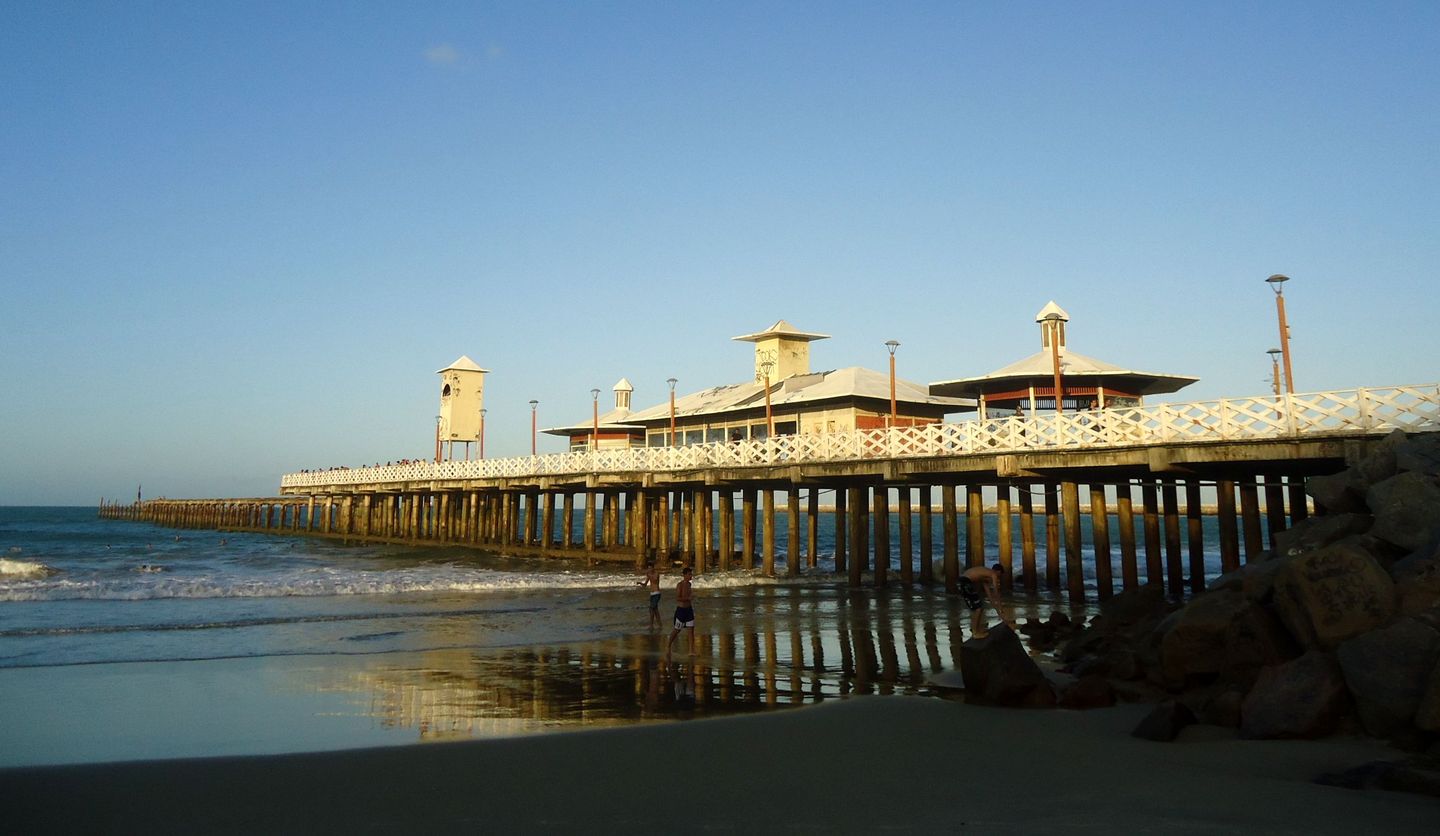
Fortaleza sits at a genuine geographic hinge point, the spot where Brazil's coastline stops running north-south and turns to face the equator instead, and that single accident of geometry explains more about the city than any guidebook fact you'll read about it. The trade winds that sweep along this stretch of coast do not gust and rest the way sea breezes do almost everywhere else — they blow, hard and steady, for months at a stretch, and Ceará has built an entire identity around catching them: kites, sails, dune buggies, and a beachfront where the flags never hang limp.
That wind is also why Fortaleza gets compared, lazily, to Rio and Salvador and comes off worse in the comparison every time. It has no Sugarloaf, no colonial Pelourinho, no Carnival that stops the world. What it has instead is a working Nordeste port city of two and a half million people, built along a single long crescent of sand, where the region's actual culture — forró danced in tight embrace on a Wednesday night, tapioca griddled at a beach kiosk, cashew fruit turned into a tannic, faintly sweet juice found nowhere else — is not staged for visitors so much as simply going on, with visitors welcome to join in.
This dispatch treats Fortaleza the way it deserves to be treated: as a base rather than a bucket-list stop. The city itself rewards two or three unhurried days along its beachfront and its markets. Its real trump card is what sits beyond it — a coastline of moving dunes, freshwater lagoons and jangada sails running east toward Jericoacoara and Canoa Quebrada that exists nowhere else in Brazil. Get the base right, understand which few blocks to treat with caution after dark, and Fortaleza does its job very well indeed.
The caseWhy Fortaleza earns the detour
Set Fortaleza next to Brazil's more famous coastal cities and it loses on drama every time — no mountain drops straight into the sea here, no colonial old town survives intact downtown. What it wins on instead is wind, and wind turns out to be a surprisingly good organizing principle for a trip. Ceará's coast, Fortaleza plus the satellite towns of Cumbuco, Taíba and Cauípe just beyond it, gets some of the most reliable trade winds anywhere in the world, gusting to 40 knots in season, and that has made this stretch of Nordeste the kitesurfing and windsurfing capital of Brazil and arguably of South America — a genuinely international scene of pros and obsessives, not a resort gimmick bolted on for tourists.
The second pillar is forró, the accordion-and-triangle dance music that is the Nordeste's real cultural export, and Fortaleza's Dragão do Mar district is one of the best places in the entire country to hear it live, night after night, not just during the June festival season it's traditionally associated with. The third is food: an active fishing port at Mucuripe keeps seafood restaurants supplied with genuinely fresh fish and shrimp at prices that would be unthinkable in Rio, and Ceará's inland cattle and cashew country supplies a whole vocabulary of dishes — carne de sol, baião de dois, cajuína — that most visitors to Brazil never encounter because they never leave the southeast.
And then there's the honest reason people actually book the flight: Fortaleza is the logistics hub for one of the strangest, most beautiful coastlines in Brazil, a run of moving white dunes, turquoise freshwater lagoons and fishing villages stretching toward Jericoacoara that looks more like a desert meeting an ocean than anything else in the country. The city is worth two or three days on its own; it becomes worth a week or more once you treat it as the door to what lies beyond it.
The calendarWhen to go
Forget temperature. Fortaleza sits close enough to the equator that the mercury barely moves across the year, holding somewhere between 22 and 31°C in every month and the sea staying warm regardless of season. The only variables that matter here are rain and wind, and they do not move together.
The rainy season, which locals still call inverno — winter — despite the heat, runs roughly from January through June, with the heaviest downpours between February and May. It rarely means grey all-day weather; expect intense tropical showers that clear by afternoon, but they are frequent enough to plan around. The dry season runs roughly July through December, and wind season for kitesurfing and windsurfing runs from around June through January, with the strongest, most consistent trade winds arriving between August and October. Those two windows overlap deliberately: the second half of the year is both the driest and the windiest, which makes August through early December the honest answer for most visitors, whether or not a kite is involved — blue skies, steady sea breeze cutting the heat, and the beach clubs running at full tilt.
The trade-off is that this stretch also catches Brazilian and European holiday season, especially December, when prices climb and Praia do Futuro's barracas fill up. If you want most of the dry-season upside without the crowd, aim for June or early July: the rain is easing, the wind is already building, and the high season hasn't fully arrived.
LogisticsGetting around
Pinto Martins International Airport (FOR) sits in the Serrinha district, roughly 7 to 11 kilometres from the beachfront depending on which end you're headed to — call it 15 to 35 minutes depending on traffic and mode. The newest option is also the most useful: since February 2026, the VLT light rail's Northeast Line runs a direct branch straight into the airport terminal, connecting through Expedicionários station to a network that cuts across the city via Montese, Papicu and Mucuripe — and the ride is currently free. It's a roughly 30-minute trip toward the centre and worth using if you're travelling light.
Official airport taxis run somewhere in the R$25–48 range to the tourist beach districts, and can reach downtown in as little as 15 minutes outside peak traffic; confirm the fare or the meter before getting in, since unlicensed drivers and inflated quotes are a genuine, low-grade nuisance at the arrivals curb. Regular street taxis run on a meter starting around R$5.75 with a per-kilometre rate that rises at night, but most visitors and plenty of locals default to Uber instead, particularly after dark, since it removes the fare-negotiation question entirely.
Once you're based on the beachfront, walking covers most of what you need. The central stretch of Avenida Beira Mar through Iracema and Meireles is a genuinely pleasant, well-lit, patrolled promenade with a dedicated bike lane and outdoor gym stations that fill with joggers at both ends of the day. Beyond that core strip, know before you go: Praia do Futuro, the port district around Mucuripe, and downtown after the shops close are all places to arrive by taxi or rideshare rather than on foot, a point worth taking seriously rather than as guidebook boilerplate — see the practical section below.
The tableHow Fortaleza actually eats
Start with tapioca, and forget whatever the word means to you from elsewhere — this is not a pudding but a naturally gluten-free crepe made from hydrated cassava starch, griddled until it holds together and folded around a filling, sweet with coconut and condensed milk or savoury with carne de sol and cheese. It's sold everywhere from beach kiosks to dedicated tapioca counters and works as breakfast, snack, or an entire light meal.
Carne de sol, lightly salt-cured and sun-dried beef, is the backbone of Ceará's serious cooking, usually grilled and shredded over rice, beans and farofa, or folded into baião de dois alongside queijo coalho, a firm local cheese that also turns up grilled on a stick and sold straight off the sand by vendors carrying portable charcoal braziers — one of the most purely Fortaleza ways to eat there is. The signature seafood dish is peixada cearense, fresh local fish simmered in a light, often coconut-touched broth with vegetables, worth ordering at any serious seafood address along the coast given how directly it's supplied by the working fishing port at Mucuripe.
Ceará is also one of the world's major cashew-growing regions, and the fruit gets its due here in ways it rarely does elsewhere in Brazil: doce de caju, a thick cashew preserve, and cajuína, a clarified, faintly tannic, non-alcoholic cashew-apple juice that tastes like nothing else and is worth seeking out specifically rather than by accident. For where to actually eat, Mercado Central downtown has upper-floor stalls doing a genuine cross-section of regional dishes in one visit, Varjota's restaurant-dense Polo Gastronômico is where a proper sit-down dinner happens away from the beach strip, and the nightly Feirinha da Beira Mar mixes craft stalls with food vendors against a sunset backdrop most evenings from around four until ten. As everywhere in Brazil, lunch is the main event, dinner runs later and lighter, and nightlife barely gets started before nine — Nordeste forró bars in particular keep going well past midnight, and oddly enough, Monday and Wednesday can be some of the liveliest nights, worth confirming with a specific venue rather than assuming a weekend-only schedule.
The mapNeighbourhoods to know
Meireles is Fortaleza's default tourist base, an upscale, hotel-dense stretch of Avenida Beira Mar running from the old fish market area toward Mucuripe, with the highest concentration of hotels in the city along Avenida Abolição. It's polished, patrolled and walkable, which makes it the easy first choice for a first visit even if it's the least distinctly local of the beach districts.
Praia de Iracema, wedged between Meireles and downtown, is the bohemian, arts-and-nightlife waterfront, home to the Ponte dos Ingleses pier and the Centro Dragão do Mar cultural complex, and popular with budget travellers for its cheaper stays. Treat it as a district with a real gradient: the renovated cultural corridor around Dragão do Mar is lively and reasonably safe into the evening, while quieter stretches further out get isolated after dark and are worth reaching by taxi rather than on foot.
Centro, the historic downtown, holds Praça do Ferreira, the Mercado Central and the cathedral, and is genuinely worth a daytime wander for its market stalls and 1912 opera house — but it empties out and becomes a place to leave, not linger, once the shops close for the evening. Aldeota is the city's upscale, non-beachfront district of malls, hospitals and services, useful for practicalities more than sightseeing, while Varjota sits between downtown and Praia do Futuro as the city's dedicated food-and-nightlife neighbourhood, its Polo Gastronômico packing more than a hundred restaurants into a walkable stretch. Praia do Futuro itself, 8 kilometres east, isn't really a place to base yourself — it's a beach day, built around roughly 150 barracas, the full beach-club setups of pools, loungers and live music that were formally recognised as Brazilian cultural heritage in 2024, and it has the best actual swimming water in the city, unlike the more photogenic but current-affected water off Iracema and Meireles.
Field intelligencePractical intelligence
Be straightforward about safety rather than either alarmist or naive: Fortaleza has a genuinely higher urban crime profile than Brazil's more polished tourist circuits, and that's worth taking seriously rather than soft-pedalling, but it is also entirely manageable with the kind of ordinary caution that applies in most large cities once you know where it matters most. The central, patrolled stretch of Beira Mar through Iracema and Meireles is fine even into the evening. Praia do Futuro sits next to the Serviluz favela and has a documented pattern of robbery at its bus stops and in emptier stretches of beach and parking, including in daylight — go by direct taxi or rideshare to a specific barraca rather than walking in or waiting at a bus stop. Praia de Iracema and Praia do Futuro after dark, away from the lit and populated sections, are the two spots most often flagged for confrontational robbery, and the port district around Mucuripe is better avoided on foot at any hour. One specifically local risk worth knowing: phone-snatching by passing motorcycles targets pedestrians standing at the kerb with a phone out, so keep it pocketed rather than in hand while walking near traffic.
None of that should overshadow how easy the rest of the logistics are. The currency is the Brazilian real; cards are widely accepted in restaurants, hotels and malls, but carry cash for beach vendors, markets and small transport. Tipping isn't obligatory — most restaurants already add a 10% service charge to the bill — though rounding up for a taxi or tipping a tour guide around 10% for good service is standard practice. Portuguese is the only reliable language outside hotel front desks and tour operators in Meireles and Iracema; a handful of basic phrases go further here than in more internationally trafficked parts of Brazil, and locals respond warmly to the effort. The equatorial sun is intense in every month regardless of cloud cover, so sunscreen and shade breaks matter even on a grey-looking day, and standard urban-Brazil tap water caution applies throughout.
Field notesWhat to see & do
-
Ponte dos Ingleses
A 1923 iron pier at Praia de Iracema, exposed rocks at its base at low tide — the single most photographed spot in the city and its definitive sunset image.
On the groundGo around 5:30 to 6pm and expect company; this is the city's postcard shot, and everyone with a camera in Iracema has the same idea at the same hour.
-
Centro Dragão do Mar de Arte e Cultura
A roughly 30,000-square-metre cultural complex housing a contemporary art museum, a planetarium, a cinema and a regional-culture memorial, ringed by the city's best concentration of bars and live-music venues.
On the groundCheck the schedule for a live forró or regional-music night here rather than settling for a museum-only visit — it's the most genuine, least touristy cultural evening the city offers.
-
Mercado Central de Fortaleza
A multi-floor downtown market of more than 500 stalls selling hammocks, lace, cashew products, rapadura and regional liquors, with upper-floor food counters doing real Ceará cooking.
On the groundHead straight for the upper-floor food stalls rather than only browsing ground-floor souvenirs, and bargain lightly rather than aggressively on crafts.
-
Praia do Futuro barracas
Around 150 full beach-club compounds — pools, loungers, kitchens, live music — lining the city's best swimming beach, 8 kilometres east of downtown and formally recognised as cultural heritage in 2024.
On the groundGo by day, arrive by taxi or rideshare directly to a named barraca rather than on foot or by waiting at a bus stop, and expect bigger, livelier crowds Thursday through Sunday.
-
Catedral Metropolitana de Fortaleza
A neo-Gothic cathedral near Praça do Ferreira with twin towers roughly 75 metres tall, begun in 1938 but not inaugurated until 1978, seating close to 5,000.
On the groundPair it with Praça do Ferreira and Mercado Central — all three sit within a few blocks of each other downtown, an easy single morning.
-
Museu do Ceará
A free state-history museum inside the Dragão do Mar complex, covering Ceará's cultural and political history from colonial settlement through the twentieth century.
On the groundUse it as a midday-heat or rainy-afternoon option and combine it with the contemporary art museum next door in the same complex.
-
Theatro José de Alencar
An ornate 1912 theatre with an iron structure imported and assembled locally, still hosting opera, ballet and regional theatre most evenings.
On the groundWorth a daytime look at the building and gardens even without a show ticket; ask about guided tours if you want to see the interior properly.
-
Feirinha da Beira Mar
A nightly artisan and food fair along the seafront promenade, running roughly from four in the afternoon to ten at night against a beachfront sunset backdrop.
On the groundArrive around dusk to catch both the sunset and the promenade's evening scene of joggers and outdoor-gym regulars, not just the market stalls.
-
Beach Park, Aquiraz
One of Latin America's largest water parks, roughly 13 to 20 kilometres southeast in Porto das Dunas, historically home to one of the world's tallest water slides.
On the groundGo on a weekday if you can; most hotels and tour operators run direct shuttle transfers, which is simpler than arranging your own transport.
On the groundWhere things are
Map data © OpenStreetMap contributors.
Where to stayBase yourself well
Meireles
Best for first-timers who want an easy, safe base close to everythingThe default beachfront base — an upscale, hotel-dense stretch of Avenida Beira Mar with the city's highest concentration of hotels, well lit, patrolled and walkable well into the evening.
A beachfront hotel along Avenida Abolição
This stretch has the thickest run of hotel options in the city, from international chains to smaller design-led properties, all a short walk from the promenade's boardwalk and bike lane.
$$$A mid-rise apartment a few blocks back from the sea
Trading a direct sea view for a lower rate is an easy call here — Meireles is compact enough that even a few streets inland stays a five-minute walk from the beach.
$$Praia de Iracema
Best for budget travellers and anyone prioritising nightlife and live musicThe bohemian, arts-and-nightlife waterfront next to Dragão do Mar, cheaper than Meireles and more atmospheric after dark near the cultural centre, with a real safety gradient the further you get from that lit core.
A guesthouse near the Dragão do Mar cultural centre
Staying inside the lively, patrolled cultural corridor rather than its quieter outer edges gets you walking distance to forró bars without the isolation risk further along the strip.
$$Varjota
Best for travellers who'd rather prioritise the dinner scene than a sea viewThe inland food-and-nightlife neighbourhood between downtown and Praia do Futuro, built around a restaurant-dense Polo Gastronômico rather than a beach frontage.
A boutique stay within the Polo Gastronômico blocks
You trade the ocean view for a short walk to over a hundred restaurants, a fair swap if eating well matters more than falling asleep to the sound of the surf.
$$Aldeota
Best for longer stays prioritising city infrastructure over beachfront proximityThe city's upscale, non-beachfront district of malls, hospitals and services — practical rather than picturesque, and a taxi ride from the sand.
A business-oriented hotel near the main shopping district
Best suited to a longer stay or a trip mixing tourism with errands — expect easy access to services and a car or rideshare needed for the beach.
$$Affiliate notePostcardRoute is reader-supported. Some links to accommodation are affiliate links: if you book through them we may earn a small commission at no extra cost to you. We only recommend places we would send a friend.
Beyond the cityWorthwhile day trips
- Cumbuco
About 35 kilometres and 45 to 60 minutes from the city, Cumbuco is the easy, genuine day trip for wind and dunes — a long beach backed by dune fields and freshwater lagoons, usually visited by dune buggy or jangada sailboat excursion with lunch included.
- Canoa Quebrada
Roughly 164 kilometres and two and a half to three hours east, famous for multicoloured cliffs up to 30 metres tall and a lingering 1970s hippie history still visible in the half-moon-and-star symbol painted across the village.
- Morro Branco and the Falésias de Beberibe
About 80 to 90 kilometres southeast, roughly 90 minutes by road, where multicoloured sand-clay cliffs run six kilometres of coastline; the Labirinto das Falésias threads a network of eroded passages through them in an easy half-hour walk, and local artisans sell bottled layered-sand souvenirs made on the spot.
- Jericoacoara
Worth naming honestly: Jeri is not a day trip. It's roughly 290 to 300 kilometres away, four and a half to six and a half hours by road depending on transport, with the final stretch crossing dunes by 4x4 — treat it as an overnight-minimum extension of a Ceará trip rather than an excursion from Fortaleza.
Before you goCommon questions
- How many days do you need in Fortaleza?
- Two to three full days covers the city itself well — the beachfront promenade, Dragão do Mar, the markets and a beach day at Praia do Futuro. Fortaleza's real value, though, is as a base for Ceará's dune coast, so budget extra time if Cumbuco, Canoa Quebrada or an overnight trip to Jericoacoara are on the list.
- Is Fortaleza safe for tourists?
- It requires more situational awareness than Brazil's more polished tourist circuits, and that's worth acknowledging honestly. The central, patrolled Beira Mar stretch through Iracema and Meireles is fine into the evening; Praia do Futuro, the port district around Mucuripe, and darker beach stretches after dark are the specific places to reach by taxi rather than on foot. Ordinary precautions — no visible jewellery, phones pocketed near traffic, official taxis or rideshare at night — cover most of the risk.
- What is the best time of year to visit Fortaleza?
- August through early December is the sweet spot — the driest and windiest stretch of the year, with steady sea breeze and blue skies, though it overlaps with Brazilian and European holiday crowds, especially in December. June and early July offer much of the same dry, breezy weather with fewer visitors, before high season fully arrives.
- Where should I stay in Fortaleza for a first visit?
- Meireles is the easiest choice — an upscale, walkable, well-patrolled stretch of beachfront with the city's densest concentration of hotels. Praia de Iracema is the better pick for nightlife and a lower budget, provided you stay close to the lit, lively core around Dragão do Mar.
- Can I visit Jericoacoara as a day trip from Fortaleza?
- Not comfortably. The drive alone runs four and a half to six and a half hours each way over roughly 290 to 300 kilometres, with a final dune crossing by 4x4. Treat it as an overnight-minimum trip, or better, a multi-day extension, rather than something to squeeze into a single day from the city.
- What food should I try in Fortaleza that I won't find elsewhere in Brazil?
- Cajuína, a clarified, faintly tannic non-alcoholic juice made from cashew apples, is a genuine Ceará specialty found almost nowhere else. Pair it with tapioca — a griddled cassava-starch crepe, not the pudding the word suggests elsewhere — and carne de sol with baião de dois for the region's defining savoury combination.