
Denmark · Capital Region of Denmark
Copenhagen, by bike
This is a small, flat, meticulously designed capital that has spent forty years quietly proving a point: a city built around bicycles and public space is simply a more pleasant place to be a person.
Dispatch from the city that made cycling and coziness into an export · 55.68° N · 12.57° E
Plan this trip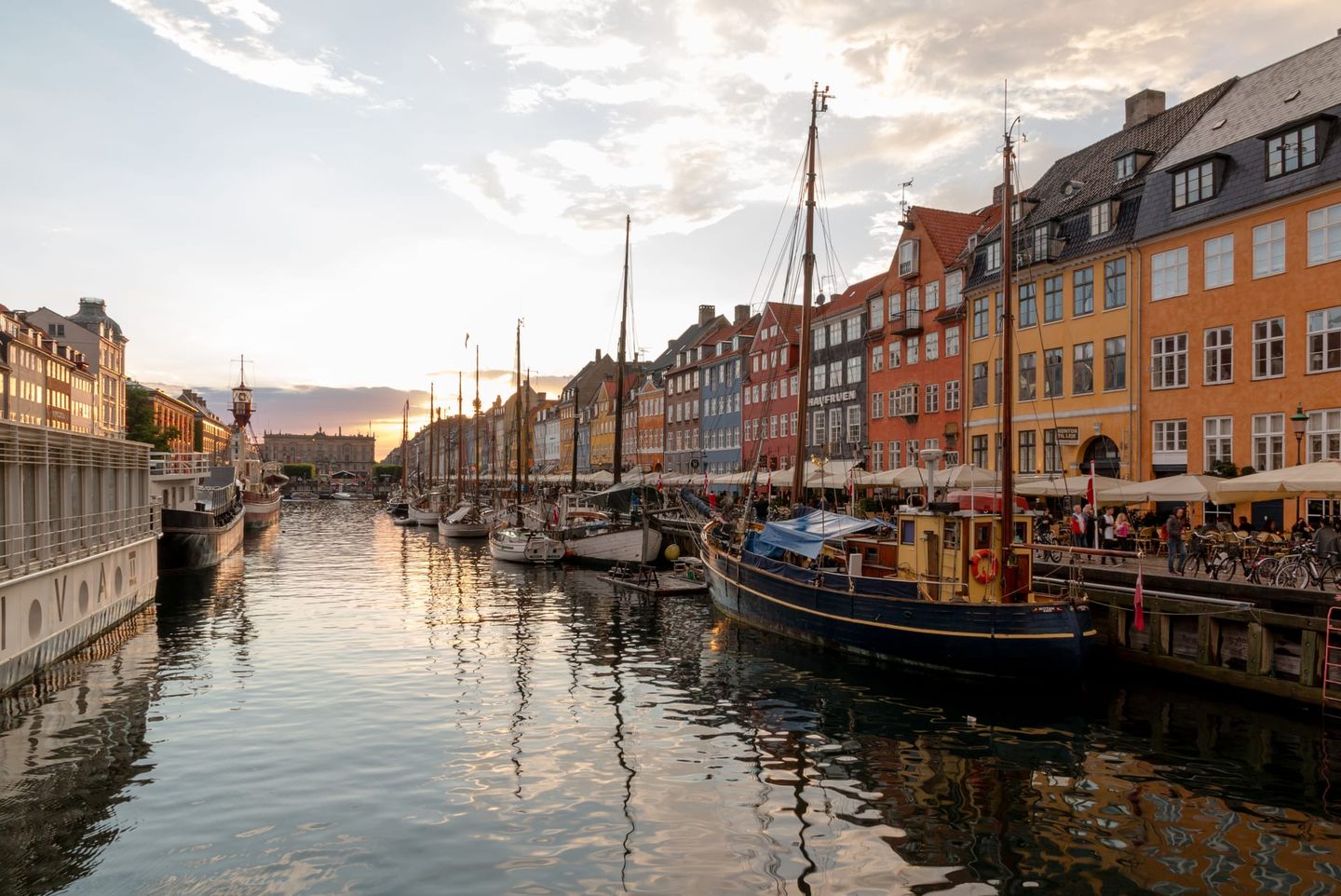
Copenhagen does not announce itself the way some European capitals do. There is no single skyline moment, no one plaza that summarizes the place. What it has instead is a level of everyday civic competence that becomes obvious within about an hour of arrival: the trains run when they say they will, the bike lanes are wider than some cities' car lanes, and almost everyone you see moving through the city is doing so calmly, on a bicycle, in whatever they were already wearing. It takes a visitor from a more chaotic capital a day or two to stop being faintly suspicious of how well it all works.
The city sits on the eastern edge of Zealand, facing Sweden across the narrow Øresund strait, and it has spent the last few decades turning itself into the reference case for humane urban design — protected cycle tracks, harbour water clean enough to swim in a few hundred metres from the Parliament building, district heating, and a planning culture that treats public space as something to be designed rather than merely left over between buildings. None of this is an accident, and once you notice it, it is hard to stop noticing it: a floating harbour pool here, a rooftop with a ski slope on top of a power station there, benches turned to face the water instead of the street.
This dispatch is not a highlight reel of Noma and the Little Mermaid, though both get their due. It is aimed at someone with three or four days who wants to understand how the city actually functions — how to rent and ride a bike without causing an accident, which neighbourhood to base yourself in, how New Nordic cuisine trickled down from tasting menus into everyday cafés, and why hygge is a genuinely useful word rather than a marketing invention. Get comfortable on two wheels and the city opens up almost immediately; stay in a taxi and you will see a fraction of it.
The caseWhy Copenhagen earns its reputation
Copenhagen tops liveability rankings often enough that the claim has become a cliché, but spend a few days here and the reasons stop feeling abstract. This is a capital of roughly 660,000 people (1.4 million across the wider metro) that has decided, repeatedly and over decades, to optimise for the experience of being a pedestrian or a cyclist rather than a driver. More than half of residents commute by bike, and the infrastructure that makes that possible — wide, physically separated cycle tracks, bike-specific traffic signals, bridges built for cyclists and pedestrians only — is itself worth a day of a visitor's attention.
The food case is separate and, for many visitors, the actual draw. Noma has been named the world's best restaurant more times than any other kitchen and effectively created the New Nordic movement — foraged, seasonal, hyper-local cooking that rejected the French classical tradition that dominated fine dining for a century. That movement didn't stay locked in tasting-menu restaurants; it filtered down into bakeries, wine bars and neighbourhood bistros across the city, so that a good meal in Copenhagen at almost any price point tends to be thoughtful about where the ingredients came from.
Then there is the design case, which is really the same case as the liveability one told through objects rather than infrastructure. Danish design — furniture, lighting, ceramics — grew out of a specific mid-century philosophy that beautiful, well-made everyday objects were a democratic project, not a luxury one, and Copenhagen is still full of the shops, museums and workshops that prove it. Add a compact historic core, a harbour clean enough to swim in, and a culture that has made unhurriedness into something close to a civic value, and the reputation holds up under scrutiny in a way not every heavily marketed capital manages.
The calendarWhen to go
Late May through August is the obvious window, and for good reason: this far north, summer days stretch enormously, with light lingering past 10pm in June, and the whole city relocates outdoors — harbour swimming, canal-side picnics, café terraces packed until close. The trade-off is real: this is also peak season for prices, crowds at the major sights, and the best restaurant tables, which need booking weeks ahead.
May and early September are the sweet spots for a visitor who wants the outdoor culture without the full crush. The weather is genuinely unpredictable in both months — layer accordingly — but the parks and harbour are still in use, hotel rates soften, and Noma-adjacent restaurants become bookable with a bit less lead time. Christmas markets from late November draw a different, cosier crowd; Tivoli Gardens in particular does a full seasonal transformation with mulled wine and fairy lights that is worth braving the cold for.
Winter — properly December through February — is genuinely dark, with only about seven hours of daylight at the solstice, and cold enough that outdoor sightseeing gets uncomfortable fast. It is also when hygge stops being a tourist-brochure word and becomes the actual local coping strategy: candlelit cafés, wool blankets on outdoor terrace chairs, saunas built right into the harbour swimming spots. If you don't mind short days, winter Copenhagen at a fraction of summer's prices has its own appeal. Avoid only the grey, wet stretch of late January through February if you have full flexibility — it is the least forgiving season weather-wise and lacks winter's holiday atmosphere to compensate.
LogisticsGetting around — and learning to cycle like a local
Rent a bike on day one. This is the single highest-value piece of advice for visiting Copenhagen, and almost every guide underplays it. The city is flat, compact — you can cross the historic centre in twenty minutes — and built around an cycling infrastructure so complete that a nervous first-time cyclist becomes reasonably confident within an hour. Bike rental shops are common near the main train station and throughout the centre; expect to pay a modest daily rate, and note that the bright red Bycyklen electric city bikes, docked at stations across town, are a solid option if you don't want a multi-day rental.
The etiquette matters more here than almost anywhere else you'll cycle. Always signal turns with your arm. Never walk in a bike lane, which is usually a distinct, often raised strip between the pavement and the road — locals will not swerve for you, and getting clipped by a bike doing 20km/h is a genuinely common tourist mishap. Keep to the right unless overtaking, and expect to be overtaken by commuters moving considerably faster than a sightseeing pace. Lock your bike properly; bike theft is common enough that most rentals include a wheel lock as standard.
When you're not cycling, the Metro and S-train network is clean, frequent and easy to navigate, running on a zone-based fare system — buy a Rejsekort travel card or use the DOT app for tap-in, tap-out convenience, which works out cheaper than single tickets for more than a couple of rides. The driverless M3 Cityring loop line is the newest and most useful for hitting several central neighbourhoods quickly. Copenhagen Airport sits just fifteen minutes from the centre by direct train, one of the more painless airport connections in Europe. Walking works fine for the old town itself, but the city rewards a bike far more than it rewards feet alone — the harbour circuit, the lakes, and the outer neighbourhoods are all comfortably bikeable distances that are a slog on foot.
The tableHow Copenhagen eats, from Noma to the corner bakery
Start with smørrebrød, the open-faced rye bread sandwich that is Denmark's actual national dish, whatever the tourist board's Noma photography suggests. A proper version starts with dense, dark rugbrød, is topped with anything from pickled herring and egg to roast pork and crispy onions, and is eaten with a knife and fork, not by hand. Restaurants like Aamanns and the century-old Schønnemann do serious versions; a lunch spot in any residential neighbourhood will do a perfectly good one for a fraction of the price.
Then there is New Nordic cuisine properly, the movement Noma effectively founded in 2004 around a manifesto of foraged, seasonal, hyper-local ingredients — sea buckthorn instead of citrus, fermented vegetables instead of imported spice, an aesthetic that borrowed as much from Japanese kaiseki as from French technique. Noma itself requires booking months ahead and costs accordingly, but its influence runs through a whole tier of more accessible restaurants — Relæ, Amass, Kadeau — doing serious, ingredient-led cooking at prices well below tasting-menu-flagship level. Even the city's better casual restaurants tend to name-check where their vegetables came from on the menu, which tells you how deep the movement's influence actually runs.
Coffee and bakery culture is its own reward. Copenhagen has one of the most committed specialty-coffee scenes in Europe — Coffee Collective and The Corner both roast their own and do the flat white as seriously as anywhere in Melbourne or Seattle — and the pastry counters are not to be skipped: a proper Danish kanelsnegl (cinnamon roll) or cardamom bun from a bakery like Andersen & Maillard bears little relation to what gets sold as a 'Danish' abroad.
For an easy, social way to eat across a whole evening, hit one of the city's food halls — Reffen, a street-food market in a former industrial shipyard, or the more central Torvehallerne market halls, which double as a produce market by day and a grazing destination by early evening. And budget for the drink alongside the food: Danish beer culture runs well beyond Carlsberg and Tuborg into a genuinely strong craft scene (Mikkeller, founded in Copenhagen, is now a global name), and a round of drinks here costs noticeably more than in most of continental Europe.
The mapNeighbourhoods to know
Indre By, the old town, is where most first visits concentrate: Nyhavn's postcard row of colourful gabled townhouses along the canal, the Strøget pedestrian shopping street (one of the longest in Europe), and the government and royal buildings around Christiansborg and Amalienborg. It is compact, walkable, and unavoidably touristy in the most photographed stretches, but the quieter side streets off Strøget still hold genuine old-Copenhagen charm.
Vesterbro, just southwest of the central station, is the neighbourhood most locals will tell you to actually spend time in. Once the red-light district, it has gentrified into the city's most interesting eating and drinking strip, especially around the Meatpacking District (Kødbyen), a cluster of former abattoir buildings now packed with restaurants, galleries and clubs. It also borders Tivoli Gardens, the 19th-century amusement park that is genuinely lovely rather than just a theme park, and reportedly one of Walt Disney's direct inspirations for Disneyland.
Nørrebro, north of the lakes that ring the old city, is the most multicultural and youthfully alternative district — Assistens Cemetery (where Hans Christian Andersen and Søren Kierkegaard are buried, and where locals sunbathe among the headstones without any apparent irony), Israels Plads' food market, and a dense concentration of vintage shops, bars and immigrant-owned restaurants that give the neighbourhood real texture.
Østerbro, to the northeast, is quieter, greener and more residential — leafy streets, the green expanse of Fælledparken, and Parken Stadium — and closer to how ordinary well-off Copenhageners actually live. Christianshavn, across the harbour and reachable by a short bike ride or the harbour ferry, holds the houseboat-lined canals, the twisting external staircase of the Church of Our Saviour, and the self-governing hippie enclave of Freetown Christiania, worth an hour's wander for its murals and genuinely different atmosphere (no photography inside the market street, by strict and enforced local rule).
Field intelligencePractical intelligence
Currency is the Danish krone, not the euro, despite Denmark's EU membership — check exchange rates before assuming euro pricing, and note that cards are accepted almost everywhere, including small purchases; carrying cash is close to unnecessary. This is one of the most expensive cities in Europe for food and drink, on par with Zurich or Oslo, so budget accordingly: a casual restaurant meal or a round of beers costs meaningfully more than the same order in Berlin or Barcelona.
Most Danes speak excellent English, often close to fluent, so language is rarely a real barrier — that said, learning tak (thanks) and hej (hi) is appreciated and costs nothing. Danish social style runs reserved rather than cold: don't expect effusive friendliness from strangers, but courtesy and quiet helpfulness are the norm once you ask a direct question.
Hygge, the much-exported word for cosy contentment, is genuinely load-bearing in Danish culture rather than just a lifestyle-brand invention — it shows up as candles lit in cafés at 2pm, wool blankets left on outdoor terrace chairs through autumn, and a general design ethos that treats warmth and comfort as civic infrastructure, not decoration. You'll feel its absence more than its presence until you notice how many surfaces around you have been quietly optimised for it.
Harbour swimming is real and not just a photo opportunity: the water has been clean enough to swim in since a major cleanup completed in the early 2000s, and purpose-built harbour baths (Islands Brygge and others) get busy on any warm day. Bring a swimsuit in summer. Weather changes fast and rain gear is worth packing even in July; Danes simply layer up and carry on rather than letting drizzle cancel outdoor plans, and you should do the same. Tipping is not expected — service is included in prices by law — though rounding up for good service is appreciated, not obligatory.
Field notesWhat to see & do
-
Nyhavn
The 17th-century canal harbour lined with brightly coloured gabled townhouses and wooden ships, and easily the most photographed stretch of the city. Hans Christian Andersen lived at three different addresses along it.
On the groundWalk past the crowded first fifty metres to the quieter far end of the canal, where the same view costs nothing extra and comes without the crush of tour groups.
-
Tivoli Gardens
A 19th-century amusement park in the middle of the city, all fairy lights, flower beds and vintage wooden rides, that reportedly helped inspire Walt Disney's Disneyland. Transforms completely for its Halloween and Christmas seasons.
On the groundGo in the early evening as the lights come on rather than in daytime — it is a different, considerably more atmospheric park after dark.
-
The Little Mermaid
The small bronze statue on a harbourside rock, based on Hans Christian Andersen's fairy tale, that has become Copenhagen's unlikely mascot despite being modest in scale and mobbed with visitors most of the day.
On the groundManage expectations on size, and go at sunrise if you want a photo without fifty strangers in the frame.
-
Christiania
A self-governing former military barracks turned hippie enclave since 1971, with its own informal rules, murals, workshops and a cannabis market street where photography is strictly and locally enforced as forbidden.
On the groundRespect the no-photos rule on Pusher Street without exception, and go with a guided walk if you want the real history rather than just the atmosphere.
-
Rosenborg Castle & the King's Garden
A Renaissance castle built by King Christian IV, holding the Danish crown jewels, set inside the King's Garden — one of the oldest and most-used public parks in the city, packed with locals sunbathing and picnicking in summer.
On the groundDo the castle in the morning before tour groups arrive, then picnic in the garden afterward, which is free and open long after the castle closes.
-
Freetown's neighbour: Christianshavn's canals
A 17th-century planned district of houseboats and narrow canals modelled loosely on Amsterdam, with the twisting external spiral staircase of the Church of Our Saviour rising above the rooftops.
On the groundClimb the church's external staircase on a clear day for the best rooftop panorama of the city, but check ahead — it closes in poor weather and during winter.
-
Torvehallerne food market
Two glass-walled market halls near Nørreport station selling fresh produce, seafood, cheese and prepared food from dozens of independent stalls — the city's best one-stop introduction to Danish and New Nordic ingredients.
On the groundArrive hungry around midday on a weekday to avoid the weekend crush, and graze rather than committing to one stall.
-
The National Museum & Ny Carlsberg Glyptotek
Denmark's largest cultural history museum and, a few blocks away, a superb private art collection housed in a Beaux-Arts building with a genuinely lovely indoor winter garden at its centre.
On the groundPair the two in a single afternoon — both are compact enough to do well without museum fatigue, and the Glyptotek's café sits right in the winter garden.
On the groundWhere things are
Map data © OpenStreetMap contributors.
Where to stayBase yourself well
Indre By (Old Town)
Best for first-timers and short staysThe historic centre — Nyhavn, Strøget, the royal buildings — postcard-central and unbeatable for a first visit, though it runs pricier and busier than the rest of the city.
A boutique hotel near Kongens Nytorv
Puts Nyhavn, Strøget and the harbour ferries within a five-minute walk, at a price premium for the location.
€€€A design-led hotel off Strøget's quieter side streets
Central without sitting directly on the busiest tourist stretch, which matters for a good night's sleep in summer.
€€Vesterbro
Best for food-focused visits and a livelier evening sceneThe city's best eating and nightlife district, built around the old Meatpacking District, with Tivoli Gardens and the central station both within walking distance.
A converted industrial-style hotel near Kødbyen
Steps from the Meatpacking District's restaurants and bars, and an easy walk into the old town.
€€A budget-friendly hostel-hotel hybrid near the central station
Good value and well connected by train and Metro, if you don't need the postcard views.
€Nørrebro
Best for repeat visitors and a more local feelThe most alternative and multicultural district, with vintage shops, immigrant-owned restaurants and Assistens Cemetery's green calm — cheaper than the centre and full of local, unpolished character.
A small apartment-style stay near Sankt Hans Torv
Puts you among the neighbourhood's best cafés and bars, a short bike ride from the centre.
€€Christianshavn
Best for quieter stays with easy harbour accessHouseboat-lined canals and a slower pace just across the harbour from the centre, with Christiania and the Church of Our Saviour on the doorstep.
A canal-side guesthouse near Christianshavns Torv
A short bike ride or harbour-ferry hop from the old town, with a genuinely different, calmer atmosphere at night.
€€Affiliate notePostcardRoute is reader-supported. Some links to accommodation are affiliate links: if you book through them we may earn a small commission at no extra cost to you. We only recommend places we would send a friend.
Beyond the cityWorthwhile day trips
- Louisiana Museum of Modern Art
Thirty-five minutes north by train along the coast, one of the most beautifully sited modern art museums in the world — sculpture gardens overlooking the Øresund strait toward Sweden, and a collection that punches well above what the setting alone would suggest.
- Malmö, Sweden
A quick 35-minute train ride across the Øresund Bridge into another country entirely — a compact, youthful Swedish city with its own old town and a genuinely different national character worth the day for the novelty alone.
- Roskilde
Half an hour by train to a former Viking capital, home to a UNESCO-listed cathedral holding the tombs of Danish monarchs and the excellent Viking Ship Museum, built around five excavated 11th-century vessels.
- Kronborg Castle, Helsingør
About 45 minutes north by train, the real-life castle that inspired Shakespeare's Elsinore in Hamlet, dramatically sited at the narrowest point of the Øresund facing Sweden across barely four kilometres of water.
Before you goCommon questions
- How many days do you need in Copenhagen?
- Three full days covers the old town, a New Nordic meal or two, and one further-out neighbourhood like Vesterbro or Nørrebro at an unhurried pace. Four gives you room for a day trip to Louisiana or Malmö, both of which are genuinely worth the extra day rather than a rushed half-day squeeze.
- Do I need to rent a bike in Copenhagen?
- You don't need to, but you should. The city is flat, compact, and built around cycling infrastructure that makes a first-time visitor comfortable within an hour, and a huge amount of what makes Copenhagen pleasant — the harbour circuit, the lakes, the outer neighbourhoods — is a slog on foot but effortless by bike. Learn the etiquette (signal turns, never walk in the bike lane) before you set off.
- Is Copenhagen expensive?
- Yes, consistently one of the most expensive cities in Europe for food, drink and accommodation, on par with Zurich or Oslo. You can manage costs by eating smørrebrød at lunch counters rather than restaurants, using bakeries and food halls, and taking advantage of free attractions like the parks and Nyhavn's public stretches, but budget more than you would for Berlin or Lisbon.
- Can I visit Noma?
- You can try, but it requires booking months in advance through a release-window system and costs several hundred euros per person for the tasting menu. If you can't get in, its influence runs through a whole tier of more accessible restaurants — Relæ, Amass and Kadeau among them — doing similarly ingredient-led cooking without the wait or the price.
- What is the best time of year to visit Copenhagen?
- Late May through August brings the longest days and the full outdoor culture — harbour swimming, canal picnics, packed terraces — but also peak prices and crowds. May and early September offer a quieter, cheaper middle ground. Winter is dark and cold but genuinely cosy, especially around the Christmas markets and Tivoli's seasonal lights.
- How do I get from Copenhagen Airport into the city?
- The Metro and regional train both connect directly to the central station in about fifteen minutes, one of the more painless airport transfers in Europe. Buy a ticket via the DOT app or a Rejsekort travel card before boarding; taxis are available but unnecessary given how fast and reliable the rail link is.