
Germany · North Rhine-Westphalia
Cologne, built around its river and its spire
A working city that rebuilt itself twice over and still puts a two-thousand-year-old cathedral and a round of Kölsch at the centre of everything.
A cathedral city that never stopped being a river town · 50.94° N · 6.96° E
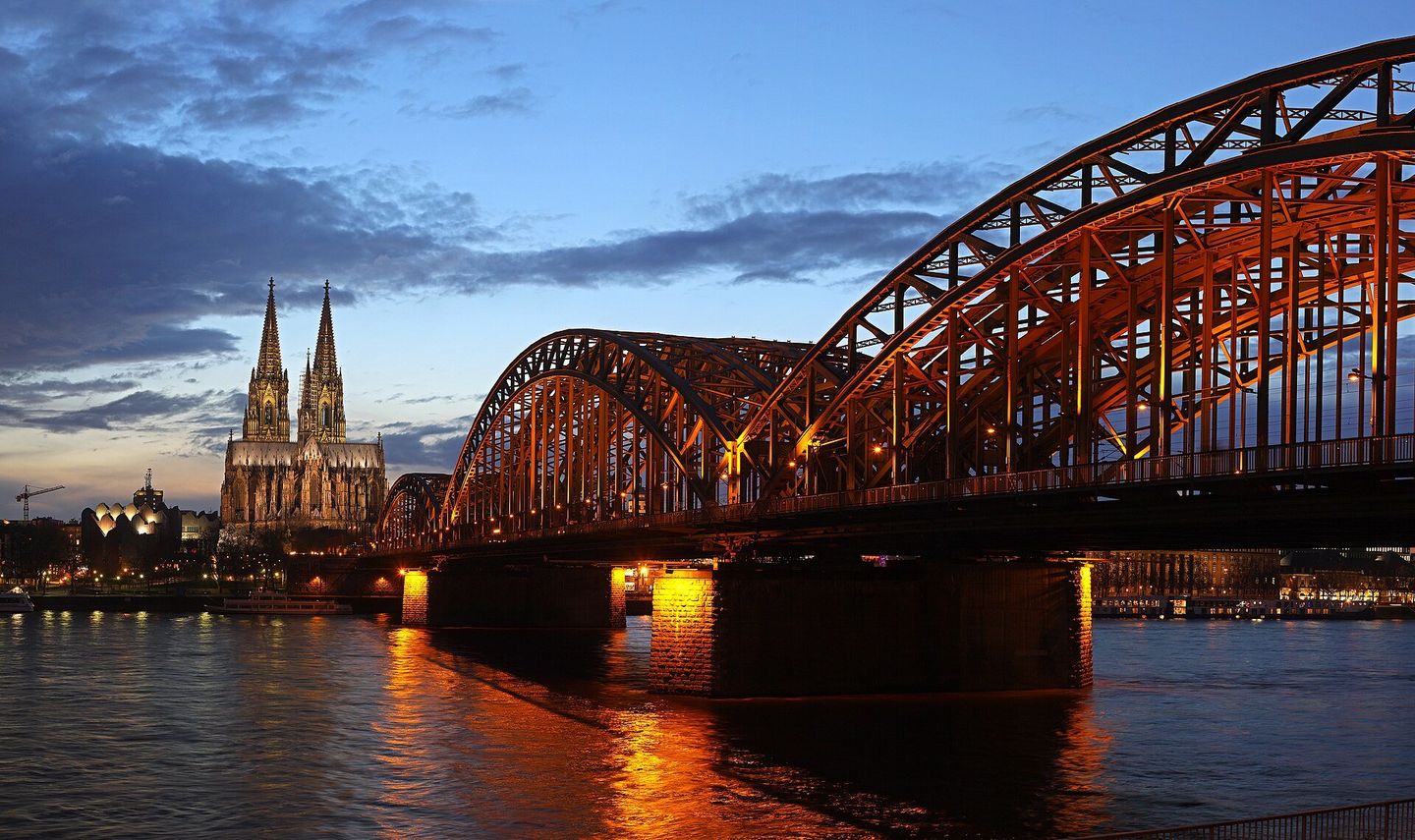
Cologne has a strange relationship with its own size. It is Germany's fourth-largest city, a two-thousand-year-old Roman foundation, and the seat of a cathedral so enormous it took six centuries to finish — and yet it carries almost none of the self-importance that combination usually produces. This is a city that was flattened by bombing in 1945, rebuilt in a hurry along largely practical lines, and has spent the decades since getting on with being a river port, a media and insurance town, and a genuinely good place to drink beer with strangers. The grandeur is real, but it sits next to ordinary life rather than above it.
Almost everything here orients around the Rhine and the cathedral that rises beside it, and almost every first-time visitor's itinerary collapses into the same half-day loop: the Dom, the Altstadt lanes behind it, a Kölsch at a brewery hall, a walk along the river. That loop is worth doing and worth doing properly — but Cologne rewards a longer stay with a genuinely different texture once you get past it: a Belgian Quarter full of independent shops and wine bars, a design and media district built almost entirely on reclaimed harbour land, and a carnival tradition that the city takes more seriously than almost anything else on its calendar.
What follows is not a checklist of the Dom and little else. It is how to actually spend two or three days here — where to stay, when to come, how the city eats and drinks, and the neighbourhoods that explain why people who live here rarely want to leave.
The caseWhy Cologne earns more than a day trip
Most visitors to western Germany treat Cologne as a stopover between Amsterdam and Frankfurt, or a day trip tacked onto Düsseldorf, and that undersells it badly. The cathedral alone — a UNESCO World Heritage Site and, for a few years after its 1880 completion, the tallest building on earth — justifies a dedicated visit, but it is the surrounding city that makes Cologne worth a proper stay rather than a photo stop. This is one of the few German cities where the old Roman street grid, a flourishing medieval free-trading history, total wartime destruction, and a scrappy postwar rebuild are all still legible at once if you know where to look.
It also happens to be an unusually good-humoured place. Cologne's self-image leans hard into its own particular brand of Rhineland warmth — direct, unpretentious, quick to invite a stranger to sit down — and that shows up most clearly in the brewery halls, where communal benches and a running tally of small beers on a coaster are the default way to spend an evening. Add a genuinely excellent museum scene (Roman-Germanic artefacts, Ludwig's modern collection, chocolate history told properly), and the case against treating this as a half-day stop falls apart fast.
The calendarWhen to go
Late spring through early autumn — May to September — gives the most reliable weather for walking the Rhine promenade and sitting out at a brewery garden, with June and September the sweet spots that dodge both the coolest shoulder-season days and the thickest summer crowds. July and August bring warm weather and long terrace evenings but also the year's heaviest tourist traffic and higher hotel rates, particularly around any music festival dates.
The other defining season is Carnival, which in Cologne is not a minor local custom but a genuine citywide institution running from 11 November through Ash Wednesday, climaxing in the week before Lent with parades, costumed street parties and a public holiday feel that shuts down normal business. Visiting during peak Carnival week is an experience in itself if that is what you are after, but it is a poor time to come for a quiet cathedral visit or a calm hotel stay — book well ahead or avoid it entirely depending on which trip you want. Christmas market season, late November into December, is the other high point, with several markets running simultaneously around the Dom and the harbour.
LogisticsGetting around
Cologne is flat, compact at its historic core, and genuinely walkable — the Altstadt, the cathedral, the main shopping streets and the river all sit within about a twenty-minute walk of each other, so for a short stay you may barely need public transport at all. When you do need it, the KVB network of trams (Stadtbahn) and buses is dense and reliable, and a single ticket or day pass covers both; validate paper tickets at the yellow machines before boarding, since Germany's honour-system transit comes with real fines for riding without one.
Cologne Bonn Airport connects to the Hauptbahnhof (main station, right beside the cathedral) by a direct regional train in about fifteen minutes, which is by far the simplest arrival route. The Hauptbahnhof itself is also a major InterCity Express hub, making Cologne an easy rail base for day trips to Bonn, Düsseldorf or further into the Rhine valley. A bike-share system (KVB Rad) covers the flatter stretches well, and the riverside promenade on both banks is an excellent, mostly car-free walking and cycling route once you want to get outside the core.
The tableHow Cologne actually eats and drinks
Kölsch is less a beer style here than a civic identity, and understanding its ritual matters more than memorising any single brewery name. It is served in small, narrow 0.2-litre glasses, brought unbidden and continuously by an apron-wearing Köbes (waiter) who keeps a tally of how many you have had by marking your coaster — you stop the count by physically laying a coaster on top of your empty glass, not by asking. The classic breweries — clustered thickly through the Altstadt — brew their own Kölsch on-site and pair it with heavy, unfussy Rhineland food: Himmel un Ääd (black pudding with apple and mash), Halve Hahn (a rye roll with Dutch cheese, despite the misleading name involving no chicken at all), and Flönz, the local blood sausage.
Beyond the brewery halls, the Belgian Quarter and Ehrenfeld carry the more contemporary, international food scene — wine bars, small-plate kitchens, a strong coffee culture that has grown up around independent roasters in the last decade. Cologne is also, improbably, a serious chocolate city thanks to the Lindt-run Chocolate Museum on the Rhine, and a market-shopping habit worth adopting at the small daily markets scattered through residential neighbourhoods rather than only the tourist-facing stalls near the Dom.
The mapNeighbourhoods to know
The Altstadt (old town), hugging the Rhine directly below the cathedral, is where first-time visitors spend most of their time — brewery halls, souvenir shops, the rebuilt medieval lanes, and the Fish Market square down by the river. It is touristy by Cologne standards but genuinely pretty, especially from the far bank at dusk when the floodlit Dom and the Altstadt waterfront line up into the view every postcard uses.
The Belgian Quarter (Belgisches Viertel), named for its streets after Belgian cities, is the one neighbourhood worth a deliberate detour: independent boutiques, natural wine bars, and a slower, more residential pace that most cathedral-day visitors never see. Ehrenfeld, further out, is the rougher-edged creative district — former industrial buildings now holding studios, bars and a strong live-music scene. And the Rheinauhafen, a converted harbour south of the Altstadt, is Cologne's most dramatic piece of modern architecture: the three angular glass Kranhäuser (crane houses) standing where cargo cranes once worked the docks, now holding offices and apartments against a backdrop of restored warehouse brick.
Field intelligencePractical intelligence
Cologne and Düsseldorf maintain a long-running, mostly good-natured rivalry that extends specifically to beer — ordering a Düsseldorf Altbier in a Cologne Kölsch hall, or vice versa, is a reliable way to get a raised eyebrow from the regulars, so read the room. More usefully: most museums close on Mondays, so plan around that if a specific collection is the point of your visit, and the KölnCard offers worthwhile discounts on transit and museum entry if you are museum-hopping over a couple of days.
German retail hours still mean most shops close on Sundays, with the Altstadt's restaurants and brewery halls the reliable exception. Cash remains more commonly used than in many other European capitals, though card acceptance has improved significantly; carry some cash for smaller cafés and markets regardless. And the cathedral's south tower climb — over five hundred steps with no lift — is worth doing once for the view over the Rhine and the city's low-rise roofline, but is a genuine physical undertaking rather than a quick stop, so budget real time and stamina for it.
What to see & do
-
Cologne Cathedral (Kölner Dom)
A Gothic cathedral so large it took from 1248 to 1880 to finish, briefly the tallest building in the world on completion, and still the unmissable anchor of the entire city skyline.
Tip:Climb the south tower for the view, but go early — the queue for the narrow spiral staircase backs up fast once tour groups arrive mid-morning.
-
Altstadt (Old Town) & the Rhine promenade
The rebuilt medieval core between the cathedral and the river, dense with brewery halls, the Fish Market square, and the classic photo angle of the floodlit Dom from the far bank.
Tip:Cross the Hohenzollern Bridge on foot at dusk for the single best skyline view, then walk back along the Deutz-side promenade.
-
Museum Ludwig
A major modern and contemporary art collection right beside the cathedral, with one of the largest Picasso holdings outside Spain and a strong run of German Expressionism and American Pop Art.
Tip:Buy a combined ticket with the Romano-Germanic Museum if both are open — the two sit almost side by side.
-
Chocolate Museum (Schokoladenmuseum)
A glass-fronted building on its own spit of land in the Rhine, tracing cacao from Mesoamerican ritual drink to industrial Lindt production, with a working chocolate fountain at the end.
Tip:Go hungry — the free sample at the end of the tour is generous, and the on-site café is worth lingering in.
-
Belgian Quarter (Belgisches Viertel)
A grid of streets named for Belgian cities, now Cologne's most walkable concentration of independent boutiques, wine bars and slow weekend brunch spots.
Tip:Come on a Saturday afternoon and just wander — this is a browsing neighbourhood, not a sights-list one.
-
Rheinauhafen & the Kranhäuser
A former cargo harbour south of the Altstadt, now anchored by three angular glass 'crane houses' that have become Cologne's most photographed piece of contemporary architecture.
Tip:Walk the harbour promenade in the late afternoon when the glass facades catch the low sun.
-
Brewery halls of the Altstadt
The working heart of Kölsch culture — long communal tables, aproned Köbes waiters running a constant relay of small beers, and heavy Rhineland food to match.
Tip:Let your coaster fill up and lay it flat over your empty glass only when you actually want the beer to stop coming.
-
Romano-Germanic Museum collection (Praetorium & Roman wall)
Remnants of Cologne's two-thousand-year Roman history as the colony of Colonia Claudia Ara Agrippinensium, including the governor's palace foundations beneath the city hall square.
Tip:The Praetorium's underground chambers are a quiet, air-conditioned break from a hot Altstadt afternoon.
-
Hohenzollern Bridge
A steel railway and pedestrian bridge directly beside the cathedral, famous for the tens of thousands of padlocks couples have clipped to its fencing as a declaration of commitment.
Tip:Bring your own lock if you want to add to the collection — just don't block the pedestrian lane doing it.
-
Ehrenfeld
A former industrial district turned creative quarter, with converted factory buildings now holding studios, bars and one of the city's strongest live-music and nightlife scenes.
Tip:This is an evening neighbourhood — come after dark for the bars and venues rather than expecting daytime sightseeing.
On the groundWhere things are
Map data © OpenStreetMap contributors.
Where to stayBase yourself well
Altstadt / Cathedral quarter
Best for first-timers and short staysMaximum convenience — the Dom, the Hauptbahnhof, and the brewery halls are all within a few minutes' walk. Busy and touristy, but you will never need transit for the headline sights.
A full-service hotel steps from the Dom and Hauptbahnhof
Paying for proximity here means skipping transit entirely for a short trip focused on the cathedral and the Altstadt.
€€€A mid-range hotel just off the Altstadt's main brewery streets
A block or two back from the busiest lanes trims the noise without losing the walk-everywhere convenience.
€€Belgian Quarter
Best for longer stays and a more local feelA quieter, more residential base with Cologne's best independent shopping and wine-bar scene on the doorstep, a short tram or twenty-minute walk from the cathedral.
A boutique hotel on a quiet Belgian Quarter side street
Trades a few minutes of travel time for a genuinely different, less tourist-dense neighbourhood to come back to each evening.
€€Rheinauhafen & the southern riverside
Best for a design-forward base away from the crowdsModern, design-led, and built around the harbour's glass architecture — a short riverside walk or tram ride from the Altstadt, with a calmer, more residential evening atmosphere.
A contemporary hotel overlooking the Rheinauhafen
Good for travellers who want the Kranhäuser view at breakfast and an easy walk north into the Altstadt.
€€€Deutz (east bank)
Best for value and the best cathedral photo angleAcross the Rhine from the historic core, with the trade-fair grounds and a more modern, business-district feel — but the classic skyline view of the Dom is literally on your doorstep.
A straightforward business hotel near Deutz station
Rates run noticeably lower here, and the direct S-Bahn or a ten-minute walk across the Hohenzollern Bridge puts the Altstadt within easy reach.
€€Affiliate notePostcardRoute is reader-supported. Some links to Booking.com (stays, flights, car hire, tickets and tours, airport transfers) are affiliate links, tracked through CJ Affiliate: if you book through them we may earn a small commission at no extra cost to you. We only recommend places we would send a friend.
Book the restEverything else for the trip
Stay sorted? These open Booking.com for the other legs of the journey.
-
Tours & tickets
Things to do in Cologne
Skip-the-line tickets, tours and day trips.
Browse activities -
Wheels
Car hire in Cologne
Compare pick-up points and rental companies.
Compare cars -
Air
Flights
Search fares, then come back for the neighbourhood advice.
Search flights -
Ground
Airport transfers
Book a taxi or private transfer before you land.
Book a transfer
Affiliate noteThese four links are affiliate links too: if you book through them we may earn a small commission at no extra cost to you.
Beyond the cityWorthwhile day trips
- Bonn
Germany's former capital, twenty minutes south by train — Beethoven's birthplace, a pleasant riverside old town, and a noticeably slower pace than Cologne.
- Düsseldorf
The rival city thirty minutes north, worth a day for its own old town, Rhine promenade and Altbier culture — go in, compare, and expect Cologne locals to ask which beer you preferred.
- Phantasialand
One of Germany's best theme parks, roughly thirty minutes south in Brühl, with genuinely ambitious themed sections and a loyal following well beyond day-tripping families.
- The Ahr Valley
A dramatic, steep-sided wine valley under an hour away, known for red wines that are unusual for Germany's largely white-wine reputation, with vineyard trails and small producer tastings.
Before you goCommon questions
- How many days do you need in Cologne?
- Two full days cover the cathedral, the Altstadt and a brewery hall evening comfortably. Three days lets you add the Belgian Quarter, a proper museum visit and either Bonn or Düsseldorf as a half-day trip without feeling rushed.
- Is Cologne worth visiting if I've already seen Düsseldorf?
- Yes — despite the rivalry and the surface similarities (both Rhine cities with their own beer culture), Cologne's cathedral, Roman history and Altstadt give it a weightier historic core than Düsseldorf, which leans more toward shopping and contemporary architecture.
- What is Kölsch and how do you drink it properly?
- Kölsch is Cologne's local beer style, served in small 0.2-litre glasses by an aproned Köbes waiter who keeps bringing fresh ones and tallying the count on your coaster until you lay the coaster flat over your empty glass to signal you are done.
- When is the best time to visit Cologne?
- May through September for the most reliable weather and the fullest brewery-garden and riverside experience, with June and September avoiding the thickest summer crowds. Carnival week before Lent and the Christmas markets in December are the two big alternative reasons to visit, each with a completely different, more festival-driven atmosphere.
- Do I need more than a day trip to Cologne from another city?
- A day trip covers the cathedral and a walk through the Altstadt, but it skips the Belgian Quarter, the museums and any real brewery-hall evening — which is most of what makes Cologne more than a photo stop. If your schedule allows it, stay at least one night.
- How do you get from the airport into central Cologne?
- A direct regional train connects Cologne Bonn Airport to the Hauptbahnhof, right beside the cathedral, in about fifteen minutes — by far the simplest and most reliable option, and faster than a taxi in most traffic conditions.