
United States · Illinois
Chicago, at full height
The city that burned down, rebuilt itself taller than anywhere on earth, and never stopped arguing about the right way to eat a hot dog.
Dispatch from the city that invented the skyline and still means it · 41.88° N · 87.63° W
Plan this trip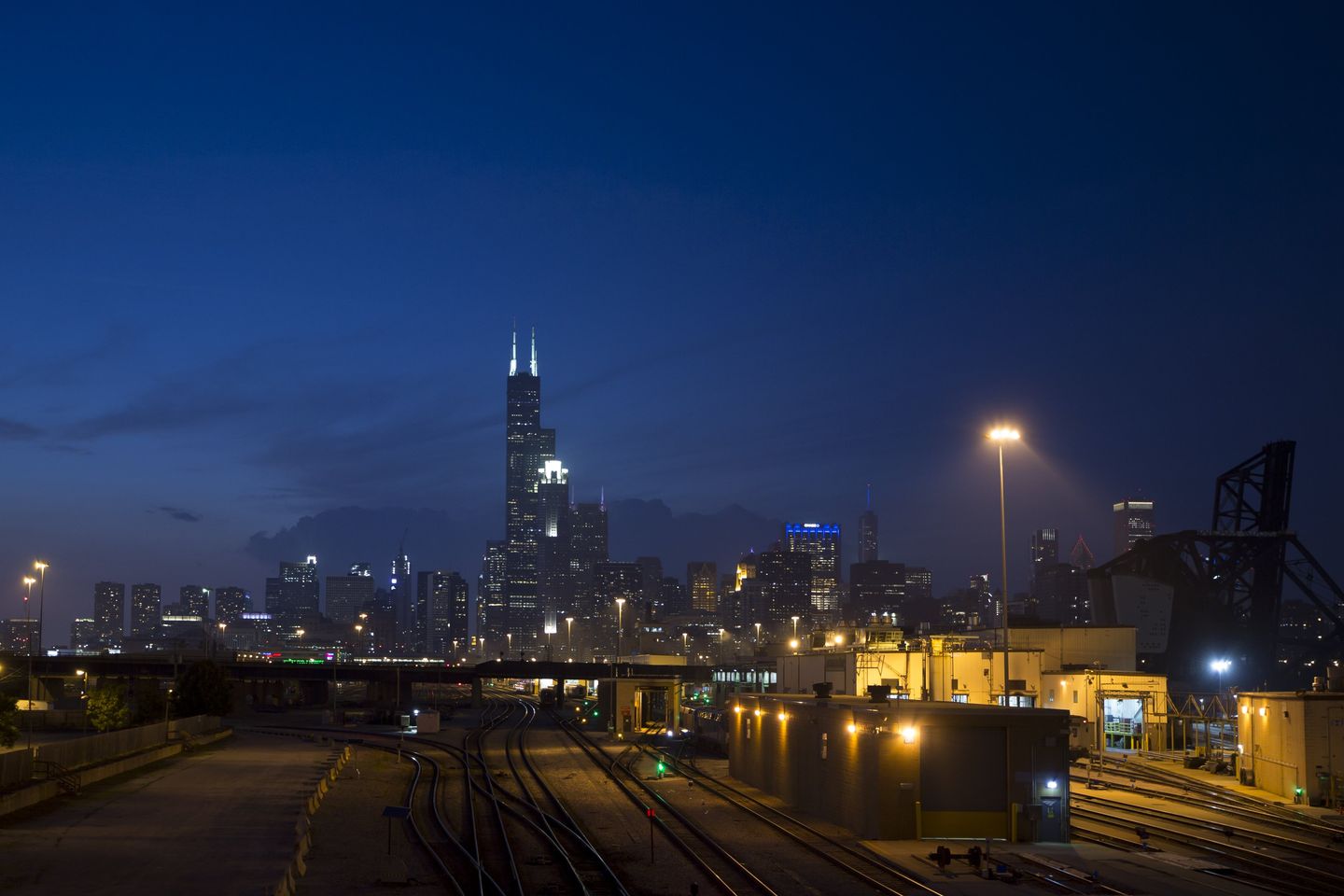
Chicago has an image problem that has nothing to do with reality: for a lot of people who have never been, it registers as a stopover, a connecting flight, the flat grey middle of the country between the two coasts that supposedly matter. Spend three days here and that idea collapses almost immediately. This is America's third-largest city, the place that invented the skyscraper as a commercial form and then kept building the best examples of it for a hundred and fifty years, set on the shore of a lake so large it makes its own weather and looks, from the right vantage point, exactly like an ocean.
The 1871 fire is the origin story everyone half-remembers, and it matters more than trivia. Chicago burned to the ground in three days, and the rebuilding that followed — fireproofing requirements, a young pool of architects with a blank slate and steel-frame construction newly practical — produced the Chicago School and, within two decades, the tallest buildings in the world. That civic instinct never really left. This is a city that still thinks about its own skyline the way other cities think about their skyline's opposite: not as background scenery but as the actual argument for showing up.
What follows is not a Bean photo and a deep-dish recommendation, though you will get both. It is a guide to a city built in distinct, walkable pieces — the Loop's canyon of architecture, a thirty-kilometre unbroken public lakefront, and neighbourhoods that still carry the accents of the immigrant groups who built them — with honest advice about when to come, given that this is also a city whose winter will test you and whose summer is one of the best three months any American city has to offer.
The caseWhy Chicago earns the detour
Start with the architecture, because Chicago's case is unusually literal: this is the city where the skyscraper was invented, and it is still one of the best places on the planet to look up. The Home Insurance Building, finished here in 1885, is generally credited as the first true skyscraper, built around a steel skeleton rather than load-bearing masonry, and the building boom that followed the Great Fire gave Louis Sullivan, Daniel Burnham and later Ludwig Mies van der Rohe a genuinely blank canvas. The result is a downtown core where you can trace a century and a half of architectural history by walking a few dozen blocks, something no other American city offers at this density.
The lake is the other half of the argument, and visitors consistently underestimate it. Lake Michigan is not a pond behind the skyline — it is a genuine inland sea, and Chicago wrapped its entire eastern edge in public parkland rather than private waterfront, a decision made in the late nineteenth century that still shapes the city more than almost anything else. Add a food scene that runs from immigrant-neighbourhood institutions to some of the most inventive fine dining in the country, a comedy and theatre scene that trained more household names than it gets credit for, and a genuine, unpretentious Midwestern directness in how people treat visitors, and the case stops needing much of a sales pitch.
The calendarWhen to go
Be honest about the trade-off before you book anything: Chicago has real seasons, more extreme than most first-time visitors expect from a major American city. Late May through September is the sweet spot, and the run from June to August specifically is when the city is at its absolute best — long daylight, the lakefront trail full of runners and cyclists, rooftop bars and beer gardens running at capacity, and a packed calendar of outdoor festivals including Taste of Chicago and the Air and Water Show. Book accommodation well ahead for this window; rates climb and availability tightens noticeably.
September and early October are, if anything, the connoisseur's choice — the crowds thin, the heat breaks, and the light turns genuinely beautiful along the lakefront, with the added bonus of the city's best restaurant reservations becoming easier to land. Winter is not a myth invented to make the summer sound better: from December through February, Chicago gets legitimately cold, with the wind off the lake giving the city its nickname more through meteorology than metaphor, and a lake-effect snow event can shut things down for a day. That said, the museums, theatre and food scene run at full strength all winter, hotel rates drop sharply, and a well-prepared visitor who packs for it can have a genuinely good trip in January. Spring is the wildcard — April can swing from warm and clear to raw and grey within the same week, so pack layers rather than betting on the calendar.
LogisticsGetting around
The Loop and its immediate surrounding neighbourhoods are genuinely walkable, and the lakefront trail — nearly thirty kilometres of continuous, mostly car-free path running the length of the city — is one of the best urban walks or bike rides in the country, connecting neighbourhood after neighbourhood without a single traffic light. For anything beyond a compact downtown stay, the 'L' elevated train is the backbone of the system: eight colour-coded lines, cheap, frequent, and genuinely useful for reaching neighbourhoods like Wicker Park, Hyde Park or Logan Square without a car.
Buy a Ventra card at any station — it works across trains and buses and can be loaded with single rides or day passes, and contactless bank cards now tap directly on most turnstiles too. The Loop itself, the literal loop of elevated track that gives downtown its name, is worth riding once just for the view into office windows and the theatrical rattle of the trains between buildings. Rideshare apps are widely available and reasonably priced outside of major events, and O'Hare and Midway airports both connect directly to the 'L' network, making a taxi or rideshare from the airport more a matter of convenience than necessity. Driving downtown is expensive and largely unnecessary; skip the rental unless a specific day trip demands it.
The tableHow Chicago actually eats
Get the arguments out of the way first. Deep-dish pizza is real, it is genuinely good, and it is also a once-a-trip event rather than a daily lunch — a thick, buttery crust holding a deep well of cheese and chunky tomato sauce, baked in a pan and eaten with a knife and fork. Locals are more likely to eat tavern-style thin crust, cut into squares (party cut), on any given weeknight, and both traditions have fierce, genuine defenders rather than one being a tourist trap and the other the truth. The Chicago-style hot dog has its own strict, semi-sacred rules — an all-beef frank, poppy seed bun, yellow mustard, chopped onion, bright green relish, a dill pickle spear, tomato wedges, pickled sport peppers and a dash of celery salt — and the one thing every stand agrees on is that ketchup does not belong anywhere near it, particularly not after childhood.
Beyond the icons, this is a genuinely serious food city. Fine dining runs deep, from tasting-menu destinations that have held Michelin stars for years to a wave of younger, less formal kitchens doing ambitious work at accessible prices. The neighbourhood food map tracks Chicago's immigration history closely: Pilsen for Mexican cooking that goes far beyond tacos, Chinatown on the South Side for genuinely excellent Cantonese and increasingly Sichuan food, Devon Avenue on the far North Side for South Asian cooking dense enough to earn comparisons to actual Indian and Pakistani city blocks, and Greektown for a concentrated strip of tavernas still doing the theatrical flaming-cheese saganaki tableside. Italian beef — thin-sliced roast beef piled on a roll, dipped in jus, ideally ordered 'wet' with giardiniera — is the other sandwich worth seeking out specifically, and it long predates the television show that made it famous to people who had never set foot here.
The mapNeighbourhoods to know
The Loop is downtown proper, the dense cluster of skyscrapers ringed by the elevated train tracks that give it its name — office towers by day, increasingly residential as older buildings convert, and home to the Art Institute, Millennium Park and the architectural boat tours that are genuinely one of the best orientations to the city available anywhere. It empties out somewhat in the evening outside of theatre nights, which is worth knowing if you want a livelier dinner scene.
River North, just north of the Loop across the Chicago River, carries the highest concentration of restaurants and nightlife downtown, along with a serious gallery scene and the flagship shopping of the Magnificent Mile along Michigan Avenue. Wicker Park and Bucktown, further northwest, are the city's long-running creative and nightlife hub — independent boutiques, vintage shops, live music venues and a dense bar scene that has gentrified without entirely losing its edge. Lincoln Park, hugging the lakefront north of downtown, pairs a genuinely excellent free zoo with leafy residential streets and one of the city's most popular stretches of beach and park.
Hyde Park, well south on the lakefront and home to the University of Chicago, has a distinct academic, architecturally rich character of its own, and it is where the Museum of Science and Industry and the Obama Presidential Center sit. Pilsen and the surrounding Lower West Side carry the city's strongest Mexican-American cultural identity, dense with murals, taquerías and the National Museum of Mexican Art, and Chinatown on the South Side is compact, walkable, and genuinely serves the local Chinese-American community rather than existing purely for tourists.
Field intelligencePractical intelligence
Tipping follows standard American convention and is not optional the way it is in much of the rest of the world: fifteen to twenty percent at sit-down restaurants, a dollar or two per drink at bars, and roughly the same for rideshare and taxi drivers. Sales tax in Chicago runs unusually high — among the steepest of any major US city once state, county and city rates stack — so budget for prices to land noticeably above the sticker figure at checkout.
The wind is real but overstated as a defining trait; the nickname 'Windy City' most likely originated as nineteenth-century political mockery of boastful local politicians rather than a literal meteorological claim, though the lake genuinely does funnel real wind along the waterfront on a lot of days, so a layer that blocks wind is worth packing regardless of season. Public safety varies significantly by neighbourhood and time of day, as in any large American city; downtown, the Loop, River North, Lincoln Park and Hyde Park's main areas are well-trafficked and comfortable for visitors, and ordinary city awareness — populated streets, aware of surroundings at night — covers most situations well.
Museum admission is genuinely steep for the headline institutions, but Chicago residents get free or reduced days at several major museums, and a handful, including the Art Institute, offer free entry windows for all visitors on specific evenings — check current schedules before planning around them, since they shift periodically. English is the default everywhere, and Midwestern friendliness is a real, not exaggerated, feature of how strangers get treated here.
Field notesWhat to see & do
-
The Art Institute of Chicago
One of the great encyclopedic art museums in the United States, holding the world's best collection of Impressionist and Post-Impressionist painting outside France alongside American classics like Grant Wood's American Gothic.
On the groundGo straight to the second floor Impressionist galleries first if crowds are a concern — the queue builds there before anywhere else in the building.
-
Millennium Park and Cloud Gate
The free public park that gave the city its most photographed object, the mirror-polished steel sculpture known universally as 'the Bean', plus the Frank Gehry-designed Pritzker Pavilion and the summer concert series it hosts.
On the groundVisit at sunrise for photos of the Bean without a crowd of a hundred people also trying to get the same shot.
-
Willis Tower Skydeck
The 103rd-floor observation deck of the building that held the title of world's tallest for nearly twenty-five years, with glass ledge boxes that let you stand looking straight down over 400 metres to the street.
On the groundBook a timed-entry ticket online in advance; walk-up queues on a clear weekend afternoon can run well over an hour.
-
Chicago Architecture Center river cruise
A ninety-minute boat tour along the Chicago River narrated by trained architecture-literate docents, widely considered one of the best introductions to any American city's built environment anywhere in the country.
On the groundBook the First Lady or Chicago's First Lady Cruises option specifically and sit on the side facing the newer riverfront towers for the best skyline angles.
-
Navy Pier and the lakefront
A century-old pier turned entertainment complex with a Ferris wheel, gardens and boat launches, functioning mostly as the gateway to the wider lakefront trail that runs nearly thirty kilometres along Lake Michigan.
On the groundSkip the pier's interior shops and head straight for a bike rental to actually experience what makes the lakefront worth the trip.
-
Museum of Science and Industry
Housed in the sole surviving building from the 1893 World's Columbian Exposition, home to a real German U-boat, a coal mine you walk through, and hands-on exhibits that make it the most genuinely fun major museum in the city.
On the groundBudget a full half-day minimum; the building is enormous and the good exhibits are spread across multiple wings.
-
Wrigley Field
The second-oldest ballpark in Major League Baseball, opened in 1914, still ringed by hand-turned scoreboard operators and the ivy-covered outfield walls that make it one of the sport's most atmospheric venues.
On the groundA rooftop seat on one of the buildings across Waveland or Sheffield Avenue is a genuinely different, and often cheaper, way to watch a game.
-
The 606 and Wicker Park
An elevated former rail line converted into a 4.3-kilometre linear park and cycling trail through the Northwest Side, running directly past the murals, boutiques and bars of Wicker Park and Bucktown.
On the groundEnter near Damen Avenue and walk east toward Humboldt Park for the quieter, less crowded half of the trail.
-
National Museum of Mexican Art
The largest Latino arts institution in the country and the anchor of Pilsen's cultural identity, with free admission and a permanent collection spanning pre-Columbian art through contemporary Chicano and Mexican-American work.
On the groundPair it with a walk down 16th Street to see the neighbourhood's dense concentration of murals before or after the visit.
On the groundWhere things are
Map data © OpenStreetMap contributors.
Where to stayBase yourself well
The Loop
Best for first-timers and sightseeing on footDowntown proper — skyscrapers, the theatre district, Millennium Park and the Art Institute all within walking distance. The most convenient base for a first visit built around the headline sights, though it quiets down noticeably at night.
A high-rise hotel overlooking Millennium Park
Look for upper floors facing the park and lake for a skyline view that does most of the work for you.
$$$A converted historic office tower near the theatre district
Several of the Loop's grand early-twentieth-century office buildings have been converted into hotels, putting you inside the architecture rather than just looking at it.
$$$$River North
Best for food-focused trips and nightlifeThe densest concentration of restaurants and nightlife downtown, a short walk from the Loop and the Magnificent Mile, with a genuinely lively evening scene that the Loop itself lacks.
A boutique hotel near the Chicago River
Being steps from the river puts you within easy reach of the architecture cruise docks and the restaurant density of the neighbourhood.
$$$Lincoln Park
Best for families and repeat visitors wanting a quieter baseA leafy, residential lakefront neighbourhood with a free zoo, beach access and a genuinely local, less touristy pace, a short 'L' ride or bike from downtown.
A boutique hotel near the lakefront trail
Staying here trades a few minutes' commute downtown for direct access to the park, the zoo and the beach on your doorstep.
$$Wicker Park & Bucktown
Best for younger travellers and a local, non-touristy stayThe city's creative and nightlife hub — independent shops, live music, and a dense bar and restaurant scene with genuine neighbourhood character rather than a downtown-adjacent version of it.
A design-led boutique hotel near the 606 trail
Puts you within walking distance of the elevated park and the neighbourhood's bar and restaurant density, a short 'L' ride from downtown.
$$Affiliate notePostcardRoute is reader-supported. Some links to Booking.com (stays, flights, car hire, tickets and tours, airport transfers) are affiliate links, tracked through CJ Affiliate: if you book through them we may earn a small commission at no extra cost to you. We only recommend places we would send a friend.
Book the restEverything else for the trip
Stay sorted? These open Booking.com for the other legs of the journey.
-
Tours & tickets
Things to do in Chicago
Skip-the-line tickets, tours and day trips.
Browse activities -
Wheels
Car hire in Chicago
Compare pick-up points and rental companies.
Compare cars -
Air
Flights
Search fares, then come back for the neighbourhood advice.
Search flights -
Ground
Airport transfers
Book a taxi or private transfer before you land.
Book a transfer
Affiliate noteThese four links are affiliate links too: if you book through them we may earn a small commission at no extra cost to you.
Beyond the cityWorthwhile day trips
- Oak Park
A short 'L' ride west to the suburb where Frank Lloyd Wright built his home and studio and designed more than two dozen buildings, plus Ernest Hemingway's childhood home — an essential stop for architecture and literary interest alike.
- Indiana Dunes National Park
Roughly an hour southeast by car or the South Shore Line train, a genuine sand-dune landscape along Lake Michigan's southern shore with hiking trails and beaches most visitors never suspect exist this close to a major Midwestern city.
- Galena
A well-preserved nineteenth-century river town about three hours west near the Mississippi, with brick storefronts and Ulysses S. Grant's former home — a longer but rewarding day for anyone with a car and an interest in small-town Americana.
Before you goCommon questions
- How many days do you need in Chicago?
- Three full days covers the headline sights comfortably — downtown architecture and museums, the lakefront, and one or two neighbourhoods beyond the Loop. Four or five lets you add a day trip and slow the pace considerably, which this city rewards more than a rushed itinerary suggests.
- What is the best time of year to visit Chicago?
- June through September, when the lakefront, outdoor festivals and rooftop bars are all running at full capacity. September and early October are the connoisseur's window — same good weather, noticeably thinner crowds. Winter is genuinely cold but far from a dealbreaker if you pack for it and lean into museums, theatre and the food scene.
- Is Chicago walkable?
- Downtown and the immediate lakefront neighbourhoods are genuinely walkable, and the nearly thirty-kilometre lakefront trail is one of the best urban walks in the country. Reaching neighbourhoods further out is easiest by the 'L' train, which is cheap, frequent and covers the city well without a car.
- Deep dish or thin crust — which pizza should I actually order?
- Both, if you have the time. Deep dish is the once-a-trip event worth doing at least once; tavern-style thin crust, cut into squares, is what locals eat far more regularly and is arguably the better everyday slice. Neither is a tourist trap — both traditions have serious, genuine local followings.
- Is Chicago safe for visitors?
- Downtown, the Loop, River North, Lincoln Park and Hyde Park's main areas are well-trafficked and comfortable for visitors at normal hours. Like any major American city, safety varies significantly by neighbourhood, so standard city awareness — populated streets, particularly at night — is the right approach rather than avoiding the city generally.
- How do I get from O'Hare or Midway into central Chicago?
- Both airports connect directly to the 'L' elevated train network — the Blue Line from O'Hare and the Orange Line from Midway — making the train a cheap, reliable option into downtown that avoids traffic. Rideshare and taxis are widely available too, with the trip typically running thirty to forty-five minutes depending on the airport and traffic.
- Is Chicago expensive to visit?
- It sits in the middle of the pack for major US cities — cheaper than New York or San Francisco for accommodation and dining, but sales tax runs high and headline museum admission is steep. Eating at neighbourhood spots rather than downtown tourist-facing restaurants, using the 'L' instead of rideshare, and checking for free museum evenings all meaningfully soften the cost.