
Italy · Campania
Capri, after the day-trippers leave
The island everyone visits for an afternoon and almost nobody sees properly. Stay the night and it becomes a different, far better place.
An island that makes you pay for the view, then earns it · 40.55° N · 14.24° E
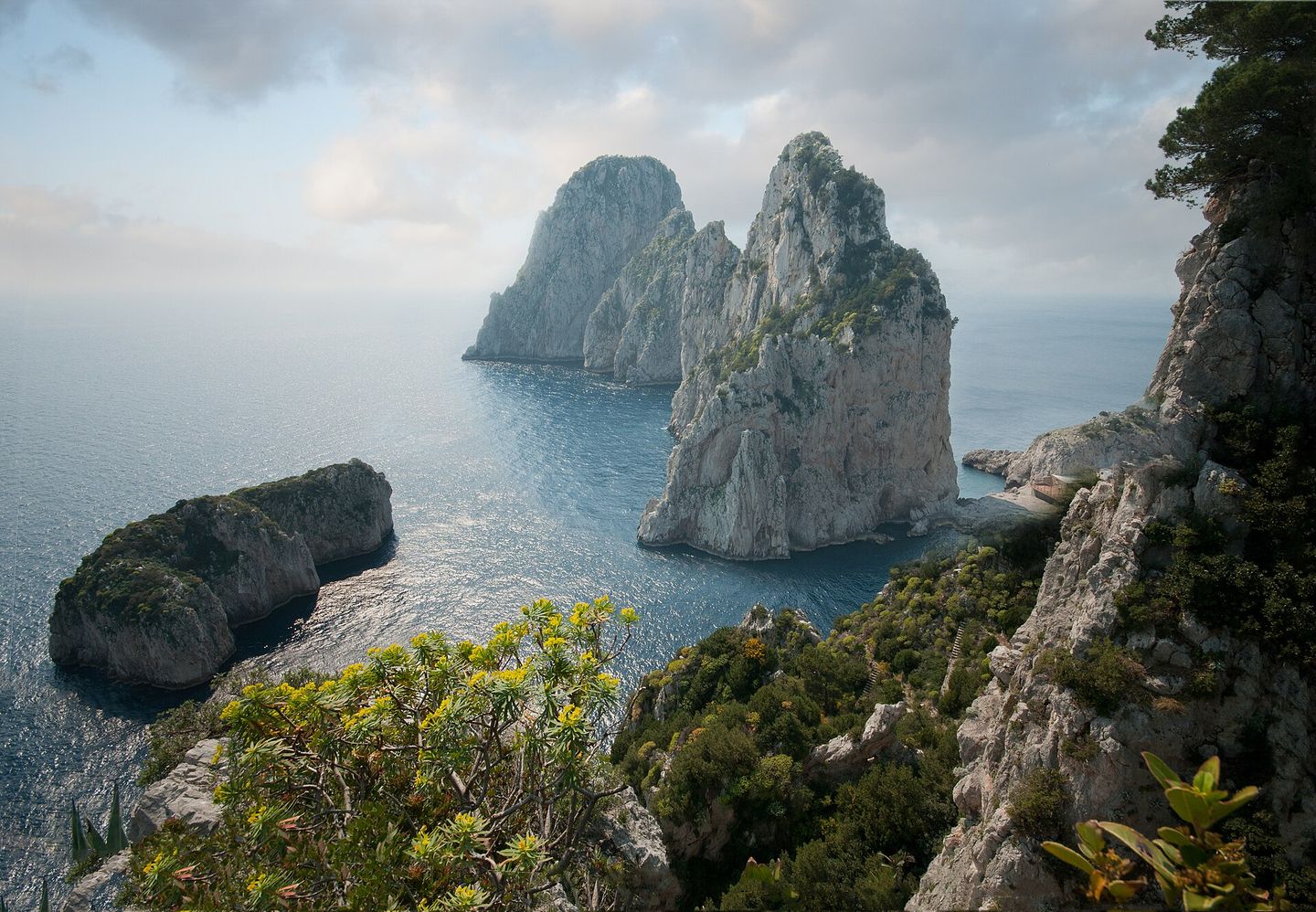
Capri has an image problem entirely of its own making: it has become shorthand for a certain kind of over-photographed, over-priced Mediterranean cliché, the island equivalent of a selfie spot. Several million day-trippers a year do their best to prove the cliché correct, pouring off ferries from Naples and Sorrento for a few frantic hours, queuing for the Blue Grotto, buying an overpriced granita in the Piazzetta, and leaving on the last boat without ever seeing the island breathe.
That crowd is real, and between roughly eleven in the morning and four in the afternoon it is genuinely unpleasant in the handful of places everyone has been told to go. But Capri is a small, dramatic, limestone spine of a place — eleven square kilometres jutting more than five hundred metres out of the Tyrrhenian Sea — and almost all of that pressure concentrates onto maybe three locations for maybe five hours a day. Walk fifteen minutes in nearly any direction, or simply be there at seven in the morning or eight in the evening, and the crowd evaporates entirely.
What's left is one of the most strikingly beautiful stretches of coastline in Italy: limestone cliffs that drop straight into impossibly clear water, two genuinely different towns connected by a single vertiginous road, Roman ruins scattered across clifftop sites the emperor Tiberius chose for their views eighteen centuries before Instagram existed, and a scale small enough to walk most of in a couple of days. This is a guide aimed at the overnight visitor rather than the day-tripper, because the difference in experience between the two is not subtle — it's closer to visiting two separate islands.
The caseWhy Capri is worth the fuss, if you time it right
Set aside the Blue Grotto for a moment — it's a single, genuinely odd sea cave, not the reason to come. The reason to come is the coastline itself: the Faraglioni, three immense limestone stacks rising straight out of turquoise water off the southern shore, visible from a dozen different vantage points and different each time; the chairlift ascent of Monte Solaro, which deposits you at the island's highest point for a 360-degree view that takes in the Bay of Naples, the Sorrentine Peninsula and, on a clear day, the distant smoking cone of Vesuvius; and the Via Krupp, a switchbacking footpath carved into a sheer cliff face that is as much an engineering marvel as a scenic walk.
It also helps that Capri has been doing this for longer than almost anywhere else in Italy. Roman emperors built retreats on these cliffs specifically for the views two thousand years ago; nineteenth-century Northern European artists and writers rediscovered the island and gave the Blue Grotto its modern fame; and by the mid-twentieth century it had become the place where European and Hollywood glamour actually wintered. That layered history is still legible if you look past the souvenir shops — in Tiberius's ruined villa, in Axel Munthe's eccentric house-museum, in a Piazzetta that has hosted the genuinely famous for a hundred years and still performs that role every evening at aperitivo hour.
The calendarWhen to go
Late May to mid-June and the second half of September are the island's best fortnight-long windows: the sea is warm enough to swim, the light is clear, and the worst of the cruise-ship and day-tripper surge hasn't arrived or has already thinned out. July and August bring both the warmest water and genuinely oppressive crowding — the Piazzetta, the Blue Grotto queue and the Marina Grande ferry dock all become bottlenecks, and accommodation prices roughly double.
April and early May are a well-kept secret: cool enough that hiking Monte Solaro or the Pizzolungo path doesn't feel punishing, wildflowers are out across the limestone scrub, and most restaurants and hotels have reopened after the winter closure. Capri essentially shuts down from November through March — many hotels, and a fair number of restaurants, close entirely, and rough winter seas periodically cancel ferries outright, so this is not a reliable off-season city-break destination the way, say, Rome is.
LogisticsGetting around — and getting there
There is no bridge and no airport. Everyone arrives by boat, almost always from Naples (roughly fifty minutes by fast ferry) or Sorrento (around twenty to twenty-five minutes), docking at Marina Grande on the island's north side. Buy tickets for a specific sailing in summer; walk-up capacity on the popular midday departures sells out.
Once you're on the island, cars are essentially irrelevant to a visitor — Capri town's centre is pedestrian-only, the lanes are often too narrow for anything wider than the local electric taxis, and most of what matters is within walking distance of one of the two town centres. The funicular connects Marina Grande up to Capri town in about seven minutes and is worth taking at least once rather than the steep road walk with luggage. A single bus route links Capri town to Anacapri and on to the Blue Grotto turnoff and the Faro lighthouse at the island's western tip; buses run frequently but fill fast in high season, so build in slack. The chairlift up Monte Solaro departs from Anacapri's main piazza and is a destination in its own right, not just transport.
The tableEating on an island that knows its prices
Capri invented the caprese salad — tomato, mozzarella and basil, dressed in nothing more than olive oil — and a shocking number of restaurants here still get it wrong, using underripe tomatoes and industrial mozzarella at a tourist-trap markup. Seek out places using genuine local buffalo mozzarella and vine-ripened tomatoes and the dish reveals why it became famous in the first place.
Prices on Capri run meaningfully higher than on the mainland for the simple reason that nearly everything — produce, wine, staff, laundry — arrives by boat. That's not a reason to avoid eating out, but it is a reason to choose carefully: the restaurants directly on the Piazzetta trade heavily on location and charge accordingly, while places a short walk away in Capri town or up in Anacapri, serving the same quality of seafood and lemon-everything Capri cuisine, often cost a third less. Limoncello was effectively born on this coast, made from the thick-skinned Sorrento-Amalfi lemons grown on terraced groves across the island, and a genuinely good, house-made version — cloudy, intensely lemon-forward, served ice-cold — bears little resemblance to the bottled version sold in airport duty-free.
The mapCapri town vs. Anacapri — pick one, or both
Capri has exactly two towns, and they have genuinely different personalities. Capri town, perched above Marina Grande, is the famous one: the Piazzetta's see-and-be-seen café tables, the designer boutiques along Via Camerelle, and the Gardens of Augustus with their postcard view down onto the Faraglioni and the switchbacking Via Krupp below. It is undeniably glamorous and undeniably the busier, more expensive half of the island.
Anacapri, higher up and further from the ferry dock, is quieter, less polished and considerably more residential — whitewashed lanes, more affordable trattorias, and the departure point for both the Blue Grotto (by boat from the base of the cliff below) and the Monte Solaro chairlift. Villa San Michele, the extraordinary house and garden built by Swedish doctor Axel Munthe, sits here too, often overlooked by visitors who never make it past the Piazzetta. Basing yourself in Anacapri trades a little convenience for noticeably lower prices and a genuinely different, calmer version of the island.
Field intelligencePractical intelligence
The Blue Grotto deserves a clear-eyed warning: it is a genuinely striking natural phenomenon — sunlight refracting through an underwater cave opening turns the interior water an intense electric blue — but the visit itself is a brief, expensive, often chaotic scrum of rowboats jostling to squeeze through a metre-high cave entrance, and it closes outright whenever the sea is even moderately rough. Go for the novelty, go early, and go in expecting a two-minute payoff rather than a leisurely experience.
Luggage and Capri's steps do not mix well — much of Capri town and the lanes connecting it to viewpoints like the Gardens of Augustus involve stairs, and porters with electric carts at Marina Grande and the funicular stations exist specifically because wheeled suitcases struggle here. Pack light, or budget for a porter. Swimming spots are mostly rocky rather than sandy — the Marina Piccola bathing establishments and the rocks below the Faraglioni are the classic options — so water shoes earn their weight. And book Blue Grotto boats, the Monte Solaro chairlift in peak season, and any sit-down dinner in the Piazzetta area in advance; Capri's small scale means popular things sell out fast.
What to see & do
-
The Faraglioni
Three immense limestone stacks rising straight out of the sea off Capri's southern coast, the island's single most photographed sight and visible from a dozen different clifftop and boat vantage points.
Tip:See them from the water on a boat tour for the full scale, then again from the Belvedere di Tragara path at sunset for the classic elevated view.
-
Blue Grotto (Grotta Azzurra)
A sea cave on the island's north coast where sunlight refracts through the water to turn the interior an intense, otherworldly blue — a brief, crowded, weather-dependent visit by rowboat through a cave mouth barely a metre high.
Tip:Go first thing in the morning and check forecasts the day before; the grotto closes entirely whenever the sea swell makes the low entrance unsafe.
-
Gardens of Augustus
Small, immaculately terraced gardens above Capri town delivering the single best easy-access view on the island: the Faraglioni, the bay, and the switchbacking Via Krupp directly below.
Tip:The small entry fee is trivial and the gardens take twenty minutes — come in the late afternoon when the light on the Faraglioni is best.
-
Via Krupp
A dramatic switchback footpath carved directly into a sheer cliff face in the early 1900s, connecting the Gardens of Augustus down to Marina Piccola — an engineering feat as much as a scenic walk.
Tip:It has been closed for landslide repairs more than once over the years; check locally whether it's open before counting on it, and view it from above regardless if it is not.
-
Monte Solaro & the Anacapri chairlift
A twelve-minute chairlift from Anacapri's main piazza up to the island's highest point, 589 metres above the sea, with an uninterrupted 360-degree panorama over the Bay of Naples, the Sorrentine Peninsula and Vesuvius.
Tip:Go in the first hour after opening for the clearest air and the shortest queue, and wear something warmer than you think you'll need — it's noticeably cooler and windier at the summit.
-
Villa San Michele
The house and garden built by Swedish physician and writer Axel Munthe in Anacapri, filled with ancient fragments and opening onto one of the island's most serene clifftop gardens, largely bypassed by day-trip crowds.
Tip:Combine it with a wander through Anacapri's quieter lanes immediately after — the two together make a genuinely peaceful half-day.
-
Villa Jovis
The ruins of Emperor Tiberius's clifftop retreat on the island's eastern promontory, from where he is said to have ruled the Roman Empire by messenger for the final decade of his life, chosen for a view that still justifies the climb.
Tip:It's a genuine uphill walk from Capri town with little shade — bring water and go in the morning before the midday heat sets in.
-
Marina Piccola
The island's main swimming cove, a small rocky-beach bay beneath dramatic cliffs with a handful of bathing establishments and a view straight out toward the Faraglioni.
Tip:Arrive before 10am in summer to get a sunbed, or skip the paid establishments and swim from the free rocks at either end of the bay.
-
Piazzetta (Capri town centre)
The tiny, famously glamorous square at the heart of Capri town, ringed by café terraces, a Baroque church facade, and decades of celebrity sightings — the island's social stage, best appreciated for people-watching rather than value.
Tip:Have one coffee here to see what the fuss is about, then do your actual eating and drinking a few streets away for a fraction of the price.
On the groundWhere things are
Map data © OpenStreetMap contributors.
Where to stayBase yourself well
Capri town
Best for first-timers who want everything within walking distanceThe glamorous, central half of the island — walking distance to the Piazzetta, the Gardens of Augustus and the funicular, with the island's highest concentration of boutiques and restaurants on the doorstep.
A clifftop hotel near the Gardens of Augustus
Look for a property with a sea-view terrace on the quieter southern edge of town, away from the Piazzetta's evening noise.
€€€€A small guesthouse on a side lane off Via Le Botteghe
A step back from the main pedestrian flow keeps costs down while staying a five-minute walk from everything.
€€€Anacapri
Best for value and a calmer paceQuieter, more residential, and noticeably cheaper than Capri town, with easy access to the Blue Grotto, Monte Solaro and Villa San Michele — the trade-off is a bus or taxi ride down to the Piazzetta side.
A family-run hotel near Piazza Vittoria
Being near Anacapri's own small main square puts the chairlift and the evening passeggiata on your doorstep without Capri town's prices.
€€Marina Piccola & the southern cliffs
Best for beach-focused staysA handful of properties set directly above the island's main swimming cove, trading walkability to the towns for genuinely dramatic sea views and quick access to the water.
A cliffside hotel above Marina Piccola
Expect steps — a lot of them — in exchange for waking up to the Faraglioni view.
€€€€Marina Grande
Best for short stays built around ferry timesThe ferry-dock harbourfront, the least atmospheric base on the island but the most practical for an early departure or a late arrival, with the funicular up to Capri town right there.
A simple harbourview guesthouse near the funicular station
Useful if you're catching an early boat out and don't want to haul luggage down from town in the dark.
€€Affiliate notePostcardRoute is reader-supported. Some links to Booking.com (stays, flights, car hire, tickets and tours, airport transfers) are affiliate links, tracked through CJ Affiliate: if you book through them we may earn a small commission at no extra cost to you. We only recommend places we would send a friend.
Book the restEverything else for the trip
Stay sorted? These open Booking.com for the other legs of the journey.
-
Tours & tickets
Things to do
Tickets, tours and activities, anywhere.
Browse activities -
Wheels
Car hire
Compare rental companies worldwide.
Compare cars -
Air
Flights
Search fares, then come back for the neighbourhood advice.
Search flights -
Ground
Airport transfers
Book a taxi or private transfer before you land.
Book a transfer
Affiliate noteThese four links are affiliate links too: if you book through them we may earn a small commission at no extra cost to you.
Beyond the cityWorthwhile day trips
- Sorrento
The mainland town most ferries to Capri depart from — a clifftop base of its own worth a half-day if you're routing through, with its own old-town lanes and lemon groves.
- Positano and the Amalfi Coast
Seasonal ferries run directly between Capri and Positano, making a day trip onto the Amalfi Coast's cliffside towns possible without backtracking through Naples.
- Naples and Mount Vesuvius
The fast ferry back to Naples puts the chaotic, magnificent city and the day-trip climb up Vesuvius within easy reach for anyone basing a longer trip around Capri.
Before you goCommon questions
- Is Capri worth it as a day trip from Naples or Sorrento?
- It's worth seeing even on a rushed day trip, but a day trip shows you the crowded version — the Piazzetta and Blue Grotto scrum between roughly 11am and 4pm. Staying even one night transforms the experience: you get the island at dawn and dusk, when it's genuinely quiet, for a fraction of the stress.
- Should I stay in Capri town or Anacapri?
- Capri town for first-timers who want the Piazzetta, the Gardens of Augustus and the funicular within an easy walk, and don't mind paying for it. Anacapri for a quieter, cheaper base with easier access to the Blue Grotto and Monte Solaro — expect a short bus or taxi ride to reach Capri town's sights.
- Is the Blue Grotto worth the hype?
- It's a genuinely strange, striking couple of minutes — the blue really is that vivid — but temper expectations: it's a brief rowboat scramble through a low cave mouth, often queued, and closed outright in rough seas. Worth doing once, not worth building a whole day's schedule around.
- How do you get to Capri?
- By boat only — there's no bridge or airport. Fast ferries run from Naples (about fifty minutes) and from Sorrento (around twenty to twenty-five minutes), both arriving at Marina Grande. Book a specific sailing in summer, when the popular midday departures sell out.
- How many days do you need in Capri?
- Two full days covers the headline sights — Capri town, the Faraglioni viewpoints, the Blue Grotto, and Anacapri with Monte Solaro — at a pace that still leaves time to swim. One night is enough to escape the day-tripper crowd; three or four days suits anyone who wants to properly hike the island's quieter paths.
- Is Capri expensive?
- Yes, noticeably more than mainland Campania — accommodation, restaurants and even coffee run higher because nearly everything arrives by boat. Costs drop meaningfully if you base in Anacapri rather than Capri town and eat a few streets back from the Piazzetta rather than on it.
- When should I avoid visiting Capri?
- July and August bring the heaviest crowds and highest prices, while the winter months (November through March) see many hotels and restaurants close entirely and rough seas periodically cancel ferries. Late May, June, and September offer the best balance of good weather and manageable crowds.