
Romania · Bucharest Municipality
Bucharest doesn't perform for you
A belle-époque boulevard city with a dictator's colossus dropped in its lap, cheap enough to feel like a loophole and interesting enough that nobody who stays three days wants to leave after two.
The capital Europe keeps forgetting to mention, and is better for it · 44.43° N · 26.10° E
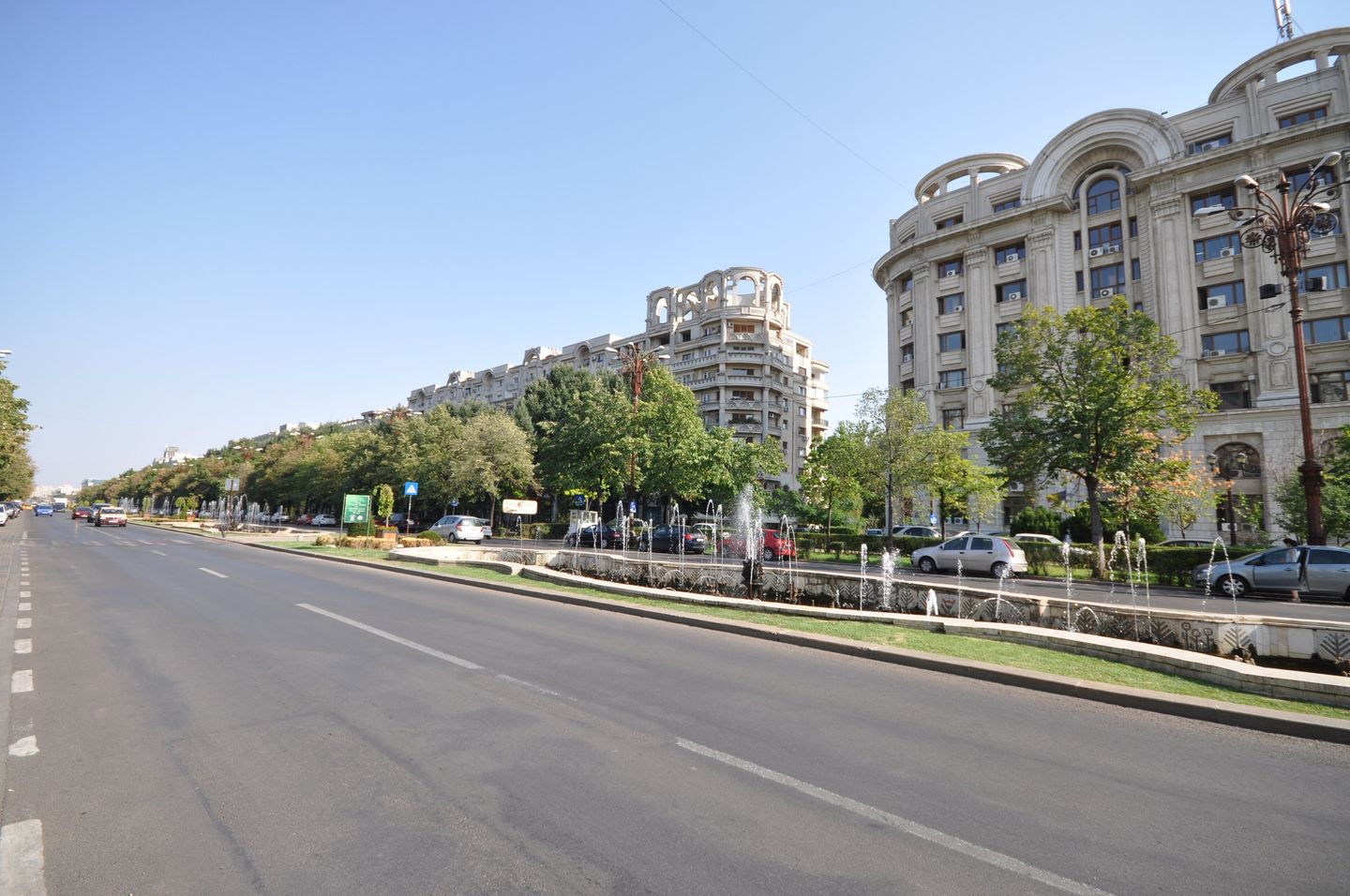
Bucharest has an image problem it did nothing to deserve. Mention it to most Western Europeans and you'll get a vague mental folder of grey apartment blocks, stray dogs and a dictator's palace, filed somewhere between 'former Eastern Bloc' and 'probably skip it.' The city that actually exists on the ground is a different proposition entirely: a once-nicknamed 'Little Paris' whose belle-époque boulevards, Art Nouveau villas and a genuinely grand early-twentieth-century downtown survived decades of earthquake damage, wartime bombing and one of the most aggressive urban demolition campaigns of the Cold War, then came out the other side still legible as the elegant city it used to be.
What makes Bucharest worth a dedicated trip rather than a layover is the collision of eras stacked on top of each other with almost no attempt at reconciliation. Walk five minutes in the centre and you'll pass a restored Belle Époque mansion, a Brutalist housing block from the 1980s, an Orthodox church small enough to miss and old enough to predate the city's written history, and then the single largest administrative building on earth, built by a regime that bulldozed a historic quarter the size of Venice to make room for it. Nowhere else lets you read twentieth-century European history this directly, this close together, without a museum curator standing between you and the buildings.
This isn't a nostalgia trip dressed up as urban exploration, either. Bucharest in the 2020s has one of the liveliest, cheapest nightlife scenes left in the European Union, a specialty coffee and craft beer culture that would not embarrass Berlin, and a dining scene currently rediscovering Romanian peasant cooking as something worth taking seriously rather than apologising for. The guide below treats the Ceaușescu-era landmarks as one layer of a much longer story, not the whole of it, and spends at least as much time on where that story is best eaten, drunk and slept through.
The caseWhy Bucharest earns the detour
Start with the scale of what's still standing. The Palace of the Parliament — still widely known by its old name, Casa Poporului, the People's House — is by floor area the largest administrative building in the world and by volume the heaviest building on the planet, a genuinely unhinged piece of totalitarian architecture that took the forced labour of tens of thousands of workers through most of the 1980s and was still unfinished when the regime that ordered it fell in December 1989. You can tour maybe a tenth of it and still spend forty minutes walking marble halls built on a scale designed to make a single human being feel like nothing in particular. No other European capital has anything comparable, and reading about it is a poor substitute for standing in one of its ballroom-sized corridors.
That building is also, usefully, the worst possible first impression of the city, because it tells you almost nothing about the Bucharest that existed before it and the one that has grown up around it since. The historic centre survived with enough of its pre-war fabric intact — ornate banking halls, a UNESCO-recognised Art Nouveau and interwar-modernist streetscape, a cluster of tiny Orthodox churches tucked between buildings a century younger than they are — that the city reads less like a Cold War relic and more like Vienna or Budapest's slightly scruffier, much cheaper cousin who never quite finished renovating the hallway.
And then there's the value proposition, which in 2026 is still absurd by Western European standards. A three-course dinner with wine at a genuinely good restaurant, a craft beer in a converted interwar bank lobby, a taxi across the entire city centre — all of it runs a fraction of the equivalent in Paris, Vienna or even Prague, without the compromise on quality that figure usually implies elsewhere. Bucharest isn't cheap because it's lacking; it's cheap because the exchange rate and cost of living haven't caught up to how good the city has quietly become.
The calendarWhen to go
Late April through June is the strongest window: the city's considerable stock of parks and gardens — Herăstrău, Cișmigiu, Carol Park — are at their best, days are long and warm without yet being oppressive, and outdoor terraces across the Old Town and the newer specialty-coffee strips fill up every evening. September into the first half of October runs a close second, trading a little blossom for golden light and noticeably thinner crowds, plus the first properly comfortable sleeping temperatures after a hot Bucharest summer.
July and August bring serious heat — Bucharest sits in a landlocked plain and regularly pushes past 35°C in high summer, with little relief after dark in the denser parts of downtown. It's also when most Romanians with the means to do so decamp to the coast or the mountains, so the city itself feels oddly emptied out even as tourist numbers tick up. Winter is genuinely cold, often below freezing with grey skies for days at a stretch, but it's also when hotel rates drop hardest, the Christmas market in University Square runs through December, and the museums and that enormous Palace empty out almost entirely.
One date worth knowing regardless of when you travel: 1 December is Romania's National Day, marking the 1918 unification of Transylvania with the rest of the country, and it brings a military parade and genuinely large crowds to the centre — worth building a trip around if you want the spectacle, worth avoiding the city centre for if you don't.
LogisticsGetting around
Bucharest is bigger and more spread out than its historic core suggests, but the centre itself — Old Town, University Square, Calea Victoriei, the start of Bulevardul Unirii — is compact enough to walk end to end in under an hour. For anything further, the metro is the single best tool in the city: five lines, cheap, frequent, and since 2020 running a direct line (M6) from the centre to Henri Coandă International Airport, which replaced what used to be a genuinely miserable bus-only transfer. Buy a contactless-enabled travel card at any station; day passes make sense if you're moving around a lot.
Above ground, an extensive tram and trolleybus network fills in the gaps the metro doesn't reach, running on the same ticketing system, though route-planning apps are worth having since the network's logic isn't always obvious to a first-time visitor. Ride-hailing apps (both Uber and the locally dominant Bolt) are cheap, reliable and widely used — cheaper, in most cases, than hailing a street taxi, and a sensible default for later-night trips or longer hops to Herăstrău or the airport if the metro's hours don't line up.
Walking the centre itself rewards no particular plan. Calea Victoriei, the city's grand historic spine running from University Square up toward the Arcul de Triumf and Herăstrău, strings together more of the belle-époque architecture than any other single route, and it's flat, tree-lined and genuinely pleasant on foot for its full length. Driving yourself is the one thing to actively avoid: Bucharest's traffic is dense, the on-street parking situation downtown is close to hopeless, and nothing in the historic centre benefits from a car in the first place.
The tableHow Bucharest actually eats
Romanian food has spent decades being underrated even within Europe, partly because the Communist-era export of the cuisine was mostly stodgy canteen cooking, and Bucharest's restaurant scene is currently in the middle of correcting that record. Start with the staples: sarmale (cabbage or vine-leaf rolls stuffed with minced pork and rice, slow-braised and usually served with polenta and a dollop of sour cream), mici (short, garlicky grilled minced-meat rolls, Romania's answer to the kebab and a fixture at every outdoor terrace and festival), and ciorbă, a broad family of sour soups — ciorbă de burtă (tripe) is the classic hangover cure, ciorbă de perișoare (meatball) the gentler entry point for the unconvinced.
The current wave of Bucharest kitchens is doing something more interesting than just serving these dishes well: several of the city's best-regarded restaurants are explicitly rebuilding Romanian peasant and regional cooking with better sourcing and more technique, rather than either ignoring it in favour of generic European fine dining or serving the tourist-trap version. Look for restaurants describing their menu as cuisine from specific regions — Oltenia, Moldova, Transylvania each have distinct culinary traditions — rather than a generic 'traditional Romanian' label, which usually signals more care went into the kitchen.
Coffee culture here is genuinely strong and inexpensive by European standards — specialty roasters have multiplied across the centre and the northern districts over the past decade, and a flat white at a serious third-wave café costs a fraction of the Western European equivalent. Craft beer has had a similar boom, often poured in repurposed interwar bank halls and department stores whose original architecture does most of the atmosphere's work. Street food, mici and a cold local beer eaten standing up at a festival or outdoor terrace, remains one of the most purely enjoyable ways to spend an evening here, and costs next to nothing.
The mapNeighbourhoods to know
The Old Town, Centrul Vechi, is the obvious first stop and the city's nightlife engine — a dense grid of pedestrianised streets around Lipscani, lined with bars, restaurants and some of the last surviving fragments of medieval Bucharest, including the ruined Old Princely Court where Vlad the Impaler briefly held his seat. It's genuinely atmospheric by day and genuinely loud by night; book here for convenience and energy, not for sleep.
Calea Victoriei and the area around University Square form the city's more dignified historic spine — the Romanian Athenaeum, the National Museum of Art in the former Royal Palace, grand belle-époque banking halls repurposed as bars and bookshops. It's central, walkable and considerably calmer after dark than the Old Town two streets over. North of here, the Dorobanți and Aviatorilor districts trade historic density for leafy, villa-lined streets, embassy-row calm and some of the city's better independent restaurants and cafés — a sensible, more residential base for a longer stay.
Further north again, the area around Herăstrău Park and the Arcul de Triumf is where Bucharest exhales: the Village Museum, the city's largest lake and green space, and a noticeably calmer, more suburban register that suits anyone prioritising a run or a quiet evening over proximity to nightlife. South of the centre, the area around Unirii and the Palace of the Parliament is more about the single monumental sight than any particular neighbourhood charm — worth visiting, not necessarily worth basing yourself in.
Field intelligencePractical intelligence
Romania uses the leu (plural lei), not the euro, despite being an EU member — card payments are near-universal in the capital, but it's worth carrying some cash for small cafés, market stalls and tips. English is widely spoken by anyone under about 45 in the service industry, considerably less so among older Bucharesters, though a basic bună ziua (good day) and mulțumesc (thank you) go a long way, as they do anywhere.
Tipping around 10 percent at sit-down restaurants is standard and appreciated, though rarely obligatory; check whether a service charge has already been added before doubling up. The city is generally safe for a European capital, with the usual pickpocket caution warranted around the main train station and crowded nightlife streets late at night rather than any broader concern.
The Palace of the Parliament requires advance booking for anything beyond the standard tour, and bring your passport — it's checked at the entrance as a matter of course given the building's continued use as the actual seat of the Romanian parliament and senate. Most of the city's major museums close on Mondays, which is worth building into any itinerary that leans heavily on indoor sights. And a small but real cultural note: Romanians nod for 'no' and shake their head for 'yes' in some older, more traditional contexts — a holdover that increasingly younger Bucharesters don't follow, but worth knowing if a gesture seems to contradict the words accompanying it.
What to see & do
-
Palace of the Parliament
The world's largest administrative building by floor area and heaviest by volume, built under Ceaușescu through most of the 1980s on the site of a bulldozed historic quarter. A forty-minute guided walk through a fraction of its marble halls is Bucharest's single most-visited sight.
Tip:Book online in advance and bring your passport; same-day walk-up tickets exist but with far less certainty, and ID checks are strict since the building remains in active government use.
-
Old Town (Centrul Vechi) and the Old Princely Court
A dense pedestrianised grid of restored belle-époque facades, bars and restaurants, built around the ruined foundations of the Old Princely Court where Vlad the Impaler briefly ruled from in the 15th century.
Tip:Visit the Old Princely Court ruins in daylight before the surrounding streets turn fully into nightlife — the historical fragments are easy to overlook once the terraces fill up.
-
Romanian Athenaeum
An ornate 1888 concert hall on Calea Victoriei, home to the George Enescu Philharmonic, with a domed, gilded auditorium that punches well above its modest exterior footprint.
Tip:Catch an evening concert if the schedule allows — tickets are inexpensive by Western European standards and the hall is the best way to see the interior properly.
-
Village Museum (Muzeul Satului)
An open-air museum on the edge of Herăstrău Park gathering genuine wooden churches, farmhouses and windmills relocated from across rural Romania — a crash course in regional vernacular architecture in a single afternoon.
Tip:Allow at least two hours and wear comfortable shoes; the grounds are larger and more spread out than they first appear from the entrance.
-
National Museum of Art of Romania
Housed in the former Royal Palace facing Revolution Square, with a European gallery holding genuine works by El Greco, Rembrandt and Monet alongside the country's deepest collection of Romanian medieval and modern art.
Tip:The European and Romanian collections are ticketed separately in some seasons — check at the desk so you don't accidentally skip half the museum.
-
Cișmigiu Gardens
The oldest public park in Bucharest, laid out in the 1840s around a central lake, with shaded promenades, a rowing-boat rental and chess tables that fill with players most afternoons.
Tip:Rent a rowing boat on the lake on a warm afternoon — it's one of the cheapest, most purely pleasant hours the city offers.
-
Cărturești Carusel
A restored 19th-century bank building in the Old Town converted into a six-storey bookshop and café, with white iron balustrades spiralling up around a central atrium that photographs better than almost anything else in the city.
Tip:Go on a weekday morning if you want the atrium photo without a crowd of other people taking the same one.
-
Revolution Square and the Memorial of Rebirth
The square where the 1989 revolution against Ceaușescu's regime turned decisively, still flanked by the former Communist Party headquarters balcony from which the dictator gave his final speech before fleeing by helicopter.
Tip:Pair it with the National Museum of Art directly opposite — the square's history reads very differently once you know what the buildings around it witnessed.
On the groundWhere things are
Map data © OpenStreetMap contributors.
Where to stayBase yourself well
Old Town (Centrul Vechi)
Best for first-timers and nightlifeBucharest's nightlife engine — restored belle-époque facades, wall-to-wall bars and restaurants, and the city's highest concentration of things to do within a five-minute walk. Loud after dark, genuinely atmospheric by day.
A boutique hotel on a quiet Lipscani side street
Pick a courtyard-facing room or one set back from the main pedestrian strip to keep the Old Town's energy without its noise at 2am.
€€A design-led apartment near the Old Princely Court
Puts the historic core, the National Bank and the best bars within an easy stumble, at a fraction of what the same location would cost further west in Europe.
€€Calea Victoriei & University Square
Best for a central base without the nightlife noiseThe dignified historic spine — the Athenaeum, the former Royal Palace, grand banking halls — with real Old Town proximity but a noticeably calmer night-time register two streets over.
A classic hotel directly on Calea Victoriei
Everything on the main boulevard is walkable from here, and the street itself empties out and quiets down well before midnight.
€€€Dorobanți & Aviatorilor
Best for longer stays and a quieter, local-feeling baseLeafy, villa-lined embassy-row streets north of the centre, with some of the city's better independent restaurants and cafés and a genuinely residential, lived-in feel.
A converted villa guesthouse off Calea Dorobanților
Trades a few minutes' metro ride into the centre for tree-lined streets, better restaurant density, and real quiet after 10pm.
€€Herăstrău & the Arcul de Triumf
Best for runners, families and anyone prioritising green spaceThe city's green, exhale-and-slow-down district — the largest park and lake in Bucharest, the Village Museum on its doorstep, and a more suburban, spread-out pace than anywhere closer to Old Town.
A modern hotel near the Arcul de Triumf
A short metro ride from the centre in exchange for lakefront runs and far lower night-time noise than downtown.
€€Affiliate notePostcardRoute is reader-supported. Some links to Booking.com (stays, flights, car hire, tickets and tours, airport transfers) are affiliate links, tracked through CJ Affiliate: if you book through them we may earn a small commission at no extra cost to you. We only recommend places we would send a friend.
Book the restEverything else for the trip
Stay sorted? These open Booking.com for the other legs of the journey.
-
Tours & tickets
Things to do in Bucharest
Skip-the-line tickets, tours and day trips.
Browse activities -
Wheels
Car hire in Bucharest
Compare pick-up points and rental companies.
Compare cars -
Air
Flights
Search fares, then come back for the neighbourhood advice.
Search flights -
Ground
Airport transfers
Book a taxi or private transfer before you land.
Book a transfer
Affiliate noteThese four links are affiliate links too: if you book through them we may earn a small commission at no extra cost to you.
Beyond the cityWorthwhile day trips
- Peleș Castle, Sinaia
A two-hour train into the Carpathians to the fairy-tale Neo-Renaissance mountain retreat built for King Carol I in the 1870s — widely considered Romania's most beautiful castle, and nothing like the Dracula-themed kitsch some visitors expect.
- Snagov
A lakeside monastery roughly 40 minutes north of the city, reputedly (if disputedly) the burial place of Vlad the Impaler, set on a small island reached by rowing boat or a short bridge walk.
- Mogoșoaia Palace
A restored 17th-century Wallachian princely residence just outside the city, blending Ottoman and Venetian architectural influences around formal gardens and a small lake — an easy half-day escape without a long drive.
Before you goCommon questions
- How many days do you need in Bucharest?
- Three full days covers the headline sights — the Palace of the Parliament, the Old Town, the main museums — with time left over to properly wander Calea Victoriei and Herăstrău Park. Two days works for a focused visit; a single day will show you the Palace and little else.
- Is Bucharest safe for tourists?
- Yes, by any normal European standard. The usual precautions apply around the main railway station and late-night crowds in the Old Town, but violent crime against visitors is rare and the city centre is well lit and busy well into the evening.
- Is Bucharest expensive to visit?
- No — it remains one of the best-value capitals in the European Union. Restaurant meals, drinks, museum tickets and taxis all run a fraction of equivalent Western European prices, without a corresponding drop in quality, which is a large part of the city's current appeal.
- Do I need to see Dracula sites in Bucharest?
- The historical Vlad the Impaler connection to Bucharest is thin — he briefly held court at the Old Princely Court ruins in the Old Town, which is worth a short visit, but the famous castle sites associated with the Dracula legend (Bran, Poenari) are in Transylvania, several hours away, not in or near the capital.
- What is the best area to stay in Bucharest for first-timers?
- The Old Town (Centrul Vechi) for proximity to nightlife and sights, or Calea Victoriei and University Square for the same central convenience with a calmer night-time atmosphere. Both put the city's main attractions within easy walking distance.
- How do I get from the airport into central Bucharest?
- Metro line M6 runs directly from Henri Coandă International Airport into the city centre in well under an hour and is the cheapest, most reliable option. Ride-hailing apps (Uber or Bolt) are a fast, inexpensive alternative if you're arriving with luggage or late at night.