
Belgium · West Flanders
Bruges after the tour buses pull out
A medieval city so completely intact it can look staged in the middle of the day — and then the coaches leave, the canals go quiet, and it stops looking staged at all.
A city that stopped building six centuries ago and never looked back · 51.21° N · 3.22° E
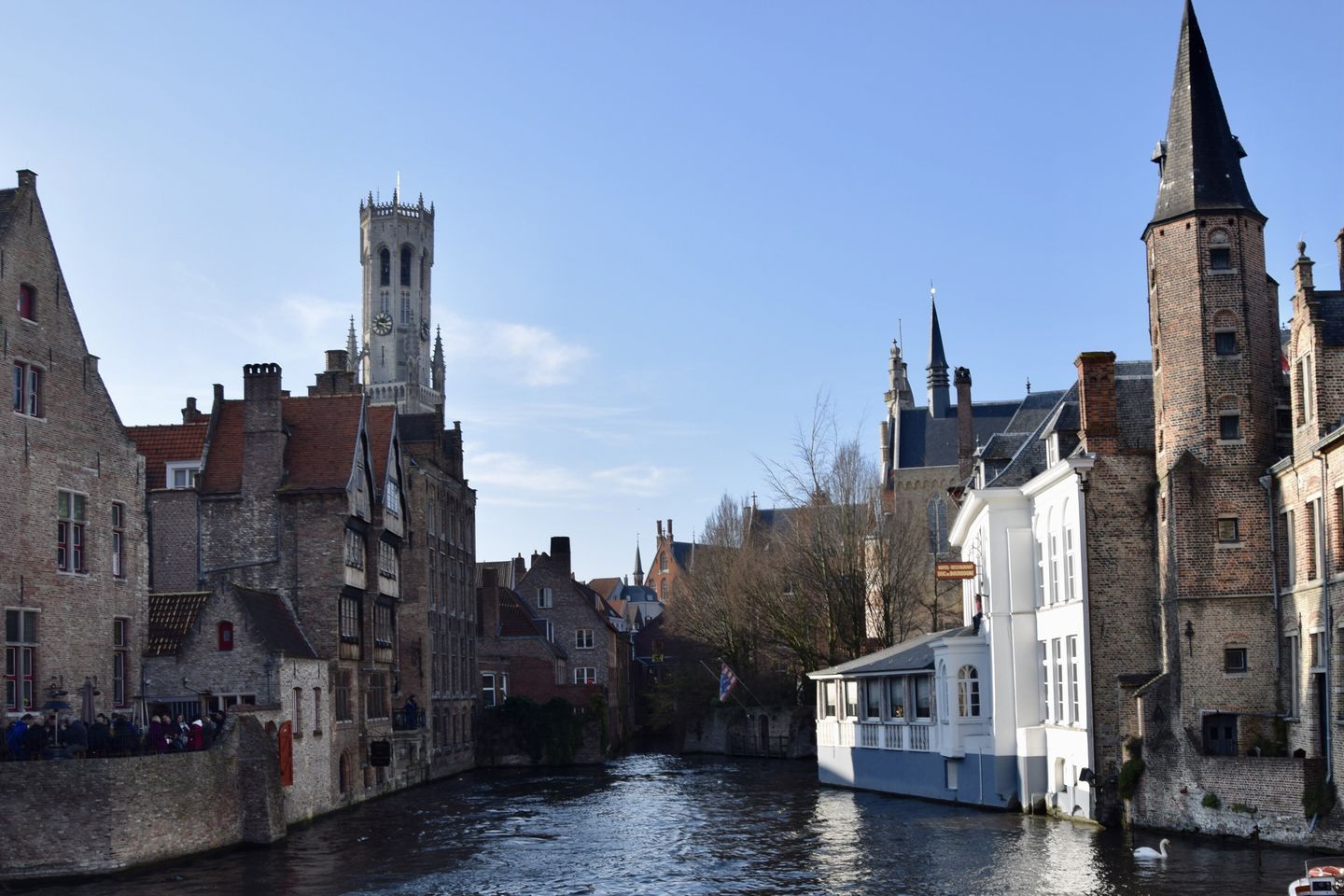
Bruges is the rare European city whose main selling point is something that didn't happen. In the late 15th century the River Zwin, which connected the city to the North Sea and had made it one of the wealthiest trading ports in Europe, began silting up. The ships went elsewhere, the merchants followed, and Bruges spent the next four centuries as a quiet provincial backwater instead of a thriving one — too poor to tear down its Gothic core and rebuild it in whatever style happened to be fashionable, the way Brussels, Antwerp and nearly every other prosperous city did. The accident of that decline is the reason a visitor today can stand on the Rozenhoedkaai and look at a skyline that has barely changed since the Burgundian dukes ruled the Low Countries from here.
That history gives Bruges its defining tension, and its defining problem. The historic centre is a genuine UNESCO World Heritage Site, not a themed reconstruction, and the density of real medieval and Gothic architecture packed into one square kilometre of cobbled streets and canals has no real equivalent north of the Alps. It has also made Bruges one of the most heavily day-tripped cities in Europe — a straightforward train ride from Brussels, a frequent stop for Baltic and North Sea cruise coaches, and small enough that a few thousand extra visitors between eleven and four can make the Markt feel more like a queue than a square.
The fix is almost embarrassingly simple: stay the night. Nearly every day-tripper arrives mid-morning and leaves by early evening, so a visitor who sleeps in Bruges gets two cities for the price of one — the working postcard that everyone photographs at lunchtime, and the hushed, lamplit, almost eerily quiet town that exists before nine and after six. What follows is built around that split, plus the chocolate, beer and lace-making culture, the day trips worth the short hop out, and the practical detail — much of it about footwear and crowd timing — that separates a frustrating afternoon from a genuinely memorable one.
The caseWhy Bruges still earns the detour
Set aside the "Venice of the North" marketing line, which undersells the place by comparison rather than describing it. Bruges is its own thing: a complete, walkable, UNESCO-protected medieval trading city, with a belfry you can climb, a basilica housing a relic venerated since the Crusades, and one of the only Michelangelo sculptures to leave Italy during his lifetime sitting almost unguarded in a parish church. The scale is the real gift — the entire historic centre is small enough to cross on foot in under half an hour, so a few days here never feel like a checklist the way a few days in a capital city can.
The other case for Bruges is sensory rather than architectural. This is a serious food and drink city hiding behind the swans and the lace shops: Belgium's chocolate culture concentrated into a few blocks of family-run chocolatiers, a beer scene that treats brewing as regional identity rather than a novelty, and a kitchen tradition built around slow stews and proper frites that has nothing to do with the waffle stands aimed at day-trippers. Taken together — the architecture, the scale, the table — Bruges rewards a visitor who commits to more than a single afternoon far more than its day-trip reputation suggests.
The calendarWhen to go
Late spring (May, early June) and early autumn (September, early October) are the sweet spots, for the usual reasons: mild weather, long evening light over the canals, and crowd levels that have thinned from the summer peak without the city shutting down. July and August bring the heaviest day-trip and cruise-coach traffic, when the Markt and the main canal bridges can feel genuinely overwhelmed between late morning and mid-afternoon — workable if you're staying overnight and willing to see the headline sights early or late, hard if you're trying to do it all in a single midday visit.
Winter is Bruges's most underrated season. The crowds drop sharply, the canals occasionally ice over into something properly atmospheric, and the Christmas market on the Markt and Simon Stevinplein (late November through early January) adds mulled wine stalls and an ice rink to a city that already looks like a storybook illustration. Carnival and spring bring their own smaller events, but the real variable to plan around isn't the season so much as the hour — any time of year, arrive at the big sights before 10am or after 5pm and you are seeing a meaningfully different, quieter city than the one in everyone else's photos.
LogisticsGetting around
Walk, almost exclusively. The historic centre is roughly 430 hectares and genuinely small enough to cross end to end in half an hour on foot; most visitors never need public transport inside it at all. The cobblestones are real and uneven in places, which matters more here than in most cities — trade the stylish shoes for something with a sole that can handle wet stone, because Bruges gets rain year-round and canal-side cobbles get slick.
A bicycle is the second-best option and genuinely useful for reaching the edges of the centre, the train station, or a day trip to nearby Damme — rental shops are everywhere and the city's flat terrain and (mostly) calm traffic make it an easy place to cycle even for the rusty. Canal boat tours run regularly from several jetties along the Dijver and give a view of the backs of buildings invisible from the street, though they operate on a fairly fixed seasonal schedule (roughly March to November) and queue heavily at peak midday hours. Bruges railway station sits a 15–20 minute walk south of the centre, with frequent direct trains to Brussels, Ghent and the coast, and a bus link into the Markt for anyone with luggage or limited mobility.
The tableHow Bruges actually eats and drinks
Chocolate here is not a souvenir gimmick, or at least it doesn't have to be — the city supports a genuine density of small, independent chocolatiers making pralines and truffles by hand, and the difference between those and the mass-market shops lining the main tourist streets is immediately obvious once you've tasted both. The same goes for beer: Bruges has its own city brewery, De Halve Maan, which still brews Brugse Zot on-site in the historic centre and pipes the unfermented beer under the streets to a bottling plant outside town to dodge delivery-truck traffic on medieval roads — a genuinely strange and very Bruges piece of civic engineering, and the brewery tour explains it properly.
For food, look past the waffle stands aimed squarely at passing day-trippers and toward the Flemish kitchen proper: stoofvlees (a dark beer-braised beef stew, Belgium's answer to French carbonade), mussels in season, and frites fried twice in beef fat and served with mayonnaise rather than ketchup, from a proper frituur rather than a tourist-menu restaurant. Belgian portions and prices both run generous by European standards, and a sit-down dinner here is rarely a quick affair — book ahead at anywhere with a reputation, and treat the beer list as seriously as the wine list, because in Bruges it deserves to be.
The mapQuarters to know
The Markt and Burg squares form the dense, photogenic core — belfry, basilica, city hall, and the heaviest day-trip footfall in the city, worth basing near for convenience but not for quiet. A few streets east, around Sint-Anna, the character changes completely: residential, almost suburban in its calm, with the Jerusalem Church and a handful of small museums that see a fraction of the Markt's crowds, and genuinely local bakeries rather than tourist-menu cafés.
South of the centre, the Begijnhof and Minnewater quarter trades the density of the old town for green space, swans, poplar-lined water and a hush that can feel like a different city entirely — it is also a short, pleasant walk from the railway station, which makes it a sensible base for a first or last night. North of the Markt, Sint-Gillis is where a lot of actual Bruges residents live and shop, with fewer souvenir shops and a more ordinary, workaday Flemish feel that's worth an afternoon's wander if the postcard centre starts to feel like a stage set.
Field intelligencePractical intelligence
Bruges is compact enough that most sights don't need advance booking, with two notable exceptions: the Belfry's narrow spiral staircase limits how many people can be inside at once, so a timed online ticket avoids a long standing queue at the base, and the Church of Our Lady's Michelangelo Madonna sits in a paid chancel area that gets genuinely crowded by midday. Both are worth booking the first slot of the morning if you can manage it.
Dutch is the local language (specifically the West Flemish dialect), but English and French are both widely spoken in anything tourist-facing, so language is rarely a practical barrier. Tipping follows the general Belgian pattern — service is usually included, and rounding up is generous rather than expected. The canals look inviting on a hot day but swimming in them is neither legal nor sensible; admire from the many stone bridges instead. And because this is a city built almost entirely around water crossings, allow extra time for any walk that looks short on a map — the actual route rarely runs in a straight line.
What to see & do
-
Markt & the Belfry
The beating heart of the city: a vast cobbled square ringed by stepped-gable guild houses, dominated by the 83-metre Belfry, whose 366-step climb rewards you with a carillon room and a rooftop view across the entire historic centre.
Tip:Book a timed Belfry ticket for the first slot of the day online — the staircase is one-at-a-time narrow and the queue by midday can run well over an hour.
-
Burg Square & the Basilica of the Holy Blood
A quieter, more architecturally eclectic square one block from the Markt, home to the Gothic city hall and a basilica said to house a relic of Christ's blood brought back from the Second Crusade.
Tip:The relic is shown for public veneration only at specific times (traditionally Friday mornings) — check the current schedule if that's the reason for your visit.
-
Groeninge Museum
A compact but world-class collection of Flemish Primitives — Jan van Eyck, Hans Memling, Gerard David — the painters who effectively invented oil-painting realism in this city during its 15th-century commercial peak.
Tip:It's small enough to see properly in 90 minutes; pair it with the nearby Arentshuis rather than treating it as a half-day museum.
-
Church of Our Lady
A brick Gothic church with Europe's second-tallest brick tower, and home to Michelangelo's Madonna and Child — one of only a handful of his sculptures to leave Italy in his own lifetime.
Tip:The nave is free; the Madonna sits in the paid chancel area, which is worth the small fee and best visited right at opening to avoid tour groups.
-
Begijnhof & Minnewater
A whitewashed, poplar-shaded beguinage where lay religious women once lived communally, opening onto the Minnewater — the 'Lake of Love' — a genuinely tranquil green corner a world away from the Markt's crowds.
Tip:Come at dusk, when the beguinage gates are quiet and the lake's swans and willows are at their most photogenic without the daytime foot traffic.
-
Rozenhoedkaai
The single most photographed canal bend in Bruges, where the water curves past stepped gables with the Belfry rising behind — the image on most of the city's postcards, for good reason.
Tip:Arrive at sunrise or just after if you want the view without a dozen other people's phones in the frame.
-
De Halve Maan Brewery
The last working brewery inside the historic centre, still producing Brugse Zot on a site that has brewed beer since the 16th century, famous for piping its unfermented beer under the city streets to avoid lorry traffic.
Tip:Book the guided tour online ahead — it includes a tasting and climbs several tight staircases, so isn't ideal right after a big lunch.
-
Canal boat tour
A roughly 30-minute boat circuit from one of several jetties along the Dijver, giving a waterline view of bridges, back gardens and building foundations that are invisible from the surrounding streets.
Tip:Go either the first departure of the day or close to the last — midday queues at the main jetties can run well past half an hour in summer.
On the groundWhere things are
Map data © OpenStreetMap contributors.
Where to stayBase yourself well
Markt & Burg (the historic core)
Best for first-timers who want everything on footThe postcard centre — belfry, basilica, guild houses, and the heaviest day-trip footfall in the city. Maximally convenient, maximally busy by midday, and genuinely magical once the crowds thin in the evening.
A gabled boutique hotel just off the Markt
Look for a small hotel on one of the quieter side lanes rather than directly on the square itself, to trade a few steps of distance for a much quieter night.
€€€A canal-view guesthouse near Burg Square
Several converted townhouses here look straight onto the water — ask specifically for a canal-facing room when booking.
€€Sint-Anna
Best for a calmer base without sacrificing distanceA quiet residential quarter a few streets east of the Markt, with the Jerusalem Church, the lace museum, and genuinely local bakeries rather than tourist-menu cafés. Still a short walk from everything, with none of the core's crush.
A family-run B&B in a converted almshouse near Jerusalem Church
This quarter has some of the best value-for-quiet in the city — expect smaller properties and a warmer, more personal welcome than the Markt's hotels.
€€Begijnhof & Minnewater
Best for romance and a quiet first or last nightGreen, hushed, and built around the beguinage and the Lake of Love rather than monuments — the most romantic corner of the city, and a sensible choice if you're arriving or leaving by train.
A converted convent guesthouse near the Begijnhof gate
Several properties here occupy genuinely historic religious buildings — ask about room size, as some conversions keep original, compact cell-like layouts.
€€€A modern hotel between Minnewater and the station
Trades a little old-town atmosphere for an easy wheeled-luggage walk to the trains, useful on a tight connecting itinerary.
€€Sint-Gillis & the north
Best for value and a more local feelWhere a lot of actual Bruges residents live, shop and eat — fewer souvenir shops, more ordinary Flemish neighbourhood life, and noticeably better value than the core for a similar walk-in time.
A simple guesthouse on a residential street near Sint-Gilliskerk
Expect a plainer room for a lower price and a ten-to-fifteen-minute walk into the Markt — a fair trade for anyone not chasing a canal view.
€Affiliate notePostcardRoute is reader-supported. Some links to Booking.com (stays, flights, car hire, tickets and tours, airport transfers) are affiliate links, tracked through CJ Affiliate: if you book through them we may earn a small commission at no extra cost to you. We only recommend places we would send a friend.
Book the restEverything else for the trip
Stay sorted? These open Booking.com for the other legs of the journey.
-
Tours & tickets
Things to do
Tickets, tours and activities, anywhere.
Browse activities -
Wheels
Car hire
Compare rental companies worldwide.
Compare cars -
Air
Flights
Search fares, then come back for the neighbourhood advice.
Search flights -
Ground
Airport transfers
Book a taxi or private transfer before you land.
Book a transfer
Affiliate noteThese four links are affiliate links too: if you book through them we may earn a small commission at no extra cost to you.
Beyond the cityWorthwhile day trips
- Ghent
A thirty-minute train ride east to a city with the same Flemish Gothic bones as Bruges but a real working-city energy and far fewer day-trippers, built around its own belfry, cathedral and a lively student population.
- Ypres (Ieper)
An hour southwest to a town rebuilt brick by brick after near-total destruction in the First World War, now home to the In Flanders Fields Museum and the nightly Last Post ceremony at the Menin Gate — a sobering, essential half-day for anyone interested in the war's history.
- Damme
A tiny fortified canal town six kilometres northeast, reachable by a flat, poplar-lined bike path or a seasonal canal boat — a scaled-down, almost entirely tourist-free version of Bruges itself, best paired with lunch at one of its handful of restaurants.
- Zeebrugge & the coast
Bruges's own seaside outlet, twenty minutes by train, with a working ferry port, a long sandy beach, and the Seafront maritime museum — a straightforward change of pace if the old town's cobbles start to feel claustrophobic.
Before you goCommon questions
- How many days do you need in Bruges?
- Two full days covers the historic centre's headline sights at a reasonable pace, including the Belfry, Groeninge Museum, Church of Our Lady and a canal tour. One overnight stay is the real minimum worth building a trip around, since it lets you see the city both during the busy midday hours and in the quiet morning or evening either side of them — a single rushed day trip from Brussels shows you the postcard but not the place.
- Is Bruges worth visiting if it's so touristy?
- Yes, but the timing matters more here than in most cities. Bruges genuinely does get crowded with day-trippers and cruise-coach groups between roughly 11am and 4pm in peak season, and a visit confined to those hours can feel like a queue. Stay overnight, see the main sights early or late, and the same city feels completely different — quiet, lamplit, and far closer to what drew people to it in the first place.
- What is the best area to stay in Bruges?
- The Markt and Burg core is most convenient for first-timers who want everything within a short walk, though it's also the busiest by day. Sint-Anna, a few streets east, offers a quieter, more residential base at a similar distance from the centre, and the Begijnhof/Minnewater quarter to the south is the most tranquil option and handy for the train station.
- Can you do Bruges as a day trip from Brussels?
- Yes — direct trains run roughly hourly and take about an hour, making it a popular day trip. It works for seeing the headline sights, but you'll be visiting during the busiest part of the day alongside every other day-tripper; anyone with a flexible itinerary gets a meaningfully better experience by staying one night instead.
- What is the best time of year to visit Bruges?
- Late spring (May–June) and early autumn (September–early October) bring the best balance of mild weather and manageable crowds. Winter is a quieter, atmospheric alternative, especially around the Christmas market on the Markt. July and August are the busiest months and the hardest to enjoy without an overnight stay to dodge the midday crush.
- Do I need to speak Dutch or French in Bruges?
- No. Bruges is in Flemish-speaking West Flanders, but English is widely spoken in hotels, restaurants and shops throughout the historic centre, and French is a reliable backup. A little effort with basic Dutch greetings is appreciated but never required.
- Is Bruges a good base for seeing more of Belgium?
- Reasonably — Ghent, Brussels and the coast are all under an hour away by train, making Bruges a workable base for a few days of day trips. That said, Ghent in particular rewards an overnight stay of its own rather than being treated purely as an add-on to a Bruges trip.