
Slovakia · Bratislava Region
Bratislava deserves more than a lunch stop
Most itineraries reduce it to a half-day add-on before or after Vienna. Stay one night and the calculation changes completely.
Dispatch from the capital most people only pass through on the way to Vienna · 48.15° N · 17.11° E
Plan this trip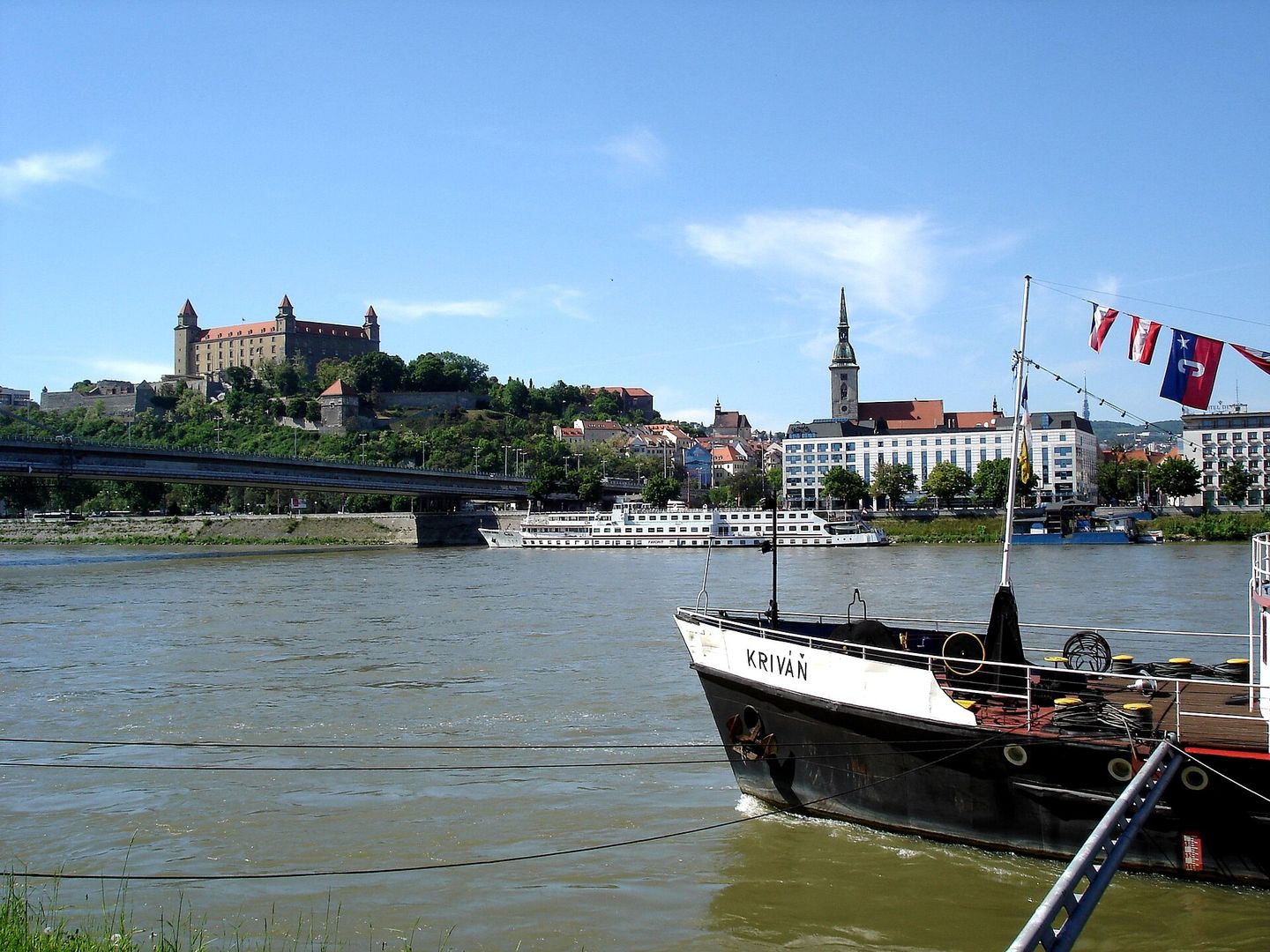
Bratislava has an image problem it did not entirely earn: the capital you glimpse from a Danube river cruise, the city coach parties tick off in three hours between breakfast in Vienna and dinner in Budapest. It is, after all, the only national capital in the world that shares a border with two other countries, sitting so close to Austria that a tram used to run straight across the frontier. That proximity has quietly worked against it — why book a hotel here when Vienna's opera houses and Habsburg grandeur are an hour up the river?
The answer is that Bratislava is a genuinely different city, not a smaller version of its famous neighbour, and the difference is most of the appeal. Its Old Town survived Communist-era redevelopment in miniature — a tight knot of baroque townhouses, courtyards and a single crooked main square, small enough to feel intimate rather than monumental. Above it, a scrubbed-white castle looks almost too tidy to be four hundred years old, because most of what you see today was rebuilt from a shell after a 1811 fire and decades of neglect. Across the river, the vast Petržalka housing estate is one of the most complete pieces of Communist urban planning left standing in Central Europe, and it is far more interesting up close than any coach-tour itinerary suggests.
This dispatch treats Bratislava as its own destination rather than Vienna's overflow car park. What follows covers when to come, how to get around a city built at a human scale, where Slovak food and the Little Carpathians wine country actually shine, and which neighbourhood to base yourself in for an evening that has nothing to do with catching the last train out.
The caseWhy Bratislava earns a night, not just an afternoon
The daytime highlights are real: the castle terrace view over the Danube bend, the pedestrian Old Town with its baroque facades and the bronze Čumil statue peering up from a manhole, the ornate interior of the Slovak National Theatre. All of that fits comfortably into an afternoon, which is exactly why so many visitors never come back after doing it once as a Vienna day trip.
What that afternoon misses is the city after the tour buses leave. Old Town wine bars fill with Slovaks rather than cruise passengers once the light drops, the UFO observation deck on the Most SNP bridge turns the whole valley gold at sunset, and the Danube embankment near Eurovea becomes a genuine evening promenade rather than a photo stop. Prices are also a real argument: a good dinner and a bottle of Little Carpathians wine here costs a fraction of the equivalent evening in Vienna, for a city that is, if anything, easier to navigate on foot.
The calendarWhen to go
May, June and September are the reliable months — warm enough for the riverside terraces and the Danube embankment to fill up, without the sharpest heat of July and August, when temperatures regularly push past 28°C and the Old Town's stone squares hold the warmth long after dark. Spring brings blossom to the castle gardens and comfortable walking weather from around mid-April.
December has its own case: Bratislava's Christmas market on Main Square and Hviezdoslavovo Square is smaller and considerably less crowded than Vienna's, with the same mulled wine and roasted chestnuts and a fraction of the queue. Winter proper, from January through February, is genuinely cold and often grey, but hotel rates drop hard and the castle grounds are close to empty. Whatever the season, check the calendar for Slovak public holidays — a compact Old Town with half its shops shuttered feels considerably smaller than it is.
LogisticsGetting around
Bratislava is built for walking. The Old Town, the castle hill and the riverfront are all within a twenty-minute stroll of each other, and most visitors will barely need public transport inside that core. The exceptions are Petržalka across the river and Devín Castle out toward the Austrian border, both of which are a short bus or tram ride rather than a walk.
The city runs an integrated tram, bus and trolleybus network on a single ticket system, bought from machines at stops or via the DPB mobile app — validate it the moment you board, since inspectors do check and fines are not gentle. From Vienna, the fastest link is the direct train to Bratislava hlavná stanica in about an hour, or the Twin City Liner boat along the Danube for a scenic alternative at a higher price. Bratislava Airport itself mostly serves budget carriers; many travellers actually fly into Vienna and take the train in, which is often cheaper and just as fast door to door.
The tableSlovak food and the Little Carpathians
Slovak cooking is hearty, unpretentious, and built around potatoes, cabbage and sheep's cheese rather than the pastry-shop elegance of Vienna next door. The dish to order at least once is bryndzové halušky — small potato dumplings tossed with bryndza sheep's cheese and topped with crisp bacon — a genuinely national dish rather than a tourist invention, found on menus from grand restaurants to student canteens. Kapustnica, a sour cabbage soup with sausage and smoked meat, is the winter counterpart, especially around Christmas.
What sets Bratislava apart from most capitals is how close serious wine country sits to the city limits. The Malé Karpaty (Little Carpathians) wine route begins almost at the tram terminus, running through villages like Rača, Svätý Jur, Pezinok and Modra, where family wineries pour Grüner Veltliner, Welschriesling and the local red Frankovka modrá at prices that would be unthinkable in comparable regions further west. A half-day tasting trip by regional train or organised tour is one of the best-value additions you can make to a Bratislava stay.
The mapNeighbourhoods to know
Staré Mesto, the Old Town, is where almost every visitor spends most of their time — a compact pedestrian tangle around Hlavné námestie (Main Square) and Hviezdoslavovo námestie, dense with cafés, the Primatial Palace, and the narrow lanes leading up to the castle. It is unapologetically the tourist centre, but it is also where locals still work, drink and go to the theatre, and it never feels as manufactured as equivalent old towns three times its size.
Across the Most SNP bridge, Petržalka is the flip side of the postcard: a sprawling panelák housing estate built for over a hundred thousand people under Communist-era planning, now slowly gaining riverside parks, street art and a handful of genuinely good local bars amid the concrete blocks. It rewards an hour of curious wandering far more than its reputation suggests. Back on the Old Town side, the newer Eurovea and Nové Mesto areas along the river bring glass-and-steel development, a shopping promenade, and some of the city's better modern dining, a useful contrast to the baroque core a ten-minute walk away.
Field intelligencePractical intelligence
English is widely understood in the Old Town's restaurants and hotels, though a few words of Slovak — dobrý deň for hello, ďakujem for thank you — go a long way, and German is often a useful backup given the city's proximity to Austria and its Habsburg-era history. The currency is the euro, and Bratislava runs noticeably cheaper than Vienna for food, drink and accommodation, which is one of the strongest arguments for basing a trip here rather than treating it as a side note.
The Old Town is compact enough that a paper map or offline app is really all you need; the castle hill and the main square are visible from most vantage points, so getting lost tends to be brief. Sunday sees many shops close and museum hours shorten, so plan any specific ticketed sight around a weekday if possible. Tipping around ten percent for good restaurant service is standard and appreciated, though not obligatory in the way it is in the United States.
Field notesWhat to see & do
-
Bratislava Castle
The whitewashed hilltop fortress that defines the skyline, its four corner towers visible from almost anywhere in the Old Town. Most of what stands today was rebuilt after a fire gutted the original in 1811 and it sat as a ruin for over a century.
On the groundSkip the paid interior museum unless Slovak history genuinely interests you — the free courtyard and the terrace garden give the best river views for nothing.
-
Old Town (Staré Mesto)
A tight, walkable knot of baroque townhouses and pedestrian lanes centred on Hlavné námestie and Hviezdoslavovo námestie, small enough to cover on foot in an afternoon but rewarding a slower wander.
On the groundLook down as you cross the square near the Old Town Hall — the bronze Čumil statue peers out of a manhole cover and is easy to miss entirely.
-
St. Michael's Gate
The last surviving gate of the medieval city fortifications, a narrow stone tower you walk directly beneath entering the Old Town from the west, with a small weapons museum inside.
On the groundClimb the narrow interior stairs for a modest but genuine rooftop view over the Old Town's terracotta roofs.
-
Most SNP and the UFO observation deck
A single-pylon bridge across the Danube topped by a flying-saucer-shaped restaurant and viewing platform, an unmistakable piece of late-Communist engineering that has become one of the city's most photographed landmarks.
On the groundGo up around sunset — the deck faces west over the Old Town and castle, and the light show as the sky changes colour is the best fifteen minutes in the city.
-
Petržalka
The vast panelák housing estate across the river, built for well over a hundred thousand residents under Communist-era planning and still one of the largest single housing developments in Central Europe.
On the groundWalk the riverside Sad Janka Kráľa park and the murals near Chorvátske rameno rather than the interior blocks — it is the most rewarding introduction to a district most visitors skip entirely.
-
Primatial Palace
A neoclassical palace just off the main square, best known for its Hall of Mirrors, where the 1805 Peace of Pressburg was signed after Austerlitz, and a set of rare 17th-century English tapestries discovered by accident during a 1903 renovation.
On the groundEntry is inexpensive and the palace is rarely crowded, making it one of the calmer indoor stops in the Old Town on a hot or wet afternoon.
-
Slovak National Theatre and Hviezdoslavovo námestie
A grand neo-Renaissance opera house anchoring one end of a long, tree-lined pedestrian square that runs toward the river, lined with cafés and the odd street performer in summer.
On the groundTickets for opera and ballet performances here are a fraction of Vienna's prices and rarely need booking more than a few days ahead.
-
Devín Castle
Dramatic ruins perched on a rock at the confluence of the Danube and Morava rivers, marking the border with Austria, with foundations dating back to Great Moravian and even Roman times.
On the groundTake bus 29 from Nový Most rather than a taxi — the ride itself hugs the Danube and is part of the appeal.
On the groundWhere things are
Map data © OpenStreetMap contributors.
Where to stayBase yourself well
Staré Mesto (Old Town)
Best for first-timers and anyone without a carThe obvious first choice and, for a city this compact, close to the only choice most first-timers need — everything is within walking distance, and the baroque streets are as pleasant at 8am as at midnight.
A boutique hotel just off Hviezdoslavovo námestie
Puts the theatre, the riverfront and the castle steps all within a ten-minute walk in any direction.
€€€A guesthouse near Michalská Street
The pedestrian lane running through the heart of the Old Town, loud with café chatter by day and quiet enough to sleep by night.
€€Below the castle
Best for a quieter base with castle viewsThe Podhradie district climbing toward Bratislava Castle, quieter and steeper than the flat Old Town core, with a handful of characterful small hotels and views that improve with every block uphill.
A small hotel on the castle hill's lower slopes
Expect stairs and cobbles rather than a lift, traded for a view over the Old Town rooftops from your window.
€€Eurovea and the riverfront
Best for business travellers and modern comfortsModern glass-and-steel development along the Danube east of the Old Town, with international chain hotels, a shopping promenade, and a fifteen-minute riverside walk into the historic centre.
A riverside hotel near the Eurovea promenade
Trades Old Town atmosphere for larger rooms, river views, and easy access to the newer dining strip along the embankment.
€€€Petržalka
Best for budget travellers happy to commute a short hopAcross the river from the Old Town, considerably cheaper, and connected by a short bus or tram ride over Most SNP — worth considering for a longer stay on a tighter budget.
An apartment near the Petržalka riverside park
A five-minute bus ride from the Old Town for a noticeably lower nightly rate, with the added novelty of an evening in a genuinely local neighbourhood.
€Affiliate notePostcardRoute is reader-supported. Some links to accommodation are affiliate links: if you book through them we may earn a small commission at no extra cost to you. We only recommend places we would send a friend.
Beyond the cityWorthwhile day trips
- Vienna, Austria
The two capitals sit barely an hour apart by direct train, making Bratislava the easiest add-on to a Vienna trip or, argued the other way round, the best reason to see Vienna as the day trip instead.
- Devín Castle
A half-day out to the dramatic ruins at the meeting of the Danube and Morava rivers, close enough for a short bus ride and a genuine change of pace from the Old Town's cafés.
- Little Carpathians wine villages
Pezinok, Modra and Svätý Jur sit a short regional train ride from the city, each with family-run wineries pouring Grüner Veltliner and Frankovka modrá at prices well below the wine regions of Western Europe.
- Trnava
Slovakia's first free royal town, sometimes called the 'Little Rome' for its density of church towers, is a compact and largely overlooked historic centre under an hour away by train.
Before you goCommon questions
- Is Bratislava worth visiting, or just a day trip from Vienna?
- It is worth an overnight in its own right. A day trip covers the castle and the Old Town, but it misses the city after the coach parties leave — the UFO bridge deck at sunset, the Old Town's evening wine bars, and a half-day out to the Little Carpathians wine villages, none of which fit into a rushed afternoon.
- How many days do you need in Bratislava?
- One full day covers the Old Town and castle comfortably; two lets you add Devín Castle or a Little Carpathians wine trip without rushing either. Few visitors need more than that inside the city itself, but pairing it with Vienna makes a very efficient long weekend.
- What is the best area to stay in Bratislava?
- Staré Mesto, the Old Town, for almost everyone — it puts the castle, the main squares and the riverfront within easy walking distance. Budget travellers should also consider Petržalka across the river, a short bus ride away at noticeably lower rates.
- Is Bratislava expensive compared to Vienna?
- No, and that gap is one of the best reasons to base a trip here. Restaurants, wine and hotel rates typically run well below Vienna's equivalents for a comparable standard, particularly outside the most tourist-facing stretch of the Old Town.
- What is the best time of year to visit Bratislava?
- May, June and September offer the most reliable combination of good weather and manageable crowds. December's Christmas market is a strong, quieter alternative to Vienna's, while January and February bring the lowest prices and the coldest weather.
- How do you get from Bratislava Airport into the city?
- Bus 61 runs from the airport to the main railway station and city centre in about twenty minutes on the same integrated ticket as the rest of the public transport network. Many travellers instead fly into Vienna and take the hour-long direct train, which is often just as fast and no more expensive.
- Do people speak English in Bratislava?
- Yes, widely in the Old Town's hotels, restaurants and shops, especially among younger staff. German is a useful backup given the city's history and proximity to Austria, and a few basic Slovak phrases are always warmly received.