
France · Nouvelle-Aquitaine
Bordeaux, uncorked
For three centuries the grandest 18th-century streetscape in France sat under two hundred years of coal grime. It took until the 2000s to scrub it clean — and the result is one of the best-looking cities in Europe that almost nobody outside the wine trade used to visit on purpose.
A wine capital that spent two decades scrubbing the soot off its own face · 44.84° N · 0.58° W
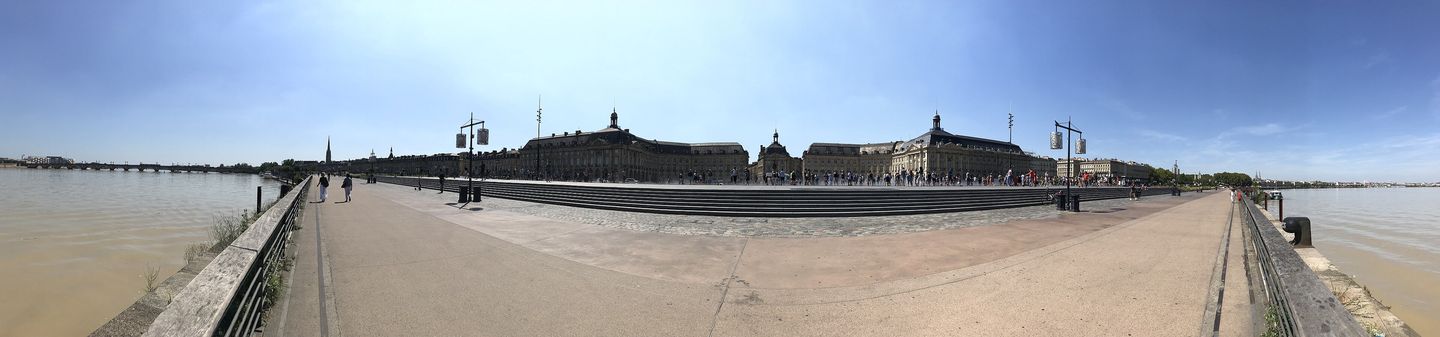
Bordeaux has an image problem it spent two hundred years earning and about twenty years fixing. For most of the 20th century the city's famous honey-coloured limestone — the same stone that gave it the nickname 'la belle endormie', the sleeping beauty — was black with soot, the accumulated grime of coal heating and port-city industry layered so thick that nobody under sixty could remember what the buildings actually looked like underneath. A sustained municipal cleaning and restoration campaign starting in the mid-1990s, paired with the arrival of a sleek modern tramway that banished cars from the historic core, undid that in roughly a decade and a half. The 18th-century streetscape it revealed — the largest continuous run of classical architecture in France, bigger than any single quarter of Paris — is why UNESCO listed the entire riverfront as a World Heritage Site in 2007, under the telling name Port of the Moon, for the crescent the Garonne carves through the city.
None of this would matter much if Bordeaux weren't also sitting on top of the wine. The city is the administrative and commercial capital of a surrounding appellation system — Médoc, Saint-Émilion, Pomerol, Graves, Sauternes — that has shaped the world's idea of serious wine for three hundred years, and it has leaned hard into that identity lately rather than treating it as background noise. La Cité du Vin, the wave-shaped wine museum that opened on the river's edge in 2016, is as much a statement of civic intent as it is a tourist attraction: Bordeaux decided to stop being merely the place wine passes through on its way to a cellar and start being somewhere people actually come to understand it.
The resulting city is compact, walkable, and — this is the part that surprises first-time visitors most — genuinely fun to be in for reasons that have nothing to do with wine. Chartrons has become the most interesting neighbourhood for food and independent shopping in southwest France. The Garonne's right bank, long the city's industrial afterthought, is now a park-lined promenade with a floating pool. And the Miroir d'eau, the shallow reflecting pool in front of the Place de la Bourse, has become one of the most photographed public spaces in France for the simple reason that it does something almost no other European square does: on a hot day, it fills with kids and adults wading, splashing, and lying flat in six millimetres of water in front of an 18th-century stock exchange. Bordeaux takes its history seriously and still doesn't take itself too seriously, which is a rarer combination among wine capitals than you'd think.
The caseWhy Bordeaux earns the detour from the wine route
Most people arrive in Bordeaux thinking of it as a logistics problem to solve on the way to a château — somewhere to land before the real trip, through the vineyards, begins. That undersells the city itself badly. Few places in France pack this much coherent 18th-century urban planning into a walkable core: wander from the Place de la Bourse along the quays to the Monument aux Girondins and you're moving through more continuous classical stonework than most capital cities can manage, and almost none of it behind a ticket barrier.
The wine is still the headline reason to come, and it should be — this is one of the only cities on earth where you can taste the actual terroir an hour's drive away and be back in your hotel for dinner. But Bordeaux in 2026 is also a genuinely good city to simply be in: a modern tram system that actually works, a restaurant scene that has shed its old stuffiness for something more casual and ingredient-driven, and a riverfront that locals actually use rather than merely photograph. It rewards two or three unhurried days rather than a single afternoon squeezed between cellar visits.
The calendarWhen to go
Late September through October is the sweet spot for a reason beyond pleasant weather: this is harvest season (les vendanges) across the surrounding vineyards, when the whole region smells faintly of fermenting grapes and many châteaux open for harvest-adjacent tastings and events they don't run the rest of the year. Temperatures sit comfortably in the high teens to low twenties Celsius, and the Atlantic humidity that makes high summer sticky has usually broken by then.
June is the other strong window, before the real heat sets in and with long evening light that makes the quays genuinely beautiful after 8pm. July and August bring the Atlantic coast crowds — Bordeaux is close enough to the Bassin d'Arcachon and the Dune du Pilat that August in particular sees a lot of beach-bound traffic passing through — plus a heat that can push past 35°C in a city with limited air conditioning in older buildings. Winters are mild and wet rather than cold, and while most châteaux still receive visitors by appointment, the Miroir d'eau and riverside parks lose most of their appeal without the sun.
LogisticsGetting around
Bordeaux's historic centre is almost entirely pedestrianised and compact enough to walk end to end in under forty minutes, which is itself a deliberate policy outcome: the city banned through-traffic from large parts of the core when it built its tramway in the early 2000s, and the result is one of the most pleasant city centres in France to simply wander on foot. The tram network (lines A through D, plus a newer line) covers everything you're likely to need beyond walking distance, runs frequently, and uses a simple contactless or paper-ticket system readable at any stop.
For the vineyards, you have three real options: a guided minibus tour (easiest, and the only sensible choice if you intend to actually drink at each stop), a rental car (necessary for the more remote Médoc châteaux, useless if you're tasting seriously), or the regional TER trains, which reach Saint-Émilion directly and cheaply in about 40 minutes without any need for a car at all. Bordeaux–Mérignac Airport sits about 30 minutes from the centre by tram-and-shuttle combination (the Navette) or taxi; there's no direct rail link to the airport itself.
The tableHow Bordeaux actually eats
Bordeaux's food scene has quietly become one of the most interesting in provincial France over the past decade, shifting away from the white-tablecloth, wine-pairing-menu formality that used to define 'serious' dining here toward something looser and more bistro-driven. Chartrons leads this shift: a neighbourhood of 18th-century wine-merchant warehouses now full of natural-wine bars, small-plate restaurants, and a genuinely excellent Saturday market along the quay that locals, not tour groups, actually shop at.
The local specialties worth seeking out specifically: canelés, the small caramelised rum-and-vanilla pastries with a custardy centre that Bordeaux claims as its own and that bear almost no resemble to the mass-produced versions sold elsewhere; entrecôte à la bordelaise, steak grilled traditionally over vine cuttings and finished with a red-wine-and-shallot sauce; and oysters from the Bassin d'Arcachon, sold at stalls across the city and traditionally eaten with hot sausage rather than lemon, a pairing that sounds wrong until you try it. Wine bars (bars à vins) are the city's default evening social space far more than cocktail bars or pubs, and a proper one will pour you a serious glass by the region rather than just the grape — ask what's open and let the sommelier steer.
The mapNeighbourhoods to know
Saint-Pierre, the medieval core around the Place Saint-Pierre and Place du Parlement, is the obvious first-timer base — a tangle of narrow pedestrian streets, lively at night, within walking distance of almost everything on this page. It's also the most touristy pocket of the centre, so expect higher prices and more English on the menus than elsewhere.
Chartrons, north along the river, is the neighbourhood locals will actually recommend you stay in if you ask: former wine-merchant warehouses converted into galleries, vintage shops and the city's best concentration of independent restaurants and natural-wine bars, with a quieter, more residential feel after dark. Saint-Michel, around the Gothic basilica of the same name, is grittier and more multicultural, home to the city's biggest flea market (the marché des Capucins area) and noticeably cheaper rents — interesting to explore, less essential to base yourself in unless budget is the deciding factor. Across the river, the once-industrial right bank (Bordeaux's own left-bank/right-bank divide runs opposite to Paris's) has been transformed around the Darwin ecosystem of converted warehouses, skate parks and food trucks, and the Jardin Botanique — worth an afternoon, not a base.
Field intelligencePractical intelligence
The Bordeaux Métropole City Pass (sold for 24, 48 or 72 hours) bundles free entry or discounts to most major sights, unlimited tram and bus travel, and a free walking or wine-tasting tour, and pays for itself quickly if you're hitting more than two or three paid attractions. Buy it online in advance or at the tourist office on the Place de la Bourse esplanade.
Most museums close on Mondays, and many smaller shops still observe a traditional midday closure between roughly 1pm and 3pm outside the main tourist streets, which catches visitors used to all-day retail by surprise. Tipping follows standard French convention — service is included by law, rounding up is a courtesy, not an obligation. English is widely spoken in the tourist-facing wine trade but less reliably so once you're off the main squares, and a few words of French go further here than the city's international wine reputation might suggest. If you're serious about visiting specific châteaux rather than taking a general tour, book directly with the estate weeks ahead; the famous names (Lafite, Margaux, Mouton Rothschild) require advance appointment and don't accept walk-ins.
What to see & do
-
Place de la Bourse & the Miroir d'eau
The city's signature postcard: a grand 18th-century square built for the old stock exchange, facing a shallow reflecting pool that mists into fog and fills with wading children on warm afternoons. More fun in person than any photo of it suggests.
Tip:Come at two different times — midday for the mirror effect in full sun, and after dark when the square is lit and the water turns to fog on a timed cycle.
-
La Cité du Vin
A wave-shaped wine museum on the river's northern edge, less about any single bottle than about wine as a global cultural phenomenon, with an immersive sensory gallery and a panoramic tasting room at the top.
Tip:The rooftop glass-walled tasting bar, with one included glass per ticket, has the best view in the museum — go up before you tour the exhibits so you're not rushing it at closing time.
-
Grand Théâtre de Bordeaux
A neoclassical opera house from 1780, its colonnaded façade topped by twelve statues of muses and goddesses, considered one of the most beautiful theatres in Europe and still an active opera and ballet venue.
Tip:If you can't catch a performance, book one of the daily guided tours of the interior — the gilded auditorium and the grand staircase (which reportedly influenced the Paris Opera's) are worth seeing even dark.
-
Basilique Saint-Michel
A soaring Gothic basilica with the tallest freestanding bell tower in southern France, rising over the Saint-Michel neighbourhood's flea-market streets and immigrant food shops rather than a manicured tourist square.
Tip:Climb the detached tower (a separate ticket from the church) for a rooftop view over the river and the city's less polished eastern edge.
-
Cathédrale Saint-André & the Pey Berland Tower
Bordeaux's main cathedral, a Gothic-Romanesque hybrid where Eleanor of Aquitaine married the future Louis VII in 1137, with a freestanding bell tower you can climb separately for the best rooftop panorama in the centre.
Tip:Climb the Pey Berland tower rather than settling for the cathedral alone — it's a separate small fee and the 229-step climb earns a 360-degree view most visitors skip.
-
Chartrons & the Quai des Chartrons
The former wine-merchant district, its grand 18th-century warehouse façades now holding antique dealers, concept shops and the city's best concentration of natural-wine bars and small-plate restaurants.
Tip:Time a visit for Saturday morning, when the riverside market along the quay is at its busiest and most of the neighbourhood's cafés are doing a brisk breakfast trade.
-
Pont de Pierre & the river promenades
Napoleon's 1822 stone bridge across the Garonne, still the city's most elegant crossing, anchoring a riverside promenade that runs for kilometres along both banks — park, floating pool, skate spots and all.
Tip:Walk or cycle across and loop back along the opposite bank for the classic reverse view of the Place de la Bourse skyline you've already photographed from the other side.
-
Darwin Ecosystem
A former army barracks on the river's right bank converted into a sprawling complex of street art, skate ramps, an urban farm, food trucks and a co-working scene — Bordeaux's answer to post-industrial reinvention done with a sense of humour.
Tip:Go on a weekend afternoon when the food-truck lineup and the skate park are both running at full tilt, and budget time for the enormous street-art wall alone.
On the groundWhere things are
Map data © OpenStreetMap contributors.
Where to stayBase yourself well
Saint-Pierre
Best for first-timers who want to walk everywhereThe medieval tangle at the centre of everything — pedestrian lanes, bars that stay loud past midnight, and walking distance to the Place de la Bourse, the cathedral and the Grand Théâtre alike. The obvious first-timer base, at a price to match its convenience.
A boutique hotel on a quiet lane off Place du Parlement
Look slightly off the busiest nightlife streets for a room that's central without the late-night noise bleeding through the window.
€€€A converted townhouse near the Cathédrale Saint-André
The southern edge of Saint-Pierre trades a little nightlife proximity for calmer evenings and the same easy walk to everything.
€€Chartrons
Best for repeat visitors and food-focused tripsThe neighbourhood Bordelais themselves suggest when asked where to stay — former wine warehouses, independent restaurants, and a quieter, more residential evening rhythm a fifteen-minute riverside walk from the centre.
A design hotel inside a former wine warehouse
Several Chartrons properties have converted the neighbourhood's old négociant buildings directly into rooms, keeping the exposed stone and timber.
€€€Les Quinconces & the esplanade
Best for a central base with more breathing roomThe broad, leafy stretch around the Monument aux Girondins and Europe's largest public square, slightly more spacious and less densely packed than Saint-Pierre, with easy tram access everywhere.
A mid-range hotel facing the Quinconces esplanade
A straight ten-minute walk down to the river and the Place de la Bourse, with a calmer, more open streetscape on the doorstep.
€€Saint-Michel
Best for budget trips and a less touristy feelGrittier, cheaper and more genuinely lived-in, around the basilica's flea-market streets — the right call if budget matters more than postcard polish, and still a walkable fifteen minutes from the centre.
A simple guesthouse near the Marché des Capucins
Close to Bordeaux's main covered food market, with lower rates than Saint-Pierre for a comparable walk into the centre.
€Affiliate notePostcardRoute is reader-supported. Some links to Booking.com (stays, flights, car hire, tickets and tours, airport transfers) are affiliate links, tracked through CJ Affiliate: if you book through them we may earn a small commission at no extra cost to you. We only recommend places we would send a friend.
Book the restEverything else for the trip
Stay sorted? These open Booking.com for the other legs of the journey.
-
Tours & tickets
Things to do in Bordeaux
Skip-the-line tickets, tours and day trips.
Browse activities -
Wheels
Car hire in Bordeaux
Compare pick-up points and rental companies.
Compare cars -
Air
Flights
Search fares, then come back for the neighbourhood advice.
Search flights -
Ground
Airport transfers
Book a taxi or private transfer before you land.
Book a transfer
Affiliate noteThese four links are affiliate links too: if you book through them we may earn a small commission at no extra cost to you.
Beyond the cityWorthwhile day trips
- Saint-Émilion
The best-known wine village in the Bordeaux region, a UNESCO-listed medieval hill town wrapped entirely in its own vineyards, reachable by direct train in about 40 minutes without a car.
- Médoc wine route
The famous left-bank appellations — Margaux, Pauillac, Saint-Estèphe — dotted with the grand châteaux whose names appear on the world's most expensive wine lists. Best done by guided minibus so everyone in the group can actually taste.
- Dune du Pilat & the Bassin d'Arcachon
Europe's tallest sand dune, a sweeping, climbable wall of sand facing the Atlantic, paired easily with an afternoon of oyster shacks around the Arcachon basin an hour from the city.
- Saint-Jean-de-Luz & the Basque coast
A longer but doable day trip south toward the Spanish border — a handsome fishing port and beach town with a markedly different, Basque-inflected character from Bordeaux itself.
Before you goCommon questions
- How many days do you need in Bordeaux?
- Two full days covers the city itself comfortably — the historic core, the Miroir d'eau, a museum or two. Add a third day, minimum, if you want to visit the vineyards properly rather than as a rushed half-day add-on; Saint-Émilion and the Médoc châteaux each deserve their own day.
- Do I need a car to visit Bordeaux's wine region?
- No, and it can actually be a disadvantage if you intend to taste seriously. Saint-Émilion is reachable directly by train, and the Médoc's famous châteaux are best visited on a guided minibus tour where a designated driver means everyone in the group can actually drink. Rent a car only if you're visiting several remote, specific estates by appointment and plan to taste lightly.
- What is the best area to stay in Bordeaux for first-timers?
- Saint-Pierre, the pedestrianised medieval core, puts you walking distance from the Place de la Bourse, the cathedral and the Grand Théâtre. Chartrons, a short walk or tram ride north, is the quieter, more food-focused alternative locals themselves tend to recommend.
- Is Bordeaux expensive to visit?
- Moderately, and noticeably less so than Paris for comparable quality. Wine tastings and château tours are where costs climb fastest; eating at wine bars rather than formal restaurants, using the City Pass for attraction bundling, and taking the tram instead of taxis keep a trip reasonable.
- What is Bordeaux famous for besides wine?
- Its 18th-century architecture, recognised as a UNESCO World Heritage Site in 2007 for having the largest continuous urban ensemble of classical stonework in France; the Miroir d'eau reflecting pool, one of the most photographed public spaces in the country; and canelés, the small caramelised pastry the city claims as its own.
- When is the best time to visit Bordeaux?
- Late September through October, during the grape harvest, when the weather is mild and many châteaux run harvest-season events. June is the other strong option, before the Atlantic-coast summer crowds and heat arrive. July and August bring both the highest temperatures and the heaviest traffic toward the nearby beaches.
- Can you visit Bordeaux as a day trip, and is it worth it?
- You can see the Place de la Bourse, the cathedral and the Grand Théâtre in a single afternoon, but it undersells a city this walkable and this close to serious wine country. If your time is genuinely limited to a day, prioritise the historic quayside and skip the vineyards rather than rushing both.