
Spain · Basque Country
Bilbao rebuilt itself on purpose
Twenty-five years ago this was a declining shipbuilding port choking on its own river. Now it's one of Europe's best-run mid-sized cities, and the Guggenheim is the least interesting reason to understand why.
The post-industrial city that rebuilt itself around a museum, and never stopped · 43.26° N · 2.94° W
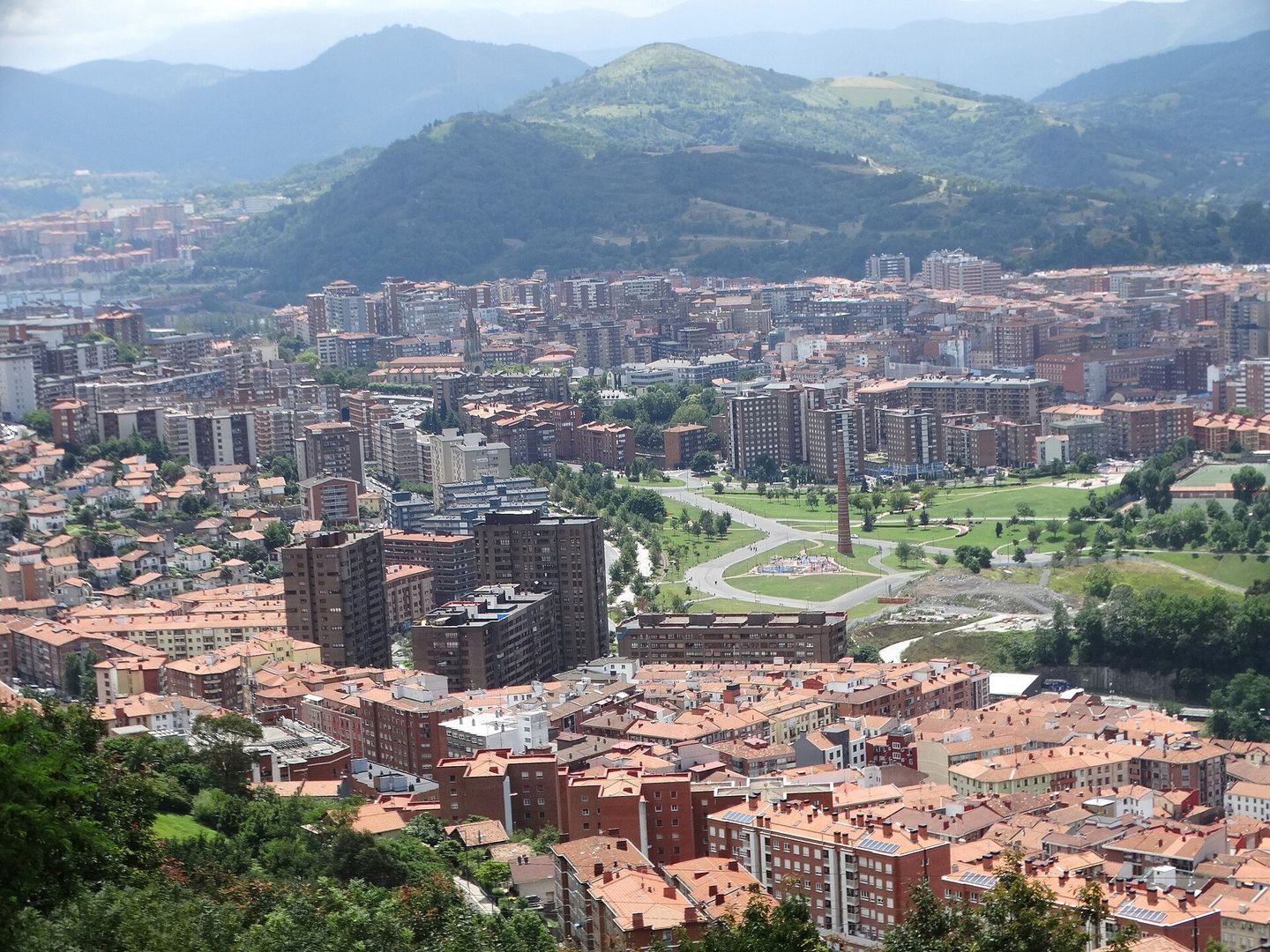
Bilbao has the best origin story of any city in Spain, and it tells it everywhere: on the river you can still see the ghosts of the cranes and shipyards, and on the river you can also see the titanium curves of a museum that pulled the whole place out of a decades-long economic hole. The 'Guggenheim effect' became a term of art in urban planning because of what happened here, and it's tempting to let the museum stand in for the whole trip. Don't. The Guggenheim is a genuinely good building with a genuinely mixed permanent collection, and it is maybe the fourth or fifth best reason to come to Bilbao.
The better reasons are smaller and cheaper. This is pintxos country, which means Casco Viejo's Siete Calles turn into a moving dinner party every evening, plate by plate, bar by bar, nobody sitting down for long. It's a city shaped by a river that genuinely organizes how you move through it — the old town on one bank, the grand 19th-century Ensanche on the other, connected by a scatter of bridges each more architecturally opinionated than the last. And it sits twenty minutes from a coastline that goes from working fishing villages to a church on a dramatically unlikely rock that most visitors have never heard of.
What follows treats Bilbao as a whole city rather than a museum with a town attached: when to come (not August, not for the reasons you'd expect), how the Basque language and culture actually shape daily life here, where the pintxos route works and where it's wasted on tourist-menu imitations, and how to use Bilbao as a base for some of the best day trips in northern Spain.
The caseWhy Bilbao earns a trip beyond the museum
Every account of modern Bilbao starts with the same fact: in 1997 the Guggenheim opened on a derelict industrial riverbank, and within a few years a city that had been shedding population and self-confidence in roughly equal measure had a new identity and a tourism industry it had never previously needed. That story is true and worth knowing, but visiting Bilbao purely to see the building that caused it is like visiting a kitchen to look at the oven that baked a cake you'll never taste.
The cake, in this case, is a genuinely confident, walkable, well-fed Basque city that was quietly excellent long before Frank Gehry showed up. Casco Viejo's seven medieval streets have been serving pintxos since long before the word 'regeneration' entered the municipal vocabulary. The Ensanche, Bilbao's 19th-century expansion across the river, has the kind of wide, arcaded boulevards and belle-époque apartment blocks that most people only associate with Barcelona or Paris. And the Basque identity running underneath all of it — the language, the food culture, the particular civic pride — predates the museum by centuries and will outlast whatever comes next in the tourism cycle.
The honest pitch is this: come for two or three days, split your time roughly evenly between the big-ticket architecture and the unglamorous business of eating well in the old town, and don't rush the river. Bilbao rewards people who treat it as a city to live in for a few days, not a landmark to tick off on a Spain itinerary.
The calendarWhen to go
Late spring (May, early June) and early autumn (September, early October) are the sweet spots, and for a very specific reason beyond the usual shoulder-season logic: the Basque coast gets real rain, year-round, and the driest stretches of the calendar cluster in these windows. Temperatures are comfortable for walking the Siete Calles and the riverside paths without the muggy heat that can settle over the Ensanche in August.
August itself is a mixed bag. Semana Grande (Aste Nagusia), the city's nine-day summer festival in mid-to-late August, is genuinely worth timing a trip around if you like fireworks, txosnas (festival food-and-drink stalls run by neighbourhood associations) and a city that doesn't really sleep for over a week — but it also means higher prices, fuller bars, and a old town that's loud well past midnight. If a quieter version of Bilbao is what you want, avoid it specifically.
Winter is underrated here in the same way it's underrated in most of northern Spain: fewer crowds at the Guggenheim, pintxos bars that feel more like genuine neighbourhood hangouts than tourist stops, and a moody, rain-slicked version of the city that suits its industrial-turned-cultural identity rather well. Just pack a proper waterproof jacket — Bilbao's reputation for rain is not exaggerated, and a cheap poncho will not survive the Atlantic weather coming off the Bay of Biscay.
LogisticsGetting around
Bilbao is compact enough to walk most of it, but the city also has one of the best small-city transit systems in Spain, and using it is part of the experience rather than a chore. The Metro Bilbao, designed by Norman Foster, is famous enough locally that its glass-tube station entrances have their own nickname — 'fosteritos' — and the trained Basques will use it without a second thought for even short hops. Buy a Barik card at any station; it's a reloadable smart card that also covers trams and most buses, and it's meaningfully cheaper than single tickets if you're staying more than a day or two.
The Euskotran tram runs along the river from the old town past the Guggenheim and down to San Mamés, the stadium, and is the easiest way to connect the museum district to the Casco Viejo without a long walk or a metro change. For the view, not the convenience, the Artxanda funicular climbs from the Ensanche up to Monte Artxanda in about three minutes and delivers the best panoramic overview of the entire city and the hills that ring it — genuinely worth the few euros even if you have no other reason to go up.
Taxis and rideshares exist and are reasonably priced by western European standards, but given how well the public transit covers the places visitors actually go, most people will barely need them beyond an airport transfer. The airport bus (Bizkaibus A3247) runs frequently between Bilbao Airport and the city centre and is dramatically cheaper than a taxi for the roughly thirty-minute ride.
The tableHow Bilbao actually eats
Pintxos are not tapas with a different name, and treating them that way is the single most common visitor mistake. A pintxo is typically one considered bite, built to be eaten in one or two moves, often skewered with a toothpick that the bartender uses at the end of the night to count up what you owe — on the honour system, in the older bars, which tells you something about how seriously the culture takes the ritual. The move is to order one or two pintxos and a small glass of txakoli (the local slightly sparkling, high-acid white wine, traditionally poured from height to aerate it) or a short beer, eat standing, and then walk to the next bar. A proper pintxos night in Casco Viejo covers four to six bars, not one long sit-down meal.
The Siete Calles (Seven Streets) of the old town are the obvious hunting ground, and specific bars have specific specialties worth seeking out by name rather than wandering in blind — a txalupa (stuffed crab) at one spot, a seared foie at another, a simple but perfect tortilla at a third. Mercado de la Ribera, one of the largest covered markets in Europe and still a working fish and produce market by day, becomes its own pintxos destination in the evening with stalls serving straight from the counter.
Beyond pintxos, the Basque Country takes its cooking seriously enough to have more Michelin stars per capita than almost anywhere else in Europe, and Bilbao has a handful of genuinely excellent sit-down restaurants if a splurge dinner is part of the plan. Bacalao al pil-pil (salt cod in an emulsified olive oil and garlic sauce) and txuleta (a thick-cut, bone-in beef chop, usually grilled over coals and served rare) are the two dishes worth ordering on purpose rather than by accident.
The mapNeighbourhoods to know
Casco Viejo, the medieval old town on the river's east bank, is where the Siete Calles live and where most visitors spend their evenings — narrow, lamplit, dense with bars, and genuinely atmospheric without having been hollowed out into a pure tourist set piece the way some old towns have. It's also home to the Cathedral of Santiago and the Mercado de la Ribera, and it's where to base yourself if proximity to pintxos bars matters more than modern comfort.
Across the river, the Ensanche is Bilbao's 19th-century answer to Barcelona's Eixample — wide grid-planned boulevards, grand apartment buildings, and the city's main shopping streets around Gran Vía. It's less atmospheric after dark than Casco Viejo but more comfortable to stay in, with better hotel stock and easy tram and metro access to everywhere else.
Abandoibarra, the riverside strip between the Ensanche and the river, is entirely a product of the post-Guggenheim regeneration — this is where the museum itself sits, along with the Euskalduna conference centre (built on the site of a former shipyard) and a landscaped riverwalk that makes the clearest visual case for what the 'Guggenheim effect' actually looks like on the ground. Deusto, across the river again and a short walk or tram ride north, is a quieter, more residential university district worth a wander for the Zubizuri bridge and a more local pace.
Field intelligencePractical intelligence
Basque (Euskera) and Spanish are both official languages here, and street signs, metro announcements and menus often run in both. Learning a few Basque words — eskerrik asko for thank you, kaixo for hello — is appreciated but not expected; Spanish will get you through any practical situation, and English is common enough in the tourist-facing parts of town.
Pintxos bars generally expect payment at the end rather than per round, and the honour-system toothpick count is real — don't try to game it, the bartenders remember. Lunch (comida) runs roughly 1pm to 3:30pm and dinner (cena) rarely gets going before 8:30pm, later on weekends; arriving at a restaurant at 7pm European-style will often mean an empty room and a kitchen not yet in gear.
Bring a proper raincoat regardless of season — Bilbao's position on the Bay of Biscay means genuine, unpredictable Atlantic rain is a live possibility most months of the year, not just a winter risk. And don't skip the Artxanda funicular on a clear day; it's one of the cheapest, fastest ways to understand the city's geography, with the river, the hills and the whole post-industrial-to-cultural transformation laid out at once from above.
What to see & do
-
Guggenheim Museum Bilbao
Frank Gehry's titanium-clad landmark on the Nervión riverbank, the single building most responsible for Bilbao's reinvention, with a permanent collection that's more mixed than the architecture around it.
Tip:Buy a timed ticket online and go right at opening; the plaza and Jeff Koons's 'Puppy' outside are free to see any time, even if you skip the museum entirely.
-
Casco Viejo & the Siete Calles
The medieval seven-street old town, Bilbao's pintxos engine and most atmospheric neighbourhood after dark, built around the Cathedral of Santiago and Plaza Nueva's arcaded square.
Tip:Start a pintxos crawl around 8pm on Plaza Nueva and work outward — the square itself is more tourist-facing than the streets just beyond it.
-
Mercado de la Ribera
One of Europe's largest covered markets, a working fish and produce hall by day on the riverbank that turns into its own pintxos destination by early evening.
Tip:Go mid-morning to see the market in full working swing, then come back after 7pm when the counter stalls switch to pintxos service.
-
Zubizuri bridge
Santiago Calatrava's curved white footbridge over the Nervión, as photographed as any building in the city and a genuinely elegant way to cross between the Ensanche and Uribitarte.
Tip:Cross it around sunset when the white structure catches the last light — and watch your footing, the glass-brick deck gets notoriously slippery in rain.
-
Monte Artxanda
A hilltop above the Ensanche reached by a century-old funicular, delivering the best full overview of Bilbao's river, hills and skyline in under three minutes.
Tip:Time it for a clear late afternoon and stay for a drink on one of the hilltop terraces as the city lights come on below.
-
Azkuna Zentroa (Alhóndiga)
A former wine warehouse reimagined by Philippe Starck into a cultural centre with a rooftop pool, cinema, library and gallery space, each of its 43 interior columns in a different design.
Tip:The ground-floor courtyard and columns are free to wander even without a ticket to whatever exhibition or film is showing.
-
Plaza Nueva
A grand 64-arch neoclassical square at the edge of Casco Viejo, ringed by pintxos bars and host to a lively Sunday morning market selling everything from books to caged birds.
Tip:Come for the Sunday market if your dates line up — it's a genuinely local scene, not a tourist production.
-
San Mamés stadium
Athletic Bilbao's home ground, nicknamed 'La Catedral' for the near-religious local devotion to a club that, uniquely in Spanish football, fields only Basque-trained players.
Tip:A matchday here is one of the most intense atmospheres in Spanish football — book well ahead if a fixture lines up with your trip.
-
Puente Colgante (Vizcaya Bridge)
A UNESCO-listed 19th-century transporter bridge at the mouth of the estuary in nearby Portugalete and Getxo, the oldest working structure of its kind in the world.
Tip:Pay for the walkway crossing up top rather than just the gondola below — the views along the estuary from the high walkway are the real draw.
On the groundWhere things are
Map data © OpenStreetMap contributors.
Where to stayBase yourself well
Casco Viejo
Best for pintxos-first visitors and short staysThe medieval old town, lamplit and dense with pintxos bars, steps from Plaza Nueva and the Siete Calles. Loud at night, especially on weekends, but unbeatable for anyone prioritising the pintxos crawl over quiet sleep.
A small guesthouse on a quiet side street off the Siete Calles
Pick a room away from Plaza Nueva itself if weekend noise is a concern; the quieter lanes are a two-minute walk from the same bars.
€€A boutique hotel near the Cathedral of Santiago
The cathedral end of the old town is slightly calmer after midnight than the Plaza Nueva cluster.
€€€Abando / Ensanche centre
Best for first-timers who want comfort without losing central locationThe 19th-century grid across the river, with wide boulevards, the main shopping streets and the best hotel stock in the city. Comfortable, well-connected by metro and tram, and an easy walk to both Casco Viejo and the Guggenheim.
A mid-range hotel near Plaza Moyúa
Moyúa sits roughly equidistant from the old town and the museum district, with a metro stop on-site.
€€A grander hotel on Gran Vía
Bilbao's main shopping boulevard, with department stores and chain retail on the doorstep.
€€€€Abandoibarra / near the Guggenheim
Best for museum-focused, shorter visitsThe riverside strip built almost entirely during the post-Guggenheim regeneration, with the museum, the riverwalk and some of the city's newest hotel development. Quieter at night, less characterful by day.
A modern riverside hotel a short walk from the museum entrance
Being able to walk to the Guggenheim at opening, before the queues build, is the whole case for this area.
€€€Deusto
Best for value and repeat visitorsA quieter, more residential university district across the river from the Ensanche, with the Zubizuri bridge as the easy connector. Fewer sights on the doorstep, better value, a more local pace.
A simple apartment stay near the Deusto riverfront
Trade a short tram or walk into the centre for noticeably lower rates than the Ensanche or old town.
€€Affiliate notePostcardRoute is reader-supported. Some links to Booking.com (stays, flights, car hire, tickets and tours, airport transfers) are affiliate links, tracked through CJ Affiliate: if you book through them we may earn a small commission at no extra cost to you. We only recommend places we would send a friend.
Book the restEverything else for the trip
Stay sorted? These open Booking.com for the other legs of the journey.
-
Tours & tickets
Things to do in Bilbao
Skip-the-line tickets, tours and day trips.
Browse activities -
Wheels
Car hire in Bilbao
Compare pick-up points and rental companies.
Compare cars -
Air
Flights
Search fares, then come back for the neighbourhood advice.
Search flights -
Ground
Airport transfers
Book a taxi or private transfer before you land.
Book a transfer
Affiliate noteThese four links are affiliate links too: if you book through them we may earn a small commission at no extra cost to you.
Beyond the cityWorthwhile day trips
- Getxo & the Puente Colgante
A beach town and genuine seaside escape twenty minutes by metro, with the UNESCO-listed transporter bridge, a cliffside promenade, and a noticeably different, more relaxed register than central Bilbao.
- San Juan de Gaztelugatxe
A tiny hermitage church perched on a rocky islet connected to the mainland by a steep, zig-zagging stone stairway — dramatic, heavily photographed, and best visited early to beat both the crowds and the midday sun on the climb.
- Gernika (Guernica)
The town devastated by the 1937 bombing that inspired Picasso's painting, now home to the Gernika Peace Museum and a sobering, essential half-day for understanding Basque modern history.
- San Sebastián
An hour east by bus or car, San Sebastián's own pintxos scene and La Concha beach make it the natural pairing with Bilbao for anyone building a longer Basque Country trip.
Before you goCommon questions
- How many days do you need in Bilbao?
- Two full days covers the Guggenheim, Casco Viejo's pintxos circuit and a couple of the riverside and hilltop sights comfortably. Three lets you add a day trip to Getxo or Gaztelugatxe without rushing the city itself.
- What is the best area to stay in Bilbao?
- Casco Viejo if the pintxos crawl is your priority and you don't mind weekend noise; the Ensanche around Plaza Moyúa or Gran Vía if you want comfortable, well-connected lodging within easy reach of both the old town and the Guggenheim.
- Is the Guggenheim worth visiting if I'm not into contemporary art?
- The building and the riverside plaza around it — Jeff Koons's 'Puppy', the Louise Bourgeois spider, the titanium curves themselves — are worth seeing for free regardless. The paid collection inside is more hit-or-miss and matters more to visitors with a real interest in contemporary and modern art.
- How do pintxos actually work?
- Order one or two small plates and a drink standing at the bar, eat them, then move to the next bar rather than settling in for one long meal. Many old-town bars track what you've eaten on the honour system via toothpicks and settle the bill only when you're ready to leave.
- What is the best time of year to visit Bilbao?
- Late spring and early autumn offer the driest, most comfortable weather for walking the city. Mid-to-late August brings Semana Grande, the city's biggest festival, if you don't mind crowds and noise; winter is quieter and moodier, with genuine Atlantic rain a real possibility most of the year.
- Do I need a car to visit Bilbao and the Basque coast?
- Not for the city itself — the metro, tram and funicular cover it well. A car becomes useful for stringing together multiple coastal day trips like Gaztelugatxe and the smaller fishing villages in one day, though buses reach most of the same places on a slower schedule.
- Is Bilbao expensive?
- It's generally cheaper than Barcelona or Madrid for food and lodging. Pintxos crawls are genuinely affordable — a few euros a plate — while the city's handful of Michelin-starred restaurants push well into splurge territory if that's the trip you're planning.